Review · NEW YORK CITY
Tribeca Architecture And History Walking Tour
Tribeca’s polished streets hide a remarkable past: farmland, docks, factories, artists, celebrities, and some of Manhattan’s most expensive real estate all occupy the same few blocks. This 2.5-hour walking tour connects those eras through old warehouses, cast-iron facades, grand civic buildings, and the famous Ghostbusters firehouse.
I like the small group, capped at 15, and I like the way the tour mixes architecture with odd little stories, pop culture, and food tips. Guides such as Meghan Sara are praised for making the subject lively, even for longtime New Yorkers and families with teenagers. The main drawback is simple: you are on your feet for much of the morning, and bad weather can cancel the outing.
Key things to know before you book
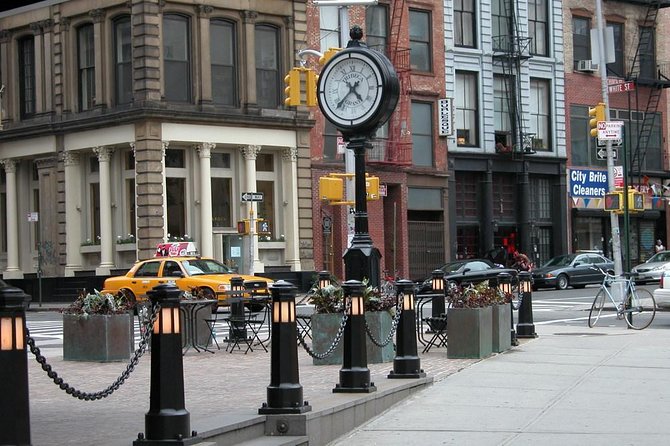
- More than 15 Tribeca locations: You will cover a lot of ground, with regular pauses for photos and explanation rather than one long lecture.
- A guide-led look at cast iron: The buildings are not just backdrops. You will learn how their materials, details, and original uses shaped the neighborhood.
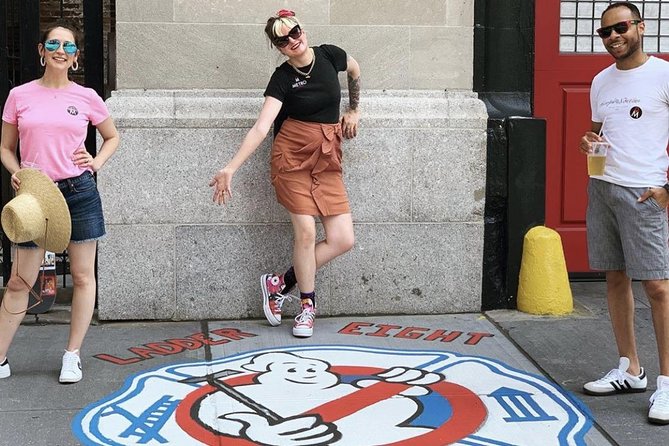
- The Ghostbusters firehouse: Company 8 provides the easy photo moment, but the stop also places the movie site in a real New York setting.
- A useful start in Lower Manhattan: The walk begins at Tweed Courthouse near City Hall and ends in Tribeca Park, making it easy to pair with other downtown sights.
- Local tips along the way: Guides may point out cafés, bakeries, restaurants, and places worth returning to after the tour.
- Strong value for a small group: At $50 per person, the price is fair if you want context and conversation rather than a self-guided stroll.
Why Tribeca makes a good walking tour
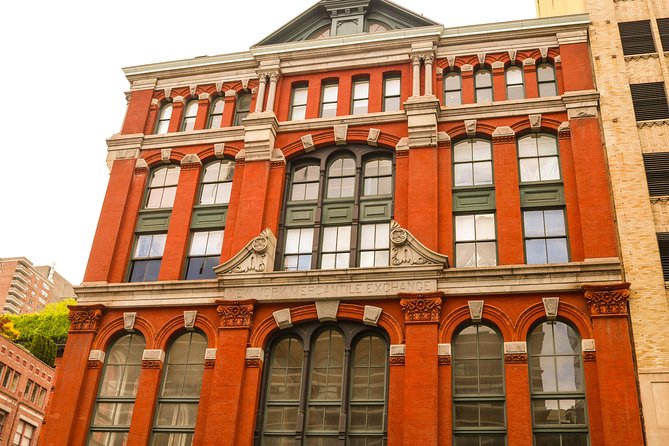
Tribeca is easy to misunderstand from street level. Today, you see quiet blocks, expensive homes, restaurants, lofts, and carefully restored facades. Without a guide, it can look like a wealthy neighborhood with attractive old buildings. The larger story is far more dramatic.
The name Tribeca comes from Triangle Below Canal Street. That name describes its position, but not its past. The area has more than 300 years of Manhattan history, moving from farmland to a working waterfront and industrial district before becoming one of the city’s most fashionable addresses.
That change is what gives the tour its shape. You are not simply looking at old brick and iron. You are seeing how business, shipping, manufacturing, preservation, and money altered the same streets over time.
I especially like tours that explain why a neighborhood looks the way it does. This one is built for that purpose. You do not need a background in architecture, and you will not be expected to identify every style or term. The guide points out details you could easily miss, then links them to the people and businesses that once used the buildings.
The setting also helps. Tribeca has a quieter feel than many parts of Lower Manhattan, so you can examine facades without constantly rushing through a crowd. That does not mean every block is peaceful or traffic-free, but the pace is suited to looking up, stopping, and asking questions.
More Walking Tours in New York City
- TriBeCa Architecture & History Walking Tour
★ 5.0 · 37 reviews - Midtown Manhattan Art and Architecture Walking Tour
★ 5.0 · 32 reviews - Holdouts: A NYC Architecture Walking Tour
★ 5.0 · 31 reviews
Starting at Tweed Courthouse and City Hall
The tour begins at Tweed Courthouse, 52 Chambers Street. This is a useful meeting point because it places you at the edge of Lower Manhattan, where public power, old commercial streets, and the former waterfront meet.
Starting here gives the guide room to set the scene before you reach the residential heart of Tribeca. You begin with the broader story of Manhattan, then move toward the neighborhood’s own identity.
The opening portion is likely to be especially useful if you are new to New York. Tribeca can seem disconnected from the city’s earliest chapters, yet its location below Canal Street links it to the growth of downtown Manhattan. The guide helps you understand that the neighborhood did not simply become fashionable overnight.
Expect the first part to establish names, dates, and changes in land use. The experience is not designed as a rapid checklist of attractions. It is a walking conversation with stops for photographs and questions.
The 11 a.m. start works well for a morning plan. You can have breakfast first, take the tour, and finish in time for lunch in or near Tribeca. One guide specifically includes restaurant, bakery, and café suggestions, so I would save a little appetite and keep notes on places that catch your attention.
Reading Tribeca’s cast-iron buildings
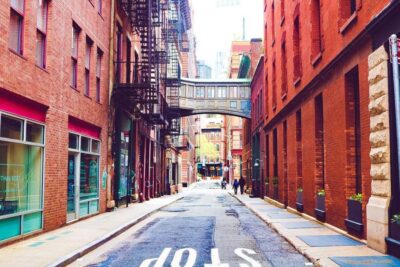
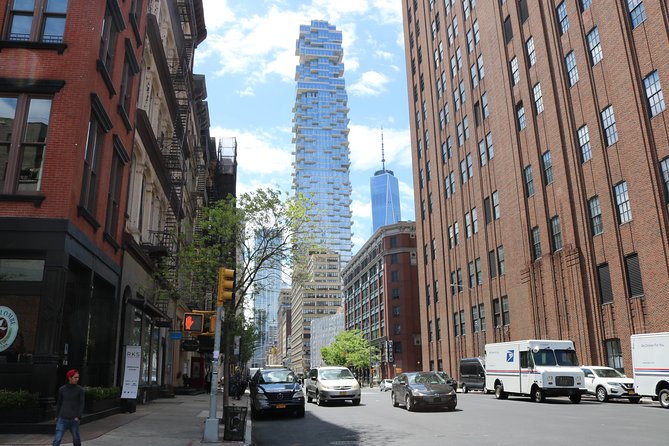
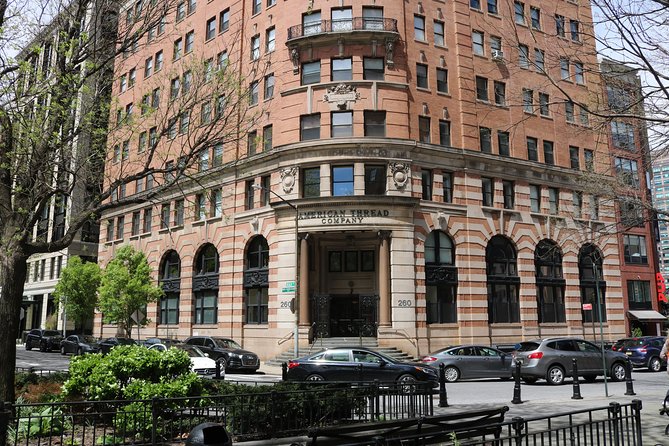
Architecture is the heart of the walk, and the area’s cast-iron buildings are a major reason to book it. A self-guided walk can show you handsome facades, but a guide helps you notice the small choices that explain how the buildings worked.
Look for repeated patterns, decorative details, tall windows, and the broad fronts associated with commercial buildings. These features tell you something about the businesses and working life that once filled the neighborhood. The point is not to memorize architectural vocabulary. The point is to understand why Tribeca has such a distinctive appearance.
The guide also helps separate preservation from original design. Some buildings have been adapted for new uses, and the neighborhood’s current wealth can hide its industrial past. A good explanation makes that contrast clear without turning the morning into a classroom.
I like the fact that the tour welcomes people with no architecture training. You can enjoy the buildings for their beauty, then add the historical reason they matter. If you already follow New York architecture, you will still have room to ask more detailed questions or focus on features you might otherwise overlook.
The group size matters here. With no more than 15 people, you have a better chance of hearing the guide and getting an answer when you ask about a doorway, cornice, building use, or odd detail. It is not a private tour, but it should feel more manageable than a large sidewalk group.
The farmland-to-loft story
The most interesting thread is Tribeca’s change from open land to a working district and then to a high-end neighborhood. That arc helps explain why the area contains such a mix of buildings and uses.
The farmland chapter gives you a reminder that modern Manhattan was not always dense. As New York expanded, the area was absorbed into the city’s commercial growth. Its connection to downtown and the waterfront helped bring work, storage, manufacturing, and trade.
Later, old industrial structures became attractive for new purposes. Large floor plates, strong materials, and distinctive facades offered something different from newer apartment buildings. The same qualities that once served business made the neighborhood appealing to artists, property owners, and eventually celebrities.
The tour presents Tribeca as one of New York’s wealthiest addresses, but it also explains how that status developed. That context is more useful than simply pointing out expensive homes. You see the relationship between old buildings, changing demand, and the city’s long habit of reinventing itself.
The guide’s storytelling seems to be one of the strongest parts of the experience. Meghan Sara is repeatedly praised for using humor, gestures, odd facts, and enthusiasm to keep the material moving. Details such as New York’s beavers may sound minor, but they give the walk personality and make the history easier to remember.
More Walking Tours in the USA
- Midtown North NYC Architecture Walking Tour
★ 5.0 · 28 reviews - Financial District NYC Architecture Walking Tour
★ 5.0 · 26 reviews - Chelsea and the High Line NYC Architecture Walking Tour
★ 5.0 · 6 reviews - Manhattan Architecture & Urban Design Walk
★ 4.5 · 2 reviews
The Ghostbusters firehouse at Company 8
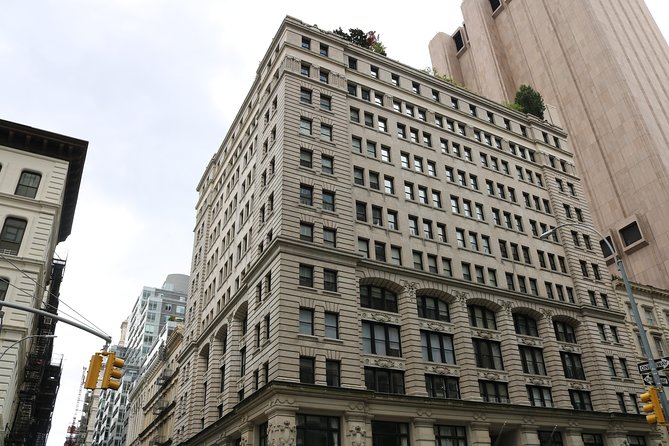
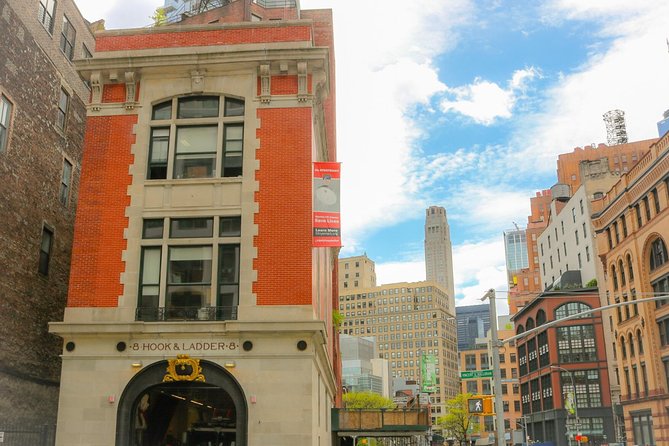
The Ghostbusters firehouse is the tour’s most obvious pop-culture stop. Company 8 is at 14 North Moore Street, and the exterior is familiar to movie fans around the world.
You get about 10 minutes here, enough for a photo and an explanation of why the building matters beyond its role on screen. That distinction is important. The firehouse is a real working place, not just a film set dressed for a joke, and the guide uses the stop to connect popular culture with the neighborhood itself.
This is a good pause for families and mixed-interest groups. Someone who is less interested in architecture can enjoy the movie connection, while someone focused on New York history can still appreciate the building’s actual role. It keeps the tour from becoming too serious.
The stop is also a reminder that Tribeca’s identity is not only about old masonry and property prices. Film, celebrity culture, and local institutions all overlap here. You get a quick, memorable image that balances the more detailed architectural stops.
Do not expect a long museum-style presentation at the firehouse. It is a short stop within a broader walk. The value comes from the guide’s context and the chance to see the place in its real neighborhood setting.
More than a photo walk
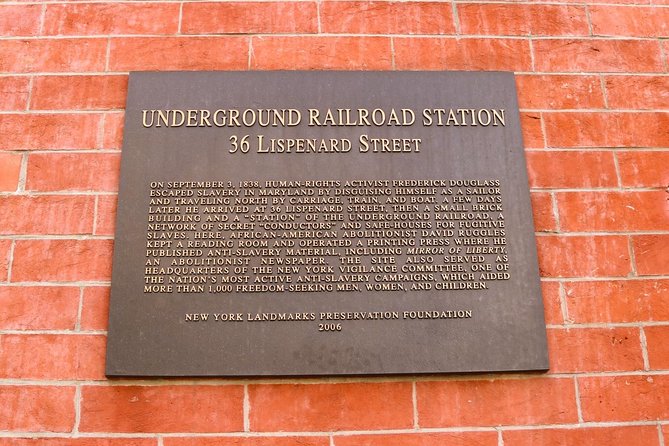
The tour covers over 15 locations, though the supplied details do not name every stop. That means the experience is best understood as a connected neighborhood walk, not a fixed list of major attractions where you spend equal time at each address.
Some places will receive a longer explanation. Others may serve as brief examples of a building style, a historical change, or a local story. That variety helps maintain a good pace over two and a half hours.
The reviews describe a mix of history, architecture, art, trends, and pop culture. That range is useful because Tribeca’s story cannot be told through one subject alone. Architecture shows you what survived. History explains why it was built. Pop culture shows how the neighborhood is seen today.
The pace also seems carefully managed. Guides have made stops for warming up and using the toilet, and one guide found lemonade on a very hot day. Those small choices matter in New York, where weather can change your mood quickly and there may not be a convenient break when you need one.
Still, you should wear comfortable shoes and dress for the forecast. This is a genuine walking tour, not a bus ride with occasional exits. It requires good weather, and the operator may cancel if conditions are poor or if the minimum number of participants is not reached.
How the guide shapes the experience
A neighborhood walk rises or falls on the guide, and the praise here is unusually consistent. Meghan Sara is singled out for warmth, humor, strong delivery, and a clear interest in the subject.
That does not mean every departure will have the same person. The available information identifies Meghan Sara as a guide associated with many of the comments, so you should treat her name as a useful indication of the tour’s style rather than a guaranteed assignment unless your booking confirms it.
The best feature of this style is its flexibility. One local family with a 14-year-old found the walk entertaining, while another participant who normally dislikes tours appreciated the stories and details. That suggests the guide does more than recite prepared facts.
You may also find the tour more personal than a standard sightseeing route. The guide can respond to your interests, point out a café or bakery, and adjust the emphasis between architecture, history, art, and film. That is a real benefit in a small group.
If you prefer to explore silently at your own pace, this format may feel too structured. You will stop often, listen, and remain with the group. But if you want to understand what you are looking at, that structure is exactly what you are paying for.
Is $50 a fair price?
The cost is $50 per person, and the walk lasts about two and a half hours. I consider that reasonable for a capped group, a specialist subject, and a guide who gives you more than directions between famous sights.
You are not paying for entry to a museum or a meal. Admission is free at the stops, and snacks are not included. The value lies in interpretation: noticing architectural details, understanding the neighborhood’s changes, hearing local stories, and getting suggestions for places to eat afterward.
For a first visit to New York, the price works best if you care about neighborhoods rather than only headline attractions. For a local, it can still make sense because Tribeca is the kind of place people often cross without seeing. The tour gives you a reason to slow down and look closely.
The value is weaker if you already know Tribeca extremely well and prefer independent research. It is also less appealing if your main goal is a quick Ghostbusters photo. The firehouse is one stop in a longer history and architecture walk.
Who should book this Tribeca walk?
I would recommend it to you if you fit one or more of these descriptions:
- You enjoy old buildings but want help reading them.
- You want a downtown tour that is less general than a basic Manhattan overview.
- You like history presented through stories instead of a formal lecture.
- You are traveling with a teenager or a mixed-interest group.
- You want restaurant, bakery, and café suggestions for later.
- You are a New Yorker who has seen Tribeca but never studied its past.
It is also a good early-in-the-trip choice. The walk ends in Tribeca Park, and the local suggestions can help shape your plans for lunch or dinner. The park itself has a 300-year history connected to the early development of New York City, giving the final stop a fitting sense of place.
I would hesitate if you have limited mobility that makes two and a half hours of walking difficult, though most people can participate and service animals are allowed. The route is near public transportation, but the supplied information does not give a detailed accessibility assessment, so ask the operator if you need specific arrangements.
Booking 25 days ahead on average suggests that popular dates can fill well before the morning itself. A mobile ticket keeps things simple, and confirmation is provided at booking. Free cancellation is available up to 24 hours before the start time. After that, changes and refunds are not accepted, except when the operator cancels for weather or insufficient numbers.
My verdict on the Tribeca Architecture and History Walking Tour
Book this tour if you want to see why Tribeca looks the way it does, not just take a picture of its best-known movie location. The combination of cast-iron architecture, farmland-to-industry history, celebrity culture, and practical food advice gives the walk a clear purpose.
The Ghostbusters firehouse is a fun hook, but it is not the whole experience. The real payoff comes from learning to read the neighborhood’s buildings and seeing how New York turned an old working district into an exclusive address.
At $50, the tour offers solid value for a small group and an animated guide. Just plan for outdoor conditions, comfortable shoes, and a full morning on foot. If that sounds like your kind of New York, I would book it early and keep lunch open in Tribeca.
FAQ
How long is the Tribeca Architecture and History Walking Tour?
The tour lasts approximately two hours and 30 minutes.
Where does the tour begin?
It begins at Tweed Courthouse, 52 Chambers Street, New York, NY 10007.
Where does the tour end?
The walk ends at 8 Beach Street in Tribeca Park.
What time does the tour start?
The listed start time is 11:00 a.m.
How many people can join the tour?
The group has a maximum of 15 participants.
Is the Ghostbusters firehouse included?
Yes. The tour stops at Ghostbusters Firehouse Company 8 for about 10 minutes, with time for a photo and information about the real firehouse.
Is admission to the stops included?
The stops have no admission charge. Snacks are not included.
Is the tour suitable for people without architecture training?
Yes. No prior architecture knowledge is required.
What happens if I need to cancel?
You can cancel at least 24 hours before the start time for a full refund. Cancellations or changes made less than 24 hours before the tour are not accepted. If poor weather or insufficient participation causes the operator to cancel, you will be offered another date or experience, or a full refund.
More History Walks around New York City
- New York City: Flatiron Food, History, and Architecture Tour
★ 4.8 · 43 reviews - The Story Behind NY’s Evolving Skyline An Architectural Journey Through History
★ 5.0 · 18 reviews - Chelsea Galleries and High Line; Art, Architecture and History
★ 5.0 · 14 reviews - Private Flatiron Food, History and Architecture Tour
★ 5.0 · 8 reviews
New to the itinerary around New York City
- Race to the Sky: NYC Architecture Tour With SUMMIT One Ticket★ 5.0 · 3 reviews
- Private Flatiron Food, History and Architecture Tour★ 5.0 · 8 reviews
- New York Soho and the Village Art and Architecture Tour★ 5.0 · 4 reviews
- Chelsea and the High Line NYC Architecture Walking Tour★ 5.0 · 6 reviews
- New York Upper West Side Art and Architecture Tour★ 5.0 · 4 reviews
- New York Midtown South Art and Architecture Tour★ 5.0 · 2 reviews
- New York Upper East Side Art and Architecture Tour★ 5.0 · 3 reviews
- Custom Private New York Architecture, Art and City Tour★ 5.0 · 3 reviews
New York City Architecture Tours, compared.
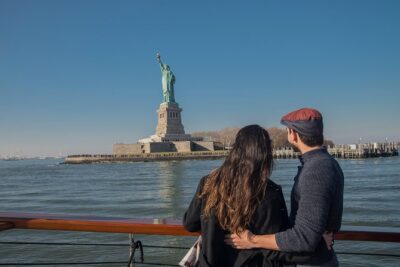

Around Manhattan Official NYC Architecture Cruise
Read our review →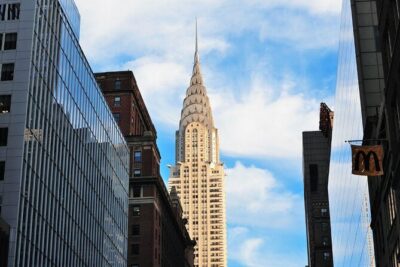
Art Deco and Architecture Midtown Landmarks Tour
Read our review →
New York City The Official Rockefeller Center Tour
Read our review →