Review · NEW YORK CITY
Chelsea and the High Line NYC Architecture Walking Tour
The striking thing about this tour is how quickly Chelsea changes from old rail infrastructure to ambitious modern design. You walk the High Line, trace how air rights helped fund its transformation, and finish among buildings by Zaha Hadid, Jean Nouvel, BIG, and Diller Scofidio + Renfro. Guide Ivan Shumkov brings the buildings and public spaces into one clear story.
I like the small group of no more than 15 and the individual headsets, which matter in a noisy city. I also like the two-hour length: long enough for real context, short enough to fit around a museum visit or dinner. The main consideration is that this is an outdoor walking tour, so poor weather can affect the schedule and the experience.
Key points at a glance
- Follow the High Line’s transformation: Learn how an old elevated rail route became a public park and how air rights helped support the project.
- See major contemporary architecture: The route includes 520 West 28th Street by Zaha Hadid, 100 11th Avenue by Jean Nouvel, and 15 Hudson Yards by Diller Scofidio + Renfro.
- Connect public space with private development: Little Island, the High Line, Hudson Yards, and The Shed show different ideas about how New York uses limited urban land.
- Benefit from a compact group: With a maximum of 15 people, you have a better chance to hear the guide and ask questions.
- Finish at Hudson Yards: The tour ends at 20 Hudson Yards, near The Vessel, The Spiral, 15 Hudson Yards, and the wider complex.
- Plan for outdoor conditions: The tour requires good weather, and you should allow for about two hours of steady city walking.
Why this Chelsea walk is more than a stroll on the High Line
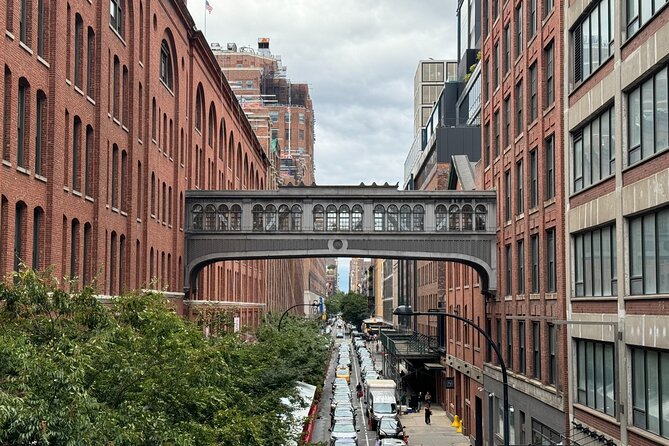
The High Line is easy to enjoy on your own. You can walk above the streets, look toward the Hudson River, and admire the plantings without a guide. What you miss, though, is the explanation of how this narrow strip of elevated rail became tied to real estate, public funding, architecture, and neighborhood change.
That is the focus here. You are not simply moving from one photo stop to another. You are looking at how a city reuses old infrastructure, how new buildings respond to a public park, and how private development can help pay for public space. The walk also gives you a way to read buildings that might otherwise seem like expensive shapes on the skyline.
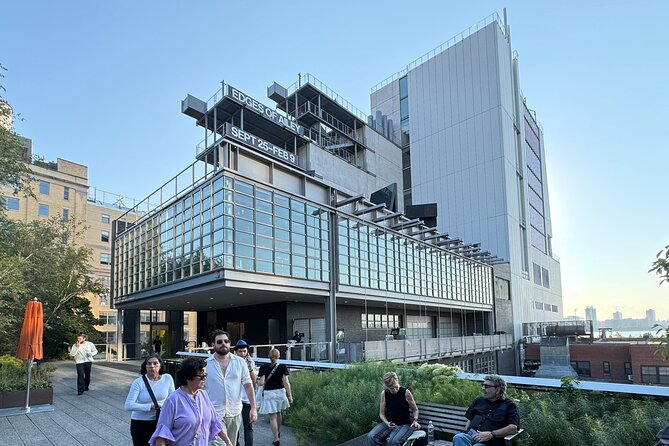
The route begins at the Whitney Museum of American Art at 99 Gansevoort Street and ends at 20 Hudson Yards. That point-to-point design is useful. You do not have to circle back to the starting place, and you finish in an area with plenty to see after the tour.
More Walking Tours in New York City
- Tribeca Architecture And History Walking Tour
★ 5.0 · 141 reviews - TriBeCa Architecture & History Walking Tour
★ 5.0 · 37 reviews - Midtown Manhattan Art and Architecture Walking Tour
★ 5.0 · 32 reviews
Starting beside the Whitney Museum
The Whitney is a fitting meeting point because it places you at the southern end of the High Line and right in the middle of Chelsea’s art district. The tour does not include museum admission, so think of the building as a landmark and starting point rather than part of the paid activity.
From here, the guide sets up the larger story. Chelsea is known for art galleries, former industrial uses, new apartment towers, and ambitious public projects. The value of beginning at the Whitney is that you can see these layers close together instead of treating the High Line as an isolated park.
The scheduled start is 2:00 p.m. That timing gives you a useful afternoon option. You could visit the Whitney before the walk, though you will need to allow enough time to reach the meeting point. You could also plan the museum for afterward, but remember that the tour takes about two hours and ends in Hudson Yards rather than returning to the Whitney.
Walking the High Line with the city below
The High Line receives about an hour of the tour, making it the main chapter rather than a quick pass-through. You will have time to look at the park itself, the buildings around it, and the choices that shaped its current form.
The guide’s explanation of the High Line’s history is one of the most useful parts of the experience. Ivan Shumkov has discussed how air rights worked in the project’s funding, a detail that helps explain why the park is connected so closely to nearby development. That subject can sound technical, but it gives you a practical way to understand the neighborhood’s rapid change.
Personal headsets are particularly helpful here. The High Line can be noisy, and you may be looking in one direction while the guide is speaking from another. Instead of gathering tightly around the guide, you can keep walking and still follow the commentary.
The park itself is free to enter, as are the exterior viewing stops along the route. That does not make the tour redundant. You are paying for the interpretation, the route planning, and the connection between separate projects.
One thing to keep in mind is pace. This is a walking tour with several stops, not a long pause at one viewpoint. Wear comfortable shoes, and expect to remain on your feet for much of the two hours.
The Whitney, The Standard, and Chelsea’s art district
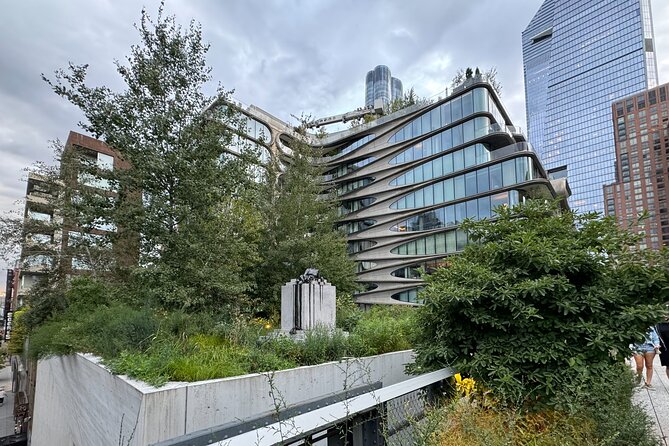
After setting out from the Whitney, the route includes views of The Standard, High Line. The hotel is one of the buildings that helped make the High Line a desirable address, and seeing it in context gives you a better sense of how the park affected nearby construction and public attention.
The tour also passes through the area’s gallery district. The supplied details do not promise gallery admissions or interior visits, so you should treat these as exterior and neighborhood observations. That is still useful if you want to understand why Chelsea attracts both art institutions and new residential and commercial buildings.
The short stops at the Whitney and The Standard are not full visits. They work as visual reference points while the guide explains the area. If you want museum time or gallery browsing, schedule that separately.
More Walking Tours in the USA
- Holdouts: A NYC Architecture Walking Tour
★ 5.0 · 31 reviews - Midtown North NYC Architecture Walking Tour
★ 5.0 · 28 reviews - Financial District NYC Architecture Walking Tour
★ 5.0 · 26 reviews - Manhattan Architecture & Urban Design Walk
★ 4.5 · 2 reviews
Little Island and 100 11th Avenue
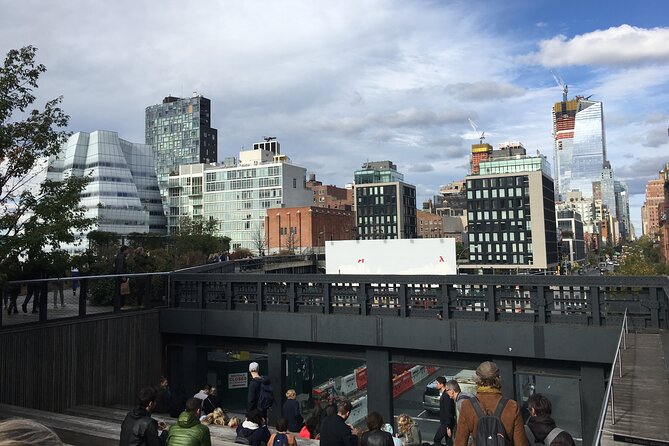
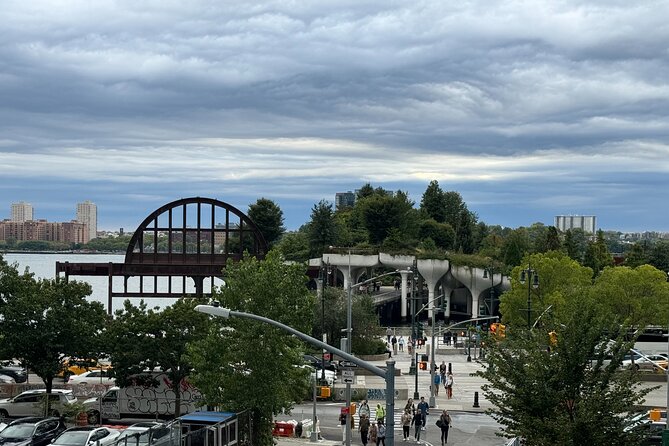
The walk continues toward Little Island Park in the Hudson River. This gives the tour another chance to compare different approaches to public space. The High Line is a long, linear park built on an elevated rail structure, while Little Island is a park set in the river. You can see how each project changes the relationship between the city and the waterfront.
The route also includes 100 11th Avenue by Jean Nouvel. This is the sort of stop that makes an architecture-focused walk worthwhile. Rather than simply pointing out a famous building, the guide can place it within the larger group of towers, parks, galleries, and streets that shape western Chelsea.
The provided schedule does not assign a long stop to either location. Expect to see and discuss them as part of the moving route. If you prefer detailed interior tours or long photo sessions, this format may feel brisk. If you want a broad introduction to several important projects, the pace works well.
520 West 28th Street and Zaha Hadid’s design
One of the clearest architectural highlights is 520 West 28th Street by Zaha Hadid Architects. The building is treated as an exterior stop, with about five minutes listed for the visit. That is enough for an introduction and a close look, but not enough for an extended architectural lecture on every detail.
The benefit is context. The building is not presented alone. It appears within a route that includes the High Line, nearby public spaces, and Hudson Yards. You can consider how a major private building addresses a public park and how new architecture changes the visual character of the street.
If this is your main reason for booking, keep your expectations measured. You are joining a group walking tour, not arranging a private architectural consultation. The guide’s broader knowledge is the attraction: Ivan Shumkov has been praised for explaining the design visions behind the buildings as well as the city history around them.
The Shed and Hudson Yards’ public face
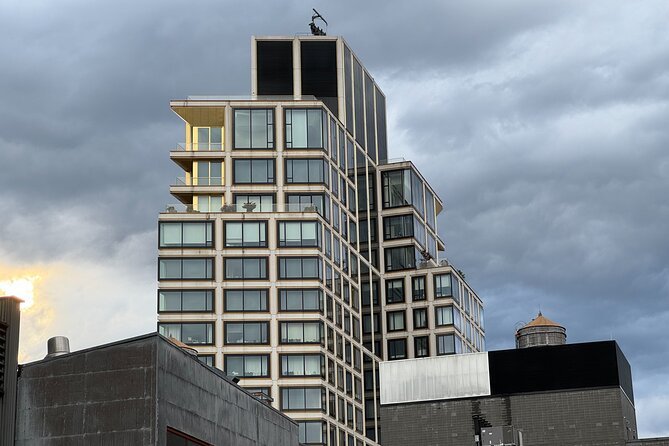
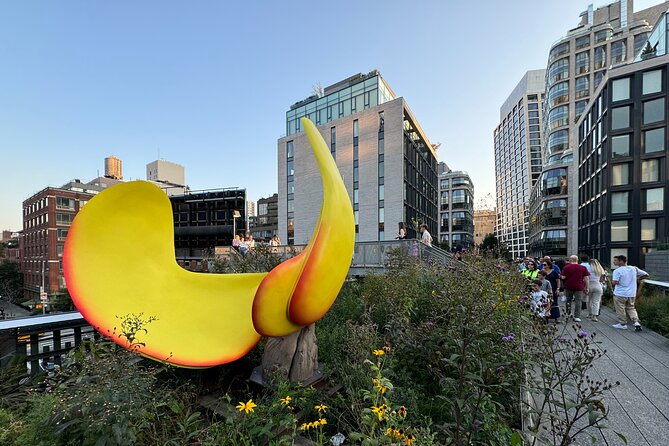
The Shed is another brief stop. It is a cultural building at Hudson Yards, and its inclusion helps the tour move from Chelsea’s older urban fabric into the newer development farther north.
The Shed matters here because the tour is interested in more than apartment towers. Public buildings, parks, performance spaces, and observation points all help shape how a new district feels. You will see The Shed as part of a collection of projects rather than as a stand-alone attraction.
The route then reaches The Vessel, one of Hudson Yards’ most recognizable structures. The stop is listed at about five minutes, so the focus is on seeing and discussing it from the outside. You should not expect a ticketed visit or an extended climb as part of this tour.
That distinction is important when you plan your day. The tour offers architectural orientation. It does not include admissions to the Whitney, The Vessel, or other attractions, and all listed stops are described as free exterior visits.
Hudson Yards, 15 Hudson Yards, and The Spiral
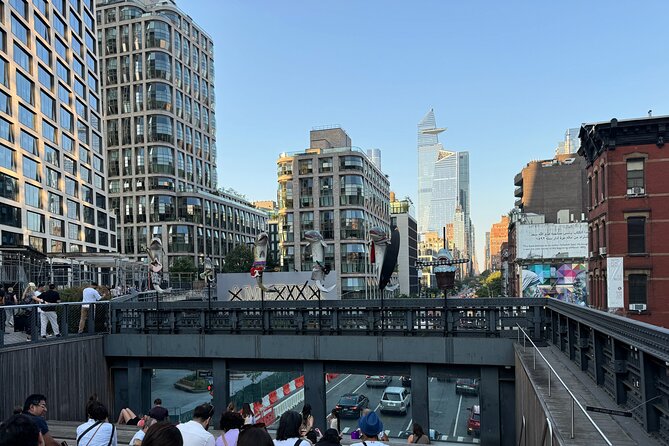
The tour spends about ten minutes in Hudson Yards itself, then includes shorter stops at 15 Hudson Yards and The Spiral. This is where the walk’s theme comes together most clearly.
Hudson Yards is a large new district built around bold construction and carefully designed public areas. The tour gives you a chance to consider how such a district fits into Manhattan’s older street pattern and how the High Line helped shape its arrival.
15 Hudson Yards is identified as a project by Diller Scofidio + Renfro. Including it alongside The Shed allows you to see more than one type of building by the same design practice. The schedule gives about five minutes, so your guide will likely focus on the main architectural idea rather than every technical feature.
The Spiral by BIG, completed in 2021, provides another useful contrast. Its inclusion shows that the route is not limited to historic structures or the first wave of Hudson Yards construction. You are looking at a district that continues to develop and add new architectural statements.
A strong feature of the tour is the way it links design with economics. The discussion of air rights and funding means the buildings are not treated as isolated works of art. You get a basic explanation of why they appeared here and how public projects and private construction relate to each other.
What the two-hour format does well
Two hours is a sensible length for this route. The High Line receives the most time, while the later buildings are handled in short, focused stops. That lets you cover a wide section of Chelsea and Hudson Yards without turning the outing into a half-day commitment.
I like this format for a first look at the area. You get enough orientation to decide where you want to return, perhaps to the Whitney, a gallery, Little Island, or Hudson Yards. You also finish near 20 Hudson Yards instead of spending time retracing your steps.
The tradeoff is depth. Five minutes at a building cannot replace a dedicated architecture tour of that one structure. The experience works best if you want connections among many projects rather than a detailed study of one.
The group limit of 15 helps keep the presentation personal. It is small enough for the guide to manage with headsets and questions, while still being less costly than booking a private tour. The headsets also solve a common city-walking problem: you can hear the explanation while standing near traffic, crowds, or other tour groups.
Price, practical details, and who gets the best value
At $49 per person, this is reasonably priced for a guided two-hour walk with a professional guide, all listed fees and taxes, and an individual headset. The High Line itself is free, so the price is not paying for entry. It is paying for the guide’s interpretation and the carefully selected sequence of architectural stops.
The value is strongest if you care about architecture, urban design, public parks, or how New York funds and reshapes public space. You will get less from it if you simply want a scenic walk with no commentary, since you can visit the High Line independently.
Most people can take part, and service animals are allowed. The tour is near public transportation, though the supplied details do not specify a particular subway entrance or station, so check the exact starting map before you set out.
Free cancellation is available if you cancel at least 24 hours before the 2:00 p.m. start time. Changes made inside that window are not accepted, and late cancellations are not refunded. Since the experience requires good weather, a weather cancellation offers either another date or a full refund. The same choice applies if the minimum number of participants is not reached.
Who should book this Chelsea architecture tour?
I would choose this walk if you want a smart introduction to western Manhattan’s recent changes and prefer explanations over a simple photo stop. It suits architecture students, design fans, curious first-time visitors, and anyone who wants to understand why the High Line affected so much more than one elevated path.
It also works well for families or mixed-age groups who need a compact activity. The short duration keeps the commitment manageable, and the headsets help everyone follow the guide without standing shoulder to shoulder.
You should think twice if you want indoor attractions, guaranteed sunshine, or long visits at each building. This is an outdoor route with several short stops, and the schedule depends on weather.
Should you book it?
Book this tour if you want the High Line explained as part of a larger city story. The strongest material is the link among rail infrastructure, air-rights funding, public parks, galleries, and new architecture. Ivan Shumkov’s ability to discuss both the city’s past and the design ideas behind its newer buildings adds substance to a route that could otherwise become a simple walk.
Skip it if you only need a quick visit to the High Line or want admission to museums and attractions. For $49, the tour makes sense when you value context, a well-planned route, and a small group more than free independent sightseeing.
FAQ
How long does the Chelsea and High Line Architecture Walking Tour last?
The tour lasts approximately two hours.
Where does the tour begin?
It begins at the Whitney Museum of American Art, 99 Gansevoort Street, New York, NY 10014.
Where does the tour end?
The tour ends at 20 Hudson Yards, New York, NY 10001.
What time does the tour start?
The scheduled start time is 2:00 p.m.
How many people can join the tour?
The group has a maximum of 15 participants.
Are headsets included?
Yes. Each participant receives a professional individual headset.
What happens if the weather is poor?
The experience requires good weather. If it is canceled because of poor weather, you will be offered another date or a full refund.
New to the itinerary around New York City
- Race to the Sky: NYC Architecture Tour With SUMMIT One Ticket★ 5.0 · 3 reviews
- Private Flatiron Food, History and Architecture Tour★ 5.0 · 8 reviews
- New York Upper West Side Art and Architecture Tour★ 5.0 · 4 reviews
- New York Soho and the Village Art and Architecture Tour★ 5.0 · 4 reviews
- New York Midtown South Art and Architecture Tour★ 5.0 · 2 reviews
- New York Upper East Side Art and Architecture Tour★ 5.0 · 3 reviews
- Chelsea Galleries and High Line; Art, Architecture and History★ 5.0 · 14 reviews
- Custom Private New York Architecture, Art and City Tour★ 5.0 · 3 reviews
New York City Architecture Tours, compared.

Around Manhattan Official NYC Architecture Cruise
Read our review →
Art Deco and Architecture Midtown Landmarks Tour
Read our review →

New York City The Official Rockefeller Center Tour
Read our review →