Review · NEW YORK CITY
Manhattan Architecture & Urban Design Walk
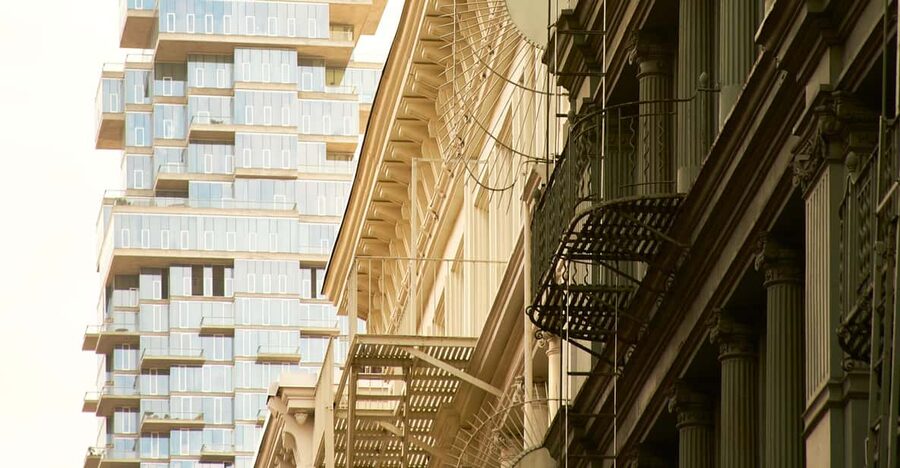
Manhattan makes more sense when you stop looking at individual buildings and start asking why they were built there, in that shape, and at that height. On this 2.5-hour architecture walk, David connects street-level details with zoning, public space, development, and the early growth of New York City.
I like the small group of no more than 10 and the fact that each route builds from one idea to the next instead of offering a random parade of landmarks. I also like the chance to see familiar neighborhoods through an urban designer’s eyes. The main drawback is that you won’t know your exact neighborhood until booking, since the walk may take place in Chelsea and the Meatpacking District, Lower East Side and SoHo, or the Financial District.
Key points at a glance
- Three possible Manhattan routes: Explore Chelsea and Meatpacking, Lower East Side and SoHo, or the Financial District.
- Urban planning made practical: Learn how zoning, maps, public spaces, and development shape New York.
- More than famous façades: Study building types and lesser-known work by leading architects.
- Led by David: Your guide has worked in architecture, design, hospitality, real estate, and urban planning.
- Useful mid-tour pause: Take a 15-minute break, with chances to stop indoors for a snack, drink, or restroom.
- Good for older teens and adults: The tour is in English, wheelchair accessible, and not suitable for children under 16.
New York explained from the sidewalk up
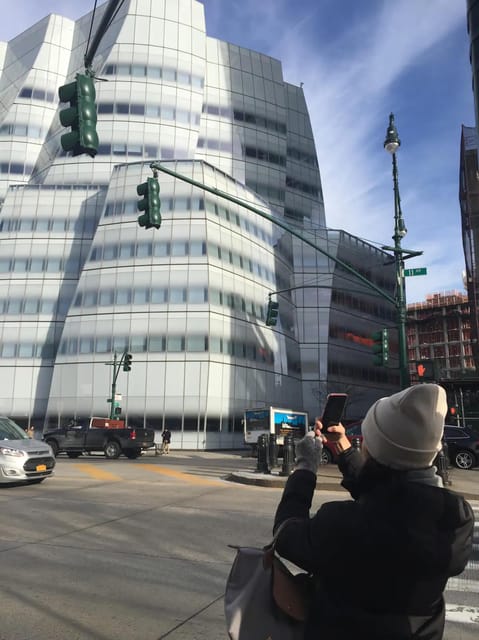
This is not the usual sightseeing walk where you collect a few famous addresses and move on. The streets themselves are the classroom. You’ll look at buildings, gaps between buildings, public spaces, street patterns, and the rules that determine what can be built.
That approach is useful in Manhattan because the city often looks chaotic at first glance. One block may hold an old warehouse, a glass tower, a cast-iron commercial building, and a public plaza. David’s job is to show you the logic behind that mix.
He has led New York tours since 2018 and studied urban design at Parsons School of Design. His professional background also includes work with New York architecture firms and public relations agencies focused on architecture, hospitality, design, and real estate development. That combination should appeal to you if you want more than dates and names. The focus is on how the city works.
The tour has earned a 4.5 rating from two reviews, with the strongest praise aimed at its varied, less touristy character and David’s handling of the walk. That is a small sample, so I would not treat the number as a final verdict. Still, the format is clear: this is best for someone curious about the built city, not someone looking for a checklist of major attractions.
More Walking Tours in New York City
- Tribeca Architecture And History Walking Tour
★ 5.0 · 141 reviews - TriBeCa Architecture & History Walking Tour
★ 5.0 · 37 reviews - Midtown Manhattan Art and Architecture Walking Tour
★ 5.0 · 32 reviews
Choosing among three very different neighborhoods
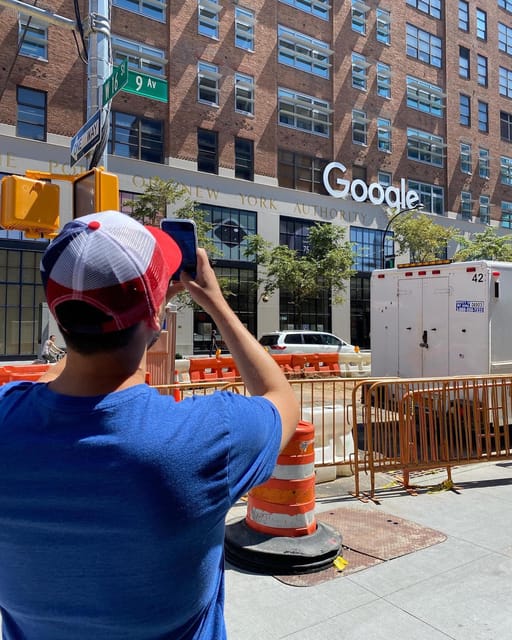
Your route will be one of three options. Each covers the same broad subjects, but the streets provide different examples.
Chelsea and the Meatpacking District offer a useful setting for discussing changing neighborhoods, older commercial structures, public space, and newer development. The area lets you consider how a place built for one purpose can change over time. You may find the contrast between historic building forms and later additions especially helpful when thinking about development.
Lower East Side and SoHo provide another strong setting for building types and neighborhood change. SoHo is known for its cast-iron architecture, while the Lower East Side brings a different mix of residential and commercial forms. The route gives you a chance to ask how buildings and streets respond to density, commerce, and changing land values.
The Financial District presents Manhattan at its most concentrated. Here, the conversation can help you understand tall buildings, crowded blocks, circulation, mapping, and the forces that make vertical development possible. The setting is especially suitable for the tour’s discussion of how a building moves from an idea to a finished structure.
You should check the meeting instructions carefully because the listed starting point applies only to the Chelsea route. If your walk is in SoHo, the Lower East Side, or the Financial District, you’ll receive a different meeting location.
Building types that most people walk past
One of the tour’s best ideas is its focus on building typologies. That term simply means groups of buildings that share a form, purpose, or way of organizing space.
You’ll look at structures that many people ignore in daily life. Instead of treating a building as a pretty front, David explains what its shape tells you about its original use, its period, and its relationship to the sidewalk or nearby public space.
This matters because Manhattan’s buildings are not isolated objects. A building’s height, width, entrance, setbacks, and ground-floor use affect how the block feels. The street, in turn, affects what kinds of buildings can succeed there.
You may find this part most rewarding if you already enjoy noticing small details. The tour does not depend only on famous towers. It trains you to read ordinary urban features, which means the experience can continue after the scheduled walk ends.
There is a practical limitation here. Since the exact route and stops are not specified in advance, you should not book this expecting a particular landmark or architect. Book it for the method and the subjects, rather than for one must-see building.
Urban planning 101 without a classroom
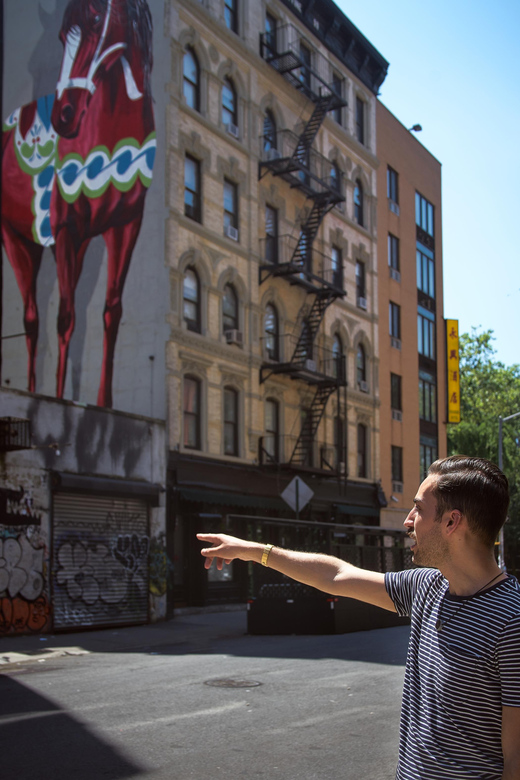
The walk’s planning section is arranged so that each stop adds another piece to the larger picture. You begin with what is visible, then connect it to the planning choices and development rules behind it.
That structure should help you follow subjects that can sound dry on paper. Instead of hearing a long lecture on planning theory, you’ll use actual streets as examples. A block, intersection, public space, or building becomes a way to understand how New York grew.
The tour also explores zoning, mapping, and development. You’ll learn about New York’s controlled chaos, including navigational tricks and the process by which a building becomes built. The wording is playful, but the subject is practical. New York can feel confusing because its street patterns, districts, building ages, and development pressures do not always line up neatly.
I like this focus because it gives you a better way to interpret the city for the rest of your trip. After the walk, a new tower or an oddly shaped block may prompt a more useful question than simply asking when it was built. You may start wondering what rule, economic pressure, or public decision allowed it to appear there.
More Walking Tours in the USA
- Holdouts: A NYC Architecture Walking Tour
★ 5.0 · 31 reviews - Midtown North NYC Architecture Walking Tour
★ 5.0 · 28 reviews - Financial District NYC Architecture Walking Tour
★ 5.0 · 26 reviews - Chelsea and the High Line NYC Architecture Walking Tour
★ 5.0 · 6 reviews
The appeal of lesser-known architecture
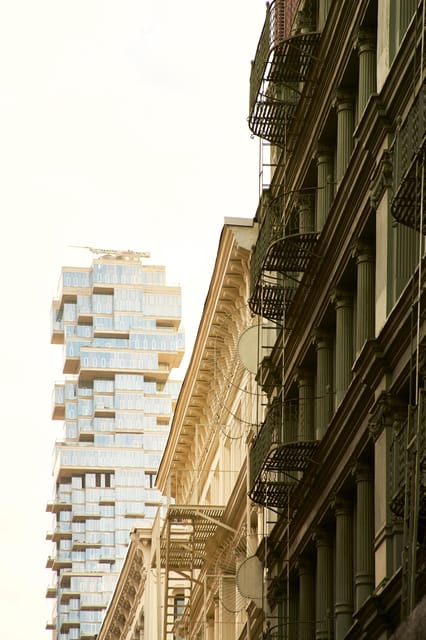
The tour also covers what it calls star-chitecture, meaning work by prominent architects that may not be as widely recognized as their best-known buildings.
That is a smart choice for Manhattan. You can see famous architecture in plenty of places, but a guide can help you notice buildings you might otherwise pass without a second thought. The subject also keeps the walk from becoming a simple list of celebrity designers.
You’ll be encouraged to consider how architectural ideas work at street level. Does a building meet the sidewalk well? How does it handle neighboring structures? Does its design improve or weaken the public space around it? Those questions are more useful than simply knowing the architect’s name.
Do not expect a museum-style architecture lecture with interior access to every building. The tour is primarily a street walk. You may walk indoors for a snack or beverage stop, but the supplied details do not promise entry into specific private or landmark buildings.
David’s background and guiding style
David brings a mix of training and professional experience that fits the subject. He holds a degree in urban design from Parsons School of Design and has worked with New York architecture firms and public relations agencies dealing with architecture, hospitality, design, and real estate development.
That background should give you a guide who can discuss both design ideas and the practical side of development. He also runs Tours By David and has been giving tours in New York since 2018. His interests extend beyond architecture, including the city’s food scene and its chocolate chip cookies, a small personal detail that hints at a guide who pays attention to everyday New York as well as major projects.
The group size is limited to 10 people. That matters on a walking tour built around questions and observation. You are less likely to be lost in a crowd, and the guide has a better chance to respond to what interests you.
Personal attention is still not the same as a private tour. If you want to set the entire route or spend a long time at one building, a private architectural guide may suit you better. This format gives you a focused small-group experience while keeping the price at $70 per person.
What the 15-minute break adds
A 2.5-hour urban walk is manageable for most people, but a planned pause makes it easier. Halfway through, you’ll have 15 minutes of free time.
You can use the break to get a snack or drink, stretch your legs, and use a restroom. There are also opportunities to walk indoors during the route. Food and drinks are not included, so bring money or plan to purchase anything you want during the stop.
I see this as more than a minor comfort feature. Architecture walks ask you to look up, compare details, listen closely, and keep moving. A short pause gives you a chance to reset before the second half.
Wear shoes suitable for city walking and dress for the weather. Bring plenty of water in summer. Bad weather can lead to cancellation or rescheduling, with an update expected the day before, so keep an eye on your messages if the forecast looks poor.
Is $70 a fair price?
At $70, this is not a bargain-basement sightseeing walk, but the price is reasonable if you want a specialist-led experience rather than a general introduction to Manhattan.
You are paying for 2.5 hours, a small group, and a guide with formal urban design training and professional experience in the architecture and development fields. The value is strongest if you enjoy asking why a city looks the way it does. The tour can also give you a useful framework for exploring New York on your own afterward.
The value is weaker if your main goal is to see a long list of famous sights or take posed photographs. The route changes by neighborhood, and the tour’s appeal comes from analysis, context, and observation. You are not buying entry tickets or a meal, so compare it with other walking tours on the basis of guide attention and subject matter.
Reserve now and pay later is available, and you can cancel up to 24 hours ahead for a full refund. Those terms make it easier to fit the walk into a changing New York schedule.
Who should book this walk?
I would choose this for adults and older teenagers who enjoy cities, architecture, design, maps, or urban history. It is also a good pick if you have already seen the main sights and want a different daytime activity.
It suits you particularly well if you like learning through real examples. You do not need an architecture degree. Curiosity is enough, and David’s route is designed to build ideas from stop to stop.
The age rule matters: children under 16 are not permitted. The tour is wheelchair accessible, but you may still want to confirm any personal mobility needs before booking because this is an outdoor walking experience across city streets.
If your interests are mainly museums, shopping, food, or skyline views, another activity may give you more of what you want. This tour asks you to pay attention to the city’s structure, not just its attractions.
Final verdict: a smart choice for curious city walkers
Book this Manhattan architecture and urban design walk if you want to understand the forces behind New York’s buildings and streets. The small group, three neighborhood options, practical planning subjects, and David’s design background give it a clear identity.
I especially like that it treats ordinary buildings and public spaces as worth studying. The strongest reason to go is not one famous stop. It is the chance to leave with a better eye for zoning, building types, development, and the relationship between a street and the structures around it.
Skip it if you need a fixed list of landmarks or prefer a fast-moving sightseeing tour. Otherwise, $70 buys a thoughtful half-day look at how Manhattan is put together, with enough time to pause, ask questions, and keep exploring on your own.
FAQ
How long is the Manhattan Architecture and Urban Design Walk?
The walk lasts 2.5 hours. Check availability for the specific starting times.
What neighborhoods can the tour visit?
The route may take place in Chelsea and the Meatpacking District, the Lower East Side and SoHo, or the Financial District. Each route covers the same main subjects.
Who leads the tour?
David leads the tour. He has been giving tours in New York since 2018, studied urban design at Parsons School of Design, and has worked with architecture firms and agencies focused on architecture, hospitality, design, and real estate development.
What subjects does the tour cover?
The walk covers building types, urban planning, zoning, mapping, development, public spaces, and work by prominent architects that may be less familiar.
How large is the group?
The group is limited to 10 participants.
Is the tour wheelchair accessible?
Yes, the activity is listed as wheelchair accessible.
Are food and drinks included?
No. You may stop indoors for a snack or beverage, but food and drinks are not included in the price.
Is the tour suitable for children?
The tour is not suitable for children under 16.
Is there a break during the walk?
Yes. There is one 15-minute free-time break halfway through the tour, along with opportunities to use a restroom.
What happens in bad weather?
You should dress for the forecast and watch for an update the day before. Inclement weather may lead to cancellation or rescheduling.
New to the itinerary around New York City
- Race to the Sky: NYC Architecture Tour With SUMMIT One Ticket★ 5.0 · 3 reviews
- Private Flatiron Food, History and Architecture Tour★ 5.0 · 8 reviews
- New York Soho and the Village Art and Architecture Tour★ 5.0 · 4 reviews
- Chelsea and the High Line NYC Architecture Walking Tour★ 5.0 · 6 reviews
- New York Upper West Side Art and Architecture Tour★ 5.0 · 4 reviews
- New York Midtown South Art and Architecture Tour★ 5.0 · 2 reviews
- New York Upper East Side Art and Architecture Tour★ 5.0 · 3 reviews
- Chelsea Galleries and High Line; Art, Architecture and History★ 5.0 · 14 reviews
New York City Architecture Tours, compared.


Around Manhattan Official NYC Architecture Cruise
Read our review →
Art Deco and Architecture Midtown Landmarks Tour
Read our review →

New York City The Official Rockefeller Center Tour
Read our review →