Review · NEW YORK CITY
Holdouts: A NYC Architecture Walking Tour
New York’s skyscrapers did not always get their way. This small-group walk shows you the old buildings, stubborn owners, odd legal arrangements, and unexpected survivors that forced Midtown’s towers to grow around them. You’ll see a brownstone trapped inside a modern skyscraper and learn why some of Manhattan’s most curious corners exist at all.
I like the tiny group size, capped at five, because it gives you room to ask questions and keep up a real conversation. I also like the way the tour connects architecture to land ownership, air rights, privately owned public spaces, and the people who shaped Midtown. The main drawback is pace: the route covers a lot of ground, and one recent participant found it rushed, with too little time for photos and questions.
Key points to know before you book
- Holdouts explain the strange shape of Midtown: You’ll see how owners who refused to sell changed the footprint and appearance of major buildings.
- Rob brings a wide-ranging city perspective: The guide has led guests through architecture, planning, housing, skyscraper construction, and lesser-known Midtown stories.
- The route runs from Third Avenue to Fifth Avenue: You begin near 875 Third Avenue and finish near East 54th Street, passing through Grand Central and Rockefeller Center.
- The Papillon ending is especially unusual: A restaurant owner negotiated space inside a future skyscraper, leaving a 19th-century brownstone preserved within the tower.
- This is a serious walking tour: Wear comfortable shoes and expect to keep moving for roughly two to three hours.
- The weather matters: The tour needs good conditions, and poor weather can lead to a rescheduled date or full refund.
Why Midtown’s holdouts make such a good walking-tour subject
A holdout is a property owner who refuses to sell while surrounding parcels are assembled for a larger project. In Midtown Manhattan, that simple decision could leave one small building sitting beside, beneath, or inside a much taller one.
That gives this tour a stronger theme than a standard skyscraper walk. You are not simply looking up at famous towers. You are asking why a building sits in an odd position, why a narrow structure survived, or why a modern tower has an unexpected gap in its design.
The guide uses these buildings to explain how New York developed. You hear about air rights, privately owned public spaces, old leases, building construction, and the economic pressure behind the skyscraper race. Those subjects can sound technical, but they become easier to grasp when you are standing in front of the actual buildings involved.
Rob is repeatedly praised for his command of New York architecture and urban planning. The strongest part of his style appears to be his willingness to follow your questions. If you want to discuss housing, construction, city planning, or the history of Midtown, this is not a tour where you are simply spoken at for two hours.
The tour is offered in English and takes a maximum of five people. That matters here. Holdouts are a detail-heavy subject, and a large group would make it harder to stop, look closely, and ask why a particular building matters.
More Walking Tours in New York City
- Tribeca Architecture And History Walking Tour
★ 5.0 · 141 reviews - TriBeCa Architecture & History Walking Tour
★ 5.0 · 37 reviews - Midtown Manhattan Art and Architecture Walking Tour
★ 5.0 · 32 reviews
Starting inside TPR Holdings on Third Avenue
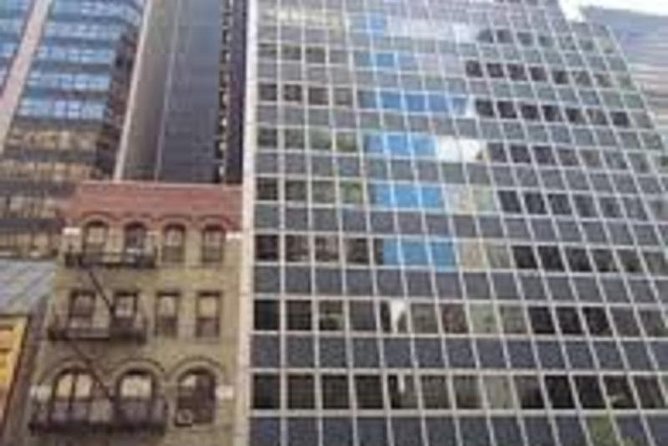
The tour begins in the lower lobby of TPR Holdings at 875 Third Avenue. The building itself is the first example of a holdout, so the opening stop immediately puts the central idea into practice.
You start with an explanation of the route, the idea of holdouts, and the broader development of Midtown. The guide may also use printed building images at the beginning to establish the setting. That preparation gives you useful context, but it is worth knowing that the opening can feel slower than the rest of the walk.
One participant specifically wanted less time spent looking at printed material and more time outside taking photos and asking questions. That is a fair point for anyone who prefers a walk that gets moving quickly. You can help set the tone by telling Rob at the start if you would rather spend more time in the street and less time on the introductory overview.
The early route also includes an intriguing ego building and another structure with an unusual engineering story. It is not a holdout, but its main pillar supports sit in the middle of the sides rather than at the corners. Details like this show that the tour is not narrowly limited to holdouts. You also get a broader look at the design decisions that allowed Midtown towers to rise.
Wollensky’s Grill and Amster Yard
Wollensky’s Grill occupies a former buggy whip factory and is another holdout. That contrast is part of the fun. A building associated with an earlier form of transport remains part of a district shaped by modern towers and high-value commercial development.
You stop only briefly here, but the location helps show how Midtown’s older uses survive among newer construction. The point is not a long interior visit. It is the story of the building and the way its presence affected the surrounding block.
Amster Yard offers a different mood. If it is open during your tour, you step inside this small oasis for a moment. It feels like a time capsule, with an older, almost suburban character tucked into central Manhattan.
Because access depends on whether it is open, you should treat this as a possible stop rather than a guarantee. Even a short visit adds variety to the route. After several streets of towers and traffic, a quieter enclosed space can make the city’s layers easier to appreciate.
Sparks Steak House and Midtown’s darker stories
Near Sparks Steak House, the guide points out the site of a notorious mob hit. The stop is brief, but it adds another kind of Midtown story to the walk. New York architecture is not only about architects and developers. Restaurants, businesses, crime, ownership, and public memory all become part of a building’s identity.
Next door is an interesting holdout. That pairing makes the stop especially effective: one address brings a well-known crime story, while the neighboring building shows how property decisions can influence the physical shape of the block.
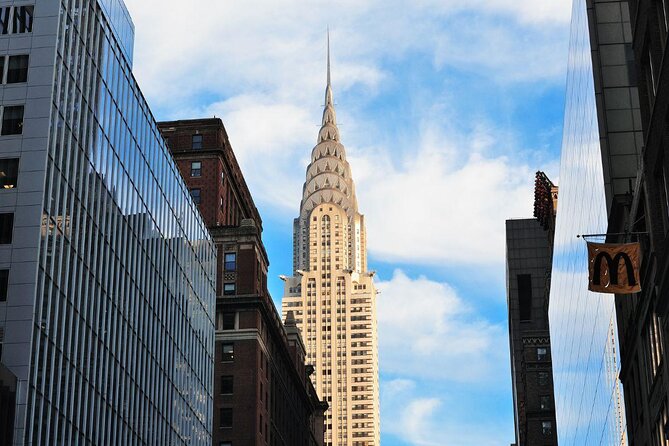
As you continue, you get views of a striking landmark and pass the Secretariat Building farther down the street. These moments help break up the technical discussion. You are still tracking holdouts, but you are also watching the skyline change from one block to the next.
This is a good point to remember the tour’s main practical challenge. The route includes many subjects in a compact area, so you may want to stay alert and ask for a pause when you see a photo you want. The guide has acknowledged that some groups want a slower pace, and the small group format makes that conversation possible.
More Walking Tours in the USA
- Midtown North NYC Architecture Walking Tour
★ 5.0 · 28 reviews - Financial District NYC Architecture Walking Tour
★ 5.0 · 26 reviews - Chelsea and the High Line NYC Architecture Walking Tour
★ 5.0 · 6 reviews - Manhattan Architecture & Urban Design Walk
★ 4.5 · 2 reviews
The final holdout on 42nd Street
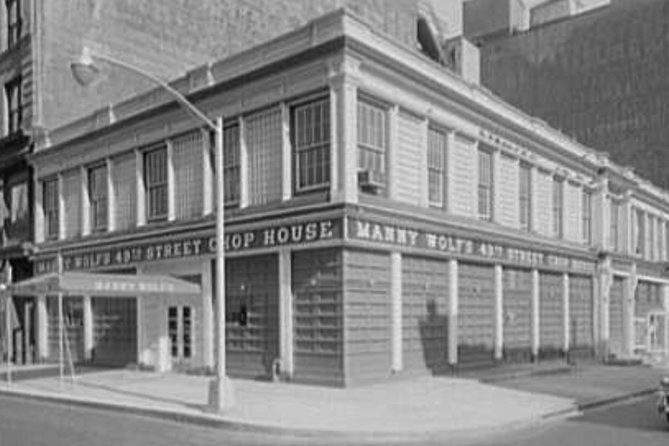
The downtown portion ends at 42nd Street, where a single holdout survived the changes around it. The stop gives you a clear example of the long-term effect one property can have on a major Manhattan corridor.
By this stage, the idea should be coming into focus. A holdout is not merely an old building that escaped demolition. It can influence the angles, setbacks, entrances, and usable floor area of the skyscraper built around it.
This is also where the tour begins shifting toward Grand Central and the western, uptown portion of the route. You are not simply walking from one isolated curiosity to another. The guide keeps connecting the buildings to the growth of Midtown as a whole.
Grand Central Terminal adds a second layer
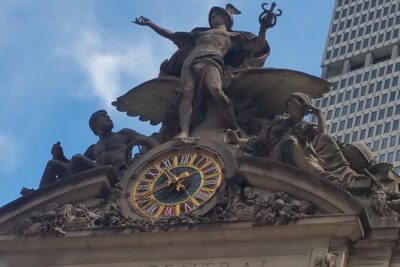
The route passes through Grand Central Terminal. Grand Central is not itself connected to a holdout in this tour, but Rob may provide a short informal tour of the terminal as you pass through.
That flexibility is useful. You get a famous New York landmark without losing the main subject of the walk. Grand Central also gives the guide a natural way to discuss how transportation shaped Midtown development.
You then pass a city-in-a-building that was still under construction when the tour description was written. Since construction changes over time, this is one place where the exact appearance and status may differ from what you expect. The important point is the idea of a large mixed-use structure functioning almost like a self-contained city.
The route also passes Brooks Brothers, where a neighboring property had its own holdout story. You see a crystal shard and iceberg-like building from the side, then pass the sole surviving building from Terminal City.
Terminal City belonged to the period before air travel, when Grand Central connected with three hotels serving people arriving by train from across the country. That detail gives the route a valuable time shift. Midtown was not always the same office district you see today. Its buildings and hotels developed around the travel habits of earlier generations.
Diamonds, Fifth Avenue, and Rockefeller Center
As you cross Fifth Avenue, the tour points out the block where $440 million in diamonds are traded each day. The entrance is a block to the north and marked by 12-foot diamond sculptures.
This is a good example of the tour’s range. You are learning about holdouts, but you are also being shown the commercial systems that make Midtown such a powerful piece of New York. The guide uses the streets around you as evidence, not just as a backdrop.
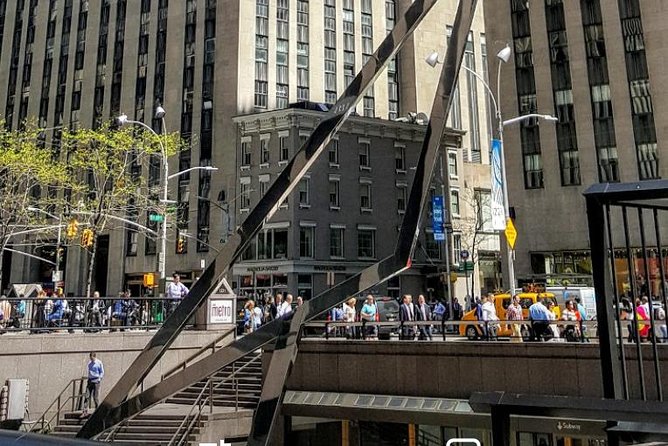
Rockefeller Center receives a longer stop of about ten minutes. Its history includes several holdouts, and the site lets the guide explore how major private developments were assembled and shaped.
Rockefeller Center is familiar to almost everyone who comes to New York, but this tour encourages you to look at it differently. Instead of focusing only on the plaza, art, or famous buildings, you consider the property lines and negotiations behind the complex.
The stop can be especially rewarding if you already know the usual Rockefeller Center sights. The tour is not trying to replace a full visit to the complex. It adds a new question: what had to remain, and how did that affect what was built around it?
The brownstone inside the Papillon building
The tour ends at Papillon Bistro & Bar near 22 East 54th Street. This is one of the most striking examples on the route, and it is more accurately described as a hold-in.
A restaurant proprietor negotiated additional square footage so the business could expand into a future skyscraper. Today, you can enter the skyscraper and stand within the walls of a 19th-century brownstone.
That is a wonderfully direct ending because the idea is no longer abstract. You are not merely looking at an old property from the sidewalk. You are inside the modern building while standing within part of the older structure.
The venue name appears as Papillon Bistro & Bar on the route and Papillion Restaurant at the meeting-point address, so check the exact meeting details before setting out. The important practical point is that the walk ends in the East 54th Street area, not back at Third Avenue.
Pace, price, and physical effort
The price is $59 per person. For a basic two-hour walk, that is not the lowest-cost way to see Midtown. The value comes from the guide’s specialized subject, the very small group, and the amount of interpretation layered onto ordinary streets and buildings.
If you only want famous sights and quick photo stops, you may find the price harder to justify. You can see Grand Central, Fifth Avenue, and Rockefeller Center independently. What you cannot easily recreate on your own is the connected explanation of holdouts, air rights, leases, privately owned public spaces, and the history of Midtown’s construction.
The tour lasts about two to three hours, and the walking pace can be brisk. Wear comfortable shoes. You need a moderate level of physical fitness, and the route includes city streets, standing, and continued movement between stops.
A maximum of five people is a real advantage. One person who took the tour alone received extra time, while larger groups of five still had room for conversation. The guide can adjust the pace to some degree, but you should not expect a leisurely stroll with long photography breaks at every stop.
I would plan this early in your New York visit if architecture or city planning interests you. The tour may change the way you look at buildings for the rest of your stay. It is also booked about ten days ahead on average, so last-minute availability should not be assumed.
The activity is near public transportation, and service animals are allowed. Confirmation arrives when you book. Free cancellation is available up to 24 hours before the start time. If poor weather cancels the tour, you can receive another date or a full refund, and the same applies if the minimum number of participants is not reached.
Who will get the most from this Midtown walk
I would choose this tour if you enjoy urban history, architecture, city planning, or the small legal and financial decisions that shape a major city. It suits people who like to look up, notice odd building lines, and ask why a block developed the way it did.
It is also a strong choice if you have already seen the standard Midtown attractions. Grand Central and Rockefeller Center feel different when you understand the property struggles and older buildings connected to them.
Families and couples can enjoy it, but younger children may not appreciate the technical parts. The tour works best when you are willing to listen, walk, and follow a story across several blocks.
I would hesitate if you need a slow photography walk, dislike standing, or want extensive interior access. Several stops last only about five minutes, and Amster Yard depends on access at the time. This is a focused outdoor architecture lesson, not a full building tour.
Should you book Holdouts?
Book it if you want to understand why Midtown looks the way it does, rather than simply collecting views of its famous towers. Rob’s strength is the breadth of the conversation: you can learn about holdouts, then move into housing, air rights, privately owned public spaces, construction, or the city’s changing travel patterns.
The best reasons to go are the five-person maximum, the unusual subject, and the brownstone preserved inside a skyscraper. The main caution is the pace. Tell the guide early if you want more time for photos or questions, and allow yourself to stay engaged between stops.
At $59, this is good value for a curious walker who wants a fresh way to read Midtown’s streets. It is less suitable for someone seeking a relaxed sightseeing loop or a tour built around long interior visits.
FAQ
How much does the Holdouts tour cost?
The tour costs $59 per person.
How long does the walking tour last?
The experience lasts approximately two to three hours.
Where does the tour begin?
It begins in the lower lobby of TPR Holdings at 875 Third Avenue, New York, NY 10022.
Where does the tour end?
It ends near 22 East 54th Street, New York, NY 10022, at Papillon Bistro & Bar, also shown as Papillion Restaurant in the meeting-point information.
What language is the tour offered in?
The tour is offered in English.
How many people can join the tour?
The maximum group size is five travelers.
What should I wear?
Comfortable shoes are recommended because the experience involves walking through Midtown for two to three hours.
Is the tour accessible by public transportation?
Yes. The experience is near public transportation.
Can I cancel for a refund?
Yes. You can cancel at least 24 hours before the start time for a full refund. Cancellations or changes made less than 24 hours before the start time are not refunded or accepted.
New to the itinerary around New York City
- Race to the Sky: NYC Architecture Tour With SUMMIT One Ticket★ 5.0 · 3 reviews
- Private Flatiron Food, History and Architecture Tour★ 5.0 · 8 reviews
- New York Soho and the Village Art and Architecture Tour★ 5.0 · 4 reviews
- Chelsea and the High Line NYC Architecture Walking Tour★ 5.0 · 6 reviews
- New York Upper West Side Art and Architecture Tour★ 5.0 · 4 reviews
- New York Midtown South Art and Architecture Tour★ 5.0 · 2 reviews
- New York Upper East Side Art and Architecture Tour★ 5.0 · 3 reviews
- Chelsea Galleries and High Line; Art, Architecture and History★ 5.0 · 14 reviews
New York City Architecture Tours, compared.


Around Manhattan Official NYC Architecture Cruise
Read our review →
Art Deco and Architecture Midtown Landmarks Tour
Read our review →

New York City The Official Rockefeller Center Tour
Read our review →