Review · NEW YORK CITY
Financial District NYC Architecture Walking Tour
Lower Manhattan packs centuries of American history and some of New York’s boldest modern buildings into a few walkable blocks. This two-hour architecture tour links Battery Park, Wall Street, Ground Zero, and the Oculus, so you get a useful overview without spending a whole day on one neighborhood.
I like the small group limit of 15 and the individual headsets, which should make it easier to hear beside busy streets. I also like the unusual mix of styles, from Federal Hall and Trinity Church to Santiago Calatrava’s Oculus and the new St. Nicholas shrine. The main drawback is pace: with many stops in two hours, you will see a lot but have little time at each place.
Key points to know before you book
- Battery Park to the Oculus: The route crosses Lower Manhattan from Castle Clinton to the World Trade Center.
- A sharp focus on architecture: You’ll compare 19th-century churches, early skyscrapers, modern banks, memorial design, and new transit buildings.
- Ground Zero is part of the walk: The route includes the 9/11 Memorial area, Liberty Park, St. Nicholas Church, and the Perelman Performing Arts Center.
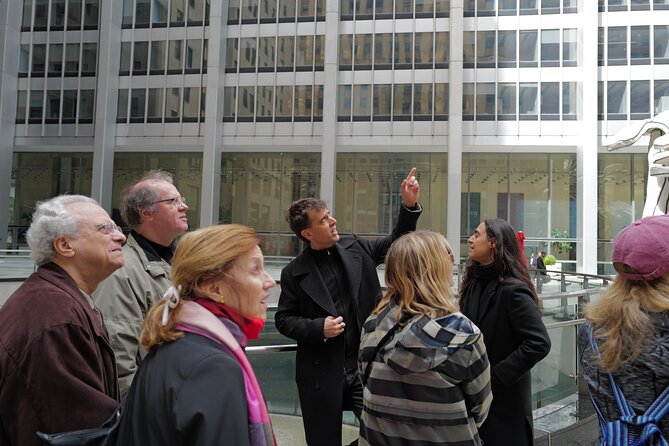
- Small group and headsets: The maximum is 15 people, and every participant receives an individual professional headset.
- A short, active outing: The tour lasts about two hours and is not recommended if walking is difficult.
- A guide-led experience: Dr. Ivan Shumkov is listed for the Battery Park meeting point, while William has also led the walk and helped one group reach a lunch reservation afterward.
Why this Lower Manhattan route works so well
The best feature here is the route itself. You begin at the southern tip of Manhattan and finish inside the Oculus at the World Trade Center. That gives the tour a clear geographic shape instead of sending you back and forth between disconnected sights.
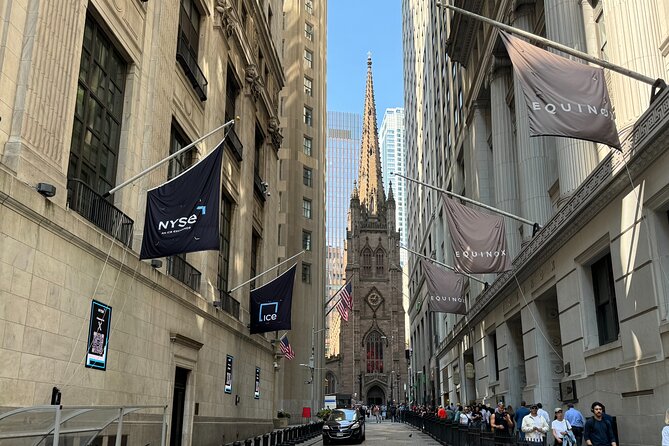
You also get a quick lesson in how New York changed over time. Trinity Church and Federal Hall point to the city’s colonial and early national past. The Woolworth Building brings you into the age of grand skyscrapers. Chase Manhattan Plaza shows the cleaner, more open language of postwar modernism. The World Trade Center district then adds memorials, transit architecture, and buildings completed or still in progress.
I like tours that help you read a city rather than simply name buildings. This one is designed for that. Your guide can explain why a bank looks like a fortified block, why a train station has a birdlike form, or how a memorial and a working office district occupy the same public space.
The tradeoff is depth. You will stop often, but most stops last only five or ten minutes. If you want to enter every church, museum, and building, this is not the right format. If you want a guided introduction before exploring on your own, it makes better sense.
More Walking Tours in New York City
- Tribeca Architecture And History Walking Tour
★ 5.0 · 141 reviews - TriBeCa Architecture & History Walking Tour
★ 5.0 · 37 reviews - Midtown Manhattan Art and Architecture Walking Tour
★ 5.0 · 32 reviews
Starting at Battery Park and Castle Clinton
The meeting point is Castle Clinton National Monument at Battery Park, near the Glass Carousel. This is a practical start because Battery Park gives you room to gather before the walk moves into denser streets.
The opening stop lasts about ten minutes and has no admission charge. From here, you are positioned near the harbor and the southern edge of Manhattan, though the tour’s main purpose is architecture rather than a boat ride or island visit.
Dr. Ivan Shumkov is listed as the guide for the start of the tour. Since the experience can have different guides, check your confirmation for the name and exact meeting details. The inclusion of headsets matters from the first stop, especially if several people are standing together near traffic and public paths.
Trinity Church and the early city
Trinity Church is the first major historical building on the route. The church dates from 1846 and receives about five minutes of attention.
That is a short visit, but it helps set up the rest of the walk. Trinity Church represents an older New York, built before the financial district became a canyon of towers. Its location near Wall Street also makes the contrast especially clear: within a few blocks, you move from a historic religious building to banks, office towers, and transit hubs.
The supplied details do not promise an extended interior visit, so plan for a brief architectural stop rather than quiet time inside. If you want to study the church at length, you will need to return after the tour.
The Federal Reserve and the story of money
The route then passes the Federal Reserve building, designed by York and Sawyer in 1924. The building is presented as the place that stores most of the gold in the world, an eye-catching detail that gives the stop real financial drama.
This is one of the more distinctive parts of the tour because the building is not simply another old facade. It connects architecture with the power of banking, currency, and government finance. Your guide can also help you notice how the building’s design communicates security and permanence.
There is no stated admission stop here, and the schedule does not give a separate time allotment. Treat it as an exterior viewing point. That keeps expectations realistic and lets the tour maintain its brisk pace.
More Walking Tours in the USA
- Holdouts: A NYC Architecture Walking Tour
★ 5.0 · 31 reviews - Midtown North NYC Architecture Walking Tour
★ 5.0 · 28 reviews - Chelsea and the High Line NYC Architecture Walking Tour
★ 5.0 · 6 reviews - Manhattan Architecture & Urban Design Walk
★ 4.5 · 2 reviews
Federal Hall and the foundations of the United States
Federal Hall, designed by Town and Davis in 1842, gets about five minutes. The building adds political history to the financial district’s banking story.
This is a useful pairing with the Federal Reserve. One building represents the early national government, while the other points to modern financial institutions. Even in a short stop, the sequence helps you see that Lower Manhattan is not just a collection of office buildings. It is a place where American government, commerce, and public life have shared the same streets for centuries.
Again, there is no admission fee listed for the stop. The experience is built around explanation and exterior architecture, not a long museum visit.
The Woolworth Building and New York’s skyscraper ambition
The Woolworth Building is one of the visual highlights of the route. Cass Gilbert designed it in 1912, and the tour pauses to show you this extraordinary early skyscraper.
The building represents the period when height itself became a public statement. You will see it in the context of later towers, which makes the change in scale and design easier to appreciate. This is the sort of stop where a guide adds value because you may otherwise look up, take a photo, and move on without noticing how much the building shaped the surrounding skyline.
The itinerary does not assign a set time to the Woolworth Building. That likely means the guide discusses it while moving through the district. If this is one of your priorities, keep your eyes up and stay close to the group.
Chase Manhattan Plaza and postwar modernism
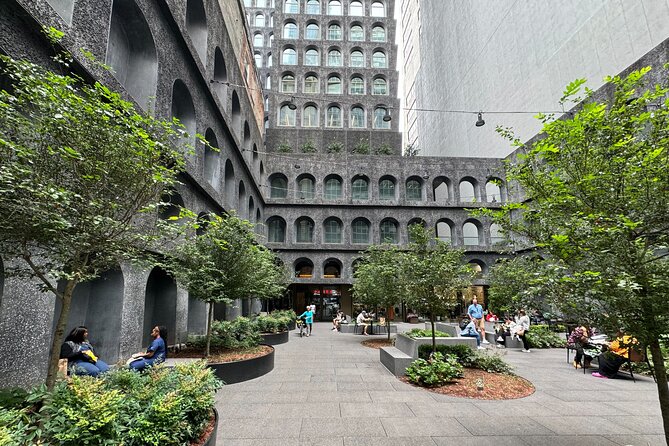
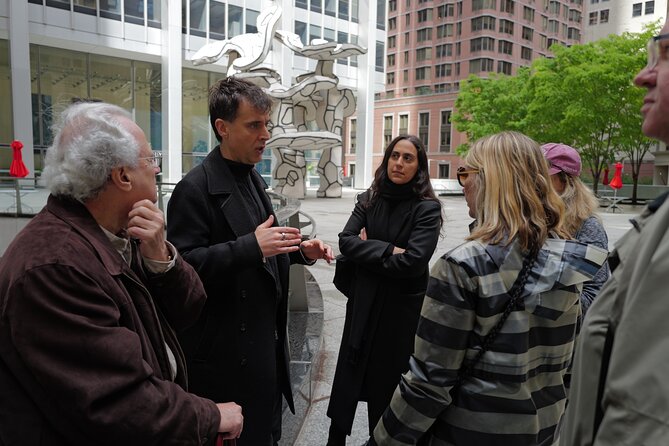
At One Chase Manhattan Plaza, you’ll see Gordon Bunshaft’s 1960 design for Chase Manhattan Bank. The stop lasts about ten minutes and includes the building’s public art and architecture.
This is a strong change of mood from Trinity Church and Federal Hall. Instead of ornament and historical references, you get the clean geometry associated with postwar corporate design. The public art is important because the building is not treated only as a private bank. Its open public space and artwork form part of the architectural story.
I especially like the inclusion of this stop because many walking tours focus only on old New York. Here, you get a chance to consider what happened after the early skyscraper era. The financial district kept changing, and Chase Manhattan Plaza shows how modern corporate buildings tried to shape public space.
Fulton Center and the movement of modern New York
Fulton Center, designed by Grimshaw and completed in 2015, receives about five minutes. This is a working transit setting, so the tour shifts from monumental banking architecture to the practical demands of moving people.
The building gives you a look at how new public infrastructure can become an architectural destination. It also prepares you for the Oculus later in the walk. Both are transit projects, but their forms and public presence differ.
Because the stop is short, do not expect a full explanation of every station connection or a long pause inside the complex. The benefit is comparison. You see one modern station before reaching the larger and more dramatic World Trade Center transit hub.
8 Spruce Street and the city’s changing skyline
The walk includes 8 Spruce Street, designed by Frank Gehry and completed in 2010. The building is often known for its unusual rippling exterior, and it provides another sharp contrast with the boxier office towers around the financial district.
This stop is a reminder that modern architecture in Lower Manhattan is not limited to glass rectangles. Gehry’s design brings movement and irregular shape into a part of the city often associated with strict financial power.
The provided schedule does not give a separate stop duration, so you will likely view and discuss it from the route rather than make a long visit. That is fine for a first look, but architecture fans may want to return later for more time and better viewing angles.
Ground Zero, the 9/11 Memorial, and the new World Trade Center
The tour then reaches the National 9/11 Memorial and Museum, credited to Snohetta, Michael Arad, and Peter Walker, with the memorial dating to 2011. The scheduled time is about ten minutes.
This is the emotional center of the walk, and it deserves a respectful pace. The memorial’s design is not simply about replacing lost buildings. It creates a public place for remembrance within an active business district. Your guide can place the design in the larger story of the World Trade Center site and its rebuilding.
Keep the time limit in mind. Ten minutes is enough for a focused look and explanation, but not enough for a full museum visit. The information provided does not promise an extended indoor museum tour, so you should plan a separate visit if the museum itself is a major goal.
A professional photo is also included as part of the experience. The exact timing and location are not specified, so ask your guide early if you want to know when it will happen. At a site with such serious meaning, a photo should feel like a personal travel record, not the main purpose of the stop.
St. Nicholas Church and the Perelman Performing Arts Center
The route continues to St. Nicholas Greek Orthodox Church and National Shrine, designed by Santiago Calatrava and completed in 2020. The visit lasts about five minutes.
This building adds another layer to the World Trade Center district. It is a religious building, a national shrine, and a contemporary architectural work in a site shaped by loss and rebuilding. Calatrava’s design gives the stop a very different character from the surrounding towers and transit structures.
You then see the Perelman Performing Arts Center, designed by REX and completed in 2023. The itinerary lists it as a viewing stop without a separate time allotment. Together, these two buildings show that the rebuilt district is not only an office center. It also includes worship, performance, remembrance, and public gathering.
Liberty Park and the World Trade Center towers
At World Trade Center’s Liberty Park, you’ll see the major buildings in the rebuilt complex. The list includes One World Trade Center, designed by David Childs of SOM and completed in 2015; Two World Trade Center, still in process; Three World Trade Center by Richard Rogers, completed in 2018; Four World Trade Center by Fumihiko Maki, completed in 2015; Five World Trade Center, still in process; and Seven World Trade Center by David Childs of SOM, completed in 2015.
This is where the tour’s changing-city theme comes together. You can compare several architects and building generations in one compact district. You also see that urban development is not frozen in time. Some projects are complete, while others remain in process.
The stop lasts about ten minutes. That is enough to orient yourself, see the group of towers, and hear the main design points. It is not enough to inspect each building in detail. I would treat this as a guided overview, then return independently if you want photographs or a closer study of one tower.
Finishing inside the Oculus
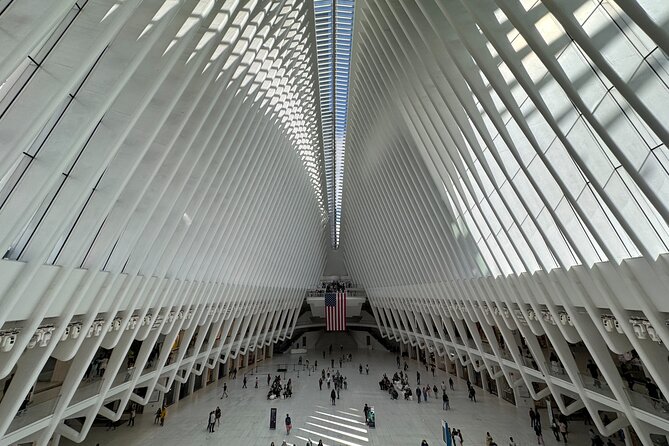
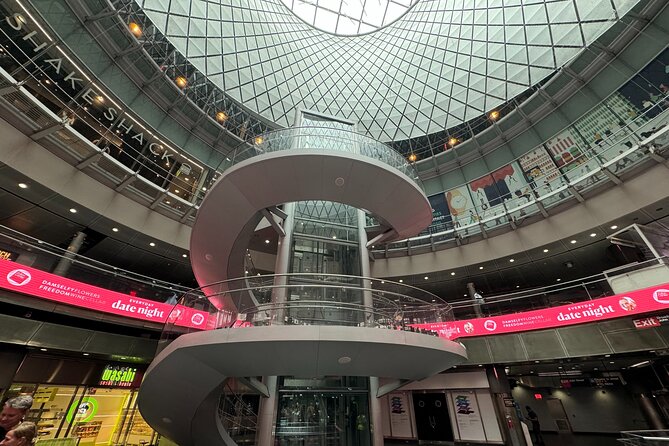
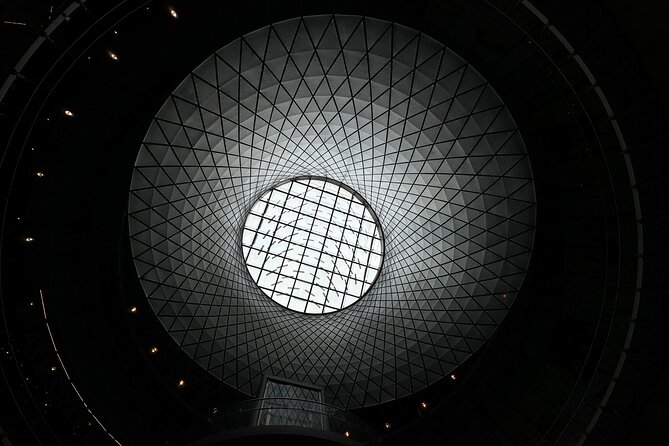
The final stop is the Oculus PATH station, designed by Santiago Calatrava and completed in 2015. The tour ends inside the building at 185 Greenwich Street, at the World Trade Center.
Ending here is smart. The Oculus is visually memorable, easy to recognize, and connected to public transportation. It also gives the tour a strong final comparison with Fulton Center. Both are modern transit buildings, but the Oculus makes a much bigger architectural statement.
The end point is not the same as the start, so plan your day around a point-to-point walk. That can be helpful if you have lunch, a museum visit, or another appointment near the World Trade Center. One guide, William, helped a group reach a lunch reservation after the tour, which suggests you can ask for basic local directions when the walk ends.
What $59 buys you
At $59 per person, this is not the cheapest way to walk through Lower Manhattan. You can see many of these buildings from public streets without paying an admission fee. The question is what you want from the money.
You are paying for a licensed guide, a planned route, individual headsets, local explanation, a small group capped at 15, and a professional photo. The headsets and group size are especially useful in a district where traffic, crowds, and large open spaces can make casual guiding hard to hear.
The value is strongest for a first visit, for anyone interested in architecture, or for people who want historical context without spending half a day in a museum. It is weaker if you already know Lower Manhattan well or prefer to set your own pace.
All fees and taxes are included, but tips are not. The tour is booked about 27 days ahead on average, so advance planning is sensible, especially if your schedule is tight.
Walking, weather, and booking details
The route lasts about two hours and requires regular walking between stops. It is not recommended for people who have problems walking. Most people can participate, and service animals are allowed. The tour is near public transportation, with Battery Park as the start and the Oculus as the finish.
Good weather is required. If poor weather cancels the experience, you can receive a different date or a full refund. The same choice applies if the minimum number of participants is not reached.
You can cancel for a full refund up to 24 hours before the start time. Changes or cancellations within 24 hours are not refunded or accepted, so do not wait until the last minute if your plans may shift.
Who should book this walk?
I would choose this tour if you want a guided introduction to Lower Manhattan’s buildings, memorial spaces, and public design in one compact outing. It suits first-time New York visitors, architecture fans, families with older children, and anyone who likes having a clear route through a complicated district.
The tour can also work well for teens. A guide named William helped one family after the walk by getting them toward a lunch reservation, and the format was engaging enough for the teenagers in that group. The headsets and short stops should help keep the pace moving.
I would skip it if you need a slow, accessible stroll, a full visit inside the 9/11 Museum, or enough time to photograph every building. You will cover a lot of ground, so wear comfortable shoes and arrive ready to keep moving.
Should you book it?
Book this walk if you want the big picture: early American institutions, Wall Street power, skyscraper history, Ground Zero, and the rebuilt World Trade Center, all tied together by a local guide.
At $59, the tour earns its price through structure, explanation, headsets, a small group, and a useful finish at the Oculus. Just keep your expectations in line with the two-hour schedule. This is a brisk architectural introduction, not a series of long interior visits. For a first look at Lower Manhattan, that focus is its greatest strength.
FAQ
Where does the Financial District architecture tour start?
The tour starts at Castle Clinton National Monument in Battery Park, near the Glass Carousel, at Liberty Island, New York, NY 10004.
Where does the tour end?
The tour ends inside the Oculus World Trade Center PATH station at 185 Greenwich Street, New York, NY 10006.
How long does the tour last?
The walking tour lasts approximately two hours.
How many people can join the tour?
The group is limited to a maximum of 15 people.
Are headsets included?
Yes. Each participant receives a professional individual headset, and all fees and taxes are included in the price.
Can I cancel for a refund?
Yes. You can cancel at least 24 hours before the start time for a full refund. Cancellations or changes made within 24 hours are not refunded or accepted.
New to the itinerary around New York City
- Race to the Sky: NYC Architecture Tour With SUMMIT One Ticket★ 5.0 · 3 reviews
- Private Flatiron Food, History and Architecture Tour★ 5.0 · 8 reviews
- New York Soho and the Village Art and Architecture Tour★ 5.0 · 4 reviews
- Chelsea and the High Line NYC Architecture Walking Tour★ 5.0 · 6 reviews
- New York Upper West Side Art and Architecture Tour★ 5.0 · 4 reviews
- New York Upper East Side Art and Architecture Tour★ 5.0 · 3 reviews
- New York Midtown South Art and Architecture Tour★ 5.0 · 2 reviews
- Chelsea Galleries and High Line; Art, Architecture and History★ 5.0 · 14 reviews
New York City Architecture Tours, compared.

Around Manhattan Official NYC Architecture Cruise
Read our review →
Art Deco and Architecture Midtown Landmarks Tour
Read our review →
New York City The Official Rockefeller Center Tour
Read our review →