Review · USA
Private Philadelphia French/English Historical and Architectural Walking Tour
Philadelphia’s story comes into focus when you connect the Liberty Bell and Independence Hall with the quieter streets around them. This private walk with Patrick moves beyond the standard patriotic checklist, using architecture, alleys, and city planning to explain how Philadelphia grew from a colonial capital into a modern city.
I like the private format, which lets you ask questions and shape the route around history, architecture, art, or local interests. I also like Patrick’s focus on lesser-known pedestrian alleys, historic homes, murals, and buildings such as the PSFS and Wanamaker’s. The main consideration is timing: the advertised duration is 2 to 4 hours, while the full collection of listed stops would take much longer.
Key points at a glance
- Patrick brings an architect’s eye: Expect more than dates and famous names, with attention to façades, street plans, alleys, public art, and the way Philadelphia changed over time.
- The route is genuinely private: Your group alone participates, with space for questions and changes in emphasis.
- You can connect six very different parts of the city: Independence National Historical Park, Society Hill, Washington Square, Center City, Reading Terminal Market, and Macy’s Philadelphia.
- The tour is strongest for repeat visitors and curious locals: Patrick’s approach goes beyond the Liberty Bell and Benjamin Franklin.
- The price works best for a small group: At $450 for up to eight people, the per-person cost drops sharply when shared by family or friends.
- Plan for a real walk: A moderate level of physical fitness is recommended, and snacks, meals, and gratuity are extra.
Philadelphia explained through streets, buildings, and stories
This is not simply a march from one famous site to another. The appeal is the connection between places. Independence Hall gives you the political story, Society Hill shows the residential city that grew around it, and Center City reveals Philadelphia’s leap into the age of department stores, train stations, office towers, and grand civic buildings.
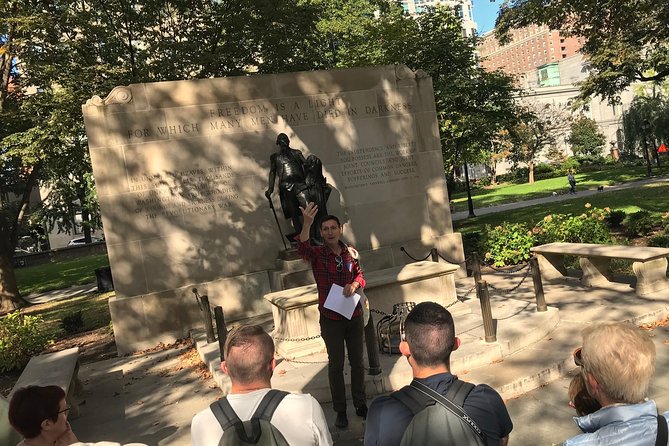
Patrick’s background in art and architecture shapes the experience. He is especially good for visitors who want to understand why a street looks the way it does, how a building fits into its surroundings, or what survives behind a polished historic façade. His stories also reach past the usual Liberty Bell and Benjamin Franklin material.
The tour is offered in English, and Patrick also works in French according to the available tour information and guest comments. If French-language guiding is important to you, confirm that preference when booking because the formal listing identifies English as the offered language.
More Private Architecture Tours in the USA
- Best of Chicago: Architecture & Highlights City Private Tour
★ 5.0 · 94 reviews - Private Santa Barbara History and Architecture Walking Tour
★ 5.0 · 56 reviews - Chicago in a Day: Food and Architecture Private Walking Tour
★ 5.0 · 53 reviews
Starting among Philadelphia’s founding landmarks
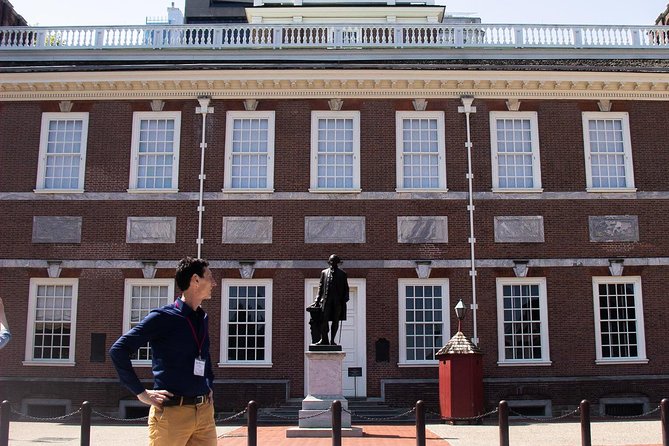
The walk begins at 525 Market Street, close to Independence National Historical Park. Hotel or rental pickup may be arranged when your lodging sits conveniently near the route. Otherwise, you and the guide agree on a clear meeting point.
The first portion can include the Liberty Bell and Independence Hall, the two places most visitors associate with Philadelphia. Admission to the walking experience is listed as free, but you should not read that as a promise of reserved entry or special access inside every building. The tour is primarily an outdoor walking experience, and the exact focus depends on the theme and length you choose.
The area offers plenty of material for a strong introduction. You can discuss the colonial street plan, the political meetings held here, and the way the national story has shaped the modern city. Depending on the route, Patrick may also cover the former site of George Washington’s house, Washington Square, Carpenters’ Hall, and the First and Second Banks of the United States.
That flexibility matters. A first-time visitor may want the major landmarks explained clearly. Someone who already knows the Liberty Bell may prefer the banks, surviving colonial streets, or the small details that are easy to miss while moving between headline sights.
The listed timing for Independence National Historical Park is about two hours. That is sensible if you want a proper explanation rather than a quick photograph. Still, this is one reason you should discuss priorities before setting out. A full historical treatment here can leave less time for Society Hill, Center City, or the market.
Society Hill and the quiet side of Old Philadelphia
Society Hill is one of the most rewarding parts of the route for anyone interested in domestic architecture. Its streets are lined with colonial and Federal-era houses, many of them arranged along attractive walks that feel far removed from the traffic of nearby Market Street.
Here, Philadelphia becomes a residential city rather than a collection of national monuments. You can look at the proportions of row houses, doorways, brickwork, shutters, and small changes in scale from one block to the next. Patrick’s strength is helping you read those details instead of treating the neighborhood as a backdrop for photographs.
The tour information allows about an hour for this area. That gives you enough time to slow down, ask questions, and notice the contrast between restored historic homes and the larger city around them. It also gives the guide room to show quieter passages and pedestrian alleys, a feature singled out as one of the most enjoyable parts of the experience.
Society Hill is also a good reason to choose a private walk over a large group outing. You can pause when a particular house or street catches your eye. If architecture is your priority, you can spend more time here. If you are focused on the founding era, Patrick can keep the discussion tied to the people and institutions that shaped the neighborhood.
Washington Square and Philadelphia’s changing visual language
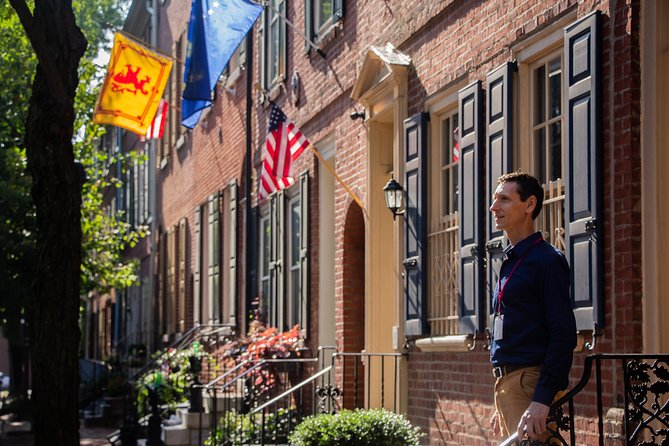
Washington Square is listed as both a possible part of the historic route and a separate stop in the broader itinerary. That tells you something useful: this is a menu of themes, not a promise that every location receives a full hour on every booking.
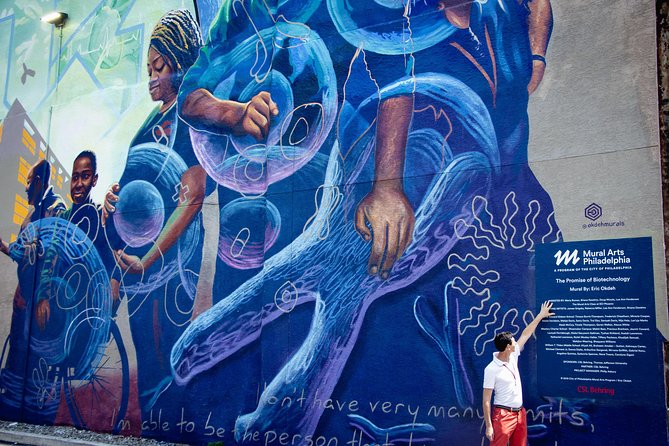
The neighborhood offers another look at Philadelphia’s mix of old and new. Its streets include historic buildings, later architectural styles, residential blocks, and examples of public art. The tour description also points to some of the city’s best murals, making this a useful section if you want to combine architecture with street art.
Patrick has also led separate historic and graffiti-focused walks, so art-minded visitors may find this part especially rewarding. You can ask for a route that gives more attention to murals and changing neighborhoods, or keep the focus on buildings and urban design.
For me, this is where the tour can feel most personal. You are not only hearing about famous events. You are looking at how a city presents itself through walls, windows, colors, memorials, and reused spaces. The tradeoff is that a mural-focused route may leave less time for the major colonial sites, so be clear about your interests at the start.
More Walking Tours in the USA
- The Official Art Deco Walking Tour by The Miami Design Preservation League
★ 5.0 · 1,580 reviews - Chicago in a Day: Food, History & Architecture Walking Tour
★ 5.0 · 1,153 reviews - Miami South Beach Art Deco Walking Tour
★ 5.0 · 1,039 reviews - Chicago’s Secret Interiors Architectural Walking Tour
★ 5.0 · 635 reviews
City Hall and the rise of modern Philadelphia
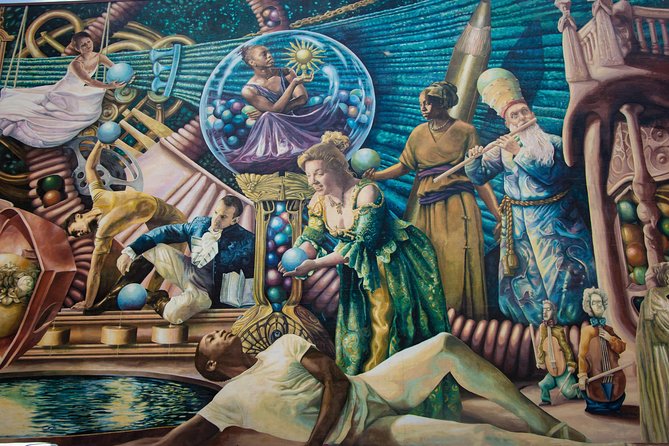
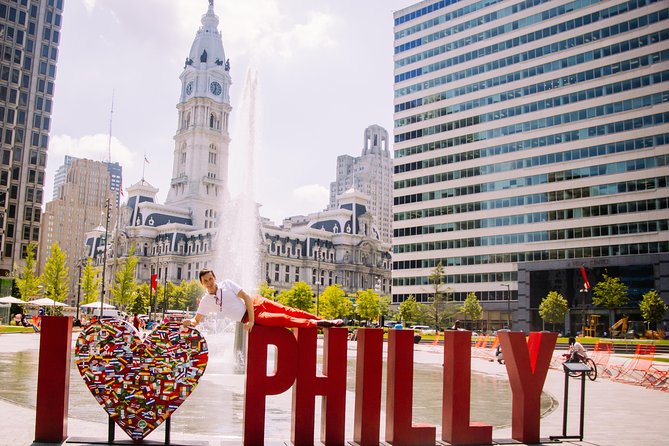
The route can continue toward City Hall Visitor Center at the geographic heart of the city. Philadelphia City Hall is a powerful change of scale after the intimate streets of Society Hill. Its size and ornament help explain the confidence of a city that was moving into the modern industrial era.
This portion is particularly good for visitors who think of Philadelphia only as a colonial destination. The city did not stop developing after the Revolution. Around City Hall, you can examine early skyscrapers and important twentieth-century buildings, including the PSFS building, Girard Trust Company, Wanamaker Department Store, and Reading Terminal station.
The value here lies in the connections. A guide can show you how finance, retail, transportation, and civic government changed the city’s center. You get a sense of how grand buildings were designed to project power and trust, while the streets around them were built to handle a growing population and a new pace of business.
The final point is listed as Philadelphia City Hall at 1400 John F. Kennedy Boulevard, though the ending point can change with the length, group size, and selected theme. That is convenient if you want to continue exploring Center City afterward, but you should confirm the exact finish when arranging the tour.
Reading Terminal Market for a taste of daily life
Reading Terminal Market has operated since 1893 and occupies the ground floor below the old train station. It is one of the city’s best places to shift from monumental architecture to everyday Philadelphia.
The market has more than 80 merchants, with food stalls, prepared dishes, and regional products. Its Amish section is a particular draw, offering products and specialties from Lancaster County. This gives the tour a useful local dimension. Instead of hearing only about leaders, banks, and grand buildings, you get a place where food traditions and commerce remain part of the city’s daily rhythm.
The market is listed as a one-hour stop, but your actual time may be shorter on a 2 to 4 hour booking. Snacks are not included, so you can purchase something at your own expense if the route and timing allow. Ask in advance if you want enough time to eat, since the market can easily become a quick photo stop or a proper food break depending on your plan.
The setting also helps explain Philadelphia’s transportation history. The market’s location above an old train station ties food distribution and urban growth to the railroad age. That is the kind of connection that makes this tour different from a basic neighborhood walk.
Wanamaker’s, now Macy’s Philadelphia
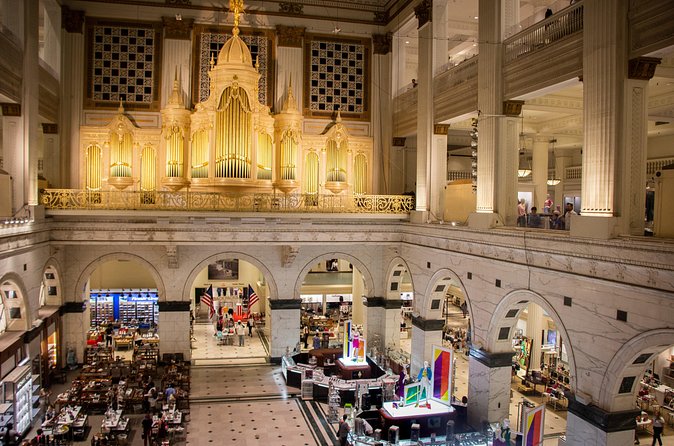
The stop at Macy’s Philadelphia offers a final look at the city’s retail and architectural ambition. The building is identified by its former name, Wanamaker, and is listed on the National Register of Historic Places.
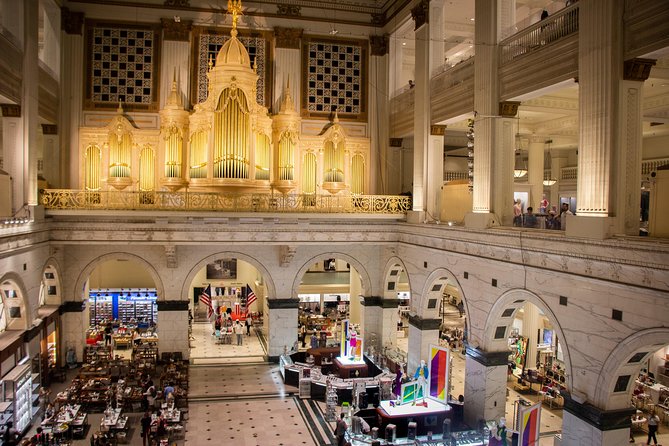
Its most famous feature is the organ, described as the largest operating organ in the world. Even if you are not especially interested in department stores, this stop shows how shopping once functioned as a major civic experience. A grand department store was not merely a place to buy clothing. It was designed to impress, gather people, and express the confidence of a growing city.
The planned visit is about 30 minutes, making it an efficient final stop if you are ending near City Hall. It also gives the route a pleasing arc: you begin with the political foundations of the United States and finish with the commercial energy of twentieth-century Philadelphia.
As with the other locations, the exact amount of time depends on your chosen tour. You should not assume that every listed building receives a detailed interior visit. The value is in the guide’s explanation of what you are seeing and why it matters.
How the private format affects the value
The price is $450 per group of up to eight people. For a full group, that works out to $56.25 per person. For four people, it is $112.50 each, while a couple would pay $225 per person.
That makes this a strong value for a family or group of friends who want a private guide and can share the cost. It is less attractive for two people comparing it with a standard group walk. The difference is that you are paying for attention, flexibility, and a route built around your interests, not just a seat in a fixed departure.
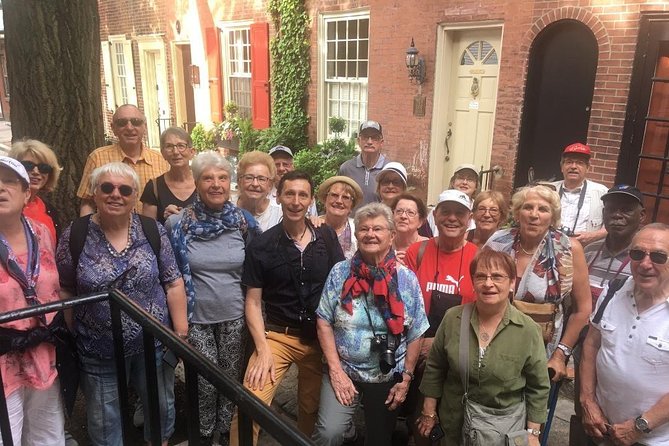
The private format is especially useful for mixed groups. One person can ask about American history, another about architecture, and someone else about murals or food. Patrick can adjust the balance instead of delivering a fixed script at one speed.
The tour also suits people who have already seen the main sights. Several comments describe repeat bookings and long-time Philadelphia residents learning new things. That is a good sign for the depth of the material, though no guide can cover the entire city in a single outing.
Timing, walking, and practical planning
The stated operating hours are 8:30 a.m. to 7 p.m., daily, and the typical duration is about 2 to 4 hours. The itinerary lists longer blocks for individual stops, so treat those descriptions as possible sections rather than a guaranteed six-hour schedule.
You should decide what matters most before the day begins. A useful request might be:
- Colonial Philadelphia and Independence Hall
- Architecture and Society Hill
- Murals, alleys, and street art
- Center City buildings and department-store history
- A route that ends at Reading Terminal Market
The tour requires a moderate level of physical fitness. You will be walking through several neighborhoods, and the experience is not designed as a vehicle sightseeing tour. Comfortable shoes are a sensible choice, and you should budget separately for snacks, market food, and a tip.
The tour is near public transportation, and service animals are allowed. Confirmation is sent within 48 hours of booking, subject to availability. Free cancellation is available if you cancel at least 24 hours before the start time. Changes or cancellations made later are not accepted for a refund.
Who will get the most from this Philadelphia walk
I would recommend this experience to you if you enjoy asking questions, studying buildings, and seeing how separate parts of a city fit together. It is also a good choice for families, private groups, French-speaking visitors who confirm language arrangements, and local residents hosting out-of-town friends.
It may be less suitable if you want a fast checklist of every major attraction, guaranteed interior access, or a food tour with tastings included. The route is shaped by conversation and theme, so its success depends partly on telling Patrick what you want to see.
The guide’s most praised qualities are his enthusiasm, humor, flexibility, and command of art, history, and architecture. He has also been described as an engaging guide for both newcomers and people who have lived in Philadelphia for decades. That range is important: you do not need to be an architecture expert, but you should be curious.
Should you book this tour?
Book it if you want Philadelphia explained rather than simply photographed. The private setting, Patrick’s architectural focus, and the ability to include colonial landmarks, quiet alleys, murals, markets, and Center City buildings give you a more complete view of the city.
For the best value, bring a group of four to eight and agree on your priorities before booking. Ask about French guiding if needed, confirm the exact route and finishing point, and remember that the $450 fee does not include food or gratuity.
If you have only a short time in Philadelphia and want the essential sights in a tightly fixed order, a standard group tour may be simpler. If you want a thoughtful, flexible walk that can surprise even people who already know the city, this is a strong choice.
FAQ
How much does the tour cost?
The tour costs $450 per group, with up to eight people included.
How long does the walking tour last?
The advertised duration is approximately 2 to 4 hours.
Is the tour private?
Yes. Only your group participates in the activity.
Is hotel pickup available?
Pickup may be arranged from your hotel or rental if it is conveniently located in relation to the route. Otherwise, a specific meeting point is arranged.
Where does the tour start?
The listed starting point is 525 Market Street, Philadelphia, Pennsylvania 19106.
Where does the tour end?
The listed ending point is Philadelphia City Hall at 1400 John F. Kennedy Boulevard. The end point can vary based on the tour length, group size, and selected tour type.
Is the tour offered in French?
The formal language information lists English. The guide, Patrick, is also described as working in French and English, so you should confirm your preferred language when booking.
Are admission tickets included?
The listed stops have no admission ticket charge for this walking experience. The tour does not specify reserved entry or interior access to every building.
Are food and drinks included?
No. Snacks are not included, and any food purchased at Reading Terminal Market is at your own expense.
What happens if I need to cancel?
You can receive a full refund if you cancel at least 24 hours before the experience start time. Cancellations or changes made less than 24 hours before the start time are not refunded.
More History Walks around the USA
- Charleston’s Best Highlights: History, Culture & Architecture
★ 5.0 · 422 reviews - Palm Springs Modernism Architecture & History Bike Tour
★ 5.0 · 359 reviews - Charleston: History and Architecture Guided Walking Tour
★ 4.8 · 349 reviews - Historic Georgetown: History, Gossip, & Architecture Walking Tour
★ 5.0 · 321 reviews
New to the itinerary around the USA
- Wilmington History and Architecture Tour★ 4.8 · 18 reviews
- Washington, DC: Georgetown Architecture Walking Tour★ 5.0 · 8 reviews
- Washington DC: Dupont Circle & Embassy Row Architecture Tour★ 5.0 · 6 reviews
- New Orleans : Garden District Architecture Walking tour★ 4.8 · 5 reviews
- Private Colonial Williamsburg Architectural Tour★ 5.0 · 5 reviews
- Tulsa: Art Deco Walking Tour of Tulsa★ 5.0 · 8 reviews
- Castle to Capitol: Museums of the National Mall Architecture Tour★ 4.5 · 9 reviews
- Monuments and Memorials Architectural Walking Tour★ 5.0 · 17 reviews
Private Architecture Tours, compared.
Sagrada Familia & Gaudi Tour Private or Small Group with Tickets
Read our review →
Barcelona 1.5h Private Old Town, Gothic & Ramblas Walking Tour
Read our review →
Treasures of Barcelona: Private Gaudi Walking Tour
Read our review →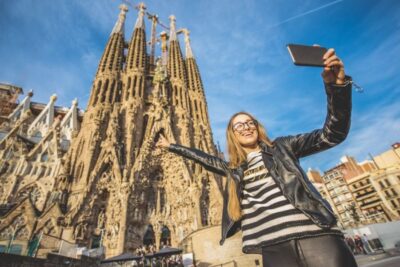
Sagrada Familia & Gaudi Guided Tour Private or Small Groups
Read our review →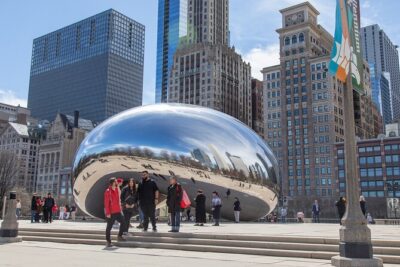
Best of Chicago: Architecture & Highlights City Private Tour
Read our review →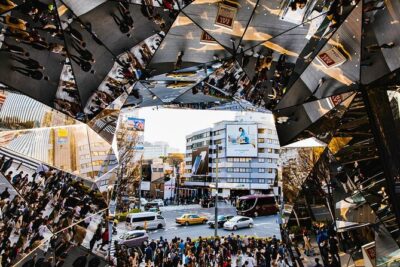
Private Harajuku Omotesando Architecture Walking Tour
Read our review →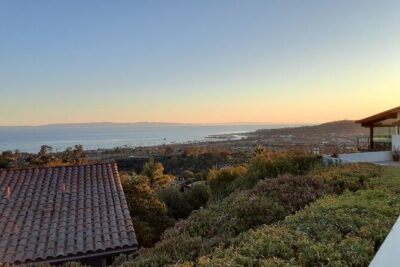
Private Santa Barbara History and Architecture Walking Tour
Read our review →