
Review · USA
Denver: History and Architecture Walking Tours
Denver’s early story is written in brick, stone, and cast iron. On this 90-minute walk, you trace how a rough tent settlement became a railroad center, how grand homes reflected new wealth, and how one endangered block became Denver’s first historic district. The small group makes it easier to ask questions and keep up with the guide.
I especially like the choice of four distinct routes and the focus on the people behind the buildings. I also like the $20 price, which is fair for a compact, guide-led introduction to central Denver. The main caution is that the experience is outdoors in all weather, and the mobility information is mixed, so you should confirm the route before booking if you have access needs.
Key points at a glance

- Four different stories: Choose LoDo, Capitol Hill, Quality Hill, or Larimer Square, depending on your interest in railroads, mansions, civic power, or preservation.
- Union Station starting point: The LoDo route begins at the flagpole in front of Union Station, an easy downtown landmark.
- Historic Denver guides: English-speaking guides explain buildings and the people who shaped the city. Lois received particular praise for placing architecture in its time period.
- Small groups: With no more than 10 participants, you get a better chance to ask questions than on a large city walk.
- A useful 90 minutes: The tour is long enough to add context without taking over your day.
- Bring outdoor basics: Wear comfortable shoes, use sunscreen, carry water, and dress for the forecast. Every tour runs rain or shine.
Four walks, four very different Denvers
The biggest decision is not the meeting time or the price. It is the neighborhood.
Historic Denver offers four routes, each built around a different slice of the city. LoDo is the best fit if you want a broad story of urban change. Capitol Hill and Quality Hill focus more closely on mansions, prominent families, and civic leaders. Larimer Square gives you a preservation story, showing how local citizens saved an old block from decay.
That choice matters because these are not interchangeable walks with a new title. Each route points your attention toward a different Denver. If you have only one free morning or afternoon, select the area that matches your interests rather than simply choosing the first available option.
The format is straightforward: you walk with a live English-speaking guide, stop at notable buildings, and hear the background that a self-guided stroll often misses. The tour does not include food or drinks, so plan any coffee, lunch, or refreshment stop before or after the 90 minutes.
More Walking Tours in the USA
- The Official Art Deco Walking Tour by The Miami Design Preservation League
★ 5.0 · 1,580 reviews - Chicago in a Day: Food, History & Architecture Walking Tour
★ 5.0 · 1,153 reviews - Miami South Beach Art Deco Walking Tour
★ 5.0 · 1,039 reviews
LoDo: from tents to rail hub to urban district
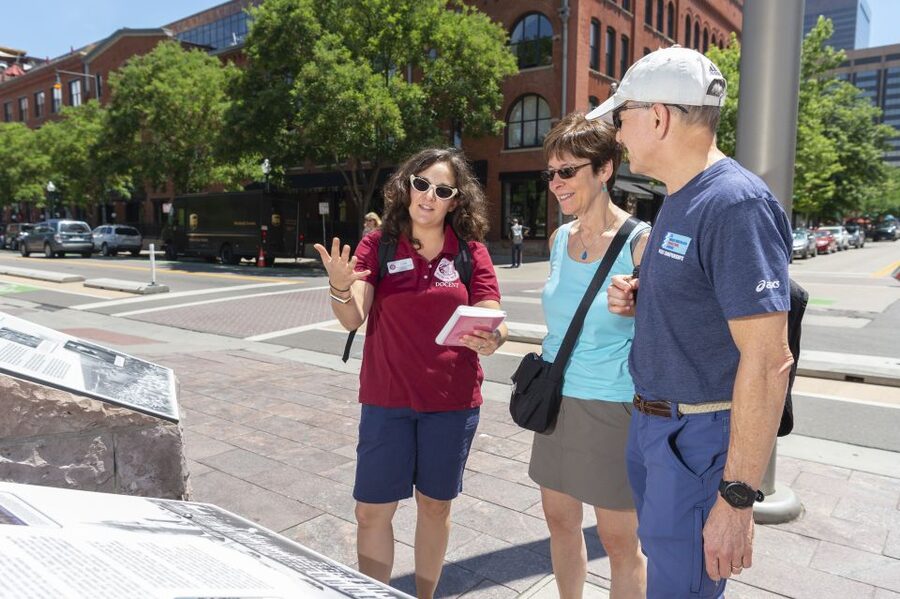
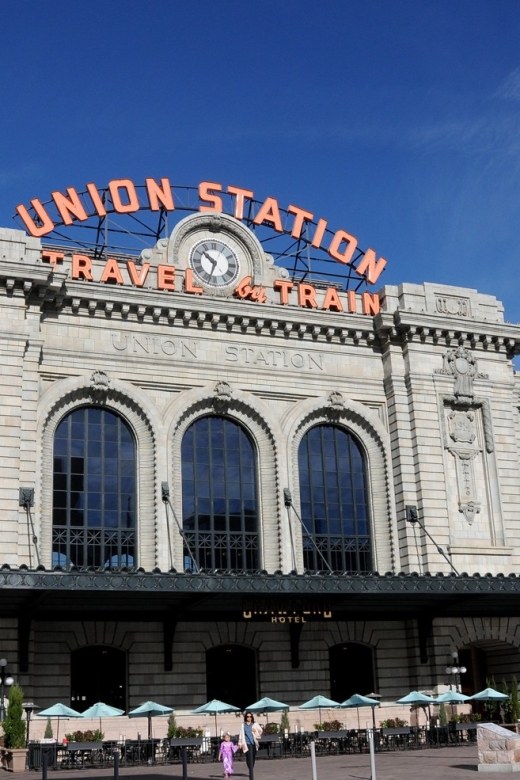
The Lower Downtown walk begins at Union Station, where you meet beside the flagpole in front of the building. Arrive 10 minutes early. Guides wear maroon polo shirts marked Historic Denver, which gives you a practical way to spot the right person in a busy downtown setting.
LoDo offers the widest social and economic arc of the four routes. You learn how Denver began as a small grouping of tents, grew into a major railroad hub, later fell into a period described as skid row, and eventually became a popular urban district. That sequence gives the neighborhood more meaning than a simple parade of attractive facades.
I like this route for first-time visitors because it connects architecture with change. Buildings are not just old objects here. They help explain how transportation, commerce, decline, and redevelopment altered the center of the city.
The tradeoff is that a route covering such a large story may give you less time with each individual building than a mansion-focused walk. If you want detailed architectural discussion of one home or one social circle, Capitol Hill or Quality Hill may suit you better.
The route begins at a clear landmark, but the walk itself is still outdoors and city-based. Wear shoes that will stay comfortable for 90 minutes, and bring water and sunscreen in warm weather.
Capitol Hill: mansions and the people inside them

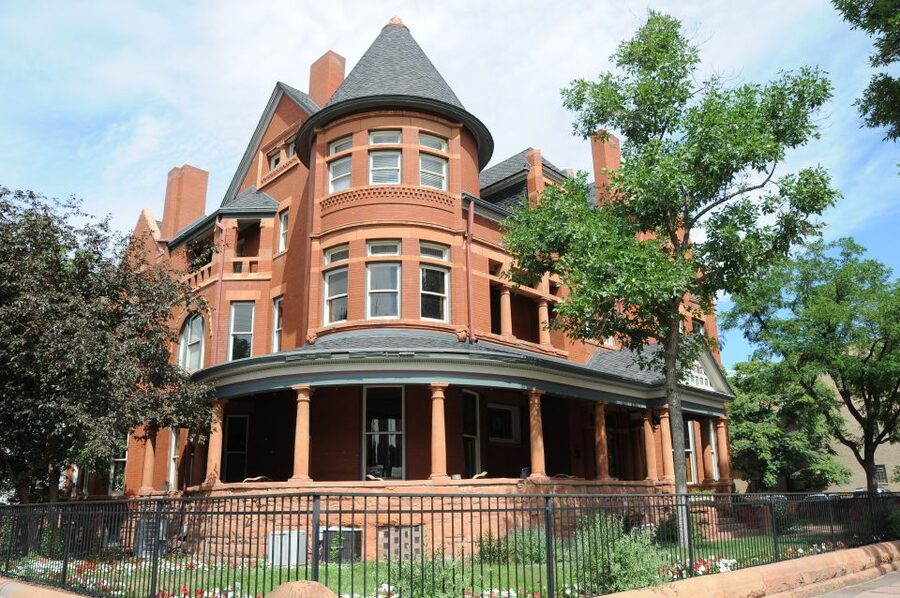
The Capitol Hill walk starts outside the Molly Brown House Museum. From there, you explore the area’s historic mansions and learn about the families who lived in these large homes at the end of the 19th century.
This is the route for you if domestic architecture and personal stories appeal more than railroad history. The focus is not only on how the houses look. It is also on the people who commissioned, occupied, and shaped them, along with the period in which they lived.
A useful guide can turn a mansion from a photo stop into a clue about Denver society. The supplied details point to that approach: one guide, Lois, was especially effective at explaining the buildings alongside the time period and events surrounding them. That kind of context is valuable because architectural details mean more when you understand the ambitions and circumstances behind them.
You should not expect an interior tour of the mansions from the information provided. This is a walking tour of notable buildings and their stories, beginning outside the Molly Brown House Museum. If seeing rooms from inside is your priority, check the separate arrangements for any building you want to visit.
Capitol Hill also makes a good choice for repeat visits to Denver. You may already know downtown’s central sights, but this route shifts attention to residential architecture and the people who helped define the city’s upper social circles.
Quality Hill: grand houses and civic power
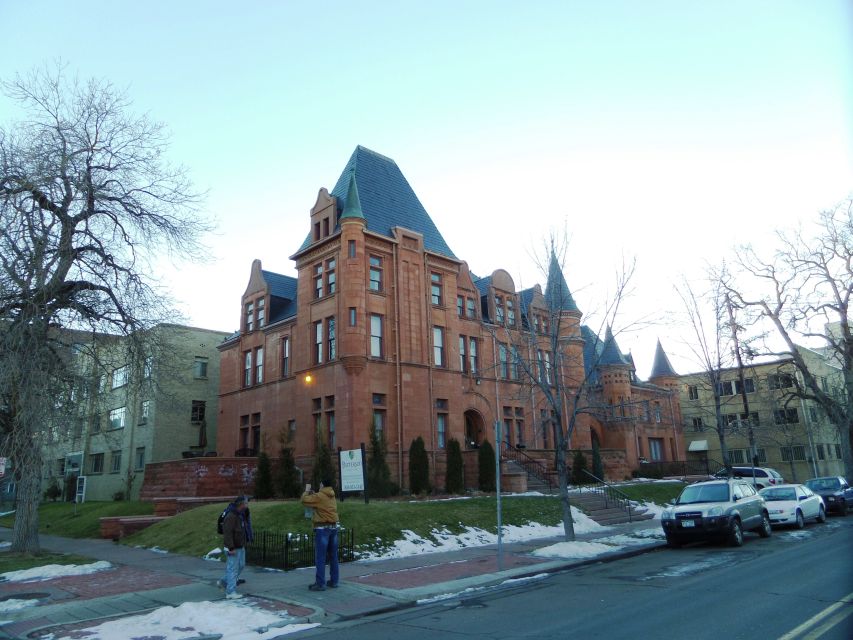
The Mansion of Quality Hill tour centers on several major residences, including the Governor’s Mansion, Malo Mansion, and Zang Mansion. The route asks you to look at the people behind these homes and consider their lasting role in Denver.
This is likely the most focused option for anyone drawn to grand houses and local leadership. The buildings provide the visual hook, while the guide supplies the names, connections, and civic background that make the route useful.
The title may suggest a narrow focus on architecture, but the stated aim is broader. You learn about the individuals behind the homes and their legacy in Denver. That means the walk is not only about materials, façades, or decorative features. It is about power, ambition, and the way private residences can reflect a city’s development.
I would choose Quality Hill if you have already seen Union Station and Larimer Square, or if you want a neighborhood walk built around Denver’s most prominent residences. The drawback is simple: if your interest is the city’s working past, migration, transport, or commercial growth, LoDo may give you more of the story you want.
As with the other routes, the tour is conducted outside and lasts 90 minutes. The supplied information does not identify every stop or promise interior access, so plan on learning from the street rather than treating this as a house museum visit.
Same streets, read through a different style:
- Chicago Architecture River Cruise
★ 5.0 · 15,756 reviews - Chicago River 90-Minute Architecture Tour
★ 4.5 · 9,629 reviews - Chicago River: 1.5-Hour Guided Architecture Cruise
★ 4.8 · 8,046 reviews - Chicago Architecture Center River Cruise aboard First Lady
★ 5.0 · 5,536 reviews
Larimer Square: preservation before it was fashionable
Larimer Square is Denver’s oldest block, and its tour is built around a clear question: how did local citizens save it from ruin and create the city’s first historic district?
That preservation story gives this walk a strong sense of purpose. You are not simply looking at old buildings that survived by accident. You learn about the effort to prevent demolition and neglect, and about the decision to treat the block as part of Denver’s shared heritage.
I like this choice for visitors who want a compact, easy-to-understand story about urban preservation. It shows that old neighborhoods need advocates. A building can be historic, but that alone does not guarantee that it will remain.
Larimer Square may also be the best route for you if you enjoy the link between architecture and public action. The central subject is not one famous family or a single mansion. It is a group of citizens and the result of their work.
The information provided does not list every building or stop along the block, so you should choose this route for its preservation theme rather than for a promised list of specific interiors or architectural styles.
What the guide adds to the buildings
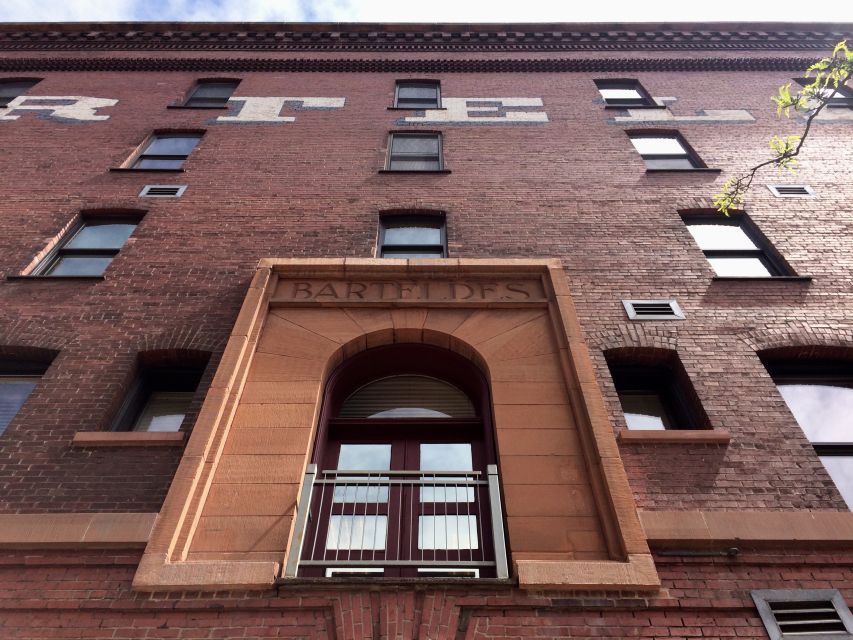
A good walking tour earns its fee by giving you connections you would probably miss alone. Here, the guide explains both buildings and the individuals who built or occupied them. That human focus is one of the strongest reasons to choose this experience.
The best feedback points to explanations, images, answers to questions, and a clear sense of how early Denver developed. One guide, Lois, was praised for adding details about the period and what was happening around the buildings. Another participant found the guide engaging and relatable.
That also tells you what to expect from the format. This is not a silent architecture stroll with a few dates. You should have opportunities to ask questions, and the small group of up to 10 makes that more practical.
The quality of a live guide can vary. One recorded experience with Jessie was criticized because the guide appeared to read heavily from a notebook, making the walk feel dull. That is a fair caution with any historical tour. The content may be strong, but delivery matters.
I would book this for the chance to talk with a local guide, not for a guaranteed theatrical performance. The strongest experience will depend on how your guide handles questions and brings the period to life.
Is $20 a fair price for 90 minutes?
At $20 per person, this is a reasonable price for a small-group city walk. You are paying for a live English-speaking guide, a planned route, and context that helps you read Denver’s buildings. The group limit of 10 adds value because you are less likely to feel anonymous or lose the guide in a crowd.
The price is especially fair if you are new to Denver and want a short orientation before exploring on your own. It also works well at the end of a business trip or during a spare afternoon, since the tour does not consume half a day.
The value is less clear if you want extensive interior access, food, drinks, or a long architectural lecture. None of those are included. You should think of this as a focused outdoor introduction, not an all-day sightseeing package.
With free cancellation up to 24 hours before the activity and the option to reserve now and pay later, you have some flexibility when arranging your schedule. Starting times vary, so check availability before you settle on a route.
Weather, walking, and access
All four tours operate in rain or shine. That is important in Denver, where a bright start does not guarantee the same conditions 90 minutes later. Bring weather-appropriate clothing, comfortable shoes, water, and sunscreen.
The activity information labels the tour wheelchair accessible but also says it is not suitable for people with mobility impairments. Those statements do not give you enough detail about surfaces, slopes, curb crossings, or the pace of each route. If you use a wheelchair or have difficulty walking, contact the provider before booking and ask about the specific neighborhood route.
The meeting point for the LoDo option is clear: the flagpole in front of Union Station. The broader route information gives separate starting locations for Capitol Hill, Quality Hill, and Larimer Square, so check the confirmed meeting point for the tour you select rather than assuming every walk begins at Union Station.
Who will get the most from this walk?

I would recommend the tour to you if you enjoy architecture but want more than a list of building dates. It suits people who like local personalities, neighborhood change, preservation, and the connection between private homes and public life.
It is also a good choice for a short visit. Ninety minutes leaves room for a museum, meal, meeting, or another downtown activity. The small group should appeal to you if you prefer asking questions instead of standing at the back of a large crowd.
Families may find the personal stories easier to follow than a purely technical architecture lecture, though the activity information does not give a minimum age or a child-specific format. Solo visitors and couples can also benefit from the compact length and central meeting points.
I would hesitate if you dislike outdoor walking, need guaranteed step-free access, or want a tour filled with interiors. The guide-led format is the main attraction, and the weather and mobility limits are part of the deal.
My pick among the four routes
For a first introduction to Denver, I would lean toward LoDo because it covers the city’s shift from tent settlement to rail center, troubled district, and urban destination. It gives you a broad framework for understanding the downtown you see afterward.
Choose Capitol Hill if mansions and family stories interest you most. Pick Quality Hill for major residences and the legacy of prominent Denver figures. Choose Larimer Square if you care about preservation and want to understand how an old block avoided ruin.
If you have more than one free day, the routes could work well together because they tell different stories. If you have only 90 minutes, make the neighborhood choice first and the time choice second.
Should you book the Historic Denver walking tour?
Book it if you want a fairly priced, short introduction to Denver’s buildings and the people connected to them. The strongest reasons are the four route choices, the 10-person limit, and the chance to ask a guide questions while standing in the places being discussed.
I would pick LoDo for a broad first look, Capitol Hill or Quality Hill for residential architecture, and Larimer Square for preservation. Go prepared for weather, wear supportive shoes, and confirm access details if mobility is a concern. If you want a simple way to give Denver’s old buildings some meaning, this is a sensible addition to your schedule.
FAQ
How much does the tour cost?
The tour costs $20 per person.
How long does the walking tour last?
Each tour lasts 90 minutes.
Which neighborhoods can I choose from?
You can choose Lower Downtown, also called LoDo, Capitol Hill, Quality Hill, or Larimer Square.
Where does the LoDo tour meet?
The LoDo tour meets at the flagpole in front of Union Station.
How early should I arrive?
You should arrive at the meeting point 10 minutes before the activity begins.
How can I identify the guide?
Guides wear maroon polo shirts with Historic Denver printed on them.
What language is the tour conducted in?
The tour is conducted in English.
How large is the group?
The group is limited to 10 participants.
Does the tour operate in bad weather?
Yes. All tours operate in rain or shine, so bring weather-appropriate clothing.
Can I cancel for a full refund?
Yes. You can cancel up to 24 hours in advance for a full refund.
More History Walks around the USA
- Charleston’s Best Highlights: History, Culture & Architecture
★ 5.0 · 422 reviews - Palm Springs Modernism Architecture & History Bike Tour
★ 5.0 · 359 reviews - Charleston: History and Architecture Guided Walking Tour
★ 4.8 · 349 reviews - Historic Georgetown: History, Gossip, & Architecture Walking Tour
★ 5.0 · 321 reviews
New to the itinerary around the USA
- Washington, DC: Georgetown Architecture Walking Tour★ 5.0 · 8 reviews
- Wilmington History and Architecture Tour★ 4.8 · 18 reviews
- Washington DC: Dupont Circle & Embassy Row Architecture Tour★ 5.0 · 6 reviews
- New Orleans : Garden District Architecture Walking tour★ 4.8 · 5 reviews
- Private Colonial Williamsburg Architectural Tour★ 5.0 · 5 reviews
- Tulsa: Art Deco Walking Tour of Tulsa★ 5.0 · 8 reviews
- Castle to Capitol: Museums of the National Mall Architecture Tour★ 4.5 · 9 reviews
- Monuments and Memorials Architectural Walking Tour★ 5.0 · 17 reviews
USA Architecture Tours, compared.


Chicago River: 1.5-Hour Guided Architecture Cruise
Read our review →
Chicago Architecture Center River Cruise aboard First Lady
Read our review →
Architecture River Cruise Skip-the-Ticket Line
Read our review →
Chicago River 45-Minute Architecture Tour from Magnificent Mile
Read our review →
45-Minute Family-Friendly Architecture River Cruise
Read our review →Other lists with this tour