
Review · COPENHAGEN
Copenhagen: Guided Architecture and Sustainability Tour
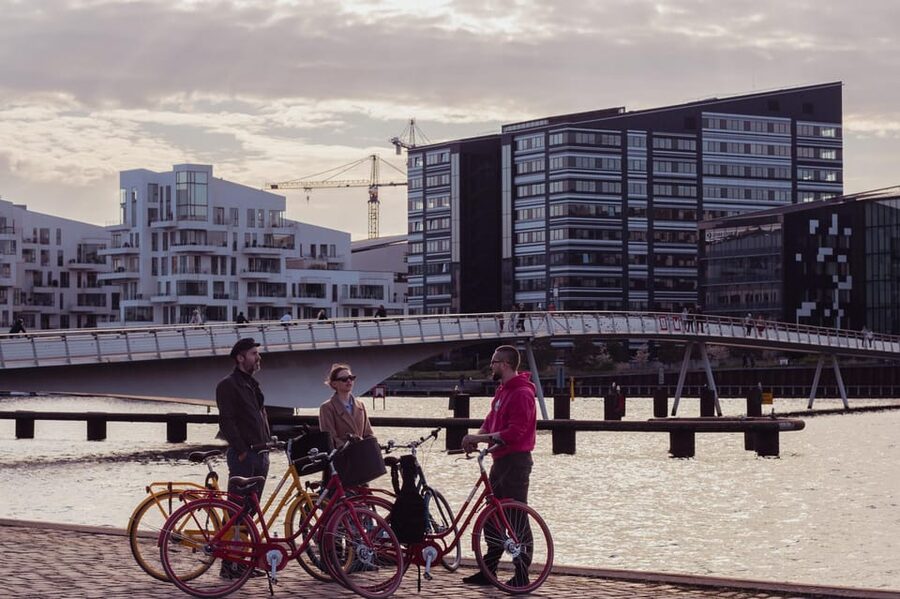
Copenhagen’s best architecture tour may be the one that gets you out of the postcard center. Over three hours and roughly 17 kilometers, you’ll pedal from Blox and the harbour to Ørestad, Amager Fælled, Kødbyen’s area, and Israels Plads. I like the mix of bold new buildings and practical city planning, and I like that cycling lets you cover ground without sitting behind a bus window.
The strongest guides, including René, Jörn, Josephine, and John, add useful local context and keep the ride personal. The main caution is simple: this is a real bike ride, not a gentle stop-and-go walking tour. One past participant also found the group harder to manage, with some riders getting separated, so stay alert at crossings and keep the guide in sight.
Key points to know before booking
- About 17km by bicycle: You cover a broad sweep of Copenhagen, including harbour paths, Ørestad, residential projects, and central public spaces.
- Modern design takes center stage: The tour is strongest on 21st-century architecture, urban planning, and sustainability.
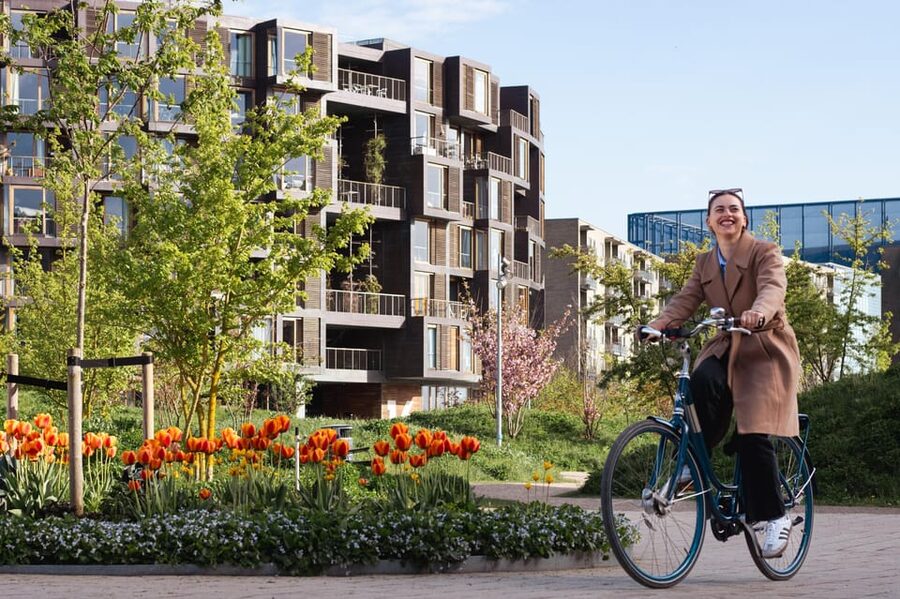
- Off the usual sightseeing route: You see places many first-time visitors would not reach on foot, including Tietgen Residence Hall, Amager Fælled, and the Gemini Residence.
- A practical setup: Bikes, helmets, rain ponchos, luggage storage, toilets, and a lounge before and after the ride are included.
- $70 buys a substantial outing: The price makes sense if you value a guide, bike rental, and access to several districts in one morning or afternoon.
- You need basic cycling confidence: The tour runs in all weather and is not suitable for anyone who cannot ride a bike.
Why this Copenhagen bike tour is different
Copenhagen is famous for its old harbor, colorful streets, and royal center. This ride asks a more useful question: how does a city make modern life work?
You’ll see buildings, bridges, bike routes, swimming areas, student housing, and public squares. The guide connects those pieces to decisions about sustainability and everyday comfort. That makes the tour more than an architecture parade. You’re learning how design affects the way people move, meet, live, and use public space.
I especially like the contrast between old and new. Copenhagen does not treat modern construction as a reason to erase its past. Former industrial zones have been repurposed, older urban areas have gained new public uses, and new districts try to include green space and efficient transport.
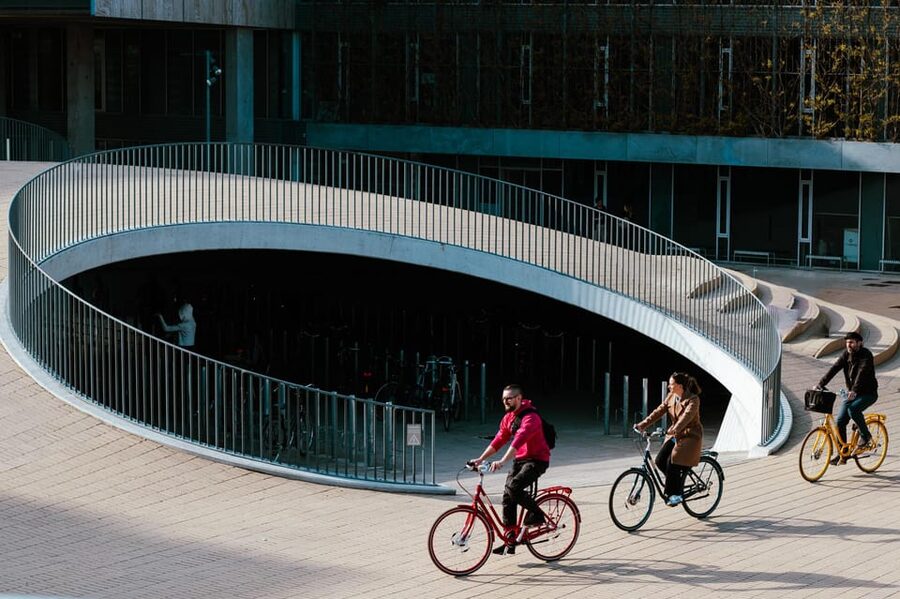
The ride also gives you a better sense of the city’s scale. A walking tour can explain Copenhagen’s bike culture, but cycling through it makes the point much more clearly. You see how paths connect districts, how bridges handle riders, and how public spaces are designed for use rather than just photographs.
More Guided Tours around the world:
- Chicago River: 1.5-Hour Guided Architecture Cruise
★ 4.8 · 8,046 reviews - Park Güell: Guided Tour with Optional Gaudí Experience Entry
★ 4.1 · 832 reviews - Barcelona: Gaudi’s Casa Vicens Guided Tour
★ 4.8 · 401 reviews
Starting at Blox and crossing Lille Langebro
The ride begins from the Tropical Bikes location at Vester Voldgade 2A, unless your booking option gives you another meeting point. The shop provides bikes in several frame sizes, including 48cm, 51cm, and 56cm, plus children’s bikes with 24-inch and 26-inch frames. Reserve children’s bikes ahead of time.
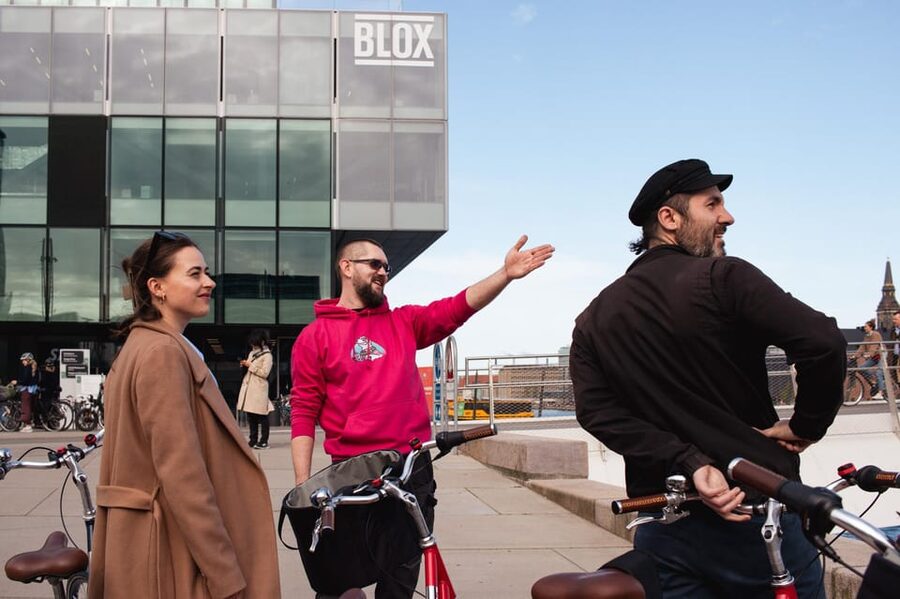
The first major stop is Blox, a prominent example of Copenhagen’s newer cultural and architectural development. Your guide spends about 10 minutes here, setting up the main theme of the ride: architecture is not only about appearance. It also shapes how people reach the water, work, gather, and pass through the city.
At Lille Langebro, you get about five minutes of guided attention. The bridge is a useful early stop because it shows how infrastructure can be both practical and carefully designed. You are not simply looking at a bridge as an object. You are considering how a crossing fits into a city built around bicycles and short connections.
The first section moves at a good pace. You get explanations without spending too long at any one site, though anyone hoping for detailed architectural lectures at every stop may find the timing brisk.
Harbour living at Islands Brygge
Havnebadet Islands Brygge is one of the tour’s most revealing stops. The harbor has not been left as a fenced-off working edge. It has been brought into daily city life, with public access and a swimming area.
Your guide spends around 10 minutes here, explaining how the waterfront has changed and why this sort of public space matters. The point is not only that you can enjoy the water. It is that a former industrial edge can become part of ordinary city life.
This is where the sustainability theme feels most practical. A city can reduce car dependence and improve public life by making central areas useful for recreation, walking, and cycling. You’ll also see why Copenhagen’s harbor is an important part of its modern identity.
The stop works well for visitors who want more than a list of famous buildings. It shows how planning decisions affect residents on a normal day. You may not get a long break here, so bring water and use the toilet before the ride begins if you prefer fewer interruptions.
Ørestad and the Tietgen Residence Hall
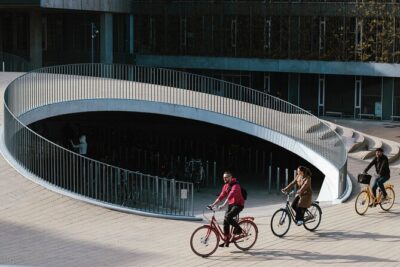
The route then heads toward Ørestad, with roughly five minutes of scenic riding along the way. This is one of Copenhagen’s clearest examples of planned modern development, and the change from older districts is easy to notice from a bicycle.
Ørestad’s buildings often make a strong visual impression, but the guide’s job is to place them in a wider discussion about housing, transport, open areas, and sustainable growth. You’ll see how a newer district attempts to combine bold design with daily living.
The Tietgen Residence Hall receives about 10 minutes of guided time. Its circular form makes it one of the tour’s most memorable buildings, but the useful question is how student housing is organized. A residence is not merely a sculptural object. It needs shared spaces, private rooms, access routes, and a workable relationship with the surrounding city.
Architecture fans will likely enjoy this part most. If you mainly want old Copenhagen streets and historic interiors, this is not the right tour for that interest. The emphasis is firmly on recent architecture and urban design.
More Architecture Tours around the world:
- Chicago Architecture River Cruise
★ 5.0 · 15,756 reviews - Chicago River 90-Minute Architecture Tour
★ 4.5 · 9,629 reviews - Barcelona: Park Güell and Gaudí House Museum Entry Ticket
★ 4.5 · 6,326 reviews - Chicago Architecture Center River Cruise aboard First Lady
★ 5.0 · 5,536 reviews
Amager Fælled and the question of green space
Amager Fælled gives the ride a change of pace. After buildings and bridges, you reach a more open setting and spend about 10 minutes discussing its role in the city.
The stop matters because sustainable planning is not only about energy-efficient buildings or attractive bike routes. It also involves deciding how much open space a growing city should keep. Copenhagen’s development choices can be complicated, and this part of the tour helps show that urban planning involves tradeoffs rather than easy answers.
You may appreciate the shift from dense construction to a more natural area. It also breaks up the architecture-heavy route and gives your eyes a rest. The guide may use this point to explain how Copenhagen has handled the tension between new housing, transport links, and protected or open areas.
The provided information does not promise a long nature ride, so think of Amager Fælled as a short, informative stop rather than a countryside excursion.
Gemini Residence and Copenhagen’s elevated bike route
The E/F Gemini Residence is another example of industrial reuse. The building’s identity comes from its former industrial function and later conversion into housing, giving you a direct look at how old structures can be adapted instead of discarded.
Your guide has about 10 minutes here. This is an important part of the tour’s story because Copenhagen’s modern character comes not only from new construction. It also comes from giving older structures a second purpose.
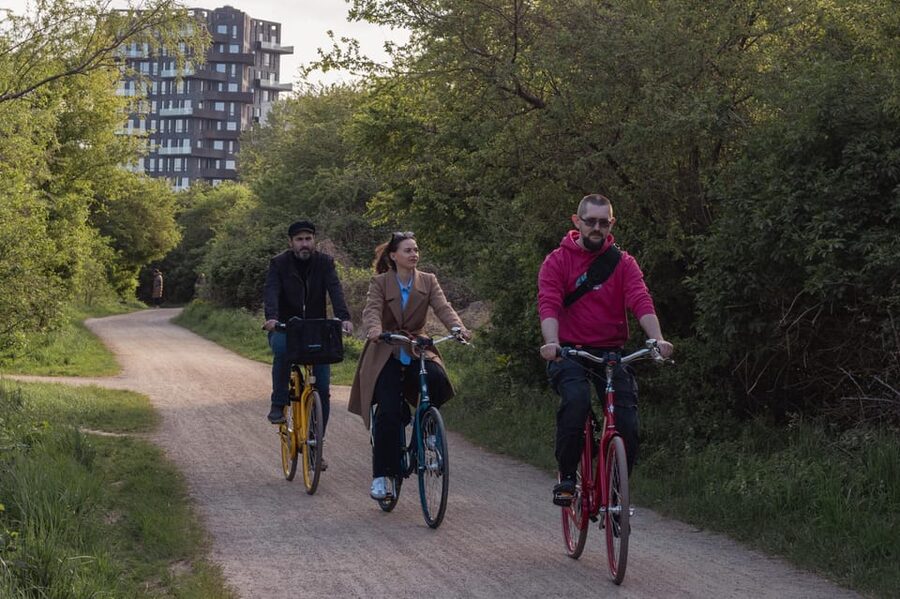
You then ride along Cykelslangen, with about five minutes of scenic cycling. The name refers to its curving bicycle route, and the experience is best understood while moving. This is not a formal lecture stop. It is a chance to feel how a dedicated cycle route can make connections easier and more enjoyable.
For me, this kind of segment is one of the tour’s best reasons to book. You are not just hearing that Copenhagen is bike-friendly. You are using infrastructure designed to make cycling part of normal city movement.
Kaktus Towers and the return toward central Copenhagen
Kaktus Towers receives another 10-minute guided stop. The towers are a striking piece of recent Copenhagen construction, and they continue the tour’s focus on how new housing can combine strong visual design with compact urban living.
Your guide will help you look past the shape of the buildings and consider their place in the surrounding district. This is a recurring strength of the experience. Instead of treating architecture as a collection of isolated photo stops, the ride asks how each project fits into transport routes, public space, and city growth.
You then move toward Enghave Plads, which offers a different kind of urban setting. This is a public square in a more established part of the city, and the 10-minute stop helps connect modern planning with neighborhood life.
The contrast is useful. Ørestad can feel planned from the ground up, while a central square such as Enghave Plads shows how public space works within an existing community. Copenhagen’s approach is not limited to brand-new districts. It also involves improving older areas.
Israels Plads and the final city-center perspective
Israels Plads is the final major stop, with about 10 minutes of guided time. The square has been transformed into a more active public space, and it gives the tour a fitting finish: design can change how people use a familiar urban area without wiping away its past.
By this point, the route has shown you waterfront redevelopment, new districts, student housing, converted industrial buildings, bike infrastructure, open space, and a central square. Israels Plads helps tie those examples together.
The tour ends at the Tropical Bikes area on Vester Voldgade 2A, though the exact return location can depend on the option booked. The full ride lasts three hours, so expect a steady outing rather than a relaxed half-day with long café breaks.
What the $70 price really includes
At $70 per person, this tour is not the cheapest way to rent a bicycle. It is priced as a guided experience, and the value depends on how much context you want.
You receive the bike, helmet, local guide, luggage storage, and access to a comfortable lounge with toilets before and after the ride. A rain poncho is also available if the weather turns wet. Those practical extras make the price easier to justify, especially if you do not want to arrange a bicycle rental and plan a route yourself.
The larger value is the distance covered and the range of districts visited. You would spend much more time finding Blox, Tietgen Residence Hall, Amager Fælled, Gemini Residence, Cykelslangen, Kaktus Towers, and Israels Plads on your own. A good guide also supplies the connections between those places, which are difficult to get from a quick photograph or online search.
Baskets and phone holders cost 49 DKK each if you want them. Upgraded equipment must be arranged in advance: an e-bike costs 249 DKK, a cargo or tandem bike costs 449 DKK, an e-cargo bike costs 649 DKK, and a child seat costs 119 DKK.
Guides, pace, and group management
The quality of this tour rests heavily on the guide. René is described as friendly, careful about cycling safety, and strong at explaining Copenhagen’s sustainability choices. Jörn brings extra detail and an easy sense of humor, while Josephine is especially well suited to architecture fans. John is also noted for giving a thoughtful account of the choices that shaped modern Copenhagen.
Guide assignments can change, so you should not book solely for one named guide. The common thread is a personal, explanatory approach rather than a memorized list of facts.
The one clear caution concerns group control. Most of the supplied feedback is highly positive, but one participant reported that some riders got lost. That is worth taking seriously on a bicycle tour. Stay close, listen carefully at turns, and do not assume the group will automatically remain together at every crossing.
The tour is offered in English or German, and a private group is available. A private booking may suit families or architecture enthusiasts who want more time for questions, though no private-group price is provided here.
Who should book this ride?
You should consider this tour if you:
- Enjoy modern architecture more than royal interiors or medieval streets.
- Want to understand how sustainability affects daily city life.
- Are comfortable cycling for roughly 17km.
- Prefer seeing several districts rather than staying in the tourist center.
- Like having a local guide explain why places were built and changed.
- Want a bike, helmet, storage, and weather backup handled in advance.
It is less suitable if you cannot ride a bike, dislike cycling in uncertain weather, or want a slow sightseeing experience with long stops. The ride begins in all weather, so wear suitable clothing and comfortable shoes. You do not need to treat this as a race, but you do need enough stamina for three hours in the saddle.
Should you book the Copenhagen architecture and sustainability tour?
Yes, if modern Copenhagen interests you and you want to see how the city works beyond its best-known streets. The route covers enough ground to make the bicycle format worthwhile, while the guide gives meaning to buildings and public spaces that could otherwise seem disconnected.
I would book it early in a Copenhagen stay, especially if you want ideas for exploring on your own afterward. The ride introduces areas you might not reach naturally, and the practical examples of bike routes, harbor access, housing, and public squares give you a sharper understanding of the city.
Skip it if your priority is historic architecture or a short, effortless tour. For everyone else, $70 is a fair price for three hours of guided cycling, equipment, and a thoughtful look at why Copenhagen is often held up as a model for greener urban life.
FAQ
How long is the Copenhagen architecture and sustainability tour?
The tour lasts three hours.
How far will I cycle?
You will cycle roughly 17 kilometers in total.
What languages are available?
The live guide is available in English or German.
What is included in the price?
The price includes a local guide, bicycle rental, helmet, rain poncho, luggage storage, and use of the lounge and toilets before and after the ride.
Are bicycles available for children?
Children’s bikes with 24-inch and 26-inch frames are available, but you need to reserve them beforehand.
Does the tour run in bad weather?
The tour starts in any weather. You should wear suitable clothing and comfortable shoes, and a rain poncho is included if needed.
Can I cancel or pay later?
You can cancel up to 24 hours in advance for a full refund. A reserve-now, pay-later option is also available.
New to the itinerary around the world
- Washington, DC: Georgetown Architecture Walking Tour★ 5.0 · 8 reviews
- Wilmington History and Architecture Tour★ 4.8 · 18 reviews
- Washington DC: Dupont Circle & Embassy Row Architecture Tour★ 5.0 · 6 reviews
- New Orleans : Garden District Architecture Walking tour★ 4.8 · 5 reviews
- Walk & Discover KL’s Architectural and Heritage Gems★ 5.0 · 7 reviews
- Unveiling Brno: History, Culture & Architectural Delights★ 5.0 · 2 reviews
- Vicenza: Palladian Architecture Private Walking Tour★ 3.3 · 3 reviews
- Private Colonial Williamsburg Architectural Tour★ 5.0 · 5 reviews
Copenhagen Architecture Tours, compared.
Copenhagen Architecture and Sustainability Tour with local Guide
Read our review →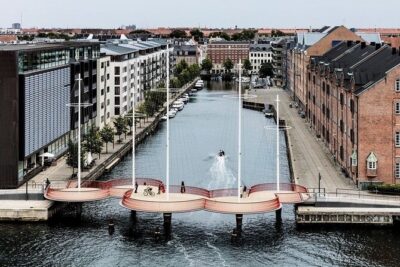
Copenhagen City, Old Town, Nyhavn, Architecture Walking Tour
Read our review →
Other lists with this tour