
Review · LOS ANGELES
Downtown Los Angeles History and Architecture Walking Tour
Downtown Los Angeles is a city of reinvention, and this walking tour shows you where that change is written into the streets. In about two and a half hours, you move from a 1917 food hall to movie palaces, early skyscrapers, Art Deco towers, former banks, and buildings given new life as shops, lofts, hotels, and restaurants.
I like the guide’s story-first approach, which links architecture to film, immigration, commerce, public space, and daily life. I also like the small-group format, capped at 15 people, since it gives you room to ask questions and follow an interesting thread instead of listening to a memorized speech.
The main thing to consider is the walking. You cover a lot of ground with few planned sitting or restroom breaks, and downtown traffic can make it hard to hear at times. This is also an architecture tour with a broad lens, not a technical lecture on building styles.
Key points to know before you book
- Start at Grand Central Market: The tour begins at one of LA’s best places to see the city’s many cultures in one room.
- Follow the birth of movie palaces: Broadway’s theater district and the Los Angeles Theatre connect Downtown LA with the early years of Hollywood.
- See famous buildings in a new way: The Bradbury Building, Eastern Columbia Lofts, Continental Building, and Hotel Per La show different eras of design and reuse.
- Expect history plus urban debate: Public space, privatization, redevelopment, and the changing role of downtown all enter the discussion.
- Plan for a long urban walk: The group is small, the route is packed, and there are limited opportunities to sit down.
- Pay $35 for context, not admission tickets: The value comes from the guide’s connections, images, stories, and access to places you may pass without noticing.
Why this Downtown LA walk feels different
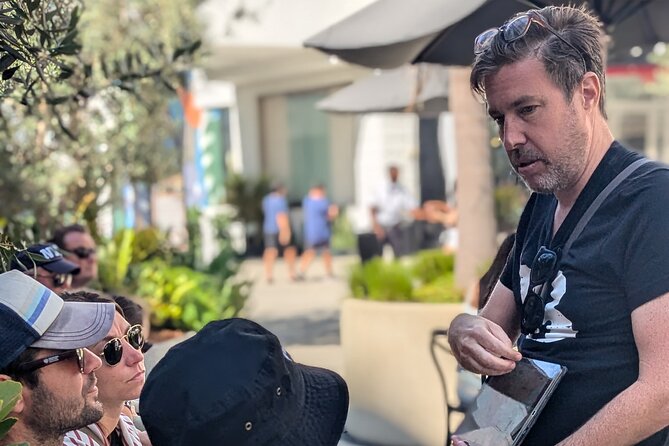
The guide, Eloi Mark, brings an unusual point of view to Los Angeles. Born in Belgium, raised in Europe, and after spending ten years in China, he has lived in Downtown LA for four years and hosts a podcast about the district.
That background matters. You are not getting only dates, architects, and building names. You are encouraged to compare Angels Flight with Lisbon’s funiculars or Hong Kong’s Peak Tram, and to think about Downtown LA alongside Antwerp, Paris, Madrid, New York, and Shanghai.
I like this international frame because it helps you see LA as a city with familiar urban problems and unexpected local answers. The discussion can move from movie theaters to public squares, from old banks to adaptive reuse, and from a food hall to immigration and entrepreneurship.
The tone is conversational. You can ask questions, add local knowledge, or spend more time on a subject that catches your interest. Historical photographs and maps shown on an iPad help connect present-day streets with earlier versions of the city.
That approach also explains the one point that may disappoint some people. If you want a strict architectural survey, with detailed discussion of structural systems, architects, floor plans, and materials, this will feel too broad. If you want to understand how buildings shaped the life of Los Angeles, the format works much better.
More Walking Tours in the USA
- The Official Art Deco Walking Tour by The Miami Design Preservation League
★ 5.0 · 1,580 reviews - Chicago in a Day: Food, History & Architecture Walking Tour
★ 5.0 · 1,153 reviews - Miami South Beach Art Deco Walking Tour
★ 5.0 · 1,039 reviews
Grand Central Market and the first taste of old Los Angeles
The meeting point is the Grand Central Market parking garage at 308 South Hill Street. The market itself is the first major stop, with about 10 minutes to take in its role as a meeting place for the city.
Founded in 1917, Grand Central Market brings together Mexican tacos, Japanese ramen, Salvadoran pupusas, Jewish pastrami, and much more. The point is not simply to name the food stalls. The market offers a quick lesson in how Los Angeles grew through migration, trade, and small business.
You do not need to buy food for the tour, and the stop is free. Still, if you arrive early, this is a useful place to grab a snack or coffee before the walking begins. Keep the timing in mind, since the official stop is brief.
From there, the tour moves through some of Downtown’s oldest and most recognizable spaces. The guide uses the streets as a classroom, showing how commercial ambition, public life, and entertainment developed side by side.
Angels Flight, Bunker Hill, and the problem of public space
Angels Flight is a small funicular with a large place in LA’s memory. Built in 1901, it once served the Bunker Hill community and helped people manage the steep climb between downtown streets and the hill above.
The comparison with Lisbon and Hong Kong makes sense. Like those city railways, Angels Flight is compact, practical, and wrapped in nostalgia. The ride is short, but it gives you a direct connection to an older form of city transport.
The route then brings you toward Pershing Square. This broad public space once played a larger role in civic life, but its changing design raises questions that apply to cities everywhere. Who gets to use public space? How much should downtown be shaped by private development? Can a square serve workers, residents, families, and visitors at the same time?
This is where the tour moves beyond sightseeing. You are asked to consider not only what a place looked like in the past, but how it works now. That may appeal especially to people interested in city planning and urban design.
The Bunker Hill steps add another layer. The area began as a wealthy residential district before becoming part of Downtown’s cultural and financial core. The steps reflect that change, and the guide connects them with the way LA climbed from a regional city to an international center.
Broadway’s movie palaces and the roots of Hollywood
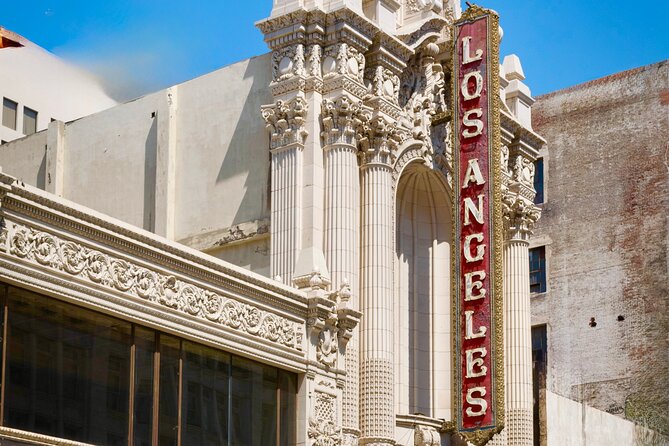
Broadway’s Historic Theater District is one of the strongest parts of the walk. The area contains the largest concentration of movie palaces in the world, and a 20-minute stop gives the guide enough time to explain why these buildings mattered.
The theaters were not just boxes with screens. Their grand entrances, ornate interiors, and large seating areas turned a film into a special outing. In an age before home streaming and multiplexes, the building itself helped sell the experience.
The district is especially useful for understanding the link between Downtown LA and Hollywood. Early movie culture did not grow in isolation on the hillsides. It depended on downtown theaters, financial investment, street traffic, and audiences from across the region.
The Million Dollar Theater was Sid Grauman’s first movie palace. Its lavish design helped set expectations for the grand cinemas that followed. The guide uses it to explain how art, business, technology, and celebrity combined to shape the film industry.
Some theater interiors may be accessible during the walk, while other buildings are best viewed from outside. The exact experience can vary, so you should not book this expecting a full tour of every movie palace.
Same streets, read through a different style:
- Chicago Architecture River Cruise
★ 5.0 · 15,756 reviews - Chicago River 90-Minute Architecture Tour
★ 4.5 · 9,629 reviews - Chicago River: 1.5-Hour Guided Architecture Cruise
★ 4.8 · 8,046 reviews - Chicago Architecture Center River Cruise aboard First Lady
★ 5.0 · 5,536 reviews
The Bradbury Building and film made real
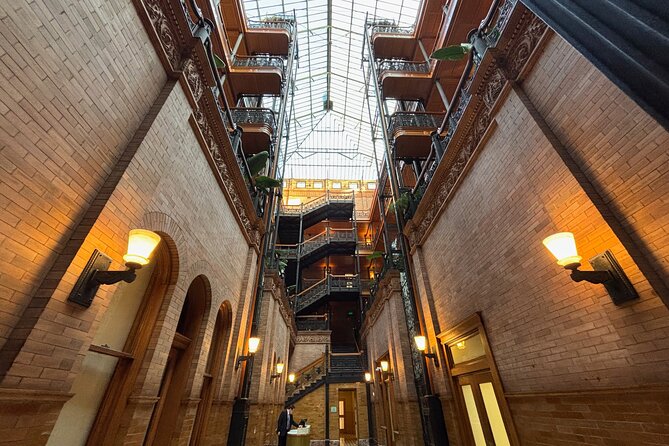
The Bradbury Building is one of Downtown LA’s essential stops. Its open atrium, iron staircases, balconies, and changing light create a setting that feels unlike most office buildings.
The building is strongly linked with Blade Runner, which used its atmosphere to suggest a strange future built inside an old structure. That contrast is exactly what makes the Bradbury so useful on this tour. It shows how architecture can shape a film’s mood before a single actor speaks.
You can expect about 10 minutes here. That is enough to notice the main details and hear why the building has inspired filmmakers and architects, though not enough for a long technical study.
I like this stop because it shows how the real city and the imagined city overlap in Los Angeles. A building can serve its original purpose, become a film location, and then take on a new identity in the minds of people who have never visited it.
Spring Street banks, the Continental Building, and El Dorado Lofts
The Old Bank District offers a clear look at Downtown’s financial ambitions. Spring Street was once known as the Wall Street of the West, and its Beaux-Arts buildings were designed to convey strength, order, and success.
The guide explains how this district became the Pacific Coast’s financial center and later changed as commerce moved elsewhere. That rise and decline give the buildings more meaning than a simple list of architectural labels.
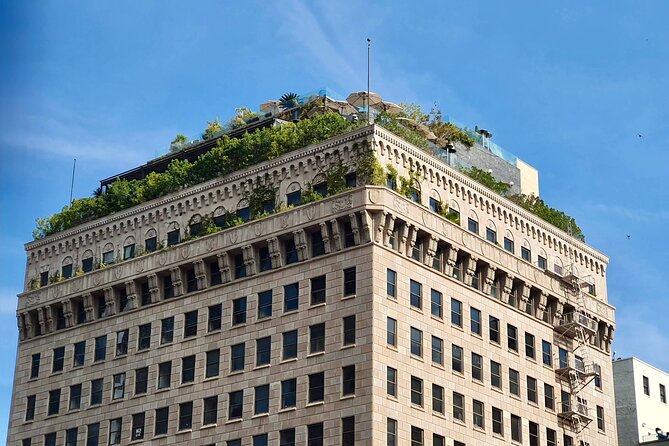
The Continental Building, completed in 1904, was among LA’s first skyscrapers. Its Beaux-Arts facade reflects a period when the city was eager to prove it could support serious high-rise construction.
The El Dorado Lofts adds a different mood. Built in 1913 as a luxury hotel, it features ornate terra cotta with floral and geometric decoration. Its design connects Los Angeles with the wider Art Nouveau and Art Deco world, including the styles later seen in New York and Shanghai.
Today, the former hotel has become residential lofts. That change is central to the tour’s message. Downtown buildings rarely have only one life. A hotel can become housing, a bank can become a hotel, and a theater can become a technology store.
The Last Bookstore and the pleasure of adaptive reuse
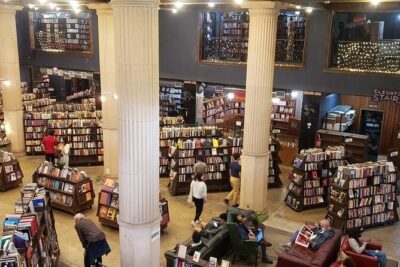
The Last Bookstore is a lighter stop after the financial district. Its shelves, book tunnel, rare books, vinyl records, and local art make it part shop, part reading room, and part art installation.
You get about 10 minutes here. That is enough to see the famous interior and understand why it has become one of LA’s most photographed bookshops. If you love books, you may want to return later, since the tour cannot give you time to browse properly.
The store also helps explain Downtown’s recent changes. A former financial center now supports independent retail, creative businesses, food, art, and housing. The area’s identity has not simply returned to an earlier period. It has been rebuilt around new uses.
The Los Angeles Theatre, Arcade Building, and Clifton’s
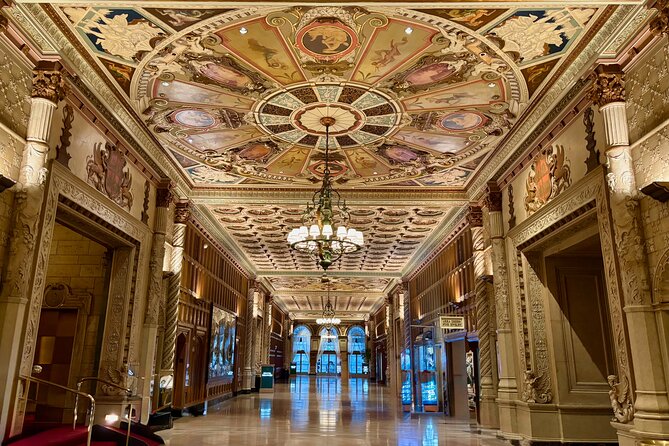
The Los Angeles Theatre is one of the grandest film-related stops. Built in 1931 for the premiere of Charlie Chaplin’s City Lights, it was designed as a full evening out, with crystal chandeliers, gold details, marble stairs, and the feel of a European opera house.
The guide places the theater within the rise and fall of movie palaces around the world. That context helps you see why such buildings were built so lavishly, and why many later struggled as entertainment habits changed.
The nearby Arcade Building offers a smaller but useful story. Completed in 1924, it once housed studios and offices tied to LA’s growing radio industry. Today, its shops and eateries show another form of reuse.
Clifton’s provides one of the tour’s most unusual examples of themed design. Founded in 1931 as a cafeteria, it became known for offering free meals to people in need during the Great Depression. Its later spaces include a large tree, forest-style decoration, and hidden bars.
You may not spend a long time inside each place, but the guide uses them to show that Los Angeles has long mixed commerce with spectacle. Clifton’s was not just a place to eat. The setting was part of the attraction.
Apple Tower Theatre and the shift from cinema to technology
The Tower Theatre was built in 1927 as the first theater in Los Angeles designed for films with synchronized sound. Its first film was The Jazz Singer, a landmark in the change from silent movies to talkies.
The building’s Spanish Renaissance Revival style includes carved decoration, stained glass, and vaulted ceilings. Its connection with David Lynch’s Mulholland Drive adds another film layer, especially through the memorable Silencio scene.
Today, Apple uses the former theater as a flagship store. This is a strong example of adaptive reuse because the building remains connected to technology and entertainment, even though its function has changed.
You can see how the old structure and modern retail use meet in one place. For me, that is more interesting than treating preservation as a frozen picture of the past. A historic building survives only if someone finds a workable use for it.
Jewelry, fashion, and the working side of Downtown
The Jewelry District covers 12 blocks and is the largest jewelry district in the United States. Its roots go back to the 1920s, and the guide connects it with Antwerp, Belgium, where he grew up.
This stop is not only about storefront displays. It points to manufacturing, craftsmanship, trade, and immigrant enterprise. The district shows a side of LA that is less connected to film glamour and more connected to work.
The Fashion District makes a similar point. It supports textiles, clothing, streetwear, and design, and it reflects the city’s entrepreneurial character. You may not find the polish of a grand European shopping avenue, but you see where products and trends are made and sold.
The Eastern Columbia Lofts provides a visual highlight nearby. Its turquoise terra cotta, Art Deco decoration, and clock tower make it easy to recognize. Built in 1930, it captures the confidence of the period and recalls other landmark Art Deco buildings, including New York’s Chrysler Building.
The building’s celebrity associations add a bit of Hollywood flavor, but the architecture is the real reason to stop. Look for the color and surface detail, which differ sharply from the stone and formal lines of the older bank buildings.
Hotel Per La and the final view of Downtown’s many lives
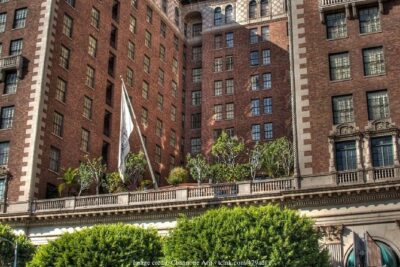
The walk ends at Hotel Per La, the former Bank of Italy building, at 649 South Olive Street. The location is one block from the 7th Street Metro Center, served by Metro’s A, B, D, and E lines, which makes the end point convenient for continuing your day.
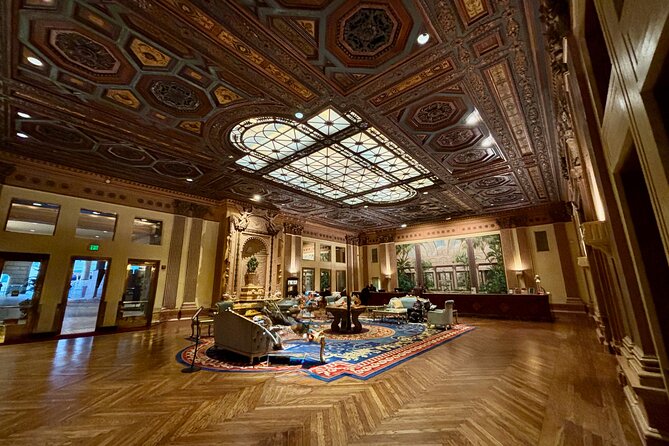
The building began as a symbol of Italian immigrant success and later became part of the story of Bank of America. Its restored lobby includes a gold ceiling and tall marble columns, while the current hotel adds modern rooms, art, and a rooftop pool.
This final stop neatly brings together the tour’s main ideas. A bank becomes a hotel. A financial district becomes a place for restaurants, retail, housing, and tourism. The architecture survives, but the meaning changes with the people who use it.
What $35 gets you, and who should book
At $35 per person, the tour is reasonably priced for a two-and-a-half-hour small-group walk. Admission to the listed stops is free, so you are paying for the guide’s preparation, commentary, historical images, route planning, and ability to connect separate parts of the city.
I think the price works best if you value context. You could walk past the Bradbury Building, Eastern Columbia Lofts, or Tower Theatre on your own, but you might miss why each one matters and how they fit into the larger story.
The value is less clear if you want paid attractions, long interior visits, or a relaxed pace with plenty of time for food and photographs. Parking fees are not included, so public transportation is worth considering. The start is near Grand Central Market, while the finish is close to a major Metro station.
The tour suits adults interested in architecture, film, city planning, history, and cultural change. Families can join, and the guide makes an effort to include younger participants, but the material is aimed more at adults than children.
The group limit of 15 helps keep the discussion personal. Still, downtown streets can be noisy, and one participant found it difficult to hear. Stay close to the guide, ask him to repeat a point when needed, and bring comfortable shoes. The walk requires a moderate level of fitness, with limited planned breaks.
Free cancellation is available up to 24 hours before the start time. The tour may be rescheduled or refunded if poor weather or an insufficient number of bookings forces cancellation.
Should you book this Downtown LA walking tour?
Book it if you want to understand how Downtown Los Angeles became a center of banking, film, food, retail, and creative reuse. Eloi Mark’s international background, historical images, and open discussion give the walk a personal angle that you will not get from simply following a map.
Skip it if you want a short, technical architecture tour or a route built around sitting indoors. For most curious visitors, locals, and design-minded people, $35 is a fair trade for seeing familiar buildings with fresh eyes and learning why Downtown’s old streets still matter.
FAQ
How long does the Downtown Los Angeles History and Architecture Walking Tour last?
The tour lasts about 2 hours and 30 minutes.
How much does the tour cost?
The price is $35 per person. Group discounts are available.
Where does the tour begin?
It begins at the Grand Central Market Parking Garage, 308 S Hill Street, Los Angeles, California 90013.
Where does the tour end?
The tour ends at Hotel Per La, Autograph Collection, 649 S Olive Street, Los Angeles, California 90014.
Is the tour close to public transportation?
Yes. The end point is one block from the 7th Street / Metro Center station, served by Metro lines A, B, D, and E.
How many people can join the tour?
The group is limited to a maximum of 15 participants.
What happens if I need to cancel?
You can receive a full refund if you cancel at least 24 hours before the start time. Cancellations or changes made less than 24 hours before the tour are not refunded.
More History Walks around the USA
- Charleston’s Best Highlights: History, Culture & Architecture
★ 5.0 · 422 reviews - Palm Springs Modernism Architecture & History Bike Tour
★ 5.0 · 359 reviews - Charleston: History and Architecture Guided Walking Tour
★ 4.8 · 349 reviews - Historic Georgetown: History, Gossip, & Architecture Walking Tour
★ 5.0 · 321 reviews
New to the itinerary around the USA
- Washington, DC: Georgetown Architecture Walking Tour★ 5.0 · 8 reviews
- Wilmington History and Architecture Tour★ 4.8 · 18 reviews
- New Orleans : Garden District Architecture Walking tour★ 4.8 · 5 reviews
- Washington DC: Dupont Circle & Embassy Row Architecture Tour★ 5.0 · 6 reviews
- Private Colonial Williamsburg Architectural Tour★ 5.0 · 5 reviews
- Tulsa: Art Deco Walking Tour of Tulsa★ 5.0 · 8 reviews
- Castle to Capitol: Museums of the National Mall Architecture Tour★ 4.5 · 9 reviews
- Monuments and Memorials Architectural Walking Tour★ 5.0 · 17 reviews
Los Angeles Architecture Tours, compared.
The History and Architecture of Downtown Los Angeles
Read our review →
LA’s Art Deco & Beaux Art Architecture: Private Walking Tour
Read our review →
Downtown LA’s History & Architecture: Private Walking Tour
Read our review →Other lists with this tour