Review · CHICAGO
Chicago’s Secret Interiors Architectural Walking Tour
Chicago’s best architectural surprises are often behind ordinary doors. This two-hour walk takes you from Union Station through the Loop’s financial canyon and into grand interiors most people would pass without noticing, including the Rookery’s light court, the Marquette’s mosaics, and Palmer House’s lavish lobby.
I like the sharp mix of architecture and human stories, from Chicago’s rebuilding after the Great Fire to the magnates, stars, and engineers who shaped the city. I also like the practical route: you spend much of the time indoors, which makes the tour manageable in cold or rainy weather.
The main consideration is the walking pace and changing access. The Rookery is closed Sundays, and the final interior lineup can vary, with the Chicago Cultural Center or Monadnock Building used as an alternative stop. One isolated booking failure also makes it wise to confirm your meeting details before setting out.
Key points at a glance
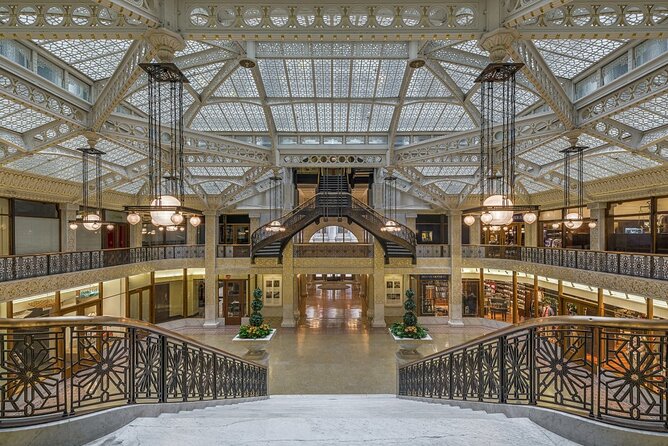
- The Rookery is the interior prize: Frank Lloyd Wright later reshaped its lobby, adding to a building first designed by Burnham and Root.
- Union Station starts the story: Its Beaux-Arts design and Great Hall connect Chicago’s architecture to the rail network that made the city a national hub.
- The Marquette tells history in mosaic: Its lobby uses terra cotta, stained materials, and decorative scenes tied to Jacques Marquette’s exploration of Illinois.
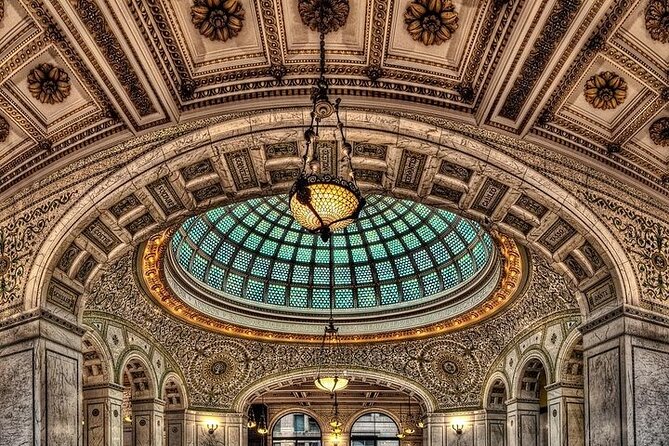
- You finish at Macy’s grand predecessor: The Marshall Field and Company Building contains a Tiffany glass dome and a walnut-paneled Tea Room.
- Strong guides make the difference: Ethan, Grant, Ty, Matthew, Avery, and others are praised for clear explanations, humor, group control, and energy.
- The price is modest for the access: At $35, you get two hours with an expert guide and several interiors that are easy to miss on your own.
Why Chicago’s interiors matter as much as its skyline
Chicago is famous for its tall buildings, but the best lesson in city architecture often comes once you walk through the front door. Outside, the Loop can look like a wall of stone, steel, and glass. Inside, you find mosaics, painted ceilings, bronze details, iron staircases, and careful solutions to problems that once seemed impossible.
This tour gives you both views. You look up at the Board of Trade and Willis Tower, then step into older buildings where the craftsmanship is close enough to inspect. That contrast helps you understand Chicago’s growth better than a simple list of famous facades.
The route also connects architecture to money. Banks, department stores, hotels, offices, and railway stations were not built only to be useful. They were designed to impress customers, attract business, display new technology, and announce that Chicago belonged among the world’s great commercial cities.
At $35, the experience offers solid value. You are paying for a guide who explains what you are seeing, not for admission to a single museum. The buildings themselves are mainly viewed from public areas, so this is not a ticketed collection of private rooms. Its value lies in the access, the interpretation, and the details you would likely miss while walking alone.
More Walking Tours in Chicago
- Chicago in a Day: Food, History & Architecture Walking Tour
★ 5.0 · 1,153 reviews - Chicago: Secret Interiors Architecture Walking Tour
★ 4.9 · 498 reviews - Chicago Walking Tour: Art Deco Skyscrapers Loop
★ 5.0 · 138 reviews
Starting at Union Station and entering the Loop
The meeting point is outside Chicago Union Station at 225 South Canal Street. This is a sensible beginning because the station introduces one of the tour’s central ideas: Chicago grew through movement, commerce, and engineering.
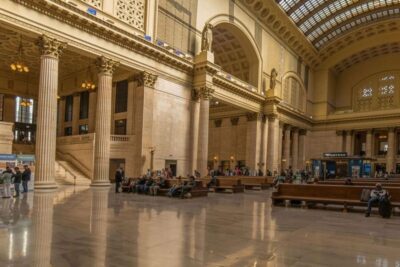
Union Station was designed by Daniel Burnham and completed in 1925. Its Beaux-Arts exterior leads to a Great Hall with a large skylight and carefully finished decorative details. Even if you have used the station simply as a place to catch a train, the tour encourages you to stop and look at it as a major civic room.
The station is also a practical meeting point near public transportation. From here, the group moves east into the Loop. Wear shoes suited to city sidewalks and stairs, and keep your phone charged if your booking uses a mobile ticket.
The advertised group maximum is 15 people, a size that should make it easier to hear the guide and stay together. Actual group sizes have sometimes been larger, so do not assume the walk will always feel like a private tour. Guides such as Grant and Ethan have been praised for keeping groups together and making sure people can hear while crossing busy streets.
La Salle Street and Chicago’s financial canyon
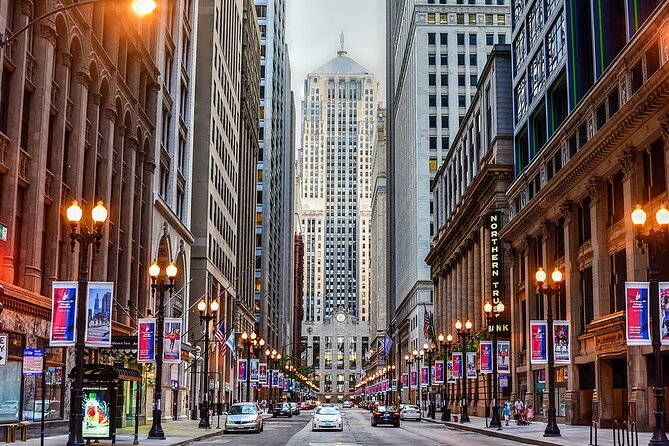
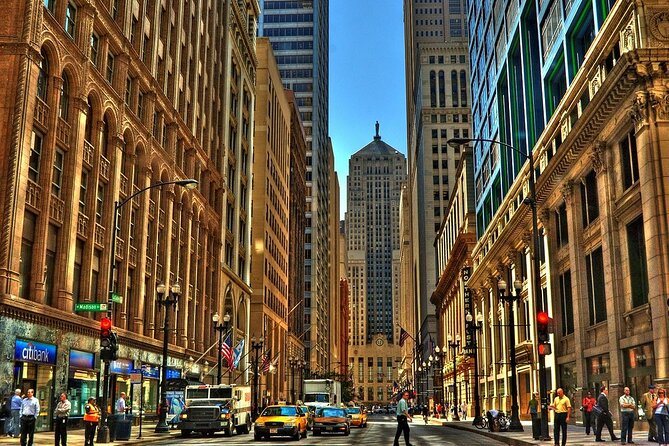
La Salle Street gives you one of the clearest outdoor lessons on the route. Tall buildings press in from both sides, creating the canyon effect that makes the Loop feel larger and more dramatic than a map suggests.
Here, the guide explains how architects worked with limited city blocks, steel framing, elevators, and rising land values. The nearby Chicago Board of Trade and Willis Tower represent different moments in the city’s growth, yet both reflect the same ambition to build higher, trade faster, and make a strong impression.
This stop is brief, listed at about 10 minutes, but it gives you useful bearings. Look around before the group moves on. The best view is not always straight ahead. Turn upward, compare the older stone facades with later towers, and notice how much architectural history is packed into a few blocks.
The outdoor portion can be the least comfortable part in winter, rain, or strong wind. Still, the route repeatedly moves indoors, and that balance is one of the tour’s practical strengths.
The Rookery’s light court and Wright connection
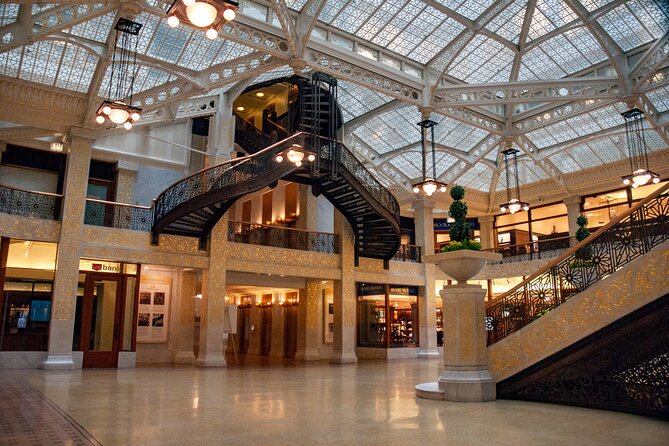
The Rookery is likely to be the architectural high point. Burnham and Root designed the building in 1888, combining Romanesque and Moorish influences with new structural ideas. Its famous light court brought daylight into the interior, while ornate ironwork and the distinctive oriel staircase gave the building a level of detail that modern office blocks rarely attempt.
Frank Lloyd Wright later redesigned the lobby. That creates a useful comparison between the building’s original late 19th-century design and Wright’s cleaner, more controlled approach. You are not just looking at decoration. You are seeing different ideas about how an office building should welcome people and use light.
The Rookery is also a good example of why this tour works better with a guide. You might notice the staircase and shiny surfaces on your own, but the story of Burnham, Root, Wright, and the building’s structural challenges gives those features a purpose.
The important planning detail is Sunday closure. On Sundays, the Rookery is not included, so architecture fans who most want this interior should choose another day. This is not a minor substitution if the building is your main reason for booking.
More Walking Tours in the USA
- Chicago Architecture Walking Tour: Incredible Art Deco Interiors
★ 5.0 · 85 reviews - Chicago Architecture Walking Tour: What’s New
★ 5.0 · 64 reviews - Chicago Walking Tour: Art Deco Skyscrapers Riverfront
★ 5.0 · 53 reviews - Chicago in a Day: Food and Architecture Private Walking Tour
★ 5.0 · 53 reviews
The Field Building and Art Deco restraint
The Field Building brings the route into the Art Deco period. Its design is more streamlined than the ornate interiors associated with the late 19th century, but it still reflects Chicago’s taste for fine materials and strong visual statements.
A guide can help you read the change in style. Instead of the dense historic ornament found in the Rookery or Palmer House, Art Deco often favors geometric forms, polished surfaces, and a sense of speed and modern industry. The stop is short, yet it helps place Chicago’s buildings in a larger timeline.
If your interest is mainly in famous architects, this may feel less memorable than the Rookery or Marquette Building. If you enjoy seeing how styles change across decades, it adds needed range to the route.
Marquette Building mosaics and the Chicago window
The Marquette Building is one of the most rewarding stops because it combines technical progress with storytelling. It is associated with the Chicago School of Architecture and is known for its use of the Chicago window, a large central pane flanked by narrower windows.
That window design helped bring more daylight into deep office spaces while allowing buildings to rise higher. It is a small reminder that architecture is often shaped by practical problems, not just artistic taste.
Inside, the lobby’s decorative mosaics tell the story of Jacques Marquette’s exploration of Illinois. The terra cotta facade adds another layer, showing how exterior decoration could be both durable and highly detailed.
This is the sort of place you could easily walk past without entering. That makes it a strong example of the tour’s purpose. You are not merely checking off a famous address. You are learning to look through the doorway of an ordinary office building and ask what its materials, windows, and images were meant to do.
Palmer House, bronze peacocks, and Gilded Age theater
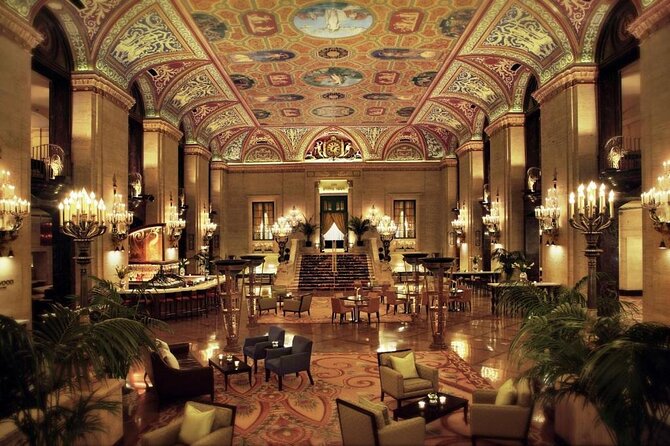
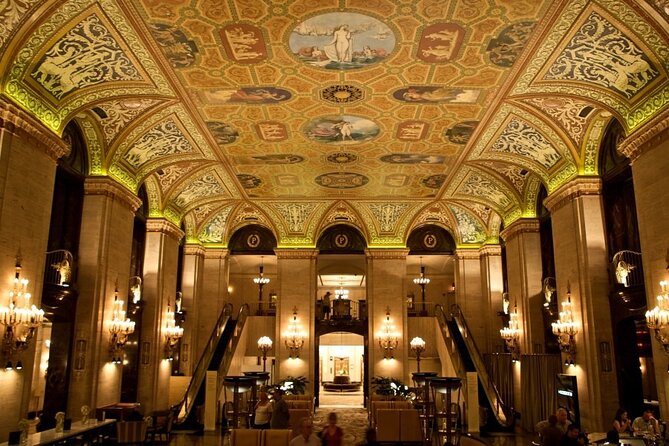
The Palmer House brings a different mood. This grand hotel represents the luxurious side of Chicago’s Gilded Age, with an opulent lobby, mosaic floors, a frescoed ceiling, and bronze peacock doors.
The hotel was rebuilt in 1871 after the Great Chicago Fire, giving the stop an important connection to the city’s recovery. Chicago did not simply replace what was lost. It rebuilt on a larger scale and used new construction methods, materials, and styles to present itself as a modern city.
The Palmer House also links architecture with celebrity and social life. It hosted famous people and public figures, so the hotel was more than a place to sleep. It was a stage where wealth, influence, and fashion were displayed.
Give yourself a moment to look upward in the lobby. The ceiling is easy to miss if you are focused on the group, and the floor details reward a slower glance. Since this is an active hotel, the group must remain respectful of guests and normal hotel activity. Access can therefore feel less controlled than a museum visit.
Cultural Center or Monadnock Building
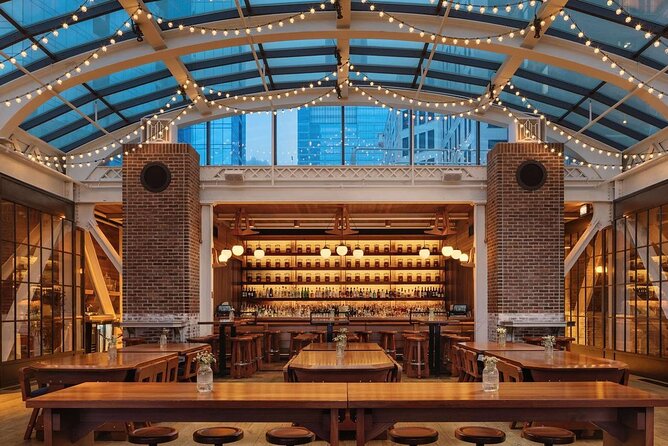
At this point, the route may include the Chicago Cultural Center or the Monadnock Building. The two options offer different experiences.
The Chicago Cultural Center is known for its architectural beauty and cultural role. It fits the tour’s focus on public interiors, decorative craftsmanship, and the way important buildings serve the city beyond their original purpose.
The Monadnock Building offers a look at late 19th-century commercial architecture. Its place in Chicago’s development helps explain how office buildings changed as the city’s economy expanded.
Because the exact option can vary, do not book this tour expecting one fixed interior at every stop. That flexibility can be useful, but it also means you should treat the route as a guided architectural walk rather than a guaranteed list of nine full building visits.
Marshall Field and Company Building finale
The tour ends at the Marshall Field and Company Building, now home to Macy’s at 111 North State Street. This is a fitting finale because it combines commerce, design, and public spectacle.
Inside, the Tiffany glass mosaic dome is the main attraction. It turns a department store into a grand interior experience, using light and color to make shopping feel like an event. The walnut-paneled Tea Room adds another glimpse of early 20th-century retail luxury.
Marshall Field understood that a department store had to offer more than merchandise. It had to draw people in, make them feel important, and encourage them to linger. The building’s decorative program helped do that.
Ending here also gives you a useful choice. You can continue shopping at Macy’s, explore State Street, or stop for a meal nearby. The tour does not return you to Union Station, so note that the route is one-way, moving from the west side of the Loop toward State Street.
Guides, group size, and the walking experience
The guide is the most important variable. Ethan has been praised for enthusiasm, clear explanations, and the ability to keep people interested even in heavy rain. Grant is described as warm, organized, and careful about maintaining a steady pace. Ty is noted for humor and a sharp point of view, while Matthew is praised for balancing professionalism with jokes. Avery is also credited with keeping the group moving and offering useful background.
Those details matter because this is not a silent photo walk. You will spend much of the time listening, moving, and looking where the guide directs you. A dry recitation of dates would make the interiors blur together. Strong guides connect buildings to people, money, technology, and city planning.
The walk has also worked well for people who have already taken a Chicago architecture boat tour. The two experiences serve different purposes. A boat tour gives you broad skyline views and a grand sense of scale. This route brings you close to lobbies, mosaics, staircases, and ceilings.
Plan on about two hours, though one recent experience ran closer to an hour and a half with a 15-minute break. The pace is manageable for most people, but you should be comfortable walking through downtown and standing during explanations.
Weather, access, and practical planning
The tour requires good weather and may be canceled if conditions are poor. If that happens, you are offered another date or a full refund. Chicago weather can change quickly, so bring a coat or rain layer even if much of the walk is indoors.
Most people can take part, and service animals are allowed. The route is near public transportation, which helps with arrival and departure. The tour ends at Macy’s rather than returning to the starting point.
You can cancel for a full refund up to 24 hours before the start time. Changes or cancellations inside that window are not refunded. Since one booking problem involved a guide who did not arrive, save the confirmation, verify the meeting point, and contact the operator promptly if anything seems unclear before departure.
Who should book this $35 walk?
I would recommend it most strongly to first-time Chicago visitors who want more than skyline photos, architecture fans who enjoy interiors, and local residents ready to see familiar streets differently. It also works well as a half-day activity because the route ends near shops, restaurants, and other Loop sights.
You should be comfortable with city walking and a changing schedule of public interiors. If you want long visits at each building, this may feel too brisk. The stops are generally short, around 10 minutes each, so the tour favors breadth and explanation over extended photography.
The 4.9 rating from 635 reviews and 98 percent recommendation suggest unusually strong satisfaction, but the practical details still matter. Sunday visitors lose the Rookery, group sizes may vary, and weather can affect the outing.
Should you book it?
Book this tour if you want Chicago’s architecture explained at street level, especially if the Rookery, Marquette mosaics, Palmer House, and Marshall Field dome appeal to you. At $35, the mix of expert commentary and hard-to-notice interiors is a good deal.
Choose another activity if you dislike walking, need a guaranteed indoor schedule, or want a single building explored at length. For everyone else, this is a smart companion to a boat tour: the boat shows you the skyline, while this walk helps you understand the doors, ceilings, materials, and stories just below it.
FAQ
How much does the Chicago’s Secret Interiors Architectural Walking Tour cost?
The tour costs $35 per person.
How long does the tour last?
The stated duration is approximately two hours. The timing can vary, and one account describes a walk of about an hour and a half with a 15-minute break.
Where does the tour begin?
It begins at Chicago Union Station, 225 South Canal Street, Chicago, Illinois 60606.
Where does the tour end?
The route ends at the Marshall Field and Company Building, 111 North State Street, Chicago, Illinois 60602.
Is the Rookery Building included every day?
No. The Rookery is closed on Sundays and is not included in the Sunday route.
What may replace the Rookery or other stops?
The stated route may include the Chicago Cultural Center or the Monadnock Building. The exact interior lineup can vary.
Is the tour suitable for most people?
Most people can participate. The experience is a walking tour through the Loop, and service animals are allowed.
Is the tour offered with a mobile ticket?
Yes. The experience includes a mobile ticket.
How many people can join the tour?
The advertised maximum is 15 travelers.
What happens if bad weather cancels the tour?
You are offered a different date or a full refund if the experience is canceled because of poor weather.
Can I cancel for a full refund?
Yes. You must cancel at least 24 hours before the start time for a full refund. Cancellations within 24 hours are not refunded.
More Hidden Gems Architecture Tours in Chicago
- Tokyo: Shibuya Highlights Walking Tour & Secret View Spot
★ 5.0 · 287 reviews - Delhi Hidden Gems: Mehrauli, Lodhi Art & Sunder Nursery
★ 5.0 · 108 reviews - Miami Beach Art Deco & Hidden Gems Bike Tour with Local Historian
★ 5.0 · 78 reviews - Barcelona: Exploring Gaudí’s Hidden Gem, Bellesguard Tower
★ 4.7 · 37 reviews
New to the itinerary around Chicago
- Private Chicago Architecture Tour★ 5.0 · 5 reviews
- Private Frank Lloyd Wright Architectural Tour by Luxury Vehicle★ 3.5 · 7 reviews
- Chicago Luxury Minibus City Tour and Architecture River Cruise★ 4.5 · 8 reviews
- Private Chicago Architecture Walking Tour★ 5.0 · 6 reviews
- Chicago History and Architecture Walking Tour with Boat Cruise★ 4.5 · 10 reviews
- Small Group History And Architecture Walking Tour of Chicago★ 4.5 · 8 reviews
- Chicago Walking Tour: See Inside Art Deco Masterpieces★ 4.9 · 8 reviews
- Chicago: History and Architecture Guided Kayak Tour★ 5.0 · 3 reviews
Hidden Gems Architecture Tours, compared.
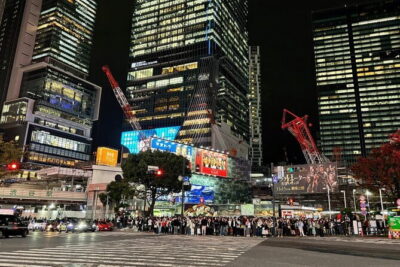
Shibuya Highlights Walking Tour & Secret View Spot
Read our review →
Delhi Hidden Gems: Mehrauli, Lodhi Art & Sunder Nursery
Read our review →
Miami Beach Art Deco & Hidden Gems Bike Tour with Local Historian
Read our review →

Detroit: Architectural Beauty and Hidden Gems Walking Tour
Read our review →
Secret Split: Socialist Architecture & brutalism – Urban Utopia
Read our review →