
Review · BERLIN
Karl-Marx-Allee Tour: Life and Architecture in East Berlin
Karl-Marx-Allee tells the story of East Berlin in stone. Its huge towers, broad avenue, workers’ housing, monuments, and cafés show how the East German state wanted socialism to look, and how real people lived inside that grand plan. This two-hour walking tour connects architecture with politics instead of treating the boulevard as a row of impressive façades.
I like the clear route from Frankfurter Tor to Strausberger Platz, and I like the small group limit of 15 people. The tour also gives you details you could easily miss alone, including the 1953 workers’ uprising, the changing name of the avenue, and the design ideas behind its buildings.
The main drawback is simple: you spend about two hours outdoors, and the tour requires good weather. The walk is short enough for most people, but it is not a museum visit with places to sit indoors along the way.
Key points to know before you book
- Frankfurter Tor begins the story with grand socialist towers: Learn how Hermann Henselmann’s design helped shape East Berlin’s most famous boulevard.
- The route compares rival visions of postwar Berlin: Hans Scharoun’s modernist housing offers a sharp contrast to the later Stalinist style.
- The 1953 workers’ uprising gives the buildings a human story: You’ll visit the site where disgruntled workers began a revolt against the East German government.
- Café Sibylle links everyday life with Soviet power: Its story reaches back to the nearby statue of Joseph Stalin, removed in 1961.
- Martina brings a personal, theatrical style to the subject: Her tours are known for careful preparation, humor, original visual material, and stories about life under communism.
- The $30.01 price buys interpretation, not admission tickets: Every stop is free, so the value rests on the guide’s ability to make the avenue meaningful.
Why Karl-Marx-Allee is more than a grand boulevard
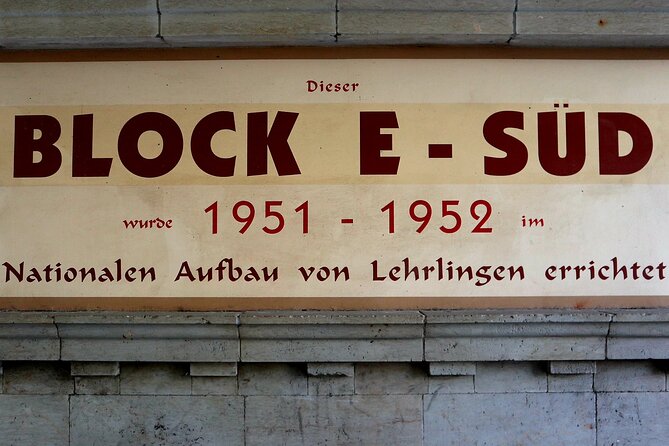
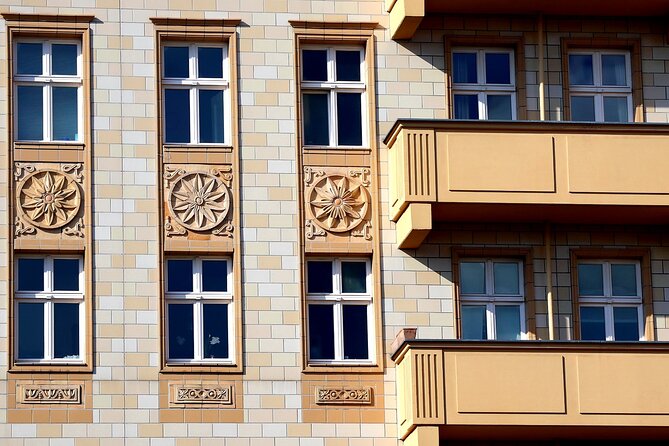
Karl-Marx-Allee was once called Stalinallee, and that earlier name tells you much about the avenue’s purpose. This was not just a road rebuilt after wartime destruction. It was meant to be a showcase for East Germany, a place where architecture could display the strength and order of the socialist state.
That makes the route useful for understanding a difficult period. You see official ambition in the monumental towers, but you also hear about the workers, architects, and residents who had to live with those ambitions.
The boulevard can look imposing at first. Its width and repeated façades may seem designed for ceremony rather than ordinary life. The guide’s role is to explain what lies behind that visual order: the rebuilding program, the political messages, the arguments among architects, and the daily experience of people who moved into these homes.
I especially like tours that treat buildings as evidence. Here, a tower can tell you about government propaganda, a café can reveal changing social habits, and a workers’ monument can show the limits of state control.
More Architecture Tours around Germany:
- Munich 3-Hour Segway Tour: Nazi Munich & Royal Architecture
★ 4.9 · 194 reviews - Düsseldorf: Guided City Architecture Walking Tour
★ 4.6 · 61 reviews - Hidden Architectural Gems of Munich (Max. 16 guests)
★ 4.9 · 52 reviews
Frankfurter Tor and the making of a socialist street
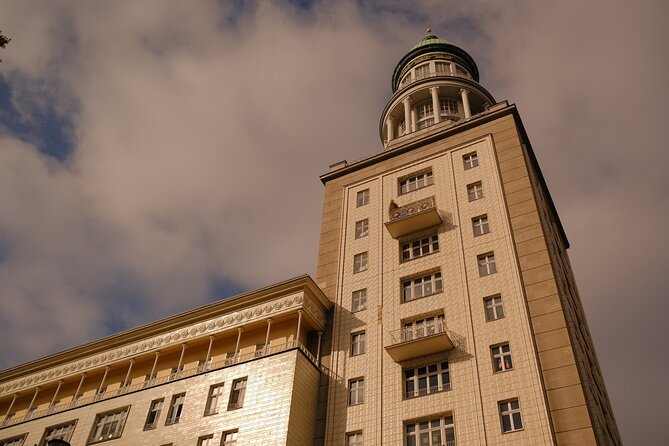
The tour starts at U Frankfurter Tor, where the paired towers create one of the most recognizable views on Karl-Marx-Allee. Their symmetry is deliberate and powerful. Hermann Henselmann designed the complex in the style associated with East Germany’s early socialist architecture, using monumental forms to give the new state a grand public face.
You’ll spend about 20 minutes here, learning how plans for Germany’s first socialist street took shape in the early 1950s. The rebuilding effort called on thousands of volunteers, and the project was presented as proof that a new society could reconstruct Berlin through collective work.
That official story is worth hearing, but the more useful question is what such a street was meant to do. It was housing, public space, political theater, and a symbol of national recovery all at once.
Look closely at the towers and the broad layout. The design does not aim for a modest neighborhood feel. It seeks order, scale, and ceremony. The guide can help you read those choices as political statements rather than mere decoration.
Because the stop is outdoors, the details may be harder to absorb if the group is standing in strong sun, wind, or rain. Still, this is a strong opening because you immediately see the visual language that shaped the rest of the route.
Laubenganghäuser and the road not taken
The Laubenganghäuser offer a sharp change of mood. These modernist buildings were designed by Hans Scharoun in the years just after World War II, when Berlin was still physically ruined and architects were imagining a different future.
Scharoun’s ideas were more open and experimental than the monumental style later favored by the East German government. His approach grew from the destruction around him and from the hope that new urban design could support a more humane society.
The tour spends about 15 minutes here, explaining why those ideas soon fell out of favor. That contrast is one of the most valuable parts of the walk. Instead of presenting East German architecture as one fixed style, the route shows that architects first considered several possible futures.
You may find the Laubenganghäuser less immediately dramatic than Frankfurter Tor. They do not deliver the same grand postcard view. Their importance lies in the debate they represent: should postwar Berlin be rebuilt with open modernist planning, or with monumental streets that expressed political power?
For anyone interested in architecture, this stop adds needed balance. It prevents Karl-Marx-Allee from becoming a simple story about Stalinist buildings and shows that East Berlin’s design history included competing ideas.
Hochhaus an der Weberwiese, a socialist prototype
The Hochhaus an der Weberwiese is a key stop because it served as an early model for the later Karl-Marx-Allee. Its first tenants received a level of comfort that was unusual in the difficult postwar years, making the building both a housing project and a political showcase.
You’ll spend around 20 minutes here. The guide explains how the building became a propaganda tool and attracted Western architects who wanted to see what East Germany was constructing.
That mix of housing and publicity is central to the avenue’s story. The government wanted to show that socialism could provide modern homes for workers. A new apartment was not only a private benefit. It was evidence in an argument about which political system could build the better future.
The building also helps you consider the experience of the first residents. Public speeches might focus on equality and collective effort, but a person moving into a bright, modern apartment would notice practical comforts first. The tour connects those personal gains with the larger political message.
This is another place where a guide adds real value. Without context, you might see a handsome early high-rise and move on. With the story, you can ask why this one building mattered so much and why architecture became part of East Germany’s international image.
Same streets, read through a different style:
- Potsdam: Guided Walking Tour of UNESCO Site and Architecture
★ 4.7 · 49 reviews - Private Taxi Tour City East & West History and Architecture 3-4h
★ 5.0 · 42 reviews - Stuttgart city library – an architectural tour
★ 4.4 · 27 reviews - Berlin: Hansaviertel Modernist Architecture Tour
★ 4.9 · 16 reviews
The June 17, 1953 uprising
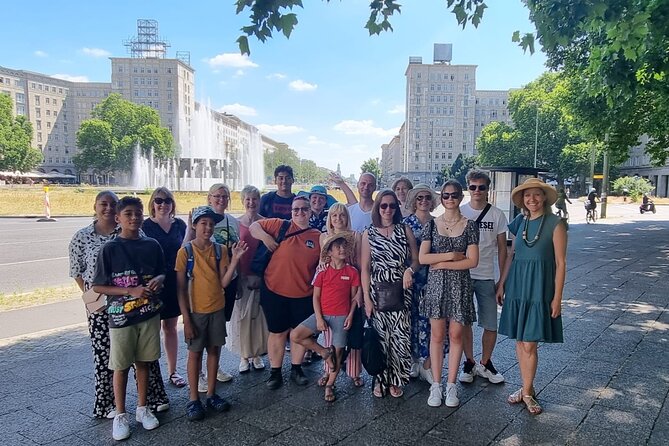
The Gedenkstätte Arbeiteraufstand 17 Juni 1953 brings the politics down to street level. Here, workers began a mass uprising that came close to toppling East Germany’s socialist government.
The event began with worker dissatisfaction, but it quickly became a wider challenge to state authority. The site helps explain that East German citizens were not passive figures living inside a government-designed world. They could organize, protest, and demand change, even when the consequences were serious.
You’ll spend about 20 minutes here, including time to see the controversial monument dedicated to the uprising. Its disputed nature is important. Memorials do not simply preserve the past. They also show how later generations choose to frame events that remain politically sensitive.
I find this stop especially useful because it changes the tone of the tour. The avenue’s architecture can make East Berlin look controlled and polished. The 1953 uprising reminds you that the people who built and occupied this world had their own grievances and hopes.
The stop is also a good reason to take the tour slowly. The facts may be unfamiliar, and the political background is not always easy to grasp from a quick explanation. A guide who can connect the protest to the surrounding housing and construction program makes the location easier to understand.
Café Sibylle and the ordinary side of East Berlin
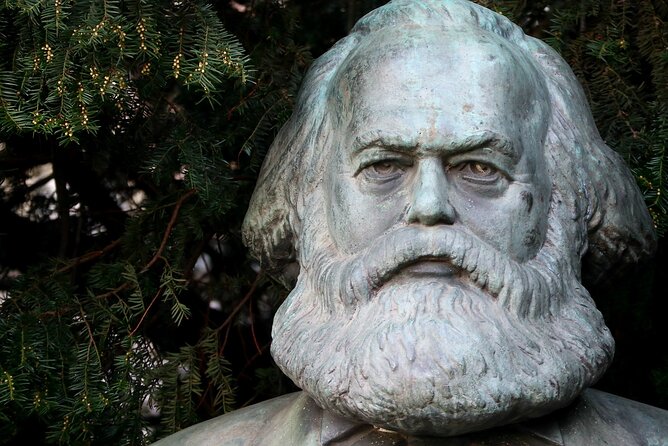
Café Sibylle adds a more personal chapter. In the days of East Berlin, it was one of the most exclusive cafés on Karl-Marx-Allee. Its story is connected to the statue of Joseph Stalin that once stood nearby until 1961.
That connection shows how public symbols changed. Stalin’s image had once been central to the boulevard’s identity. By 1961, the statue was gone, and the avenue itself had already moved through several political and cultural phases.
The café also gives you a way to think about daily life. Grand boulevards and official monuments are easy to photograph, but cafés reveal how people used the city socially. A place associated with status, conversation, and meeting friends can tell you something different from a government building or memorial.
You’ll spend about 15 minutes here. It is a welcome pause in the narrative, though you should not expect this tour to be a café tasting experience. The focus remains on the history of the place and its connection to the avenue.
I like this stop because it keeps the tour from becoming too abstract. You hear about ideology, urban planning, and state power, then arrive at a place where people drank coffee, met others, and took part in city life.
The Karl Marx bust and ideology in daily life
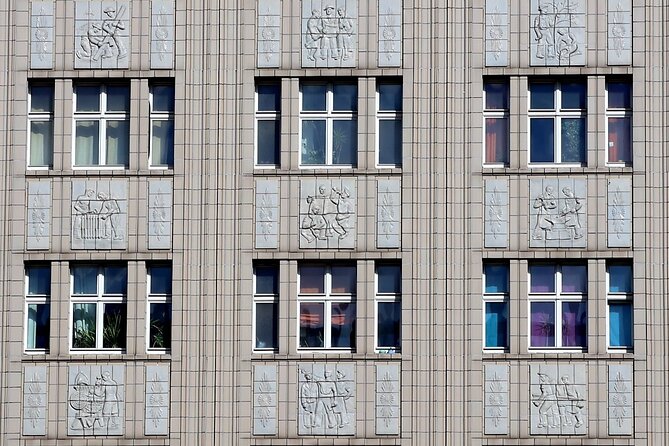
The Karl Marx bust provides a direct link to the ideas behind the state. Marx, coauthor of The Communist Manifesto, was not simply a figure on a monument. His theories shaped the language of East German politics and influenced how the government described work, class, ownership, and society.
The guide uses this stop to discuss how socialist ideology affected ordinary life in East Berlin. That is a useful shift from political theory to practical experience. You can consider how official ideas reached the workplace, the home, education, public ceremonies, and the design of the city itself.
The stop lasts about 15 minutes. It may be less visually striking than Frankfurter Tor or Strausberger Platz, but it gives the route a clear intellectual center.
If you know little about Marxism, you do not need to prepare a great deal before arriving. The value lies in hearing the ideas explained in connection with the actual street around you. If you already know the basics, you may appreciate the chance to see how those ideas were turned into buildings, slogans, and public space.
Strausberger Platz and the end of the walk
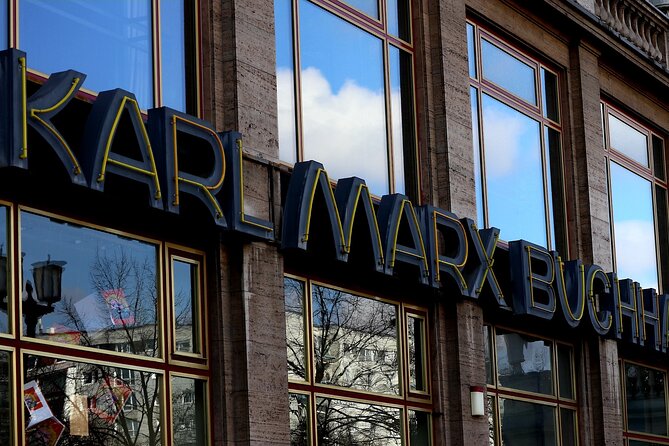
The tour finishes at Strausberger Platz, about a 10-minute walk from Alexanderplatz. This large roundabout offers another impressive example of Hermann Henselmann’s work and gives you a final chance to compare the architecture with the political story you have heard.
The stop lasts about 15 minutes. Here, the focus turns to life on Karl-Marx-Allee after the Berlin Wall fell and to the avenue today.
That final chapter matters. The boulevard did not stop changing in 1989. Buildings were repaired, meanings shifted, and residents had to adjust to a new political and economic system. The same street that once advertised East Germany now attracts people interested in architecture, memory, and the legacy of division.
Ending here is practical too. You are close to Alexanderplatz, so you can continue exploring central Berlin after the tour. You also finish with a broader question: what should happen to buildings created for a former regime when the regime disappears?
The guide makes the price worthwhile
The tour costs $30.01 per person and lasts about two hours. Since the route uses public streets and all stops have free admission, you are paying mainly for explanation, organization, and interpretation.
For me, that is a fair price if you care about Berlin’s 20th-century history or architecture. A self-guided walk would cost less, but you would need to research the buildings, understand the political timeline, and work out how the separate stories connect.
The strongest guide associated with this experience is Martina. Her style combines careful preparation, humor, strong recall, and a personal connection to parts of East Germany’s communist period. She has also used visual material and original historical items to make the subject easier to follow.
That personal element can matter here. The subject is full of political terms and competing viewpoints, and a guide with a sense of humor can keep the walk from becoming a dry lecture. The aim is not to excuse the regime or flatten the past into a simple good-and-bad story. It is to help you understand how architecture, state power, and real life overlapped.
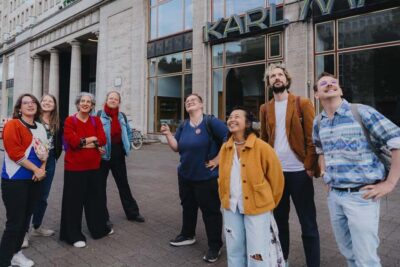
The group maximum is 15 people, which should make it easier to hear the guide and ask questions than on a large city tour. The listed language is English.
Practical details for a comfortable walk
The meeting point is U Frankfurter Tor, at 10243 Berlin. The walk ends at Strausberger Platz, also in 10243 Berlin, on the eastern side of the roundabout.
You should plan for an outdoor walk lasting about two hours. Wear shoes you can comfortably walk in and check the forecast before setting out. The experience requires good weather, and if poor conditions force a cancellation, you are offered another date or a full refund.
The route is near public transportation, service animals are allowed, and most people can participate. Confirmation arrives when you book. Free cancellation is available until 24 hours before the start time. After that point, the amount paid is not refunded, and changes are not accepted.
The tour is usually booked around 18 days in advance, so I would not leave it until the last moment if the timing matters to you.
Who should book this Karl-Marx-Allee tour?
I would choose this walk if you want more than a quick look at East Berlin’s grand buildings. It suits people interested in architecture, postwar Europe, the Cold War, urban planning, or the personal side of political history.
It is also a good choice if you have only a short time in Berlin. Two hours gives you a focused route without taking over your day, and the finish near Alexanderplatz makes it easy to add another sight afterward.
Families with older children and teenagers may find the stories easier to follow than a long museum lecture, especially with a guide who uses humor and visual material. The subject is serious, but the walk is not presented as a dense academic seminar.
You may want to skip it if you strongly prefer indoor attractions, dislike standing outside, or have no interest in architecture and political history. The buildings are the setting, but the real subject is how a government tried to express its ideals through a city.
Should you book it?
Book this tour if you want to understand why Karl-Marx-Allee looks the way it does and how the avenue connects to East German power, protest, and daily life. The route is short, focused, and packed with specific places rather than broad generalities.
The best reason to go is the combination of architecture and human stories. You move from monumental towers to modernist housing, from a workers’ revolt to a café, then finish with the boulevard’s life after reunification.
At $30.01, the value depends on the guide. With a strong leader such as Martina, the walk can turn a grand but confusing avenue into a readable chapter of Berlin’s past. If the weather is sound and the subject interests you, I would book it.
FAQ
How long does the Karl-Marx-Allee tour last?
The tour lasts approximately two hours.
Where does the tour begin?
It begins at U Frankfurter Tor, 10243 Berlin, Germany.
Where does the tour end?
It ends at Strausberger Platz, on the eastern side of the roundabout in 10243 Berlin. The finish is about a 10-minute walk from Alexanderplatz.
What language is the tour offered in?
The tour is offered in English.
How large is the group?
The maximum group size is 15 people.
Are admission tickets included?
The walking route includes free admission at each listed stop. An expert local guide is included.
Can I cancel for a full refund?
Yes. You can cancel at least 24 hours before the start time for a full refund. Cancellations or changes made less than 24 hours before the start time are not accepted, and poor weather may result in another date or a full refund.
New to the itinerary around Germany
- Munich Your Way: Private Tour with Architect & Guide★ 5.0 · 2 reviews
- Hidden Architectural Gems of Munich (Max. 16 guests)★ 5.0 · 2 reviews
- Architectural Frankfurt: Private Tour with a Local Expert★ 5.0 · 2 reviews
- Berlin Architecture/River Spree Full Day Photography Tour★ 5.0 · 2 reviews
- Private Taxi Tour of City East History and Architecture 2-3h★ 5.0 · 2 reviews
- Architectural Berlin: Private Tour with a Local Expert★ 4.0 · 3 reviews
- Lübeck: Architecture and Local Craft Private Guided Tour★ 4.0 · 6 reviews
- Lübeck: Private Historical and Architectural Walking Tour★ 4.5 · 6 reviews
Berlin Architecture Tours, compared.
Private Taxi Tour City East & West History and Architecture 3-4h
Read our review →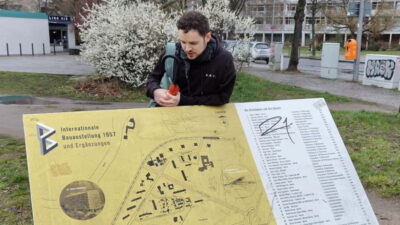
Karl-Marx-Allee Tour of Life and Architecture in GDR
Read our review →
Guided Architectural Walking Tour of Hansaviertel
Read our review →
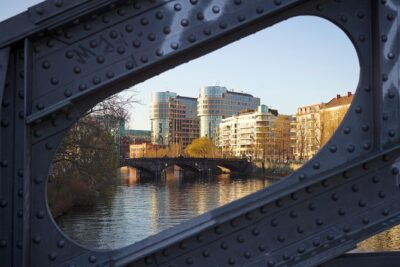
Berlin Architecture/River Spree Full Day Photography Tour
Read our review →Other lists with this tour