
Review · PARIS
Paris: Discover the hidden architecture gems of Le Marais
Le Marais tells Paris’ story in stone. In just 150 minutes, this walk moves from medieval buildings to Renaissance design and grand 18th-century mansions, with stops at Place des Vosges and the medieval Hôtel des archevêques de Sens.
I like the focus on private mansions, or hôtels particuliers, since their courtyards and façades reveal how Paris’ wealthy families lived. I also like that the tour points out places many visitors pass without understanding, including Hôtel Lamoignon and the Saint-Paul-Saint-Louis church. The main concern is reliability: one verified booking reported that the guide did not arrive, so I would confirm the meeting details before setting out.
Key points to know before booking
- Eight centuries in one neighborhood: Follow Le Marais from medieval Paris through the Renaissance and the 18th-century aristocratic period.
- Place des Vosges is the centerpiece: The walk ends here, giving you time to appreciate Paris’ second-oldest square after hearing its story.
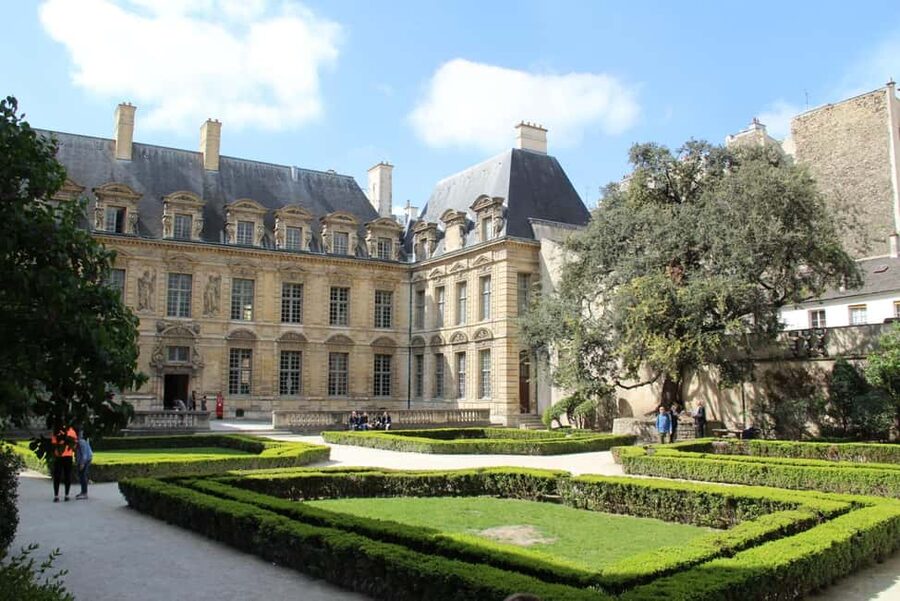
- Private mansions are the main subject: Hôtel Lamoignon, Hôtel Carnavalet, and other grand residences show how powerful families shaped the district.
- Louis Capion leads the English tour: Feedback connected with Louis describes a friendly guide who uses humor, stories, and clear explanations, though one booking reported a missed tour.
- A useful first-day orientation: The route links history, architecture, dining advice, and major sights in a compact 2.5-hour walk.
- Check mobility details carefully: The activity information says wheelchair accessible, but it also says the tour is not suitable for wheelchair users.
Why Le Marais works so well for an architecture walk
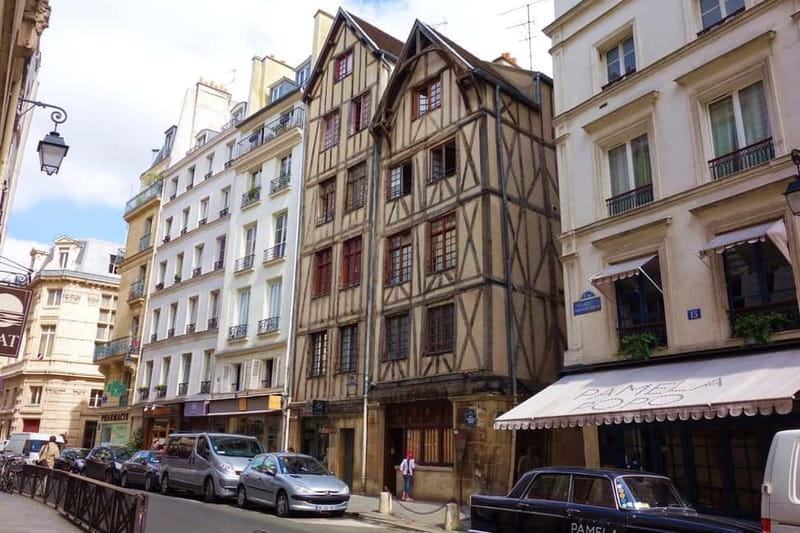
Le Marais is one of the best parts of Paris for seeing several periods close together. You do not need to cross the city to move from medieval traces to Renaissance façades and later aristocratic homes. The district keeps its past in the street plan, courtyards, churches, and formal squares.
That makes this different from a standard sightseeing walk built around famous monuments. You are not simply moving from one postcard view to the next. You are learning to read doorways, façades, courtyards, and building layouts as clues to Parisian life.
The theme is especially useful if you have already seen the Eiffel Tower, the Louvre, and Notre-Dame and now want to understand how ordinary streets developed. Le Marais shows Paris at a closer range. Its architecture tells you who had money, who held power, how families displayed status, and how the district changed over time.
The tour lasts 150 minutes, or two and a half hours. That is enough time for a real explanation at each stop without taking up an entire day. You should still expect a steady walking pace, since the experience is a neighborhood walk rather than a seated lecture.
More Architecture Tours around France:
- Reims Art Deco guided tour
★ 4.5 · 26 reviews - Bastille’s Architecture & Artisans Self-Guided Walking Tour
★ 4.5 · 18 reviews - Private Art Nouveau and Art Deco tour near Opera
★ 5.0 · 15 reviews
Meeting at Saint-Paul and entering old Paris
The meeting point is outside the Saint-Paul station on Metro Line 1. The directions specify that there is only one exit, which makes the starting point fairly simple to find. Arrive 10 minutes early. That small cushion matters in Paris, where a late arrival can mean missing the group at the first corner.
Rue Saint-Antoine is a fitting place to begin. It places you directly in the historic quarter and near the older core of Le Marais. From here, the guide introduces the neighborhood’s long development rather than treating each building as an isolated attraction.
Expect the opening section to establish the broad story: medieval beginnings, later rebuilding, the Renaissance, aristocratic expansion, and the political shocks that changed Paris. Louis Capion is the named provider and guide for the activity. Feedback associated with his tours describes him as warm, funny, and good with families, with a style built around stories and facts rather than a dry architectural lecture.
Still, keep the practical issue in mind. One verified booking from August 2025 reported that the guide did not turn up. That is a serious problem for a paid walking tour. The overall rating is 3.8 from four reviews, a small sample that includes several positive comments connected with Louis and one very negative account. I would save the booking confirmation and check the meeting point shortly before departure.
Reading the private mansions of Le Marais
The most valuable part of the walk is its attention to hôtels particuliers. These were private urban mansions built for wealthy and influential families. The term can be misleading if you picture a hotel in the modern sense. Here, it refers to a large private residence, often organized around a courtyard and designed to give its owner privacy, status, and room for servants and guests.
The guide explains how these homes reflect political and social change. Their façades were not decoration alone. Size, symmetry, stonework, entrances, and courtyards all helped announce the owner’s position.
Some spaces may only be viewed from outside or from publicly accessible areas, so you should not expect a full tour of every private interior. The value comes from learning what to look for. A guide can point out why a building is important even when you are standing on the street.
That approach suits curious visitors who want more than a list of dates. You will hear about the people who lived and worked in the area, the events tied to the neighborhood, and the way art and culture changed its streets. The tour also connects architecture with the French Revolution and later changes in Parisian society.
Hôtel Lamoignon and the aristocratic chapter
Hôtel Lamoignon is one of the key architectural stops. It is described as one of the oldest hôtels particuliers in Paris, which makes it important not only for its appearance but also for its age and place in the district’s story.
This is where the tour’s main idea becomes clear. A mansion is not just an attractive building. It is evidence of the families who could afford a large urban residence and of the city’s changing ideas about comfort, privacy, and prestige.
The stop is scheduled for about 20 minutes. That is a sensible amount of time for an exterior explanation and a closer look at the building’s design. You may not get a long interior visit, but the guide’s context helps you see the building as part of a wider pattern across Le Marais.
I particularly like this stop for repeat visitors to Paris. You may have walked past similar façades before without knowing why they mattered. After this tour, you should be better equipped to notice the difference between a simple historic building and an aristocratic residence built to impress.
Same streets, read through a different style:
- Tasting of 6 wines at Château Haut Breton Larigaudière
★ 4.5 · 17 reviews - Strasbourg : Neustadt Architecture Walking Tour
★ 5.0 · 14 reviews - Neoclassical Paris Architecture 2-Hour Private Walking Tour
★ 5.0 · 7 reviews - Architectural Bourgeois Paris 19th Century
★ 4.0 · 4 reviews
Hôtel Carnavalet and the story of Paris
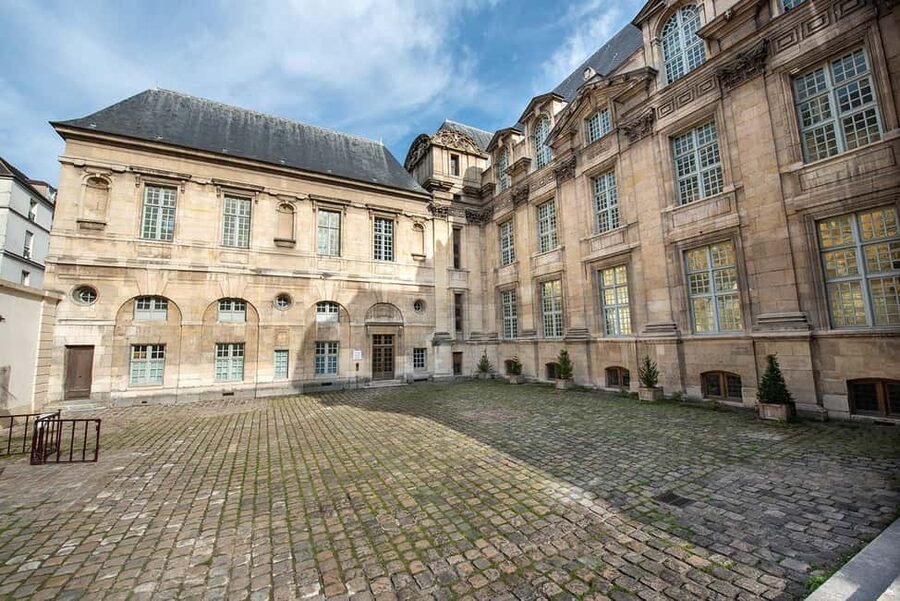
Hôtel Carnavalet receives another 20-minute sightseeing stop. It is one of the district’s most important landmarks for understanding Paris, since the building itself and its museum identity connect architecture with the city’s past.
The tour uses it to widen the story beyond individual families. You learn how Le Marais fits into the development of Paris and how buildings can preserve political, artistic, and social changes.
Because the activity focuses on architecture, you should expect the guide to discuss the building’s form and setting as well as its historical associations. The stop should appeal to visitors who like museums but do not want to spend the whole day indoors. You get a sense of the place from the street, along with an explanation of why it matters.
One limitation is that the description does not promise museum admission or an extended interior visit. If you want to explore Hôtel Carnavalet’s collections, plan a separate visit. Treat this walk as an introduction and orientation, not as a substitute for entering the museum.
Place des Vosges, the tour’s grand pause
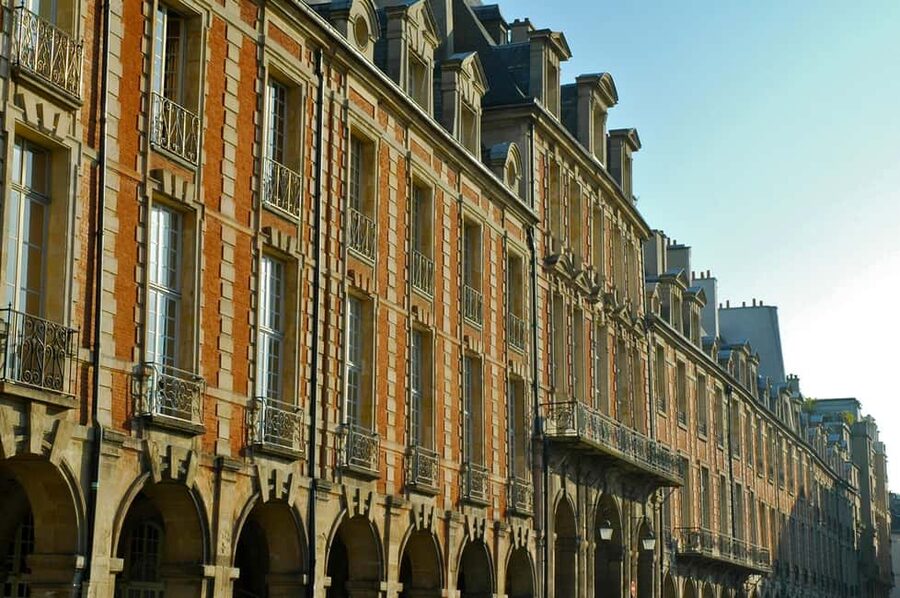
Place des Vosges is the clearest visual reward of the route. The square is described as the second-oldest in Paris, and its regular design gives you a sharp contrast with the narrower, less orderly streets around it.
The guide spends about 20 minutes here. That is enough time to explain the square’s role in the city and let you take in the repeated façades, arcades, and balanced layout. The formal design reflects a different vision of Paris, one in which royal planning and aristocratic display shaped the city.
Place des Vosges is also the finishing point, which is convenient. You do not end in an unknown side street and then need to find your way back to the center. Instead, you finish at one of Le Marais’ best-known meeting places, with restaurants and further sightseeing nearby.
The square can be busy, so do not expect solitude. Its popularity is part of the tradeoff. The tour gives you the background needed to look past the crowd and understand why the space is so carefully arranged.
The activity description also promises advice about good places to eat. That can be useful here, since Le Marais offers many choices and a short local recommendation may save you from choosing at random. The information does not name specific restaurants, so treat this as practical guidance rather than a promised food stop.
Hôtel des archevêques de Sens and medieval Paris
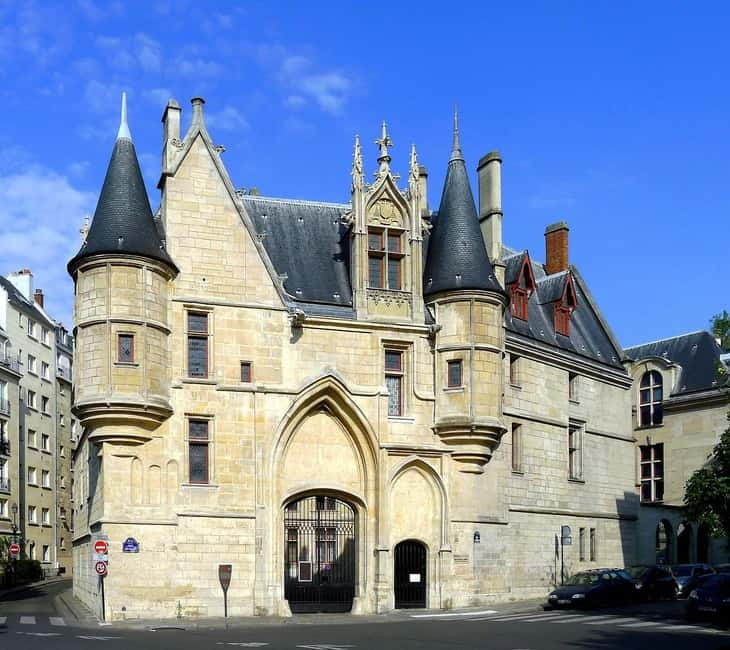
The Hôtel des archevêques de Sens is one of the most unusual stops because it preserves a medieval side of Le Marais that can be easy to miss. Its name refers to the archbishops of Sens, and the building gives the tour a strong link to the church and political life of earlier Paris.
This stop helps keep the walk from becoming a parade of elegant 17th and 18th-century façades. You see that Le Marais was not created all at once. Its older buildings and irregular streets remain part of the neighborhood’s shape.
The description calls this a hidden architectural highlight, but the useful point is not simply that it is less famous. It shows how much of Paris’ past survives away from the major monuments. You may find the stop especially rewarding if medieval architecture interests you or if you want a break from the better-known royal and aristocratic sites.
Again, expect explanation more than a guaranteed interior visit. The value lies in the guide’s ability to explain what you are seeing and why it matters.
Saint-Paul-Saint-Louis and the religious side of the district
The route includes about 20 minutes at Paroisse Saint-Paul-Saint-Louis. This church adds another layer to the walk by showing how religious institutions shaped Le Marais.
After seeing aristocratic residences, it is useful to consider a building designed for worship and public religious life. The church helps broaden the architectural comparison. You can think about how a mansion expresses private status while a parish church serves a larger community and reflects the beliefs and institutions of its time.
The stop also keeps the walk connected to the area around Saint-Paul, where the tour begins. That makes the route feel like a coherent circuit rather than a random collection of sights.
The provided information does not promise a guided interior visit, a service schedule, or special access. If entering the church is important to you, check conditions on the day and remain respectful if worship is taking place.
How the 150-minute route feels in practice
The itinerary includes several sightseeing sections of roughly 20 minutes each, along with the opening and transitions between stops. That rhythm should work well for you if you prefer frequent changes of scene. Every stop has a distinct purpose: medieval history, private mansions, civic architecture, the formal square, and religious buildings.
The walk is long enough to offer substance but short enough to fit beside a museum visit or an afternoon in the neighborhood. I would book it early in your Paris stay if you want help finding your bearings in Le Marais. The route can then guide later independent walks.
Families may appreciate the friendly, humorous style associated with Louis Capion. One piece of feedback specifically describes his tours as suitable for children and says he explains Paris in an entertaining way. That does not guarantee every child will enjoy two and a half hours of architecture, but stories and short stops should help hold attention better than a formal lecture.
English is the listed language. There is no information about headphones, group size, restroom breaks, or seating, so plan for an ordinary guided walk with limited chances to sit.
Is $41 good value for Le Marais?
At $41 per person, the tour is not the cheapest way to walk around Le Marais. You can see Place des Vosges, Saint-Paul-Saint-Louis, and several streets without paying anything.
You are paying for structure and interpretation. A guide connects the buildings to eight centuries of change, points out details you might miss, and explains how architecture reflects wealth, politics, religion, and social life. For first-time visitors, that can be worth more than the admission price of a small attraction because it changes how you see the whole district.
The value is strongest if you like history and want an organized introduction. It is weaker if you prefer to wander alone, take photographs at your own pace, or spend long periods inside museums. The route includes sightseeing at several places, but it does not include listed museum admission, food, or transport.
The cancellation terms reduce some booking risk: you can cancel up to 24 hours ahead for a full refund, and you can reserve now and pay later. Those policies are useful, but they do not remove the concern raised by the reported no-show. Confirm the appointment close to the start time and allow enough flexibility in your day to handle a problem.
Access, pace, and who should book
The activity information is contradictory about wheelchair access. One section says the tour is wheelchair accessible, while another says it is not suitable for wheelchair users. Do not assume the route works for your needs. Contact the provider before booking and ask for a clear answer about surfaces, steps, narrow passages, and access to each stop.
The walk is best for you if:
- You want architecture explained in plain language.
- You enjoy historic neighborhoods more than isolated monuments.
- You are comfortable walking for 150 minutes.
- You want a guided introduction before exploring Le Marais alone.
- You are visiting with older children who enjoy stories and visual details.
- You care about the connection between buildings and political history.
It may not suit you if you need guaranteed wheelchair access, dislike outdoor walking, or want extensive interior visits. It also may not be the right choice if your main goal is food, since dining advice is included but the experience is not a food tour.
Should you book this Le Marais walk?
Book it if you want to understand why Le Marais looks the way it does. The strongest reason to go is the range of architecture packed into a short route: Hôtel Lamoignon, Hôtel Carnavalet, Place des Vosges, Hôtel des archevêques de Sens, and Saint-Paul-Saint-Louis each add a different period or purpose.
Louis Capion’s reported style is a plus for families and for anyone who prefers history with humor. The price is reasonable when you value a guide’s interpretation, though it is not a bargain if you only want to see the streets.
I would make the booking after confirming the meeting and the guide’s availability. The one reported no-show is too important to ignore. If that practical concern is settled, this is a useful, focused way to spend a first afternoon in Le Marais and learn to read Paris beyond its famous monuments.
FAQ
Where does the Le Marais tour meet?
Meet outside Saint-Paul Metro station on Line 1. The meeting information says there is only one exit, and you should arrive 10 minutes before the scheduled start.
How long does the tour last?
The walking tour lasts 150 minutes, or two and a half hours.
What language is the tour in?
The live guided tour is conducted in English.
What places are included?
The route begins near Rue Saint-Antoine and includes Hôtel Lamoignon, Hôtel Carnavalet, Place des Vosges, Hôtel des archevêques de Sens, and Paroisse Saint-Paul-Saint-Louis, along with several additional sightseeing stops.
Where does the tour finish?
The tour finishes at Place des Vosges.
Who leads the experience?
The experience provider is Louis Capion. The activity information identifies him as the guide for the English tour.
Is the tour suitable for wheelchair users?
The information is inconsistent. One section says the tour is wheelchair accessible, while another says it is not suitable for wheelchair users. Contact the provider before booking for a definite answer.
New to the itinerary around France
- Architectural Strasbourg: Private Tour with a Local Expert★ 5.0 · 2 reviews
- Architectural Paris: Private Tour with a Local Expert★ 5.0 · 2 reviews
- Architectural Bourgeois Paris 19th Century★ 4.0 · 4 reviews
- Discovery Tour of Château Haut Breton Larigaudière★ 5.0 · 2 reviews
- Strasbourg : Neustadt Architecture Walking Tour★ 5.0 · 14 reviews
- Marseille Belvedere: The city through architecture★ 5.0 · 3 reviews
- Contemporary Architecture in Bordeaux city center!★ 5.0 · 2 reviews
- Neoclassical Paris Architecture 2-Hour Private Walking Tour★ 5.0 · 7 reviews
France Architecture Tours, compared.
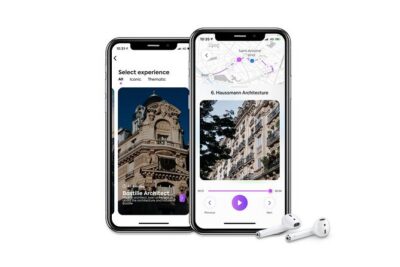
Bastille’s Architecture & Artisans Self-Guided Walking Tour
Read our review →
Tasting of 6 wines at Château Haut Breton Larigaudière
Read our review →
Private Art Nouveau and Art Deco tour near Opera
Read our review →

Neoclassical Paris Architecture 2-Hour Private Walking Tour
Read our review →
Marseille Belvedere: The city through architecture
Read our review →Other lists with this tour