
Review · WASHINGTON DC
Historic Georgetown Architectural Walking Tour
Georgetown’s story comes alive when you leave the shopping streets and follow its old canal, cobbled lanes, grand homes, university buildings, and riverside paths. This two-hour walking tour covers about 2 miles, moving from Baked & Wired to the Georgetown Waterfront with a local guide explaining the people and places along the way.
I like the route’s variety, especially the shift from the C&O Canal and Old Stone House to the quieter residential streets and Georgetown University. I also like the small-group limit of 20, which gives you a better chance to hear the guide and ask questions. The main consideration is simple: this is a walking tour over historic streets and steps, so you need a moderate level of fitness.
Key details before you book
- Start with Georgetown’s canal story: Meet at Baked & Wired at 10am, then begin beside the C&O Canal and learn how it linked Potomac River communities with markets and supplies.
- See more than the postcard sights: The route includes old homes, churches, schools, a former tavern, Pomander Walk, Volta Laboratory, Georgetown University, and Cady’s Alley.
- Expect about 2 miles on foot: The pace is described as leisurely, but the route includes cobblestones and the Exorcist Steps.
- Enjoy a history-first tour: Architecture matters here, but the emphasis is on residents, institutions, scandals, inventions, and Georgetown’s growth.
- Finish beside the Potomac: The tour ends at Georgetown Waterfront Park, a useful spot for continuing your own afternoon.
- Plan for a small group: A maximum of 20 people keeps the experience more personal than a large city walk.
Why Georgetown works so well on foot
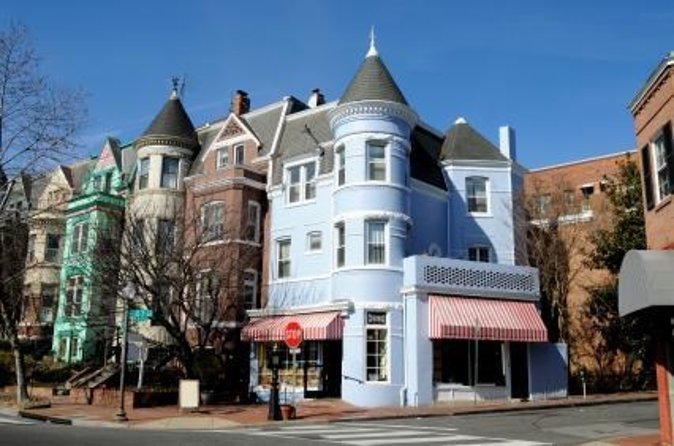
Georgetown can seem like a district of polished shops, brick sidewalks, and expensive homes. That surface is only part of the story. The neighborhood began as a port community before Washington, DC, was formed, and its position along the Potomac shaped its trade, streets, and social life.
This tour gives you a useful framework for reading the area. The canal is not just a pleasant strip of water. It points to Georgetown’s working past, when goods moved through the port and the town served nearby communities. The houses are not just pretty facades, either. The guide connects them with political figures, business owners, schools, churches, and families who helped shape the neighborhood.
I especially like this approach for a first visit. You get orientation before wandering on your own, and later, the names of streets and buildings make more sense. The route also spends time away from the busiest commercial blocks, where the narrow streets and residential buildings give you a calmer view of Georgetown.
The advertised price is $48 per person. That is not the cheapest way to walk around Georgetown, since you can see many exterior sights without paying an admission fee. The value comes from the narration and the structure. You are not simply looking at buildings. You are getting two hours of connected stories from a local guide, without having to research every address yourself.
More Walking Tours in the USA
- The Official Art Deco Walking Tour by The Miami Design Preservation League
★ 5.0 · 1,580 reviews - Chicago in a Day: Food, History & Architecture Walking Tour
★ 5.0 · 1,153 reviews - Miami South Beach Art Deco Walking Tour
★ 5.0 · 1,039 reviews
Starting at Baked & Wired and the C&O Canal
The meeting point is Baked & Wired at 1052 Thomas Jefferson Street NW. It is a practical beginning, since you can arrive early and buy a coffee, pastry, or dessert before the 10am departure. The tour itself starts with an overview of the C&O Canal.
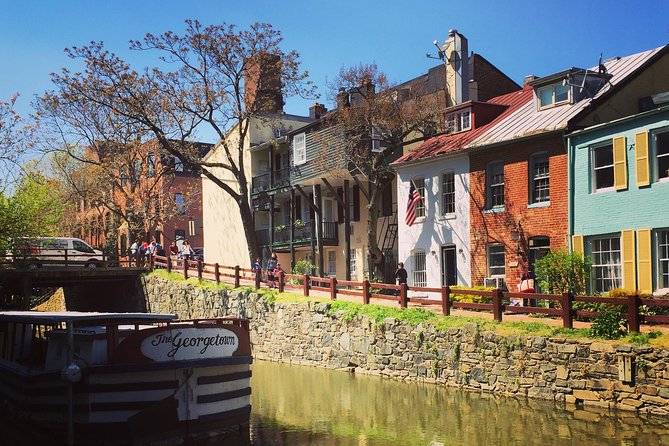
That opening is smart. You begin with the reason Georgetown mattered in the first place. The Chesapeake and Ohio Canal connected communities along the Potomac with markets and goods, and its history gives you a clear starting point for understanding the town’s economy.
The canal also helps set the pace. Rather than rushing straight into a list of famous residents, the guide can place the neighborhood in a larger story about trade and transportation. From there, the walk turns toward Georgetown’s older streets and buildings.
Old Stone House and Georgetown’s early character
One of the first stops is the Old Stone House, described as the oldest building in Washington, DC. You only spend about five minutes here, but it is an important contrast to the large mansions and fashionable streets nearby.
The house gives you a glimpse of Georgetown before the neighborhood became known for grand residences and university life. It is also a reminder that the district’s history is not limited to presidents and wealthy families. Older working structures help explain the town’s age and changing fortunes.
Admission to the listed stops is free, and the experience is mainly an exterior walking tour. You should not expect a long indoor museum visit at every address. The strength is in seeing many places in context, with the guide explaining why each one matters.
Historic homes, churches, and the east and west sides
From the Old Stone House, the route moves into Georgetown’s residential streets. You will hear about the Laird-Dunlop House and the Newton D. Baker House, along with other buildings connected to prominent residents.
The route also includes the Lydia English Seminary School for Girls, a boarding school that served upper-class students. This stop adds a social layer to the walk. Georgetown was not only a port and political neighborhood. It was also a place where schools, churches, and private institutions shaped the lives of families with money and influence.
The Grafton Tyler Double House offers another look at Georgetown’s residential design. The Christ Episcopal Church and Hyde-Addison School broaden the picture again, showing how religious and educational buildings fit into daily neighborhood life.
You will cross Wisconsin Avenue to the west side of town. That change matters because Georgetown is not one uniform display of brick row houses. Different sections have their own scale, architecture, and mood. The tour helps you notice those changes instead of treating the whole neighborhood as a single historic block.
The route also passes the Yellow Tavern, known as the White Horse Tavern. The description of this stop hints at the less respectable side of Georgetown’s past. That is useful. A good walking tour should include more than tidy civic stories, and this one makes room for old rivalries, salacious episodes, and colorful local characters.
Same streets, read through a different style:
- Chicago Architecture River Cruise
★ 5.0 · 15,756 reviews - Chicago River 90-Minute Architecture Tour
★ 4.5 · 9,629 reviews - Chicago River: 1.5-Hour Guided Architecture Cruise
★ 4.8 · 8,046 reviews - Chicago Architecture Center River Cruise aboard First Lady
★ 5.0 · 5,536 reviews
Pomander Walk and the smaller details
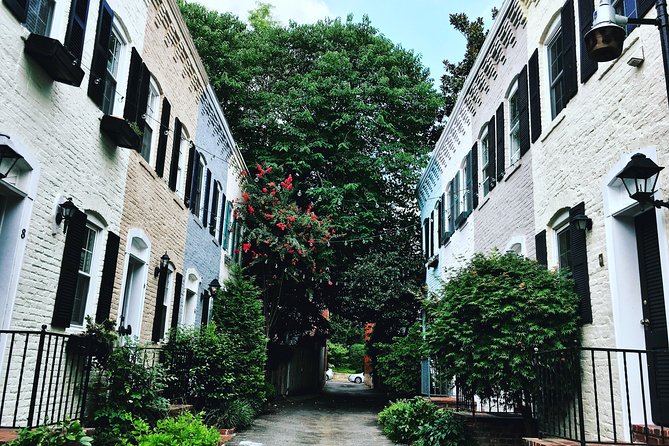
Pomander Walk is one of the more distinctive stops. Its tiny, pastel-colored row houses offer a sharp contrast to Georgetown’s larger homes and formal facades.
This is the kind of place that is easy to miss if you are walking without a guide. You might pass through, admire the colors, and move on. With the history explained, the lane becomes part of a larger conversation about the ways Georgetown’s builders used small spaces, attached homes, and carefully shaped streets.
The route also brings you to homes linked with important Washington figures, including Jacqueline Kennedy and Ben Bradlee. These connections will appeal to anyone interested in political and social history, but the walk does not depend only on famous names. The surrounding architecture and neighborhood pattern remain part of the story.
I would keep your expectations realistic. This is not a specialist architectural survey with technical drawings or a long discussion of building materials. It is a broad introduction that uses houses and streets to tell human stories. One past participant summed up the balance well: the tour includes some architecture, but more history. That is a useful way to approach it.
Volta Laboratory and Georgetown’s academic side
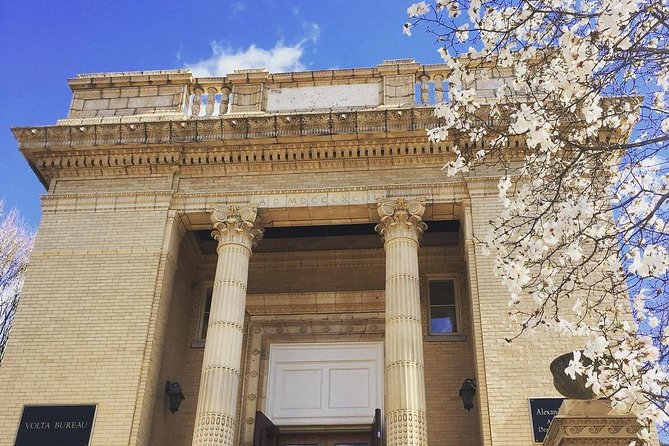
A particularly interesting stop is the place where Alexander Graham Bell founded Volta Laboratory. It adds science and invention to a route that might otherwise seem focused on old homes and political families.
The laboratory connection also shows how much change Georgetown has absorbed. The neighborhood’s story moves from canal commerce to private schools, religious institutions, scientific work, and university life. You get a sense of a place that kept adapting while retaining its older street plan.
The tour then turns toward Georgetown Preparatory School and Georgetown University. At the university, you will see Healy Hall and the University Library. These buildings bring a stronger academic presence to the second half of the walk.
Healy Hall is one of the visual highlights, but the value of the university section is not just the architecture. The campus helps explain Georgetown’s identity as a place where old institutions and student life exist beside private homes and small businesses. The guide also points out The Tombs, giving you a look at the campus nightlife connected with the university.
The route through the university area may be especially appealing to families with teenagers or students considering colleges. One family described the tour as suitable for middle-school age and older, which fits the range of topics: invention, local politics, schools, famous residents, and even the Exorcist connection.
The Car Barn, Exorcist Steps, and the final walk
The Georgetown Car Barn is another strong stop. This former streetcar depot has been renovated, and it helps explain how transportation changed the neighborhood after the canal era.
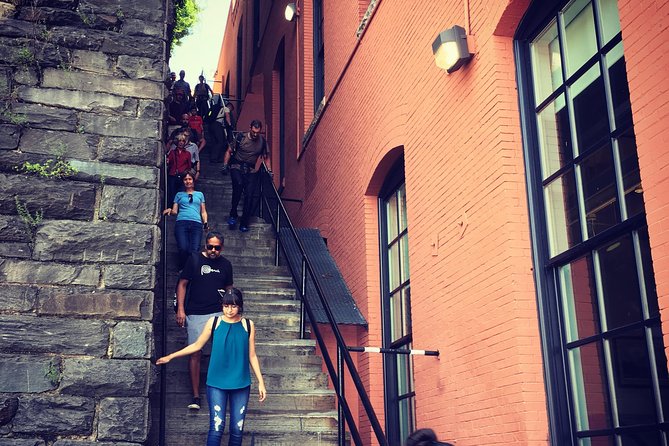
The route later includes the Exorcist Steps, a famous set of stairs associated with the film. This is one of the tour’s more playful moments, especially if you know the movie. It also gives the walk a physical challenge near the end, so comfortable shoes are a good idea.
The tour description includes Francis Scott Key Memorial, Cady’s Alley, and the Georgetown Waterfront. The memorial connects the neighborhood to a well-known American writer and figure, while Cady’s Alley brings you back to Georgetown’s mix of older structures and newer uses.
The finish at Georgetown Waterfront Park is well chosen. You end beside the Potomac after moving through canals, homes, schools, campus buildings, and commercial lanes. It feels like a natural closing point rather than an arbitrary street corner.
Since the tour ends at 3303 Water Street NW, you can continue exploring after the guide leaves. The supplied details do not promise a particular restaurant, museum, or boat activity afterward, so treat the waterfront simply as a convenient place to pause and decide what comes next.
How the guides shape the experience
This tour depends heavily on the guide. The route contains many stops, and the buildings themselves do not explain their stories. The guide has to keep the pace moving while making the history clear.
Past guides named in the tour’s feedback include Brian, Kim, Caroline, Sam, Christine, and Ellery. Their praised qualities are consistent: clear storytelling, humor, patience, professionalism, and an ability to answer questions. Christine was also noted for giving a nearby ice cream suggestion, a small but useful touch at the end of a morning walk.
Brian’s tour was described as especially good for connecting Georgetown with the wider formation of Washington, DC. Sam was praised for engaging narration, while Ellery was described as personable and entertaining. You cannot choose a particular guide from the information provided, but these names give you a sense of the guiding style to expect.
The overall rating is 4.9 from 77 ratings, with 97 percent recommending the experience. Those numbers suggest a strong level of satisfaction, but the practical lesson matters more: people value the storytelling and the way the guide brings order to a large number of sights.
Walking conditions, timing, and group size
The tour begins at 10am and lasts about two hours. Morning is a sensible time for this route because it leaves you most of the day for museums, shopping, lunch, or more sightseeing.
You will walk about 2 miles, or 3.2 kilometers, at a leisurely pace. That is manageable for many people, but the distance is not the only factor. Georgetown includes cobblestones, uneven historic streets, and the Exorcist Steps. You should have moderate physical fitness and wear shoes suited to walking.
The group can include up to 20 people. That is small enough for a guide to provide personal service, though it is not a private tour. If asking questions is important to you, stand near the guide and speak up when the group pauses.
A mobile ticket is provided, and the tour is offered in English. Service animals are allowed, and the meeting point is near public transportation. The supplied details do not give a specific accessibility route or guarantee step-free access, so anyone concerned about stairs or uneven surfaces should confirm before booking.
Free cancellation is available up to 24 hours before the start time for a full refund. Changes or cancellations inside that window are not accepted, and the tour requires a minimum number of people to operate.
Who will get the most from this walk
I would recommend this tour to a first-time Georgetown visitor who wants a clear overview without spending half a day indoors. It also suits history fans, families with older children, couples, and solo visitors who prefer a guided introduction to a complicated neighborhood.
The tour is a good match if you enjoy stories about houses and their residents, old schools, churches, local scandals, inventions, and university life. It is also useful if you have visited Georgetown before but mostly stayed on the main shopping streets. The route shows you a quieter side of the district.
I would choose another experience if you want a narrow focus on architectural technique, a private guide, or extended access inside historic buildings. The tour covers a lot of ground in two hours, so each stop receives a short explanation rather than a long examination.
Should you book the Historic Georgetown Architectural Walking Tour?
Book it if you want a well-organized introduction to Georgetown that mixes architecture with people, politics, education, science, and local color. The route is varied, the group size is reasonable, and the finish at the waterfront makes it easy to keep exploring.
At $48, you are paying for interpretation rather than admission tickets. That is worthwhile if you want the neighborhood to make sense quickly and enjoy a guide who can connect the C&O Canal, Volta Laboratory, Georgetown University, the Exorcist Steps, and old residential streets in one compact walk.
Skip it if two miles of walking, cobblestones, and steps would be uncomfortable, or if you prefer to explore at your own speed. For most visitors with moderate fitness, this is a strong morning choice and one of the better ways to get your bearings in Georgetown.
FAQ
How long is the Historic Georgetown Architectural Walking Tour?
The tour lasts approximately two hours.
How far do you walk?
You walk about 2 miles, or 3.2 kilometers, at a leisurely pace.
Where does the tour begin?
The meeting point is outside Baked & Wired at 1052 Thomas Jefferson Street NW, Washington, DC 20007.
What time does the tour start?
The tour starts at 10am.
Where does the tour end?
The tour ends at Georgetown Waterfront Park at 3303 Water Street NW, Washington, DC 20007.
How large is the group?
The maximum group size is 20 people.
Is cancellation allowed?
Yes. You can cancel up to 24 hours before the experience for a full refund. Cancellations or changes made less than 24 hours before the start time are not accepted.
More History Walks around the USA
- Charleston’s Best Highlights: History, Culture & Architecture
★ 5.0 · 422 reviews - Palm Springs Modernism Architecture & History Bike Tour
★ 5.0 · 359 reviews - Charleston: History and Architecture Guided Walking Tour
★ 4.8 · 349 reviews - Historic Georgetown: History, Gossip, & Architecture Walking Tour
★ 5.0 · 321 reviews
New to the itinerary around the USA
- Washington, DC: Georgetown Architecture Walking Tour★ 5.0 · 8 reviews
- Wilmington History and Architecture Tour★ 4.8 · 18 reviews
- Washington DC: Dupont Circle & Embassy Row Architecture Tour★ 5.0 · 6 reviews
- New Orleans : Garden District Architecture Walking tour★ 4.8 · 5 reviews
- Private Colonial Williamsburg Architectural Tour★ 5.0 · 5 reviews
- Tulsa: Art Deco Walking Tour of Tulsa★ 5.0 · 8 reviews
- Castle to Capitol: Museums of the National Mall Architecture Tour★ 4.5 · 9 reviews
- Monuments and Memorials Architectural Walking Tour★ 5.0 · 17 reviews
USA Architecture Tours, compared.
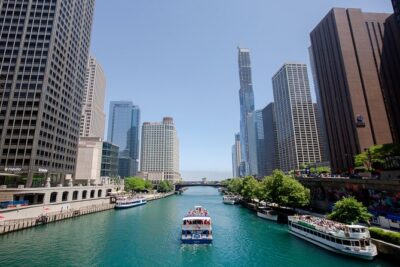
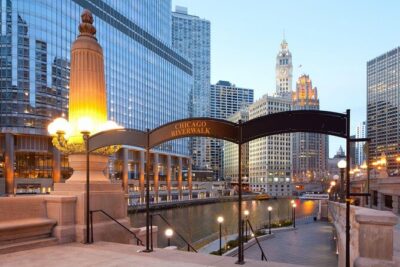

Chicago River: 1.5-Hour Guided Architecture Cruise
Read our review →
Chicago Architecture Center River Cruise aboard First Lady
Read our review →
Architecture River Cruise Skip-the-Ticket Line
Read our review →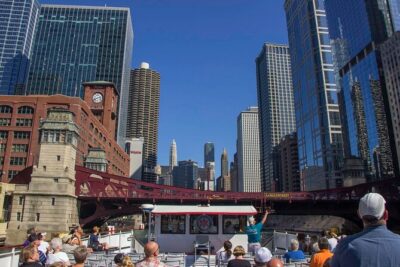
Chicago River 45-Minute Architecture Tour from Magnificent Mile
Read our review →
45-Minute Family-Friendly Architecture River Cruise
Read our review →Other lists with this tour