
Review · BERLIN
Berlin: Karl-Marx-Allee Tour of Life and Architecture in GDR
Karl-Marx-Allee tells the story of East Germany in one long, imposing stretch of Berlin. You walk past monumental housing blocks built to display socialist success, then learn how workers’ anger over those very policies helped trigger the 1953 uprising. The boulevard looks grand, but its story is full of tension.
I like the way this tour connects buildings to daily life instead of treating architecture as decoration. I also like the route’s focus on Stasi surveillance, including hidden listening posts and wiretaps that sat behind the polished public image. The main consideration is simple: two hours on a broad urban street means plenty of walking, so comfortable shoes matter.
Key points to know before you go
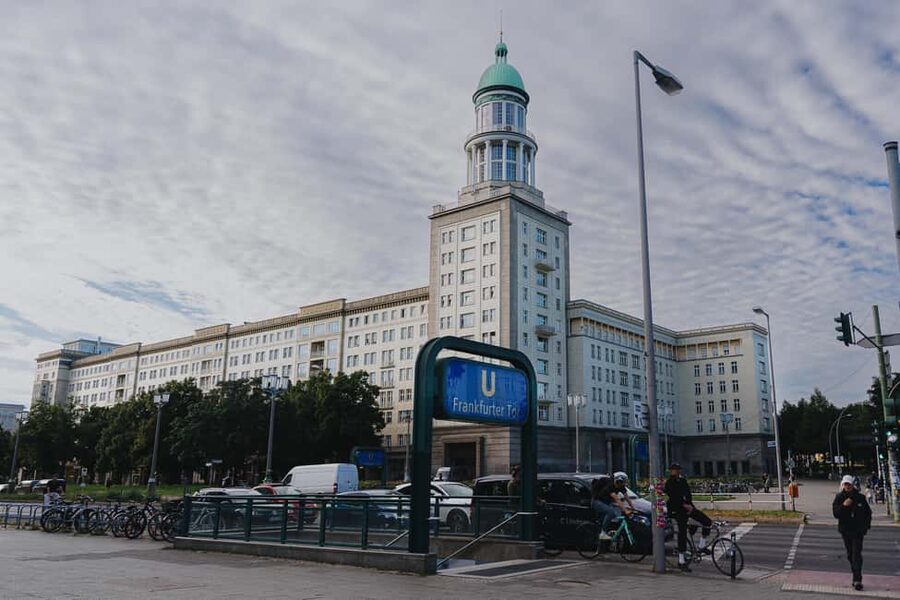
- Walk from Frankfurter Tor to Strausberger Platz: The route follows one of East Berlin’s most important ceremonial avenues.
- See socialist classicism up close: The grand housing blocks were designed to project strength, order, and prosperity.
- Learn about June 1953: The boulevard’s construction helped fuel a workers’ uprising that nearly brought down the young East German government.
- Look behind the perfect facade: The tour explains Stasi wiretaps, attic listening stations, and the gap between public image and private life.
- Connect the past with Berlin today: Karl-Marx-Allee now appears in discussions about housing costs, redevelopment, and gentrification.
- English or German guiding: Recent feedback specifically praises Martina for answering questions and telling the story in a lively, thoughtful way.
Why Karl-Marx-Allee is more than a grand boulevard
Many Berlin architecture walks show you impressive buildings and leave the history at the curb. Karl-Marx-Allee works differently. Here, the architecture is the evidence.
The avenue was the largest building project in former East Berlin after World War II. The young East German government wanted to rebuild from wartime ruins while announcing that socialism could provide clean, modern, comfortable homes for ordinary workers. The result was not a modest residential street. It was a monumental display of power.
As you walk, the scale does much of the talking. The housing blocks make you feel small, which was part of the point. Their broad facades, formal details, and carefully planned appearance presented the state as orderly and capable. This was housing, but it was also political theater.
I find that setting useful because it helps you read Berlin’s Cold War divisions through stone, brick, and street width. The western side of the city often promoted modernist simplicity and commercial freedom. East Berlin initially chose a grander style, known as socialist classicism, to show that its vision of the future could be both modern and monumental.
More Architecture Tours around Germany:
- Munich 3-Hour Segway Tour: Nazi Munich & Royal Architecture
★ 4.9 · 194 reviews - Düsseldorf: Guided City Architecture Walking Tour
★ 4.6 · 61 reviews - Hidden Architectural Gems of Munich (Max. 16 guests)
★ 4.9 · 52 reviews
Starting at Frankfurter Tor and reading the first clues
The meeting point is outside the Frankfurter Tor underground station, beside the southern tower at the corner of Warschauer Straße and Karl-Marx-Allee. Look for the guide with an orange umbrella. That small detail matters at a busy station, especially if you are arriving with a group or trying to find the correct side of the road.
Frankfurter Tor gives you an immediate sense of the avenue’s scale. The towers and broad street create a formal entrance, almost like a gate into a planned capital. From here, the guide begins walking west toward Strausberger Platz.
The route is mostly about looking carefully. You might notice the repeated shapes of the buildings, the large spaces between them, and the way the avenue was designed for more than residents. It was also made for official ceremonies, public gatherings, and socialist parades.
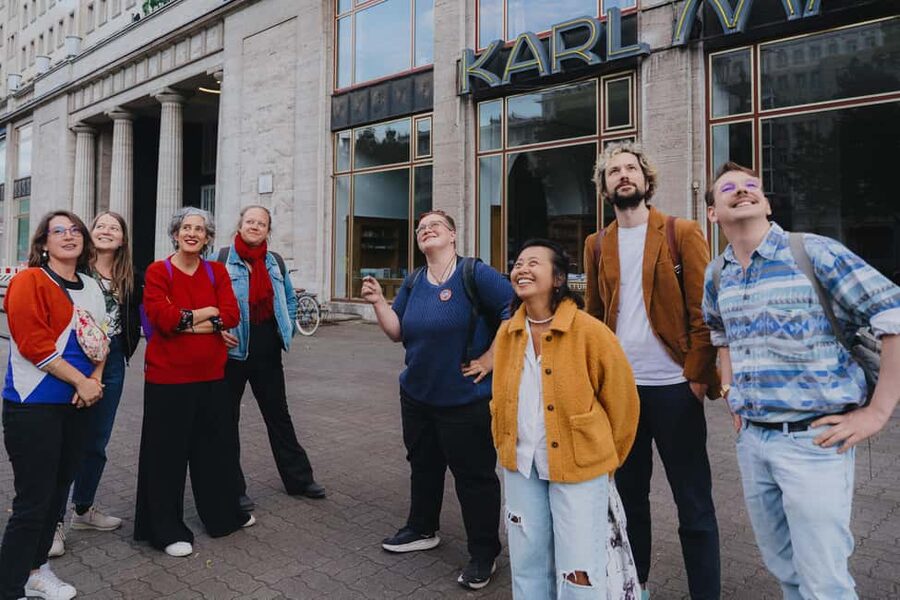
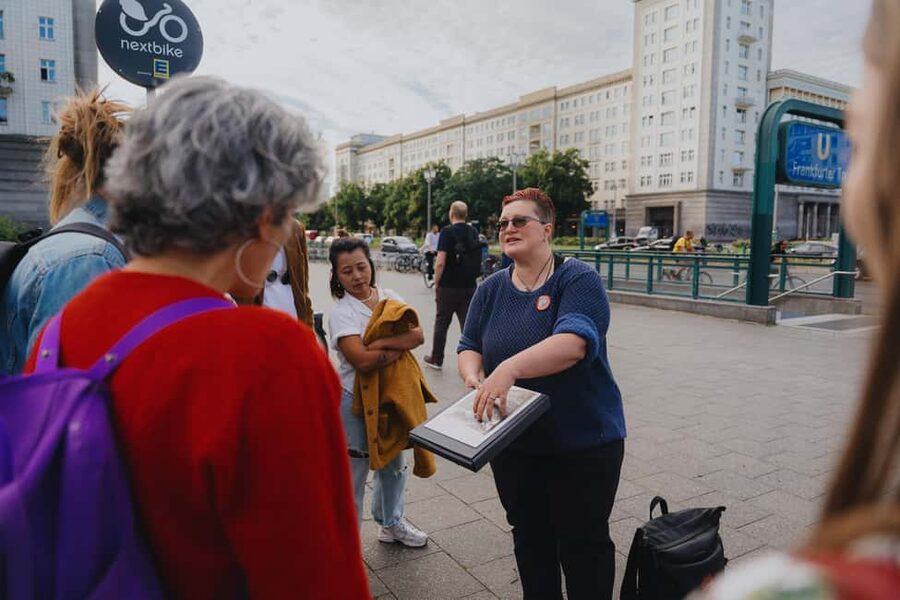
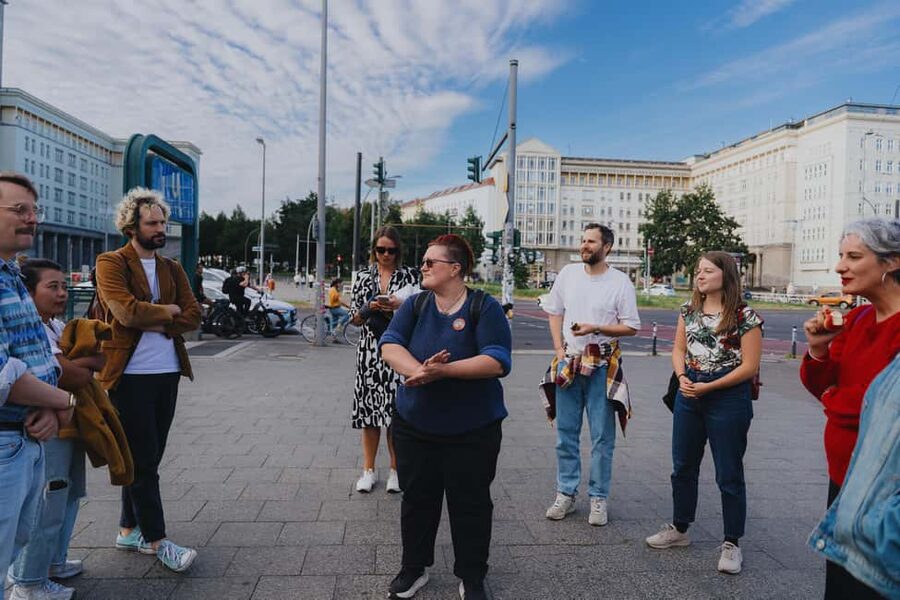
A good guide helps you avoid seeing only an oversized boulevard. Martina, one of the guides praised in the feedback, is described as responding to curious questions rather than simply reciting a fixed script. That is exactly the quality you want here. Karl-Marx-Allee raises natural questions: Why are the buildings so grand? Who lived here? Why did the design change? What happened behind the doors?
Socialist classicism and the promise of a better life
The best-known buildings along Karl-Marx-Allee come from the 1950s. Their style rejected the spare modernism that had shaped some earlier postwar projects. The East German regime wanted architecture that looked more traditional, official, and unmistakably socialist.
The avenue was meant to offer the best East Berlin could provide. Cafes, restaurants, and well-stocked shops helped create an image of comfort and abundance. The homes were part of that message. They were not simply emergency shelters in a damaged city. They were meant to show that the new state could reward workers with a decent urban life.
That image was carefully managed. You will hear how public presentation and private reality could differ sharply. The buildings suggested stability and openness, while the state maintained a system of control that reached into private homes.
This is where the tour becomes more useful than a basic architecture walk. You are not asked to admire the facades without question. You are encouraged to consider what these buildings promised, who received the best housing, and how much of the boulevard’s public image was designed to persuade.
The earlier modernism hidden by poplar trees

Karl-Marx-Allee’s story does not begin with the most famous 1950s blocks. Earlier postwar buildings reflected modernist ideas about rebuilding the city after destruction. These designs were tied to utopian hopes that a new society could emerge from the ruins of Berlin.
Later, the East German leadership rejected this approach. The regime preferred a more monumental style for its flagship avenue. Some of the earlier modernist buildings were also visually screened from the street by fast-growing poplar trees.
That detail gives the tour a strong sense of change over time. The avenue was not built according to one fixed plan from the beginning. Its architecture shifted as the political leadership changed its ideas about what socialist living should look like.
I like this part because it keeps the story from becoming too simple. East German architecture was not one uniform style. The avenue contains layers of political decisions, changing tastes, and competing ideas about how a socialist city should look.
Same streets, read through a different style:
- Potsdam: Guided Walking Tour of UNESCO Site and Architecture
★ 4.7 · 49 reviews - Private Taxi Tour City East & West History and Architecture 3-4h
★ 5.0 · 42 reviews - Stuttgart city library – an architectural tour
★ 4.4 · 27 reviews - Karl-Marx-Allee Tour: Life and Architecture in East Berlin
★ 5.0 · 19 reviews
The 1953 uprising and the cost of reconstruction

The most dramatic chapter comes in June 1953. Workers who were already angry about the demands placed on them began a mass uprising. The building program and labor policies connected to the avenue helped create the conditions for protest.
The revolt spread beyond one construction site and threatened the existence of the young East German government. The tour explains how a project designed to display socialist strength almost exposed the state’s weakness.
This is a key reason to take the walk in person. A history book can tell you that the uprising happened, but standing along the huge avenue makes the political stakes easier to picture. The boulevard was supposed to represent a successful new society. Instead, it became tied to one of the most serious challenges the regime faced.
The story also changes the way you see the workers who built the street. They were not just anonymous figures in a reconstruction effort. They were people dealing with pressure, shortages, and political demands. The grand result came at a human cost.
Behind the facades: Stasi surveillance

The public face of Karl-Marx-Allee was bright, ordered, and carefully presented. The private system behind it was much less reassuring.
The tour covers the role of the Stasi, East Germany’s secret police, and the surveillance methods used in residential buildings. Wiretaps could be placed in flats, while listening stations in attics allowed officials to monitor residents without being seen.
These details matter because they give the buildings a second identity. The apartments were symbols of modern socialist living, but some also became places where private life could be watched. The polished public image depended on keeping that system out of sight.
You should not expect a tour inside private apartments or a museum-style display of surveillance equipment. The available information points to an outdoor architectural and historical walk. The value comes from learning how to interpret the spaces around you and understanding what was deliberately hidden.
The connection to The Lives of Others adds a useful popular-culture link. You will also see filming locations associated with The Queen’s Gambit. These references can help you recognize the avenue, but the tour’s main subject remains the real history of East Berlin rather than film trivia.
From neglected relic to contested real estate
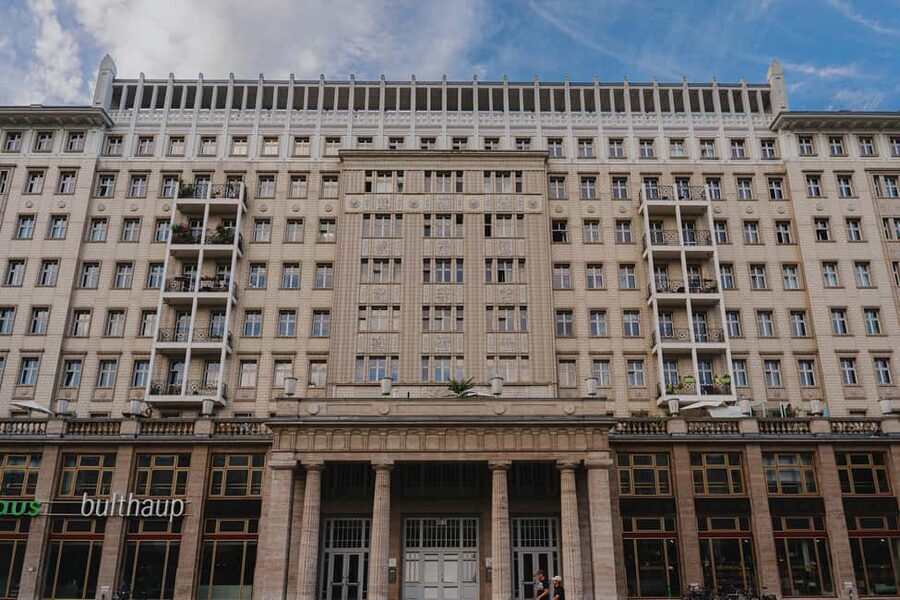
After the Berlin Wall fell, Karl-Marx-Allee lost its official role. The avenue was no longer the center of socialist parades, and its buildings began to look like relics from a political system that had disappeared.
Over time, the street gained new attention for a very different reason. Berlin’s housing shortage and rising property values made the large, centrally located apartments attractive to real estate interests. The avenue moved from state showcase to neglected curiosity, then toward a new struggle over who gets to live in central Berlin.
Today, it is also a place where local protests address gentrification and rising living costs. That gives the tour a direct link to present-day Berlin. The political system has changed, but housing remains a major public issue.
I appreciate that the tour does not treat the GDR as a sealed-off chapter. Karl-Marx-Allee still affects people who live there, use the surrounding streets, or worry about the cost of staying in the city. The setting lets you compare two very different systems while asking a similar question: who benefits from the way a city is planned and developed?
The walk from Strausberger Platz and the practical pace
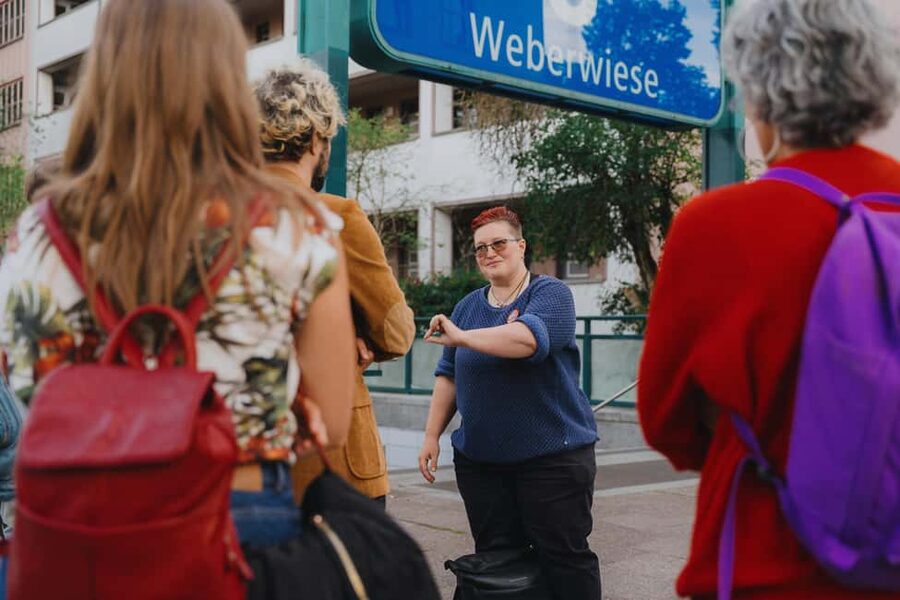
The guided portion lasts about 1.5 hours, while the full activity is listed as two hours. It begins at Frankfurter Tor and ends at the U Strausberger Platz station, so you finish with a clear public transport connection rather than being left in the middle of the avenue.
The walk is long enough to build a story but short enough to fit into a busy Berlin day. You can pair it with other East Berlin sights, though you should allow time before the start to locate the correct meeting point at Frankfurter Tor.
The street is broad and exposed. Comfortable shoes are specifically recommended, and I would take that advice seriously. The tour is wheelchair accessible, but the route still covers a substantial urban distance, so it is sensible to consider your own pace and comfort.
The guide speaks English or German. If you have a strong interest in architecture, politics, film locations, or Cold War history, bring questions. The best feedback highlights the guide’s willingness to respond to curiosity and explain ideas in a lively, considered way.
Is $29 a fair price?
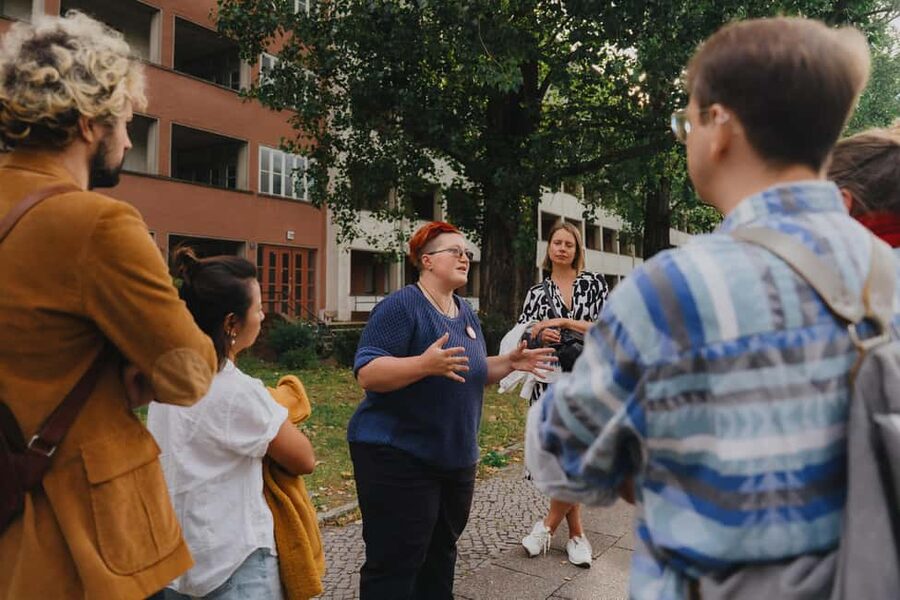
At $29 per person, this is a reasonable price for a two-hour guided walk, especially if you want historical context rather than a quick look at the buildings. You are paying for a live guide who links architecture, labor unrest, surveillance, film locations, and current housing debates.
The value depends on your interests. If you only want photographs of monumental facades, you can walk Karl-Marx-Allee on your own for free. If you want to understand why the street looks this way and how its political meaning changed, the guide adds the part you cannot easily get from the pavement alone.
The perfect score from nine ratings and the especially positive comments about storytelling support the idea that the human guide is the main reason to book. Martina is singled out for being responsive and engaging, while another review describes the experience as intimate and informative. The small number of ratings means I would not treat that score as a guarantee, but the praise points to a clear strength: thoughtful explanation rather than a rushed list of dates.
Flexible booking also helps. You can reserve now and pay later, and cancellation is free up to 24 hours before the start. Those terms are useful if your Berlin schedule is still shifting.
Who will enjoy this walk most?
I would recommend it to adults and older children who enjoy seeing how political ideas shape ordinary streets. It suits first-time visitors who want a more focused look at East Berlin, as well as repeat visitors who have already seen the Wall and want to understand the city beyond the usual memorials.
It is especially good for you if you enjoy:
- Architecture with a political story
- Cold War history and the East German state
- The 1953 workers’ uprising
- Stasi surveillance and daily life under socialism
- Film locations connected with The Lives of Others and The Queen’s Gambit
- Current debates about housing and gentrification
Children under 10 are not suitable for this activity. Younger visitors may also find the political detail and two-hour walking format less appealing.
Should you book the Karl-Marx-Allee tour?
Book it if you want Berlin history tied to a real street rather than presented as a string of museum facts. The route shows how an avenue could be a housing project, a propaganda display, a site of worker resistance, a place of surveillance, and a modern housing battleground all at once.
Skip it if you dislike walking tours or mainly want interiors, exhibitions, or famous landmarks. The experience takes place along Karl-Marx-Allee, and its strength is the guide’s explanation of what you are seeing.
For $29, I think it is a sound choice for curious adults, architecture fans, and anyone who wants to understand East Berlin’s built environment. Meet at Frankfurter Tor, find the orange umbrella, wear comfortable shoes, and arrive ready to look past the grand facade.
FAQ
Where does the Karl-Marx-Allee tour begin?
It begins outside the Frankfurter Tor underground station, by the southern tower at the corner of Warschauer Straße and Karl-Marx-Allee. Look for the guide holding an orange umbrella.
Where does the tour end?
The walk ends at the U Strausberger Platz underground station.
How long does the tour last?
The activity lasts two hours. The guided walk along Karl-Marx-Allee is listed as 1.5 hours.
What languages are available?
The tour is offered in English and German.
Is the tour wheelchair accessible?
Yes, the activity is wheelchair accessible.
What should I bring?
Bring comfortable shoes for the walking route.
Are children allowed on the tour?
Children under 10 are not suitable for this activity.
What is included in the price?
A guide is included. The listed price is $29 per person.
New to the itinerary around Germany
- Munich Your Way: Private Tour with Architect & Guide★ 5.0 · 2 reviews
- Hidden Architectural Gems of Munich (Max. 16 guests)★ 5.0 · 2 reviews
- Architectural Frankfurt: Private Tour with a Local Expert★ 5.0 · 2 reviews
- Berlin Architecture/River Spree Full Day Photography Tour★ 5.0 · 2 reviews
- Private Taxi Tour of City East History and Architecture 2-3h★ 5.0 · 2 reviews
- Architectural Berlin: Private Tour with a Local Expert★ 4.0 · 3 reviews
- Lübeck: Architecture and Local Craft Private Guided Tour★ 4.0 · 6 reviews
- Lübeck: Private Historical and Architectural Walking Tour★ 4.5 · 6 reviews
Berlin Architecture Tours, compared.
Private Taxi Tour City East & West History and Architecture 3-4h
Read our review →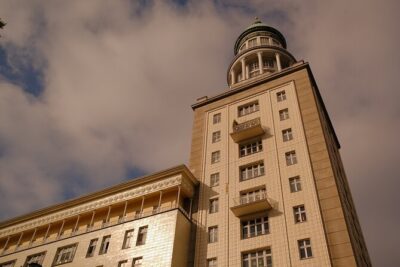
Karl-Marx-Allee Tour: Life and Architecture in East Berlin
Read our review →
Guided Architectural Walking Tour of Hansaviertel
Read our review →
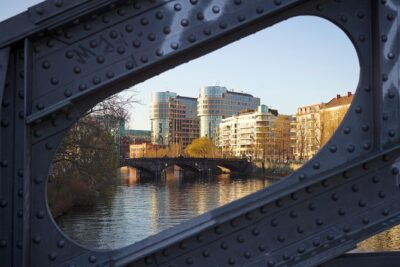
Berlin Architecture/River Spree Full Day Photography Tour
Read our review →Other lists with this tour