
Review · PARIS
Architectural Bourgeois Paris 19th Century
Paris changes character around Parc Monceau. In two hours, this walking tour takes you from an English-style park and private mansions to Baron Haussmann’s broad avenues, a Second Empire church, a grand railway station, and the glittering interior of Galeries Lafayette. Belle Époque Paris comes through here as a living neighborhood, not just a chapter in a guidebook.
I like the small group, limited to 10 people, and the focus on one period rather than a hurried survey of all Paris. I also like the guide’s specialist angle. François, a historian focused on 19th-century Paris, speaks French and English and adds useful links between architecture, industry, writers, wealthy families, and the rise of department stores. The possible drawback is the steady two-hour walk, with no coffee stop included and limited time at each sight.
Key points to know before booking
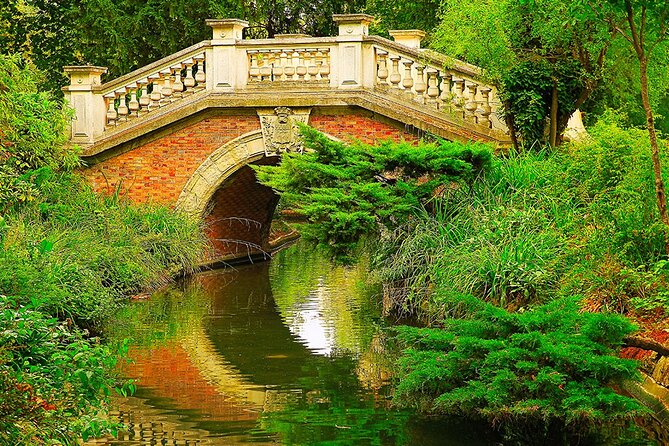
- Parc Monceau begins the story: See its colonnade, bridge, pyramid, unusual trees, and nearby private mansions.
- Haussmann’s Paris gets proper attention: The walk explains how Baron Haussmann reshaped the city with broad boulevards and uniform apartment blocks.
- The route mixes famous and less obvious sights: Saint-Augustin Church, the rear of Gare Saint-Lazare, and grand commercial buildings all have a place.
- François brings a historian’s eye: He is comfortable in both French and English and focuses on the 19th century.
- Galeries Lafayette provides the finale: The tour ends inside one of Paris’s great department stores, during opening hours.
- The price reflects the setting and small group: At $68.65 per person, you are paying for a specialist-led walk, not transport, food, or a full-day sightseeing package.
A focused walk through bourgeois Paris
This is not a general introduction to Paris. It is a close look at the city shaped by wealthy families, new industries, ambitious urban planning, and the cultural life of the 19th century.
That focus is the main reason to book. You are not simply moving from one postcard sight to another. You are following a theme. The parks, private houses, church, station, boulevards, and department stores all fit into a story about how Paris looked and felt during the Belle Époque and the decades that led to it.
The route begins at Monceau, in the 17th arrondissement, at 10:30 a.m. It finishes at 40 Boulevard Haussmann, inside or at Galeries Lafayette. The tour lasts about two hours and uses a mobile ticket. With a maximum of 10 people, the group should be small enough for questions and a more personal exchange with the guide.
The route is best for someone who already knows the basic Paris sights and wants a more specific subject. It also suits architecture lovers, readers of 19th-century French literature, and anyone curious about how money, railways, retail, and city planning changed daily life.
More Architecture Tours around France:
- Reims Art Deco guided tour
★ 4.5 · 26 reviews - Bastille’s Architecture & Artisans Self-Guided Walking Tour
★ 4.5 · 18 reviews - Private Art Nouveau and Art Deco tour near Opera
★ 5.0 · 15 reviews
Parc Monceau: a pleasure ground for the Parisian elite
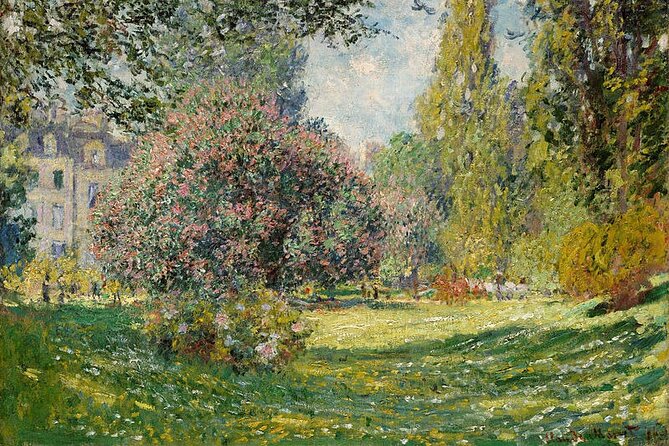
Parc Monceau gives the tour a graceful opening. You walk through a park filled with visual oddities: an ancient-looking colonnade, a bridge, a pyramid, and striking trees. The mix is deliberate and theatrical. This is not simply a patch of green for a quick stroll.
The park helps explain the tastes of wealthy 18th- and 19th-century Parisians. It offers nature, architectural decoration, and a sense of cultivated leisure in one place. François uses the setting to talk about the buildings and people around it, so you are looking beyond the paths and flowerbeds.
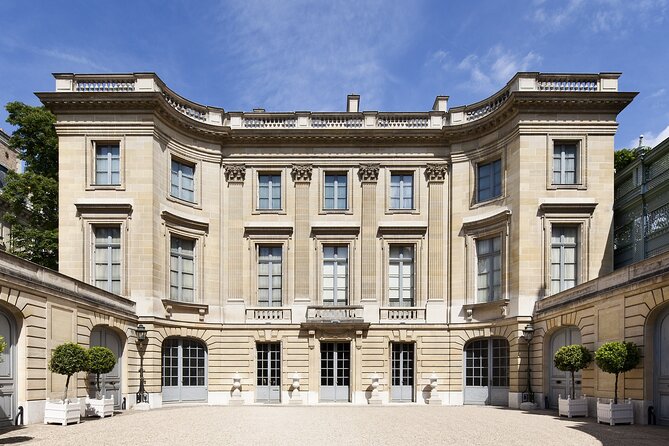
The nearby buildings add weight to the first half hour. You pass Hôtel Menier, the Pagoda of Mr. Loo, and the private mansion associated with Camondo. These are not interchangeable apartment blocks. Each points to the private world of wealthy owners who wanted their homes to express taste, status, or fascination with distant cultures.
Allow yourself time to look upward and across the park. The tour includes plenty of photo opportunities, and this opening section is likely to produce some of the most varied pictures. The tradeoff is that the park section lasts about 30 minutes, so you will hear an explanation rather than explore every corner at leisure.
Baron Haussmann and the new shape of Paris
At the statue of Baron Haussmann, the tour shifts from private pleasure to public planning. Haussmann is the central figure behind the broad boulevards and ordered apartment façades that many people think of as typical Paris.
The point is not just to admire handsome streets. You get a chance to consider why the city was rebuilt in such a forceful way. The walk passes through the heart of Haussmannian Paris, where wide roads and repeated building forms create a very different city from the older, tighter medieval quarters.
This 20-minute stop works best if you pay attention to the relationship between street width, building height, and the long views down the avenues. The tour places the statue in context, then shows you the urban fabric he helped create.
You should not expect a museum-style presentation or a long stop at the monument. This is an outdoor explanation while you continue walking. That keeps the pace moving, but it also means you may want to ask questions as they arise. François has the specialist background to connect the visible buildings with 19th-century political and social change.
Saint-Augustin Church and a possible Proust detour
Saint-Augustin Church brings the tour indoors. Built around 1860, it belongs to the period you are studying, rather than serving as a much older interruption to the story.
That makes it a useful stop. You can see how religious architecture fit into the expanding, modernizing city of the 19th century. The church also gives you a brief change of pace after the park and boulevards.
The scheduled visit lasts about 20 minutes. That is enough to enter and take in the main space, but not enough for an extended study of every detail. Since the tour is built around the period, the church is valuable less as a stand-alone religious sight and more as part of the era’s architecture.
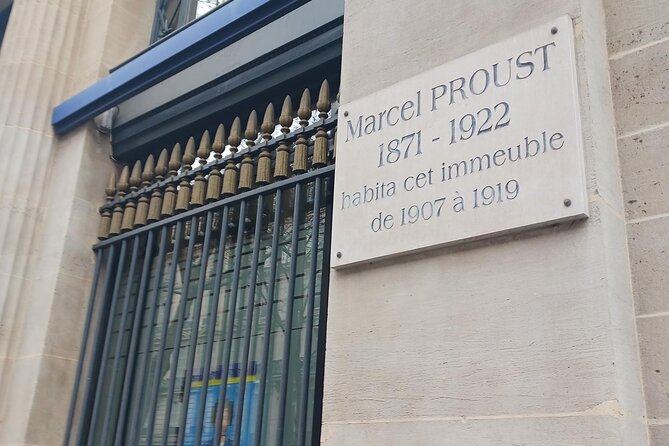
By request, the guide can make a detour to the place where Marcel Proust lived and wrote À la recherche du temps perdu. The available information does not give the extra walking time, so ask François at the start if this literary addition matters to you. The detour is especially appealing if Proust is one of your interests, but it may affect the pace of the planned route.
Same streets, read through a different style:
- Tasting of 6 wines at Château Haut Breton Larigaudière
★ 4.5 · 17 reviews - Strasbourg : Neustadt Architecture Walking Tour
★ 5.0 · 14 reviews - Neoclassical Paris Architecture 2-Hour Private Walking Tour
★ 5.0 · 7 reviews - Paris: Discover the hidden architecture gems of Le Marais
★ 3.8 · 4 reviews
Gare Saint-Lazare and the wealth created by railways
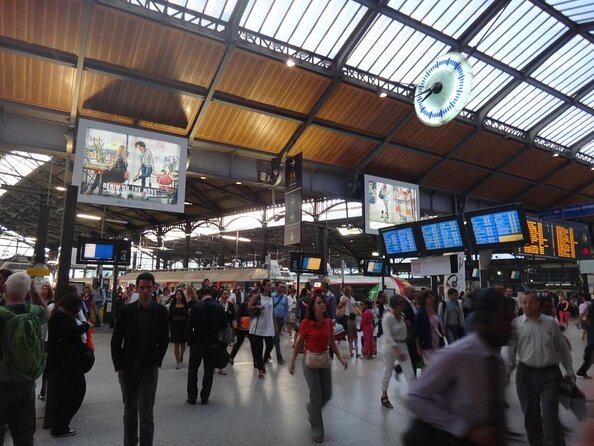
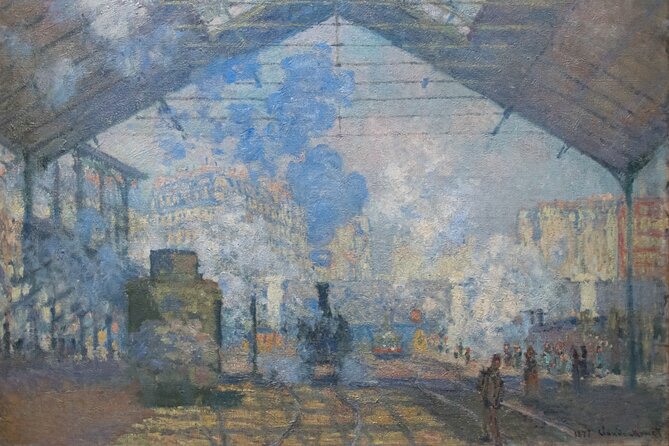
The route then reaches the back side of Gare Saint-Lazare. You do not enter the station as a main attraction, but its role in the story is important.
Railways helped drive the industrial and commercial growth of 19th-century Paris. New transport links supported business, travel, and the fortunes of entrepreneurs. Many wealthy people connected with this new economy lived in the neighborhoods covered by the walk.
This is one of the tour’s more useful connections. A railway station can look like a practical transport point, but here it becomes evidence of a much wider change. Industry created money, money supported grand homes and cultural projects, and those projects helped shape the district.
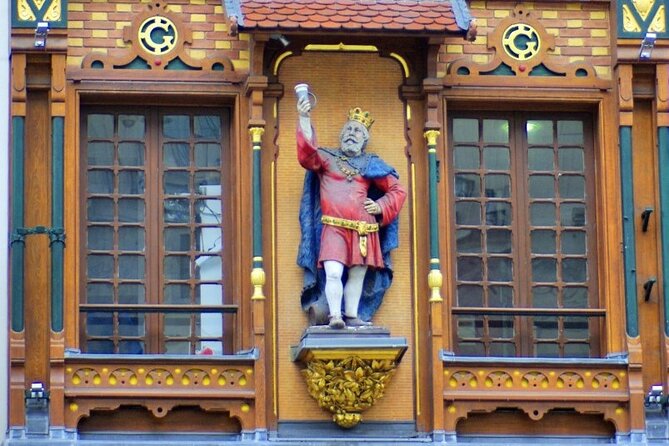
The station section lasts about 20 minutes. You also see a remarkable building associated with Le Roi de la Bière, with a McDonald’s restaurant now occupying part of the scene. That odd pairing gives the route a touch of humor. Paris constantly places old architecture beside modern commercial life, and this stop lets you see that contrast without pretending the city is frozen in the past.
Because this is an exterior pass by the rear of the station, you should not book the tour expecting a detailed railway visit. The value is the explanation of what the station meant to the surrounding neighborhood.
Printemps and the rise of the grand department store
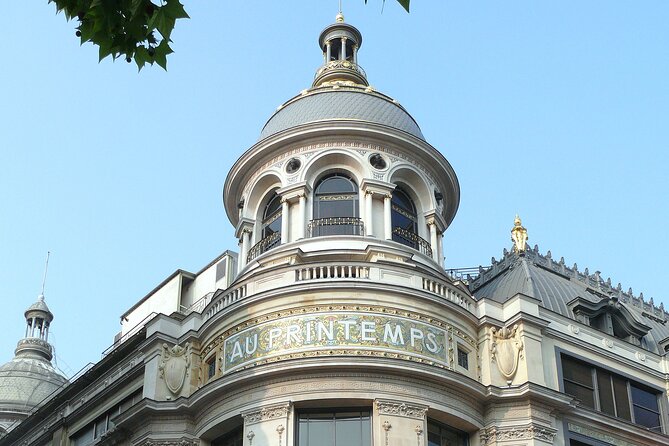
The final part of the walk explains another 19th-century invention: the grand department store. You pass Printemps before ending at Galeries Lafayette, where the guide invites you inside during opening hours.
This is a strong finish because it shifts the story from private wealth to public shopping. Department stores changed how people encountered goods, fashion, display, and urban entertainment. They were not simply large shops. They offered a new kind of commercial experience connected to the confidence and spending power of modern city life.
Galeries Lafayette also gives you an indoor ending, which can be welcome after two hours on foot. The experience includes entry during opening hours, but it does not include shopping credit, refreshments, or private transport. You are there to see the building and understand its place in 19th-century commercial culture.
The last section is scheduled for about 30 minutes. That should give you enough time to appreciate the interior and hear the guide’s explanation, though the exact amount of time inside may depend on the walking pace and opening conditions. If you want to browse the store afterward, plan extra time beyond the tour.
What the small group and specialist guide add
A group capped at 10 people is a real advantage on a history-focused walk. You can usually hear the explanation more clearly than in a large group, and it is easier to ask about a building, a writer, or a detail you notice along the way.
François is identified as a historian specializing in 19th-century Paris. One published assessment specifically praises his friendly manner, his command of French and English, and his ability to connect French history and culture to the route. The comment also points to a comfortable walking pace, which matters on a tour that covers several districts and five main stops.
You should still think of this as an outdoor walking lesson, not a formal lecture. The guide’s subject is broad enough to include art, architecture, nature, literature, railways, urban planning, and retail. That range is a strength, but the short duration means some topics will receive only a compact explanation.
The best approach is to arrive ready to look closely and ask focused questions. If you want the Proust detour, request it early. If you have a particular interest in Haussmann, Saint-Augustin, or the department stores, tell François so he can shape the conversation where possible.
Is $68.65 a fair price?
At $68.65 per person, this is not the cheapest way to walk around the 8th and 9th arrondissements. You could follow the same streets independently for the cost of a metro ride, and you would not need to pay an admission charge for the park or church.
The value comes from interpretation and structure. Instead of seeing disconnected sights, you follow a clear 19th-century theme with a specialist. The small group also makes the price more reasonable than a large commercial walking tour. You are paying for context, not transportation.
The price is less attractive if you prefer to move at your own pace, spend a long time inside churches and stores, or stop for coffee along the way. Coffee and tea are not included, and there is no private transport. You should also budget time for reaching the starting point and for any extra time you want at Galeries Lafayette after the official finish.
For someone interested in Parisian architecture and social history, the fee is fair. For a first-time visitor who mainly wants the Eiffel Tower, Louvre, or Notre-Dame, another tour would probably serve you better.
Practical details for the walking route
The meeting point is in the Monceau area, listed as Monceau, 75017 Paris. The finish is 40 Boulevard Haussmann, 75009 Paris, at Galeries Lafayette. Check the two locations carefully before you leave, since this is a point-to-point route rather than a return walk.
The tour starts at 10:30 a.m. and lasts approximately two hours. Wear comfortable shoes and expect regular walking between the stops. A moderate level of physical fitness is requested, and the route is near public transportation.
A mobile ticket is provided, and confirmation arrives when you book. Service animals are allowed. Free cancellation is available if you cancel at least 24 hours before the start time. Changes or cancellations made later are not accepted for a refund.
The tour operates with up to 10 people. That number is small enough to preserve the personal feel, but you should still arrive on time. A late arrival could be difficult on a route that moves from one neighborhood to another.
Who should book this Paris walk?
I would choose this tour if you want architecture with a strong historical frame. It is especially suitable if you have already seen central Paris and now want to understand the city’s 19th-century expansion.
You will get the most from it if you enjoy:
- French urban history and Haussmann’s city planning
- Private mansions, parks, and decorative architecture
- The Belle Époque and the world of wealthy Parisians
- Marcel Proust and literary Paris
- The effect of railways and industry on city life
- Department stores such as Printemps and Galeries Lafayette
I would be more cautious if you dislike walking, want extensive time inside each building, or expect food and transport to be part of the price. This is a compact, subject-driven tour. It rewards attention more than speed.
Should you book Architectural Bourgeois Paris 19th Century?
Book it if you want to see how money, railways, architecture, literature, and shopping shaped modern Paris. The route offers a satisfying range of settings, from the unusual design of Parc Monceau to the grand interior of Galeries Lafayette, and François gives the walk a clear historical thread.
Skip it if your Paris plans are already packed with major monuments or if you want a relaxed café-focused stroll. The route covers several stops in two hours and asks you to keep moving.
For an architecture-minded visitor, this is a smart way to spend a morning. You see a side of Paris that many people pass without understanding, and the small group gives a specialist guide room to make the buildings speak.
FAQ
Where does the tour start?
The tour starts at Monceau, 75017 Paris.
Where does the tour end?
It ends at 40 Boulevard Haussmann, 75009 Paris, at Galeries Lafayette.
What time does the tour begin?
The start time is 10:30 a.m.
How long does the tour last?
The tour lasts approximately two hours.
How many people can join the tour?
The maximum group size is 10 people.
Is Parc Monceau included?
Yes. The tour spends about 30 minutes in Parc Monceau, including its colonnade, bridge, pyramid, trees, and nearby buildings.
Does the tour enter Saint-Augustin Church?
Yes. The route includes entry to Saint-Augustin Church for about 20 minutes.
Can the tour include a Proust-related detour?
Yes. By request, the guide can make a detour to the place where Marcel Proust lived and wrote À la recherche du temps perdu.
Is entry to Galeries Lafayette included?
Yes. Entry to Galeries Lafayette is included during opening hours.
Are food, drinks, or private transport included?
No. Coffee and tea are not included, and the tour does not provide private transportation.
New to the itinerary around France
- Architectural Strasbourg: Private Tour with a Local Expert★ 5.0 · 2 reviews
- Architectural Paris: Private Tour with a Local Expert★ 5.0 · 2 reviews
- Discovery Tour of Château Haut Breton Larigaudière★ 5.0 · 2 reviews
- Strasbourg : Neustadt Architecture Walking Tour★ 5.0 · 14 reviews
- Marseille Belvedere: The city through architecture★ 5.0 · 3 reviews
- Contemporary Architecture in Bordeaux city center!★ 5.0 · 2 reviews
- Neoclassical Paris Architecture 2-Hour Private Walking Tour★ 5.0 · 7 reviews
- Paris: Discover the hidden architecture gems of Le Marais★ 3.8 · 4 reviews
France Architecture Tours, compared.
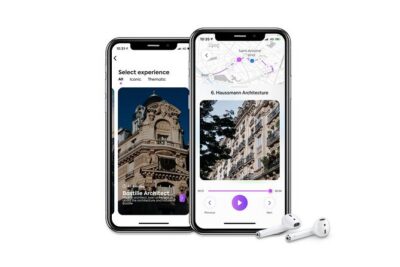
Bastille’s Architecture & Artisans Self-Guided Walking Tour
Read our review →
Tasting of 6 wines at Château Haut Breton Larigaudière
Read our review →
Private Art Nouveau and Art Deco tour near Opera
Read our review →
Neoclassical Paris Architecture 2-Hour Private Walking Tour
Read our review →
Discover the hidden architecture gems of Le Marais
Read our review →
Marseille Belvedere: The city through architecture
Read our review →Other lists with this tour