
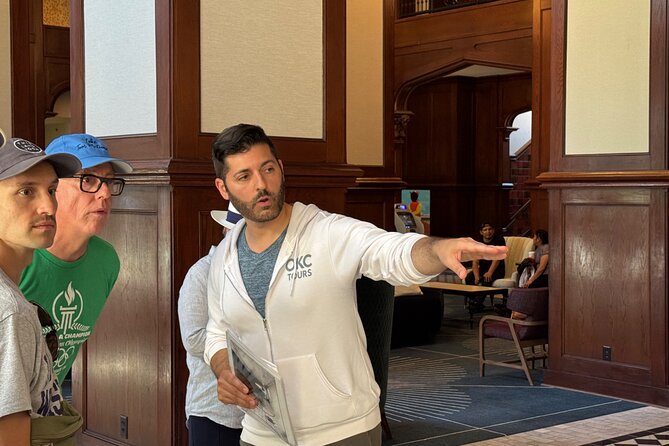
Review · USA
Oklahoma City History and Architecture Walk Downtown
Downtown Oklahoma City packs a surprising amount into a short walk: pioneer skyscrapers, grand Art Deco interiors, hotel scandals, and a deeply moving memorial to the city’s darkest day. This two-hour tour ties those pieces together instead of treating them as unrelated sights.
I like the route for two reasons: it offers access to historic hotel interiors, including original details at the Skirvin, and it gives the Oklahoma City National Memorial enough time to explain its symbols and meaning. Guides such as Ryan and Jeffrey add plenty of local stories. The main drawback is the Oklahoma weather. This is an outdoor walk, so heat, sun, wind, or rain can affect your comfort.
Key points
- Six downtown stops in about two hours: The route covers hotels, parks, Automobile Alley, the memorial, and one of the state’s grandest former banks.
- Skirvin Hotel stories: Hear about W. B. Skirvin, his socialite daughter, the hotel’s expansion, and its long-running haunting tales.
- Architecture with context: The Colcord Hotel and First National Center are not just photo stops. You learn who built them and why they mattered.
- A thoughtful memorial visit: The tour explains the symbolism of the Oklahoma City National Memorial grounds, though museum admission is not included.
- Small-group format: The maximum is 20 people, with a guide who can answer questions along the way.
- Good value at $35: You receive two hours of guided history and architecture without extra admission charges at the stops.
Why this short walk is a smart introduction to Oklahoma City
Oklahoma City can feel spread out when you first arrive. A guided walk gives you a useful downtown frame, starting at 120 North Robinson Avenue and returning to the same point after about two hours.
The route works because it mixes broad city history with specific buildings. You hear how a pioneer skyscraper came together, learn how Oklahoma’s early automobile trade shaped a district, and then move into the more personal stories attached to the Skirvin Hotel. At the memorial, the tone changes. The guide explains the 1995 bombing, the memorial’s design, and the community response without treating the site as a quick photo stop.
At $35 per person, I consider this a fair price for a first look at the city. There are no extra admission charges at the listed stops, and a live guide can answer questions that a self-guided walk cannot. The museum is not part of the price, so plan for a separate visit if you want the full exhibition.
The group limit of 20 is also useful. That is large enough for the tour to operate efficiently, but small enough that you should be able to hear the guide and ask questions. The experience has earned a 4.7 rating from 14 ratings, with 93 percent recommending it. That is a small sample, but it points to a consistently strong experience.
More Walking Tours in the USA
- The Official Art Deco Walking Tour by The Miami Design Preservation League
★ 5.0 · 1,580 reviews - Chicago in a Day: Food, History & Architecture Walking Tour
★ 5.0 · 1,153 reviews - Miami South Beach Art Deco Walking Tour
★ 5.0 · 1,039 reviews
Starting at the Colcord Hotel and Oklahoma City’s first skyscraper
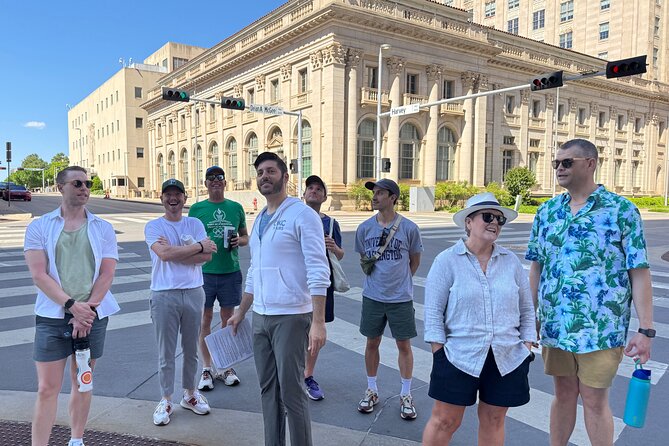
The first stop is the Colcord Hotel, a fitting place to begin because it introduces Oklahoma City’s early ambition. You spend about 15 minutes learning how the city’s pioneer skyscraper was built and who was behind it.
This is more useful than simply hearing the building’s age. A guide can point out how the hotel fits into the city’s early growth and why a tall commercial building mattered in a young western city. The stop also helps you read downtown architecture with more purpose. Look beyond the façade and listen for the decisions behind its construction.
Admission is free, and the stop is short. That keeps the walk moving while giving you a clear starting point. If you are especially interested in architecture, take a moment to study the exterior before the group moves on.
The Skirvin Hotel, social scandal, and ghost stories
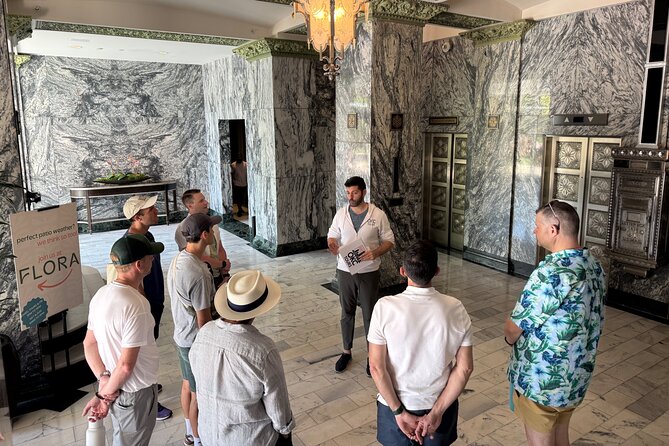
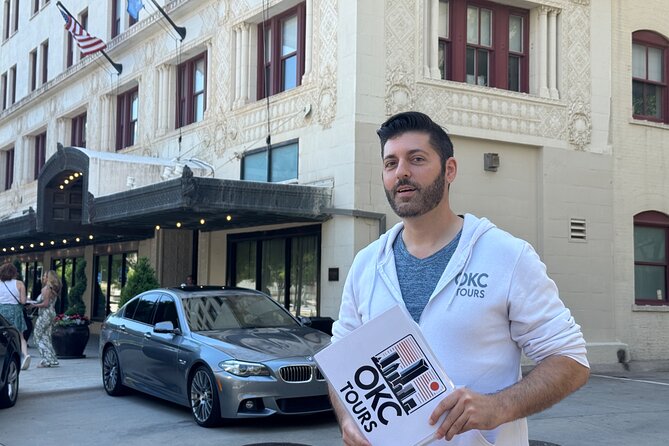
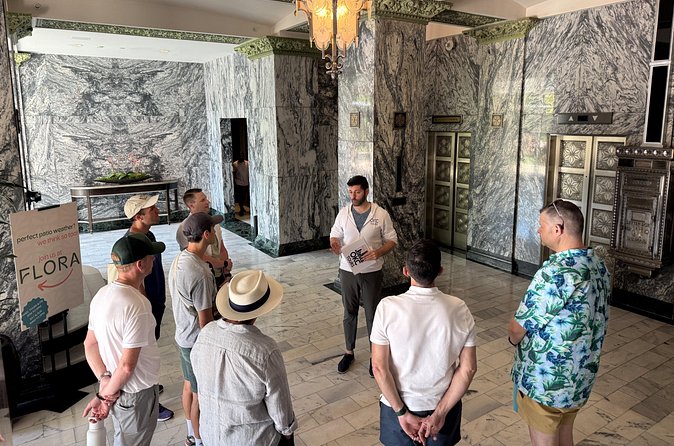
The Skirvin is the most theatrical stop on the route. You spend about 20 minutes exploring the renovated lobby and hearing stories connected to Mr. Skirvin, his socialite daughter, and the hotel’s growth in size and reputation.
The hotel dates back more than 100 years, and the guide points out original details that remain inside. That matters because a restored lobby can otherwise feel like a polished modern space with little connection to its past. Here, you get a closer look at what survived and how the building’s story changed over time.
The Skirvin’s tales of mysterious hauntings add a lighter, slightly spooky turn. They are part of the hotel’s public identity, but the tour also places them beside facts about the people who built and ran the property. I like that balance. You get entertaining stories without losing the city context.
This is one place where guides Ryan and Jeffrey have been especially praised for keeping the history lively and answering questions. The experience does not depend on a single scripted speech. A good guide can adjust the detail to the group, spending more time on architecture or local characters when interest is high.
Kerr-McGee Park and the land beneath the city
Kerr-McGee Park is a brief five-minute stop, but it provides a useful change of pace. You learn about Robert S. Kerr and his contributions, along with what occupied this land before it became a park.
Do not expect a long park visit. The value is in the connection between a present-day public space and the earlier city beneath it. Short stops like this help explain how downtown has changed, rather than presenting Oklahoma City as a collection of preserved buildings.
If you are taking notes or photographs, this is a good point to pause and catch your breath. The tour keeps a steady pace, so the park also functions as a small reset between the hotel stories and Automobile Alley.
Same streets, read through a different style:
- Chicago Architecture River Cruise
★ 5.0 · 15,756 reviews - Chicago River 90-Minute Architecture Tour
★ 4.5 · 9,629 reviews - Chicago River: 1.5-Hour Guided Architecture Cruise
★ 4.8 · 8,046 reviews - Chicago Architecture Center River Cruise aboard First Lady
★ 5.0 · 5,536 reviews
Automobile Alley and the city’s changing identity
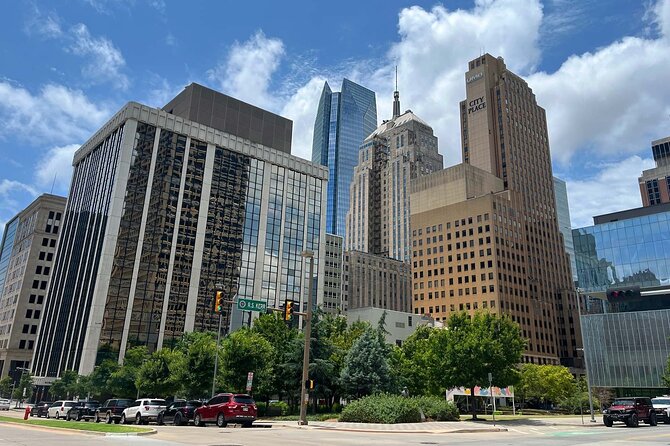
The route passes the entrance to Automobile Alley, once the center of Oklahoma City’s automobile industry. You learn why car dealers and related businesses gathered here about a century ago, then hear how the area serves a different purpose today.
This stop gives the tour a wider economic angle. Downtown architecture is not only about banks and hotels. It also reflects the ways people moved, shopped, worked, and spent their leisure time. Automobile Alley shows how a district built around cars can later gain new uses and new energy.
The stop lasts about 10 minutes and focuses on the entrance and the district’s story. It is not a full tour of every business or building in the area. If you plan to explore Automobile Alley on your own, use the guide’s explanation as a starting point and return later with more time.
The Oklahoma City National Memorial, handled with care
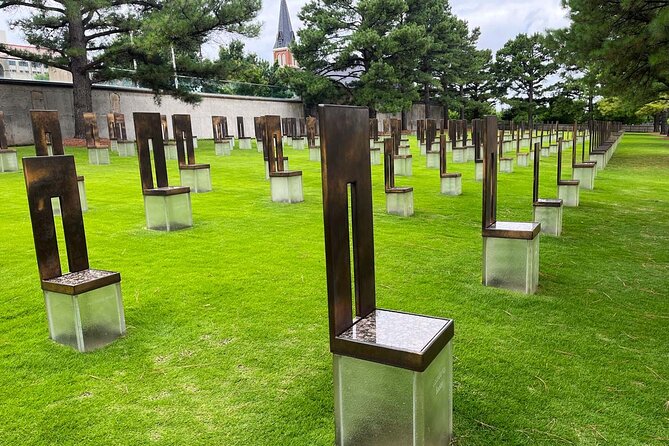
The memorial is the emotional center of the walk. You spend about 20 minutes in the carefully maintained grounds learning what happened on April 19, 1995, and how the memorial’s design records that loss.
The guide explains the meaning behind the grounds and their design elements, then places the bombing within the larger response of the Oklahoma City community. That context is important. Without it, the site can be visually powerful but difficult to understand in full.
Expect the mood to become quieter here. This is not simply another downtown landmark. You will have time to look at the memorial features, consider their symbolism, and understand why the site matters to the city.
The museum is not included. The tour visits the memorial grounds only, so budget separately if you want the indoor exhibits. For many people, the guided explanation of the outdoor site will be enough for a first visit. If you prefer a longer, more detailed account, add the museum afterward rather than trying to rush through it before the walk.
Inside the First National Center’s Art Deco details
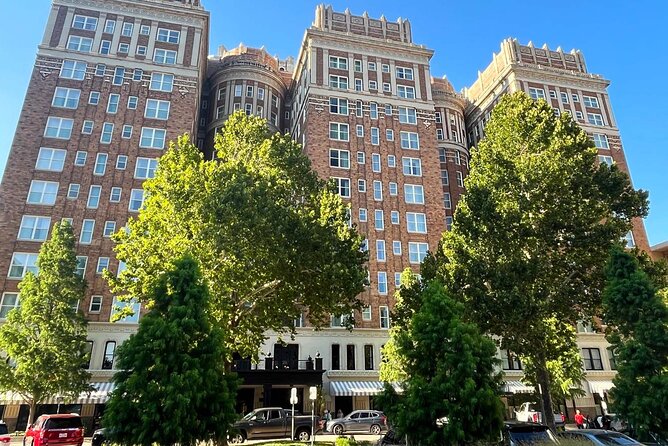
The final major stop is the First National Center, a former bank that is arguably the most impressive building on the route. You enter the building and examine Art Deco details inside and out.
This is where the tour’s architecture focus reaches its high point. The former bank is now a mixed-use property with a hotel, apartments, shops, and restaurants, but its earlier purpose still shapes the building’s design. A guide can help you notice the decorative details and explain how the interior supported the image of a powerful financial institution.
I especially like that the tour goes inside. From the street, you can admire a façade, but interior spaces often reveal more about a building’s original ambition. The guide’s explanation helps turn decorative patterns, materials, and scale into evidence of how the city wanted to present itself.
The tour ends back at the original meeting point. That makes the walk easy to pair with other downtown plans, since you are not left across the city looking for transportation.
The guide makes the difference
This experience is built around the guide rather than an audio device or a printed route. Ryan and Jeffrey are named guides associated with the tour, and the supplied feedback highlights their clear explanations, humor, and ability to answer questions.
That matters on a history walk. The same building can feel dry or memorable depending on how its story is told. Here, you can expect a mix of architecture, local personalities, unusual facts, and social history. The guide also helps connect the stops so the route feels like one story rather than six unrelated addresses.
One practical detail from the walk is the effort to use shade or indoor spaces when possible during hot weather. Do not count on that as a complete solution, though. Wear comfortable shoes, bring water, and dress for the forecast. The required fitness level is moderate, and the experience remains on foot for about two hours.
The mobile ticket is convenient. Confirmation is provided when you book, and service animals are allowed. Since the tour requires good weather and a minimum number of participants, a cancellation is possible if either condition is not met. In that case, you are offered another date or experience, or a full refund.
Who will get the most from this OKC walk
I would recommend this tour to anyone arriving in Oklahoma City for the first time, especially if you want a quick orientation before exploring on your own. It suits people who enjoy buildings but also want the human stories behind them.
It is a strong choice for:
- First-time visitors who want a city overview in two hours
- Architecture fans interested in Art Deco and early skyscrapers
- History-minded visitors who want context at the National Memorial
- Couples and small groups looking for a focused downtown activity
- People who prefer a guide and questions over a self-guided app
You may want a different plan if you dislike walking in hot or uncertain weather, need a fully indoor activity, or want to spend a long time inside the National Memorial Museum. The route gives you an introduction, not an exhaustive study of every downtown building.
Families can also use the stop-by-stop format to keep younger walkers interested, especially at the Skirvin, where the hotel stories and ghost tales provide a change from architectural detail. Still, the memorial is a serious site, so adults should decide how much explanation is suitable for their children.
Practical value at $35 per person
The price makes sense because the tour combines several kinds of access in one outing. You receive a live guide, entry to the hotel and First National Center areas visited on the route, a guided look at the memorial grounds, and a clear explanation of downtown’s development.
The key value is not admission savings. Most stops are free anyway. You are paying for the order of the route, local interpretation, and the ability to ask questions. That is worthwhile in a city where the connections between pioneer growth, oil and business leaders, automobiles, hotels, and civic memory are not always obvious from the sidewalk.
A gratuity is optional. The tour lasts about two hours, so the cost also compares well with longer paid attractions that cover only one building or museum. Just remember to add the National Memorial Museum separately if that is important to you.
The walk is usually booked about 10 days ahead, so I would not leave it until the last minute if your schedule is fixed. Free cancellation is available up to 24 hours before the start time. After that point, the payment is not refunded, and changes are not accepted.
Should you book this Oklahoma City tour?
Book it if you want a compact, story-driven introduction to downtown Oklahoma City. The best reasons are the Skirvin’s memorable hotel history, the chance to see Art Deco details inside the First National Center, and the thoughtful explanation of the National Memorial grounds.
Skip it if your priority is a long museum visit, a fully indoor activity, or independent exploration at your own pace. For most first-time visitors with two hours to spare, though, $35 buys a useful orientation and a human connection to the city. Take the walk early in your stay, then return to Automobile Alley, the memorial museum, or any building that catches your eye.
FAQ
How long does the Oklahoma City history and architecture walk last?
The tour lasts approximately two hours.
Where does the tour start?
It starts at 120 N Robinson Ave, Oklahoma City, OK 73102.
Where does the tour end?
The activity ends back at the original meeting point.
What time does the tour start?
The stated start time is 10:00 am.
Is admission to the Oklahoma City National Memorial Museum included?
No. The tour includes the memorial grounds, but museum admission is not included.
How many people can join the tour?
The activity has a maximum of 20 travelers.
Is the walk suitable for people with limited mobility?
The tour requires a moderate level of physical fitness. It is a walking activity, so you should be comfortable walking for about two hours.
Can I cancel for a full refund?
Yes. You can cancel at least 24 hours before the experience start time for a full refund. The activity may also be canceled because of poor weather or if the minimum number of participants is not met, in which case you are offered another date or experience, or a full refund.
More History Walks around the USA
- Charleston’s Best Highlights: History, Culture & Architecture
★ 5.0 · 422 reviews - Palm Springs Modernism Architecture & History Bike Tour
★ 5.0 · 359 reviews - Charleston: History and Architecture Guided Walking Tour
★ 4.8 · 349 reviews - Historic Georgetown: History, Gossip, & Architecture Walking Tour
★ 5.0 · 321 reviews
New to the itinerary around the USA
- Washington, DC: Georgetown Architecture Walking Tour★ 5.0 · 8 reviews
- Wilmington History and Architecture Tour★ 4.8 · 18 reviews
- Washington DC: Dupont Circle & Embassy Row Architecture Tour★ 5.0 · 6 reviews
- New Orleans : Garden District Architecture Walking tour★ 4.8 · 5 reviews
- Private Colonial Williamsburg Architectural Tour★ 5.0 · 5 reviews
- Tulsa: Art Deco Walking Tour of Tulsa★ 5.0 · 8 reviews
- Castle to Capitol: Museums of the National Mall Architecture Tour★ 4.5 · 9 reviews
- Monuments and Memorials Architectural Walking Tour★ 5.0 · 17 reviews
USA Architecture Tours, compared.
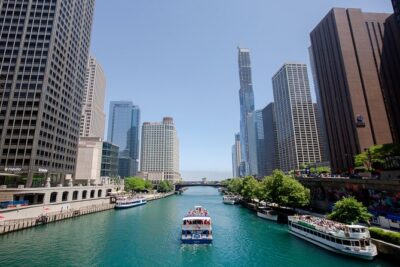
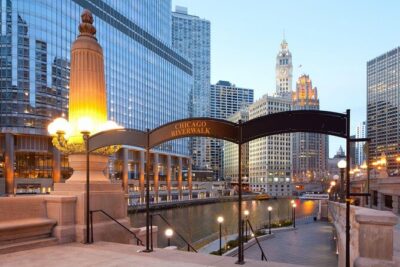
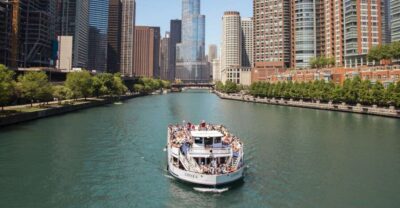
Chicago River: 1.5-Hour Guided Architecture Cruise
Read our review →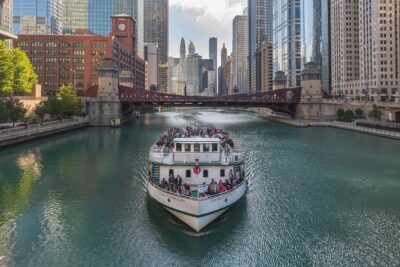
Chicago Architecture Center River Cruise aboard First Lady
Read our review →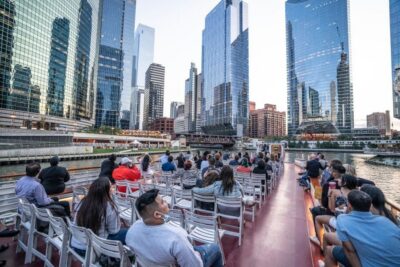
Architecture River Cruise Skip-the-Ticket Line
Read our review →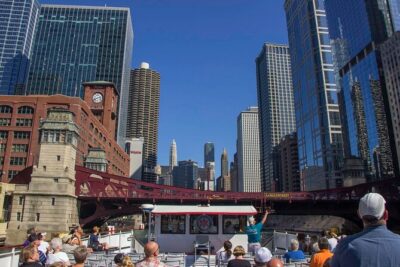
Chicago River 45-Minute Architecture Tour from Magnificent Mile
Read our review →
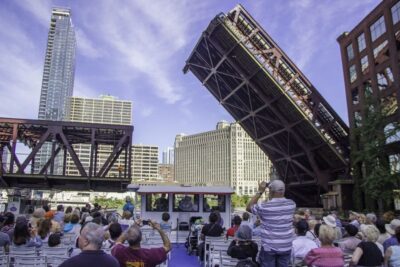
45-Minute Family-Friendly Architecture River Cruise
Read our review →Other lists with this tour