
Review · SLOVENIA
Plečnik’s Ljubljana -UNESCO heritage- A walk among architect Plecnik’s creations
Ljubljana makes the most sense when you follow Jože Plečnik’s own route through the city. This private two-hour walk links bridges, market arcades, a square, a theater, and the National and University Library, showing how one architect gave the Slovenian capital its special look.
I like the small private format, limited to your group of up to six, and the fact that the guide adds little tastings along the way. I also like the central route, which keeps the focus on Ljubljana’s core sights rather than sending you far from the city center.
The main consideration is the pace. Two hours is enough for an introduction, but not for long visits at every stop. The experience also depends on good weather, and the $220.41 group price is much better value for four to six people than for one or two.
Key points to know before booking
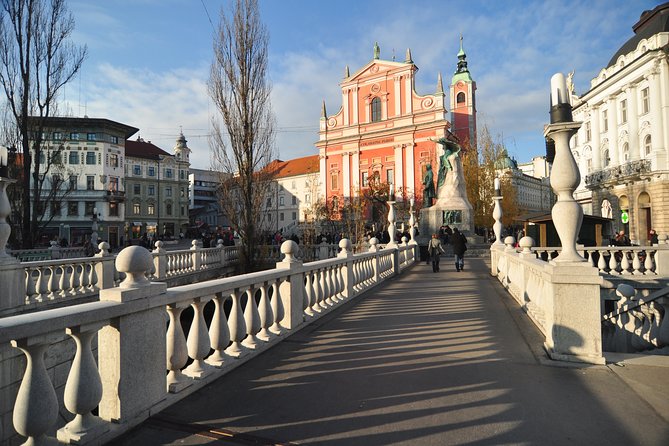
- Plečnik’s bridges and market work: See the Triple Bridge, Central Market, and Shoemaker’s Bridge as parts of one connected city plan.
- Private tour for up to six: Your group does not share the walk with strangers.
- A local English-speaking guide: Tjasa has been praised for making the architecture clear and memorable, especially for mixed-age groups.
- Small tastings on the way: The snacks offer a simple link between the city’s food and its daily life.
- A useful two-hour route: Start at Krekov trg and finish at Križanke, with advice on what to do next in Ljubljana or elsewhere in Slovenia.
Why Plečnik is the right lens for Ljubljana
Ljubljana is compact, but it can feel like a collection of pleasant squares and river crossings until someone points out the plan behind them. This walk gives you that plan. You see how Plečnik worked across the center, shaping public places rather than designing only one isolated building.
The route is especially useful if you are new to the city. It connects several well-known sights and gives them a common thread. The Triple Bridge is not just a crossing, the market is not just a place to buy food, and Congress Square is not merely an open space for photographs.
You also get a local guide who can explain Plečnik’s work and life in person. Tjasa is one guide associated with this experience, and her approach has been praised for working well with very different interests, including family members with a serious interest in architecture and others who were less certain it was for them.
That is important here. Architecture tours can become a parade of dates and names. This one is better suited to you if you want to understand how buildings and public spaces affect the way a city feels.
More Walking Tours in the world:
- The Official Art Deco Walking Tour by The Miami Design Preservation League
★ 5.0 · 1,580 reviews - Lecce: Baroque Architecture and Underground Walking Tour
★ 4.6 · 1,248 reviews - Chicago in a Day: Food, History & Architecture Walking Tour
★ 5.0 · 1,153 reviews
Starting at Krekov trg and the Triple Bridge
The walk begins at Krekov trg, a central meeting point near the opening section of the route. From there, you reach the Triple Bridge, or Tromostovje, one of Ljubljana’s most familiar public spaces.
A useful detail is that Plečnik created only two of the three bridges. The existing arrangement is therefore not a single work built all at once, and the guide can help you separate the older structure from Plečnik’s additions.
The stop is brief, listed at about five minutes. That tells you something about the format: you will pause for an explanation and orientation, then keep moving. You will not have a long, quiet period here for sketching or detailed architectural study.
Still, the location is a strong opening. It introduces Plečnik’s habit of treating a bridge as part of a larger public setting. The crossing connects the riverfront and the central city, so you begin by seeing architecture as something people use, not just something they look at.
Central Market and the route toward Dragon Bridge
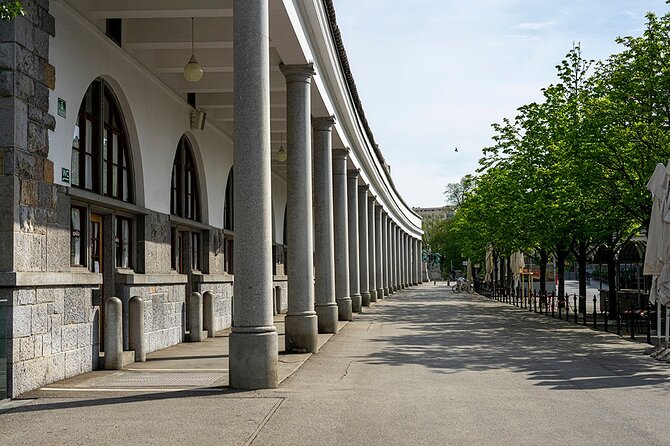
From the Triple Bridge, the walk continues along the Central Market. This section is described as an impressive stretch of Plečnik’s work arranged on two levels. That makes it one of the most useful parts of the tour for understanding how the architect handled movement, trade, and the riverfront.
The market gives the route a practical side. You are not looking only at grand civic buildings. You are also seeing a place tied to everyday shopping and local routines, with small tastings included along the way.
The walk toward Dragon Bridge brings another helpful comparison. The route highlights Plečnik’s work between the Triple Bridge and Dragon Bridge, although Dragon Bridge itself is not listed as one of the main stops. You can therefore expect the guide to place the area in context rather than treat every bridge as a full stop.
The market visit is scheduled for about ten minutes. That is enough to learn what makes the design important and to enjoy a small taste, but you should not expect an extended food tour or a long market visit. If you want time to browse stalls on your own, plan to return later.
Shoemaker’s Bridge and Plečnik’s small details
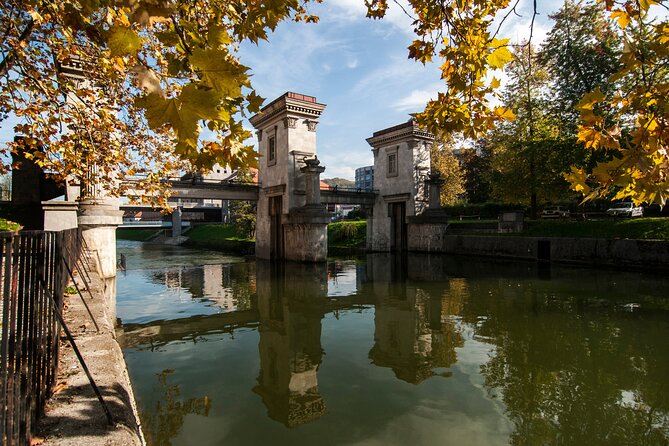
Shoemaker’s Bridge, or Čevljarski Most, offers a different view of Plečnik’s style. Here, the focus is on the river crossing as a square, along with the bridge’s lights and distinctive columns.
This is a good reminder that the architect’s work is not limited to large buildings. Lighting, supports, proportions, and the shape of a public crossing all matter. A guide can point out details you might otherwise pass without noticing.
The stop lasts about five minutes. That is short, but the bridge is compact, and the explanation can be focused. You will likely get more from this pause if you look closely at the columns and lights rather than treating it as another quick photo stop.
The route also has a pleasant rhythm at this point. You move between market structures, water, open space, and formal architecture. That variety helps keep a two-hour walk from feeling like a lecture delivered at one doorway after another.
More History Walks around the world:
- Charleston’s Best Highlights: History, Culture & Architecture
★ 5.0 · 422 reviews - Palm Springs Modernism Architecture & History Bike Tour
★ 5.0 · 359 reviews - Charleston: History and Architecture Guided Walking Tour
★ 4.8 · 349 reviews - Historic Georgetown: History, Gossip, & Architecture Walking Tour
★ 5.0 · 321 reviews
Congress Square and Ljubljana’s public life
Congress Square, or Kongresni trg, is scheduled for around ten minutes. Plečnik changed the square, and it has hosted one of the largest events ever held in Ljubljana.
The square matters because it shows the public scale of his work. Bridges and market buildings shape movement, but a square gathers people for ceremonies, celebrations, and major occasions. The guide can connect the physical changes to the role the space has played in the city.
You should expect an outdoor explanation rather than a ticketed interior visit. That keeps the tour simple and central, but it also means the weather matters. On a warm day, the open square may be comfortable. In rain or strong sun, the experience can be less pleasant, which is one reason the operator requires suitable weather.
This is also a useful point to ask your guide for suggestions for the rest of your time in Ljubljana. Advice on what to see and do next is included, and Congress Square is a natural place to get your bearings before continuing independently.
Križanke, Plečnik’s final major Ljubljana work
The route then reaches the Monastery of the Holy Cross Summer Theater, known as Križanke Poletno Gledališče. It is described as Plečnik’s last major work in Ljubljana and one of the city’s best outdoor theaters.
The stop lasts about ten minutes. You will see architectural details that reward a slower look, even though the overall visit is brief. The theater gives the tour a strong final section because it combines an older religious setting with a public performance space.
Križanke is also the end point at Trg francoske revolucije 1. Ending here is convenient if you want to continue exploring central Ljubljana on foot, though the tour does not include admission to a performance or a separate indoor visit.
I like this ending more than a return to the starting point. It gives the walk a clear direction and leaves you near another part of the center. You can also use the guide’s suggestions to decide what comes next, instead of finishing with a vague goodbye in the same square where you began.
The National and University Library deserves attention
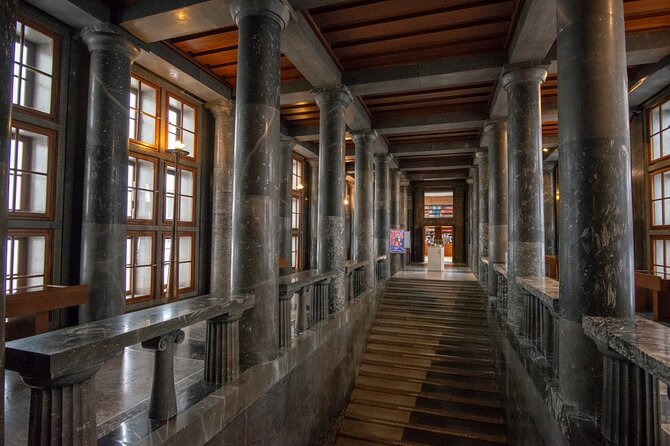
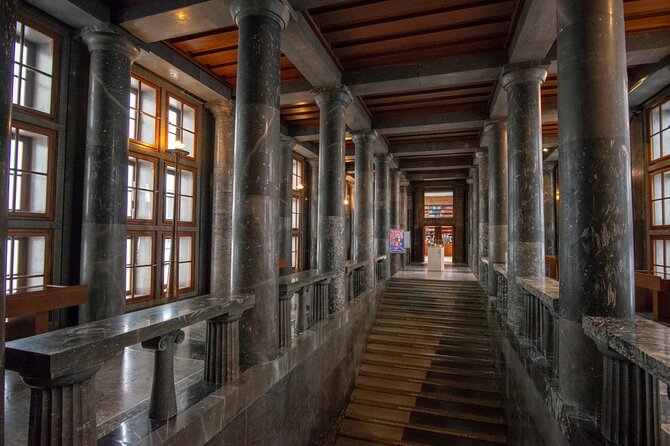
The National and University Library is another Plečnik masterpiece on the route. The stop is listed at about five minutes, so keep your expectations in check. You will receive an introduction to the building, not an extended architectural inspection.
Even with limited time, this is an important inclusion. The library represents Plečnik at the level of a major civic institution, complementing the bridges, market, and theater seen earlier. Together, the stops show several types of city-making: transport, commerce, gathering, culture, and education.
The supplied route places the library alongside Križanke in the final part of the experience. Since the exact walking order between those two points is not fully detailed, follow the guide’s flow on the day. The key benefit is that you see both buildings as part of Plečnik’s wider contribution to Ljubljana.
If you have a strong architecture background, you may want more time at the library. The short schedule works best as an introduction, with the option to return independently if the building catches your interest.
What the private format is worth
The price is $220.41 per group of up to six people. That is not a cheap walk for a solo visitor, but the calculation changes with a full group. Split six ways, the cost is about $36.74 per person. For four people, it is roughly $55.10 each, before any currency conversion.
The private format is the main reason to consider the price. You can keep the group together, ask questions without competing with a large crowd, and move at a pace suited to your party. A family with different ages and interests may get more from this than from a large public tour.
The value is also tied to the guide. You are paying for interpretation, local advice, tastings, and a route that connects several places. If you only want to see the bridges and take photographs, you can explore the center on your own for much less. If you want help seeing the connection between the sites, the private format makes more sense.
The two-hour length keeps the commitment manageable. You can fit it into a morning or afternoon and still have plenty of time for other plans. The tradeoff is that each stop gets only a few minutes, so architecture fans may want to return to favorite locations later.
Snacks add a human touch
The included snacks are described as little tastings that say something about the city and its residents. This is a small feature, not a full meal, but it helps prevent the walk from becoming purely visual.
Food can also make a city easier to remember. A bridge or column may blur together after several days of sightseeing. A taste connected to the place gives you another way to think about Ljubljana’s daily life.
Do not book this as a food tour. The main subject is Plečnik, and the tastings support that subject rather than replace it. You should also plan your own meal separately, since the experience is only about two hours and the included items are described as small tastings.
Who will get the most from this walk
I would choose this tour for a first visit to Ljubljana if you want a clear introduction to the center and prefer a guide who can explain what you are seeing. It also suits couples, families, and small groups who value privacy.
It is a particularly good match for mixed-interest groups. One person can focus on design, another on public spaces, and another on local life. The guide’s ability to make the subject accessible matters here, and Tjasa has been praised for engaging both a family member with an architecture degree and someone considering a different field of study.
You should think twice if you want long indoor visits, extensive historical detail, or a full food experience. The route is mainly outdoors, the stops are short, and the focus stays on Plečnik’s work in central Ljubljana.
Most people can take part, the meeting point is near public transportation, and service animals are allowed. Pickup is offered, but the listed start point is Krekov trg, so confirm the arrangement when booking if pickup matters to you.
Timing, weather, and cancellation
The walk lasts approximately two hours and is offered in English. It requires good weather. If poor weather cancels the experience, you are offered another date or a full refund.
You can cancel up to 24 hours before the start time for a full refund. Changes or cancellations made less than 24 hours before the start time are not accepted for a refund, and the cut-off uses local time in Ljubljana.
Confirmation is sent within 48 hours of booking, subject to availability. Since the experience is private and limited to your group, booking ahead is sensible if you are visiting for only a short stay.
Should you book Plečnik’s Ljubljana?
Book it if you want to understand why Ljubljana looks the way it does, not just collect photographs of its prettiest bridges. The route is focused, central, and easy to fit into a busy schedule. The guide, private group, local tastings, and practical advice add value, especially when the cost is shared by four to six people.
Skip it if you prefer to explore at your own pace or want to spend twenty minutes at every building. The short stops and outdoor format are real limits.
For most first-time visitors with an interest in architecture, city design, or local life, I would choose this walk early in the stay. It gives you a useful framework for the rest of Ljubljana, and you can return to the places that deserve a second look.
FAQ
How long does Plečnik’s Ljubljana tour take?
The tour lasts approximately two hours.
How much does the private tour cost?
The listed price is $220.41 per group, with up to six people included.
Is the tour conducted in English?
Yes. The experience is offered in English.
Where does the tour start and finish?
The listed starting point is Krekov trg in Ljubljana. The end point is Križanke, at Trg francoske revolucije 1.
Is this a private tour?
Yes. Only your group participates, with a maximum group size of six people.
What happens if the weather is poor?
The experience requires good weather. If it is canceled because of poor weather, you are offered a different date or a full refund.
New to the itinerary around the world
- Washington, DC: Georgetown Architecture Walking Tour★ 5.0 · 8 reviews
- Wilmington History and Architecture Tour★ 4.8 · 18 reviews
- Washington DC: Dupont Circle & Embassy Row Architecture Tour★ 5.0 · 6 reviews
- New Orleans : Garden District Architecture Walking tour★ 4.8 · 5 reviews
- Walk & Discover KL’s Architectural and Heritage Gems★ 5.0 · 7 reviews
- Unveiling Brno: History, Culture & Architectural Delights★ 5.0 · 2 reviews
- Vicenza: Palladian Architecture Private Walking Tour★ 3.3 · 3 reviews
- Private Colonial Williamsburg Architectural Tour★ 5.0 · 5 reviews