
Review · FINLAND
Helsinki: Architecture Walking Tour with Expert
Helsinki packs an astonishing range of building styles into a compact city center. In three hours, this small-group walk connects neoclassical Senate Square with Jugendstil details, functionalist landmarks, Alvar Aalto’s work, and the new Oodi library. Guide Emek adds the useful layer: not just who designed each building, but what Finnish society was saying through its architecture.
I like the maximum group size of six, which makes it easier to ask questions and adjust the pace. I also like the way the tour joins architecture with Finnish history, politics, climate, and daily life. The main consideration is simple: you will walk 3 to 4 miles, or 5 to 6 kilometers, and the tour runs outside in all seasons, including cold, wet weather.
Key points at a glance
- See many styles in one city center: Neoclassical, Gothic Revival, Art Nouveau, Jugendstil, Nordic Classicism, modernism, functionalism, and contemporary design all appear on the route.
- Meet at a useful central starting point: The guide waits outside Nanso Clothing Store at Aleksanterinkatu 9B, on the corner of Aleksanterinkatu and Kluuvikatu.
- Walk with a very small group: The tour is limited to six participants, allowing for a more personal conversation.
- Go inside selected buildings: The route can include interiors such as the National Library and Central Railway Station, adding detail that façades alone cannot provide.
- Connect architecture to Finnish life: Emek explains how history, politics, climate, and social changes shaped the city’s buildings.
- Plan for Finnish weather: Wear comfortable shoes and weather-appropriate clothing. The tour operates rain or shine.
Why Helsinki works so well for an architecture walk
Helsinki is a particularly rewarding city for this kind of tour because its architectural chapters sit close together. You do not need long transfers between distant districts to see major changes in design. A few city blocks can take you from the orderly monumental style of the nineteenth century to the clean lines of modern Finnish design.
That makes the city easier to read on foot. Instead of treating each building as an isolated sight, you can see how one period reacted to another. Grand neoclassical buildings project civic confidence. Jugendstil introduces more expressive shapes and national themes. Functionalism strips away decoration. Contemporary buildings such as Oodi ask how public architecture should serve people today.
I find that context matters here. Without it, a building can be attractive but mute. With a good guide, a column, window, entrance, or choice of stone becomes part of a larger story about Finland.
The tour covers architects including Carl Ludvig Engel, Eliel Saarinen, and Alvar Aalto. That gives you a useful range of design approaches, from Engel’s formal city center to Saarinen’s powerful national style and Aalto’s more human approach to modernism.
More Walking Tours in the world:
- The Official Art Deco Walking Tour by The Miami Design Preservation League
★ 5.0 · 1,580 reviews - Lecce: Baroque Architecture and Underground Walking Tour
★ 4.6 · 1,248 reviews - Chicago in a Day: Food, History & Architecture Walking Tour
★ 5.0 · 1,153 reviews
Starting at Aleksanterinkatu and Kluuvikatu
The meeting point is outside Nanso Clothing Store at Aleksanterinkatu 9B, where Aleksanterinkatu meets Kluuvikatu. You should arrive ready to walk, since the guide waits at that specific corner rather than inside a large transport hub or museum.
The central location is practical for a first Helsinki activity. It places you near several important buildings and makes this a sensible choice early in a stay, when you are still learning the shape of the city center.
Look for the guide at the street corner outside the store. The tour is conducted in English, and the small group format should make introductions and questions straightforward.
Emek is the named guide associated with this experience. The strongest pattern in the feedback is his ability to connect architecture with Finnish history, culture, politics, art, and everyday life without turning the walk into a dry lecture. Several participants also valued his care with the group’s comfort and interests.
Senate Square and the neoclassical city
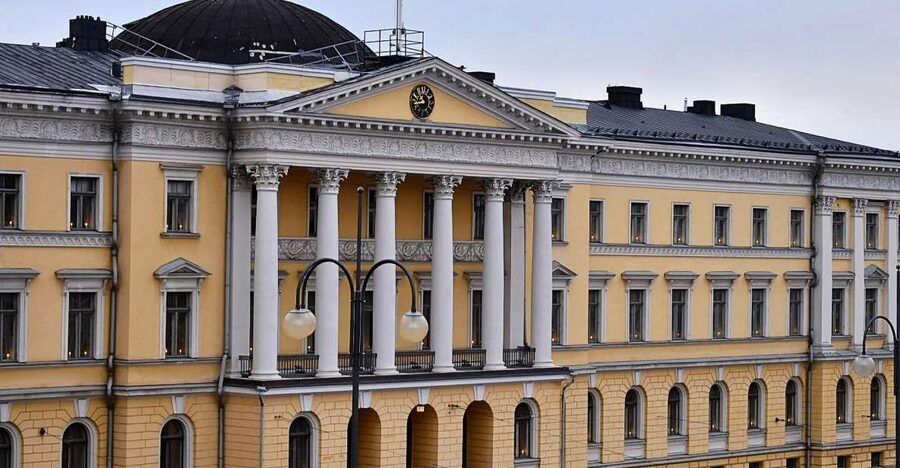
Senate Square is one of the essential stops. Its carefully ordered surroundings give you the clearest introduction to Helsinki’s neoclassical core and to Carl Ludvig Engel, the architect most closely linked with the square’s major buildings.
This is where I would pay attention to the relationship between the buildings rather than looking only at individual façades. The square presents architecture as a civic setting, with scale, symmetry, and uniformity doing much of the work.
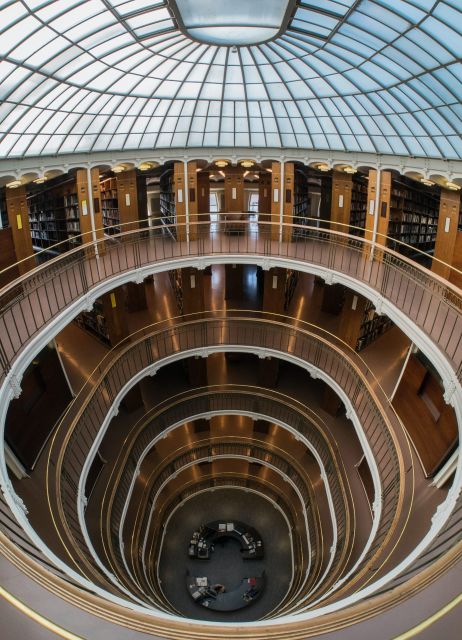
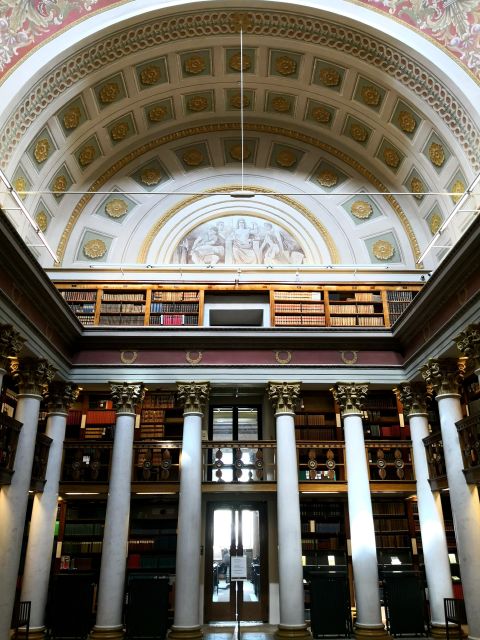
The nearby National Library of Finland adds another layer. Its exterior is important, but an interior visit can make the stop far more rewarding. The library is among the places the tour may enter, so you can see how the design works from within rather than simply photographing it from the street.
That difference matters. Helsinki’s architecture often reveals its character through interiors, materials, stairways, reading rooms, and public spaces. If the group enters, take time to look up and around instead of treating the building as a quick photo stop.
The National Library and the value of going indoors
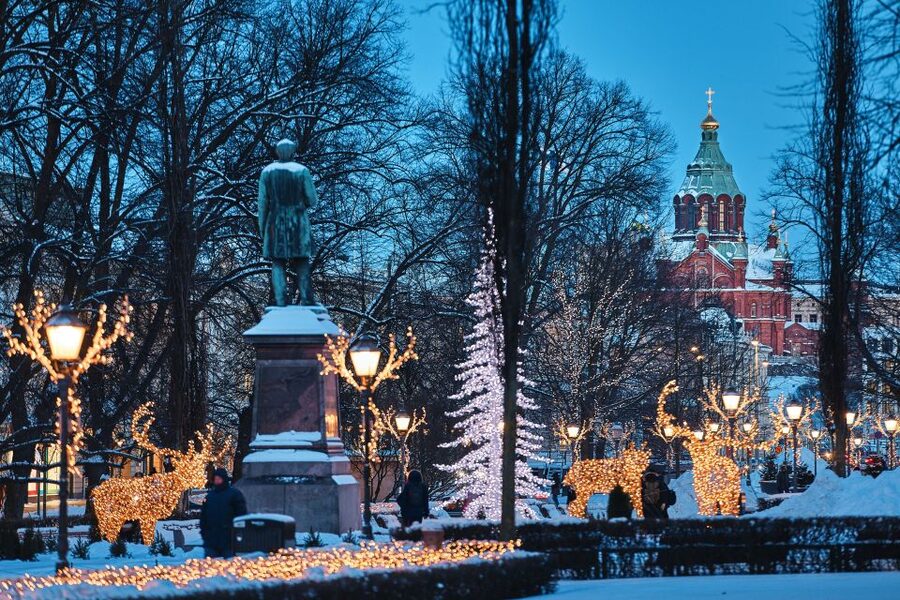
The National Library is a good example of why this is more than a façade-spotting walk. It gives you a chance to consider how a major public institution expresses learning, authority, and national identity through space.
The available information does not promise entry into every building at every departure, so you should treat interior access as part of the planned experience rather than a guaranteed museum-style visit. Still, the tour specifically includes places such as the National Library, Central Railway Station, and buildings connected with Aalto.
This indoor element is also useful in Helsinki’s less friendly seasons. A participant on a very cold winter tour noted that Emek moved explanations indoors as much as possible. That does not remove the need for warm clothing, but it shows that the walking format can be handled with some common sense when conditions are harsh.
More Architecture Tours around the world:
- Chicago Architecture River Cruise
★ 5.0 · 15,756 reviews - Chicago River 90-Minute Architecture Tour
★ 4.5 · 9,629 reviews - Chicago River: 1.5-Hour Guided Architecture Cruise
★ 4.8 · 8,046 reviews - Barcelona: Park Güell and Gaudí House Museum Entry Ticket
★ 4.5 · 6,326 reviews
Central Railway Station and Saarinen’s national style
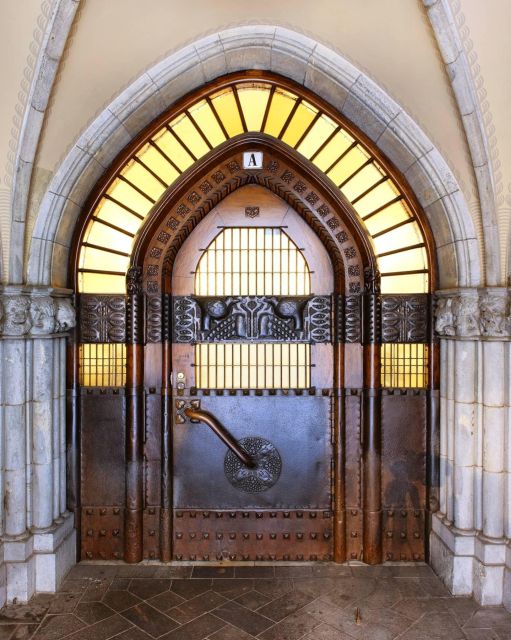
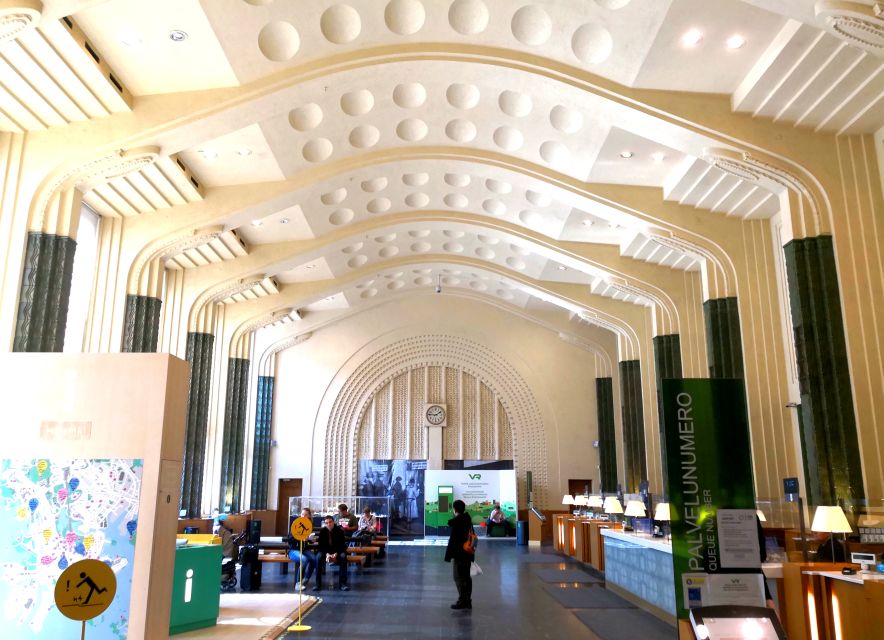
Central Railway Station is one of Helsinki’s most memorable architectural stops. Eliel Saarinen’s work gives the building a strong presence, and the station is especially useful for understanding the connection between transport, national identity, and architecture.
You can expect the guide to explain more than the building’s date or architect. The point is to understand why the station looks the way it does and how its design fits into Finland’s wider architectural story.
The station also gives the tour a change of scale. Senate Square feels composed and ceremonial. A railway station must handle movement, crowds, function, and daily use. Seeing both helps you understand the difference between architecture designed to represent a city and architecture designed to keep it moving.
Because this is an active public building, the experience is not the same as visiting a quiet museum. You may need to listen closely, stay with the group, and share the space with ordinary railway users. That is part of its value, since you see the building as it functions rather than as a preserved display.
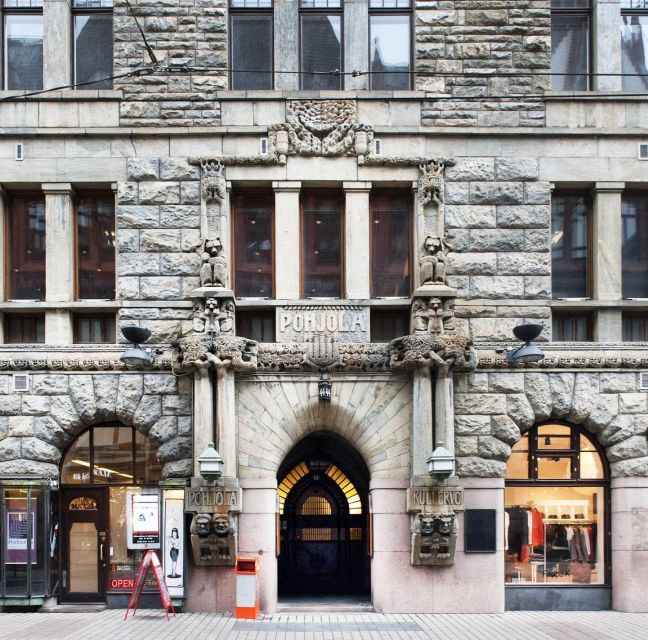
JugendHall and the Pohjola Insurance Building
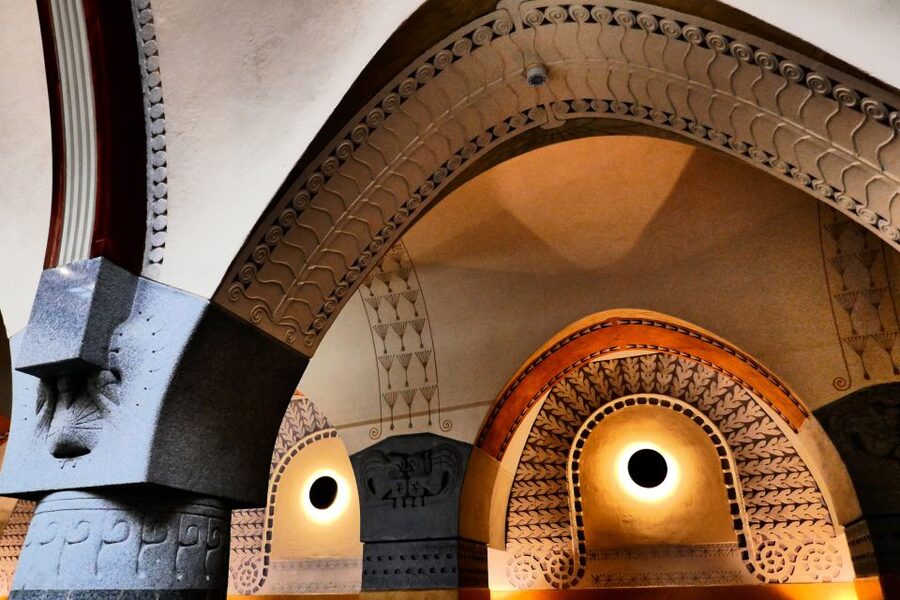
JugendHall and the Pohjola Insurance Building bring Helsinki’s Art Nouveau and Jugendstil traditions into focus. These styles are among the reasons Helsinki feels different from many other northern European capitals.
The buildings use stronger decorative detail and more imaginative forms than the restrained neoclassical center. Look for the way entrances, stonework, windows, and ornament create a more local visual language. The Pohjola Insurance Building is particularly useful for understanding how architecture could draw on Finnish themes while serving a modern commercial purpose.
The title Jugendstil is common in Finland, while Art Nouveau is the broader European term. The tour can help you see the local character rather than treating the style as a generic decorative period.
These stops are also a good reminder that architectural history is not a series of neat boxes. Helsinki’s buildings reflect outside influences, Finnish identity, new technology, business, and changing ideas about what a city should look like. That makes a guide’s explanation more useful than a list of style names.
Academic Bookstore and Alvar Aalto’s practical modernism

The Academic Bookstore is one of the route’s most worthwhile Aalto-related stops. Alvar Aalto is often associated with modernism, but his work is not simply about plain white boxes and hard efficiency.
At the bookstore, notice how a commercial interior can still feel carefully shaped for people. Light, levels, materials, and movement matter. The building has a public purpose, yet it also asks you to slow down and look.
The route includes other buildings connected with Aalto, although the supplied details do not identify every one. That is a good reason to ask the guide which Aalto examples you will see on your departure.
I especially like having Aalto included alongside Engel and Saarinen. It creates a clear thread through Helsinki’s architectural development. Engel gives you the formal nineteenth-century city. Saarinen brings a more forceful national expression. Aalto shows how modernism could become warmer, more practical, and more attentive to human use.
Oodi and Helsinki’s contemporary public life
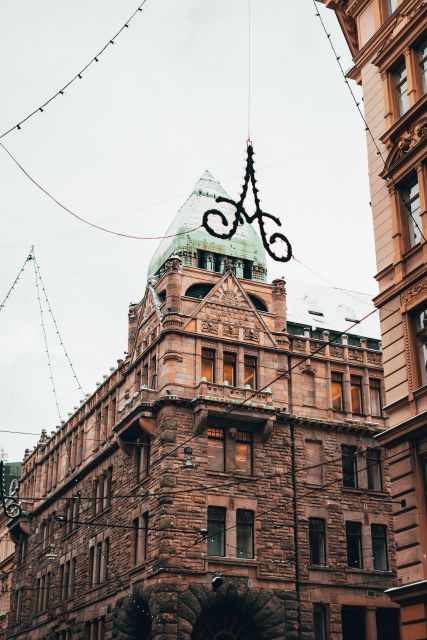
The new public library Oodi brings the walk into the present. Its inclusion prevents the tour from becoming a purely historical survey.
Oodi is important because it shows how Helsinki treats a library as a broad public resource, not only a place to store books. The building reflects current ideas about shared civic space and contemporary Finnish architecture.
The contrast with Senate Square is the point. At the square, architecture communicates order and state power through classical form. At Oodi, the emphasis is on modern public use and an open civic function. The two places belong to very different periods, yet both help explain how Helsinki presents its values through buildings.
You should not expect the same kind of quiet, formal visit at Oodi that you might find in the National Library. It is a current public facility, so the experience is likely to feel more active and open-ended. The guide’s explanation helps you compare its design with the older buildings you have already seen.
What Emek adds to the three-hour walk
The guide is the main reason to choose this tour instead of using a self-guided architecture map. Emek is described as speaking with strong command of Finnish history, architecture, art, politics, and culture. Just as important, he adjusts the discussion to the group.
That flexibility matters in a group of six. If you already know the basics of modern architecture, you can ask for more detail about social or political influences. If you are new to the subject, the guide can explain the visual clues without assuming too much.
The pacing also receives consistent praise in the supplied feedback. The walk is described as informative without becoming heavy, and well paced rather than rushed. That is important over three hours, especially when the route covers several styles and includes both exterior and interior stops.
The strongest benefit is the connection between architecture and Finnish life. You are not only learning that a building is Gothic Revival or functionalist. You are considering why that style appeared, what Finland was experiencing at the time, and how climate and local conditions affected design.
Walking distance, weather, and comfort
Plan on 3 to 4 miles, or 5 to 6 kilometers, over three hours. That is manageable for most people who are comfortable walking through a city, but it is not a short sightseeing loop with frequent transport breaks.
Wear shoes that can handle pavement for several hours. Helsinki weather can change, and the tour operates all year, rain or shine. Bring clothing suited to the forecast, with extra care in winter. One recorded winter departure took place at minus 20 degrees Celsius, so do not assume the tour stops because the temperature falls sharply.
The guide may use indoor locations for part of the explanation when the weather is severe, but you should still dress for an outdoor walk. Cold hands, wet shoes, or poor footwear can distract from an otherwise excellent architecture lesson.
I would also avoid scheduling this immediately after a long walking excursion if your legs tire easily. The tour is most useful when you have enough attention left to look carefully and ask questions.
Is $70 good value?
At $70 per person, this is not the cheapest way to stroll around Helsinki. The value comes from the expert interpretation, the small group, the three-hour length, and the chance to enter selected buildings.
A self-guided route can show you many of the same exteriors for free. It cannot easily explain the links between architecture, Finnish politics, national identity, climate, and daily life. It also cannot respond when you ask why a building looks the way it does.
The maximum of six makes the price easier to justify than it would be for a large coach-style group. You are paying for access to a conversation, not only for a path between landmarks.
I would consider it good value for anyone who actively enjoys buildings, design, urban history, or cultural context. If you only want Helsinki’s headline sights and do not care about architectural detail, the cost may feel high.
Free cancellation up to 24 hours before the start and the option to reserve now and pay later also reduce some booking risk. Those policies are useful, but they should not be the main reason to choose the tour.
Who should book this Helsinki walk?
I would recommend it most strongly to first-time visitors who want a clear introduction to Helsinki. It works especially well near the start of a stay, since the route helps you understand the center before exploring it on your own.
Architecture students, design fans, photographers, and anyone interested in urban history should find plenty to discuss. The tour also suits curious visitors who want Finnish culture explained through real places rather than through a museum display alone.
The small group and adaptable explanations make it a good choice for people who prefer conversation to a scripted sightseeing routine. It can also suit older walkers who are comfortable with the distance, since the guide has shown care with group needs and can move explanations indoors when conditions demand it.
I would think twice if you dislike walking in poor weather, need a fully indoor activity, or want a tour focused only on interiors. This is a city walk first, with architecture as its subject.
Should you book it?
Book this tour if you want Helsinki’s buildings to make sense as part of Finnish history and modern life. The route covers an unusually broad range of styles, while Emek’s approach adds context about architects, politics, culture, and the people who use these spaces.
The best time to take it is near the beginning of your visit. Bring good shoes, prepare for 5 to 6 kilometers, and dress for the day’s weather. At $70, it is a considered purchase, but the small group and expert-led discussion make it worthwhile for anyone who wants more than a quick look at attractive façades.
FAQ
How long is the Helsinki Architecture Walking Tour?
The tour lasts three hours.
How far will I walk?
You should be prepared to walk approximately 3 to 4 miles, or 5 to 6 kilometers.
What language is the tour conducted in?
The tour is conducted in English.
How large is the group?
The group is limited to six participants.
Who is the guide?
The named guide is Emek.
Where does the tour meet?
The meeting point is outside Nanso Clothing Store at Aleksanterinkatu 9B, on the corner of Aleksanterinkatu and Kluuvikatu.
Which architectural places are included?
The route includes Senate Square, the National Library of Finland, Central Railway Station, Oodi public library, JugendHall, the Pohjola Insurance Building, Academic Bookstore, and additional buildings.
Does the tour operate in winter and rainy weather?
Yes. Tours operate all year, rain or shine.
What should I bring?
Wear comfortable shoes and clothing suitable for the weather. This is important because the tour includes several kilometers of walking outdoors.
New to the itinerary around the world
- Washington, DC: Georgetown Architecture Walking Tour★ 5.0 · 8 reviews
- Wilmington History and Architecture Tour★ 4.8 · 18 reviews
- Walk & Discover KL’s Architectural and Heritage Gems★ 5.0 · 7 reviews
- Washington DC: Dupont Circle & Embassy Row Architecture Tour★ 5.0 · 6 reviews
- New Orleans : Garden District Architecture Walking tour★ 4.8 · 5 reviews
- Unveiling Brno: History, Culture & Architectural Delights★ 5.0 · 2 reviews
- Vicenza: Palladian Architecture Private Walking Tour★ 3.3 · 3 reviews
- Private Colonial Williamsburg Architectural Tour★ 5.0 · 5 reviews
Finland Architecture Tours, compared.



Other lists with this tour