
Review · CHINA
Handcraft Your Chinese Mother-of-Pearl Brooch
Chinese mother-of-pearl work turns small pieces of sea shell into a wearable bit of Chinese art. At this Shanghai workshop, you learn how Luodian once decorated imperial lacquerware, then use natural, color-shifting shell pieces to make your own brooch. It is a calm way to spend part of the day with your hands busy and your mind off the city.
I like the beginner-friendly design: you do not need drawing or craft skills to take part. I also like the direct link between old Chinese court decoration and a modern accessory you can actually wear. The English guidance from Wendi and Zhang Mo adds useful context without making the session feel like a lecture.
The main consideration is the price. At $99 per person, this is not a cheap souvenir-making stop, and the session is held at one meeting point rather than paired with major Shanghai sights. You are paying for a small-group workshop, instruction, materials, and a personal object, not for a broad sightseeing tour.
Key Points
- Make your own brooch: Select natural shell pieces and arrange them into a personal pattern.
- Learn about Luodian: Discover how mother-of-pearl once appeared on prized lacquerware linked with imperial palaces and nobility.
- Small group setting: The workshop accepts a maximum of 10 people, which should allow for focused instruction.
- English guidance: Wendi and Zhang Mo lead the cultural and practical parts of the session in English.
- A restful two-and-a-half hours: You can sit, work at a measured pace, and take a break from Shanghai’s streets.
- Simple transport plan: Meet at Shilong Road station and return to the same meeting point when the workshop ends.
Turning Shell Into a Wearable Piece of Chinese Art
The special feature here is not simply that you make a brooch. It is that the brooch introduces you to Luodian, an old Chinese decorative method based on setting thin pieces of shell into a surface. The shell catches light and changes color as you move it, giving the finished object a soft, shifting shine.
This craft was once reserved for palace interiors, lacquerware, and objects owned by ancient nobility. That background gives your small accessory a useful sense of place. You are not just gluing decorations onto a souvenir. You are adapting a courtly decorative idea for everyday use.
I like this balance. The cultural lesson gives the activity weight, while the hands-on design keeps it relaxed. You can listen, choose, arrange, and make decisions instead of standing back while someone else demonstrates a finished product.
The workshop also connects older methods with present-day cultural preservation. One participant specifically praised learning about both traditional techniques and modern ways of caring for cultural objects. That is an important detail. The session is not limited to a romantic view of the past. It also explains how craft traditions can continue in a modern setting.
More facades, interiors and skylines to see around the world:
- Chicago Architecture River Cruise
★ 5.0 · 15,756 reviews - Chicago River 90-Minute Architecture Tour
★ 4.5 · 9,629 reviews - Chicago River: 1.5-Hour Guided Architecture Cruise
★ 4.8 · 8,046 reviews
The First Stage: Understanding Luodian and the Shell Pieces
The session begins with an introduction to the craft and its place in Chinese culture. You learn why mother-of-pearl was associated with status and wealth, and how its reflective surface helped make lacquerware and architectural decoration feel precious.
This part matters because the materials can otherwise seem small and ordinary. A shell fragment may look like a simple colored chip until you understand the skill and taste involved in choosing it, shaping a pattern, and placing it so the light works in your favor.
The workshop bypasses the complicated industrial processing of the shell. That is good news for a short activity. You spend your time on the artistic choices rather than on a technical production process that would take far longer than two and a half hours.
You can expect to handle natural pieces with different colors and reflections. The shifting surface is part of the appeal. A piece that looks pale from one angle may show a stronger color from another, so the arrangement is not only about shape. Light and movement also affect the final look.
The cultural explanation is especially useful if you have already seen Chinese lacquerware, old decorative objects, or historic architecture during your time in Shanghai. The workshop gives you a closer view of one small design element and helps you recognize it later.
Choosing a Pattern That Feels Like Yours
After the introduction, the focus moves from history to design. You select shell pieces and compose a pattern for your brooch. This is the most personal part of the experience, since the final arrangement reflects your color choices and sense of style.
No artistic background is required. That does not mean the activity is entirely automatic. You still decide which pieces work together, how much open space to leave, and how the reflective surfaces should sit beside one another.
I would approach this stage with patience. The first arrangement you make may not be the best one, and the shell can look different as you shift it under the light. Since the session is designed for beginners, you can focus on making a pleasing object rather than trying to copy a difficult historical design.
The small group limit of 10 people is helpful here. A large class could turn a careful craft into a quick assembly line. With fewer participants, you have a better chance to ask about your pattern and get help with the equipment.
The supplied materials include traditional Chinese craft equipment, though the exact tools are not specified. You should expect a prepared creative workspace rather than a full lesson in shell cutting or lacquer production. The workshop keeps the process practical and manageable for a visitor with limited time.
Making the Brooch During a 2.5-Hour Session
The full experience lasts about two hours and 30 minutes. That gives you enough time for the cultural introduction, design decisions, and construction of the brooch without rushing through every step.
The timing also makes this a useful pause in a Shanghai itinerary. You can sit down, rest your legs, and spend a quiet block of time concentrating on one task. For some people, that change of pace will be the main benefit. Shanghai sightseeing can involve long walks and crowded streets, while this activity offers a slower rhythm.
You will not be expected to produce a museum-quality object. The point is to understand the basic artistic idea and leave with something made by your own hands. Small differences in arrangement are part of the appeal. Your brooch will not look exactly like someone else’s.
The finished item is more practical than many craft souvenirs. A brooch can be worn or kept as a small decorative reminder of Shanghai. It also carries a clear connection to the workshop, since the iridescent shell is the central feature rather than a logo or generic trinket.
The session ends back at the meeting point. There is no private transport included, so you are responsible for reaching the workshop and continuing to your next stop afterward. Tea and coffee are included, which suits the slow, seated nature of the activity.
Same streets, read through a different style:
- Barcelona: Park Güell and Gaudí House Museum Entry Ticket
★ 4.5 · 6,326 reviews - Chicago Architecture Center River Cruise aboard First Lady
★ 5.0 · 5,536 reviews - Barcelona: Gaudi’s Casa Vicens Skip-the-Line Entrance Ticket
★ 4.7 · 4,541 reviews - Barcelona: Gaudí’s Park Güell Tour with Fast-Track Ticket
★ 4.8 · 4,512 reviews
What Wendi and Zhang Mo Add to the Experience
The English guide is an important part of the value here. You are learning a craft with cultural references that may not be obvious from the materials alone, so clear explanation helps connect the making process with Chinese decorative traditions.
Wendi and Zhang Mo are named as the people involved in guiding the workshop. Their role covers both the background of Luodian and the practical work of creating the brooch. One account of the experience also noted the connection between old techniques and modern methods used to preserve cultural objects.
That combination is worth looking for in a craft class. A purely practical session might teach you how to arrange shell pieces but leave you with little understanding of why the technique matters. A purely historical talk would not give you anything to make. Here, the two parts are intended to support each other.
The guidance also helps make the class approachable for families and first-time makers. A previous participant attended with family, which suggests the format can work for a mixed group, although the available information does not give a minimum age. If you are booking for children, confirm age suitability directly before paying.
Is $99 a Fair Price for This Shanghai Workshop?
The cost is $99 per person. That is a noticeable amount for a two-and-a-half-hour activity, especially when private transportation is not included. You should compare it with what you want from the day rather than with the price of an ordinary souvenir.
The fee includes the workshop space, traditional craft equipment, tea or coffee, an English guide, and the brooch you create. You are also paying for access to a specialized cultural activity that would be difficult to reproduce on your own during a short visit to Shanghai.
I see the value most clearly for people who care about process. If you only want a quick keepsake, a shop-bought accessory will cost less and take less time. If you want to understand a Chinese craft, make design decisions, and leave with a personal object, the price is easier to justify.
The maximum group size of 10 strengthens the case for the fee. Small instruction-based activities generally offer more direct help than large demonstrations. Still, the group may not always reach the maximum, and the information does not promise private instruction.
The workshop is also a good choice for a return visit to Shanghai, when you have already seen the main city sights and want a less familiar activity. It is not designed to replace the city’s museums, gardens, or historic neighborhoods. Think of it as a focused cultural appointment.
Getting There and Planning Your Time
The meeting point is at Shilong Road station, listed at 5C3P+XV7, Shi Long Lu, Xuhui District, Shanghai, China, 200234. Since the experience begins and ends there, the route is straightforward once you arrive at the station.
No private transportation is provided. You should allow enough time to find the exact meeting point and avoid arriving at the last minute, especially if you are coming from another part of Shanghai. The listing notes that the workshop is near public transportation, which makes a self-guided arrival possible.
A mobile ticket is provided, and confirmation is received at the time of booking. Keep the booking details available on your phone. The end point is the same as the start point, so you can plan a later meal or attraction from that location.
The physical demand should be moderate. You will be seated for much of the session, but the activity notes that participants should have a moderate level of physical fitness. Service animals are allowed. Specific wheelchair or seating details are not provided, so ask the operator before booking if you have mobility needs beyond the general information.
Who Will Enjoy This, and Who May Not
I would recommend this to you if you enjoy making things, want a quieter activity, or prefer cultural experiences that let you participate rather than simply observe. It suits solo visitors, couples, and families looking for a shared project.
It is also a good fit for anyone interested in Chinese decorative arts, lacquerware, architecture, or the way old techniques are kept alive. The historical explanation gives the craft more meaning, while the brooch keeps the experience accessible.
You may want to skip it if your Shanghai schedule is packed with major sights and you dislike fixed workshop times. The activity takes 2.5 hours, plus the time needed to reach Shilong Road station. It also may not suit you if $99 feels too high for a small handmade accessory.
The quiet pace will appeal to some people and bore others. You will spend time choosing, arranging, and concentrating on details. This is not a fast-moving tour with several stops or a broad overview of Shanghai.
Booking and Cancellation Details
The experience is free to cancel when you give at least 24 hours notice before the local start time. Cancellations made less than 24 hours before the start are not refunded, and changes inside that window are not accepted.
The activity is often booked about 16 days ahead. That does not guarantee that every date sells out, but it is a useful reason to reserve early if the workshop is an important part of your schedule. Confirmation arrives when you book, and the group is capped at 10 people.
My Recommendation: Book It for the Craft, Not the Sightseeing
Book this workshop if you want a calm, hands-on look at Chinese decorative art and like the idea of wearing the result. The strongest parts are the clear connection to imperial lacquerware, the beginner-friendly process, the small group size, and the chance to learn from Wendi and Zhang Mo in English.
Skip it if you are looking for a low-cost souvenir, private transport, or a major sightseeing route through Shanghai. At $99, the value depends on your interest in the making process and the cultural lesson.
For the right person, this is a thoughtful use of 2.5 hours. You sit down, learn why mother-of-pearl mattered, make choices with the shell pieces, and leave with a brooch that carries a direct memory of your time in China.
FAQ
How long does the mother-of-pearl brooch workshop last?
The activity lasts approximately 2 hours and 30 minutes.
Where does the workshop meet?
The meeting point is at Shilong Road station, at 5C3P+XV7, Shi Long Lu, Xuhui District, Shanghai, China, 200234.
Where does the experience end?
The workshop ends back at the same meeting point.
How much does the workshop cost?
The listed price is $99 per person.
Is transportation included?
No. Private transportation is not included. The workshop is near public transportation, and you meet at Shilong Road station.
Is an English guide provided?
Yes. An English guide is included. Wendi and Zhang Mo are named as the workshop guides.
What is included in the price?
Tea or coffee, the creative workshop space, traditional Chinese craft equipment, and an English guide are included.
How many people can attend?
The activity has a maximum group size of 10 participants.
Can I cancel for a full refund?
Yes, if you cancel at least 24 hours before the experience start time. Cancellations made less than 24 hours before the start are not refunded, and changes during that period are not accepted.
New to the itinerary around the world
- Washington, DC: Georgetown Architecture Walking Tour★ 5.0 · 8 reviews
- Wilmington History and Architecture Tour★ 4.8 · 18 reviews
- Walk & Discover KL’s Architectural and Heritage Gems★ 5.0 · 7 reviews
- Washington DC: Dupont Circle & Embassy Row Architecture Tour★ 5.0 · 6 reviews
- New Orleans : Garden District Architecture Walking tour★ 4.8 · 5 reviews
- Unveiling Brno: History, Culture & Architectural Delights★ 5.0 · 2 reviews
- Vicenza: Palladian Architecture Private Walking Tour★ 3.3 · 3 reviews
- Tulsa: Art Deco Walking Tour of Tulsa★ 5.0 · 8 reviews
China Architecture Tours, compared.
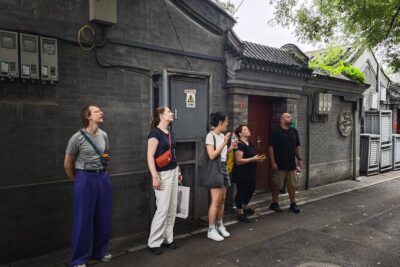
Beijing Hutong Walking Tour History, Architecture and Local Life
Read our review →

Explore Ancient Chinese Architecture & Meet its People
Read our review →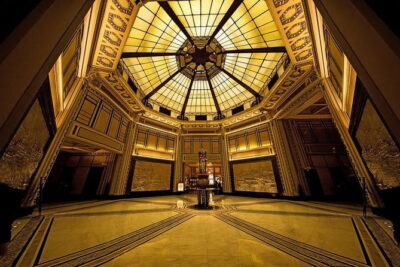
3-Hour Shanghai Art Deco Walking Tour With City Master
Read our review →Other lists with this tour