
Review · WASHINGTON DC
Embassy Row: Architecture, Mansions & International Intrigue
Washington’s Embassy Row is more than a line of impressive diplomatic buildings. It is a grand residential district where America’s Gilded Age millionaires built lavish homes, many of which later became embassies. This two-hour walk connects those mansions to international politics, cultural symbols, presidential history, and a few juicy scandals.
I like the small group limit of 15, which gives you a real chance to hear the guide and ask questions. I also like the mix of grand architecture and odd little details, from the Hindu goddess Saraswati to the Mount Rushmore connection hidden in Sheridan Circle. The main consideration is that the walk covers a fair amount of ground, and the ending point may be near the starting area rather than exactly at the Dupont Circle fountain.
Key points before you book
- Gilded Age mansions now serving as embassies: See how private wealth became international diplomacy.
- Stories beyond the usual monuments: Guides such as Becca, Mark, Tyler, Dan, John, and Eli bring in scandals, presidential details, and unusual connections.
- A comfortable small-group format: The maximum group size is 15, and the walk is described as easy, with plenty of shade along the route.
- Several cultural landmarks in one outing: The route includes the Saraswati statue, Gandhi statue, Irish Embassy, Indian Embassy, and Spanish Steps.
- A useful first-day neighborhood walk: Start at Dupont Circle and get suggestions for nearby food and shopping.
- Good value for architecture fans: At $49, you are paying for a licensed guide and two hours of context rather than admission to an indoor attraction.
Why Embassy Row makes a strong walking tour
Embassy Row is one of Washington’s most interesting areas for seeing how the city’s past and present overlap. The avenue is lined with diplomatic missions, but many of those buildings began as private homes for wealthy Americans. Their grand entrances, elaborate facades, and large scale make more sense once you know the fortunes behind them.
I like this kind of tour because the buildings are not isolated objects. A guide can explain who commissioned a mansion, why its style mattered, and how the property changed hands. The same facade then tells two stories: one about private wealth in Washington and another about the country now using the building for diplomacy.
You will not go inside the embassies or presidential house on this walk. The value comes from seeing the exteriors and understanding what happened there. That makes the quality of the guide important. The strongest descriptions of the experience single out Becca, Mark, Tyler, Dan, John, and Eli for clear storytelling, energy, useful answers, and a friendly pace.
More Architecture Tours around the USA:
- Chicago Architecture River Cruise
★ 5.0 · 15,756 reviews - Chicago River 90-Minute Architecture Tour
★ 4.5 · 9,629 reviews - Chicago River: 1.5-Hour Guided Architecture Cruise
★ 4.8 · 8,046 reviews
Beginning at Dupont Circle
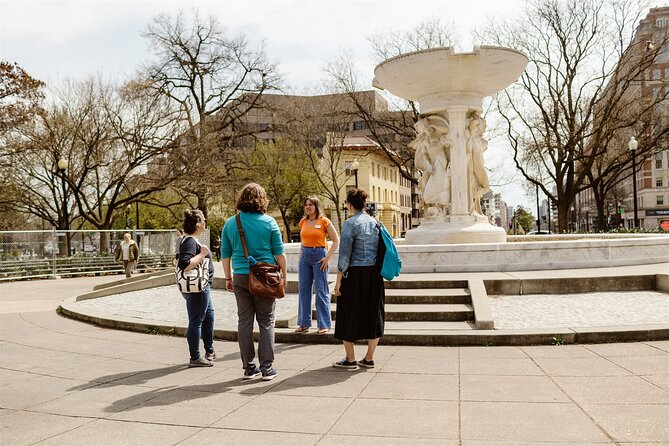
The tour starts at the Dupont Circle fountain at 10:00 in the morning. This is a sensible meeting place because it lets you begin with the neighborhood rather than treating the circle as a simple landmark.
The opening discussion lasts about 10 minutes and covers Dupont Circle’s history. You also get recommendations for places to eat or shop after the walk, which is handy because the tour finishes in the same general part of Washington.
This first stop helps set up the rest of the walk. Dupont Circle is not just a convenient gathering point. It gives you a sense of the district’s role as a residential and social center before you move toward the grand homes and diplomatic buildings of Massachusetts Avenue.
Arrive ready to walk, and wear shoes you can manage for two hours. The route is described as long but easy, with shade along much of the way. Still, this is a sidewalk tour, not a short photo stop.
Reading the mansions of Embassy Row
The main Embassy Row portion takes about 30 minutes, though the buildings and their stories continue through later stops. This is where the tour makes its case most clearly. You will see homes built by millionaires that now house ambassadors and diplomatic offices.
That change in use is the central idea of the walk. Washington’s grand private residences were built to show status, wealth, and social importance. Today, similar buildings serve practical international purposes. The contrast gives the neighborhood a useful layer of drama without needing a museum ticket.
The guide’s role is to help you notice more than a pretty facade. Look for changes in scale, decorative details, entrances, and the relationship between the mansion and the avenue. You will hear about the people who built these houses, the society that inherited one of them, and the scandals tied to some of the properties.
One of the tour’s strengths is its range. You are not simply counting embassies. You are moving through architecture, American social history, diplomacy, and local gossip. If you already know a great deal about Washington, tell the guide what you have seen and ask focused questions. If this is your first visit, the walk gives you a useful framework for the neighborhood.
The Saraswati statue and cultural diplomacy
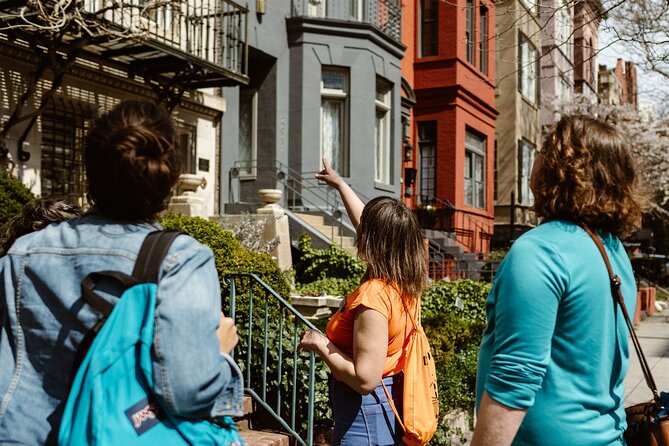
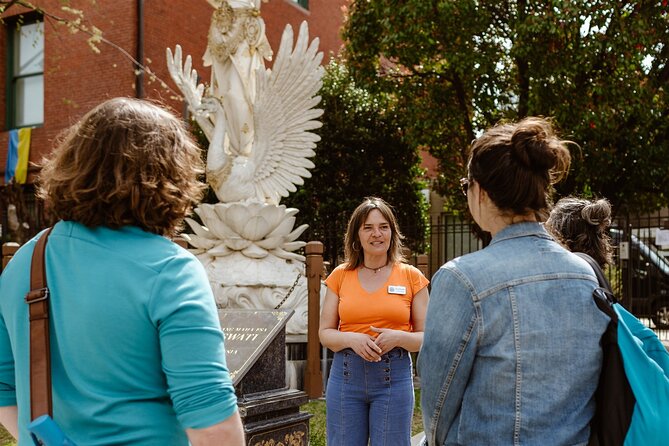
The Statue of Goddess Dewi Saraswati is a short five-minute stop, but it adds something different to the route. Saraswati is the Hindu goddess associated with knowledge, music, and the arts. The statue is surrounded by flowers and located near the Indian Embassy.
This is a welcome break from the mansion story. Instead of focusing on American wealth, the stop points to cultural exchange and the public expression of Indian tradition in Washington. It also gives you a visual reminder that an embassy is not only an office for diplomats. It can represent a nation’s culture, values, and connections abroad.
You will not spend a long time here, so listen closely and use the stop to take in the setting. The statue is one of the more distinctive details on the walk, especially for anyone who enjoys seeing how international communities express themselves in a city.
Same streets, read through a different style:
- Chicago Architecture Center River Cruise aboard First Lady
★ 5.0 · 5,536 reviews - Chicago: Architecture River Cruise Skip-the-Ticket Line
★ 4.8 · 4,325 reviews - Chicago River 45-Minute Architecture Tour from Magnificent Mile
★ 4.5 · 2,924 reviews - Chicago Lake and River Architecture Tour
★ 4.5 · 2,308 reviews
The Society of the Cincinnati
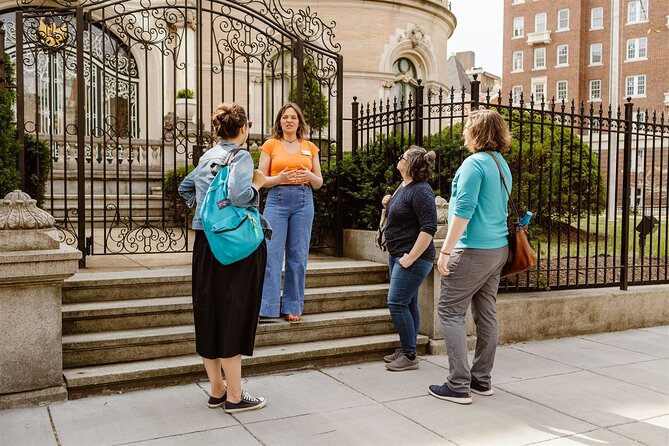
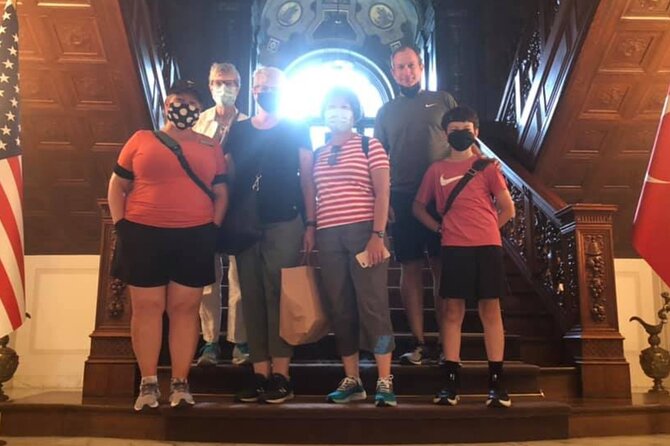
The Society of the Cincinnati stop lasts about 10 minutes and returns the tour to the question of wealth and legacy. Here, you learn about the millionaires who built the home and the society that inherited it.
This stop is useful because it shows that Embassy Row is not only about foreign governments. The area also reflects the institutions and private groups that shaped Washington before the avenue became known for its diplomatic missions.
Expect a story-driven explanation rather than an interior visit. The building’s importance comes from its ownership and connections, so this is one place where a good guide can make a familiar-looking mansion memorable.
The Indian Embassy and Gandhi statue

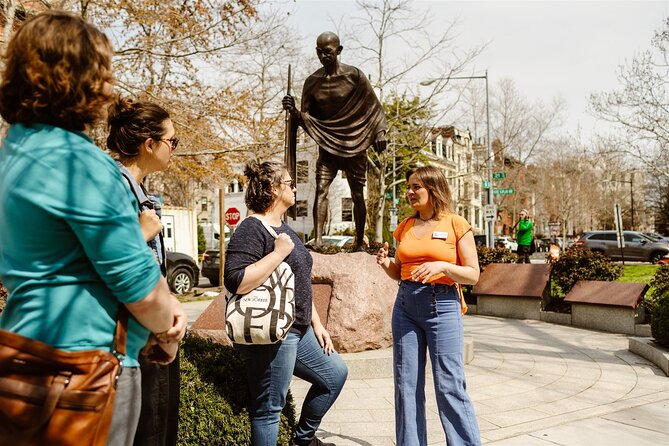
The Indian Embassy receives a brief five-minute stop. The building reflects Indian heritage and diplomatic work between India and the United States. Nearby, the Gandhi statue on Massachusetts Avenue honors Mahatma Gandhi’s connection to peace and nonviolence.
Taken together with the Saraswati statue, this section gives the tour a stronger cultural focus. You see both an embassy as a working diplomatic building and public art that communicates a national figure’s ideals.
The short stop means you should not expect a detailed lecture on Indo-American relations. Instead, you get a compact explanation of the building’s role and the symbolism of Gandhi nearby. It is a good example of how this walk moves between architecture, public art, and international affairs.
The Irish Embassy and Sheridan Circle
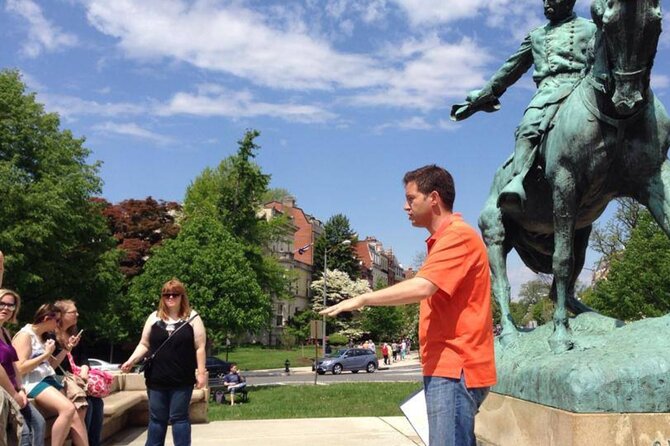
The Irish Embassy is another five-minute stop. Its elegant building represents Ireland’s history and culture while supporting diplomatic ties with the United States.
The route then reaches Sheridan Circle, where the equestrian statue of Philip Sheridan supplies one of the tour’s more unexpected questions: how is this statue connected to Mount Rushmore? That kind of link is exactly the sort of detail that can turn a routine monument into a story worth remembering.
You may not have thought of Embassy Row as a place for military history or national sculpture, but the Sheridan Circle stop widens the subject. The tour keeps asking you to connect Washington’s statues and buildings to larger national stories.
The Woodrow Wilson House from the sidewalk

At the President Woodrow Wilson House, the guide discusses the building from outside. This is the home of the former president and a notable part of the neighborhood’s presidential history.
The tour points out that Wilson was the only president to live in Washington after leaving office, apart from Barack Obama in the modern period. That fact gives the house a personal angle. It was not simply a ceremonial property. It was connected to how a former president continued life in the capital after the White House.
Because you remain outside, this stop will suit you best if you enjoy context more than interior rooms. If you hoped to tour the house itself, adjust your expectations. You are getting a neighborhood view and a historical explanation, not admission to a presidential museum.
The Spanish Steps and the walk back
The Spanish Steps are a picturesque five-minute stop near Dupont Circle. Inspired by the famous steps in Rome, they offer a quieter setting surrounded by greenery and historic buildings.
This is a pleasant way to finish because it shifts the mood from diplomatic power and grand mansions to a small urban retreat. The steps also show how much variety you can find within a short distance of Dupont Circle.
The published details describe the activity as ending back at the meeting point. At the same time, the provider has clarified that the route may finish within sight of the starting area and a Metro station rather than at the fountain itself. That is not a major problem, but it is worth knowing if you have a tight connection afterward. Ask your guide where the walk ends that day.
What $49 buys you
The price is $49 per person. For two hours, that works out to a reasonable rate for a licensed guide leading a small group through a neighborhood where the main attractions are exterior buildings and stories.
You are not paying for entry to an embassy or house. You are paying for interpretation. Without a guide, you can walk Massachusetts Avenue and read a few signs, but you may miss the people, ownership changes, connections, and scandals that give the buildings meaning.
The value is strongest if you enjoy architecture and local history but do not want a full-day museum program. It is also a practical first activity in Washington because the guide gives you a sense of Dupont Circle and nearby places to eat or shop.
The value is weaker if you prefer to set your own pace, stop for long photographs, or use your phone to research every building as you go. One dissatisfied participant felt the route could be done independently. That is a fair point for confident self-guided walkers. The paid advantage is the live storytelling and the chance to ask questions as the buildings pass by.
Group size, guides, and walking pace
The group is capped at 15 people. That is small enough for a guide to maintain contact with the group and answer questions without turning the outing into a private tour.
The guides named in the feedback include Becca, Mark, Tyler, Dan, John, and Eli. Their reported strengths vary slightly, but the pattern is clear: expect a guide who focuses on stories, answers questions, and keeps the walk moving. Becca is noted for clarity and energy. Mark is praised for his passion and friendly manner. Tyler is described as comfortable with questions and good at setting a steady pace. Dan is remembered for strong storytelling.
You should still allow for normal guide-to-guide differences. A two-hour neighborhood walk cannot cover every building or every fact on the avenue. One critical account raised concerns about factual errors, while the provider disputed that assessment. The practical lesson is simple: come ready to listen, ask questions politely, and understand that the route offers a selected story rather than an encyclopedia of Embassy Row.
Who will enjoy this walk most
This experience fits you best if you like:
- Architecture, old mansions, and changing neighborhoods
- Washington history outside the main National Mall sights
- Diplomatic buildings and cultural symbols
- Short stories about powerful people and unusual connections
- Small groups rather than large bus tours
- Easy walks with frequent stops
Families can enjoy it if children are happy listening while walking. The story of Mount Rushmore, the statues, and the mansion scandals may help hold younger attention, but the tour is still built around architecture and history.
It also suits solo visitors. The 15-person limit makes it easier to join a conversation, and the guide can help with directions afterward. The walk is offered in English, uses a mobile ticket, and is near public transportation. Service animals are allowed, and most people can participate.
A few practical tips for the morning
Meet at the Dupont Circle fountain and plan to arrive a little early. The tour begins at 10:00 a.m., so you will want time to locate the fountain without rushing.
Wear comfortable shoes and bring water. The walk is described as easy, but it lasts about two hours and includes several blocks between stops. Shade is available along much of the route, though conditions can change with the season and weather.
Keep your phone available for the mobile ticket, but do not rely on it as your guide. The point of paying for this walk is hearing the connections that are easy to miss when you simply move from building to building.
The experience is offered in English and has a maximum of 15 participants. You can cancel up to 24 hours before the start time for a full refund, which gives you some flexibility when planning a Washington schedule.
Should you book Embassy Row?
Book this tour if you want a compact, story-filled look at Dupont Circle and Embassy Row, especially if grand houses, diplomacy, and Washington gossip appeal to you. The combination of Gilded Age mansions, the Saraswati and Gandhi statues, Sheridan Circle, the Woodrow Wilson House, and the Spanish Steps gives the walk more variety than its title suggests.
Skip it if you prefer going alone, want to enter the buildings, or already know the neighborhood in detail and would rather research each site at your own speed. For most first-time visitors who want something beyond the standard monuments, $49 is a fair price for two hours of guided context, especially with a small group and a strong storyteller.
FAQ
Where does the Embassy Row tour begin?
The tour begins at the Dupont Circle fountain in Washington, DC. The scheduled start time is 10:00 a.m.
How long does the tour last?
The guided walk lasts approximately two hours.
Does the tour include entry to the embassies or Woodrow Wilson House?
No. The stops focus on exterior views and guided explanations. The information provided does not include admission inside the embassies or the Woodrow Wilson House.
How large is the group?
The tour has a maximum of 15 participants.
Is the walk suitable for most people?
Most people can participate, and the walk is described as long but easy. Service animals are allowed, and the route is near public transportation.
What is the cancellation policy?
You can cancel up to 24 hours before the experience for a full refund.
New to the itinerary around the USA
- Washington, DC: Georgetown Architecture Walking Tour★ 5.0 · 8 reviews
- Wilmington History and Architecture Tour★ 4.8 · 18 reviews
- Washington DC: Dupont Circle & Embassy Row Architecture Tour★ 5.0 · 6 reviews
- New Orleans : Garden District Architecture Walking tour★ 4.8 · 5 reviews
- Private Colonial Williamsburg Architectural Tour★ 5.0 · 5 reviews
- Tulsa: Art Deco Walking Tour of Tulsa★ 5.0 · 8 reviews
- Castle to Capitol: Museums of the National Mall Architecture Tour★ 4.5 · 9 reviews
- Monuments and Memorials Architectural Walking Tour★ 5.0 · 17 reviews
USA Architecture Tours, compared.
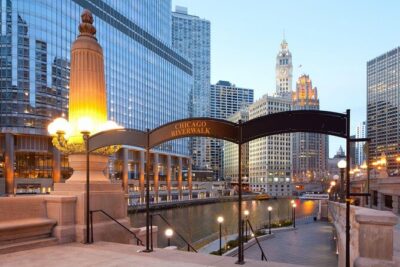
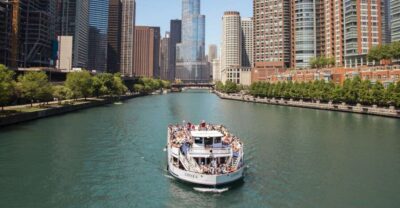
Chicago River: 1.5-Hour Guided Architecture Cruise
Read our review →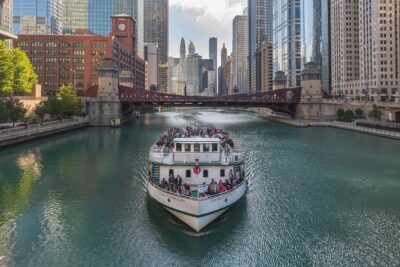
Chicago Architecture Center River Cruise aboard First Lady
Read our review →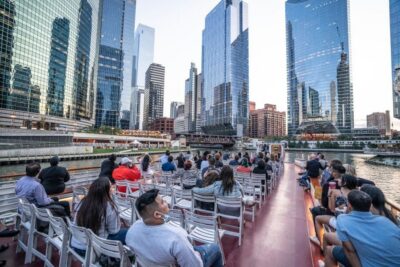
Architecture River Cruise Skip-the-Ticket Line
Read our review →
Chicago River 45-Minute Architecture Tour from Magnificent Mile
Read our review →
45-Minute Family-Friendly Architecture River Cruise
Read our review →Other lists with this tour