Review · BISHKEK
Ancient Burana Tower (Architectural wonder of Central Asia)
Burana Tower rises from the remains of Balasagun, an old Central Asian city that disappeared centuries ago. I like the way this outing joins a striking 11th-century minaret with less polished sights nearby: carved stone heads, petroglyphs, grinding stones, and the wide Tien Shan range behind it.
I also like the practical setup. Transport from Bishkek, museum admission, and an English-speaking guide are included, and the group is limited to 12 people. Guides such as Alex, Tariel, and Azamat have made the visit more personal, with clear explanations and thoughtful touches. The main drawback is the price: at $76, this can feel costly if your booking turns into a private trip or if you prefer a full day in the mountains.
Key points to know before you go
- Burana Tower is the last major reminder of Balasagun, an important medieval city destroyed over several centuries.
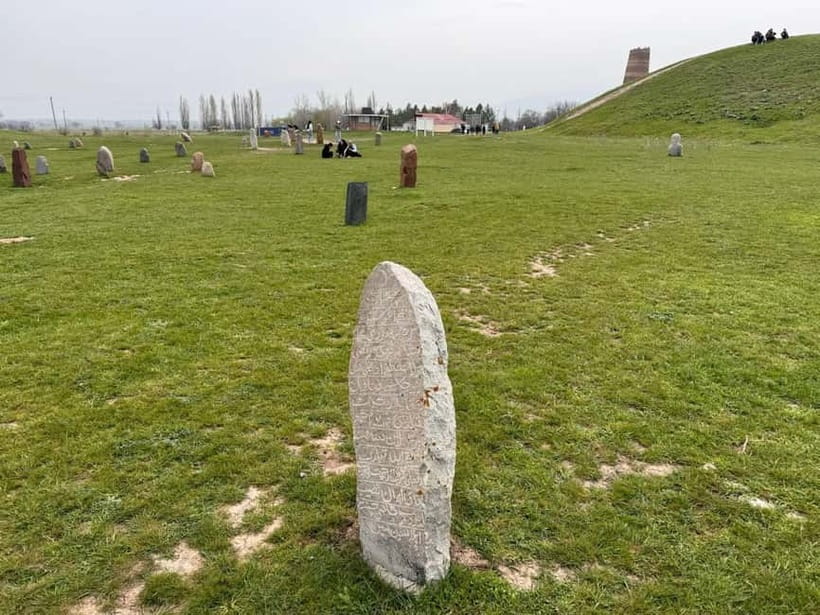
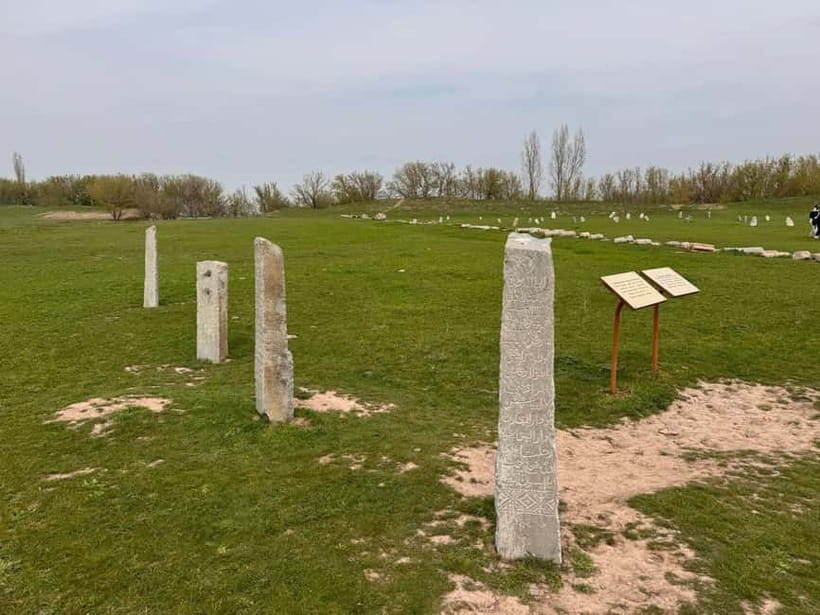
- The stone collection is more than a quick photo stop, with balbals, petroglyphs, and grinding stones offering a look at older Central Asian traditions.
- The Tien Shan backdrop gives the tower its drama, especially when you frame the old brick structure against the mountains.
- The drive from Bishkek takes time, with the main visit at Burana lasting about 2.25 hours.
- The tour works well for history-minded visitors, but the tower itself is compact and the museum is small.
- Ask about the group arrangement, since at least one booking operated as a private hotel pickup despite being sold as a small-group experience.
From Bishkek to the ruins of Balasagun
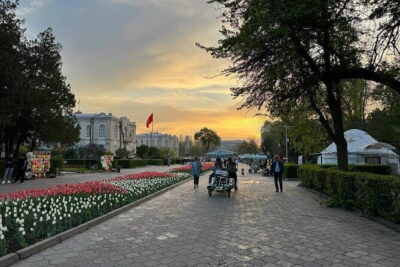
The meeting point is by the Paramount Kyrgyz Republic Flag in Bishkek. From there, the tour takes you toward Tokmok and the Burana site, about 70 kilometers from Bishkek and 12 kilometers from Tokmok.
The total outing lasts 5.5 hours. That makes it a useful half-day plan when you want to leave the capital but do not want to commit to a long mountain excursion. The road time matters, though. One recorded trip took about 90 minutes each way, so you should expect the drive to be a meaningful part of the day rather than a quick transfer.
I like this rhythm. The city gives way to open country, and the approach helps you understand why Balasagun mattered. This was not an isolated monument built for tourists. It was part of a major settlement in the Chui Valley, a region crossed by trade, migration, and political power.
Your transport from Bishkek is included, along with the entrance ticket for the museum. Food and drinks are not included, so bring water and consider eating before departure. One guide, Alex, even made sure an early-starting group could get its caffeine fix, a small but useful detail if your morning begins before breakfast.
More Architecture Tours around the world:
- Chicago Architecture River Cruise
★ 5.0 · 15,756 reviews - Chicago River 90-Minute Architecture Tour
★ 4.5 · 9,629 reviews - Chicago River: 1.5-Hour Guided Architecture Cruise
★ 4.8 · 8,046 reviews
Meeting the Burana Tower
The tower is the clear centerpiece. Built in the 11th century, it was once part of Balasagun and is now the best-known surviving piece of the old city.
The structure is not enormous by modern standards, but its age and setting give it force. You see it rising above the trees, with the Tien Shan mountains forming a powerful backdrop. The contrast does the work: old brick, open sky, distant snow or rocky ridges, and very little modern construction competing for attention.
You can climb the tower. The interior is narrow, dark, and enclosed, so anyone with claustrophobia may prefer to stay outside. One visitor chose not to go up for exactly that reason, and there is no shame in skipping it. The important part is being at the site and seeing the tower from ground level.
If you do climb, take care on the tight passage and uneven steps. The available information does not specify the height or exact stair conditions, so ask your guide before entering if mobility is a concern. The tour is listed as wheelchair accessible, but the tower climb itself may not suit every participant.
Give yourself time to look beyond the tower. The best photographs usually include the structure, the surrounding trees, and the Tien Shan range. Your guide can also help explain how the tower fits into the wider remains of Balasagun rather than treating it as an isolated photo prop.
Understanding Balasagun’s place in Central Asia
Balasagun belonged to the Kara-Khanid, or Qarakhanid, realm that controlled parts of Central Asia between the 9th and 11th centuries. The tour connects the tower with the arrival and growth of Islam in the region, an important subject because the site reflects more than architecture.
The tower is tied to the period when Islamic culture and political power were taking a stronger role in Central Asian cities. Your guide explains this regional change alongside the story of Balasagun, giving the monument a wider meaning.
The city was attacked by the Mongols in 1218. By the 14th century, Balasagun had been destroyed and left in disrepair. Today, the tower is the most visible survivor, while the surrounding site suggests the scale of what has vanished.
I find this part valuable because it keeps the visit grounded. You are not just looking at an old tower and being told that it is ancient. You are learning how a city grew, changed hands, faced destruction, and gradually disappeared. The remains are limited, but the historical setting is large.
Do not expect a fully preserved medieval city. There are no long streets of standing buildings waiting to be explored. The appeal is the combination of one strong monument, a small museum, stone artifacts, and the open setting around them.
The stone museum, balbals, and petroglyphs
The museum is small, but it fills an important gap. Outside, the tower gives you scale and atmosphere. Inside and around the site, the stone collection gives you clues about the people and traditions that came before and alongside Balasagun.
You will see balbals, carved stone figures traditionally associated with memorial and funerary customs across Central Asia. Their faces and forms are often simple, which makes them easy to overlook. Take a slow look. The marks and proportions are not decorative filler. They are the surviving evidence of beliefs and social practices that would otherwise be hard to picture.
The petroglyphs add another layer. These carved images belong to older traditions and show that people used this region long before the medieval city took shape. The visit therefore moves across several periods, from early rock art to Islamic architecture and later historical change.
Grinding stones may seem less dramatic than carved heads, but they are useful objects. They suggest everyday work: processing grain and preparing food. I like having these practical pieces beside the more symbolic artifacts because they make the past feel less distant.
Guides make a real difference here. Tariel, for example, explained the tower, stones, museum, and yurts in detail, and even provided souvenir stamps. A guide who takes time with the smaller objects can turn a short stop into a much better history lesson.
Same streets, read through a different style:
- Barcelona: Park Güell and Gaudí House Museum Entry Ticket
★ 4.5 · 6,326 reviews - Chicago Architecture Center River Cruise aboard First Lady
★ 5.0 · 5,536 reviews - Barcelona: Gaudi’s Casa Vicens Skip-the-Line Entrance Ticket
★ 4.7 · 4,541 reviews - Barcelona: Gaudí’s Park Güell Tour with Fast-Track Ticket
★ 4.8 · 4,512 reviews
Yurts and the human side of the visit
The grounds also include yurts. The supplied details do not promise a meal, craft demonstration, or cultural performance, so you should not book this expecting a full cultural show. Still, the yurts help connect the archaeological site with Kyrgyzstan’s living traditions.
They also add variety to the stop. After the brick tower and stone collection, the round felt-covered structures provide a different visual experience and another useful photo subject. Your guide may explain their place in local life, depending on the schedule and the exact arrangement of your tour.
There is time for a guided visit, free time, walking, sightseeing, and shopping. That flexibility is helpful. You can follow the main explanation, then step away to photograph the tower or inspect the stones at your own pace.
The stop at Burana lasts about 2.25 hours. That is long enough to avoid a rushed look, but not so long that the site becomes an all-day commitment. Since the museum is small and the tower is compact, the value comes from the guide’s interpretation and the chance to take in the setting calmly.
What the $76 price really buys
At $76 per person, this is not the cheapest way to see a single monument. The tower itself is only one part of the cost, though. The price includes round-trip transport from Bishkek, a live guide, museum admission, and a half-day schedule that removes the need to arrange a car or navigate the route yourself.
For a visitor who wants history explained in English, Russian, or Urdu, that package can be fair. A good guide links the tower to Balasagun, the Kara-Khanid period, the spread of Islam, the Mongol attack, and the older stone traditions. That context is difficult to get from a quick independent stop.
The value is less clear if you expect a large archaeological complex or a full mountain day. Richard’s experience was that the tower was worth seeing, but a nearby national park made a stronger day trip. That is a useful comparison. Burana is best for history, architecture, and cultural context, not for long walks or dramatic outdoor activity.
The group size is capped at 12, which should make the experience more personal than a large coach outing. Still, ask how your specific departure will operate. One booking became a private trip with hotel pickup, which can be excellent for flexibility but may make the $76 price feel high if you expected a shared group.
Guides, transport, and useful preparation
The tour offers live guiding in English, Urdu, and Russian. Named guides connected with the experience include Alex, Tariel, and Azamat, while another booking referred to a guide named Ernest or a similar name. Guide assignments can vary, so do not assume you will receive a particular person.
Tariel contacted one participant by WhatsApp the night before to confirm the pickup time and location. That kind of message is useful, especially when the starting point is central Bishkek and the morning departure is early.
Bring weather-appropriate clothing. The site is outdoors, and the weather can change between Bishkek and the open area around Burana. Comfortable footwear is sensible for walking around the tower, stones, and museum grounds.
Bring a passport or identification card. A copy is accepted. Alcohol and drugs are not allowed, and the experience is not suitable for people over 95 years old according to the stated conditions.
Cancellation is flexible if your plans are uncertain: you can cancel up to 24 hours before the tour for a full refund. You can also reserve now and pay later. Wheelchair accessibility is listed, but ask ahead about the tower climb and the exact surfaces if you use a wheelchair.
Who will enjoy this half-day trip
I would choose this tour if you are staying in Bishkek and want a manageable introduction to Kyrgyzstan’s past. It suits visitors who enjoy monuments, archaeology, old trade routes, religious history, and photography more than strenuous activity.
Families and mixed-age groups may like the short format, especially because the visit includes several types of sights. History-minded couples and solo visitors also benefit from having transport and interpretation arranged.
I would think twice if your main goal is mountain scenery. You will get fine Tien Shan views, but the trip is centered on a historic site. If you have only one spare day outside Bishkek and want a stronger nature experience, a national park may be the better choice.
The tour is also less ideal for anyone who dislikes long drives for a compact attraction. The route can take about 90 minutes each way, and the museum is small. You should book it for the full combination of tower, stones, city history, and mountain setting.
Should you book the Ancient Burana Tower tour?
Book it if you want an easy half-day from Bishkek that combines Islamic Central Asian history with older stone traditions. The tower is photogenic, the Tien Shan backdrop adds real drama, and the balbals, petroglyphs, grinding stones, museum, and yurts give the visit more substance than a single monument would provide.
At $76, I would confirm whether your departure is shared or private before paying. The tour offers solid value when the guide is engaged and the transport saves you the trouble of arranging the trip yourself. I would skip it only if you want a major nature outing, a large archaeological city, or the lowest possible price.
FAQ
Where is Burana Tower located?
Burana Tower is in the Kyrgyz Republic, about 70 kilometers from Bishkek and 12 kilometers from Tokmok.
How long does the tour last?
The full experience lasts 5.5 hours, including transport from Bishkek and the visit to Burana.
Where does the tour start and finish?
The stated starting and return point is the Paramount Kyrgyz Republic Flag in Bishkek.
What languages are available for the guide?
Live guiding is available in English, Urdu, and Russian.
What does the price include?
The $76 price includes an English-speaking guide, transport from Bishkek, museum entrance tickets, and historical interpretation.
Are food and drinks included?
No. Food and drinks are not included.
Can I climb Burana Tower?
Yes, you can climb the tower. The interior is narrow, so people with claustrophobia may prefer to remain outside.
What should I bring?
Bring weather-appropriate clothing and a passport or identification card. A copy of the identification document is accepted.
Can I cancel the booking?
You can cancel up to 24 hours in advance for a full refund. Reserve now and pay later is also available.
New to the itinerary around the world
- Washington, DC: Georgetown Architecture Walking Tour★ 5.0 · 8 reviews
- Wilmington History and Architecture Tour★ 4.8 · 18 reviews
- Washington DC: Dupont Circle & Embassy Row Architecture Tour★ 5.0 · 6 reviews
- New Orleans : Garden District Architecture Walking tour★ 4.8 · 5 reviews
- Walk & Discover KL’s Architectural and Heritage Gems★ 5.0 · 7 reviews
- Unveiling Brno: History, Culture & Architectural Delights★ 5.0 · 2 reviews
- Vicenza: Palladian Architecture Private Walking Tour★ 3.3 · 3 reviews
- Private Colonial Williamsburg Architectural Tour★ 5.0 · 5 reviews
Bishkek Architecture Tours, compared.
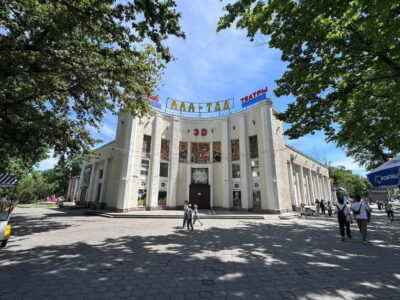
City Tour (History, Architects, Statues & Culture)
Read our review →