Review · FINLAND
Helsinki architecture tour with a city planner
Helsinki makes more sense when you look up. A grand Senate Square, a fanciful insurance office, a modern library, and a railway station all tell different parts of the city’s story. This small walking tour puts those buildings into context with help from city planner Emek, rather than leaving you to admire façades without knowing why they matter.
I like the small group limit of six, which should make it easier to ask questions and keep the discussion personal. I also like the route’s range, from Finland’s historic center to the contemporary Central Library Oodi, with politics, society, and design tied together along the way.
The main consideration is pace. Three hours on foot, in all weather, calls for decent shoes, suitable clothing, and a moderate level of fitness. Food, drinks, and transportation to and from the meeting points are not included.
Key points to know before you book
- A city planner leads the walk: Emek explains Helsinki through architecture, politics, and social change.
- The route crosses several design eras: You’ll see neoclassical, Jugend, modernist, and contemporary buildings.
- The group is capped at six: That gives you a better chance to ask questions and follow the conversation.
- The walk ends at Oodi: The Central Library offers a strong modern counterpoint to the older buildings downtown.
- The tour takes about three hours: Plan for steady walking and outdoor exposure in changing weather.
- The price is $69.14 per person: The value rests mainly in the guide’s interpretation, not paid admissions.
Why a city planner changes the way you see Helsinki
A standard city walk can point out Helsinki’s main sights. This one aims to explain how those sights fit together. That difference matters in a city where architectural styles often reflect a change in national identity, public life, or political power.
Emek’s approach, based on the supplied tour details and guest comments, links architecture with the forces behind it. You are not simply told that a building is old or attractive. You hear how artistic choices connect with Finland’s social and political story.
I find that useful in Helsinki because the route includes both famous landmarks and buildings you might pass without a second glance. The Pohjola Insurance Building, for example, is not as obvious a first stop as Senate Square, but it gives the tour a chance to show how Finnish design moved toward a more national and expressive style.
The small group is another practical advantage. With no more than six people, you should have room to stop and ask why a building looks the way it does, how it is used, or what changed around it. The tour is not designed as a private excursion, but it is more intimate than a large city walk.
More Architecture Tours around the world:
- Chicago Architecture River Cruise
★ 5.0 · 15,756 reviews - Chicago River 90-Minute Architecture Tour
★ 4.5 · 9,629 reviews - Chicago River: 1.5-Hour Guided Architecture Cruise
★ 4.8 · 8,046 reviews
Senate Square sets the historical frame
The tour begins at Aleksanterinkatu 9 and reaches Senate Square, where you spend about 10 minutes. This is the natural place to start a discussion of Helsinki’s formal center.
Senate Square is the clearest expression of Helsinki’s neoclassical public face. Even without a long stop, the square gives Emek a strong visual starting point for explaining order, power, and the role of monumental buildings in a capital city.
You should expect the guide to use the square as a reference point for the rest of the walk. Later buildings may feel more playful, more national, or more modern, and the contrast becomes easier to understand after seeing this carefully planned civic setting.
The 10-minute time allotment is short, so do not expect a long historical lecture at every stop. The benefit is the route’s rhythm: you see a place, get a focused explanation, then keep moving before the information becomes heavy.
The National Library and Jugendsali reveal different sides of public design
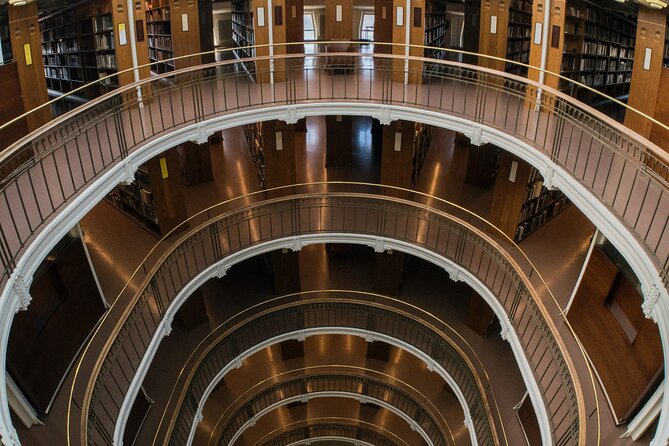
The National Library of Finland receives about 15 minutes. That is enough time for a closer look and a more developed explanation of how a public cultural building serves both practical and symbolic roles.
A library is a useful stop on an architecture tour because it sits at the meeting point of learning, national identity, and civic life. Here, the emphasis is not only on decoration. You can consider why a country places importance on books, scholarship, and access to knowledge, and how architecture helps express those aims.
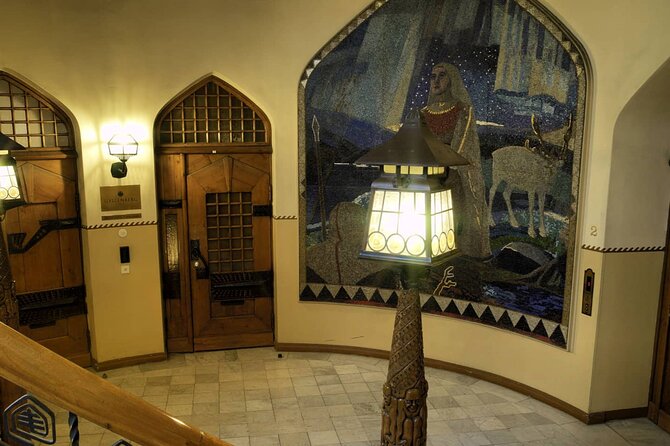
Next comes Jugendsali, also with 15 minutes. The name points to Finland’s Jugend, or Art Nouveau, period. This stop gives you a chance to see a different visual language from the formal classicism of Senate Square.
The pairing works well. Instead of treating styles as isolated labels, the guide can show how Helsinki’s buildings changed in response to new artistic ideas and a changing national mood. Emek’s explanations are especially suited to this kind of comparison, since his focus brings design together with political and social forces.
You might find the pace here more conversational than museum-like. Admission is free at these stops, but the value comes from the explanation and the chance to compare buildings in the city itself.
The Pohjola Insurance Building adds a more Finnish voice
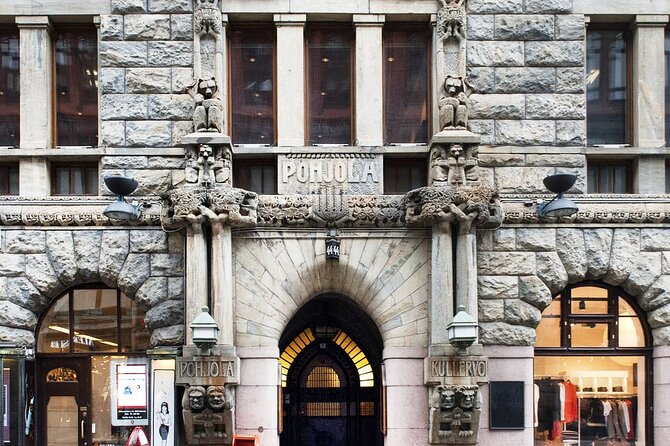
The tour spends about 10 minutes at the Pohjola Insurance Building. This is one of the route’s more distinctive choices because it moves beyond the most familiar postcard sights.
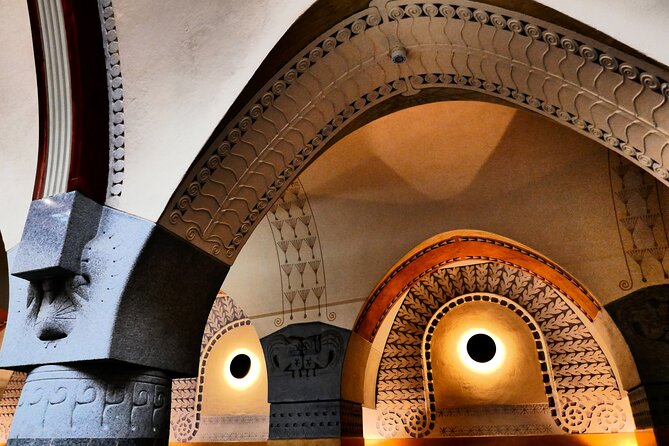
The building helps show how Finnish architecture developed an identity of its own. Rather than relying only on imported classical models, designers began using local themes and a stronger sense of national character. That makes this stop useful if you want to understand why Helsinki’s older architecture can feel both European and specifically Finnish.
Ten minutes is enough for an introduction, but not a full architectural study. If this building catches your attention, use the question time to ask Emek about its details, period, and place in Helsinki’s wider design story.
I like the fact that the tour does not spend all its time on the city’s most famous square. A route that includes a less obvious building gives you something to look for later, when you are walking around Helsinki on your own.
Same streets, read through a different style:
- Barcelona: Park Güell and Gaudí House Museum Entry Ticket
★ 4.5 · 6,326 reviews - Chicago Architecture Center River Cruise aboard First Lady
★ 5.0 · 5,536 reviews - Barcelona: Gaudi’s Casa Vicens Skip-the-Line Entrance Ticket
★ 4.7 · 4,541 reviews - Barcelona: Gaudí’s Park Güell Tour with Fast-Track Ticket
★ 4.8 · 4,512 reviews
Esplanadi shows architecture in everyday city life
Esplanadi Park gets another 10-minute stop. This changes the setting from formal civic buildings to a public green space at the center of daily Helsinki.
A park can reveal as much about urban planning as a monumental building. It shows how a city makes room for movement, rest, social life, and public gathering. Here, the guide can connect architecture to the spaces between buildings, not just the façades themselves.
This is also a useful breather during a three-hour walk. You are still outdoors, but the stop breaks up the sequence of interiors and building fronts. If the weather is poor, remember that the tour runs in all conditions, so proper clothing matters.
The stop is brief, so you will not be given an extended park history. Its role is to help you read Helsinki as a whole city, where streets, open spaces, shops, and public buildings work together.
Academic Bookstore brings design into a working commercial space
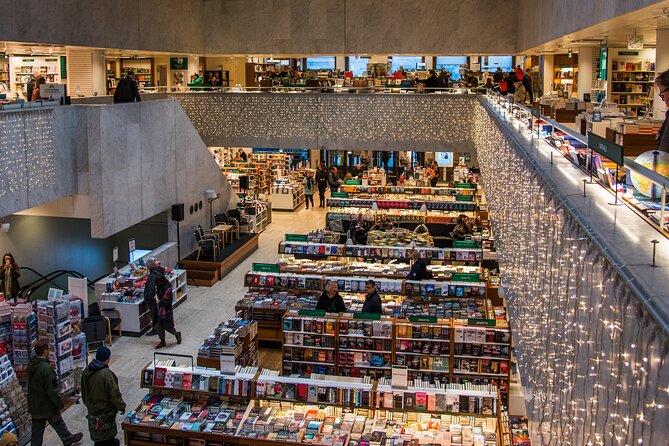
The Academic Bookstore, or Akateeminen Kirjakauppa, receives about 10 minutes. This stop brings the tour into the world of retail and modern commercial architecture.
A bookstore is an especially fitting place for this route. It connects the earlier discussion of libraries and learning with a space built for everyday use. You can see how good design affects a building that people enter to browse, shop, and spend time, rather than visit only as a monument.
The stop also helps widen the definition of architecture. You are not just studying government buildings or historic landmarks. You are looking at how design shapes ordinary urban experiences.
As with several stops, the allotted time is focused rather than leisurely. If you want to examine the interior or browse for books, allow extra time before or after the tour. The tour’s schedule is built around interpretation, not shopping.
Helsinki Central Railway Station connects style with movement
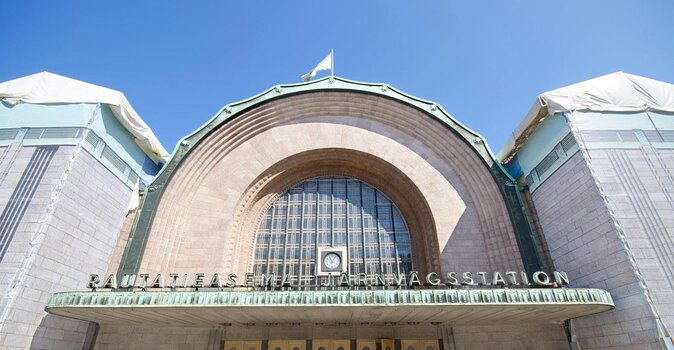
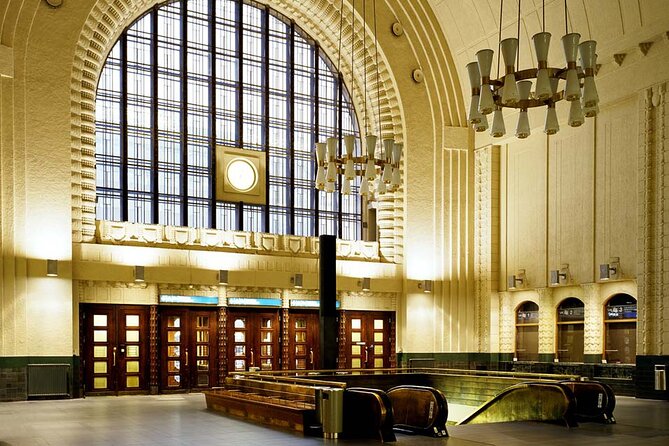
The route then reaches Helsinki Central Railway Station for about 10 minutes. This is one of the most useful stops for understanding how architecture serves a city in motion.
A railway station must handle people, schedules, entrances, and circulation, but it also becomes a public symbol. The building’s scale and design tell you something about the city’s ambitions and its connection to the wider country.
The station gives Emek another chance to explain how architectural choices work in practice. It is not only a façade to admire. It is a place where infrastructure, commerce, and public life meet.
The 10-minute stop is likely enough to identify the key ideas and point out important features. If you have luggage or need to catch a train, keep your own schedule in mind. The tour ends later at Oodi, so the station is not the final stop.
Oodi provides a modern finish
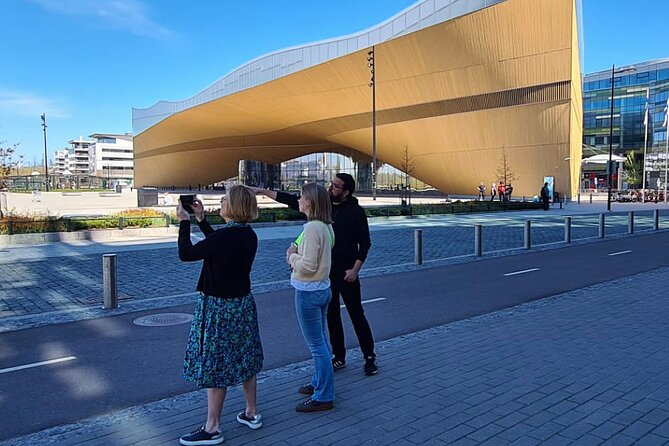
The final named stop is the Helsinki Central Library Oodi, where the tour spends about 20 minutes. This is the longest stop on the route and a fitting place to finish.
Oodi gives you a clear contrast with the older buildings seen earlier. After Senate Square, the National Library, Jugend design, the insurance building, the park, the bookstore, and the railway station, you reach a contemporary public building built around present-day civic life.
The library also brings the route back to one of its central themes: how a city expresses its values through shared spaces. The National Library represents one period of public culture, while Oodi shows how a modern city can use architecture to support community life, learning, and access.
Because Oodi is the endpoint, you can take a little more time to think about the changes you have seen. The tour does not simply move from old to new as a list of styles. It asks you to notice how Helsinki’s priorities and identity have changed over time.
The tour ends at Töölönlahdenkatu 4. You are left in a useful central location, but transportation afterward is your own responsibility.
What $69.14 buys you
At $69.14 per person, this is not the cheapest way to spend three hours in Helsinki. Most of the stops are free, and you are paying for the guide rather than admission tickets, food, or transport.
The value depends on how much you want interpretation. If you are happy to read plaques, use a guidebook, and look up buildings on your phone, the price may feel high. If you want a connected explanation from someone trained in city planning, the cost is easier to justify.
The group limit strengthens the value. With no more than six people, you are more likely to hear clearly and get answers to specific questions. The strongest praise for this experience centers on Emek’s clear, engaging way of connecting architecture with political and social history. That is the part you cannot get from a map alone.
The tour is also a good use of time early in a Helsinki visit. It can help you recognize styles and understand why certain buildings matter before you explore the city independently. The experience is booked, on average, 48 days ahead, so it is sensible to reserve early if your dates are fixed.
Who will enjoy this walking tour most
I would choose this tour if you have a real interest in architecture, urban planning, design, culture, or history. It also suits anyone who likes asking questions instead of simply following a guide from one photo stop to the next.
You should be reasonably active. The tour lasts about three hours and operates in all weather, so comfortable shoes and appropriate clothing are essential. The data does not specify the exact walking distance or indoor access at every stop, so anyone with mobility concerns should confirm details before booking.
This is less suited to someone who wants a relaxed sightseeing loop with plenty of free time. The schedule includes eight named stops and keeps moving through central Helsinki. You will see a lot, but you will not linger at every building.
Families and mixed-interest groups may find the route appealing if everyone is comfortable walking and listening. The range of stops helps keep the subject from becoming too narrow, moving from squares and libraries to parks, shops, stations, and a modern public building.
Practical details that affect your day
The meeting point is Aleksanterinkatu 9 in central Helsinki, near public transportation. The tour ends at Helsinki Central Library Oodi, at Töölönlahdenkatu 4. You need to arrange your own way to the starting point and onward transportation after the tour.
A mobile ticket is available, and booking confirmation is sent at the time of booking. The activity requires a minimum number of participants, so a cancellation for that reason can result in another date or experience, or a full refund.
You can cancel for a full refund up to 24 hours before the start time. Changes or cancellations made less than 24 hours ahead are not accepted for a refund. The cut-off uses Helsinki local time, so check the clock carefully if you are booking from abroad.
Should you book the Helsinki architecture tour?
Book it if you want Helsinki explained rather than merely photographed. The strongest reason to go is Emek’s city-planning perspective and the route’s clear movement from historic public buildings to Oodi’s contemporary civic design.
I would be less eager to book if you dislike steady walking, outdoor weather, or a discussion-heavy tour. The price is reasonable for a small, expert-led experience, but not if you are looking mainly for entrance tickets or entertainment.
For architecture and culture fans, this is a smart first or second-day activity. It gives you a working set of ideas to carry through the rest of your Helsinki visit, and the small group leaves room for the questions that make a city walk worthwhile.
FAQ
How long does the Helsinki architecture tour last?
The tour lasts approximately three hours.
Who leads the architecture tour?
The tour is led by a local city planner named Emek.
Where does the tour begin?
The meeting point is Aleksanterinkatu 9, 00100 Helsinki, Finland.
Where does the tour end?
The tour ends at Helsinki Central Library Oodi, Töölönlahdenkatu 4, 00100 Helsinki, Finland.
How large is the tour group?
The activity has a maximum of six participants.
Is transportation included?
No. Transportation to and from the attractions is not included.
Does the tour operate in bad weather?
Yes. The tour operates in all weather conditions, so you should dress appropriately.
Can I cancel for a full refund?
Yes. You can cancel at least 24 hours before the experience start time for a full refund. Cancellations or changes made less than 24 hours before the start time are not accepted for a refund.
New to the itinerary around the world
- Washington, DC: Georgetown Architecture Walking Tour★ 5.0 · 8 reviews
- Wilmington History and Architecture Tour★ 4.8 · 18 reviews
- Walk & Discover KL’s Architectural and Heritage Gems★ 5.0 · 7 reviews
- Washington DC: Dupont Circle & Embassy Row Architecture Tour★ 5.0 · 6 reviews
- New Orleans : Garden District Architecture Walking tour★ 4.8 · 5 reviews
- Unveiling Brno: History, Culture & Architectural Delights★ 5.0 · 2 reviews
- Vicenza: Palladian Architecture Private Walking Tour★ 3.3 · 3 reviews
- Private Colonial Williamsburg Architectural Tour★ 5.0 · 5 reviews
Finland Architecture Tours, compared.