Review · CHICAGO
Private Chicago Architecture Walking Tour
Chicago’s best architecture is not confined to a museum. It lines the sidewalks, fills office lobbies, and appears in grand hotels where you can still walk through the front door. This private tour gives you a quick but substantial lesson in Chicago’s skyscraper story, from 19th-century speculation to the polished towers of the 1920s. I especially like the private format, which lets your group ask questions and keep the pace comfortable, and the route’s mix of famous facades and ornate interiors. The main caution is building access: weekends and operating hours can limit which interiors you actually enter.
The route is well planned, with the Marquette, Rookery, Sullivan Center, Cultural Center, Tribune Tower, and Wrigley Building forming a clear architectural arc. The guide is described as friendly and well informed, but no guide names are supplied, so you cannot request a particular person in advance. Also check the lunch details before you go, since the tour information says lunch is included but one booking experience reported that it was not provided.
Key points to know before booking
- Private group format: Only your party takes part, giving you more room for questions and a more personal pace.
- Eight major stops: The route covers Chicago’s Loop and Michigan Avenue, ending at the Wrigley Building.
- Interior access varies: Several admission tickets are listed as included, but opening hours and weekend schedules can change what you see inside.
- Strong architectural range: You’ll see Chicago School design, Venetian Gothic detail, French Renaissance decoration, and Tiffany glass.
- Three hours on foot: The tour includes roughly 160 minutes at listed stops, plus walking between them.
- Lunch needs checking: It is listed as included, yet this detail was disputed in practice, so confirm before paying.
Why this private Chicago architecture walk works
I like this tour because it treats downtown Chicago as a connected story rather than a pile of unrelated buildings. You begin near the Fine Arts Building on South Michigan Avenue and finish at the Wrigley Building, moving through the Loop toward the river and Michigan Avenue.
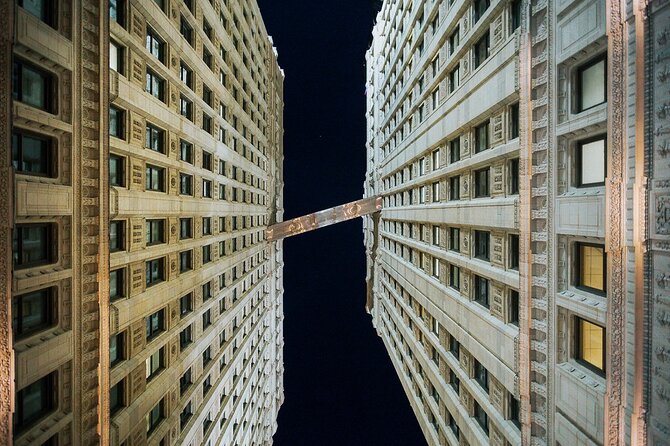
That direction matters. The buildings show how Chicago changed from a young commercial center into a city willing to test new ideas in height, structure, decoration, and public space. You are not just looking up at pretty facades. You are seeing where investors placed their money, where department stores sold modern consumer life, where private clubs served wealthy members, and where major hotels helped define urban comfort.
A private tour also changes the experience. You can stop to ask why a building looks the way it does, request more detail about a favorite style, or move on when the group has had enough. On a standard group walk, you often get a fixed speech and little chance to interrupt. Here, your party controls the conversation more easily.
The tradeoff is price. At $211 per person, this is not a casual add-on for a short city break. The value rests in the private guide, included admissions, and focused route. If your group is especially interested in architecture, that can be worthwhile. If you mainly want quick exterior photos, you can see several of these buildings on your own for much less.
More Private Architecture Tours in the USA
- Best of Chicago: Architecture & Highlights City Private Tour
★ 5.0 · 94 reviews - Chicago in a Day: Food and Architecture Private Walking Tour
★ 5.0 · 53 reviews - Private Frank Lloyd Wright Architectural Tour by Luxury Vehicle
★ 3.5 · 7 reviews
Starting at the Marquette Building
The tour begins at the Fine Arts Building, 410 South Michigan Avenue. The first listed stop is the Marquette Building, a useful place to begin because it explains the business logic behind Chicago’s early skyscrapers.
The Marquette was built as a speculative office project during the 19th-century building boom. Its purpose was not to house one grand institution. It was a collection of first-class offices designed to attract paying tenants and reward investors who believed Chicago would keep growing.
That commercial purpose helps you read the building differently. Instead of treating it as an isolated monument, you can look at it as a real estate gamble made of stone, steel, and rentable floor space. The tour allows about 20 minutes here, with admission listed as included.
This is a good opening stop for anyone who wants context before reaching the more theatrical interiors. It also sets up a theme that returns throughout the walk: Chicago’s architecture was shaped by business as much as by artistic ambition.
The Rookery and Chicago’s early office towers
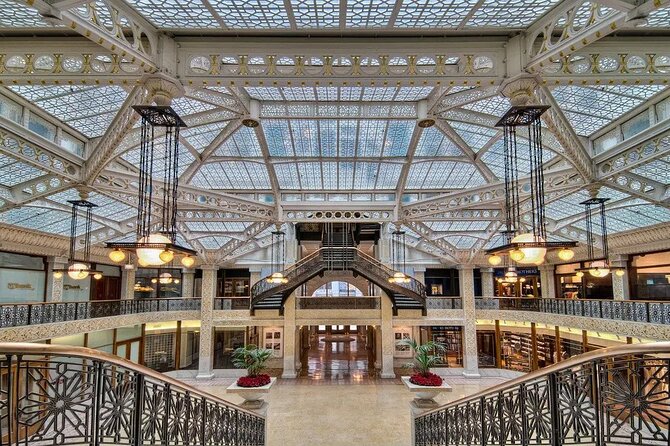
The Rookery Building sits at LaSalle and Adams, in the heart of the financial district. When completed, it was considered the largest and finest office building in the United States, and its location gives you a direct connection to Chicago’s old financial corridor.
You have about 20 minutes here, with admission listed as included. The Rookery is one of the tour’s major architectural rewards because it combines commercial purpose with a more formal, elegant interior presence.
Pay attention to the difference between the Marquette and the Rookery. Both belong to the era of rapid office growth, but the Rookery carries more civic drama. This is where a guide can add real value by pointing out how structure, light, circulation, and decoration worked together in early tall buildings.
Access is still subject to the building’s operating schedule. The tour description promises admission, but the practical warning is simple: no walking tour can force a private or working building to open every room at every hour.
A short stop at the Palmer House
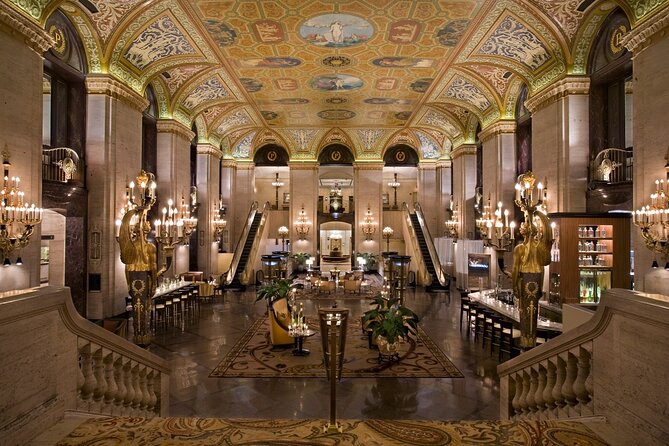
The Palmer House Hilton is a brief 10-minute stop, but it adds a different kind of Chicago story. This is the longest continuously operating hotel in North America, located in the Loop and linked to several early hotel innovations.
It was Chicago’s first hotel with elevators, and it was also the first hotel with electric light bulbs and telephones in guest rooms. Those details show how hotels became testing grounds for new technology and changing expectations about comfort.
The admission is free, and the focus is the historic lobby. Because the stop is short, do not expect a full hotel tour. Think of it as a compact look at how the city’s commercial success changed the way people stayed, worked, and communicated downtown.
More Walking Tours in Chicago
- Chicago in a Day: Food, History & Architecture Walking Tour
★ 5.0 · 1,153 reviews - Chicago’s Secret Interiors Architectural Walking Tour
★ 5.0 · 635 reviews - Chicago: Secret Interiors Architecture Walking Tour
★ 4.9 · 498 reviews - Chicago Walking Tour: Art Deco Skyscrapers Loop
★ 5.0 · 138 reviews
Reading the Sullivan Center from the sidewalk
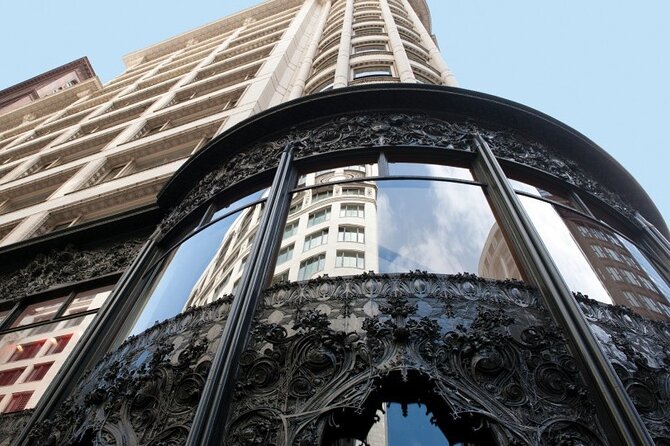
The Sullivan Center, formerly the Carson Pirie Scott department store, is one of the clearest examples of the Chicago School. Built between 1899 and 1903, it remained tied to retail throughout its life and was declared a Chicago landmark in 1975.
The tour allows about 20 minutes here, with admission listed as included. The building matters because it shows how architecture met the demands of modern shopping. A department store needed broad display areas, strong street presence, and entrances that pulled people inside.
This stop is especially useful if you are curious about Louis Sullivan’s approach to tall buildings and ornament. The building’s lower levels are more decorative and inviting, while the upper portions handle the practical work of a large commercial structure. Your guide can help you see how the facade separates those jobs.
The Sullivan Center also reminds you that Chicago architecture is not only about office towers. Retail shaped the city just as strongly, giving downtown a new rhythm of windows, signs, entrances, and shoppers.
Inside the Chicago Athletic Association
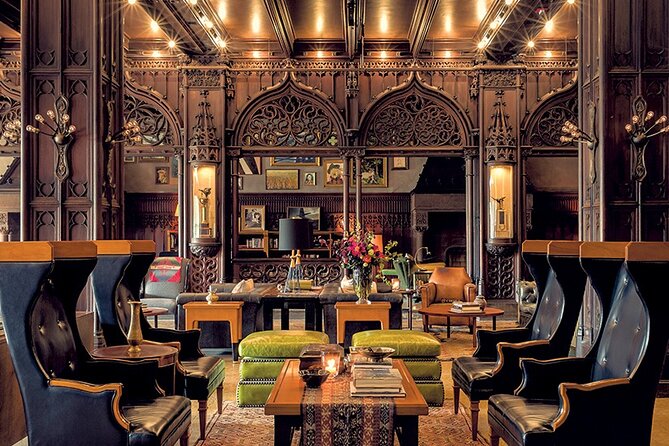
The Chicago Athletic Association takes about 30 minutes and is one of the more atmospheric stops on the route. It occupies an 11-story Venetian Gothic building designed by Henry Ives Cobb and completed in 1893.
From its opening until 2007, the building served as a private club for wealthy Chicagoans. Its current hotel use preserves much of that earlier character, including ornate paneling, elaborate molding, and detailed trim. The result is a useful contrast with the office buildings you see earlier in the day.
The building sits across from Millennium Park and includes restaurants, pubs, ballrooms, and views toward Lake Michigan. The tour does not promise time for a meal or a full hotel visit, but the interior gives you a chance to see how a private club was designed to impress its members.
Admission is free. This is also one of the places where access can be affected by hotel operations. On a weekday, you might find more of the public areas available. On a weekend, the interior experience may be more limited, so ask about current access when you book.
The Chicago Cultural Center and its Tiffany dome
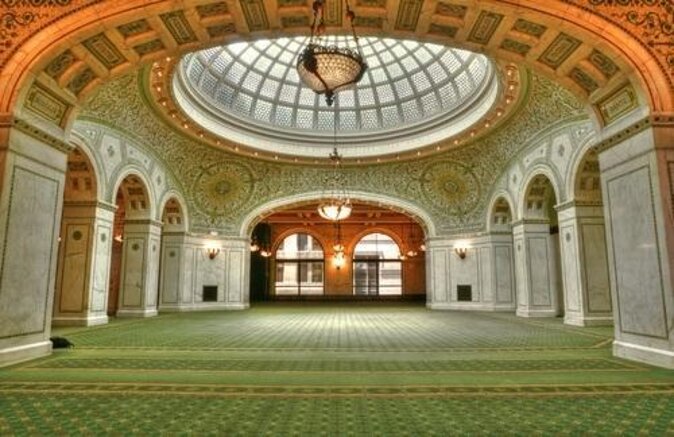
The Chicago Cultural Center fills an entire city block and is one of the most useful stops for visitors who want architecture without an extra ticket. The building is home to the world’s largest Tiffany stained glass dome and presents more than 700 humanities programs each year, many of them free.
You have about 30 minutes here, with admission listed as included. That is enough time for a focused look, though you could easily spend longer if you return later on your own.
The Cultural Center works well in the middle of the tour because it shifts the mood from private offices and commercial buildings to public culture. Look up often. The dome rewards attention, and the building’s scale gives you a sense of how Chicago once treated public interiors as important civic rooms rather than leftover space.
I would keep this stop on your personal list even if you are not usually an architecture enthusiast. It is central, free, and easy to revisit after the tour. If the guide moves quickly, you can return later to spend more time with the glass and ornament.
Tribune Tower and the meaning of a Gothic skyscraper
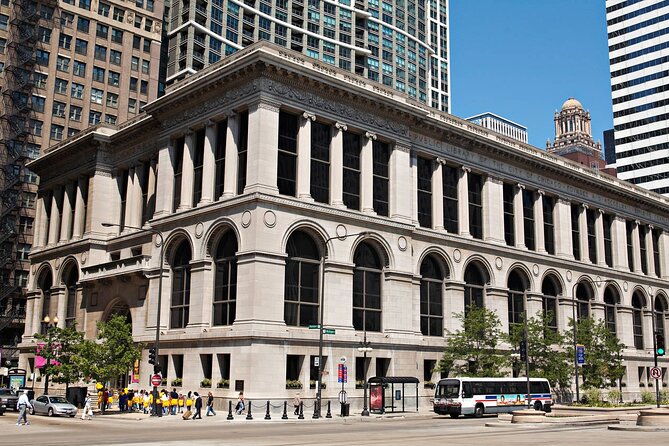
The Tribune Tower receives about 15 minutes, with admission listed as included. Although it rises only 36 stories, its Gothic spires make it one of the most recognizable buildings in Chicago.
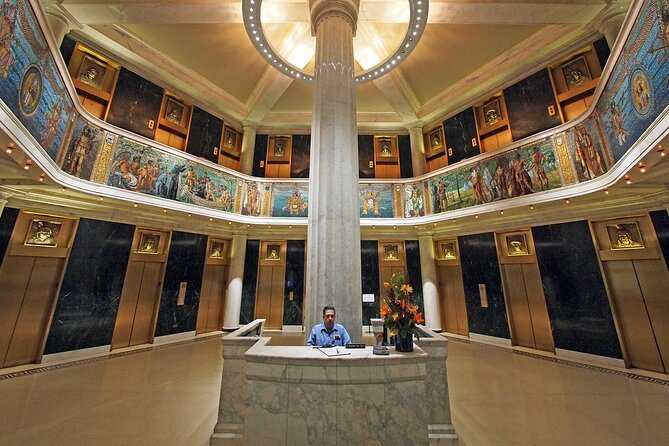
The lobby is shrine-like, with inspirational quotes, and the whole design presents the skyscraper as a vertical monument rather than just an efficient office block. This is a useful point of comparison with the earlier commercial buildings. The Tribune Tower was built to make an impression from a distance and to give the newspaper a powerful public identity.
The short stop means your guide will likely focus on the main architectural features rather than every detail. If Gothic decoration is your favorite part of the tour, this is a place to ask questions and take your time with the facade.
Ending at the Wrigley Building
The final stop is the Wrigley Building, at 400 to 410 North Michigan Avenue. The building dates from the 1920s and is one of downtown Chicago’s most familiar landmarks.
Its design uses French Renaissance elements, but the clock tower is the feature most people remember. It reaches 425 feet, or about 130 meters, giving the building a strong vertical presence even beside larger modern towers.
Ending here makes practical sense. The Wrigley Building is on Michigan Avenue, close to major downtown attractions and public transportation. The tour finishes outdoors, so you can continue along the avenue, return to Millennium Park, or make your own way back to the Loop.
The 15-minute stop is enough for an overview and photographs. It is not a lengthy building visit, so set your expectations accordingly. The value comes from placing the Wrigley Building at the end of the story, when you can compare its decorative 1920s confidence with the earlier office towers.
Timing, walking, and what to bring
The tour lasts about three hours. The listed stops add up to roughly 160 minutes, leaving about 20 minutes for walking and transitions. In practice, the route may take longer or shorter depending on building access, questions, street crossings, and the pace of your private group.
Wear comfortable shoes. This is an urban walking tour with several stops, not a bus ride between landmarks. Bring a phone for your mobile ticket, and use the included bottled water as a small convenience rather than expecting a long refreshment break.
The meeting point is the Fine Arts Building at 410 South Michigan Avenue. The tour ends at the Wrigley Building, which gives you a clear northbound route through central Chicago. The tour is offered in English, and only your group participates.
Service animals are allowed, the route is near public transportation, and most people can take part. If anyone in your party has mobility concerns, ask for current route details before booking, since interior access and walking conditions can vary.
Price, lunch, and the value question
At $211 per person, this tour makes the most sense for a small group that wants a private guide and a concentrated introduction to Chicago architecture. You are paying for personal attention, several listed admissions, and a route that links eight important buildings without requiring you to research the city beforehand.
The price is harder to justify if you are traveling alone or mainly want exterior views. The Marquette Building, Palmer House, Sullivan Center, Cultural Center, Tribune Tower, and Wrigley Building can all be appreciated from public streets or spaces, though you will miss the guide’s explanations and any available interior access.
Lunch is listed among the inclusions, but this point deserves verification. One booking experience specifically found that lunch was not provided, even after separate confirmation. Ask the operator to confirm exactly what lunch means, where it is served, and whether the inclusion is current.
The cancellation policy is straightforward: cancel at least 24 hours before the start time for a full refund. Cancellations or changes inside that window are not accepted for a refund.
Who should book this Chicago walk
I would recommend it to first-time Chicago visitors who want a strong architectural overview in one morning or afternoon. It also suits families or friends who prefer a private pace and want to ask questions without holding up a large group.
Architecture students, design fans, and anyone interested in the Chicago School will get the most from the route. The range is unusually good for a three-hour walk: speculative offices, a historic hotel, a department store, a private athletic club, a public cultural building, a Gothic tower, and a French Renaissance skyscraper.
I would be more cautious if your main goal is guaranteed interior access. The published route includes several admissions, but actual access can change, especially on weekends. For the best experience, book a weekday if possible and confirm which buildings are open on your date.
Should you book it?
Book this tour if you want Chicago’s architecture explained as part of the city’s economic and social story, not just photographed from the sidewalk. The private format, strong route, and mix of interiors make it a useful introduction, especially when your time downtown is limited.
Skip it if $211 per person feels high for a short walk, or if you want a fully guaranteed visit inside every building. Before booking, confirm lunch and weekend access. With those details clear, this is a well-planned, friendly, and focused way to understand why downtown Chicago feels like an outdoor architecture museum.
FAQ
How long does the private Chicago architecture tour last?
The tour lasts approximately three hours.
Where does the tour begin?
It begins at the Fine Arts Building, 410 South Michigan Avenue, Chicago, Illinois 60605.
Where does the tour end?
The tour ends at the Wrigley Building, 400 to 410 Michigan Avenue, Chicago, Illinois 60611.
Is the tour private?
Yes. Only your group participates in the activity.
Is the tour offered in English?
Yes. An English-speaking guide is provided.
Is lunch included?
Lunch is listed as included, but one booking experience reported that it was not provided. Confirm the current lunch arrangement with ForeverVacation before booking.
More Private Architecture Tours in Chicago
- Chicago: Private Architecture Tour – 3 or 6 Hours
★ 4.0 · 6 reviews - Private Chicago Architecture Tour
★ 5.0 · 5 reviews - Sagrada Familia & Gaudi Tour Private or Small Group with Tickets
★ 4.5 · 1,188 reviews - Barcelona 1.5h Private Old Town, Gothic & Ramblas Walking Tour
★ 5.0 · 318 reviews
More Walking Tours in the USA
- Chicago Architecture Walking Tour: Incredible Art Deco Interiors
★ 5.0 · 85 reviews - Chicago Architecture Walking Tour: What’s New
★ 5.0 · 64 reviews - Chicago Walking Tour: Art Deco Skyscrapers Riverfront
★ 5.0 · 53 reviews - Chicago Walking Tour: Modern Architecture
★ 5.0 · 50 reviews
New to the itinerary around Chicago
- Private Chicago Architecture Tour★ 5.0 · 5 reviews
- Private Frank Lloyd Wright Architectural Tour by Luxury Vehicle★ 3.5 · 7 reviews
- Chicago Luxury Minibus City Tour and Architecture River Cruise★ 4.5 · 8 reviews
- Chicago History and Architecture Walking Tour with Boat Cruise★ 4.5 · 10 reviews
- Small Group History And Architecture Walking Tour of Chicago★ 4.5 · 8 reviews
- Chicago: History and Architecture Guided Kayak Tour★ 5.0 · 3 reviews
- Chicago Walking Tour: See Inside Art Deco Masterpieces★ 4.9 · 8 reviews
- Chicago: Icons Guided Architecture Walking Tour★ 4.4 · 4 reviews
Private Architecture Tours, compared.
Sagrada Familia & Gaudi Tour Private or Small Group with Tickets
Read our review →
Barcelona 1.5h Private Old Town, Gothic & Ramblas Walking Tour
Read our review →
Treasures of Barcelona: Private Gaudi Walking Tour
Read our review →
Sagrada Familia & Gaudi Guided Tour Private or Small Groups
Read our review →
Best of Chicago: Architecture & Highlights City Private Tour
Read our review →
Private Harajuku Omotesando Architecture Walking Tour
Read our review →
Private Santa Barbara History and Architecture Walking Tour
Read our review →