Review · CHICAGO
Chicago: Icons Guided Architecture Walking Tour
Chicago’s architectural story comes into focus on this 90-minute downtown walk, where buildings from the 1890s share the route with newer work by Frank Gehry, Renzo Piano, and Adrian Smith. You make seven stops, compare major styles, and finish at Millennium Park, where art and architecture meet.
I like the wide range of design packed into a short outing, and I like the way the guide links old structures to present-day ideas instead of treating each building as an isolated monument. Teresa’s pacing and answers impressed a long-time Chicago resident, while Ron brought a useful notebook full of extra facts. The main caution is simple: this is an outdoor walk in all weather, with no luggage or stroller storage.
Key points
- Seven downtown stops cover buildings from the 1890s through the present.
- Four major styles appear along the route: 19th-Century Commercial, Beaux-Arts, Mid-Century Modern, and Postmodern.
- Modern design takes a central role, including work associated with Frank Gehry, Renzo Piano, and Adrian Smith.
- Millennium Park is the final stop, bringing public art and architecture together.
- Certified guides add context, with Teresa praised for pacing and Ron for his helpful notebook of facts.
- The ticket supports Chicago Architecture Center programs, including youth education and free community events.
Why Chicago’s skyline works so well on foot
Chicago makes a strong case for exploring by pavement. Its downtown buildings are close enough for you to compare them within minutes, yet different enough to show how design priorities changed over more than a century.
This walk begins with the Chicago Architecture Center at 111 E Wacker Drive. From there, your guide takes you through downtown and points out seven selected stops. The route is not just a parade of façades. The useful part is the comparison: an older commercial building beside a later structure, a formal Beaux-Arts design near a more stripped-down modern one, and newer skyline work shaped by fresh ideas about space and form.
I especially like this approach for first-time visitors because Chicago architecture can otherwise feel like a long list of names and dates. Here, the guide helps you see connections between the past and present. You learn what earlier architects were trying to solve, then consider what inspires designers today.
The format also suits people who already know the city. One participant who had lived in Chicago for more than 40 years still found Teresa’s explanations useful. That says something about the tour’s focus: it is not limited to basic sightseeing facts.
More Walking Tours in Chicago
- Chicago in a Day: Food, History & Architecture Walking Tour
★ 5.0 · 1,153 reviews - Chicago’s Secret Interiors Architectural Walking Tour
★ 5.0 · 635 reviews - Chicago: Secret Interiors Architecture Walking Tour
★ 4.9 · 498 reviews
Seven stops, four styles, one changing city
The tour’s seven stops are built around contrast. You will walk past buildings dating from the 1890s to the present, with each period showing a different response to commerce, technology, public life, or visual expression.
19th-Century Commercial buildings
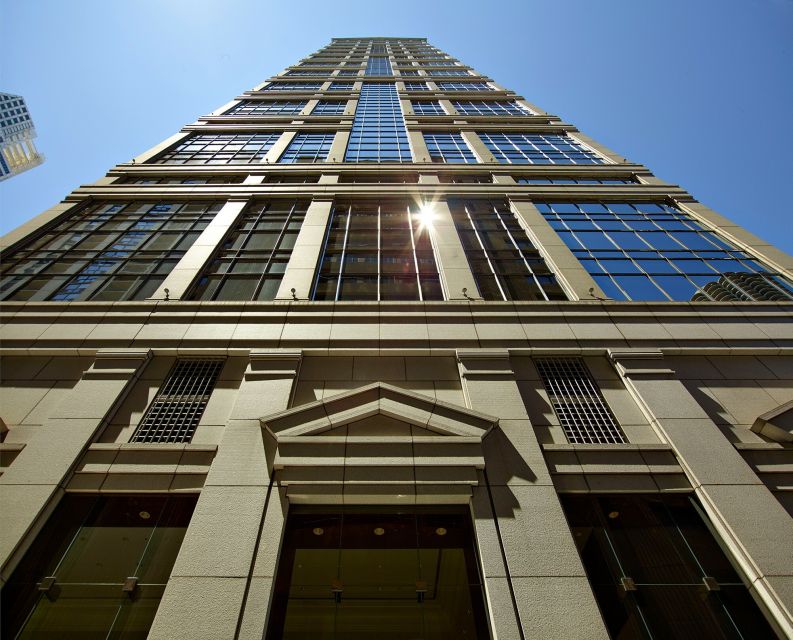
The 19th-Century Commercial style gives you a look at an important stage in Chicago’s built environment. These older buildings help establish the tour’s starting point, both in time and in design.
Your guide explains the facts and stories connected to the buildings rather than asking you to admire them in silence. That matters because older commercial architecture can be easy to overlook when taller towers surround it. With context, you can better see how the city’s earlier structures relate to the downtown that came later.
This part of the walk is also useful for understanding Chicago as a place that keeps adding to itself. The older buildings are not presented as leftovers. They become part of a conversation with newer work nearby.
Beaux-Arts formality
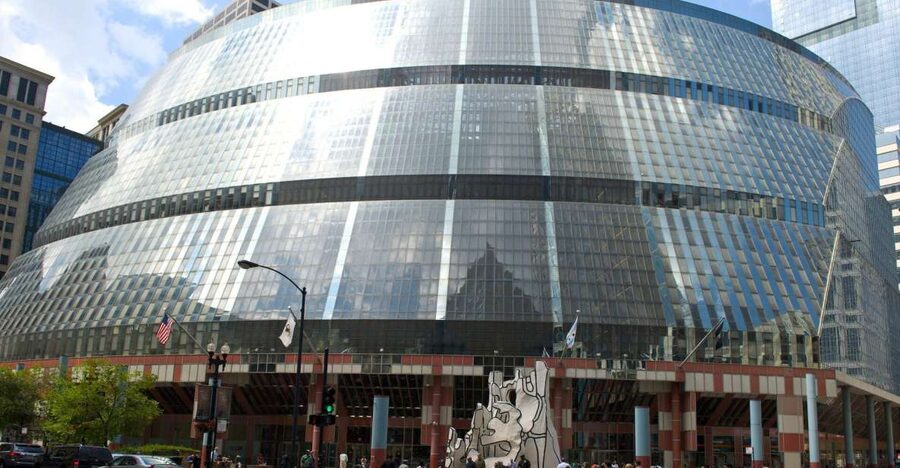
The Beaux-Arts stop brings a different mood. This style is associated with a more formal architectural language, and the tour gives you a chance to compare that approach with the commercial buildings from the 1890s and with later modern designs.
The value here is in the side-by-side reading. You are not only learning a label. You are looking at how a building presents itself, how its details shape your impression, and how that visual language differs from the simpler lines found in later architecture.
If you enjoy architectural details, this section should reward close attention. If you prefer broad city stories, the guide’s explanations keep the stop from becoming a technical exercise.
More Walking Tours in the USA
- Chicago Walking Tour: Art Deco Skyscrapers Loop
★ 5.0 · 138 reviews - Chicago Architecture Walking Tour: Incredible Art Deco Interiors
★ 5.0 · 85 reviews - Chicago Architecture Walking Tour: What’s New
★ 5.0 · 64 reviews - Chicago Walking Tour: Art Deco Skyscrapers Riverfront
★ 5.0 · 53 reviews
Mid-Century Modern restraint
Mid-Century Modern architecture changes the visual conversation again. The tour includes this style so you can see how designers moved away from some older decorative traditions and toward a more restrained modern approach.
This is where the walk’s compare-and-contrast method earns its keep. You can look backward at the 19th-century buildings, then forward to more recent work, and see that architecture is not a single straight line. Different periods make different choices about appearance and purpose.
The guide’s job is especially important here. Without explanation, a cleaner modern building can seem less distinctive than an ornate older one. A good guide helps you notice why that restraint matters and what ideas it represents.
Postmodern variety
Postmodern buildings add another turn. This style gives the tour a chance to show how architects revisited earlier forms and played with familiar design ideas in newer ways.
The stop helps explain why Chicago’s downtown does not have one uniform look. Older commercial buildings, Beaux-Arts designs, Mid-Century Modern work, and Postmodern buildings can all occupy the same central area. Instead of smoothing over those differences, the tour uses them to explain the city’s changing taste.
You will get the most from this portion if you pay attention to the contrasts your guide points out. The point is not simply to identify a style, but to understand how one era responds to the buildings and ideas that came before it.
Frank Gehry, Renzo Piano, and Adrian Smith bring the story forward
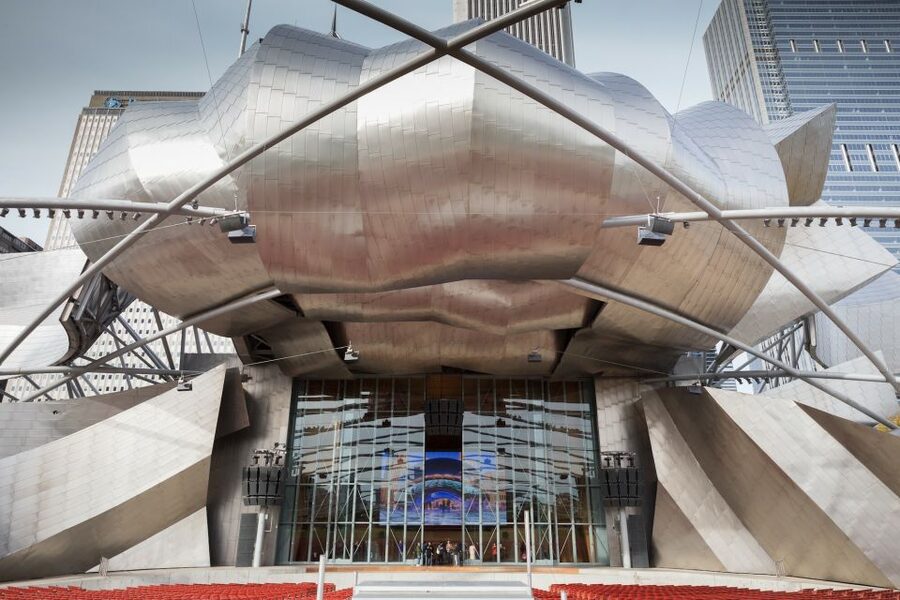
The tour does not stop with the past. It also introduces newer architecture associated with Frank Gehry, Renzo Piano, and Adrian Smith.
These names give you a useful way to think about what inspires design today. The experience connects current architecture with the older buildings around it, showing that modern work is part of Chicago’s ongoing urban story rather than a separate display of shiny new forms.
The supplied details do not identify every building by architect or provide a stop-by-stop sequence, so you should not expect a full technical lecture on each designer. Instead, you can expect the guide to place modern architecture in context and explain how newer skyline additions relate to older structures.
That is a sensible format for a 90-minute walk. You get a broad view of the city’s architectural development without spending the whole afternoon on a single building.
Ron, one of the guides, was praised for his historical background and for bringing a notebook filled with extra facts. That kind of preparation can make a difference on a short tour. It gives the guide more material to use when questions come up and may add small details that are easy to miss during a quick walk.
Millennium Park gives the walk a fitting finish
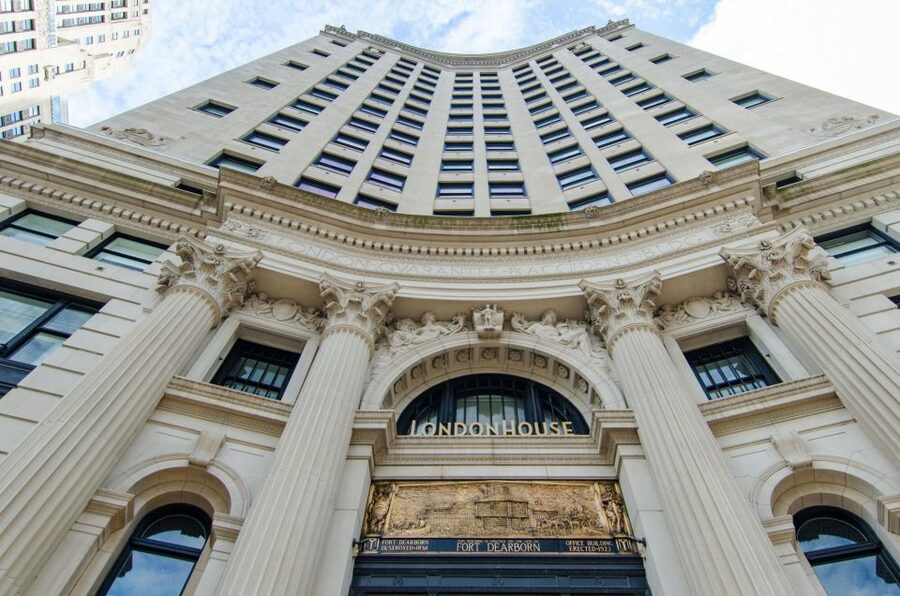
The final part of the tour takes you to Millennium Park. This is a smart ending because the park brings together public art and architecture in one place.
After seeing buildings from several periods, you finish with a setting where design is part of everyday public space. The focus broadens from individual buildings to the relationship between art, architecture, and the city around them.
Millennium Park also gives the tour a clear sense of arrival. You do not finish at a random corner after the last explanation. You end in one of Chicago’s best-known public spaces, with a final chance to think about how architecture shapes the way people use downtown.
The park finish may also help you plan the rest of your day. You can continue exploring the area after the tour, although the experience itself does not include food, drinks, hotel pickup, or drop-off.
What the guides add to the experience
The guide is the main reason to book this instead of simply walking downtown with a map. The stated focus is on facts and stories about each building, but the strongest evidence points to something more useful: guides who can adjust their pace, answer questions, and add context.
Teresa was praised for her pacing, knowledge, and willingness to answer questions. Her tour worked well even for two people who had lived in Chicago for decades. That suggests she did not rush through a fixed speech or assume that every participant needed the same level of introduction.
Ron’s notebook of extra facts offers another picture of the guiding style. You may appreciate a guide who comes prepared with additional details rather than relying only on the most familiar talking points.
The experience is conducted in English, and the live guide format gives you a chance to ask about something you notice. If you have a particular interest in one building or style, raise the question during the walk. A guide’s answer may be more useful than a general fact delivered to the whole group.
Is the $35 price good value?
The listed price is $35 per group up to one person. Because that wording is unusual, check the booking details carefully before paying, especially if you are booking for more than one person.
For the price, you receive a 90-minute guided architecture walk and admission to the Chicago Architecture Center galleries. The value is strongest if you want interpretation rather than a self-guided route. You are paying for the guide’s selection of seven stops, the connections between architectural periods, and the chance to ask questions.
The ticket also supports the Chicago Architecture Center’s nonprofit work. Purchases help fund education and community programs such as Girls Build!, Teen Fellows, and the Newhouse Architecture + Design Competition. They may also help keep programs such as Open House Chicago free.
That does not make the tour automatically right for everyone. If you prefer to move at your own pace, stop often for photographs, or read building information privately, a self-guided walk may suit you better. If you want a clear introduction with a human guide and a strong downtown route, the price is easier to justify.
Timing, weather, and practical comfort
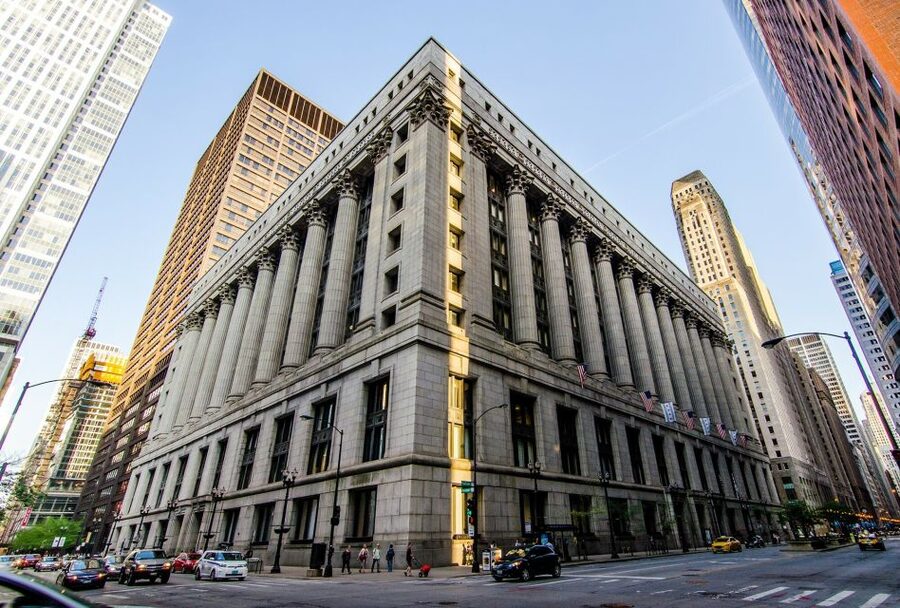
The walk lasts 90 minutes, a manageable length for most visitors who want an architectural overview without giving up half a day. Starting times vary, so check availability for the date you want.
This is a rain-or-shine activity. Bring weather protection and comfortable walking shoes, since the experience takes place outdoors and continues in poor weather.
The meeting point is the Chicago Architecture Center, 111 E Wacker Drive, Chicago, Illinois 60601. Have your mobile or printed ticket ready when you arrive.
No luggage or stroller storage is available. That is an important detail if you are arriving before hotel check-in, leaving Chicago later that day, or traveling with a stroller. Make other arrangements before you reach the meeting point.
The tour is wheelchair accessible, which makes it a practical option for visitors who need an accessible walking experience. Assistance dogs are allowed, but other pets are not.
Free cancellation is available up to 24 hours before the start time for a full refund. You can also reserve and pay later, which helps if your Chicago schedule is still changing.
Who will get the most from this walking tour?
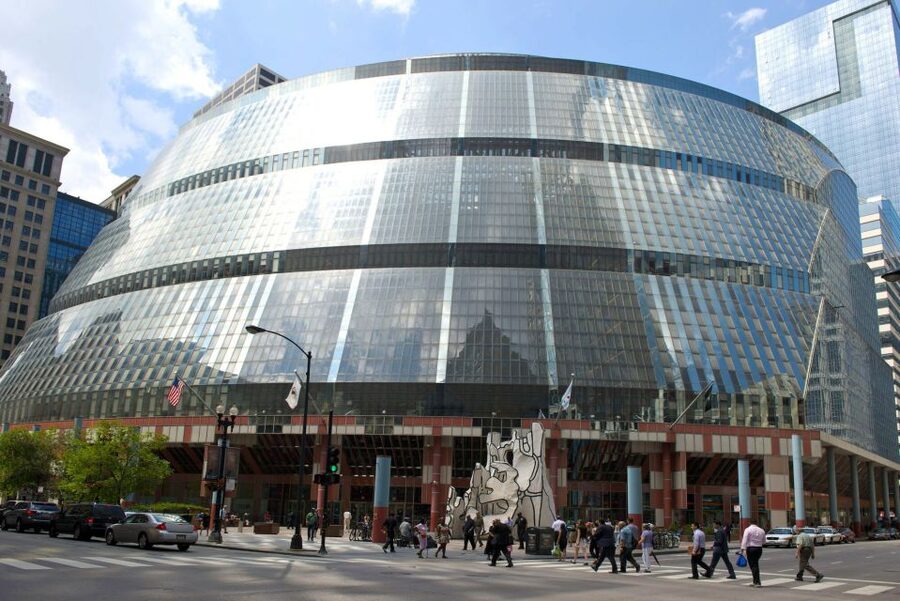
This experience is a good fit for a first visit to Chicago, especially if you want the city’s architecture explained rather than simply photographed. The range of styles gives you a strong introduction without requiring prior architectural knowledge.
It also suits repeat visitors. The account of Teresa leading long-time Chicago residents shows that the content can offer fresh context even when the streets are familiar.
You should consider it if you:
- Want a short, organized walk through downtown
- Enjoy comparing old and new buildings
- Prefer a live English-speaking guide
- Are curious about Commercial, Beaux-Arts, Mid-Century Modern, and Postmodern design
- Want to finish near Millennium Park
- Like tours that support local education and community programs
You may want another option if you need luggage or stroller storage, dislike walking in rain, or want a private route built around a very specific architectural interest. The tour gives you a broad view, not an exhaustive examination of every major Chicago building.
Should you book the Chicago Icons Architecture Walking Tour?
Book it if you want a compact, well-organized introduction to Chicago’s built environment, with enough variety to keep the 90 minutes moving. The seven-stop format, the contrast between buildings from the 1890s and today, and the Millennium Park finish give the experience a clear shape.
The strongest reason to choose it is the guide. Teresa’s thoughtful pacing and Ron’s extra facts show how much the experience can depend on who leads your walk. You also get Chicago Architecture Center gallery admission and support the center’s education work.
Skip it if your plans cannot tolerate a rain-or-shine outing or if you need to bring luggage or a stroller. For everyone else, this is a practical way to learn why Chicago looks the way it does, while still leaving most of your day free.
FAQ
Where does the Chicago Icons Guided Architecture Walking Tour begin?
The tour begins at the Chicago Architecture Center, 111 E Wacker Drive, Chicago, Illinois 60601.
How long does the tour last?
The walking tour lasts 90 minutes.
How many stops are included?
The route includes seven stops in downtown Chicago.
Which architectural styles are covered?
The tour features 19th-Century Commercial, Beaux-Arts, Mid-Century Modern, and Postmodern buildings.
Does the tour include modern architects?
Yes. The experience includes discussion of newer architecture associated with Frank Gehry, Renzo Piano, and Adrian Smith.
Where does the tour finish?
The tour finishes at Millennium Park.
Is the tour wheelchair accessible?
Yes, the activity is wheelchair accessible.
Is the tour offered in English?
Yes. A live guide leads the tour in English.
What happens if it rains, and can I bring luggage or a stroller?
The tour runs rain or shine. Storage for luggage and strollers is not available.
New to the itinerary around Chicago
- Private Chicago Architecture Tour★ 5.0 · 5 reviews
- Private Frank Lloyd Wright Architectural Tour by Luxury Vehicle★ 3.5 · 7 reviews
- Chicago Luxury Minibus City Tour and Architecture River Cruise★ 4.5 · 8 reviews
- Private Chicago Architecture Walking Tour★ 5.0 · 6 reviews
- Chicago History and Architecture Walking Tour with Boat Cruise★ 4.5 · 10 reviews
- Small Group History And Architecture Walking Tour of Chicago★ 4.5 · 8 reviews
- Chicago: History and Architecture Guided Kayak Tour★ 5.0 · 3 reviews
- Chicago Walking Tour: See Inside Art Deco Masterpieces★ 4.9 · 8 reviews
Chicago Architecture Tours, compared.
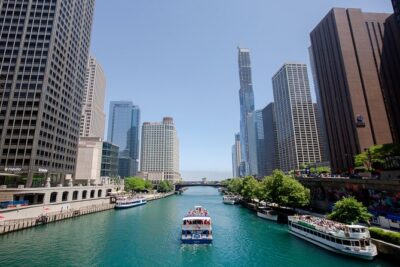
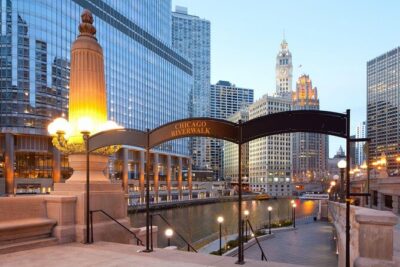

Chicago River: 1.5-Hour Guided Architecture Cruise
Read our review →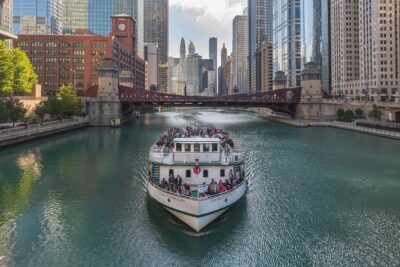
Chicago Architecture Center River Cruise aboard First Lady
Read our review →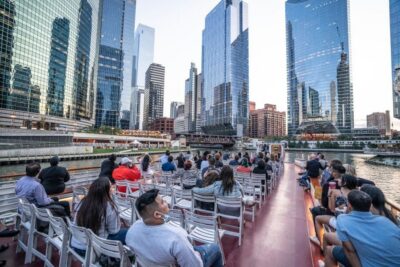
Architecture River Cruise Skip-the-Ticket Line
Read our review →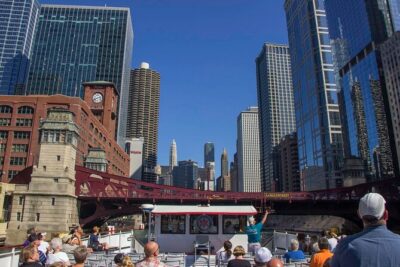
Chicago River 45-Minute Architecture Tour from Magnificent Mile
Read our review →