
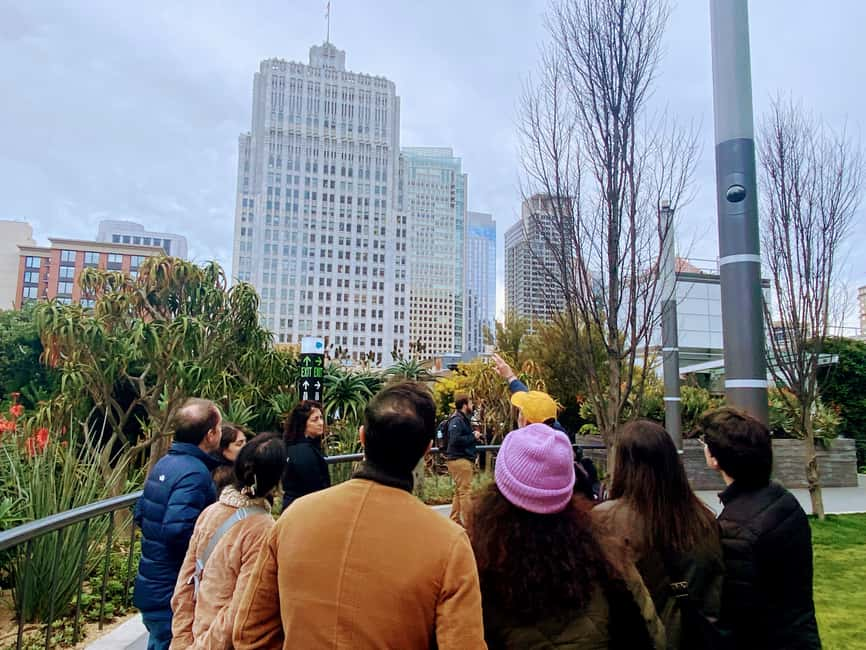
Review · USA
San Francisco: Downtown Architecture & Public Art Tour
San Francisco’s downtown is more than glass towers and office blocks. On this three-hour architecture and public art walk, you’ll read the city through its buildings, from the bank that rose after the 1906 disaster to Salesforce Park, a five-and-a-half-acre garden built above a transit terminal.
I like the clear story of the tour: each major period of downtown growth gets its own buildings and design ideas. I also like the public art focus, especially the chance to see work by Frank Stella, Jenny Holzer, and George Rickey in ordinary city spaces rather than only inside a museum.
The main consideration is the walking. It is not a strenuous hike, but you should expect a moderate amount of time on your feet, with weather and comfortable shoes worth taking seriously.
Key points to know before booking
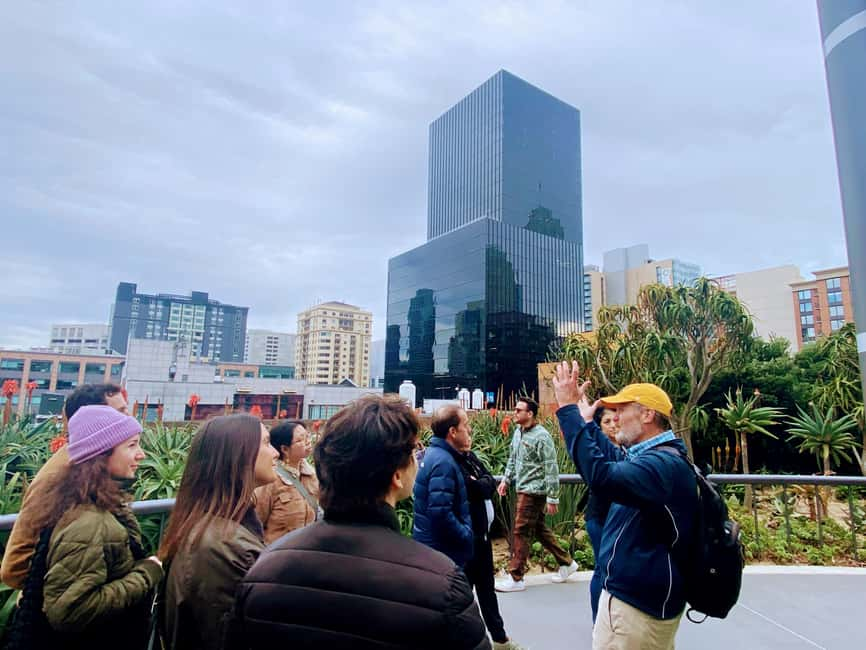
- A 2.5-hour walk through the Financial District: The route covers several eras of San Francisco architecture, with an expert English-speaking guide.
- Buildings by major modern architects: Look for work connected with Cesar Pelli, Rem Koolhaas, and other leading designers.
- Public art without a museum ticket: Downtown’s one-percent public art program has placed substantial works in plazas, lobbies, and open-air spaces.
- Salesforce Park is the grand finale: The five-and-a-half-acre park sits 70 feet above street level on top of a transit terminal.
- A conversation rather than a lecture: Jamie is praised for answering questions, explaining context, and keeping the three hours relaxed.
- Good value for architecture fans: At $44, the tour costs less than many major attractions while covering buildings, art, urban planning, and local history.
Why downtown San Francisco works as an outdoor museum
The most useful idea on this tour is that San Francisco’s Central Business District is not one architectural style. It is a timeline.
You begin at Mechanics Monument Plaza at 488 Market Street, then move through buildings shaped by disaster, economic change, technology, and changing ideas about public space. That gives the walk a strong structure. You are not simply stopping at famous façades and hearing isolated facts. You are learning why the downtown skyline keeps changing.
The 1906 earthquake and fire provide an early turning point. The London Paris National Bank is one of the grand buildings connected with the rebuilding that followed. Its importance is not just its appearance. It shows how San Francisco used monumental architecture to restore confidence after the city had been badly damaged.
The next stop in the story is the 1920s. The Pacific Telephone Building brings in the exuberance of Art Deco, a style that used strong geometry and decoration to project energy and modernity. You will get more from the building if you look beyond its size and notice how its design reflects the confidence of the Roaring Twenties.
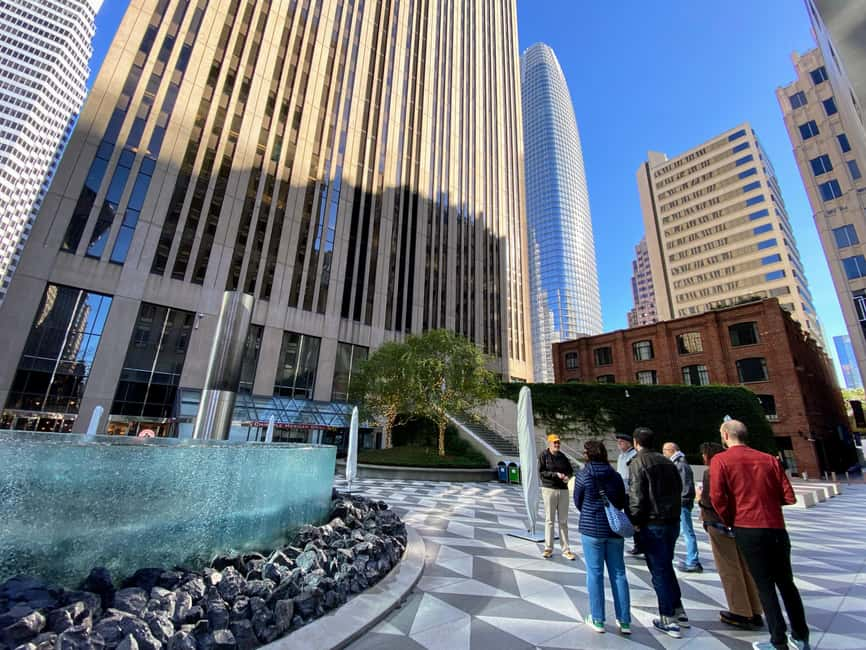
Later, the Crown Zellerbach Building represents the International Style and the economic growth of the middle twentieth century. Its sleek glass-and-steel approach is far removed from the decoration of an Art Deco tower. That contrast helps you see downtown as a record of changing taste, technology, and business culture.
The tour then reaches buildings tied to the city’s southward growth around the turn of the millennium. The JP Morgan Chase Building is part of that shift, when downtown office development pushed beyond the older Financial District. More recent projects bring in the work of star architects such as Cesar Pelli and Rem Koolhaas.
That range is the real strength of the walk. You can compare ornate, muscular, highly decorated buildings with stripped-down glass towers and newer designs that treat the surrounding plaza as part of the project.
More Architecture Tours around the USA:
- Chicago Architecture River Cruise
★ 5.0 · 15,756 reviews - Chicago River 90-Minute Architecture Tour
★ 4.5 · 9,629 reviews - Chicago River: 1.5-Hour Guided Architecture Cruise
★ 4.8 · 8,046 reviews
From Mechanics Monument Plaza into the Financial District
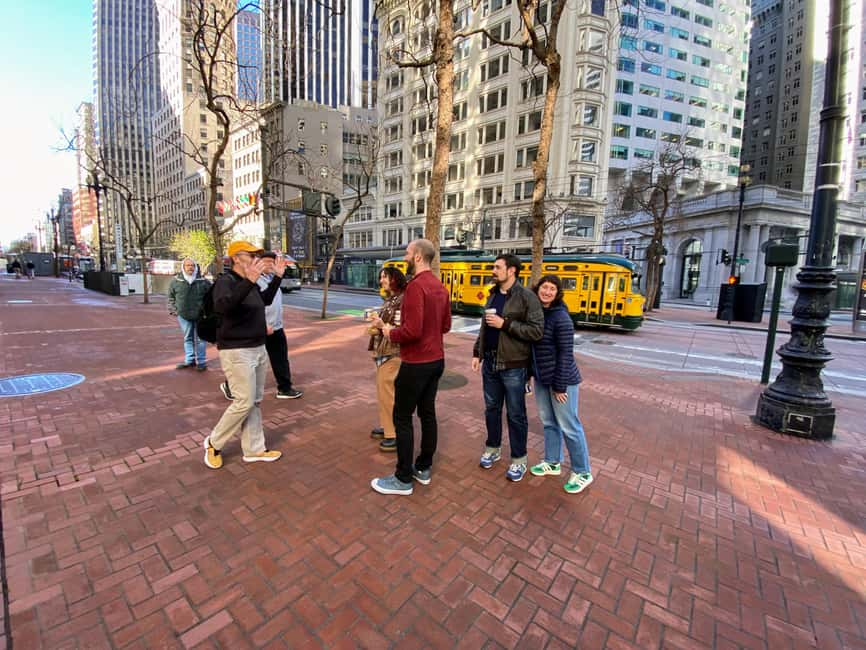
Meeting at 488 Market Street puts you right in the city’s central commercial core. This is a practical starting point for an architecture walk because the streets quickly reveal several layers of downtown history.
Your guide is Jamie, an English-speaking guide who brings a personal interest in San Francisco’s buildings and public spaces. The strongest part of his approach is the conversation. You can ask about architects, design choices, companies, public funding, or the city’s changing shape instead of simply listening to a fixed speech.
That matters on a subject like architecture. A building can look impressive but still leave you unsure what to notice. Jamie’s explanations give you a way to read the details: the period, the architect, the materials, the surrounding plaza, and the role the building played in downtown development.
The walk lasts about two and a half hours before the overall three-hour experience is complete. The pace is intended for sightseeing rather than speed. Still, you should wear proper walking shoes. San Francisco’s streets are not a place for flimsy footwear, and the tour includes enough walking that comfort will affect how much attention you can give the buildings.
The route is wheelchair accessible, an important practical point for anyone planning around mobility needs. Since the tour is outdoors, check the forecast and dress for the day rather than assuming downtown will feel warm or sheltered.
Public art by Frank Stella, Jenny Holzer, and George Rickey
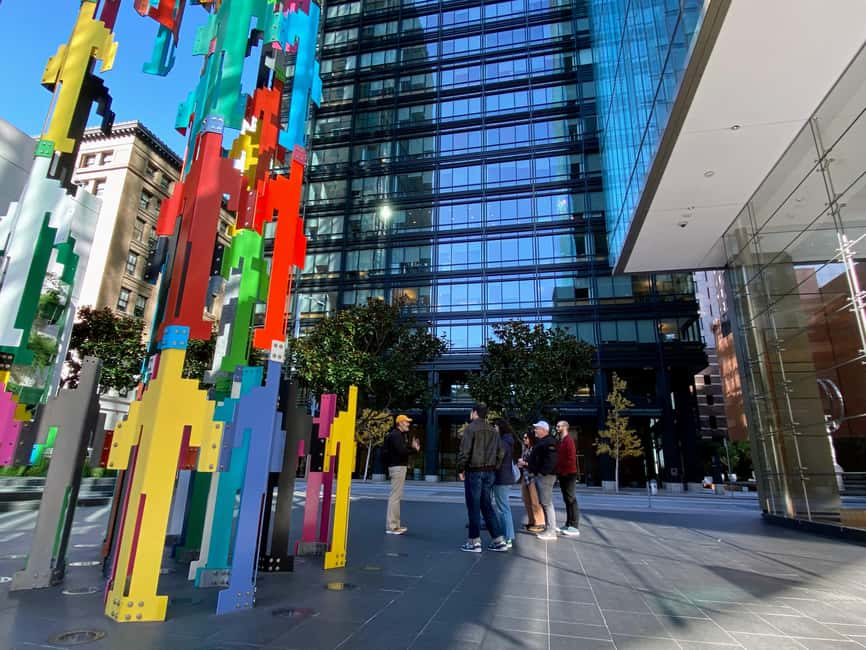
The public art portion makes this tour different from a standard architecture walk. For about 40 years, new downtown office buildings have committed one percent of their construction budgets to public art. The result is a collection spread through plazas and office districts rather than confined to a single institution.
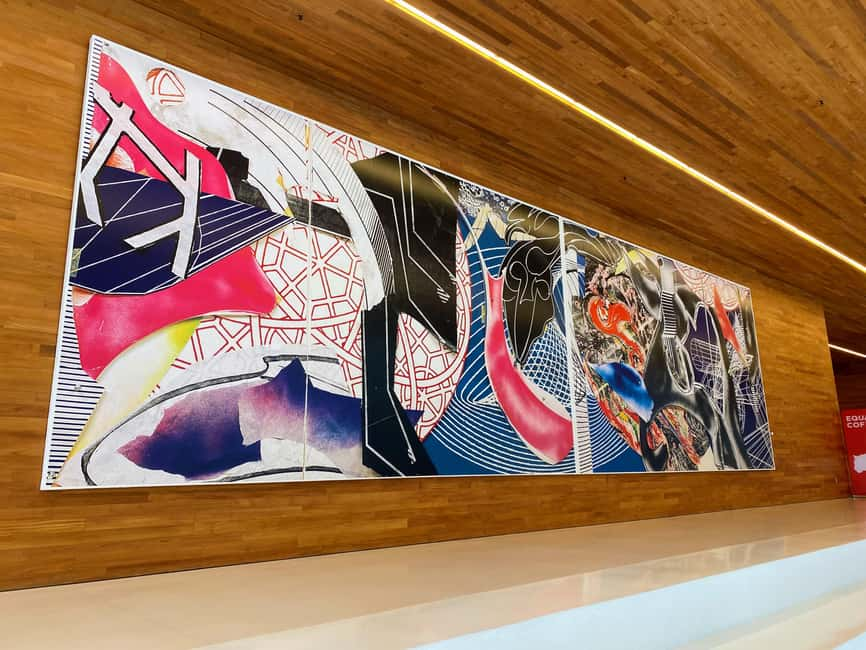
You may see kinetic sculpture by George Rickey, digital art by Jenny Holzer, paintings by Frank Stella, and unusual installations by Jonathan Borofsky and Ugo Rondinone. These artists work in very different ways, so the route gives you a useful look at how public art can respond to architecture.
Rickey’s kinetic work brings motion into a city built from fixed materials. Holzer’s digital art introduces words and changing displays into the public realm. Stella’s paintings connect large-scale color and form with the buildings around them. Borofsky and Rondinone add a more playful or unexpected note.
The value here is not just seeing recognizable names. You learn to notice the relationship between an artwork and the space around it. Does it slow people down? Fill an empty plaza? Challenge the polished office setting? Make a privately developed space feel more open to the public?
Some works may be easy to pass without noticing. That is precisely why a guide helps. Without context, public art can look like decoration or an odd object in the way. With context, you can consider what it is doing in the space and why it was placed there.
This part of the walk suits you best if you enjoy art but do not want a full museum visit. It also works well if you have already visited SFMOMA and want to see how art functions outside gallery walls.
Salesforce Tower and the city’s new vertical center
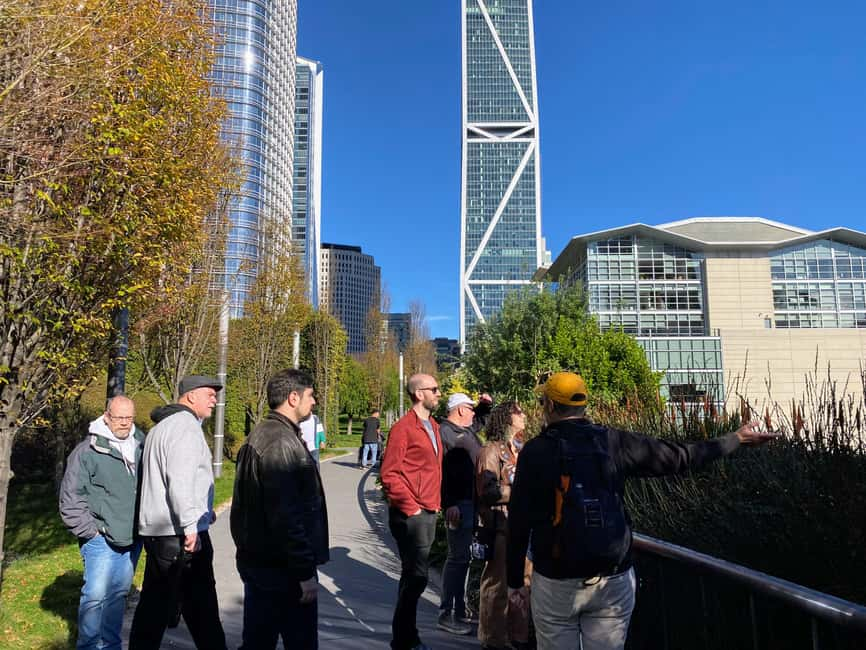
The Salesforce building is one of the major visual points of the tour. Its height and modern form show how San Francisco’s office center has changed in the technology era.
The building matters not only as a skyscraper. It belongs to a larger project that includes a remarkable public park above a transit terminal. The combination of tall office development and public open space gives the tour a chance to discuss how a dense city can add greenery without finding vacant land at street level.
Salesforce Park stretches across four and a half city blocks and covers five and a half acres. It sits about 70 feet above the streets, making it longer than the Salesforce building is tall in horizontal reach. That comparison helps explain the scale of the project.
The park contains 600 trees and 16,000 plants arranged in zones representing 13 ecosystems from around the world. You will not experience it like a conventional neighborhood square. Its planting design, elevated setting, and connection to transit make it an example of infrastructure doing several jobs at once.
The park includes quiet areas for reading, yoga classes, film nights, concerts, and a beer garden. A fountain uses jets of water that activate as buses pass through the transit terminal below. That detail connects the park’s calm surface with the transportation system underneath it.
For me, this is the most memorable urban design lesson on the route. A transit terminal usually means noise, concrete, and traffic. Here, the roof becomes a public garden. You can look up at the surrounding office and residential buildings while also considering who the park is for and how it changes the feeling of the district.
The park is also a good place to understand the limits of modern downtown design. It is a large public amenity, but it is still part of a business district shaped by major development. The guide can help you consider both sides instead of presenting the project as a simple success story.
Same streets, read through a different style:
- Chicago Architecture Center River Cruise aboard First Lady
★ 5.0 · 5,536 reviews - Chicago: Architecture River Cruise Skip-the-Ticket Line
★ 4.8 · 4,325 reviews - Chicago River 45-Minute Architecture Tour from Magnificent Mile
★ 4.5 · 2,924 reviews - Chicago Lake and River Architecture Tour
★ 4.5 · 2,308 reviews
Finishing at SFMOMA’s striking exterior
The tour finishes at the entrance of the San Francisco Museum of Modern Art. SFMOMA is one of the world’s largest museums of modern and contemporary art, and the exterior itself provides a fitting final stop.
You should be clear about what is included. The walk finishes at the museum entrance, but the supplied details do not promise an inside visit or admission to the galleries. If you want to see the collections, plan a separate museum visit and allow additional time.
Ending here makes sense. The tour begins with buildings and art integrated into the working city, then concludes at a major institution devoted to modern and contemporary art. You can compare the open-air works seen during the walk with the more controlled setting of a museum.
The final stop also gives you a natural choice for the rest of your day. You can continue into SFMOMA, explore more of downtown, or use the location as a convenient end point for another plan. The tour does not trap you inside a long attraction schedule.
What the guide adds to the three-hour walk
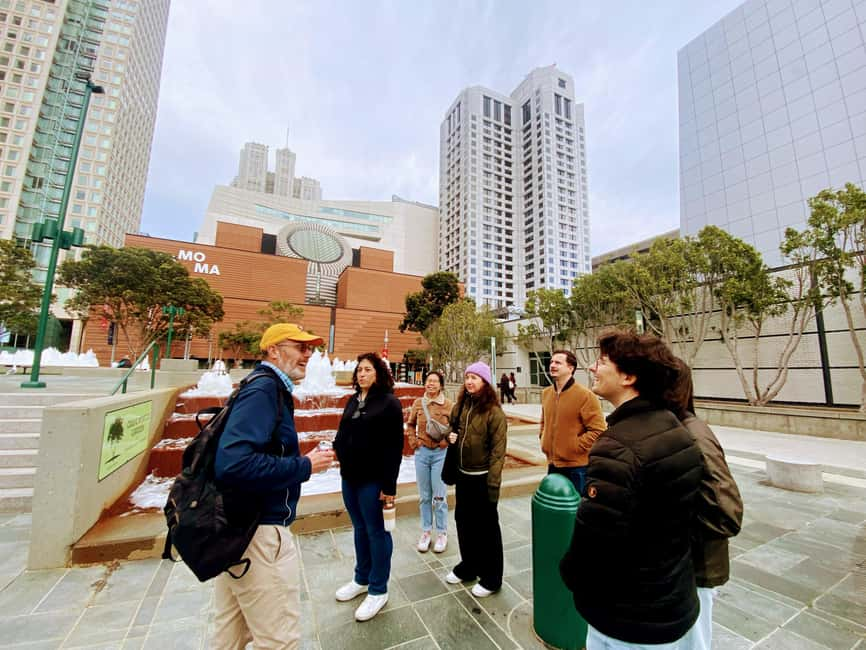
Architecture tours can easily become a parade of dates and architect names. Jamie’s strength is making the information feel like a conversation. He explains San Francisco’s buildings, public art, and open spaces while leaving room for questions.
That approach is especially helpful for people who are curious but not trained in architecture. You do not need to know the difference between Art Deco and the International Style before you start. The route gives you visible examples and lets you compare them in person.
Jamie also connects local buildings with architecture in the United States and around the world. That wider frame gives meaning to downtown San Francisco’s changes. The Crown Zellerbach Building is not just a local office tower, and a building by a major contemporary architect is not simply an isolated object. Each belongs to a broader movement in design.
The feedback about his manner is consistent: he is personable, relaxed, willing to answer questions, and able to keep a long walking session engaging. One particularly useful quality is his willingness to say when he does not know a detail rather than bluffing. That builds trust, especially on a tour with many names and dates.
Group size is not specified, so you should not book expecting either a private outing or a guaranteed small group. Some departures may feel intimate, but the available information does not promise that arrangement.
Is $44 a fair price?
At $44 per person, this is a solid value if you care about architecture, art, or city planning. You are paying for a three-hour guided walk, not a quick orientation stroll. The route covers major buildings, public artworks, public spaces, and the history behind downtown’s growth.
The value is strongest when you use the tour as a way to understand the city rather than as a checklist of sights. A self-guided walk would cost less, but you would need to research the London Paris National Bank, Pacific Telephone Building, Crown Zellerbach Building, JP Morgan Chase Building, public art program, and Salesforce Park on your own.
The price also compares well with a museum ticket if your main interest is seeing art in context. You will not get a full gallery collection, but you will see works by major artists where office workers and city residents encounter them every day.
The drawbacks are simple. You must be ready to walk for much of the morning or afternoon, and the route is best for people who enjoy explanation. If you want a fast tour of San Francisco’s biggest landmarks, this may feel too focused on downtown buildings and public space. It does not cover the Golden Gate Bridge, Alcatraz, the Painted Ladies, or neighborhoods outside the Central Business District.
Who should book this San Francisco architecture tour?
I would recommend it to first-time visitors who want a sharper understanding of downtown, locals curious about buildings they pass every day, and anyone interested in how art works in public settings.
It is also a good choice after visiting the city’s more familiar sights. Once you have seen the Golden Gate Bridge and waterfront, this walk shows you a less obvious side of San Francisco: banks rebuilt after disaster, office towers shaped by changing business eras, and public spaces made possible by private construction rules.
You will get the most from it if you ask questions. Ask about a building’s architect, how public art is funded, why a plaza feels inviting or empty, or how Salesforce Park fits into the transit system. The tour is designed for curiosity.
You should think twice if you dislike walking, want a tour centered on food or neighborhoods, or prefer to explore interiors rather than exteriors. The main experience is the city itself, with the guide helping you see what is already around you.
Should you book the Downtown Architecture and Public Art Tour?
Book it if you want to understand how San Francisco grew upward and outward, and if the idea of an open-air art collection appeals to you. The mix of earthquake-era buildings, Art Deco, International Style towers, contemporary architecture, and Salesforce Park gives the three hours a clear sense of progress and change.
The best reasons to go are Jamie’s relaxed, conversational style, the unusual public art stops, and the chance to see Salesforce Park as both a garden and a piece of transit infrastructure. At $44, the tour offers strong value for an architecture-minded visitor.
Skip it if you want a general sightseeing tour or are not prepared for moderate walking. For the right audience, though, this is a smart way to look past the office towers and understand the city they form.
FAQ
How long does the San Francisco architecture tour last?
The experience lasts three hours, including a 2.5-hour guided walking tour of downtown San Francisco.
Where does the tour begin?
Meet the guide in front of Mechanics Monument Plaza at 488 Market Street.
Where does the tour finish?
The tour finishes at the entrance of the San Francisco Museum of Modern Art.
Is admission to SFMOMA included?
The information provided identifies SFMOMA as the finishing point, but it does not include admission to the museum galleries.
Who leads the tour?
The tour is led in English by an expert guide named Jamie.
What buildings can you see?
The route includes the London Paris National Bank, the Pacific Telephone Building, the Crown Zellerbach Building, the JP Morgan Chase Building, Salesforce Tower, and other downtown buildings connected with major architects and periods of growth.
Which public artists are featured?
The tour can include public art by George Rickey, Jenny Holzer, Frank Stella, Jonathan Borofsky, and Ugo Rondinone.
Is Salesforce Park part of the tour?
Yes. The tour includes Salesforce Park, a five-and-a-half-acre park built above an intermodal transit terminal.
Is the tour wheelchair accessible?
Yes, the activity is listed as wheelchair accessible.
What should I wear?
Wear comfortable walking shoes, check the weather forecast, and dress appropriately for a moderate amount of walking.
How much does the tour cost?
The price is $44 per person.
Can I cancel the booking?
You can cancel up to 24 hours in advance for a full refund. You can also reserve now and pay later.
New to the itinerary around the USA
- Washington, DC: Georgetown Architecture Walking Tour★ 5.0 · 8 reviews
- Wilmington History and Architecture Tour★ 4.8 · 18 reviews
- Washington DC: Dupont Circle & Embassy Row Architecture Tour★ 5.0 · 6 reviews
- New Orleans : Garden District Architecture Walking tour★ 4.8 · 5 reviews
- Private Colonial Williamsburg Architectural Tour★ 5.0 · 5 reviews
- Tulsa: Art Deco Walking Tour of Tulsa★ 5.0 · 8 reviews
- Castle to Capitol: Museums of the National Mall Architecture Tour★ 4.5 · 9 reviews
- Monuments and Memorials Architectural Walking Tour★ 5.0 · 17 reviews
USA Architecture Tours, compared.
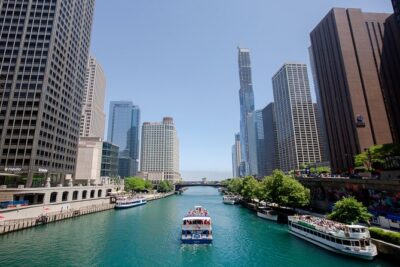
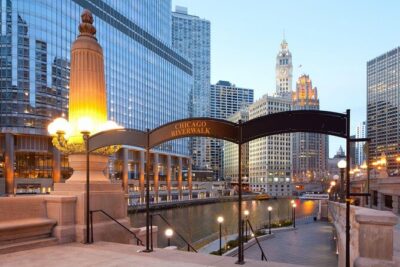
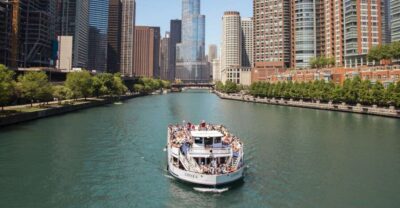
Chicago River: 1.5-Hour Guided Architecture Cruise
Read our review →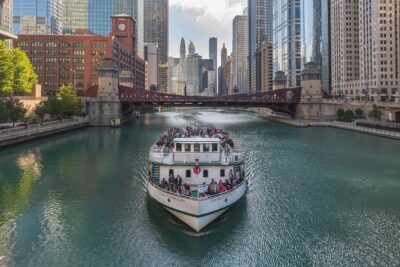
Chicago Architecture Center River Cruise aboard First Lady
Read our review →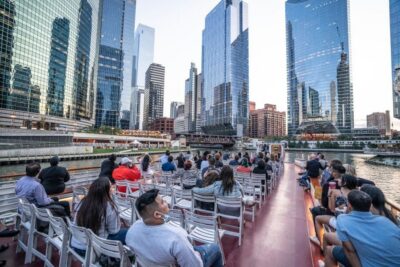
Architecture River Cruise Skip-the-Ticket Line
Read our review →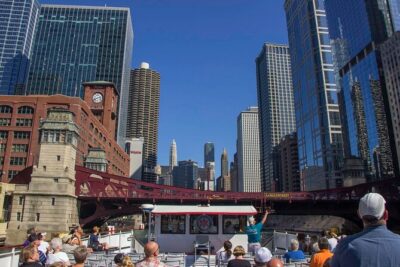
Chicago River 45-Minute Architecture Tour from Magnificent Mile
Read our review →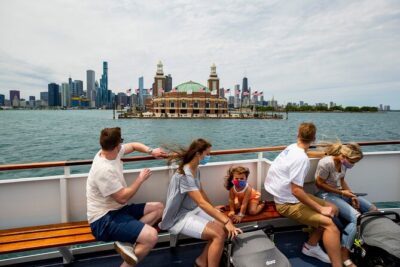
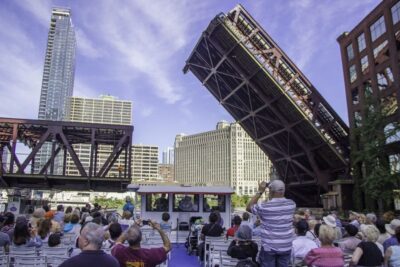
45-Minute Family-Friendly Architecture River Cruise
Read our review →Other lists with this tour