
Review · MEXICO CITY
Mexico City: 1960s &1970s Mexican Architecture Walking Tour
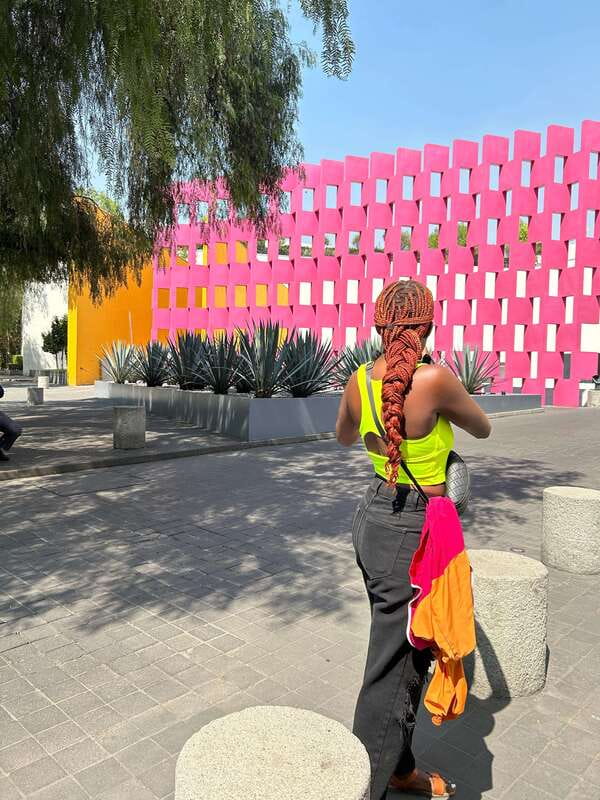
Mexico City’s 1960s architecture was not shy. It used huge forms, bold concrete, indigenous symbols, and a faith in the future to express a country changing fast. This three-hour walk connects that confident era to the art and politics behind buildings in Chapultepec Park, rather than treating them as isolated photo stops.
I like the way the tour links architecture with Mesoamerican ideas, especially at the National Museum of Anthropology. I also like the small-group format and the chance to see Hotel Camino Real, an Olympic-era hotel with an important modern art collection. The main drawback is value: at $192 per person, this is expensive for a three-hour walking tour, especially if your main interest is building design rather than history.
Key points to know
- The National Museum of Anthropology is the main event: You learn how its design expresses pre-Hispanic cosmology through structure, sculpture, and space.
- Natalia receives the strongest praise: Her explanations, flexibility, and knowledge of Mexico City’s art scene are central to the experience.
- The route covers four very different sites: The Anthropology Museum, Tamayo Museum, Modern Art Museum, and Hotel Camino Real each show a different side of modern Mexico.
- It is a short, gentle walk: You will not spend three hours marching across the park, but comfortable shoes, sunscreen, and rain gear still make sense.
- Museum tickets are included: That matters in a small group, since you can focus on the guide instead of handling separate admissions.
- The tour is best for art and history fans: If you want only a technical study of architecture, some of the historical discussion may feel too broad.
Why Mexico City’s 1960s buildings matter
Mexico City’s architecture from the 1960s through the early 1980s reflects a country looking in two directions at once. Designers drew on ancient Mexico while also embracing modern materials, international styles, and the optimism of the Space Age.
That tension gives the tour its purpose. You are not simply looking at concrete, glass, courtyards, and sculpture. You are asking what Mexico wanted to say about itself at a time of political pressure, cultural pride, and rapid modernization.
The guide places the buildings in their social and political setting. That means you should expect history alongside design analysis. One previous participant found the tour more historical than architectural, and that is a fair warning. If you want a technical study of floor plans, engineering, or construction methods, this may not be the perfect choice. If you want to understand why these buildings look the way they do, the wider context is useful.
The small group, limited to 10 people, should help. On some dates, the group may be even smaller. One booking became a private tour after the other participants failed to arrive, while another couple had a personal-feeling experience with Natalia. The format gives you room to ask questions and steer the discussion toward your own interests.
More Walking Tours in the world:
- The Official Art Deco Walking Tour by The Miami Design Preservation League
★ 5.0 · 1,580 reviews - Lecce: Baroque Architecture and Underground Walking Tour
★ 4.6 · 1,248 reviews - Chicago in a Day: Food, History & Architecture Walking Tour
★ 5.0 · 1,153 reviews
Meeting at Porrua Bookstore in Chapultepec Park
The tour begins inside the Porrua Bookstore in Chapultepec Park, near the ticket booth. Look for the guide with the WALK MEXICO project logo.
This detail matters because Mexico City has several Porrua bookstores. Do not simply enter the first one you see on a map. The correct meeting point is the branch inside Chapultepec Park.
You will spend much of the tour within the park or close to its major cultural buildings. You do not need hotel pickup, and none is provided, so plan your route to the meeting point before setting out. The tour takes place rain or shine. Bring sunscreen and rain gear, and carry a camera if you enjoy photographing architecture.
Large bags and luggage are not allowed. A small day bag is the practical choice, particularly since this is a museum-based walk rather than a long hike.
The National Museum of Anthropology and pre-Hispanic ideas
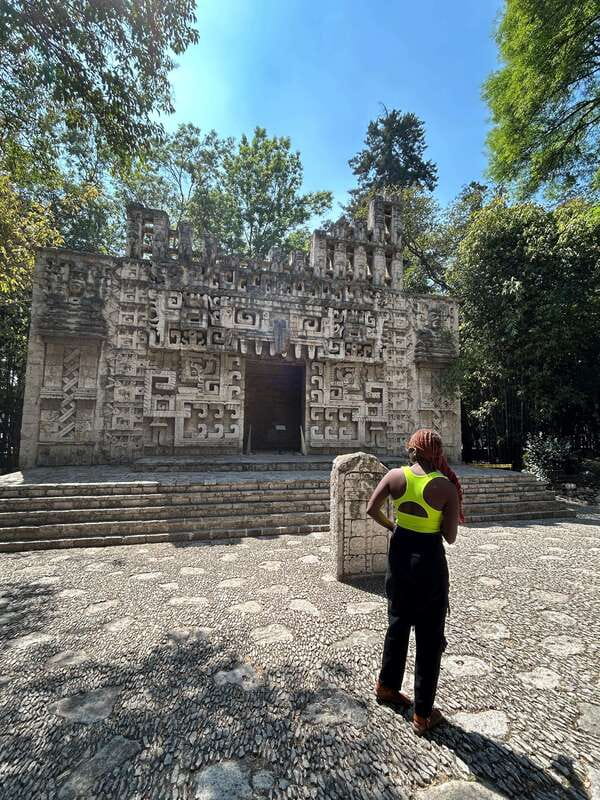
The National Museum of Anthropology is the first major stop and likely the most rewarding part of the tour for anyone curious about how modern Mexican design draws from the ancient past.
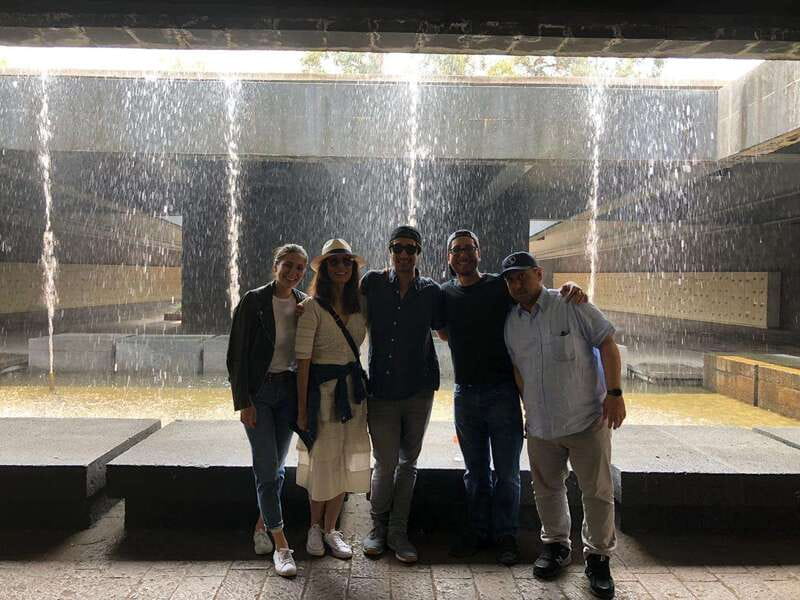
The building was designed in the 1960s by one of Mexico’s leading architects of the period. Its design does more than provide rooms for artifacts. The building itself expresses ideas tied to pre-Hispanic cosmology, and the guide explains how its organization, forms, and public spaces support that goal.
A key part of the story is collaboration. The architect worked with respected artists whose sculpture and design helped bring indigenous worldviews into the building. You will look at the museum as a complete work of art, not just a container for archaeological objects.
This approach is especially useful if you have already seen photographs of the museum and found yourself wondering why it feels so monumental. The answer is not only scale. The building was meant to connect modern Mexico with older cultural traditions, using contemporary architecture to make that connection visible.
The museum visit also gives the guide a chance to explain Mesoamerican history as it appears through modern design. One architecture enthusiast considered this the favorite part of the experience. I can understand why: the stop turns an abstract idea, Mexico’s use of the past in modern public buildings, into something you can see around you.
Museum admission is included. The exact amount of time spent inside each museum is not specified, so do not expect a full, independent visit to every collection. This is a guided architecture route, not a museum marathon.
The Tamayo Museum’s modernist answer to nature
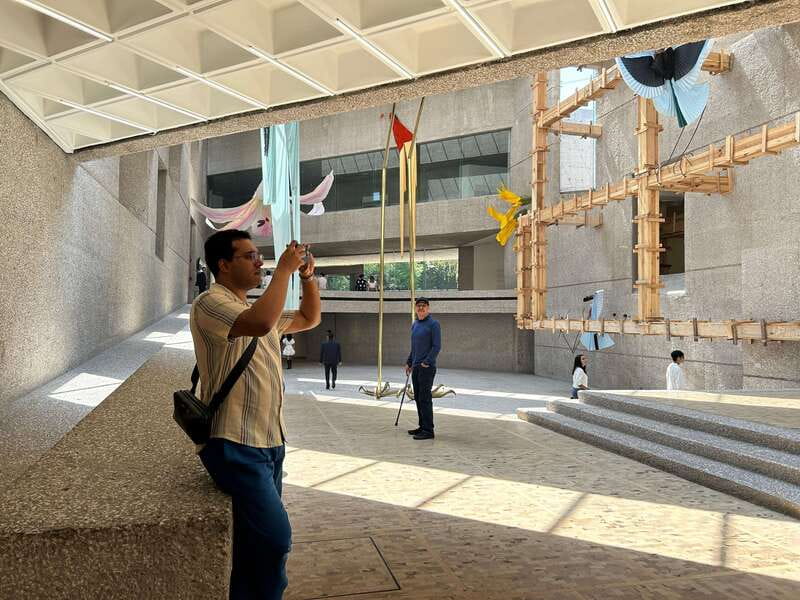
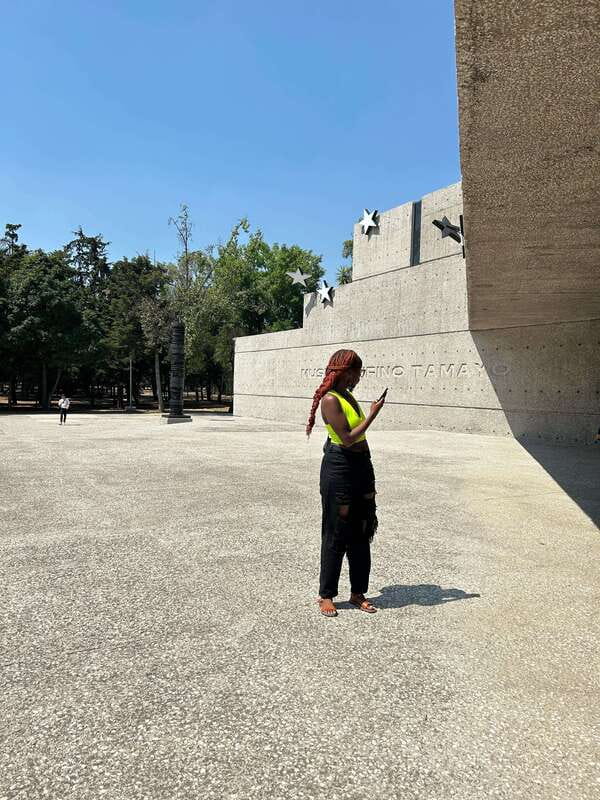
A short walk brings you to the Tamayo Museum of Contemporary Art, dedicated to Rufino Tamayo. The building was conceived by two influential architects in the early 1980s and takes a different approach from the Anthropology Museum.
Here, the emphasis is on modernist form and the relationship between the building and its natural setting in Chapultepec Park. The design honors Mexico’s artistic identity without copying pre-Hispanic buildings or relying on obvious historical decoration.
That contrast is important. At the Anthropology Museum, ancient Mexico is central to the building’s meaning. At the Tamayo Museum, the connection is more restrained. You look at how proportion, materials, mass, and placement can create a modern Mexican character without turning the building into a replica of the past.
The museum is also a useful stop for understanding Rufino Tamayo’s place in Mexican art. The experience connects the building to the artist it honors, then places both within the country’s changing cultural scene.
If you are interested in photography, this is one of the stops where your camera will earn its place. The route is designed around notable buildings, and the museums are in a safe, enjoyable area for taking pictures. As always, follow the museum’s own photography rules while inside.
More Architecture Tours around the world:
- Chicago Architecture River Cruise
★ 5.0 · 15,756 reviews - Chicago River 90-Minute Architecture Tour
★ 4.5 · 9,629 reviews - Chicago River: 1.5-Hour Guided Architecture Cruise
★ 4.8 · 8,046 reviews - Barcelona: Park Güell and Gaudí House Museum Entry Ticket
★ 4.5 · 6,326 reviews
A Space Age building from the 1960s
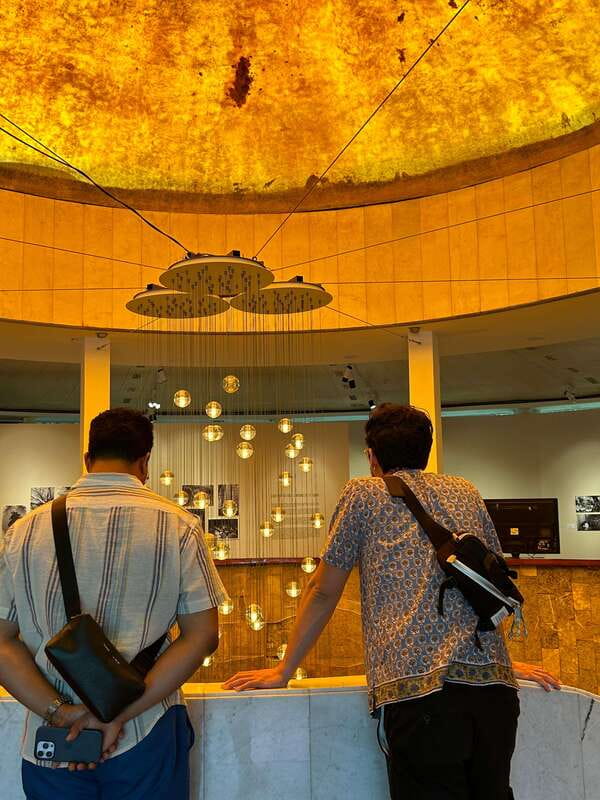
Near the Tamayo Museum, the tour visits a striking example of 1960s design shaped by Space Age aesthetics. The building captures the period’s faith in technology and the future through its form and function.
The supplied information does not identify the building by name, so you should not book this expecting a famous landmark whose details you already know. The appeal comes from seeing how the guide places an unusual structure within the mood of its time.
This stop broadens the story. Mexican modernism was not only about looking backward to ancient civilizations. It also shared the era’s fascination with rockets, new technology, streamlined forms, and the possibility of a better future.
I would pay close attention here to the guide’s comparisons. The value is likely less about entering a major museum and more about learning how a building reflects a particular moment in Mexican culture. It is also a good reminder that modern architecture can be playful and optimistic, not merely severe or monumental.
Hotel Camino Real and the 1968 Olympic moment
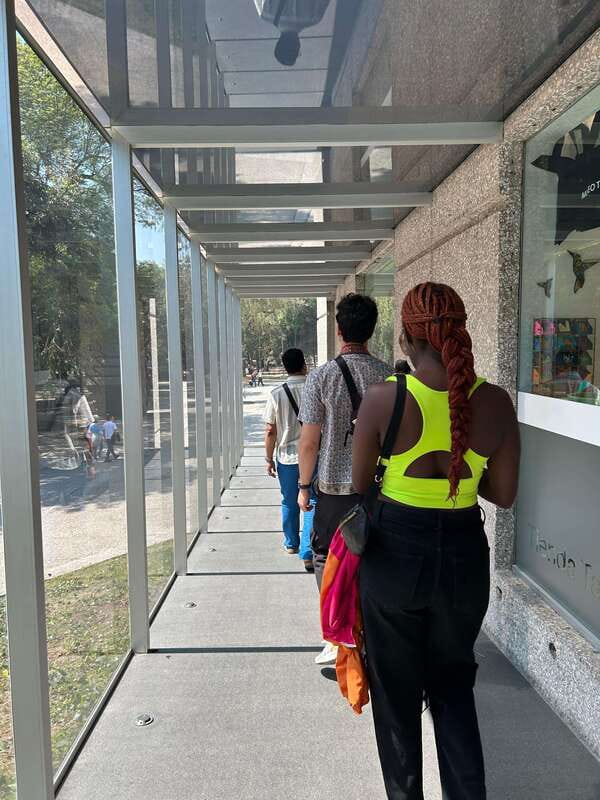
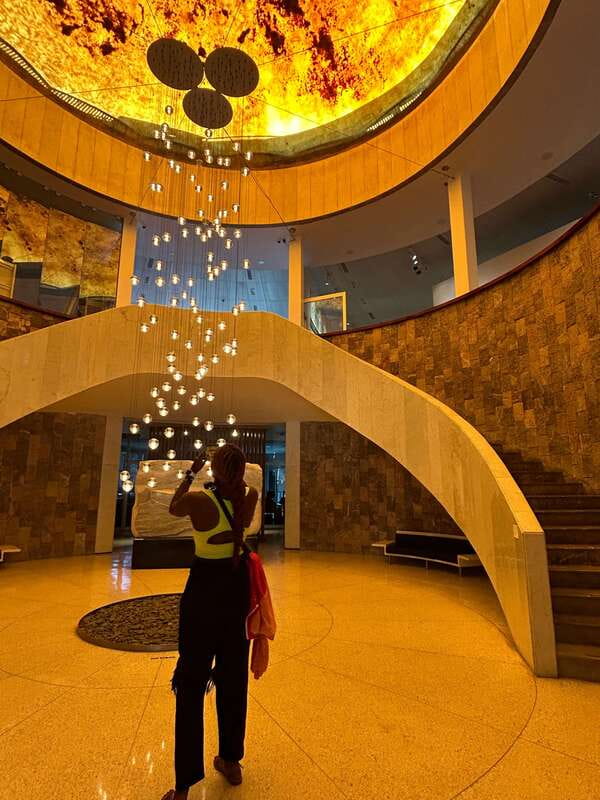
The tour concludes at Hotel Camino Real, built to host VIP guests during the 1968 Olympic Games. The hotel gives the route a different kind of architectural experience: instead of a museum designed to display culture, you see a working hospitality space shaped by an international event.
The hotel’s importance goes beyond its original function. Inside is a notable collection of modern Mexican art, turning the property into an art hotel. The result is a meeting point between public architecture, private hospitality, and the cultural ambitions of the era.
This final stop helps explain why the 1968 Olympics mattered to Mexico City’s design culture. The city was presenting itself to the world, and buildings made for international visitors had to express both modernity and national identity.
The hotel is also a strong ending because it brings the tour’s themes together. You have seen pre-Hispanic references at the Anthropology Museum, modernist restraint at the Tamayo Museum, Space Age optimism at another 1960s structure, and now an Olympic-era setting where art and hospitality share the same address.
Do not expect a conventional hotel tour with access to every area. The stated focus is the building and its modern Mexican art, and the exact interior route may depend on access at the time of your visit.
A guide-led experience shaped by Natalia
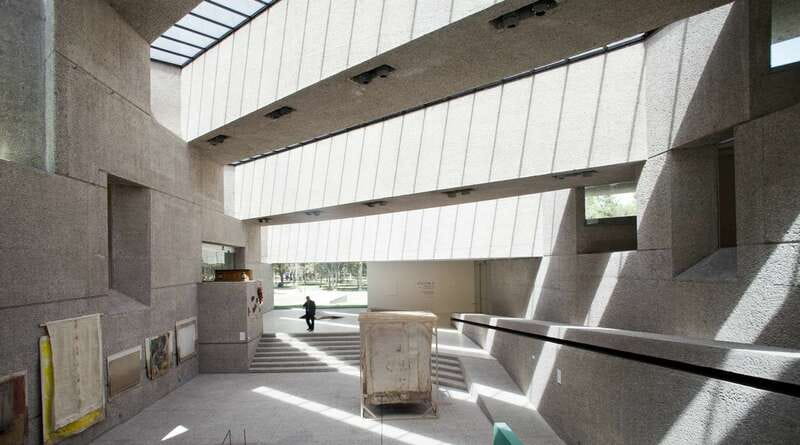
The guide can make or break a tour like this. Architecture is easy to reduce to dates and names, but the best explanations show you what to notice and why it matters.
Natalia receives especially strong praise for her enthusiasm, clear explanations, and ability to adjust the discussion to a group’s interests. She has been described as friendly, engaging, and generous with local recommendations. One participant even received help arranging a later visit to a Luis Barragán-designed house after discussing architecture during the walk.
That kind of flexibility is valuable in a small group. You can ask about art history, Mexican identity, museum design, or other buildings to visit in Mexico City. The tour also includes a guide with a graduate academic degree in art history, history, or architecture, so you are not simply following a guide who has memorized a few dates.
The language options are Spanish and English. For larger groups, headsets are provided so you can hear clearly. Since the normal group is limited to 10 people, the guide should remain easy to follow, but headsets add help when needed.
Keep your expectations balanced. The strongest part of the guiding may be the connection between buildings, politics, and art. If you want a specialist lecture focused only on architectural technique, ask questions early and make your interests clear.
What $192 buys you in three hours
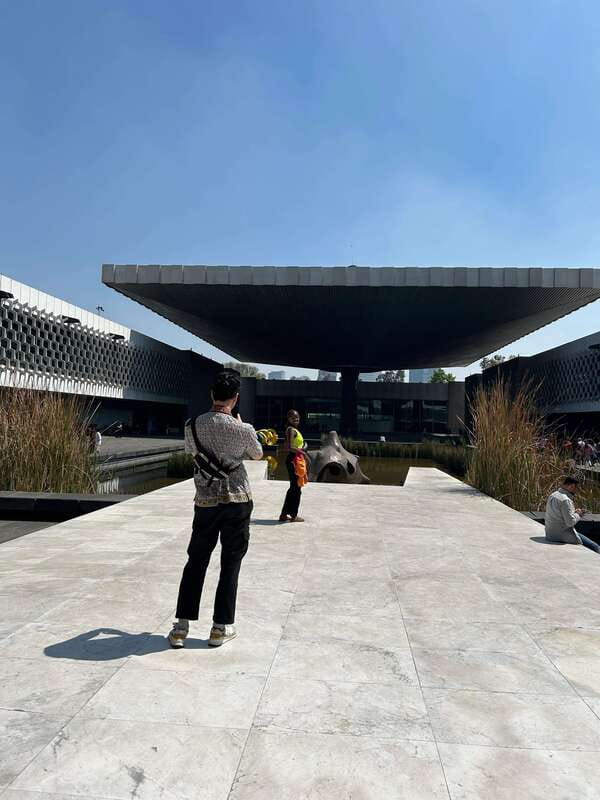
At $192 per person, this is a premium experience. The price includes the guided walk, a graduate-level specialist, and admission to the National Museum of Anthropology, Tamayo Museum, and Modern Art Museum.
That makes the tour more valuable if you would visit all three museums anyway and want someone to explain the buildings rather than simply hand you a ticket. A private or very small group can also change the experience, particularly for people who enjoy asking detailed questions.
Still, the cost is the biggest concern. One participant considered it expensive compared with other options, and that judgment is understandable. Three hours is a short time for four major stops, and the route may give you an architectural introduction rather than a full study of each site.
I would book it if you place a high value on expert interpretation and want your museum visits connected by one clear theme. I would skip it if you prefer to explore museums at your own pace, already know Mexico City’s modern architecture, or are mainly seeking a low-cost walking tour.
The flexible cancellation policy helps reduce the risk. You can cancel up to 24 hours before the activity for a full refund, and you can reserve now and pay later. Food, drinks, hotel pickup, drop-off, and extra hours are not included.
Walking conditions, accessibility, and practical planning
The tour is described as a walk, but you will not have to walk much. Most of the stops are in or near Chapultepec Park, and the route is built around museums and nearby buildings rather than a long city crossing.
Wear comfortable shoes anyway. Museum floors, park paths, and standing during explanations can tire you even on a short route. Sunscreen is useful, and rain gear is important because the tour runs in all weather.
The activity is listed as wheelchair accessible, but it is also marked as not suitable for people with mobility impairments. That is a clear inconsistency in the practical information. If you use a wheelchair or have specific mobility needs, contact Walk Mexico before booking and ask about the exact route, entrances, and restroom access.
The meeting point can be reached without hotel transport, since pickup and drop-off are not included. Bring only what you need for three hours. Large bags and luggage are not permitted.
Who should book this architecture walk
I would recommend the tour most strongly to:
- Art history fans who want buildings explained through culture and politics
- First-time visitors seeking a focused introduction to modern Mexican architecture
- Museum lovers who want context before exploring independently
- Photographers interested in mid-century forms, sculpture, and public spaces
- Couples or small groups who prefer conversation over a large guided crowd
It may be less suitable for you if you want a full day of museum time, a purely technical architecture tour, or a low-cost activity. The history content is not a side note. It is part of the method.
The tour also works well for someone who has already visited Mexico City once and wants to see familiar places differently. The museums are well known, but the focus on their buildings, designers, artists, and political setting gives you another way to read them.
Should you book the Mexico City architecture tour?
Book this experience if you want the story behind Mexico City’s modern buildings, not just a list of architects and construction dates. The National Museum of Anthropology and Hotel Camino Real give the tour its strongest range, while the Tamayo Museum and Space Age stop show how varied Mexican modernism could be.
Natalia appears to be a particularly strong guide, but the tour’s value depends on your interests. At $192, I would choose it for a special architecture-focused morning, especially if you appreciate expert conversation and included museum admission. I would not choose it as a bargain sightseeing walk.
Go with comfortable shoes, a small bag, sunscreen, and rain protection. Meet at the correct Porrua Bookstore in Chapultepec Park, and make sure you are ready for a tour where history and architecture share equal billing.
FAQ
How long does the Mexico City architecture tour last?
The tour lasts three hours.
What languages are available?
The live guide is available in English and Spanish.
Where does the tour meet?
You meet inside the Porrua Bookstore in Chapultepec Park, near the ticket booth. Look for the guide with the WALK MEXICO project logo.
Which museums are included?
Admission to the National Museum of Anthropology, Tamayo Museum, and Modern Art Museum is included.
Does the tour include Hotel Camino Real?
Yes. The route concludes at Hotel Camino Real, an Olympic-era hotel with a collection of modern Mexican art.
Is hotel pickup included?
No. Hotel pickup and drop-off are not included.
What should I bring?
Bring comfortable shoes, sunscreen, rain gear, and a camera if you want to photograph the buildings. Large bags and luggage are not allowed.
Can I cancel the booking?
Yes. You can cancel up to 24 hours in advance for a full refund.
Is the tour wheelchair accessible?
The activity is listed as wheelchair accessible, but it is also marked as not suitable for people with mobility impairments. If you have specific mobility needs, confirm the route and access details with Walk Mexico before booking.
New to the itinerary around the world
- Washington, DC: Georgetown Architecture Walking Tour★ 5.0 · 8 reviews
- Wilmington History and Architecture Tour★ 4.8 · 18 reviews
- Washington DC: Dupont Circle & Embassy Row Architecture Tour★ 5.0 · 6 reviews
- New Orleans : Garden District Architecture Walking tour★ 4.8 · 5 reviews
- Walk & Discover KL’s Architectural and Heritage Gems★ 5.0 · 7 reviews
- Unveiling Brno: History, Culture & Architectural Delights★ 5.0 · 2 reviews
- Vicenza: Palladian Architecture Private Walking Tour★ 3.3 · 3 reviews
- Private Colonial Williamsburg Architectural Tour★ 5.0 · 5 reviews
Mexico Architecture Tours, compared.
Guadalajara: Culture, Architecture, and Market Walking Tour
Read our review →
Architecture and History of Mexico City – Small Groups
Read our review →
Tlaquepaque Magic Town: Artisans, Traditions, Architecture
Read our review →
Guadalajara: Private Food Tour and Architecture Sightseeing
Read our review →

Other lists with this tour