
Review · MEXICO
Queretaro: colonial architecture and history
Querétaro’s aqueduct begins this tour with a love story, then the route follows the city’s churches, convents, plazas, and political turning points. I like the way guide Armando Magaña links local sites to Mexican and world events, and I like the small group cap of six, which leaves room for questions. One caution: this is primarily a history and religion walk, not a detailed architecture tour.
The walk covers a lot in one morning, from the city’s founding to the independence movement and the French intervention. It is a good choice if you want context before exploring on your own, but children or anyone unused to walking and listening for three to four hours may find it demanding.
Key points to know before booking
- A story-led route: The aqueduct, convents, and plazas become chapters in Querétaro’s larger story.
- Armando Magaña leads in English: His approach connects local events with Mexico’s independence and the country’s later political struggles.
- Only six people maximum: A small group makes it easier to ask questions and hear the guide clearly.
- Seven central stops: The route includes the aqueduct, historic burial ground, churches, convents, Plaza de Armas, and Museo de la Ciudad.
- Expect a walking history class: The tour suits adults interested in religion, politics, colonial society, and national history.
- The ending is useful: You finish at Museo de la Ciudad, close to restaurants, taxis, and more of Querétaro’s old town.
Why this Querétaro walk is more than a church tour
Many city walks show you a church, give you its construction date, and move on. This one uses religious buildings as evidence of how Querétaro grew. Franciscan and other religious orders shaped the city’s institutions, property, education, charitable work, and political life, so the convents are not side trips. They are central to the story.
Armando’s strength is historical connection. He explains how silver, Spanish expansion, religious orders, independence, and foreign intervention affected Querétaro. That wider frame helps you understand why this city mattered far beyond its streets.
The route also has a useful rhythm. You begin with the aqueduct and the city’s founding, move into burial grounds and convent history, then reach the main square and several major churches. By the end, you have seen many of the old town’s key landmarks without treating them as disconnected photo stops.
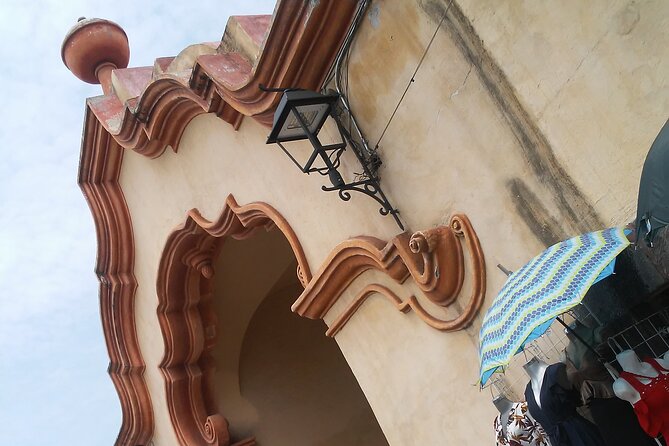
I would not book this expecting a specialist lecture on architectural periods. You will see Neo-Classical and Baroque examples, but the main emphasis is what happened in and around these buildings. If your main interest is architectural detail, tell Armando early. One guest felt the tour focused more on religious history than on architecture, and that is a fair description of the route.
More History Walks around the world:
- Chicago in a Day: Food, History & Architecture Walking Tour
★ 5.0 · 1,153 reviews - Charleston’s Best Highlights: History, Culture & Architecture
★ 5.0 · 422 reviews - Palm Springs Modernism Architecture & History Bike Tour
★ 5.0 · 359 reviews
Starting beneath the aqueduct at Mirador de los Arcos
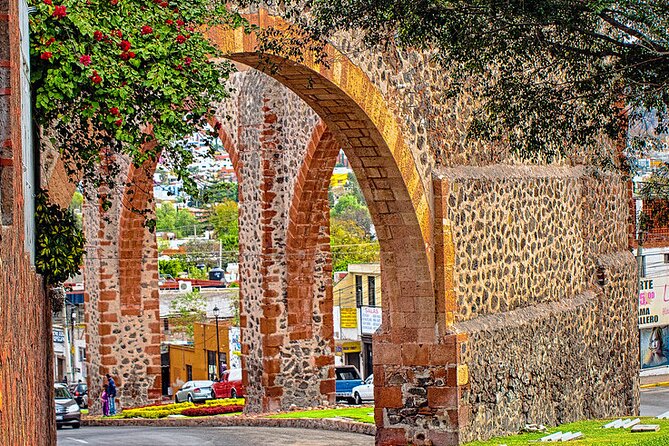
The tour begins at 9:00 am at Mirador de los Arcos, Ejército Republicano 47. This gives you an early look at El Acueducto de Querétaro, the city’s most recognizable public work and the first clue to the scale of its colonial development.
The stop lasts about 15 minutes. Armando explains the foundation of the city and the love story tied to the aqueduct’s construction. That personal tale gives the engineering project a human entry point, while the discussion of the city’s beginnings provides the framework for the rest of the morning.
There is no admission charge at any of the listed stops, so your $50 fee pays for the guide’s time, interpretation, and route rather than entrance tickets. That matters here because the value depends on how much you want explained. If you simply want to photograph the arches, you can do that independently. If you want to understand why the aqueduct was built and what it meant to Querétaro, the guided visit makes more sense.
Panteón de los Queretanos Ilustres and the people behind the city
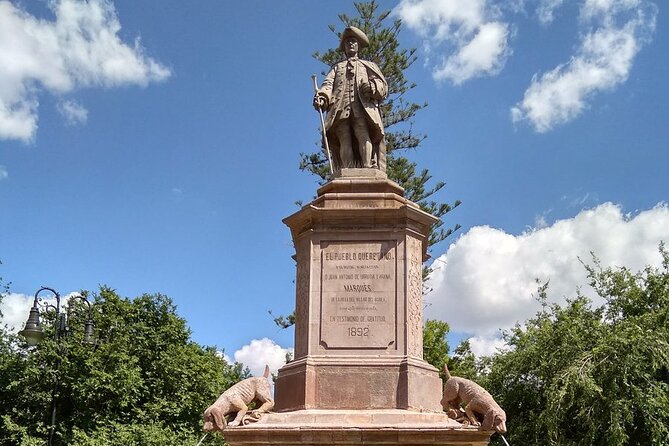
Next comes Panteón de los Queretanos Ilustres, also a roughly 15-minute stop. Here, the focus shifts from public engineering to people. You hear about important figures buried there and about the actions that affected the city and the country.
This is a short visit, but it helps put names to the political and cultural changes discussed later. The stop is especially useful if you like history through individual lives rather than dates alone. Armando’s method is to place local figures inside the larger story of Mexico, so the burial ground becomes more than a quiet monument.
You should expect the tour to keep moving. Fifteen minutes is enough for an introduction and selected stories, not a full study of every tomb. That is typical of the morning: broad coverage, strong links between sites, and a steady stream of historical explanation.
Santa Cruz and the hill where Querétaro was founded again
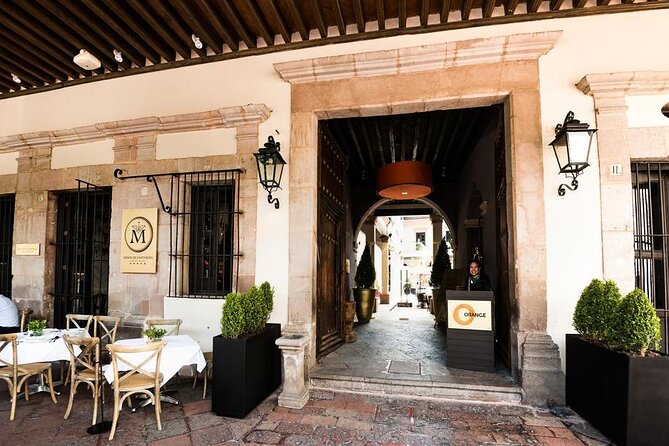
The longest early stop is Templo y Ex-Convento de la Santa Cruz de los Milagros, with about 40 minutes set aside. The building sits at the top of the hill where Querétaro was founded for the second time, making this one of the route’s most important places.
The site carries legends as well as documented national history. Armando discusses the Franciscan convent and the chapters of Mexican history connected to it. You get a clearer sense of how religious institutions became involved in the growth and political life of the country.
This is one of the places where the tour’s religious emphasis is most visible. You are not just looking at a facade or stepping into an old church. You are considering why the convent was built, how it changed over time, and how it fit into the city’s development.
Allow some patience here. A 40-minute stop can feel long if you prefer quick sightseeing, but it is valuable if you want the background that independent visits often miss. Questions are welcome, and Armando has been praised for allowing time to answer them rather than rushing people onward.
More Architecture Tours around the world:
- Chicago Architecture River Cruise
★ 5.0 · 15,756 reviews - Chicago River 90-Minute Architecture Tour
★ 4.5 · 9,629 reviews - Chicago River: 1.5-Hour Guided Architecture Cruise
★ 4.8 · 8,046 reviews - Barcelona: Park Güell and Gaudí House Museum Entry Ticket
★ 4.5 · 6,326 reviews
Plaza de Armas and the city’s public center
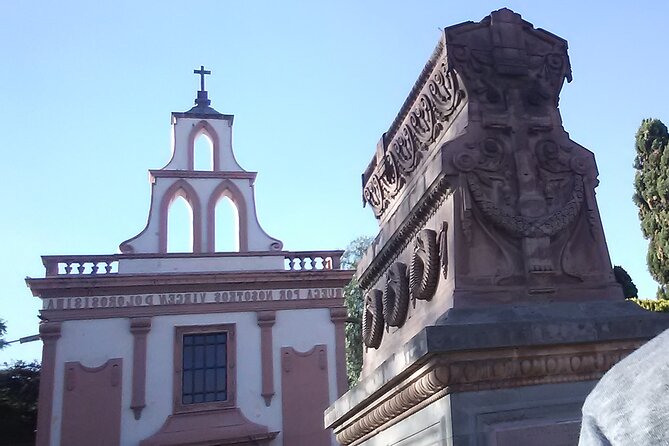
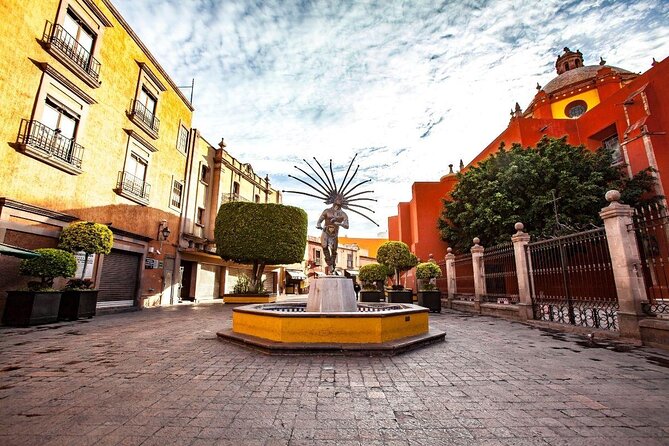
After the hill and convent, the route reaches Plaza de Armas, the picturesque main square. The planned visit lasts around 35 minutes, giving you time to look at the square, nearby Neo-Classical buildings, and the urban setting that ties many of the earlier stories together.
This is a good point to think about Querétaro as a city rather than a string of monuments. Religious buildings, private homes, civic spaces, and commercial streets sit close together in the historic center. The square helps explain how power and public life were arranged in the colonial city.
Armando also adds more historical tales here. The tour’s strongest feature is its ability to turn a familiar-looking plaza into a place connected to national events. The route later focuses on Mexico’s independence in 1810 and the expulsion of the French in the 1860s, with Querétaro’s role placed clearly in that sequence.
If your interest is photography, Plaza de Armas is likely to be one of the most enjoyable stops. If your interest is architecture, it is also a useful place to ask for more detail about the Neo-Classical buildings. The tour can respond to your questions, but the default focus remains historical context.
La Congregación and the importance of Guadalupe
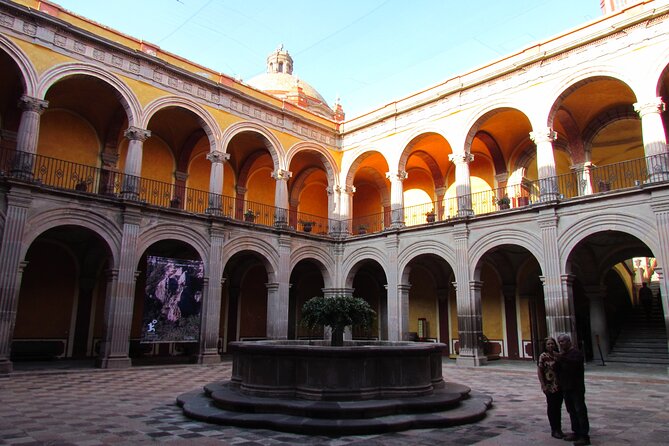
The next stop is Santuario de La Congregación de Nuestra Señora de Guadalupe, visited for about 15 minutes. You see the temple dedicated to the Virgin of Guadalupe while learning about the figure’s importance in Mexican religious and national life.
The guide also discusses the temple’s builder. That detail keeps the stop grounded in the building itself rather than turning it into a general religious talk. You get both the national meaning of Guadalupe and a local story tied to the sanctuary.
For visitors unfamiliar with Mexico’s religious traditions, this is a helpful stop. It explains why a church dedicated to Guadalupe carries such weight in Mexican public life. For those already familiar with the subject, the value lies more in the connection to Querétaro and to the people who shaped the city.
Again, the visit is short. Think of it as one piece of a larger argument about religion, identity, and power rather than a long interior tour.
San Francisco and the old inland road
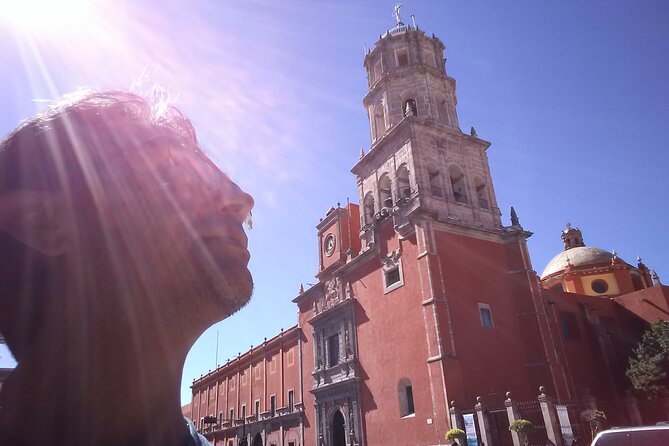
Templo y Exconvento de San Francisco de Asís de Querétaro provides another 15-minute look at the city’s religious foundations. From inside the former convent, you hear about the building’s many transformations as Mexico passed through different historical periods.
That emphasis on change is important. Old buildings are not frozen in the era when they were first constructed. Their uses and appearances shifted as the country changed, and this convent gives Armando a place to show those layers.
The stop also identifies the point where the old inland road began. That detail expands the tour beyond church history. Roads shape trade, settlement, military movement, and communication, so this location helps explain Querétaro’s place in regional development.
I like this kind of detail because it gives you a practical way to read the city streets. Afterward, you can look at the old center not only as a collection of handsome buildings but also as a network of routes and institutions.
Santa Clara, one corner with several eras of Querétaro
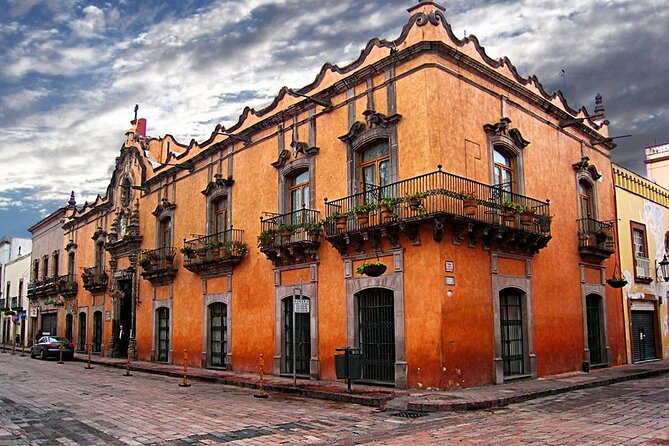
The final listed stop before the museum is Convento de Santa Clara, with about 20 minutes planned. It was the first and largest female convent in the city, and the same corner also brings together the city’s former hospital, a notable Neo-Classical fountain, and a major example of Baroque private-house architecture.
That concentration makes Santa Clara one of the route’s best stops for seeing how different parts of urban life once stood side by side. Religious women, medical care, public water, and private wealth all appear in one compact setting.
This is also where the architectural side of the tour becomes more visible. You hear about the Neo-Classical fountain and the Baroque house, though the main approach remains historical rather than technical. If you want to know about columns, ornament, floor plans, or construction methods, ask directly.
The stop rounds out the morning well. You have moved from a major public work to burial grounds, a Franciscan hilltop, a central plaza, several churches, and a women’s convent. The buildings differ, but the route keeps returning to the same themes: faith, movement, wealth, and political change.
How Armando guides the history
Armando Magaña is the key reason to choose this experience over an unguided walk. His English is described as excellent, and his approach goes beyond memorized dates. He uses stories, local sites, and questions to connect Querétaro with Mexico’s wider past.
Expect discussion of the period before the Spanish arrived, the Spanish search for silver, the work of friars, the 1810 independence movement, and the French intervention in the 1860s. The point is not to cover every event in Mexican history. It is to show how outside forces and national struggles affected one city.
His style also appears flexible. The walk is described as well paced, and he is willing to spend extra time on questions. Several tours lasted beyond the planned four hours, with one extending beyond five. That can be a benefit if you enjoy long conversations, but it means you should not schedule a tight appointment immediately afterward.
The best way to get more architecture from the experience is to say so at the beginning. Armando has acknowledged that visitors may have different expectations, and he can adjust more effectively when you make your interests clear.
Price, group size, and the value of the morning
At $50 per person, this is not the cheapest way to see Querétaro’s old town. Still, no admission fees are listed at the stops, so the fee is mainly for a personal guide, a planned sequence, English explanations, and the historical connections between places.
The maximum group size is six. That is a real advantage for a history tour. You can hear without standing next to a large flag, ask about a name or date, and tell the guide if you want more attention to architecture or religion.
The tour is normally scheduled for three to four hours, but allow extra time if the group asks questions or Armando expands on a subject. The experience suits someone who values explanation more than speed. If you only want a quick orientation and photographs, you may find the price harder to justify.
At the same time, the route covers seven substantial stops and finishes in the heart of the old town. For a first morning in Querétaro, that can save you from wandering past important buildings without knowing why they matter.
Walking needs and who will enjoy it most
You need a moderate level of physical fitness. This is a walking tour with a hilltop convent, several stops, and long periods of standing and listening. One of the most useful warnings is that it may not suit children who are not used to walking and concentrating for three to four hours.
I would recommend it most to:
- Adults interested in Mexican history and national politics
- First-time visitors who want an orientation to Querétaro
- People who enjoy churches, convents, legends, and old city streets
- Visitors who want an English-speaking guide
- Anyone willing to ask questions and spend a full morning on one subject
It may be less suitable for young children, people wanting a short photo walk, or architecture specialists seeking a technical examination of building styles. Service animals are allowed, but you should still be prepared for the physical demands of a long urban walk.
The tour ends at Museo de la Ciudad, in the former Capuchin convent on Calle Vicente Guerrero Norte. That is a practical finish. You can continue walking through the historic center, find a place to eat, rest, or take a taxi back to your hotel.
Should you book the Querétaro history walk?
Book it if you want Querétaro to make sense, not just look attractive. The aqueduct, convents, churches, and plazas are easy to visit on your own, but Armando gives them sequence and meaning. His best work is explaining how local events connect with silver, religion, independence, foreign intervention, and the formation of modern Mexico.
I would book early if your schedule is fixed, since the experience is often reserved about 10 days ahead. Choose it at the start of your stay if possible. That way, you can return to the buildings and streets later with a better sense of what you are seeing.
Skip it if you want a fast architecture-only tour or dislike extended historical discussion. For everyone else, the small group, English delivery, flexible questions, and strong local focus make $50 a reasonable price for a serious half-day introduction. Free cancellation is available until 24 hours before the start time, which gives you some planning flexibility.
FAQ
Where does the tour begin?
It begins at 9:00 am at Mirador de los Arcos, Ejército Republicano 47, La Santa Cruz, La Pastora, Santiago de Querétaro.
Where does the tour end?
The tour ends at Museo de la Ciudad, Calle Vicente Guerrero Norte 27, in Querétaro’s historic center.
How long does the experience last?
The planned duration is approximately three to four hours. Some tours may run longer when the group asks questions or the guide spends extra time on the history.
Is the tour offered in English?
Yes. The experience is offered in English.
How many people can join?
The group has a maximum of six travelers.
What is the price?
The price is $50 per person.
Are admission tickets included?
Each listed stop has free admission, so there are no separate entrance fees for the itinerary provided.
What physical condition do I need?
You should have a moderate level of physical fitness. The experience involves walking and listening for several hours, and it may not suit children who are not used to that pace.
New to the itinerary around the world
- Washington, DC: Georgetown Architecture Walking Tour★ 5.0 · 8 reviews
- Wilmington History and Architecture Tour★ 4.8 · 18 reviews
- Washington DC: Dupont Circle & Embassy Row Architecture Tour★ 5.0 · 6 reviews
- New Orleans : Garden District Architecture Walking tour★ 4.8 · 5 reviews
- Walk & Discover KL’s Architectural and Heritage Gems★ 5.0 · 7 reviews
- Unveiling Brno: History, Culture & Architectural Delights★ 5.0 · 2 reviews
- Vicenza: Palladian Architecture Private Walking Tour★ 3.3 · 3 reviews
- Private Colonial Williamsburg Architectural Tour★ 5.0 · 5 reviews
Mexico Architecture Tours, compared.
Guadalajara: Culture, Architecture, and Market Walking Tour
Read our review →
Architecture and History of Mexico City – Small Groups
Read our review →
Tlaquepaque Magic Town: Artisans, Traditions, Architecture
Read our review →
Mexico City: 1960s &1970s Mexican Architecture Walking Tour
Read our review →
Guadalajara: Private Food Tour and Architecture Sightseeing
Read our review →

Other lists with this tour