
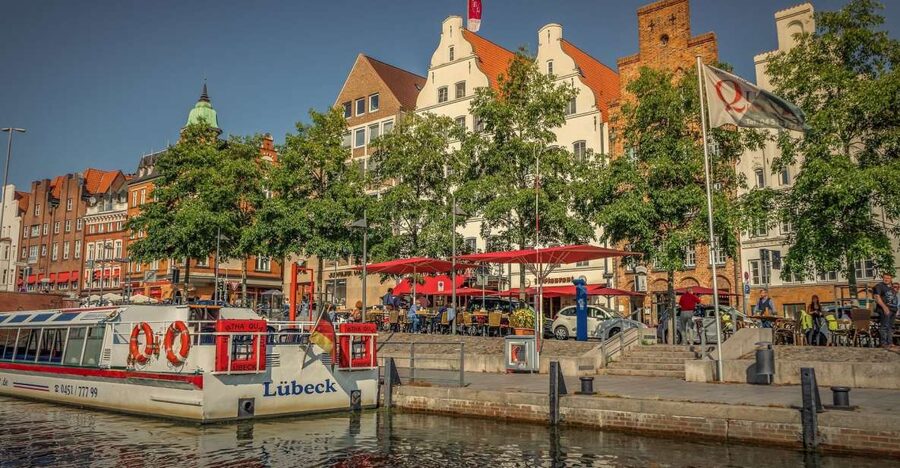
Review · GERMANY
Lübeck: Private Historical and Architectural Walking Tour
Lübeck’s best story is told in brick. On this private walk, you trace the city’s old trading power from the Holsten Gate to St. Mary’s Church, with handsome merchant homes, salt storehouses, and seven church spires rising around you. The marzipan stop adds a tasty local hook, not just another round of dates and names.
I like the private format, especially for a family or group that wants to ask questions without being lost in a crowd. I also like the clear route: Holsten Gate, the Merchants’ Quarter, Buddenbrook House, St. Mary’s, a marzipan bakery, and the Town Hall. The main drawback is time. Ninety minutes goes quickly, and entry tickets are not included.
- Holsten Gate begins the story, with a 1464 Gothic gate that once formed part of Lübeck’s medieval defenses.
- The skyline view packs in context, linking five churches, salt storehouses, and wealthy merchants’ brick homes.
- Buddenbrook House connects Lübeck to literature, through Thomas Mann and Heinrich Mann.
- St. Mary’s Church brings Gothic scale and local folklore, including the little devil outside.
- Marzipan becomes part of the history, with samples of different varieties at a traditional bakery.
- A private group of up to 15 keeps the walk personal, though the $265 price makes most sense when shared.
Lübeck’s Brick-Built Welcome at Holsten Gate
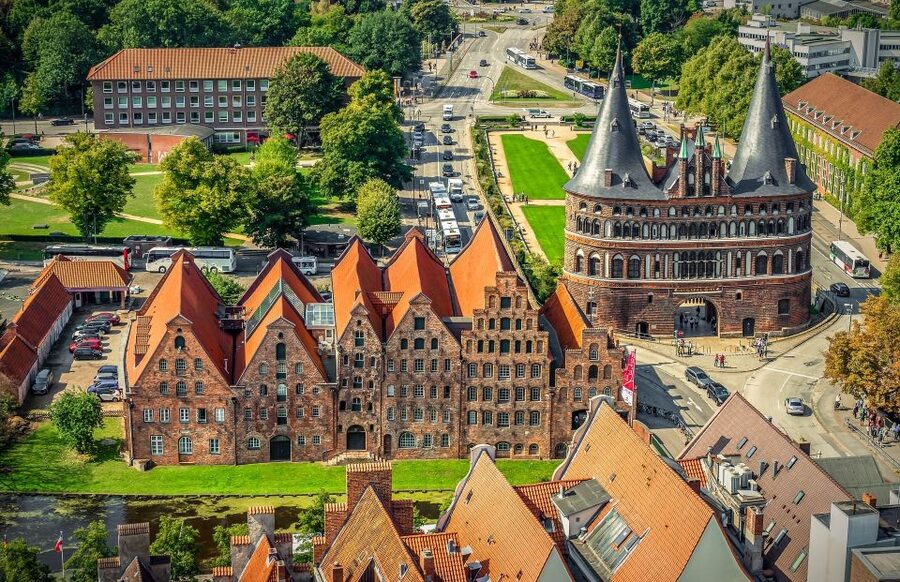
Meet your guide in front of the Holsten Gate, near Museum Holstentor. This is an easy place to recognize and a fitting starting point, since the gate gives you an instant sense of Lübeck’s former importance.
Built in 1464, Holsten Gate is one of only two remaining city gates and one of the last Gothic pieces of Lübeck’s medieval fortifications. Its heavy brick form is more than a pretty photo stop. It introduces the city as a defended trading center, a place where movement, money, and status passed through controlled entrances.
The tour explains the gate’s symbolism, including its association with freedom. You can expect your guide to put the architecture into plain historical context rather than simply point out the towers and send you onward.
That matters in Lübeck. The city is easy to admire at street level, but its buildings make more sense when you know why brick became the local signature and how Baltic Sea trade shaped the town. Starting at Holsten Gate gives the walk a firm beginning instead of dropping you into the old town with no sense of direction.
A Skyline Shaped by Baltic Sea Trade
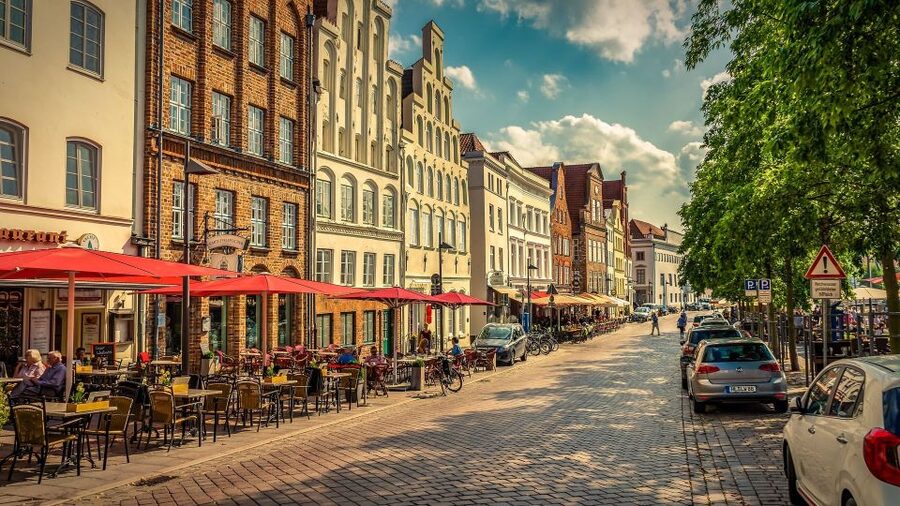
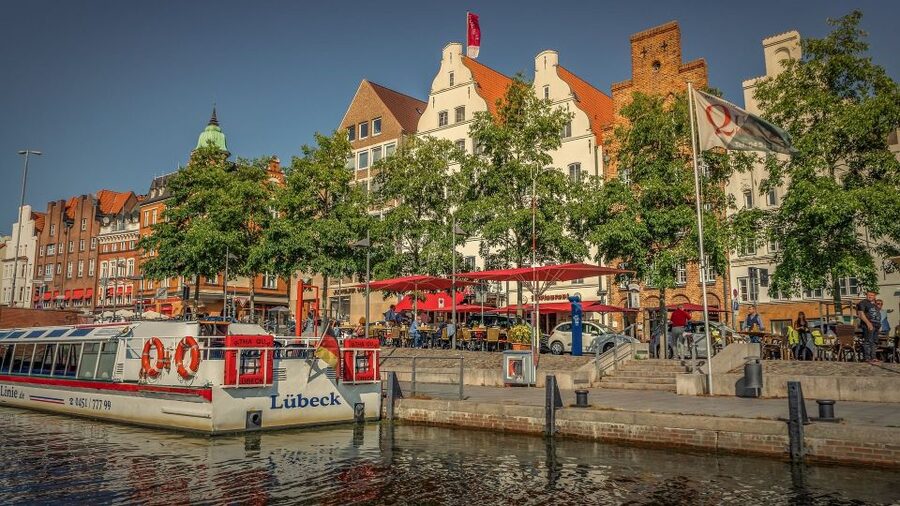
As you continue toward the historic center, the route opens views across Lübeck’s old skyline. Five churches, salt storehouses, and grand brick homes built by wealthy merchants in the late 1700s help explain why the city is also called the City of Seven Spires.
The important point is not simply that Lübeck has attractive buildings. The architecture records who had money and why. Baltic Sea trading routes helped drive Lübeck’s economic growth, and merchants invested their profits in houses, warehouses, churches, and public buildings.
I find this kind of explanation especially useful because it turns a pretty walk into a lesson in cause and effect. You see the buildings, then hear what trade paid for them. You begin to read the streets as evidence of commercial success.
The route also takes you through cobbled streets within Lübeck’s UNESCO World Heritage old town. Bring comfortable shoes. The walking distance is not described as difficult, but cobbles and historic paving can be tiring, and the activity is not suitable for wheelchair users or people with mobility impairments.
More Private Architecture Tours in Germany:
- Private Taxi Tour City East & West History and Architecture 3-4h
★ 5.0 · 42 reviews - Private walking Tour: Berlin Architecture Tour
★ 5.0 · 14 reviews - Lübeck: Architecture and Local Craft Private Guided Tour
★ 4.0 · 6 reviews
The Merchants’ Quarter and Lübeck’s Brick Style
The Merchants’ Quarter provides another look at the city’s economic past. Here, the focus is on the people who helped shape Lübeck’s growth and on the architectural style that made the old town important enough for UNESCO recognition.
Look for the contrast between practical trade buildings and luxurious private homes. The city’s brick Gothic character is not limited to churches. It also appears in civic buildings, merchant residences, storehouses, and defensive structures, giving Lübeck a strong visual unity.
You will get the most from this section if you keep asking how a building served its original owner. Was it built to protect goods, display wealth, support worship, or manage public business? A private guide can adjust the explanation to your interests, which is one of the main advantages over a fixed audio route.
The group size is capped at 15, so this is private rather than a large shared walk. That gives you room to ask about a particular building or slow down briefly for photographs. Still, the 90-minute schedule means the guide will need to keep the route moving.
Buddenbrook House and the Mann Family
The stop at Buddenbrook House shifts the tour from merchants and city walls to literature. The building is linked with German writers Thomas Mann and Heinrich Mann, and the guide places their work within Lübeck’s setting.
The house matters because it connects the city’s streets to family life and storytelling. Lübeck is not only a trading center preserved in brick. It also became the setting and inspiration for one of Germany’s best-known literary families.
The tour does not include entry tickets, so you should treat this as an exterior stop unless you arrange admission separately. The supplied details identify Buddenbrook House as part of the walking route, but they do not promise an interior visit.
That distinction is worth keeping in mind when you compare tours. If you want a full museum visit, ask before booking. If you mainly want to understand the Mann connection while seeing the building in its old-town setting, this stop fits neatly into a short city walk.
St. Mary’s Church and the Little Devil
St. Mary’s Church is one of the tour’s major architectural stops. It is the third-largest brick Gothic church in Germany, a detail that gives the building real scale before you even reach it.
Your guide explains the church’s past and points out the small devil outside. That local story adds a welcome bit of humor to a route otherwise filled with trade, religion, literature, and architecture.
The church is also a good place to notice how Lübeck’s brick style reaches its grandest form. The walls and towers show how a practical local material could be used for monumental religious buildings. You are not just looking at an old church. You are seeing the city’s wealth, craft, and religious ambition expressed in brick.
The supplied information does not include a guaranteed interior visit or admission. Entry tickets are not included, so confirm what your guide plans to cover from outside and what, if anything, requires a separate ticket.
More Walking Tours in Germany:
- Düsseldorf: Guided City Architecture Walking Tour
★ 4.6 · 61 reviews - Potsdam: Guided Walking Tour of UNESCO Site and Architecture
★ 4.7 · 49 reviews - Berlin: Guided Architectural Walking Tour of Hansaviertel
★ 4.9 · 5 reviews - The Official Art Deco Walking Tour by The Miami Design Preservation League
★ 5.0 · 1,580 reviews
Marzipan as a Piece of Lübeck’s Story
The marzipan bakery stop gives the tour its most hands-on moment. You taste several varieties of marzipan while learning why this sweet became significant in Lübeck.
This is more useful than a random snack break. Food can explain a city in a way that dates and architectural terms cannot. The tasting lets you connect Lübeck’s identity with a product that remains strongly associated with the city.
You should expect samples rather than a full meal. The tour describes freshly baked marzipan and taste-testing different varieties, so let the bakery stop be a local treat, not lunch.
I also like the change of pace. After walking past gates, churches, and merchant homes, tasting marzipan gives you a short sensory reminder that Lübeck’s past is not locked behind museum glass. It still appears in the city’s shops and food traditions.
If you have allergies or dietary restrictions, ask the provider before booking. The available details do not specify ingredients, alternatives, or allergy arrangements.
Lübeck’s Town Hall and the Final View
The walk ends at Lübeck’s Town Hall, regarded as one of Germany’s most beautiful town halls. It is also connected with the city’s UNESCO World Heritage status, making it a fitting final stop.
Town halls often bring the separate pieces of a city together. Holsten Gate shows defense, the merchant streets show private wealth, St. Mary’s shows religious ambition, and the Town Hall represents civic power. Ending here gives the route a clear sense of how Lübeck functioned as a city rather than a collection of attractive buildings.
The tour’s order also works well for a first look at Lübeck. You begin at a major landmark, pass through the old town, add literature and food, and finish with a public building at the center of civic life.
Do not expect a slow museum-style examination of every stop. The route has many subjects packed into 90 minutes. You will get a useful overview and a set of landmarks to revisit later, but a full interior tour of every church or historic building would require more time.
What the Private Price Means for Your Group
The price is $265 per private group of up to 15. That is a sizable charge for a 90-minute walk if you are traveling alone or as a couple. Split among a full group, however, the cost becomes easier to justify because you are paying for a dedicated guide rather than several individual places on a shared schedule.
For example, a group of 10 pays $26.50 per person. At the maximum of 15, it works out to about $17.67 per person. The value improves as your party grows, especially if you want the guide to focus on your interests or keep the pace suited to your group.
The fee includes the private guide and tour, but not entry tickets. Since the route centers on exterior landmarks and explanations, that may not be a problem. If you expect museum or church interiors, budget for possible extra admissions and confirm the plan first.
I would see this as a good orientation walk for a group arriving in Lübeck, not as a complete historical program. It gives you a strong framework for exploring the city on your own afterward.
Guide Quality and Practical Details
The strongest feedback points to the guide’s ability to bring Lübeck to life. One German-language assessment describes the guide as someone who had practically lived and breathed Lübeck and knew the city down to its bricks. Another short assessment calls the experience perfect and very interesting. That is exactly the quality you want on a compact architecture tour: clear local context, specific observations, and an explanation of why the buildings matter.
The guide can conduct the tour in German or English. No guide names are supplied, so you cannot request a particular named guide from the available information. One practical note is worth remembering: a participant felt the guide should have made herself easier to recognize at the meeting point. Arrive at the front of Holsten Gate near Museum Holstentor and confirm how you will identify one another.
Wear comfortable shoes and comfortable clothes. The route uses cobbled historic streets, and the activity is not suitable for wheelchair users or people with mobility impairments.
You can cancel up to 24 hours before the tour for a full refund. A reserve-now, pay-later option is also available, which is useful if your Northern Germany plans are still shifting.
Who Will Get the Most From This Walk
I would recommend this tour to a private group that wants a quick but meaningful introduction to Lübeck. Families, friends, and small work groups can share the cost and shape the conversation around architecture, literature, trade, or food.
It also suits visitors who prefer a human guide to a phone-based route. The highly praised part of the experience is not a rare access opportunity. It is the guide’s local command of the city and ability to explain details, including the story behind individual bricks and the little devil outside St. Mary’s.
You may want something else if you need extensive interior sightseeing, step-free access, or a slow photography walk. The short duration and excluded entry tickets make this a highlights tour, not a full-day exploration.
If marzipan is not your thing, the tasting is still brief and tied to local history. If you love literary connections, Buddenbrook House gives the route an extra layer that many standard architecture walks lack.
Should You Book the Lübeck Walking Tour?
Book it if you want a private overview of Lübeck’s old town, value a guide who can explain the city beyond its picture-postcard buildings, and can share the $265 cost with a group. The combination of Holsten Gate, merchant architecture, Buddenbrook House, St. Mary’s Church, marzipan, and the Town Hall gives you a well-shaped introduction in 90 minutes.
Skip it if you want several included museum entries, need wheelchair access, or prefer to explore at a very slow pace. Before booking, confirm where the guide will meet you, how interior visits are handled, and whether any extra tickets are needed.
For most private groups, this is a sensible first walk in Lübeck. It gives you the city’s main visual clues, a taste of its food culture, and enough historical context to make the rest of your visit more rewarding.
FAQ
Where does the Lübeck walking tour meet?
Meet your guide in front of the Holsten Gate near Museum Holstentor.
How long does the tour last?
The tour lasts 90 minutes.
Is the tour private?
Yes. It is a private group tour for up to 15 people.
What languages are available?
The live guide can conduct the tour in German or English.
What does the $265 price include?
The price includes the private guide and the walking tour.
Are entry tickets included?
No. Entry tickets are not included in the tour price.
Will I see Holsten Gate?
Yes. Holsten Gate is the meeting point and the first major stop.
Does the tour include marzipan tasting?
Yes. You visit a traditional marzipan bakery, taste different varieties, and learn about the sweet’s significance.
Is the tour suitable for wheelchair users?
No. The activity is not suitable for wheelchair users or people with mobility impairments.
Can I cancel for a full refund?
Yes. You can cancel up to 24 hours in advance for a full refund.
Is payment required at the time of booking?
A reserve-now, pay-later option is available, so you can book without paying immediately.
More History Walks around Germany
- Private Munich Tour for History Buffs with Architectural Gems and WWII sites
★ 5.0 · 3 reviews - Private Taxi Tour of City East History and Architecture 2-3h
★ 5.0 · 2 reviews - Chicago in a Day: Food, History & Architecture Walking Tour
★ 5.0 · 1,153 reviews - Charleston’s Best Highlights: History, Culture & Architecture
★ 5.0 · 422 reviews
New to the itinerary around Germany
- Munich Your Way: Private Tour with Architect & Guide★ 5.0 · 2 reviews
- Hidden Architectural Gems of Munich (Max. 16 guests)★ 5.0 · 2 reviews
- Architectural Frankfurt: Private Tour with a Local Expert★ 5.0 · 2 reviews
- Berlin Architecture/River Spree Full Day Photography Tour★ 5.0 · 2 reviews
- Private Taxi Tour of City East History and Architecture 2-3h★ 5.0 · 2 reviews
- Architectural Berlin: Private Tour with a Local Expert★ 4.0 · 3 reviews
- Lübeck: Architecture and Local Craft Private Guided Tour★ 4.0 · 6 reviews
- Dessau: Bauhausbauten Radtour★ 5.0 · 2 reviews
Private Architecture Tours, compared.

Sagrada Familia & Gaudi Tour Private or Small Group with Tickets
Read our review →
Barcelona 1.5h Private Old Town, Gothic & Ramblas Walking Tour
Read our review →
Treasures of Barcelona: Private Gaudi Walking Tour
Read our review →
Sagrada Familia & Gaudi Guided Tour Private or Small Groups
Read our review →
Best of Chicago: Architecture & Highlights City Private Tour
Read our review →
Private Harajuku Omotesando Architecture Walking Tour
Read our review →
Private Santa Barbara History and Architecture Walking Tour
Read our review →
Private Barcelona Modernism and Gaudí Walking Tour
Read our review →Other lists with this tour