
Review · MUNICH
Private Munich Tour for History Buffs with Architectural Gems and WWII sites
Munich’s past comes into sharp focus on this private history walk, which links royal power, Nazi politics, wartime destruction, and everyday city life. In about two hours, you move from the New Town Hall and St. Peter’s Church to places tied directly to Hitler’s rise and the 1923 Beer Hall Putsch.
I like the one-group format, since your guide can adjust the route and pace to match your interests. I also like the hotel pickup and the practical photo advice, which helps you get oriented quickly instead of wandering between major sights.
The main limitation is time. Five stops in two hours means you will usually see several places from the outside or get only a short introduction. Entrance fees are not included, so this works best as a brisk introduction rather than a full museum tour.
Key points to know before booking

- A private route with room to adjust: Your group alone takes part, and the listed sights can be changed.
- A useful WWII focus: Odeonsplatz and the Residenz connect directly to Munich’s Nazi-era story.
- Royal Munich in the same walk: Nymphenburg Palace and the Residenz add court life, architecture, and Bavarian politics.
- Hotel lobby pickup: Your guide meets you at a centrally located hotel, hostel, or vacation rental.
- Strong guide feedback for Tanja: She is praised for patience, clear explanations, and adjusting the pace when people tire.
- A short, brisk format: The tour lasts about two hours, so plan to return later if you want to enter the palaces or churches.
Why this private Munich walk works for history buffs
Many Munich sightseeing walks give you old buildings, a few dates, and a quick photograph before moving on. This experience tries to connect the city’s grandest sights with the harder parts of its past.
That connection matters here. Munich was not only a city of royal residences and ornate churches. It was also an important center of the Nazi movement. The tour brings those two stories together, showing you how power was displayed, challenged, and rebuilt across the city.
You begin at your centrally located hotel, hostel, or vacation rental. That saves you the trouble of finding a meeting point, though you must provide the exact name and address when booking. There is no airport pickup, and transportation costs are not included, so this arrangement is most useful if you are already staying in central Munich.
Since the tour is private, you can ask for more WWII content, more architecture, or more time around the old town. That flexibility is a real benefit. If your group is tiring after several days of walking, the guide can ease the pace. Tanja, one of the named guides, is described as patient and willing to adjust when people began to tire.
More Private Architecture Tours in Germany:
- Private Taxi Tour City East & West History and Architecture 3-4h
★ 5.0 · 42 reviews - Private walking Tour: Berlin Architecture Tour
★ 5.0 · 14 reviews - Lübeck: Architecture and Local Craft Private Guided Tour
★ 4.0 · 6 reviews
New Town Hall, Munich’s Gothic starting point
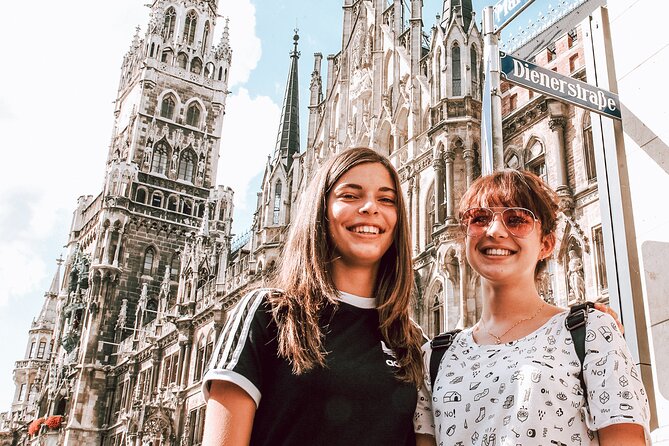
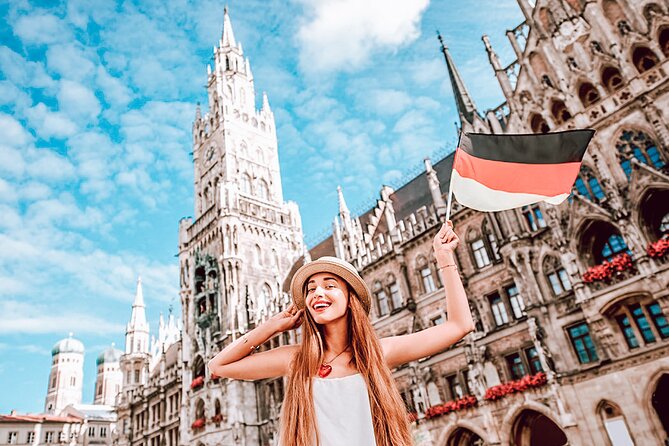
The New Town Hall, or Neues Rathaus, makes a strong opening stop. Its neo-Gothic front rises above Marienplatz with elaborate stonework and a tall tower. Built between 1867 and 1874 from brick and shell limestone, it is both a working civic building and one of Munich’s most recognizable sights.
Your guide can explain how the building still houses the city administration, city council, and mayor’s office. That gives the architecture a practical context. This is not an old palace frozen in time. It remains part of Munich’s daily government.
You are scheduled to spend about 20 minutes here. That is enough for the main story, exterior details, and photographs. If you want to climb the tower, ask about timing before the walk begins. The tower offers views across Munich’s rooftops, but an ascent may not fit comfortably into a two-hour route with four more stops.
There is also a traditional restaurant in the building’s vault, dating to 1867. It is a useful detail to keep in mind for a later meal, though food and drinks are not part of the tour.
This first stop also sets up one of the walk’s practical strengths: your guide points out good photo positions. The New Town Hall is easy to photograph badly because of its size and busy square. A local guide can help you choose where to pause rather than simply telling you to take a picture.
Nymphenburg Palace and the Wittelsbach court
Nymphenburg Palace shifts the story from city government to royal life. The palace began in 1664 as a residence for Bavarian rulers and grew into one of Europe’s largest royal palace complexes. Its origins are tied to a prince’s desire to honor his wife, which gives the grand building a surprisingly personal beginning.
The visit is listed as another 20-minute stop. That means you will likely receive an exterior introduction and an explanation of the Wittelsbach rulers rather than a full palace visit. The palace interiors, grounds, and museums require more time, and entrance fees are separate.
I like having Nymphenburg included because it prevents the tour from becoming only a Nazi-era walk. You see the older political world that shaped Bavaria long before the twentieth century. The palace also gives you a chance to compare royal display with the civic power of the New Town Hall.
The grounds are part of the appeal, but do not expect a long stroll through them on this schedule. If Nymphenburg is your priority, ask to make it the main focus of your customized route. The private format gives you room to request that change, though the shorter duration still limits how much you can cover.
The Residenz, from ducal home to Nazi-era site
The Munich Residenz carries several layers of the city’s story. Bavarian dukes and kings expanded and rebuilt the complex from 1385 onward, turning an earlier castle into a major palace. Today, it is the largest museum in Bavaria.
The building also connects to the Nazi period. It housed former Gestapo headquarters, and Hitler joined the Nazi Party here. Much of the complex was destroyed during World War II and gradually reconstructed from 1945 onward.
That combination makes the Residenz one of the most useful stops for a history-minded visitor. You are not looking at an untouched royal interior. You are seeing a place shaped by centuries of power, wartime damage, and postwar rebuilding.
Again, the schedule allows about 20 minutes. That is not enough to see the museum properly. If you want the Antiquarium, state rooms, or other interior sections, plan a separate visit. Entrance fees are not included, and the tour’s purpose is to give you the story and point out what deserves a longer return visit.
The private format helps here. You can ask your guide to explain the wartime destruction, the reconstruction, or the Nazi connection in more detail. A large group tour often has to follow a fixed script. Here, your questions can shape the conversation.
More History Walks around Germany:
- Lübeck: Private Historical and Architectural Walking Tour
★ 4.5 · 6 reviews - Private Taxi Tour of City East History and Architecture 2-3h
★ 5.0 · 2 reviews - Chicago in a Day: Food, History & Architecture Walking Tour
★ 5.0 · 1,153 reviews - Charleston’s Best Highlights: History, Culture & Architecture
★ 5.0 · 422 reviews
Odeonsplatz and the Beer Hall Putsch
Odeonsplatz is the tour’s clearest political stop. This elegant square, designed in an Italian style, sits near the Residenz and is surrounded by the Feldherrnhalle, the Baroque Theatine Church of St. Kajetan, and Munich’s oldest café.
On November 9, 1923, Hitler’s Beer Hall Putsch ended here when Bavarian police blocked the Nazi march. The failed attempt to seize power became a key episode in Hitler’s early political career. Your guide can place the event in the setting of the square, rather than leaving it as an isolated date.
Odeonsplatz has long been used for public ceremonies, demonstrations, funerals, and other large gatherings. That public role helps explain why the Nazis chose it for a show of force. It was already a place where crowds and political messages could be seen.
Today, the square has a calmer role and hosts an annual open-air classical concert. That contrast is worth noticing. Munich’s public spaces often carry several meanings at once, and the tour gives you a way to read the square beyond its attractive architecture.
This is also a good place to ask questions about how Munich deals with its Nazi past. The tour is short, so you will not receive a full academic treatment, but the stop can give you a clear framework for understanding the city’s role in the period.
St. Peter’s Church and the oldest parish in Munich
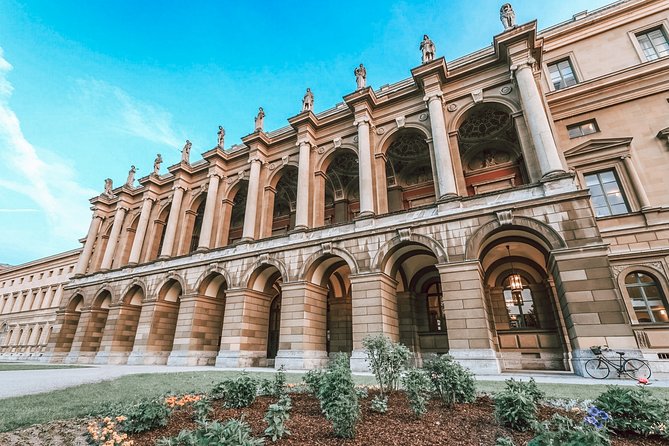
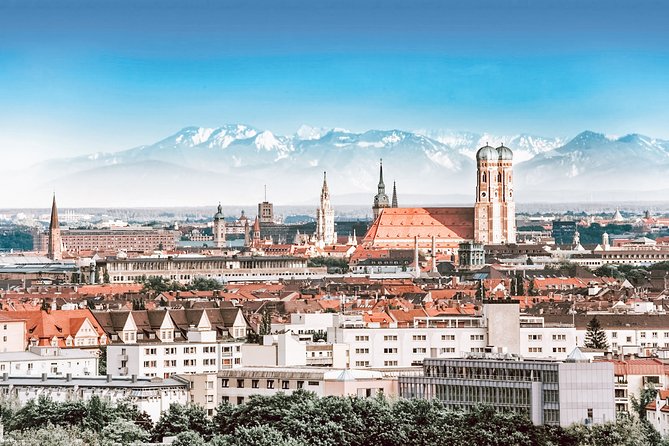
St. Peter’s Church, known locally as Alter Peter, is the oldest parish church in Munich. Its tower rises 91 meters near Marienplatz, making it one of the city center’s most useful landmarks.
The church dates back to the eleventh century and was rebuilt after a fire in 1327. Those basic facts matter because the building has witnessed centuries of change around it. The church is not simply a decorative final stop. It helps bring the city’s long civic and religious story back to human scale.
A 20-minute visit gives you time to hear about the church’s early architecture and rebuilding. If you want to climb the tower, check with your guide first. The listed tour time is short, and the climb may require a separate visit or a route adjustment.
Ending here gives the walk a more reflective finish after the political weight of Odeonsplatz and the Residenz. You are close to Marienplatz, so you can continue exploring the old town, find a meal, or return later for a fuller look at the church.
What $217 per person gets you

At $217 per person, this is not a budget sightseeing walk. The price makes the most sense for a small group that values a private guide, hotel pickup, and a route shaped around personal interests.
You are paying for the guide’s time and attention rather than for admission to the sights. All taxes and fees connected to the service are included, but palace, church, tower, food, and drink costs are not. If you expect a ticketed palace tour or an extended museum visit, budget for those separately.
The value improves when two or more people share the experience and make full use of the private format. Ask for WWII sites, architectural details, photography stops, or a gentler pace. If you simply want to be led past the standard highlights without asking questions, a less expensive group walk may serve you better.
The tour is also useful early in a Munich visit. You can get a basic map of the city, learn which sights deserve a second visit, and receive tips on getting around. One of the most practical takeaways is the chance to ask your guide what to see next and how to reach it.
How to manage the two-hour schedule
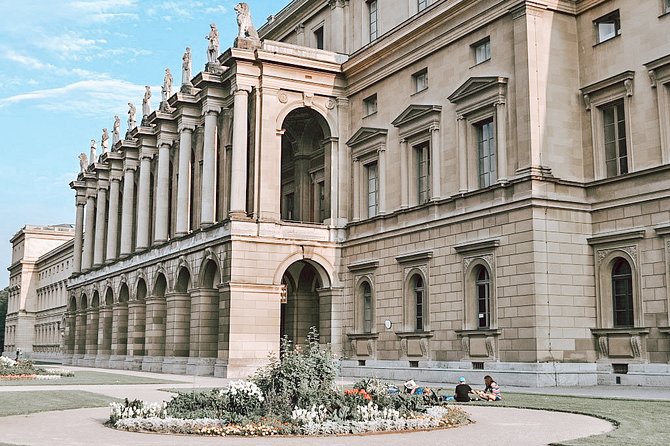
The tour lasts approximately two hours, with about 20 minutes assigned to each of five stops. That tells you what kind of experience this is: a fast orientation with historical explanation, not a full day of sightseeing.
You should wear comfortable shoes and dress for rain or changing weather. The tour runs rain or shine, and you will spend time walking between sites. A moderate level of fitness is expected, though the private format lets you discuss the pace with your guide.
Before starting, decide what matters most:
- For Nazi-era history, prioritize the Residenz and Odeonsplatz.
- For royal architecture, give more attention to Nymphenburg Palace and the Residenz.
- For old Munich and photographs, focus on the New Town Hall and St. Peter’s Church.
- For a slower pace, reduce the number of stops rather than trying to see everything quickly.
You can request changes because the route is customizable. That does not create extra hours, but it lets you spend the available time more wisely.
Who should book this Munich history tour
I would recommend this experience to first-time visitors who want context before exploring Munich on their own. It also suits families or friends who prefer a private conversation to a large group, especially when different people in the group have different interests.
History buffs will appreciate the link between royal Bavaria, the Nazi movement, wartime destruction, and reconstruction. Architecture fans will enjoy the contrast between neo-Gothic civic design, Baroque court buildings, Italian-style public space, and the church’s long religious past.
It may not suit you if you want extended interior visits. The tour does not include entrance fees, and the timetable is too short for a careful examination of Nymphenburg Palace, the Residenz museum, or the tower of St. Peter’s.
The experience is offered in English, with multiple start times. Confirmation arrives when you book, and the local supplier contacts you by email, so keep an eye on your inbox. Service animals are allowed, and the route is near public transportation, though the tour itself does not include transport.
Should you book it?
Book this private Munich tour if you want a short, focused introduction to the city’s royal, architectural, and WWII history, especially if you value a guide who can adjust the pace and answer your questions. Tanja has a reputation for patience and clear storytelling, which matters on a walk covering such heavy material.
Skip it if you want to spend hours inside the palaces or prefer to explore independently. At $217 per person, the price is justified by privacy, hotel pickup, and personal attention, not by included admissions.
For the best value, take it near the start of your Munich stay, ask to emphasize your main interests, and treat the palace interiors as separate visits. You can cancel for a full refund up to 24 hours before the start time, which gives you some useful flexibility when arranging your plans.
FAQ
How long does the private Munich tour last?
The tour lasts approximately two hours.
Where does the tour begin?
Your guide meets you in the lobby of your centrally located hotel, hostel, or vacation rental. You must provide the exact name and address of the accommodation.
Is airport pickup available?
No. Airport pickup is not available.
Are entrance fees included?
No. Entrance fees are not included. Food, drinks, and transportation costs are also separate.
Can the itinerary be changed?
Yes. The tour has a customizable itinerary because it is private. You can discuss changing the listed sights to match your interests.
What happens if it rains?
The tour runs rain or shine, so you should dress appropriately for the weather.
New to the itinerary around Germany
- Munich Your Way: Private Tour with Architect & Guide★ 5.0 · 2 reviews
- Hidden Architectural Gems of Munich (Max. 16 guests)★ 5.0 · 2 reviews
- Architectural Frankfurt: Private Tour with a Local Expert★ 5.0 · 2 reviews
- Berlin Architecture/River Spree Full Day Photography Tour★ 5.0 · 2 reviews
- Private Taxi Tour of City East History and Architecture 2-3h★ 5.0 · 2 reviews
- Architectural Berlin: Private Tour with a Local Expert★ 4.0 · 3 reviews
- Lübeck: Architecture and Local Craft Private Guided Tour★ 4.0 · 6 reviews
- Lübeck: Private Historical and Architectural Walking Tour★ 4.5 · 6 reviews
Private Architecture Tours, compared.
Sagrada Familia & Gaudi Tour Private or Small Group with Tickets
Read our review →
Barcelona 1.5h Private Old Town, Gothic & Ramblas Walking Tour
Read our review →
Treasures of Barcelona: Private Gaudi Walking Tour
Read our review →
Sagrada Familia & Gaudi Guided Tour Private or Small Groups
Read our review →
Best of Chicago: Architecture & Highlights City Private Tour
Read our review →
Private Harajuku Omotesando Architecture Walking Tour
Read our review →
Private Santa Barbara History and Architecture Walking Tour
Read our review →
Private Barcelona Modernism and Gaudí Walking Tour
Read our review →Other lists with this tour