
Review · USA
Wilmington History and Architecture Tour
Wilmington’s story is written into its old houses and churches. This 90-minute walk moves from the city’s only colonial-era block through Victorian architecture and into the 20th century, showing how a port and railroad town changed with the times. You also hear how Wilmington survived the Civil War, rebuilt during Reconstruction, faced the racial upheaval of 1898, and later found new life through tourism and film.
I like the way the tour ties architecture to history, rather than treating old buildings as pretty backdrops. I also like the manageable group size, reported at 12 people, and the guide’s use of shade when the weather turns hot. The main drawback is practical: this is an outdoor walk in a warm city, with no bathroom stop after the start and limited suitability for people with mobility impairments.
Key points to know before you book
- A Wilmington history lesson in about 90 minutes: The route covers colonial, Victorian, and 20th-century chapters without requiring a full day.
- Architecture with a purpose: You see notable homes and churches while learning about the people, industries, and events that shaped them.
- A serious Civil War and 1898 history: The tour addresses Wilmington’s role as a Confederate supply lifeline, Reconstruction, and the city’s racial violence and aftermath.
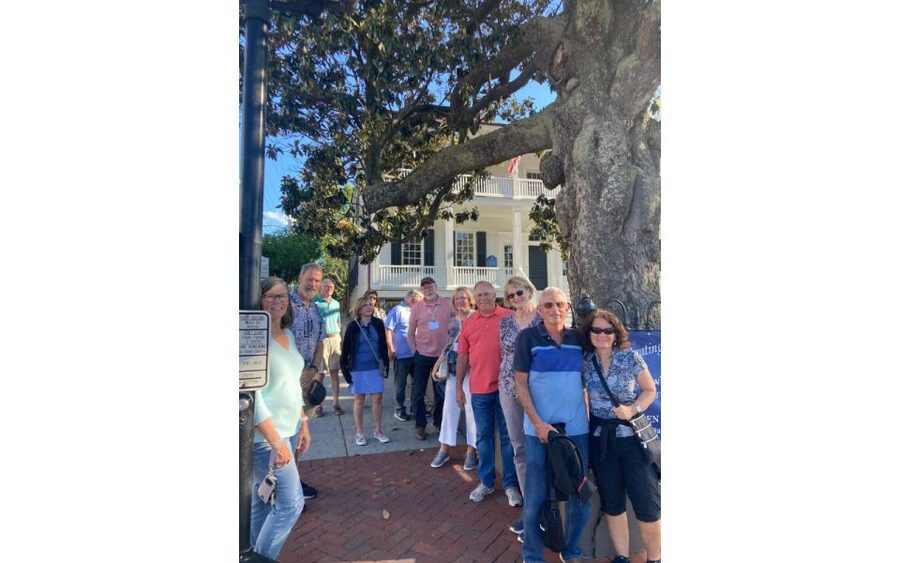
- A small-group feel: A group of 12 was described as comfortable, giving the guide room to manage questions and conversation.
- Shade matters in summer: The route is not a hard trek, but Wilmington heat can make the walk feel longer than the clock suggests.
- Bring water and use the restroom first: Sunscreen and bug spray are provided, but water is not.
A short walk through Wilmington’s long story
This tour works best if you want a fast but serious introduction to Wilmington. It is not just a stroll past handsome façades. The route uses buildings to explain the city’s changing fortunes, from colonial trade to Victorian commerce, wartime industry, tourism, and film production.
You start outside the Front Street Inn, at 215 South Front Street in central Wilmington. The inn has a coffee shop and a restroom, which makes it a useful meeting point. I would arrive early enough to use both, especially since there is no scheduled bathroom stop later.
The walk loops back to the same place. The supplied details describe the activity as 90 minutes, while other timing notes refer to one hour and 40 minutes or 105 minutes. Treat it as roughly an hour and a half, but check the starting time and expected length when you reserve.
More History Walks around the USA:
- Chicago in a Day: Food, History & Architecture Walking Tour
★ 5.0 · 1,153 reviews - Charleston’s Best Highlights: History, Culture & Architecture
★ 5.0 · 422 reviews - Palm Springs Modernism Architecture & History Bike Tour
★ 5.0 · 359 reviews
Colonial Wilmington comes first
The opening section takes you through Wilmington’s only colonial-era block. That gives you the city’s oldest visual layer before the route moves into the grander Victorian period.
This part matters because Wilmington did not begin as a 19th-century showplace. Its identity grew from the Cape Fear River, coastal trade, and its role as a port. You get an early sense of how location shaped the town’s economy and why streets near the river became important to business and daily life.
The colonial block also gives the guide a natural starting point for explaining change. Wilmington’s buildings are not presented as isolated antiques. They are clues to how the town grew, prospered, and changed its ambitions.
You should expect a walking history lesson rather than interior visits. The information provided focuses on streets, homes, church buildings, and the city’s larger story. If you want entry into historic houses, this is not the right format.
Victorian homes and the people behind them
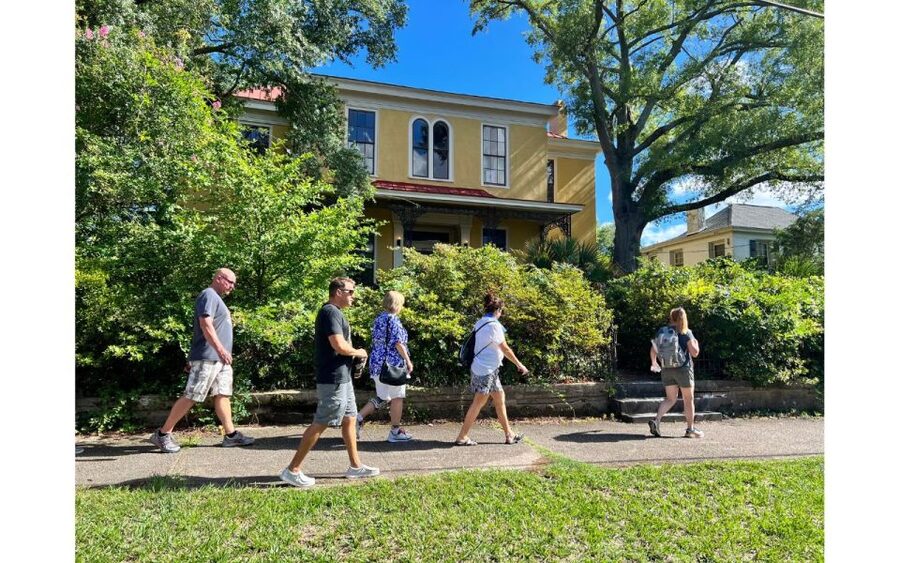
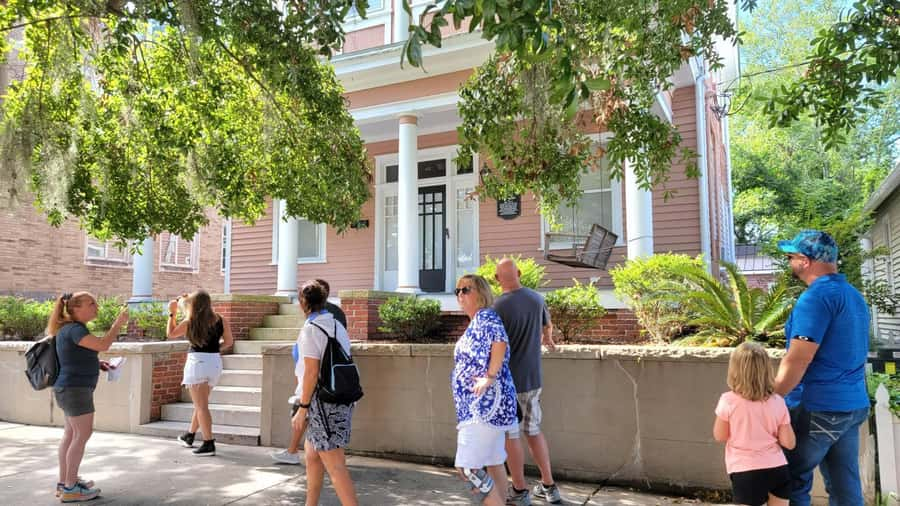
The heart of the tour is Wilmington’s Victorian architecture. You see notable homes, including houses attributed to local captains of industry from the mid-1800s, along with major church buildings.
The useful question here is not just how old a building looks. It is what the building says about the person who paid for it, the trade that created the money, and the era’s social order. The guide uses architectural types and details to show how Wilmington’s successful residents presented themselves.
That approach earned strong praise from the supplied feedback. One visitor specifically found the tour interesting and educational because it explained different types of architecture. That is a good clue about the experience: you are likely to get more than dates and names. You will hear how the buildings fit into their period.
I especially like this focus for first-time visitors. A standard sightseeing walk might show you a handsome house and move on. Here, you are encouraged to connect the home with Wilmington’s port economy, rail connections, and mid-19th-century business class.
The city’s churches add another layer. The route includes Wilmington’s most notable houses of worship, using them as markers of community life and architectural style. The supplied information does not identify each church or promise interior access, so plan to view them from the street unless your guide says otherwise.
Wilmington as a port and railroad town
The route then widens from individual buildings to the forces that made Wilmington important. The city developed as both a port and a railroad town, and those two systems shaped its work, wealth, and connections beyond North Carolina.
This is where the tour can help you read the city more clearly. A port affects what goods move through town. A railroad changes how quickly people and products arrive and leave. Together, they helped Wilmington grow beyond a small coastal settlement and supported the commercial buildings and large homes you see along the way.
The guide also covers Wilmington’s role during the Civil War, including its importance as a lifeline for the Confederacy. That subject gives the city’s location real weight. Wilmington was not simply observing the war from a distance. Its port and transport links made it strategically important.
The experience also follows the town into Reconstruction. That period is often reduced to a few dates in a general city tour, but here it is part of the main story. You learn how Wilmington tried to survive the war and rebuild its economic and civic life afterward.
More Architecture Tours around the USA:
- Chicago Architecture River Cruise
★ 5.0 · 15,756 reviews - Chicago River 90-Minute Architecture Tour
★ 4.5 · 9,629 reviews - Chicago River: 1.5-Hour Guided Architecture Cruise
★ 4.8 · 8,046 reviews - Chicago Architecture Center River Cruise aboard First Lady
★ 5.0 · 5,536 reviews
The 1898 events and their aftermath
The tour includes the racial events of 1898 and what followed. This is an important part of Wilmington’s history, and it gives the walk more substance than a purely architectural outing.
The supplied description does not provide a full account of the discussion, so I would not expect a specialist seminar. Still, the subject is clearly included among the main themes, alongside the Revolutionary and Civil Wars, Reconstruction, and the city’s later economic changes.
For you, the value is context. The city’s grand homes and public buildings can look calm and polished today. Learning about the conflict and racial upheaval that shaped Wilmington prevents the walk from turning the past into a tidy parade of beautiful façades.
If this part of the story matters to you, listen closely and leave room for questions. The tour’s strongest feature is the way it places architecture beside difficult civic history, rather than separating the two.
From World War II industry to Hollywood East
The final stretch moves into the 20th century. You learn about commercial Wilmington as a World War II boomtown, then hear what happened to the city’s largest industry and how Wilmington later became a tourism and film and television community known as Hollywood East.
That broad arc is one of the tour’s best features. It shows that Wilmington is not frozen in the Victorian era. The city has repeatedly adjusted to changes in transport, war production, industry, and entertainment.
The supplied information does not name the largest industry or list specific productions. The guide’s job here is to explain the shift, not necessarily to provide a film-location tour. If you are mainly interested in television and movie sites, this walk may offer useful background but not the specialized focus you want.
For a first visit, though, the ending helps explain modern Wilmington. You see how an old port city can keep its historic center while finding new work in tourism and screen production.
What the walk feels like in practice
The route is described as guided and conducted in English. It begins and ends at Front Street Inn, so you do not need to arrange a separate ride back from another neighborhood.
The walk is not described as strenuous, and one participant specifically noted that there was not a huge amount of walking. Still, it takes place outdoors and includes historic streets, so comfortable shoes make sense. The activity is not suitable for people with mobility impairments, and the supplied details do not promise an accessible route.
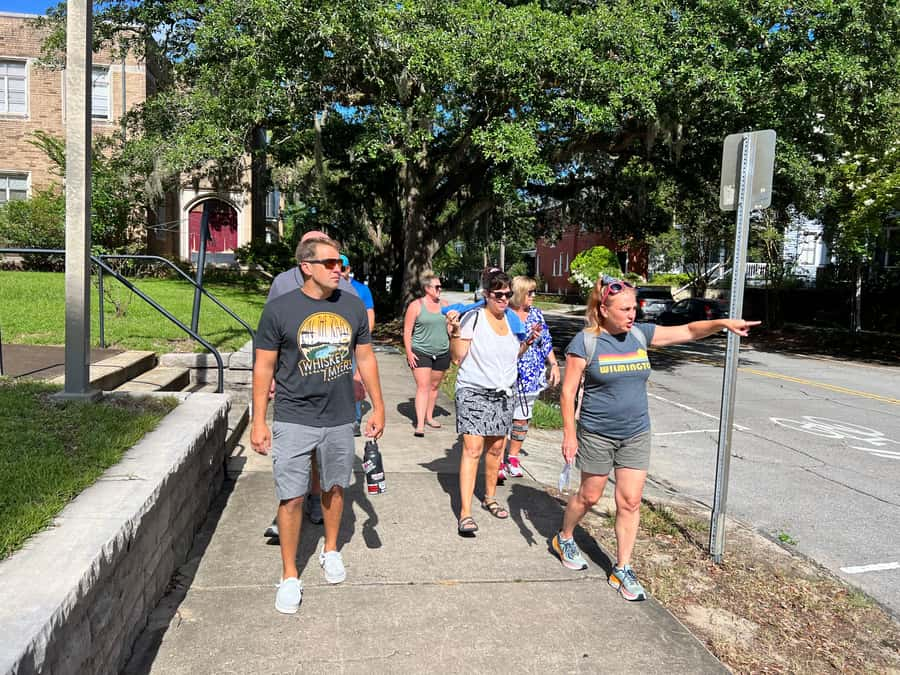
Summer heat is the bigger day-to-day issue. One group had hot conditions, but the guide kept discussion in the shade when possible. That is helpful, but shade cannot remove the need for water. Bring your own bottle. Sunscreen and bug spray are provided, which is a nice touch for an outdoor walk, but they are not a substitute for sun protection you already trust.
There is a restroom and coffee shop at the starting point. After that, no bathroom is promised. Use the facilities before setting off, particularly if you are traveling with children or prefer not to go 90 minutes without a break.
Group size, guide style, and questions
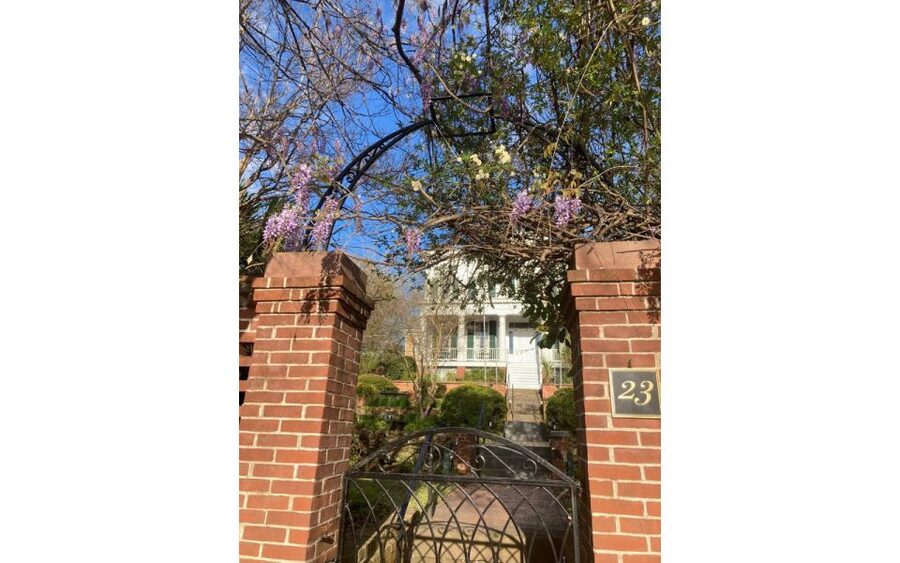
The experience is led by a live English-speaking guide. No guide name is supplied, so I cannot tell you who will lead your particular departure.
The strongest pattern in the feedback is the guide’s energy, clear command of local history, and ability to connect architecture with wider events. One group of 12 found the size comfortable. That is small enough for a more personal exchange than a large bus tour, though the experience can still vary with the guide and the questions asked by the group.
I would use the walk as an opportunity to ask about details you notice. Ask why a house has a certain architectural treatment, how a church fits into the city’s development, or how the port and railroad affected the neighborhood. The format sounds best suited to an active conversation rather than a silent march from one stop to the next.
Is $25 a fair price?
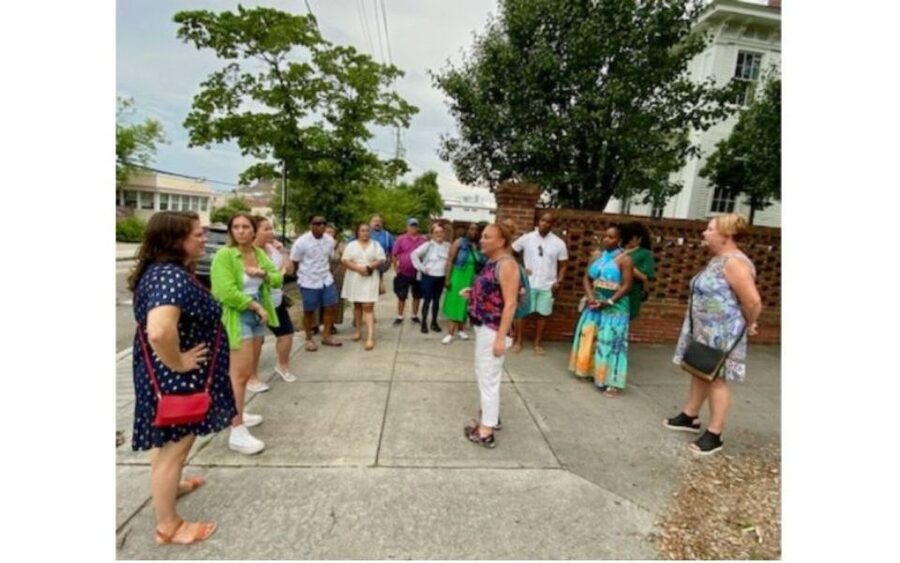
At $25 per person, this is a reasonable price for a guided introduction to central Wilmington. You are paying for a live guide, a focused route, and a connected story that covers several centuries. The value is strongest if you are new to the city and want orientation before exploring on your own.
The price is less compelling if you only want a quick look at old houses or already know Wilmington’s political and economic history. It also does not include water, meals, transportation, or guaranteed access inside buildings.
Still, 90 minutes is a useful length. You get a solid overview without giving up an entire morning or afternoon. The free cancellation option up to 24 hours before the tour and the reserve-now, pay-later choice also reduce the risk of fitting it into a changing schedule.
Parking deserves attention. Meter parking is recommended, while nearby surface lots are described as expensive. I would avoid arriving at the last minute and check the parking situation before the start.
Who should book this Wilmington walk?
I would recommend it to you if you like old buildings but want the politics, economics, and social history behind them. It suits first-time visitors, history-minded families with older children, and anyone who wants a clear introduction before visiting more sites independently.
It is also a good pick if you prefer a compact walking experience. You do not need to commit to a full-day tour, and the loop returns you to Front Street Inn.
You may want another option if you need an accessible route, dislike outdoor walks in heat, or want extensive interior access. Film fans looking for specific movie locations should also treat the Hollywood East material as one chapter of a wider city story, not the main event.
Should you book it?
Book this tour if you want Wilmington explained through its buildings and turning points. The best reason to go is the combination of Victorian architecture, port and railroad history, Civil War and Reconstruction context, the events of 1898, and the city’s later move toward tourism and film.
Bring water, use the restroom at Front Street Inn, wear comfortable shoes, and allow for warm weather. At $25, it offers good value for a short, thoughtful orientation, especially when you want more than a list of pretty houses.
FAQ
Where does the Wilmington History and Architecture Tour begin?
Meet on the sidewalk outside The Front Street Inn in Wilmington, North Carolina. The coordinates provided are 34.2321414, -77.9480662.
Where does the tour end?
The walking loop returns to Front Street Inn.
How long does the tour last?
The activity is described as 90 minutes. Other timing information gives one hour and 40 minutes or 105 minutes, so check the expected duration when you reserve.
What language is the tour conducted in?
The live tour guide speaks English.
What does the tour cost?
The listed price is $25 per person.
Is water provided?
No. You should bring your own water. Sunscreen and bug spray are provided.
Is there a restroom at the meeting point?
Yes. The Front Street Inn has a restroom and a coffee shop. No later bathroom stop is promised.
Is parking available near the meeting point?
Meter parking is recommended. The provided information advises avoiding surface lots because they are expensive.
Can I cancel for a refund?
Yes. You can cancel up to 24 hours in advance for a full refund. You can also reserve now and pay later.
New to the itinerary around the USA
- Washington, DC: Georgetown Architecture Walking Tour★ 5.0 · 8 reviews
- Washington DC: Dupont Circle & Embassy Row Architecture Tour★ 5.0 · 6 reviews
- New Orleans : Garden District Architecture Walking tour★ 4.8 · 5 reviews
- Private Colonial Williamsburg Architectural Tour★ 5.0 · 5 reviews
- Tulsa: Art Deco Walking Tour of Tulsa★ 5.0 · 8 reviews
- Castle to Capitol: Museums of the National Mall Architecture Tour★ 4.5 · 9 reviews
- Monuments and Memorials Architectural Walking Tour★ 5.0 · 17 reviews
- Saint Augustine Evening Architectural Photo Tour★ 5.0 · 15 reviews
USA Architecture Tours, compared.
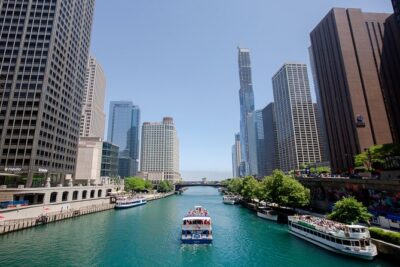
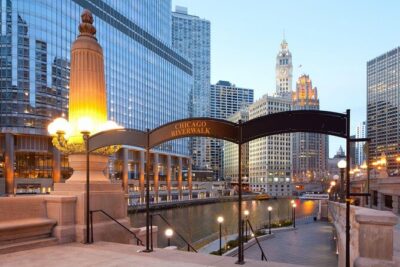
Chicago River: 1.5-Hour Guided Architecture Cruise
Read our review →
Chicago Architecture Center River Cruise aboard First Lady
Read our review →
Architecture River Cruise Skip-the-Ticket Line
Read our review →
Chicago River 45-Minute Architecture Tour from Magnificent Mile
Read our review →
45-Minute Family-Friendly Architecture River Cruise
Read our review →Other lists with this tour