
Review · WASHINGTON DC
Dupont Circle and Embassy Row Architectural Walking Tour
Washington’s grandest residential story unfolds along Massachusetts Avenue, where private mansions became embassies, clubs, museums, and reminders of another Washington. This two-hour walk from Dupont Circle to Embassy Row is less about checking off famous sights and more about understanding the people, money, architecture, and ambition behind them.
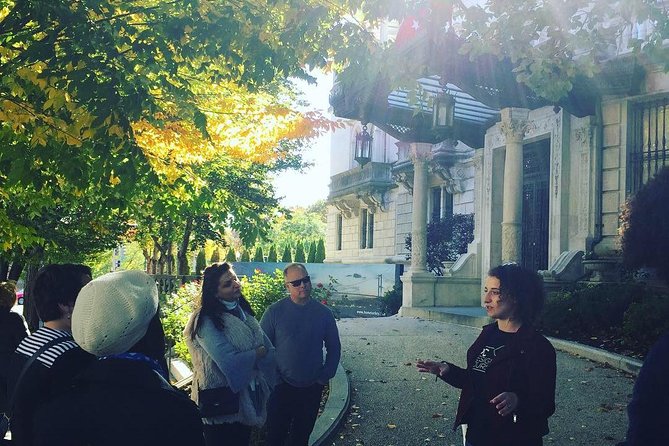
I like the mix of architectural detail and personal stories, from the Hope Diamond to Alice Roosevelt Longworth. I also like the small-group format, which makes it easier to hear a guide such as Sam, Natalie, Christine, or Mark and ask questions along the way.
The main drawback is simple: this is an outdoor walking tour, and Washington weather can be rough. The route has also run closer to two hours and 20 minutes, so do not schedule a tight appointment afterward.
Key points to know before you book
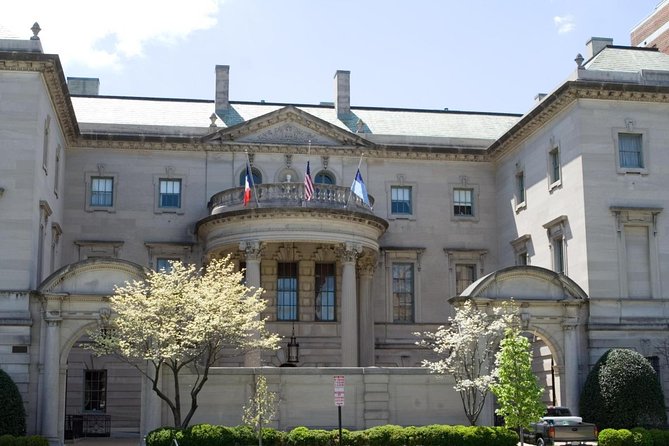
- Follow the rise and fall of Millionaires Row: See how Washington’s most fashionable private address changed into today’s Embassy Row.
- Expect stories, not interior tours: You view the buildings from outside, with the exception of any access that may happen independently or unexpectedly.
- Small groups make a difference: The maximum group size is 20, with personal attention from a local guide.
- Architecture stays readable: The tour explains Beaux-Arts, Neo-classical, Queen Anne, and other styles without requiring prior study.
- The route adds quieter corners: Spanish Steps, Mitchell Park, Kalorama, and Sheridan Circle give the walk more variety than a straight avenue stroll.
- Plan for flexible timing: The advertised length is about two hours, but the walk may take longer.
Dupont Circle gives you the right starting point
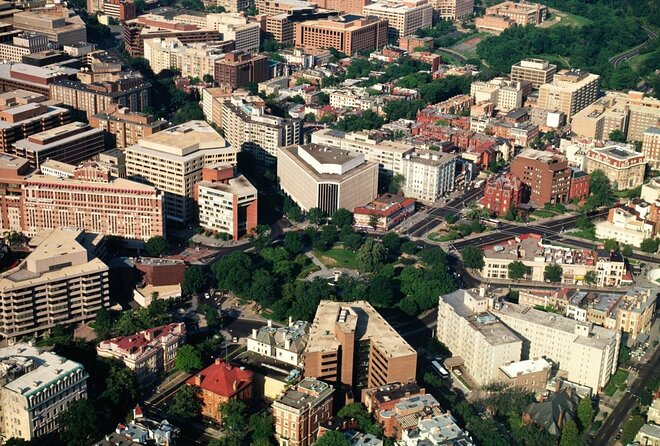
Dupont Circle is more than a traffic circle with a fountain. It is the social center of a neighborhood shaped by wealth, politics, art, and international life. The fountain at its center was designed by the same firm associated with the Lincoln Memorial, giving the opening stop a useful link to Washington’s better-known monuments.
You spend about 10 minutes here, getting a sense of the neighborhood before heading toward Embassy Row. The guide explains why Dupont Circle was established and how the area became one of the city’s most fashionable addresses.
This opening matters because the rest of the walk is not just a parade of handsome façades. You learn why these homes appeared here, who built them, and how their role changed over time. The tour uses Dupont Circle to set up the larger story of Washington society.
If you are new to the city, this is a good way to get your bearings beyond the National Mall. If you already live in the Washington area, the tour can still change the way you read a familiar neighborhood.
More Walking Tours in the USA
- The Official Art Deco Walking Tour by The Miami Design Preservation League
★ 5.0 · 1,580 reviews - Chicago in a Day: Food, History & Architecture Walking Tour
★ 5.0 · 1,153 reviews - Miami South Beach Art Deco Walking Tour
★ 5.0 · 1,039 reviews
Massachusetts Avenue tells a Washington power story
The heart of the walk is Embassy Row, where architecture and social history share the same sidewalk. Large homes once belonged to heiresses, industrial figures, newspaper owners, political families, and other people eager to make an impression in the capital.
Later, many of those houses became embassies, clubs, and offices. That change gives the route its unusual character. You are walking past international diplomatic buildings, but many began as intensely private statements of wealth.
The guide points out styles ranging from Neo-classical to Beaux-Arts and Queen Anne. You do not need to know the terms in advance. The value is in learning to notice the clues: the shape of a façade, the scale of a doorway, decorative stonework, and the way a building presents itself to the street.
The human stories keep the architecture from becoming a dry design lesson. Alice Roosevelt Longworth and Evalyn Walsh McLean, owner of the famous Hope Diamond, are among the figures tied to this part of Washington. Their stories help explain the social competition that once played out along Massachusetts Avenue.
I especially like this balance. The tour gives you enough architectural vocabulary to sharpen your eye, then connects those details to people with strong personalities and complicated lives.
The Indonesian Embassy and the Hope Diamond connection
The Indonesian Embassy is one of the early highlights. The building has an opulent past, and the guide explains its connection to the Hope Diamond.
You spend only about five minutes at this stop, but that is enough for a focused story and a look at the property from outside. It is a good example of how the tour works. A building may look impressive at first glance, but its former owners and uses give it a second layer.
Do not expect to enter the embassy as part of the standard walk. The tour is primarily an exterior architecture and history experience. That limitation is worth knowing if you are hoping to see diplomatic interiors.
Anderson House reveals the old social elite
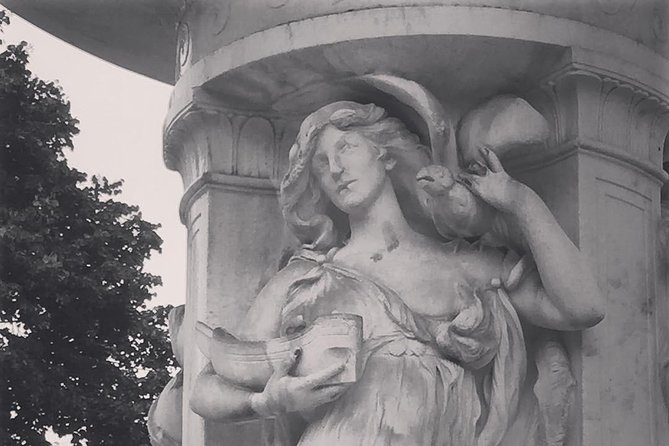
Next comes Anderson House, an imposing mansion that once belonged to one of Washington’s wealthiest couples. It now serves as the headquarters of the nation’s oldest patriotic organization.
This stop helps you see how grand private homes survived by taking on new public roles. A house built for entertaining Washington society became an institutional building, while its scale still reflects the ambitions of its original owners.
The guide may spend more time on the family, the building, or the organization connected with it. Either way, Anderson House gives the route a strong example of private wealth turned into civic and organizational space.
Same streets, read through a different style:
- Chicago Architecture River Cruise
★ 5.0 · 15,756 reviews - Chicago River 90-Minute Architecture Tour
★ 4.5 · 9,629 reviews - Chicago River: 1.5-Hour Guided Architecture Cruise
★ 4.8 · 8,046 reviews - Chicago Architecture Center River Cruise aboard First Lady
★ 5.0 · 5,536 reviews
The Turkish Ambassador’s residence adds music and diplomacy
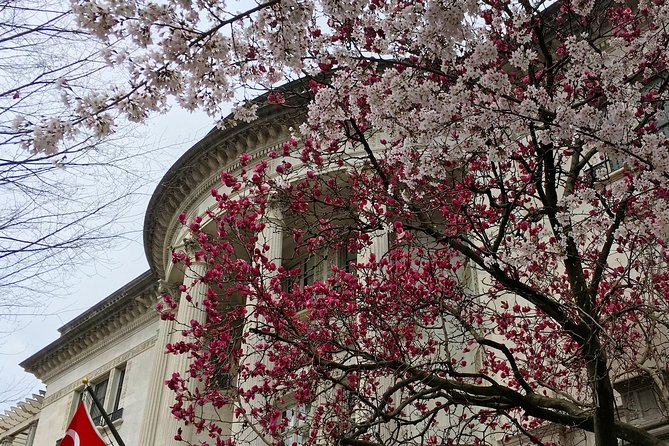
The residence of the Turkish Ambassador is a Beaux-Arts mansion near Sheridan Circle. Its formal style fits the former Millionaires Row setting, but the story attached to it takes a different turn.
The property is connected with musician and music executive Ahmet Ertegun, who got his start there. That detail widens the tour beyond presidents and diplomats. Washington’s mansions also touched music, culture, and entertainment.
Again, the stop lasts about five minutes. You will not tour the residence as part of the normal route, but the exterior and its backstory help make the avenue feel lived in rather than simply monumental.
Sheridan Circle has an odd Civil War story
Sheridan Circle offers a change of pace. Here you see a Civil War monument with an unusual backstory, designed by the sculptor associated with Mount Rushmore.
The monument gives the guide a chance to explain how public memory, military history, and city design meet in a residential setting. It is not just a pause beside a statue. It shows how Washington places national history in ordinary neighborhoods, where locals pass it every day.
The circle also breaks up the long avenue walk. You get a little breathing room before turning toward Kalorama.
Kalorama is quieter and more residential
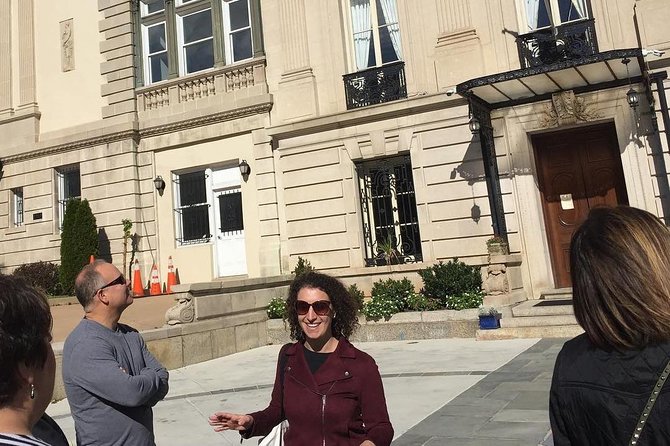
Kalorama means beautiful view in Greek, and the neighborhood feels calmer than the formal sweep of Embassy Row. The tour spends roughly 15 minutes here, walking through an area tied to some of Washington’s most influential residents.
This section is useful because it changes the mood. Instead of one grand address after another, you see a quieter residential setting and get a better sense of how the city’s elite lived away from official offices and diplomatic ceremonies.
Kalorama also gives the guide room to connect architecture with present-day Washington. The neighborhood remains associated with prominent figures, but the focus stays on the buildings and the people linked to them.
The route is still urban, and you should expect normal city walking rather than a park stroll. Wear shoes you can comfortably use for two hours, and bring water in warm weather.
Woodrow Wilson’s former home adds presidential context
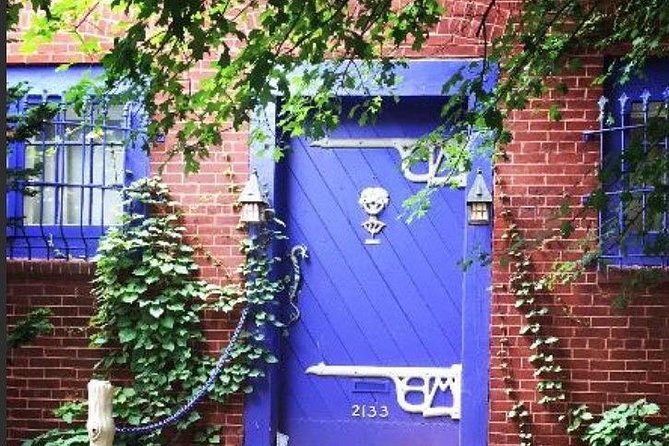
The President Woodrow Wilson House marks the route’s clearest presidential connection. This was Wilson’s post-presidency home, and the stop places one former president within the same residential world as diplomats, socialites, and wealthy families.
The house has an admission fee that is not included in the walking tour. The tour itself does not promise an interior visit, so treat this as an exterior stop unless you arrange a separate museum visit.
That distinction matters for value. You are paying for the guided walk and interpretation, not a bundled museum ticket. If the Wilson House interests you, consider allowing extra time before or after the tour to investigate admission options separately.
The Spanish Steps are a welcome surprise
Washington has its own modest version of the Spanish Steps, tucked into the city rather than presented as a major monument. The steps create one of the route’s most pleasant changes in scale.
After the large embassies and mansions, this quiet spot feels intimate. It is a useful reminder that Washington’s character is not limited to government buildings and monumental avenues.
The stop takes about five minutes. It is not a copy of the famous European landmark in size or grandeur, but that is part of its appeal. You get a small urban oasis and a good photo opportunity without leaving the neighborhood.
The Phillips Collection closes the architectural loop
The final listed stop is The Phillips Collection, the first modern art museum in the United States. Its red brick exterior provides a different architectural note after the formal mansions and embassy buildings.
The museum itself is not included as an admission stop, so you should not assume the tour enters the galleries. Still, its presence makes sense as a closing point. The neighborhood’s cultural story did not end when the old mansions lost their private role. Some became museums and public institutions.
The supplied route information describes the walk as ending at The Phillips Collection at 1600 21st Street NW. Another description says the tour returns to Dupont Circle before concluding, so confirm the exact end point when booking or meeting your guide. Either way, you finish in the Dupont Circle area, with restaurants, cafés, and public transportation nearby.
What the guides add to the experience
The guide is the main reason this tour works. The route is attractive on its own, but a map cannot explain why a mansion changed hands, how an embassy acquired its identity, or which personalities shaped Washington society.
The guides named in the supplied information include Sam, Natalie, Christine, Mark, Ellory, and Carolyn. Their styles may differ, but the strongest pattern is clear: the tour depends on storytelling, humor, clear explanations, and interaction with the group.
Sam is associated with lively storytelling and a good mix of history, architecture, humor, and present-day observations. Natalie has used supplemental images of former residents to help people picture how they lived. Christine brings humor, while Mark is described as considerate and engaging.
The tour is also designed for people who do not consider themselves architecture experts. You get a basic framework for the styles, then learn through stories rather than a stream of technical terms. That makes the walk suitable for families, couples, solo visitors, and local residents showing the area to an out-of-town parent or partner.
Is $48 a fair price?
At $48 per person, this is not a bargain-priced self-guided stroll. You can walk Dupont Circle and Massachusetts Avenue for free, and most stops are viewed from public streets.
The value comes from the guide’s interpretation. For two hours, you get a planned route, a small group capped at 20, historical context, architectural explanations, and stories that would be hard to assemble on your own. If you enjoy learning why a place looks and feels the way it does, the price is reasonable.
The cost is less convincing if you mainly want photographs or hope to enter several embassies. This is an exterior-focused walk, and access to private diplomatic buildings is not part of the standard promise.
The tour is booked an average of 22 days ahead, so popular dates may require planning. Free cancellation is available up to 24 hours before the start time. If the minimum group size is not met and the operator cancels, you are offered another date or a full refund.
Who should book this Dupont Circle walk?
I would choose this tour if you want a break from the National Mall and prefer a neighborhood story told at street level. It suits you especially well if you enjoy architecture but do not want a lecture packed with specialist language.
It is also a good pick for repeat visitors. You may have seen Washington’s major monuments already, but Embassy Row and Kalorama offer a different look at the city’s social and political life.
Families can do well here, especially with older children and teenagers who respond to stories about wealth, scandal, famous residents, and unusual buildings. Couples and solo visitors get a manageable route with plenty of subjects for conversation.
You should think twice if you dislike walking in heat, humidity, rain, or cold. The walk has continued in poor weather, but conditions can affect your comfort. Wear weather-ready clothing and leave room in your schedule, since the route may run about 20 minutes beyond the advertised two hours.
Should you book it?
Book this tour if you want architecture with human stories attached. The best parts are the transition from private mansions to embassies, the Hope Diamond connection, the stories of Washington’s social elite, and the quieter stops at Kalorama and the Spanish Steps.
Skip it if you want interior access, a fast sightseeing loop, or a tour centered on the National Mall. For everyone else, $48 buys a focused neighborhood walk that can sharpen your eye and give Dupont Circle a much more interesting past.
FAQ
How long is the Dupont Circle and Embassy Row tour?
The tour lasts about two hours. Some walks have taken closer to two hours and 20 minutes, so allow extra time before your next activity.
Where does the tour begin?
The meeting point is Dupont Circle in Washington, DC 20036.
Where does the tour end?
The listed end point is The Phillips Collection at 1600 21st Street NW. Another description says the walk returns to Dupont Circle before finishing, so confirm the exact end point with the operator.
What is included in the price?
A local guide is included. Admission to the Woodrow Wilson House and The Phillips Collection is not included.
Does the tour enter the embassies?
The standard tour focuses on exterior views of the embassies, mansions, and other buildings. Entry into embassy interiors is not part of the stated inclusions.
How large is the group?
The tour has a maximum of 20 participants.
Is the tour offered in English?
Yes. The tour is offered in English, with a mobile ticket.
Can I cancel for a full refund?
Yes, if you cancel at least 24 hours before the experience begins. Cancellations or changes made less than 24 hours before the start time are not refunded or accepted.
New to the itinerary around the USA
- Washington, DC: Georgetown Architecture Walking Tour★ 5.0 · 8 reviews
- Wilmington History and Architecture Tour★ 4.8 · 18 reviews
- Washington DC: Dupont Circle & Embassy Row Architecture Tour★ 5.0 · 6 reviews
- New Orleans : Garden District Architecture Walking tour★ 4.8 · 5 reviews
- Private Colonial Williamsburg Architectural Tour★ 5.0 · 5 reviews
- Tulsa: Art Deco Walking Tour of Tulsa★ 5.0 · 8 reviews
- Castle to Capitol: Museums of the National Mall Architecture Tour★ 4.5 · 9 reviews
- Monuments and Memorials Architectural Walking Tour★ 5.0 · 17 reviews
USA Architecture Tours, compared.
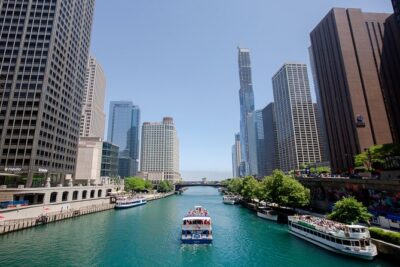
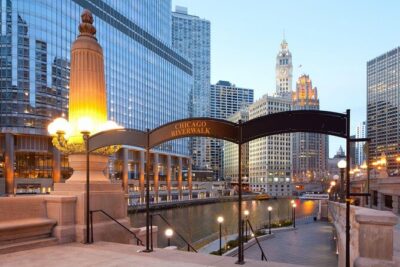
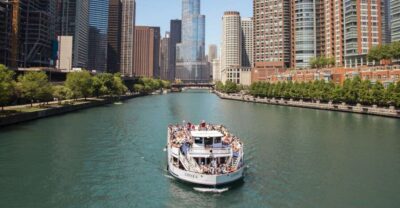
Chicago River: 1.5-Hour Guided Architecture Cruise
Read our review →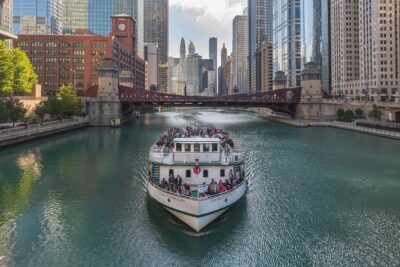
Chicago Architecture Center River Cruise aboard First Lady
Read our review →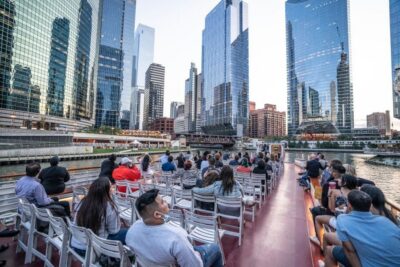
Architecture River Cruise Skip-the-Ticket Line
Read our review →
Chicago River 45-Minute Architecture Tour from Magnificent Mile
Read our review →
45-Minute Family-Friendly Architecture River Cruise
Read our review →Other lists with this tour