

Review · WASHINGTON DC
Iconic Capitol Hill Architectural Walking Tour
The most interesting part of this two-hour Capitol Hill walk is how quickly the city’s grandest buildings connect. You begin in Union Station’s restored Great Hall, then pass the Supreme Court, the Capitol, and the Library of Congress before finishing underground at the Capitol Visitor Center. I like the way the tour links architecture with political arguments, design failures, and colorful Washington personalities.
I also like the small maximum of 20 people and the local-guide format. Guides such as Sam bring humor to serious material, including the story of the Grant Memorial and the controversies around the Statue of Freedom. The main caution is that marches, police barriers, and security restrictions can make Capitol Hill hard to navigate, and one recent outing became difficult to hear and follow because of a large demonstration.
Key details before you book
- Start beneath Union Station’s big clock: Meet inside the Great Hall, an architectural sight in its own right.
- Walk about 1 mile: The route is manageable, but it includes city sidewalks, steps, and time spent outdoors.
- See three major government buildings: The Supreme Court, U.S. Capitol, and Library of Congress all feature prominently.
- Go inside the Library of Congress: About 30 minutes focus on its elaborate design, symbols, and institutional story.
- End at the Capitol Visitor Center: Your guide can help you join a free interior Capitol tour if timing and availability allow.
- Plan ahead: The tour costs $48 per person, is offered in English, and is booked about 18 days ahead on average.
Why this Capitol Hill walk works
Washington can feel like a city made for big statements. Broad avenues, domes, columns, monuments, and government buildings fill the center, but it is easy to walk past them without understanding why they look the way they do. This tour gives those buildings a connected story.
You hear about designers including Thomas Jefferson, Robert Mills, Frederick Law Olmsted, and Daniel Burnham. Their work was shaped by politics, red tape, competing plans, and public arguments. That context matters. Instead of simply hearing that a building is old or grand, you learn why its form was chosen and why people objected to it.
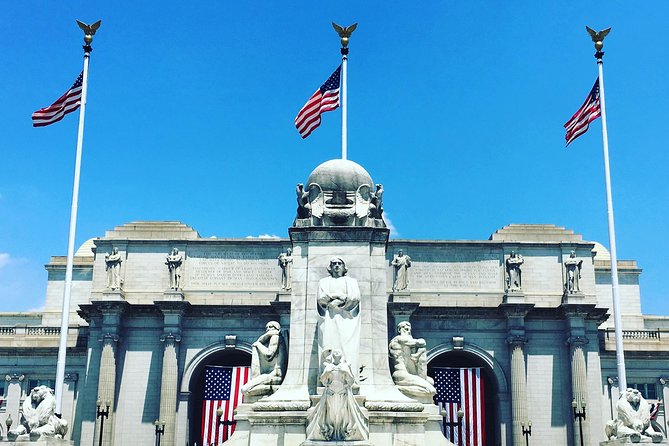
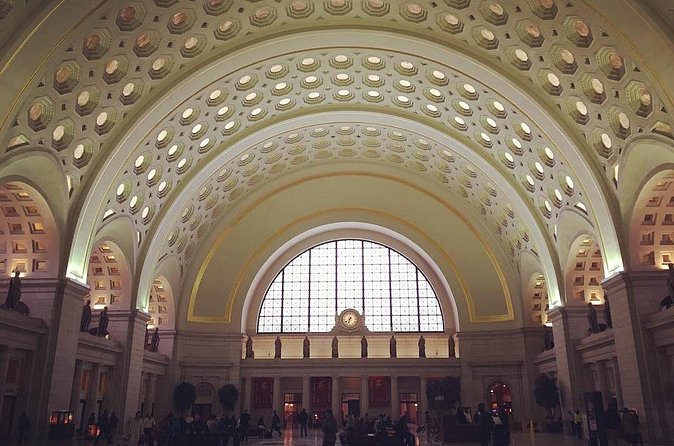
I especially like that the walk begins at Union Station rather than at the Capitol itself. The station provides a useful introduction to Washington’s public architecture. It was once the largest train station in the world, and its Great Hall has witnessed presidents, diplomats, political figures, wartime activity, inaugurations, and even a runaway train.
The route then moves through the institutional heart of the city. You are not covering every major monument in Washington, but you are getting a compact look at the buildings where the legislative, judicial, and national cultural life of the country meet.
More Walking Tours in the USA
- The Official Art Deco Walking Tour by The Miami Design Preservation League
★ 5.0 · 1,580 reviews - Chicago in a Day: Food, History & Architecture Walking Tour
★ 5.0 · 1,153 reviews - Miami South Beach Art Deco Walking Tour
★ 5.0 · 1,039 reviews
Begin under Union Station’s great clock
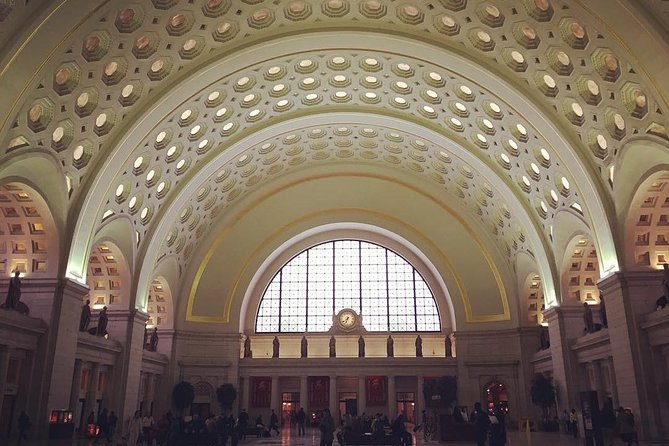
Finding the starting point should be simple if you enter Union Station through the main entrance. Turn right and look up for the large clock. The guide meets you in the Great Hall.
Give yourself enough time to reach this point without rushing. Union Station is large, and the meeting place is inside rather than on the sidewalk. The station itself is part of the tour’s appeal, with a Classical façade, vaulted interiors, and restored artwork.
The station has also had a difficult life. After falling into disrepair, it was restored, allowing you to see the scale and decoration that once made it one of the country’s most important transportation buildings. The tour uses that setting well, beginning with the story of Washington as a place of movement, ceremony, and power.
This is a good meeting point for anyone arriving by rail or public transportation. It is also a practical place to meet in bad weather before heading outside. The outdoor portion still depends on conditions, however, and the tour may be canceled for poor weather.
From Columbus Memorial Fountain to the Supreme Court
After Union Station, the group passes the Freedom Bell and the Columbus Memorial Fountain before reaching the steps of the Supreme Court. This section is short, with about five minutes listed at the fountain and another five minutes at the court, but the guide uses the transition to explain how the buildings relate to one another.
The Supreme Court’s exterior is imposing without needing much decoration. The façade, stairs, and classical design communicate authority before you know anything about the cases decided inside. Your guide explains the architecture and the building’s role as the home of the judicial branch.
Do not expect a long interior visit here. The scheduled stop focuses on the outside, so this is mainly a chance to study the façade, take photographs, and hear the building’s design story.
The short timing can be a benefit if you want to keep moving toward the Capitol. It can also feel brief if you are especially interested in the court or want plenty of photographs. This tour is a walking overview, not a detailed visit to each institution.
The Capitol’s East Front and the Statue of Freedom
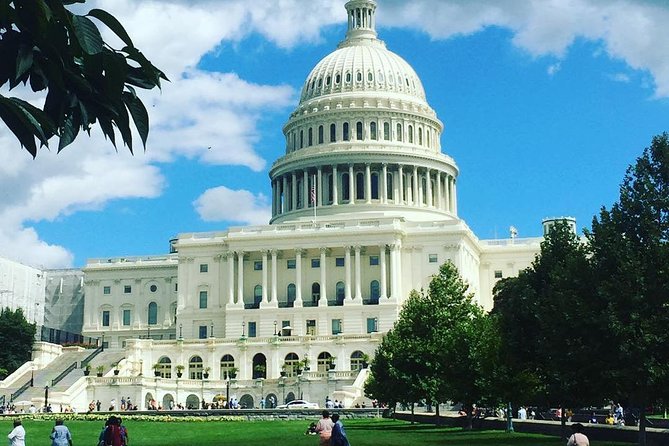
The Capitol is the visual centerpiece of the route. The tour brings you to the East side, where you can photograph the building and discuss its changing, often troubled history.
Look up at the dome for the Statue of Freedom. She may appear distant from ground level, but her position gives the Capitol its finishing touch. The guide explains why her unveiling caused controversy, adding a useful reminder that Washington’s most familiar symbols were not always accepted without argument.
The tour also addresses the Capitol’s broader story. Its appearance has changed over time, and its construction was shaped by competing ambitions and practical problems. This is where the architectural focus becomes especially useful. You are not only looking at a dome and wings. You are considering how a national symbol gets built, enlarged, defended, and reinterpreted.
The East Front provides strong photo opportunities, but security and public activity can affect how close you get. Washington demonstrations are common around the Capitol. Police lines, barriers, and marches may force the group to change position or route. One outing was seriously disrupted by a march, with noise, jostling, and limited access to the buildings. That is an unavoidable risk of touring this part of the city.
Same streets, read through a different style:
- Chicago Architecture River Cruise
★ 5.0 · 15,756 reviews - Chicago River 90-Minute Architecture Tour
★ 4.5 · 9,629 reviews - Chicago River: 1.5-Hour Guided Architecture Cruise
★ 4.8 · 8,046 reviews - Chicago Architecture Center River Cruise aboard First Lady
★ 5.0 · 5,536 reviews
Thirty minutes inside the Library of Congress
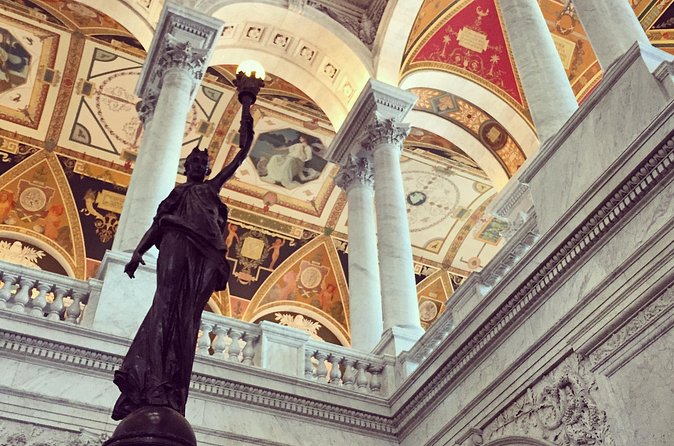
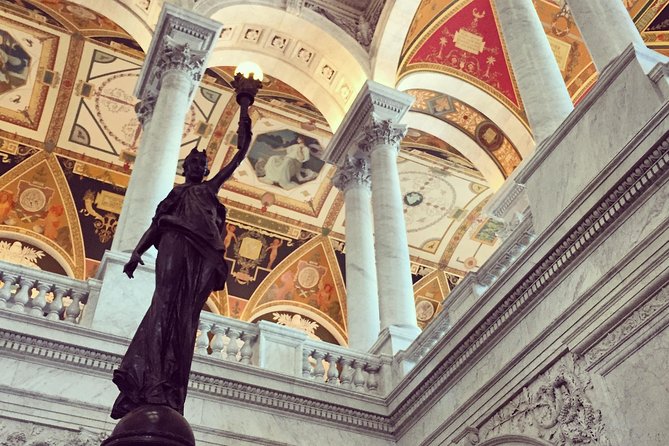
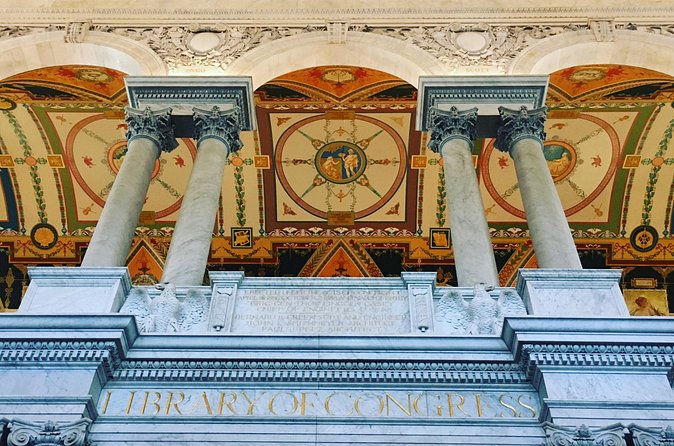
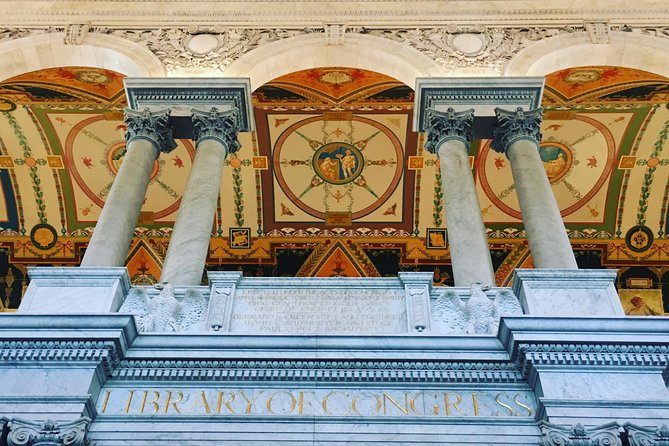
The Library of Congress Thomas Jefferson Building is the longest scheduled stop, at about 30 minutes, and it is likely to be the architectural highlight for many people. The tour takes you inside to examine the elaborate design, decorative details, secret symbols, and institutional story.
This stop gives the walk a welcome change of pace. Much of Capitol Hill is experienced from broad outdoor spaces and public sidewalks. Inside the Library of Congress, you can focus on ornament, scale, and carefully planned visual messages.
The guide helps you read the building rather than simply admire it. Decorative features can look like surface decoration when seen quickly, but the tour connects them to ideas about learning, government, and national identity. I like that this stop treats the library as more than a place where books are stored. It is also a public statement about knowledge and civic life.
The Library visit is included in the tour, but the amount of time remains limited. If you want to inspect every gallery or decorative detail, you will need a separate visit. For a two-hour walk, though, 30 minutes is enough to make the building feel like a major part of the tour rather than a quick glance from outside.
The route then uses an underground tunnel to return toward the Capitol. That practical connection also gives you a glimpse of how these institutions function below the grand public spaces. You move from the library back toward the legislative center without retracing the outdoor route.
The Capitol Visitor Center finish
The tour concludes inside the U.S. Capitol Visitor Center, close to National Mall sights and public transportation. The final scheduled portion lasts about 15 minutes.
This is a useful ending because you finish near other major Washington sights instead of having to return to Union Station. Depending on timing and availability, the guide can help you join a free interior tour of the Capitol. That opportunity is not guaranteed, so you should treat it as a possible add-on rather than part of the fixed tour.
Ending here makes the experience easy to combine with the rest of a sightseeing day. You can continue toward the National Mall, remain around Capitol Hill, or use public transportation to reach another part of the city.
The finish also means you should think about your schedule before booking. If joining the free Capitol interior tour matters to you, allow extra time and understand that availability controls what happens next. The walking tour itself concludes at the Visitor Center.
What the guide adds to the buildings
Architecture tours can become dry if they focus only on dates, architects, and building styles. This one is designed around the personalities and disputes behind Washington’s appearance.
Thomas Jefferson, Robert Mills, Frederick Law Olmsted, and Daniel Burnham each represent a different part of the city’s design story. The guide explains how major plans met bureaucratic delays, political disagreement, and controversy. That approach gives the walk a human scale.
Sam has received especially strong praise for being personable, informative, and funny. One of his strengths is delivering serious material without making the walk feel like a lecture. His explanation of the Grant Memorial was singled out as a highlight, and his historical details were appreciated alongside the architectural information.
Guide quality always matters on a tour like this. The buildings are impressive on their own, but the value comes from knowing where to look and understanding what you are seeing. A small group helps here. With no more than 20 people, you have a better chance of hearing the guide and asking a question than you would in a large sightseeing group.
The tour is offered in English only. If you want a guide who can connect architecture, politics, and design decisions in that language, this format should suit you.
The value of $48 for two hours
At $48 per person, this is not the cheapest way to walk around Capitol Hill. You can see the exterior of the Supreme Court and Capitol without paying for a guide, and much of Washington’s outdoor sightseeing is free.
The fee becomes easier to justify if you value interpretation. You are paying for about two hours with a local guide, a planned route, entry to the Library of Congress, and help understanding buildings that can otherwise blur together. The small group also adds value, especially compared with a large bus tour or a guide speaking to a crowd.
The Library of Congress visit is important to the price. It gives the experience an interior architectural stop rather than leaving you outdoors for the full two hours. The possible help with a free Capitol interior tour is useful, but it should not be counted as a guaranteed paid-tour benefit.
I would consider this a fair price for someone who wants structure and context. If you are happy to read plaques, follow a map, and research the buildings yourself, you may prefer a self-guided walk. If you want the city’s design debates explained as you go, $48 is reasonable.
The tour is booked about 18 days in advance on average, so I would not leave it until the last day of a short Washington visit. Minimum numbers apply, and the operator can cancel if too few people book, offering another date or a full refund.
Practical points for a comfortable walk
The route covers roughly 1 mile, which is not a long distance for most people. Still, you are walking between major public buildings, spending time outside, and stopping on city sidewalks and steps. Wear comfortable shoes and check the weather before you go.
The tour requires good weather. If poor conditions cause a cancellation, you can choose another date or receive a full refund. Free cancellation is available up to 24 hours before the start time. Cancellations or changes inside that 24-hour window are not accepted for a refund.
The meeting point is near public transportation at Union Station, and the end point is inside the Capitol Visitor Center. Service animals are allowed, and most people can take part. The tour is capped at 20 people, though a minimum number is also required for it to operate.
Capitol Hill security can affect the day. Demonstrations are a normal part of Washington civic life, but they can create noise, crowding, police controls, and detours. The operator cannot predict the size of every march. If a major event is scheduled, expect the possibility of a less direct route or less time close to a building.
Who should book this tour
I would choose this tour if you are interested in architecture but also want the political stories behind the façades. It suits first-time visitors who want a compact introduction to Capitol Hill, especially those who prefer walking to riding between sights.
It is also a good fit for anyone who wants to see the Library of Congress from inside without planning a separate visit. The route connects Union Station, the Supreme Court, the Capitol, the library, and the Visitor Center in a clear two-hour sequence.
Families and mixed-age groups may appreciate the short distance and the guide’s use of stories and humor. The subject matter is serious, but it is not presented as a purely academic lecture. Sam’s style, in particular, has been praised for keeping information lively.
I would hesitate if you want long interior visits at every building, guaranteed access to the Capitol, or a completely controlled environment. The Supreme Court stop is mainly exterior, the Capitol interior visit depends on availability, and public demonstrations can disrupt the route.
Should you book the Capitol Hill Architectural Walking Tour?
Book it if you want a focused introduction to Washington’s architecture, with a local guide who can explain why the city looks the way it does. The Union Station start, Library of Congress visit, and Capitol Visitor Center finish give the route a useful shape, while the small group keeps the experience personal.
Skip it if you prefer to explore at your own pace or need guaranteed access inside every government building. For most visitors who want history, design, and practical sightseeing in one compact walk, the $48 price is a sensible investment. Schedule it early in your stay so you have room to adjust if weather or minimum numbers affect the date.
FAQ
Where does the tour begin?
It begins inside the Great Hall of Union Station at 50 Massachusetts Avenue NE. Enter through the main entrance, turn right, and look up for the large clock.
Where does the tour end?
The tour ends inside the U.S. Capitol Visitor Center in the Capitol Hill area. It is close to National Mall sights and public transportation.
How long is the tour?
It lasts approximately two hours and covers roughly 1 mile on foot.
Does the tour enter the Library of Congress?
Yes. The route includes entry to the Library of Congress Thomas Jefferson Building, with about 30 minutes devoted to its design, symbols, and history.
Is a Capitol interior tour included?
The tour concludes at the Capitol Visitor Center, where the guide can help you join a free interior Capitol tour if timing and availability permit. This additional visit is not guaranteed.
What happens if the tour is canceled?
If poor weather or insufficient numbers cause a cancellation, you will be offered another date or experience, or a full refund. You can also cancel for a full refund up to 24 hours before the start time.
New to the itinerary around the USA
- Washington, DC: Georgetown Architecture Walking Tour★ 5.0 · 8 reviews
- Wilmington History and Architecture Tour★ 4.8 · 18 reviews
- Washington DC: Dupont Circle & Embassy Row Architecture Tour★ 5.0 · 6 reviews
- New Orleans : Garden District Architecture Walking tour★ 4.8 · 5 reviews
- Private Colonial Williamsburg Architectural Tour★ 5.0 · 5 reviews
- Tulsa: Art Deco Walking Tour of Tulsa★ 5.0 · 8 reviews
- Castle to Capitol: Museums of the National Mall Architecture Tour★ 4.5 · 9 reviews
- Monuments and Memorials Architectural Walking Tour★ 5.0 · 17 reviews
USA Architecture Tours, compared.
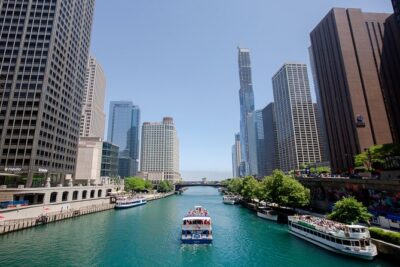
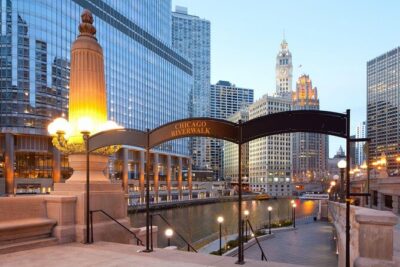

Chicago River: 1.5-Hour Guided Architecture Cruise
Read our review →
Chicago Architecture Center River Cruise aboard First Lady
Read our review →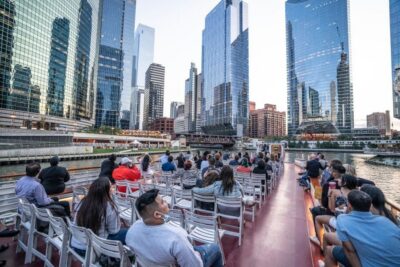
Architecture River Cruise Skip-the-Ticket Line
Read our review →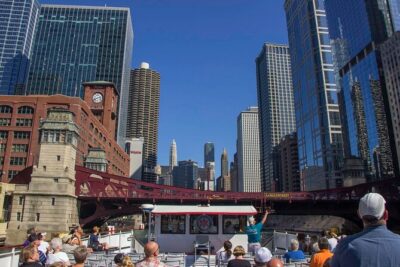
Chicago River 45-Minute Architecture Tour from Magnificent Mile
Read our review →
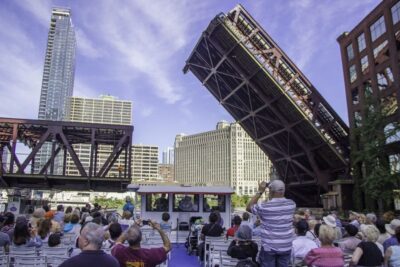
45-Minute Family-Friendly Architecture River Cruise
Read our review →Other lists with this tour