
Review · USA
Sarasota Architecture Tour
Sarasota’s best architecture is easy to miss if you’re focused on beaches and the Ringling Museum. This 90-minute tour brings the city’s design story into view, from the 1938 Municipal Auditorium to the Blue Pagoda, a Japanese garden-inspired building with a blue tile roof meant to echo Sarasota Bay.
I like the clear progression through three styles: Art Deco, Mediterranean Revival, and Mid-Century Modern. I also like the human touch, especially when guide Ed explains how Sarasota became a center for modern design and fills in the story behind architects such as Paul Rudolph and Victor Lundy. The main drawback is the brisk pace. Four important stops in an hour and a half leave little time for lingering or a close look inside buildings.
Key points to know before booking
- Art Deco begins the story: See the Sarasota Municipal Auditorium and Chidsey Library, two buildings with strong local importance.
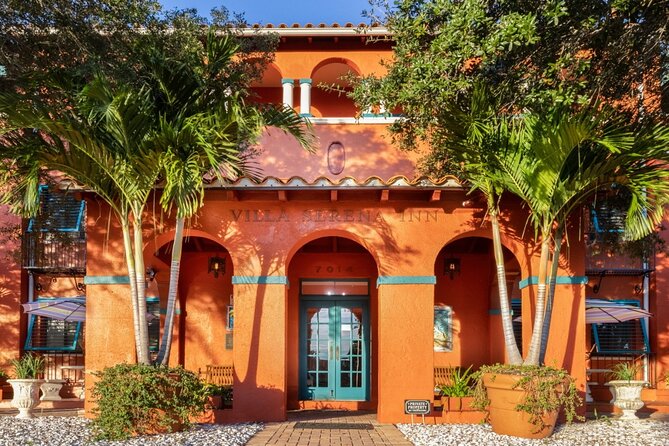
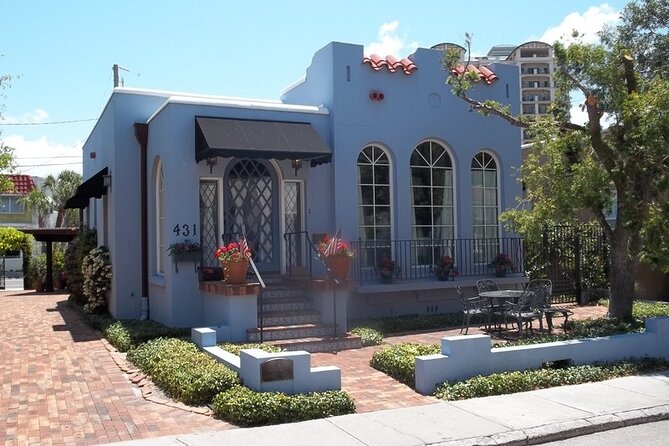
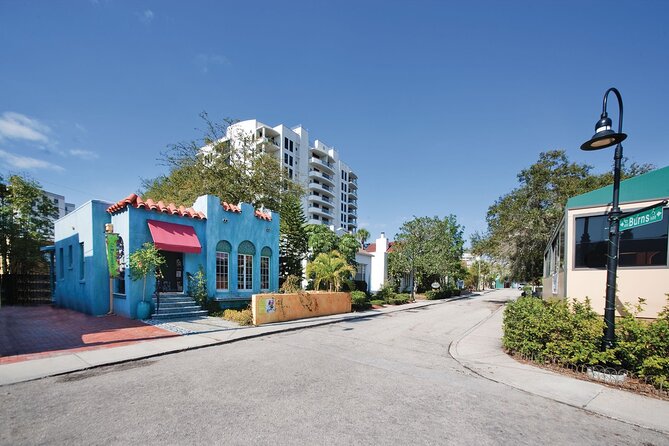
- Burns Court adds a different mood: Its Mediterranean Revival homes and commercial buildings reflect Sarasota’s 1920s development.
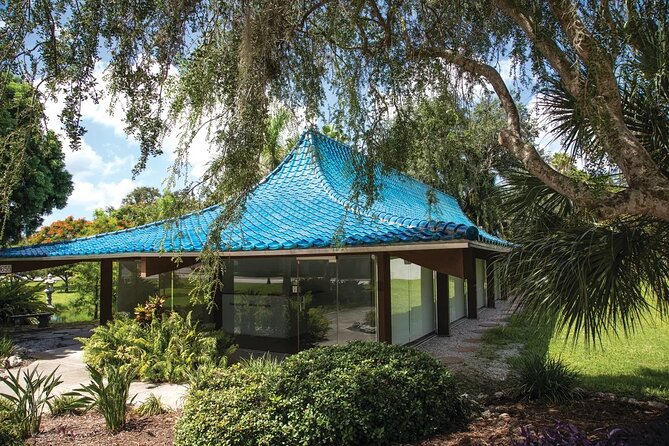
- The Blue Pagoda is the visual star: Victor Lundy designed this 1956 building with a Japanese-inspired form and blue glazed roof tiles.
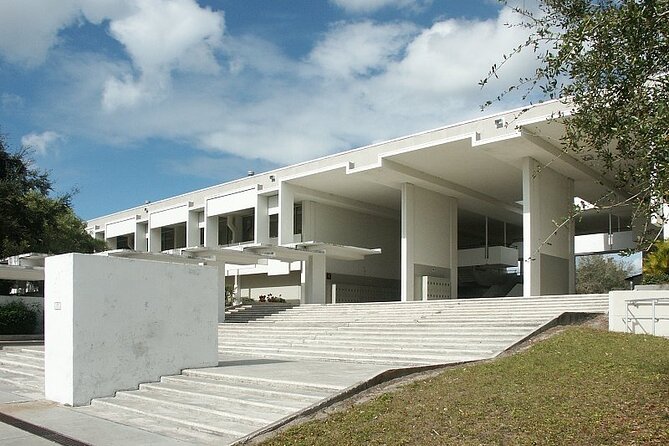
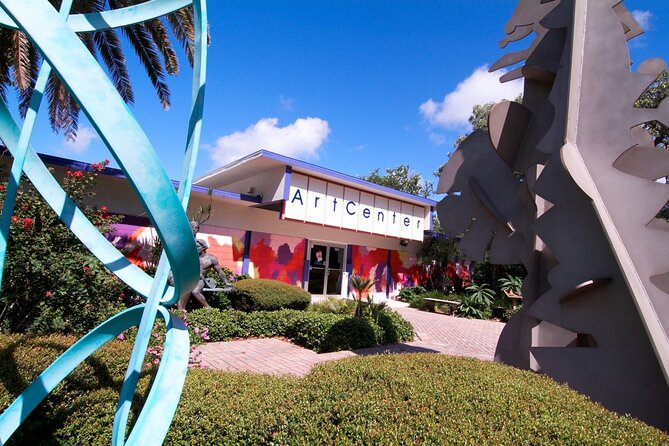
- The tour explains Sarasota School design: The Sarasota Art Center and Center for Architecture introduce the city’s Mid-Century Modern movement.
- Ed brings useful context: His commentary connects buildings, architects, the Ringlings, and Sarasota’s changing identity.
- Plan ahead: The tour is often booked 38 days in advance and sells out weekly.
Why Sarasota architecture deserves a morning

Sarasota can look like a resort town at first glance. Palm trees, bay views, and beach traffic tend to get the attention. Yet the city has an unusually varied collection of 20th-century buildings, and the tour gives you a way to read them rather than simply pass them by.
That matters because architecture here is not one tidy style. A single morning moves from the geometric decoration of Art Deco to the tile roofs and courtyards of Mediterranean Revival design, then into the clean lines and experimental shapes of Mid-Century Modern buildings.
I especially like the way the tour links buildings to civic ambition. The Municipal Auditorium was not simply a pretty structure. The first public library building was not just another neighborhood facility. These places show how Sarasota presented itself as a growing city in the 1930s, 1940s, and postwar years.
The tour is offered in English and begins at 10:30 am at Discover Sarasota Tours, 1826 4th Street. It returns to that meeting point, so you do not need to arrange a separate pickup or figure out where the experience ends. The maximum group size is 30, large enough for a lively outing but still limited enough for a guide’s commentary to remain useful.
More Architecture Tours around the USA:
- Chicago Architecture River Cruise
★ 5.0 · 15,756 reviews - Chicago River 90-Minute Architecture Tour
★ 4.5 · 9,629 reviews - Chicago River: 1.5-Hour Guided Architecture Cruise
★ 4.8 · 8,046 reviews
The Municipal Auditorium and the Art Deco opening
The Sarasota Municipal Auditorium is the first major architectural lesson. Built in 1938, it is a local example of Art Deco, the style that first appeared in France in the 1910s and reached its height in architecture and fashion through the 1930s.
You’ll learn what makes Art Deco recognizable, including its preference for strong geometry, decorative pattern, and a sense of modern progress. The Municipal Auditorium gives those ideas a real setting instead of leaving them as abstract design terms.
The date is important. A 1938 civic building sits at the point when Art Deco was moving from a fashionable design language into a familiar public style. Its function also helps you understand the choice. An auditorium was a place where Sarasota could gather, entertain, and show itself as a modern community.
The Chidsey Library adds a quieter but equally useful stop. It opened in May 1941 as Sarasota’s first public library building. Its Art Deco design gives the style a civic purpose, and the building’s library role adds a social layer to the tour.
I find this opening especially good for anyone who normally walks past architecture without knowing what to look for. Instead of saying only that a building is old or attractive, the guide explains when it was built, what style it represents, and why it mattered to the city.
The limitation is simple: the tour is short. You should expect an informed look at these places, not a long interior visit or a detailed architectural survey of every decorative feature.
Burns Court and Sarasota’s Mediterranean Revival chapter
Burns Court changes the tone. The district includes houses and some commercial buildings built in the Mediterranean Revival style, a popular choice in Sarasota during the 1920s.
Here, the emphasis shifts away from Art Deco’s machine-age geometry and toward a more romantic vision of Mediterranean life. The development’s design and history show how Sarasota used architecture to create a particular sense of place during a period of growth.
The tour also connects Burns Court to the Ringlings and their influence on Mediterranean Revival homes in the 1920s and 1930s. That connection gives the district more meaning than a simple walk past attractive façades. You begin to see how local taste, civic identity, and well-known patrons helped shape Sarasota’s appearance.
I like this part because it broadens the story. Sarasota is often associated with modern architecture, but Burns Court proves that the city’s design identity was already varied before Mid-Century Modern buildings became its calling card.
You’ll want to pay attention to the contrast between residential and commercial buildings. The district includes both, so the tour can show how Mediterranean Revival ideas worked at different scales. The supplied details do not promise interior access, so you should plan to appreciate Burns Court from the outside and listen to the guide’s explanation of its development.
The Sarasota Art Center and the rise of Mid-Century Modern
The Sarasota Art Center introduces the Sarasota School of Architecture, a local movement within Mid-Century Modern design. This is where the tour moves from historic revival styles into the clean, inventive architecture that helped put Sarasota on the map among design fans.
The Sarasota School is worth understanding as a local movement rather than treating every modern building as simply part of a national trend. The tour explains how Sarasota became a hot spot for Mid-Century Modern design and gives you a better sense of the architects who worked here.
Paul Rudolph comes into the story as one of the names connected to Sarasota’s modern period. You may already know Rudolph from other work, but the tour uses Sarasota to show how his ideas fit into the city’s wider architectural development. The commentary also explains how talented architects shaped a mix of history and modern design across the city.
This is likely the strongest stop for anyone who enjoys postwar architecture. You’ll get more from it if you notice the contrast with Burns Court. Mediterranean Revival architecture looks backward for inspiration, while Mid-Century Modern design generally seeks a cleaner and more current visual language.
The tour does not appear designed as a specialist lecture, and that is a strength for most people. You can enjoy the buildings without needing a formal architecture background. Still, serious design fans may wish the 90-minute format allowed more time on the Sarasota School and its individual architects.
Same streets, read through a different style:
- Chicago Architecture Center River Cruise aboard First Lady
★ 5.0 · 5,536 reviews - Chicago: Architecture River Cruise Skip-the-Ticket Line
★ 4.8 · 4,325 reviews - Chicago River 45-Minute Architecture Tour from Magnificent Mile
★ 4.5 · 2,924 reviews - Chicago Lake and River Architecture Tour
★ 4.5 · 2,308 reviews
The Blue Pagoda, Sarasota’s memorable modern landmark
The Blue Pagoda is the tour’s most distinctive building. Victor Lundy, a founding member of the Sarasota School of Architecture, designed it in 1956 for the Greater Sarasota Chamber of Commerce.
The building takes inspiration from a Japanese garden, and its blue glazed tile roof gives it an immediate visual identity. Lundy wanted the tiles to reflect the nearby blue waters of Sarasota Bay. That detail makes the design feel tied to its setting rather than merely placed in it.
I like the Blue Pagoda because its story is easy to remember. You do not need technical training to understand the basic idea: a modern building, shaped by Japanese garden references, using a blue roof to answer the color of the bay.
It also shows that Mid-Century Modern design was not limited to plain boxes and glass walls. Sarasota’s modern architects could work with regional light, water, landscape features, and cultural references while still creating something unmistakably of its period.
The building is near the bayfront, which gives the guide a natural opportunity to explain the relationship between design and setting. The available details do not say that you enter the building, so expect to study its exterior and hear how Lundy developed the concept.
If you enjoy taking photographs, this is likely the stop you’ll remember most. The distinctive roof and Japanese-inspired form offer more visual character than a standard office block.
The Center for Architecture and a 1959 design lesson
The final architectural stop is the Center for Architecture in Sarasota, commissioned in 1959. It is another example of Mid-Century Modern design, and the tour explains how the building was constructed and designed.
This stop works well as a conclusion because it lets you apply what you have learned. By this point, you have seen Art Deco’s formal decoration, Mediterranean Revival’s historical references, and the Sarasota School’s modern approach. The Center for Architecture gives you another chance to identify the choices that define postwar design.
The date also helps place the building in context. Commissioned in 1959, it belongs to a period when modern architecture was no longer a fringe idea. The building reflects Sarasota’s continuing interest in new forms and new ways to use space.
I would pay close attention to the construction explanation here. Design tours can sometimes focus so heavily on appearance that you miss how a building works. The information provided specifically includes construction and design, so this stop should add practical substance to the visual story.
Because the tour ends back at the starting point, the Center for Architecture also completes a compact circuit. You finish with a clearer understanding of why Sarasota’s architecture is more than a collection of unrelated landmarks.
What the guide adds to the experience
The guide can make or break a short architecture tour. You do not have enough time to read long background notes at each stop, so clear storytelling matters.
Ed has received special praise for explaining buildings that people had passed for years without really seeing. That is exactly the right role for a guide here. He points out the history and design choices that ordinary sightseeing can miss, while also filling in the gaps around Paul Rudolph, the Ringlings, and Sarasota’s Mid-Century Modern period.
The staff is described as friendly and engaging, and the guide is exceptionally well prepared on both architecture and local history. You should expect a presentation aimed at general interest, not an academic seminar. That makes the tour a good fit if you want useful context without a technical lecture.
The group can reach up to 30 people. That is not a private tour, so you may not get a long one-on-one discussion at every stop. Still, the limited size keeps the experience more manageable than a large city sightseeing group.
The tour has a 4.9 rating from 41 reviews, with 100 percent recommending it. Those figures point to a consistent experience, especially in the guide’s storytelling and the quality of the architectural subject matter. They do not change the fact that the route is compact, but they do suggest that the short format delivers a clear and enjoyable introduction.
Price, timing, and who gets the most value
At $80.12 per person, this is not a bargain walk. The value depends on how much you want interpretation rather than simple sightseeing.
You are paying for a 90-minute guided presentation that covers four significant stops and several architectural movements. If you already know Sarasota’s architecture well, the price may feel high for the amount of time. If you are new to the city, the guide’s context can save you from seeing these buildings as disconnected façades.
The advance booking pattern matters. The tour is booked an average of 38 days ahead and sells out weekly, so you should not treat it as a last-minute filler activity. Book early if the 10:30 am departure fits your schedule.
Most people age 10 and older can participate. Children under 10 are not allowed, which makes this a better choice for older children, teens, and adults who can follow a history and design discussion. Service animals are welcome, and the meeting point is near public transportation.
The mobile ticket keeps the arrival process simple. Confirmation is provided at booking, and the tour operates in English. Free cancellation is available if you cancel at least 24 hours before the start time. Canceling later or changing the booking within that window does not qualify for a refund.
Who should book the Sarasota Architecture Tour
Book this tour if you enjoy buildings, local history, or the way cities change over time. It is especially useful if you have already seen Sarasota’s more famous attractions and want to understand the city beyond beaches and cultural institutions.
I would also recommend it to anyone curious about Mid-Century Modern design. The Blue Pagoda, Sarasota Art Center, and Center for Architecture give the modern section real substance, while the Art Deco and Burns Court stops keep the tour from becoming too narrow.
It may not suit you if you want extended interior access, a slow photography walk, or a full-day architecture course. The pace is efficient, and four stops in 90 minutes require attention.
Should you book it?
Yes, if you want a compact, well explained introduction to Sarasota’s architecture. The strongest reasons are the range of styles, the unusual Blue Pagoda, and Ed’s ability to connect buildings with architects and local history.
Book early, arrive ready to listen, and keep your expectations realistic. This is a focused overview, not an exhaustive survey. At $80.12, it offers the best value to first-time architecture fans and curious visitors who want to notice more on the rest of their Sarasota stay.
FAQ
Where does the Sarasota Architecture Tour begin?
It begins at Discover Sarasota Tours, 1826 4th Street, Sarasota, Florida 34236.
What time does the tour start?
The tour starts at 10:30 am.
How long does the tour last?
The experience lasts approximately 1 hour and 30 minutes.
Where does the tour end?
The tour ends back at the meeting point at Discover Sarasota Tours.
What language is the tour offered in?
The tour is offered in English.
What buildings are included?
The route includes the Sarasota Municipal Auditorium, Chidsey Library, Burns Court Historic District, Sarasota Art Center, Blue Pagoda, and Center for Architecture in Sarasota.
Are children allowed on the tour?
Participants must be at least 10 years old. Children under 10 are not allowed.
What is the cancellation policy?
You can cancel at least 24 hours before the start time for a full refund. Cancellations or changes made less than 24 hours before the start time are not accepted for a refund.
New to the itinerary around the USA
- Wilmington History and Architecture Tour★ 4.8 · 18 reviews
- Washington, DC: Georgetown Architecture Walking Tour★ 5.0 · 8 reviews
- Washington DC: Dupont Circle & Embassy Row Architecture Tour★ 5.0 · 6 reviews
- New Orleans : Garden District Architecture Walking tour★ 4.8 · 5 reviews
- Private Colonial Williamsburg Architectural Tour★ 5.0 · 5 reviews
- Tulsa: Art Deco Walking Tour of Tulsa★ 5.0 · 8 reviews
- Castle to Capitol: Museums of the National Mall Architecture Tour★ 4.5 · 9 reviews
- Monuments and Memorials Architectural Walking Tour★ 5.0 · 17 reviews
USA Architecture Tours, compared.
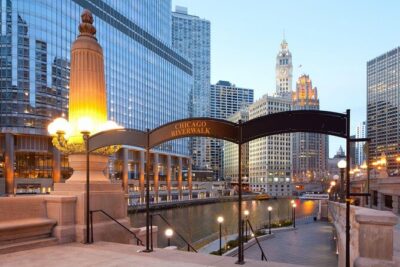

Chicago River: 1.5-Hour Guided Architecture Cruise
Read our review →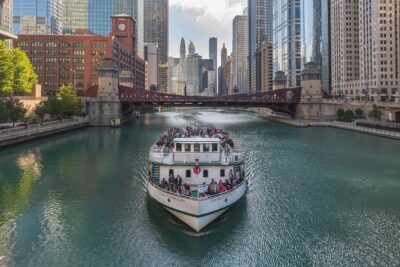
Chicago Architecture Center River Cruise aboard First Lady
Read our review →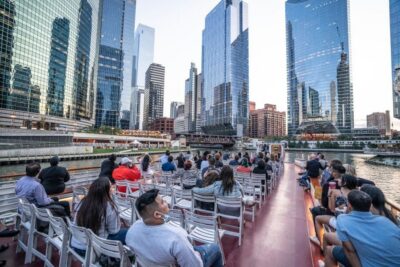
Architecture River Cruise Skip-the-Ticket Line
Read our review →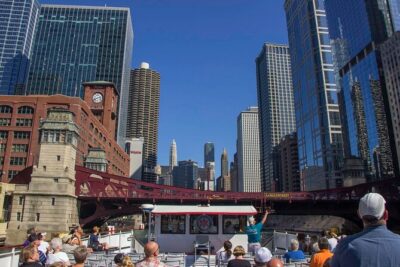
Chicago River 45-Minute Architecture Tour from Magnificent Mile
Read our review →
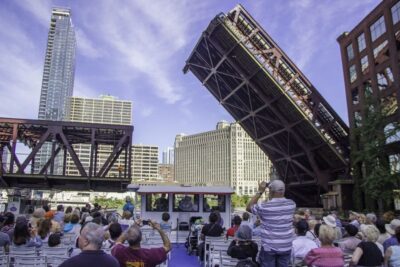
45-Minute Family-Friendly Architecture River Cruise
Read our review →Other lists with this tour