
Review · LATVIA
Riga’s Architecture: A self-guided audio tour of the city’s art nouveau history
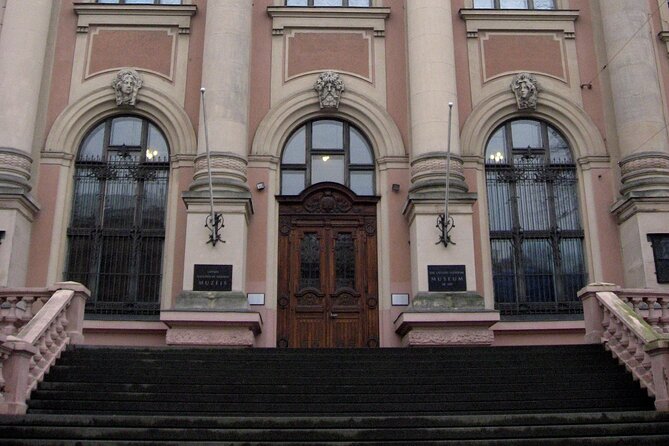
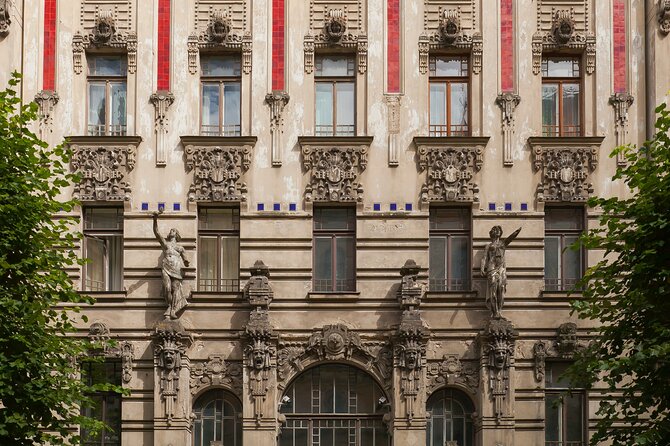
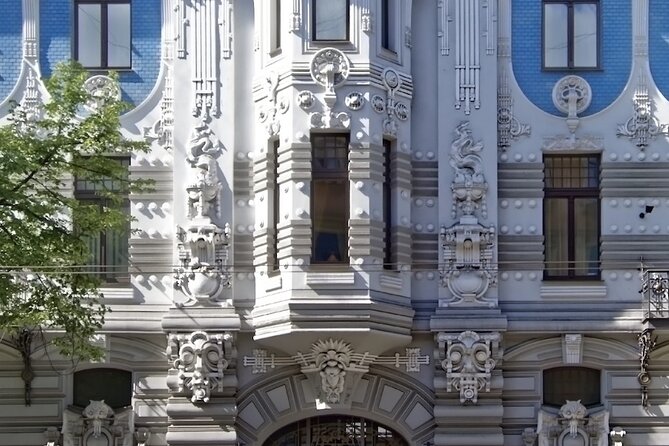
Riga’s art nouveau district is the kind of place that rewards looking up. This self-guided walk takes you from the Latvian National Museum of Art to Alberta Street, past elaborate façades, sculpted faces, curling leaves, and the bold work of architect Mikhail Eisenstein. You’ll also hear how his son, Sergei, became a famous Soviet filmmaker.
I like the short, focused route and the way it explains what you are seeing instead of asking you to admire fancy buildings without context. I also like the price: at $5.20, it costs less than many city walks and gives you lifetime access through VoiceMap. The tradeoff is that this is an app-based tour, so you need your own smartphone and headphones, and you will not have a live guide to answer questions.
Key points at a glance
- Start at the Latvian National Museum of Art: The route begins at Jaņa Rozentāla laukums, an easy landmark in central Riga.
- See several major Alberta Street façades: Stops include Alberta 2a, 4, 11, 13, and 12.
- Learn to spot art nouveau details: The commentary helps you understand the style rather than simply photograph it.
- Hear about Mikhail Eisenstein: His decorative work is one of the tour’s main subjects, with a useful link to his filmmaker son Sergei.
- Visit a notable residential courtyard: The route includes the courtyard of one of Riga’s impressive apartment buildings.
- Use it on your own schedule: The audio, map, and route can be used offline through the VoiceMap app.
Why Riga is such a good city for an art nouveau walk
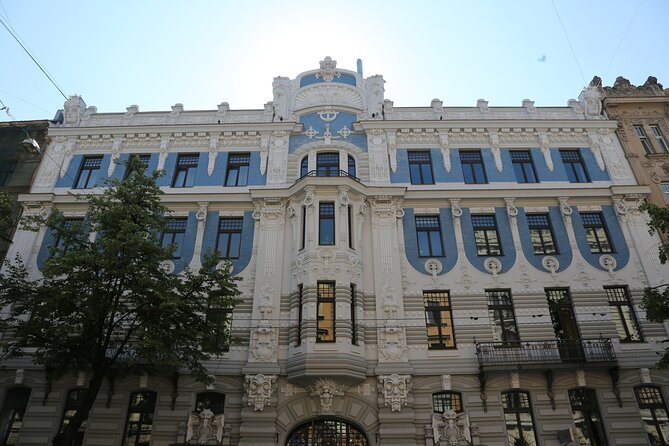
Riga has more than 800 art nouveau buildings, giving the city one of the highest concentrations of this architecture in the world. That number matters because you do not need to spend half a day crossing town to find examples. A compact central district gives you a strong sample in less than an hour.
Art nouveau can be hard to understand at first. The buildings often look busy, but the style has its own visual language: plant forms, curved lines, theatrical decoration, masks, geometric patterns, and façades designed to catch the eye from the street. This tour gives you a way to sort those details into categories.
I like that the route is not only about pretty exteriors. It also looks at the people and ideas behind them. You hear about the architects who shaped Riga and about the development of a specifically Latvian style known as National Romanticism. That adds local character to what could otherwise be a general European architecture walk.
The route is also manageable. At roughly 30 to 45 minutes, it fits neatly into a morning or afternoon of sightseeing. You can add time for photographs, pauses, and a closer look at the buildings without turning the outing into a major commitment.
More Art Nouveau Tours around the world:
- Barcelona: Art Nouveau & Gaudí Tour
★ 5.0 · 39 reviews - Walking Tour of Riga’s Beautiful Art Nouveau Architecture
★ 4.8 · 20 reviews - Private Art Nouveau and Art Deco tour near Opera
★ 5.0 · 15 reviews
Starting at the Latvian National Museum of Art
The tour begins at the Latvian National Museum of Art, at Jaņa Rozentāla laukums 1. This is a practical starting point because it gives you a clear landmark and puts you near the central art nouveau district.
Before setting off, download the VoiceMap app and the tour content. The included offline access to audio, maps, and geodata is especially useful if you do not want to depend on a mobile connection while walking. You still need your own smartphone and headphones, since neither is supplied.
The opening section introduces the main idea of the walk: how to identify an art nouveau building and what makes Riga’s examples important. That introduction is useful for the rest of your visit, even if you later walk through the district without the app.
I would allow a few extra minutes at the start to check that the audio is working and the map is loaded. This is a self-guided activity, so there is no guide waiting at the meeting point and no group departure to catch.
Elizabetes 10b and the first ornate façades
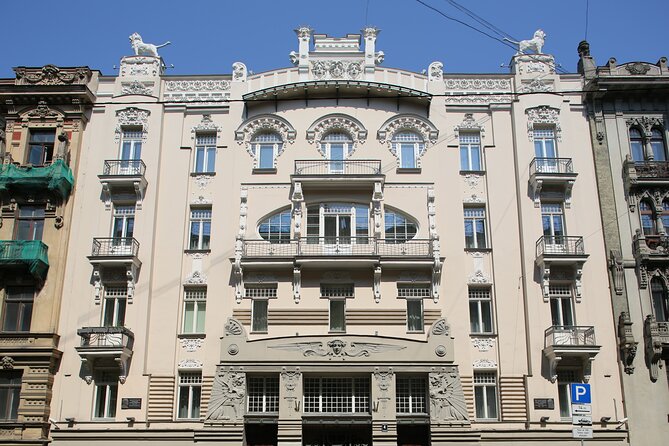
The route then moves to Elizabetes 10b, one of the brief stops along the way. This part of the walk helps shift your attention from the museum to the residential streets where Riga’s art nouveau character becomes most obvious.
The buildings in this area are not simply decorative boxes. Their façades were designed as public faces for private homes, and small details can reveal a great deal about the period. Look for sculptural decoration and patterns around windows, doors, and upper floors. The audio is intended to explain what those details mean and why they matter.
This is where the self-guided format works well. You can pause the recording while you study a façade, take photographs, or compare one building with the next. A live walking group often needs to keep moving, while you can set your own pace here.
The limitation is equally clear: the experience depends on your attention and phone setup. If you are distracted by traffic, conversation, or a low battery, you can miss part of the explanation. Headphones make the commentary easier to follow, but you should still stay alert near streets and entrances.
Alberta 2a and 4: comparing Riga’s design ideas
The next stops are Alberta 2a and Alberta 4. These addresses give the tour a chance to compare several buildings close together rather than treating each one as an isolated curiosity.
That comparison is important. Art nouveau was not one fixed look. Architects experimented with different levels of decoration, different shapes, and different ways to make an apartment building seem grand. A good audio explanation helps you notice changes that may be invisible when you are taking in the whole street at once.
The tour also places these buildings in the wider story of Riga’s architecture. You learn how local architects developed National Romanticism, a Latvian approach that drew on local identity rather than copying every fashion from elsewhere. The supplied information does not give a detailed list of every feature you will see, so I would listen for the explanation of how this local style differs from the more decorative work.
At this point, the route remains short and easy to manage. There is no transportation included because you walk between the stops. The start and finish are both in central Riga, and the activity is near public transportation if you need to reach the area from another part of the city.
More Self-Guided Audio Tours in the world:
- Gaudi and La Sagrada Familia Exterior Self-Guided Audio Tour
★ 3.5 · 25 reviews - Self-Guided Tour of Ísafjörður: Art, History, and Architecture
★ 5.0 · 23 reviews - Bastille’s Architecture & Artisans Self-Guided Walking Tour
★ 4.5 · 18 reviews - Palau Guell by Gaudi with Audio Guide in Barcelona
★ 4.5 · 13 reviews
Alberta 11 and 13: Mikhail Eisenstein’s theatrical work
Alberta 11 and Alberta 13 are among the most important stops for the tour’s discussion of Mikhail Eisenstein. His work is known for powerful decoration, and the audio focuses on the details that make his façades so memorable.
This is where the tour’s historical angle becomes particularly useful. Mikhail Eisenstein was the father of Sergei Eisenstein, who later became a legendary Soviet filmmaker. That family connection gives you an easy way to remember the architect, but the real value is seeing how the buildings communicate through composition, ornament, and dramatic visual effects.
You may find yourself looking at the buildings differently after this section. Instead of seeing only a crowded façade, you can consider how the architect used repetition, contrast, and sculpture to create an impression from the street. The tour is designed to provide enough information to explain why the architecture matters without overwhelming you with a long lecture.
That balance was one of the strongest features reported about the audio. The commentary is described as clear, passionate, and lively, with enough explanation to make the buildings understandable but not so much that the walk becomes dull. For a short tour, that is exactly the right target.
The route does not include entry into museums or other attractions. You are viewing the architecture from the streets and visiting a courtyard as part of the walk, so do not expect an indoor museum tour or access to private spaces beyond the places included in the route.
Alberta 12 and the residential courtyard
The final stop is Alberta 12, where the tour ends. Before reaching the finish, the route includes the courtyard of one of Riga’s most impressive residential buildings. This is a valuable change of angle.
Street façades are designed to make an immediate impression. A courtyard can tell you more about how an apartment building worked as a place to live. It gives the architecture an inward-facing side and helps you think about these buildings as homes, not only as postcard subjects.
The route’s endpoint is practical. You finish on Alberta Street rather than returning to the museum, so you can continue exploring the district on foot. You can also stop for photographs or spend extra time comparing the buildings you have just learned about.
Because the tour is private in the sense that only your own group participates, you do not share an organized walking group with strangers. In practice, that means the pace is yours. It does not mean you have a personal guide, though. The narration remains recorded, and you will need to make your own decisions about pauses and route following.
What the VoiceMap format adds
The VoiceMap app supplies the audio, map, and geodata, with offline use included. This is a useful arrangement for a city walk because you can listen without keeping a printed route in one hand and a phone map in the other.
The app also gives you lifetime access to this tour in English. Once you have downloaded it, you can return to the route later, and the app provides access to other self-guided walks. That extra access adds value if you enjoy exploring cities independently.
I would choose this format if you want structure without a fixed departure time. The published opening hours run around the clock from Monday through Sunday, which reflects the fact that this is an outdoor audio walk rather than a venue with a door to open. You can set out when it suits your schedule.
Still, an app cannot replace every benefit of a live guide. You cannot ask for a simpler explanation, request a detour, or get an immediate answer about a detail that catches your eye. If conversation and personal guidance are central to your sightseeing, a live walk may suit you better.
Is $5.20 good value?
At $5.20 per person, this is an inexpensive way to add context to a short visit in Riga. You are paying for the route design, recorded commentary, map, and offline access rather than transportation, food, museum tickets, or equipment.
The value improves if you already plan to visit the art nouveau district. You are not paying to be taken somewhere by vehicle, and the main sights are experienced from public streets. The audio gives you a reason to slow down and look carefully at buildings you might otherwise pass without understanding.
The price is less compelling if you want a full architecture course or a long guided walk. The experience lasts about 30 to 45 minutes, and the available information does not promise entry to buildings or a large number of stops beyond the listed addresses. Think of it as a compact orientation, not a full-day architecture program.
Its strong rating is supported by the specific qualities that matter here: clear narration, useful historical background, and a length that respects your time. One Dutch-language comment also praises the pleasant voice and the way the story connects history and politics. The tour itself is in English, so that is the language you should expect to use.
Who should book this walk?
I would recommend it to independent visitors who want more than a photo stop but less than a scheduled group tour. It suits solo visitors, couples, and small private groups who are comfortable following an app.
It is also a good choice if you are under time pressure. The route can give you a quick introduction to Riga’s art nouveau district before another appointment, and you can extend the walk with your own stops if you have longer.
Architecture fans will appreciate the focus on Mikhail Eisenstein, National Romanticism, and the difference between simply seeing a building and reading its design. First-time visitors can use the explanations to make sense of a district that might otherwise feel like a long parade of ornate façades.
I would hesitate to choose it for anyone without a working smartphone or headphones. The equipment is not supplied, and the tour depends on the VoiceMap app. The non-refundable booking terms also mean you should check your schedule and setup before paying. Once booked, it cannot be changed or refunded.
Should you book Riga’s art nouveau audio tour?
Book it if you want an affordable, flexible introduction to one of Riga’s defining features. The route is short, the endpoint on Alberta Street is convenient, and the commentary gives you useful tools for spotting art nouveau details and understanding the city’s National Romantic style.
Skip it if you strongly prefer a live guide, need indoor attractions, or want a longer tour with extensive access to buildings. For everyone else, $5.20 is a sensible price for a focused walk that turns a collection of impressive façades into a readable part of Riga’s story.
FAQ
Where does the audio tour start?
It starts at the Latvian National Museum of Art, Jaņa Rozentāla laukums 1, in central Riga.
Where does the tour end?
The tour ends at Alberta iela 12 in central Riga.
How long does the tour take?
The estimated duration is 30 to 45 minutes.
What language is the tour in?
The tour includes lifetime access in English.
Which buildings are included?
The route includes stops at Elizabetes 10b, Alberta 2a, Alberta 4, Alberta 11, Alberta 13, and Alberta 12.
Is a live guide included?
No. This is a self-guided audio tour accessed through the VoiceMap app.
Do I need internet access during the walk?
Offline access to the audio, maps, and geodata is included through the app.
Are museum tickets, transportation, or headphones included?
No. Museum and attraction admission, transportation, food and drinks, a smartphone, and headphones are not included.
More History Walks around the world
- Chicago in a Day: Food, History & Architecture Walking Tour
★ 5.0 · 1,153 reviews - Charleston’s Best Highlights: History, Culture & Architecture
★ 5.0 · 422 reviews - Palm Springs Modernism Architecture & History Bike Tour
★ 5.0 · 359 reviews - Charleston: History and Architecture Guided Walking Tour
★ 4.8 · 349 reviews
New to the itinerary around the world
- Washington, DC: Georgetown Architecture Walking Tour★ 5.0 · 8 reviews
- Wilmington History and Architecture Tour★ 4.8 · 18 reviews
- Washington DC: Dupont Circle & Embassy Row Architecture Tour★ 5.0 · 6 reviews
- New Orleans : Garden District Architecture Walking tour★ 4.8 · 5 reviews
- Walk & Discover KL’s Architectural and Heritage Gems★ 5.0 · 7 reviews
- Unveiling Brno: History, Culture & Architectural Delights★ 5.0 · 2 reviews
- Vicenza: Palladian Architecture Private Walking Tour★ 3.3 · 3 reviews
- Private Colonial Williamsburg Architectural Tour★ 5.0 · 5 reviews
Art Nouveau Tours, compared.
Walking Tour of Riga’s Beautiful Art Nouveau Architecture
Read our review →
Private Art Nouveau and Art Deco tour near Opera
Read our review →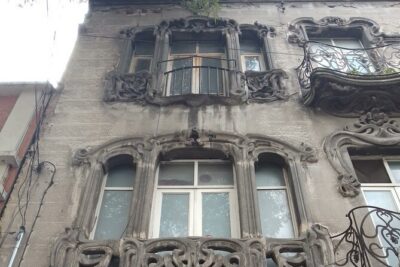
Mexico City origins and architecture: Art Nouveau, Deco,Eclectic
Read our review →Other lists with this tour