
Review · NEW YORK CITY
3 Hour Midtown Manhattan Architectural Tour
Midtown Manhattan is a city-sized architecture lesson, and this tour teaches it one block at a time. You’ll trace the rise of Fifth Avenue, compare French-inspired hotels with Art Deco towers, and see how Rockefeller Center changed the idea of a private development. Guide Annabel brings the buildings to life with stories about the people, money, and changing fashions behind them.
I like the small maximum of eight people, which gives the guide room to answer questions and adjust the route. I also like the chance to enter selected lobbies and interiors, an extra layer that turns a sidewalk tour into a closer look at marble, metalwork, murals, and design details. The main consideration is pace: three hours on Midtown streets requires moderate fitness, and traffic noise can make the opening explanations harder to hear.
Key points at a glance
- A walk through more than 20 architectural landmarks: The route includes The Plaza, Rockefeller Center, the Empire State Building, the Chrysler Building, and Grand Central Terminal.
- Annabel shapes the tour around the group: Her approach connects buildings with New York personalities, historic events, and modern city life.
- Historic interiors may be part of the experience: The tour can include public and selected private spaces, including notable hotel and office lobbies.
- A useful architecture timeline: You move from grand Gilded Age hotels and early skyscrapers to corporate modernism and Art Deco.
- No Empire State Building admission: You see and discuss the tower from outside, but an observation deck ticket is not included.
- A practical morning route: The 9:00 a.m. start at The Plaza ends at Grand Central Terminal after roughly three hours.
From The Plaza to Fifth Avenue’s grand hotels
The tour starts at 9:00 a.m. outside The Plaza at 768 Fifth Avenue. That is a smart meeting point. You begin beside one of New York’s best-known luxury hotels, then set off through a part of Midtown where wealth, architecture, commerce, and celebrity have long shared the same few blocks.
The Plaza was designed with the pomp of a French chateau. Its scale and decoration make more sense when you understand that it was meant to project luxury before you even crossed the threshold. The building has also appeared in countless films, so you may recognize the setting before you learn how its design works. The scheduled stop is about 15 minutes, admission free.
Next comes The Sherry-Netherland, whose lobby was modeled after the Vatican Library. That detail gives you a useful lesson in how New York hotels borrowed European grandeur to create their own sense of authority. When it opened, it was noted as the tallest residential hotel in New York City, a reminder that height was already a powerful selling point.
The St. Regis New York adds a different chapter. John Jacob Astor IV, one of the wealthiest men in America, built the hotel. Its arrival helped mark the change of Fifth Avenue from Millionaires’ Row, a private residential address, into a fashionable commercial thoroughfare. I like this part of the route because the architecture is tied directly to a larger change in how New Yorkers used the avenue.
These first three stops are not simply a parade of expensive hotels. They show how New York’s upper class shaped the street, then how commerce gradually took over. Annabel’s style is especially useful here because she connects the buildings to the people who financed them and to the social shifts that made them possible.
More Three-Hour Tours around New York City:
- Munich 3-Hour Segway Tour: Nazi Munich & Royal Architecture
★ 4.9 · 194 reviews - Barcelona: 3-Hour Discover Gaudí GoCar Tour
★ 4.5 · 123 reviews - Barcelona 3-hour Bike or E-Bike Tour: Gaudí By Bike
★ 5.0 · 24 reviews
Seagram Building and the clean lines of corporate modernism
The Seagram Building provides a sharp change of mood. Its design helped set a standard for office towers around the world and is widely cited as a major example of corporate modernism. After the ornament and historical references of the hotels, its disciplined form makes a strong visual contrast.
This is where an architecture tour can offer more than a list of famous names. You can compare the building’s restrained corporate character with the decorative towers you will see later. The stop also helps explain why Midtown feels like several eras placed side by side rather than one carefully planned style.
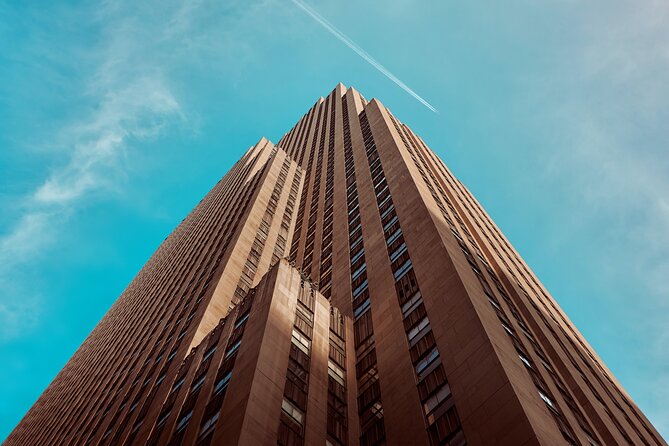
The General Electric Building, originally the RCA Building, takes you back toward ornament. Its chrome and marble lobby and radio-wave crown show how a major company used architecture as a public statement. Even if you are not trained in architecture, these details are easy to grasp: one building communicates power through restraint, another through shine, decoration, and a dramatic top.
The tour is advertised as covering more than 20 architectural marvels, while the main route lists 11 major stops. That means some buildings are viewed while passing between the principal locations. You should expect a broad Midtown survey rather than a long interior visit at every address.
Waldorf Astoria and Rockefeller Center’s planned city
The Waldorf Astoria New York brings the focus back to hotel architecture and New York’s social history. Designed by the firm behind The Sherry-Netherland, The Pierre, and Hotel Lexington, it became a legendary address for presidents, world leaders, celebrities, and foreign dignitaries.
The value here is not just the hotel’s name. It shows how a building can function as a stage for public life. Annabel’s storytelling links architecture with the people who used these places, including figures from New York’s business and social worlds. That human angle is one reason this tour works for people who enjoy history as much as design.
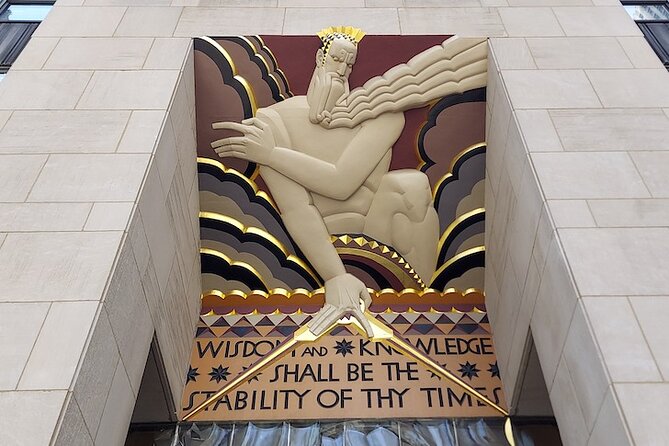
Rockefeller Center is the largest stop in spirit, even if the schedule gives roughly 15 minutes to each location. The complex contains 19 commercial buildings across 22 acres and more than 100 artworks. At the height of the Great Depression, it was the largest and most expensive development project of its time and provided 60,000 jobs.
Those numbers matter because Rockefeller Center was not built as one isolated skyscraper. It was planned as a complete urban district, with offices, public spaces, art, and a carefully organized relationship among the buildings. You will learn why its design mattered and what its artworks were meant to communicate.
Several people who took this tour particularly enjoyed being shown inside historic lobbies and buildings. Access can depend on the place and the day, so you should not treat every interior as guaranteed. Still, the possibility adds real value. A lobby often reveals more about a building’s ambition than its street facade, especially when you can see the materials and decorative work up close.
The Empire State Building, seen from the street
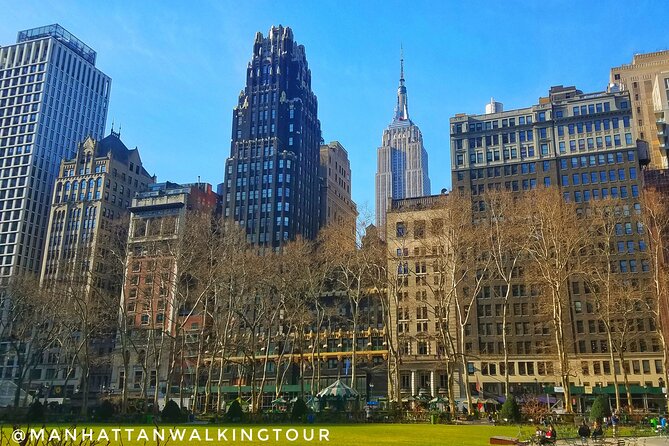
The Empire State Building is included as an exterior stop, with admission not included. It was the tallest building in the world for 40 years and was completed in 410 days, under budget. Its name comes from Empire State, New York’s nickname.
This is an important distinction when comparing the tour with an observation-deck visit. You will learn about the building and see it in the Midtown sequence, but this experience does not take you up the tower. If you want skyline views, you need to arrange a separate admission.
I see that limitation as reasonable for an architecture walk. The tour’s purpose is to place the Empire State Building within the story of Midtown, not to spend most of the morning waiting for elevators and security. You can focus on how quickly it was built, why it mattered, and how it relates to the surrounding city.
More Architecture Tours around New York City:
- Manhattan Architecture Yacht Cruise
★ 5.0 · 1,395 reviews - NYC: Around Manhattan Official NYC Architecture Cruise
★ 4.8 · 402 reviews - Art Deco and Architecture Midtown Landmarks Tour
★ 5.0 · 142 reviews - Tribeca Architecture And History Walking Tour
★ 5.0 · 141 reviews
The New York Public Library and the meaning of civic architecture
The Stephen A. Schwarzman Building of the New York Public Library adds a civic counterpoint to the hotels and corporate towers. The library formed in 1895 through the consolidation of the Tilden Trust and the Astor and Lenox libraries. When it opened in 1911, it held 350,000 volumes. Its collection has since grown to more than 55 million books and other items across seven floors.
That story gives the building a different purpose. The hotels express private luxury, while the library represents public access to learning and culture. On a tour focused on Midtown architecture, this stop helps keep the focus from drifting into a simple parade of wealthy developers and corporate symbols.
You will likely benefit most if you pay attention to how the building communicates its purpose from the outside. It was designed to look important because the institution inside was meant to serve the city. Annabel’s history-centered approach can make that connection clear even if your main interest is visual design.
Chrysler Building and Grand Central Terminal
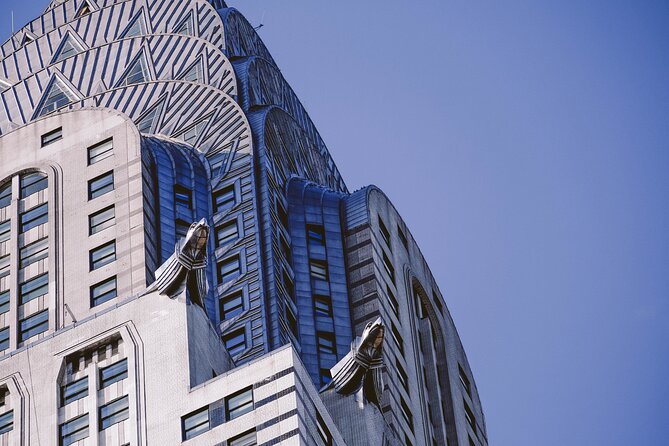
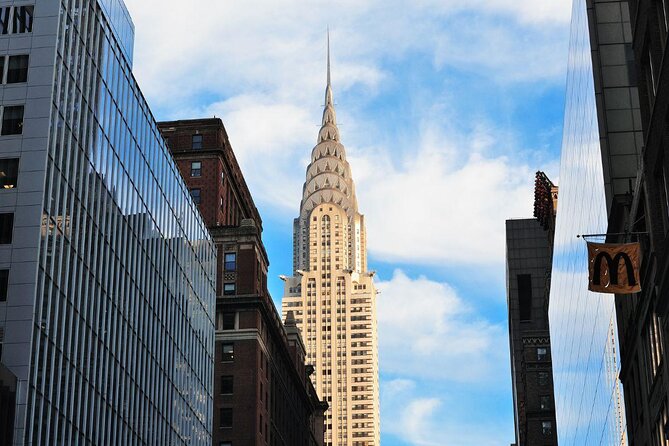
The Chrysler Building is the route’s great Art Deco moment. It was a personal symbol for automobile manufacturer Walter Chrysler and a statement about the strength of his company. Its stainless-steel crown and decorative details led critics to call it jazz in stone and steel, a phrase that captures its energy and machine-age style.
The building is often cited as a classic example of Art Deco architecture. It also gives you a chance to compare corporate branding across eras. The General Electric Building used radio imagery, while the Chrysler Building turned automobile culture into a soaring architectural identity.
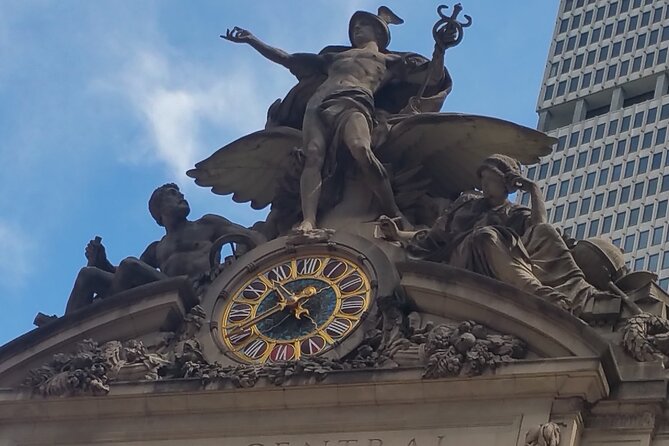
The final stop is Grand Central Terminal at 89 East 42nd Street. The terminal has 44 platforms and 67 tracks, making it far more than a pretty rail station. Its engineering and planning influenced American architecture, transportation, and culture for decades.
Ending here makes practical sense. Grand Central is a major transportation hub, so you can continue exploring Midtown, catch a train, or use the subway after the tour. It is also a satisfying final lesson because the terminal joins architecture with daily city life. The Plaza and the hotels were built to impress, but Grand Central had to move people efficiently while still creating a memorable public interior.
What Annabel’s guiding style adds
The strongest thread through the experience is Annabel’s ability to make the walk feel like a conversation rather than a speech. She is a longtime New Yorker with a broad grasp of the city, and she adjusts the focus to the group’s interests. That can mean more attention to architectural styles, historic transactions, social figures, or the way a building is used today.
Her approach also seems to work across ages. A group made up of a grandmother and a 13-year-old found enough variety to keep both engaged, including stories about architects, developers, Rockefeller, and Leona Helmsley. Families should appreciate that the tour does not require advanced architecture knowledge before you arrive.
The small group matters here. With no more than eight people, you have a better chance to ask questions and hear the answers than on a large bus or crowded walking tour. If only one or two people book a particular departure, the experience can become close to a private tour, though you should not count on that when planning.
One practical tip: Midtown traffic can be loud. At the opening, stay close to Annabel and ask her to repeat anything you miss. The tour is conversational, which is a strength, but it also means you need to listen carefully near busy streets.
Price, pace, and who gets the best value
At $85 per person, this is not the cheapest way to see Midtown. You can walk past the same buildings on your own for free. The price makes more sense if you want the connections that are difficult to spot alone: why Fifth Avenue changed, how Rockefeller Center was planned, what the lobbies reveal, and how Art Deco fits into the city’s larger development.
You are paying for about three hours of guiding, interpretation, and a small-group format, not for admission to attractions. There is no Empire State Building ticket included, and the listed stops generally have free admission. If you want the observation deck, add that cost separately.
The route requires a moderate level of physical fitness. You should be comfortable walking Midtown streets for three hours, with stops for explanation and sightseeing. Wear sensible shoes, and keep the morning schedule open enough that you do not have to rush away from Grand Central.
I would choose this tour if you have visited New York before and want to see familiar streets differently. It also suits a first visit if you prefer buildings, stories, and city design to shopping or museum interiors. Families, couples, solo visitors, and anyone curious about the people behind New York’s skyline can get a lot from it.
If your main goal is to go inside every landmark or ride to the top of the Empire State Building, this is not the right product by itself. It is a street-level architecture and history tour, with possible interior access adding extra texture rather than replacing formal admissions.
Should you book the Midtown Manhattan Architectural Tour?
I would book it for the guide-led interpretation and the small group, not simply for the list of buildings. The route covers some of Midtown’s most famous addresses, but Annabel’s stories give the walk its purpose: you learn how wealth, technology, civic ambition, transportation, and changing styles shaped the city.
At $85, the tour is good value for someone who wants context and conversation. Skip it if you only need a quick photo stop at Rockefeller Center or the Chrysler Building. Book it if you want to look up at those buildings and understand why they look the way they do.
The experience offers free cancellation up to 24 hours before the 9:00 a.m. start time. Confirmation arrives when you book, service animals are allowed, and the route is near public transportation. Plan for a real morning walk, stay alert for traffic noise, and let the guide know what interests you early.
FAQ
How long is the Midtown Manhattan architectural tour?
The tour lasts approximately three hours, although individual departures may run slightly longer.
Where does the tour start?
It starts at The Plaza, 768 Fifth Avenue, New York, New York 10019.
Where does the tour end?
It ends at Grand Central Terminal, 89 East 42nd Street, New York, New York 10017.
What time does the tour begin?
The scheduled start time is 9:00 a.m.
Is admission to the Empire State Building included?
No. The tour includes an exterior visit and information about the building, but admission is not included.
How many people can join the tour?
The activity has a maximum of eight travelers.
Is the tour offered in English?
Yes. The tour is offered in English and uses a mobile ticket.
Can I cancel for a full refund?
Yes. You can cancel at least 24 hours before the experience start time for a full refund. Cancellations or changes made less than 24 hours before the start time are not accepted for a refund.
New to the itinerary around New York City
- Race to the Sky: NYC Architecture Tour With SUMMIT One Ticket★ 5.0 · 3 reviews
- Private Flatiron Food, History and Architecture Tour★ 5.0 · 8 reviews
- New York Soho and the Village Art and Architecture Tour★ 5.0 · 4 reviews
- Chelsea and the High Line NYC Architecture Walking Tour★ 5.0 · 6 reviews
- New York Upper West Side Art and Architecture Tour★ 5.0 · 4 reviews
- New York Midtown South Art and Architecture Tour★ 5.0 · 2 reviews
- New York Upper East Side Art and Architecture Tour★ 5.0 · 3 reviews
- Custom Private New York Architecture, Art and City Tour★ 5.0 · 3 reviews
New York City Architecture Tours, compared.
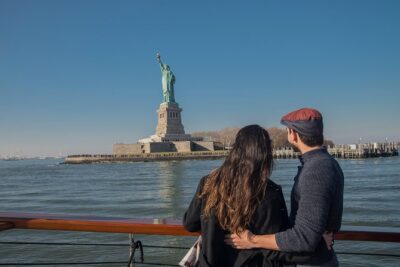

Around Manhattan Official NYC Architecture Cruise
Read our review →
Art Deco and Architecture Midtown Landmarks Tour
Read our review →

New York City The Official Rockefeller Center Tour
Read our review →
Midtown Manhattan Art and Architecture Walking Tour
Read our review →
Other lists with this tour