
Review · DUBAI
Modernism to Traditions from UAE to OMAN with Fully Live Guided Tour- 11D / 10N
Dubai’s glass towers and Oman’s rugged coast are separated by more than a border. They represent two very different sides of the Arabian Peninsula, and this 11-day UAE and Oman tour puts both into one tightly packed trip. You’ll move from Burj Khalifa and Ferrari World country to old forts, fishing towns, desert camps, and mountain wadis.
I like the wide range of places covered, especially the switch from modern Dubai to traditional Sharjah, Al Ain, and Nizwa. I also like the practical setup: airport transfers, hotels, most meals, a full-time guide, and transport are arranged for you. The main drawback is the pace. Several days run close to nine hours, and the long road sections can feel tiring, particularly on the Oman portion.
Key things to know before booking
- Dubai and Oman in one trip: You see major UAE cities, then continue into Muscat, Sur, Wahiba Sands, and Nizwa.
- A real mix of scenery: Expect skyscrapers, desert dunes, mountain roads, a dhow cruise, wadis, and Oman’s coast.
- Meals are largely covered: The package includes 10 breakfasts, 10 lunches, and nine dinners, with a few meals left to your own arrangements.
- Border rules matter: Bring a passport valid for at least six months, and check your UAE visa and Oman entry status before paying.
- Active Oman days: Wadi Shab and Wadi Bani Khalid involve walking, and the supplied advice specifically notes that the wadis require stamina.
- Small enough to stay manageable: The group limit is 25 people, with guiding available in English, French, and Italian.
A two-country trip with a very full schedule
At $1,828 per person, this is not a budget hop-on, hop-off tour. It is a package built around convenience. You receive accommodation, airport transfers, transportation, guiding, many meals, city tours, the desert safari, the Musandam cruise, and major visits such as the Louvre Abu Dhabi.
The value is strongest if you want one booking to handle the complicated pieces. You do not need to arrange a separate Dubai stay, find transport to Al Ain, organize an Oman road trip, or work out how to reach Wahiba Sands. The price also covers several long touring days that would be difficult to manage independently without hiring a driver.
You should still read the schedule honestly. This is not a slow holiday with two free afternoons in every city. It is a sightseeing sweep. You will see a lot, but some stops are brief and several transfers take hours. If you enjoy an active trip and prefer a guide to handle the details, that trade-off makes sense. If you want long, quiet stays in Muscat or Dubai, it will feel rushed.
The hotels are described as selected accommodation, but the exact properties are not provided here. That means you should confirm the hotel names, room arrangements, and locations before booking if those details matter to you.
More Guided Tours around the world:
- Chicago River: 1.5-Hour Guided Architecture Cruise
★ 4.8 · 8,046 reviews - Park Güell: Guided Tour with Optional Gaudí Experience Entry
★ 4.1 · 832 reviews - Barcelona: Gaudi’s Casa Vicens Guided Tour
★ 4.8 · 401 reviews
Days 1 and 2: Dubai from creek town to desert camp
Your first day is simple. A representative meets you at Dubai airport and takes you by air-conditioned vehicle to the hotel. You check in and have the evening to yourself, with dinner not included that night.
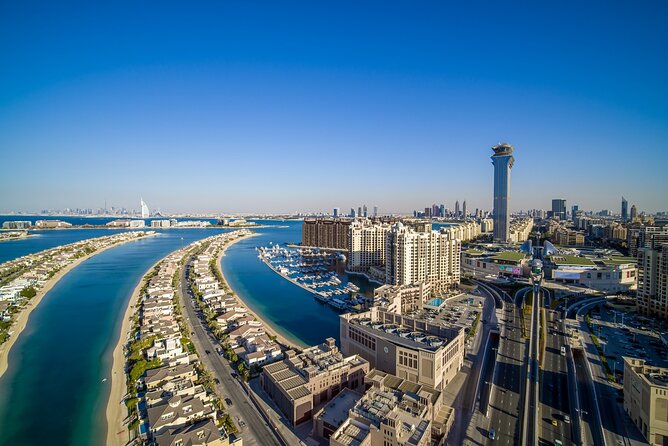
Day two gives you the first sharp contrast of the trip. Dubai began around Dubai Creek as a small fishing settlement, yet today its skyline is filled with tall towers and giant malls. The city tour links the grand modern sights with older districts, which helps you understand more than the usual image of Dubai as one large shopping center.
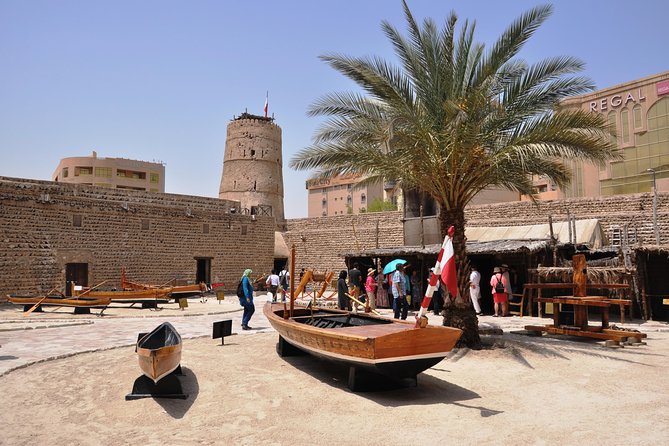
You stop near Atlantis on Palm Jumeirah, take photographs of Burj Al Arab, and pause near Jumeirah Mosque. The route then moves to Bastakyia, the old town district, and Al Fahidi Fort, home to the Dubai Museum. The museum visit and the crossing of Dubai Creek by abra are important because they show the city before oil wealth and high-rise construction changed its scale.
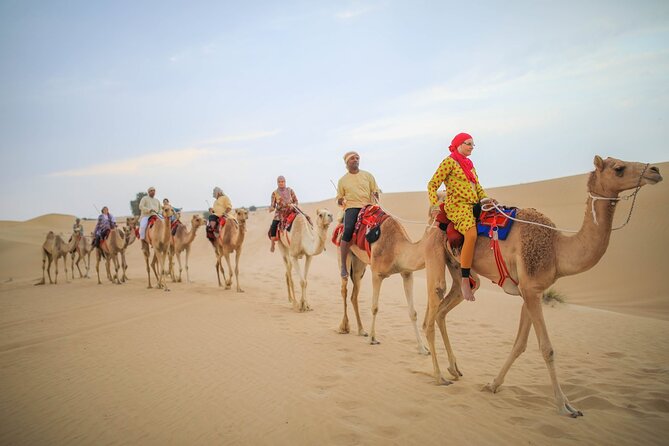
The afternoon desert safari changes the mood again. You ride in 4WD vehicles over the golden dunes, with the dune driving providing the day’s main burst of excitement. At the camp, you watch the sunset, eat a barbecue dinner, and see traditional entertainment that includes belly dancing.
I would treat the safari as a lively group outing, not a quiet desert retreat. The dune driving can be thrilling, but it may not suit anyone prone to motion sickness. You also have a long sightseeing day before it, so expect a late and energetic evening.
Day 3: Abu Dhabi’s grand mosque, heritage quarter, and Louvre
The Abu Dhabi day begins with Yas Island, home to the Formula 1 circuit and Ferrari World. The giant red Ferrari sign makes an easy photo stop, though the theme park itself is not listed as a full visit. Keep that distinction in mind if you were hoping to spend the day on its rides.
The Sheikh Zayed Grand Mosque is the major architectural stop. Its scale is hard to grasp from photographs, and the visit gives the day a strong cultural focus. Dress and conduct requirements apply at mosques, so modest clothing and respectful behavior are sensible.
After lunch, the route includes Heritage Village, the Corniche, Qasr Al Hosn, and Saadiyat Island. Heritage Village presents daily life before the oil era, while Qasr Al Hosn focuses on Abu Dhabi’s ruling history and traditions. The Corniche drive offers views of the city’s white mosques, offices, apartments, and waterfront.
The day ends at Louvre Abu Dhabi, where art and civilization are presented in a modern museum setting. This is a useful counterpoint to the mosque and heritage sites. You are not seeing only new towers or old forts. You are also seeing how Abu Dhabi presents itself as a cultural capital.
The drawback is time. Abu Dhabi has enough to fill several days, but this route asks you to cover its main symbols in one outing. You will get a strong introduction, not a slow museum visit with time for every gallery.
Day 4: Al Ain and the UAE’s older traditions
Al Ain feels different from Dubai and Abu Dhabi. Set near the Hajar Mountains, it has long served as an oasis and caravan stop. The day begins with a drive toward Jebel Hafeet, where you have a photo stop, then continues into the city for lunch.
The camel market is one of the more distinctive stops on the UAE portion. It connects the modern country with older trade and pastoral traditions. You then visit Jahili Fort, a fine example of local Islamic military architecture, followed by Al Ain Palace and Qasr Al Muwaiji.
These places give the guide room to explain the history of Sheikh Zayed’s time in Al Ain and the region’s political development. The palace is also tied to the ruling family, while Qasr Al Muwaiji adds another layer of local history.
This is another nine-hour day, so do not expect much unscheduled time. The reward is that Al Ain receives more than a quick drive-by. You spend enough of the day among forts, oasis traditions, and market life to see why it is an important contrast to the coastal cities.
More Architecture Tours around the world:
- Chicago Architecture River Cruise
★ 5.0 · 15,756 reviews - Chicago River 90-Minute Architecture Tour
★ 4.5 · 9,629 reviews - Barcelona: Park Güell and Gaudí House Museum Entry Ticket
★ 4.5 · 6,326 reviews - Chicago Architecture Center River Cruise aboard First Lady
★ 5.0 · 5,536 reviews
Day 5: Sharjah, Mandi, and Dubai Mall
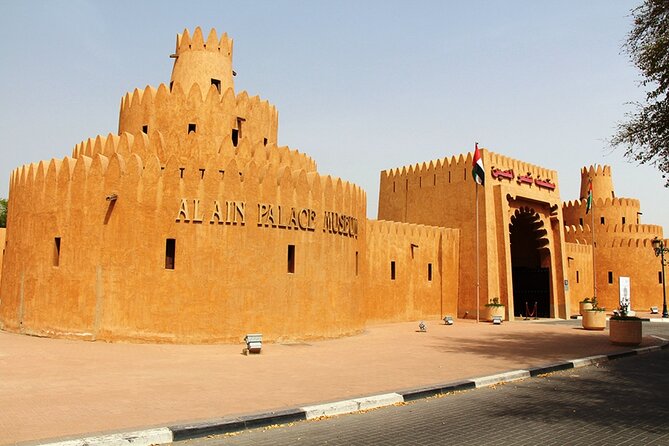
The morning starts at Hilli Gardens, known for archaeological remains dating to the third millennium BC. You then travel toward Sharjah, the UAE’s cultural center, for a half-day tour.
Sharjah’s King Faisal Mosque and restored fort introduce the city, but the Sharjah Heritage Museum is the most useful stop for understanding local life. Exhibits cover fishing and pearling, education, currency, early postal services, jewelry, clothing, herbal medicine, music, and folklore.
At Souk Al Arsa, you explore a traditional market and may see Omani halwa being made. Lunch is a local Mandi meal, a seasoned dish of meat or fish. This is one of the better food moments in the program because it connects the meal to the region rather than relying only on hotel dining.
You also visit the Blue Souk, known for carpets, jewelry, and handicrafts, before returning toward Dubai. The final part of the day shifts fully into modern retail at Dubai Mall, with free time for shopping and the option to pre-book a Burj Khalifa visit.
That contrast is the point of the day, but it can also feel abrupt. After museums, souks, and a local meal, you end among more than 1,200 shops, an aquarium, an ice rink, and high-end retail. If you want to go to the Burj Khalifa observation levels, arrange it ahead of time. It is optional and not simply guaranteed as part of the basic touring schedule.
Day 6: Musandam by dhow, with a border crossing
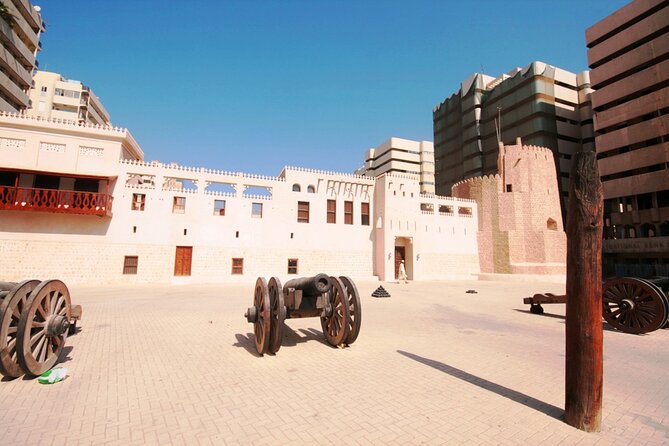
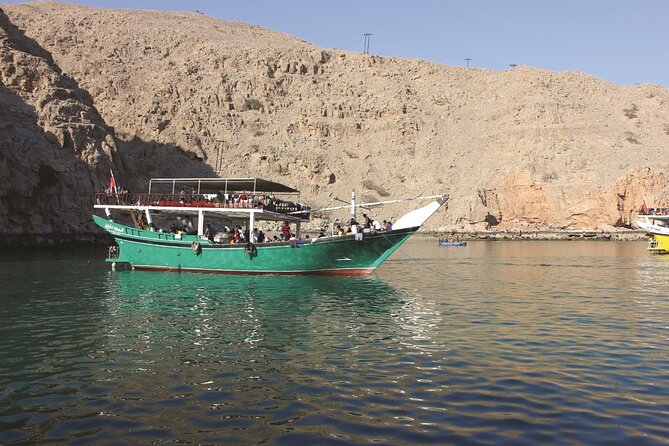
Musandam is one of the most memorable nature days in the trip. The northern tip of Oman is known for steep Hajar Mountains rising directly from the Gulf of Oman, creating fjord-like inlets, bays, caves, and small beaches.
You board a traditional dhow with cushions and carpeted seating for a full-day cruise. Lunch is served on board, and the day allows time for swimming, snorkeling, and relaxing on the water. Marine life in the area includes fish, coral, turtles, and other sea life, while dolphins may also be seen.
This is a welcome change after several city tours. You can spend much of the day looking outward instead of moving from one landmark to another. Still, bring what you need for a boat day, including sun protection and suitable clothing for swimming if you plan to take part.
The border paperwork is the practical issue. Carry your passport. It must be valid for at least six months, and your Emirates ID must be valid for at least three months. The information provided also says an exit fee of AED 31 applies, some visitors pay AED 50 for an Oman visa, and single-entry UAE visa holders cannot make the crossing. Certain low-skilled professions may face restrictions. Check these rules directly before booking, since a border problem can stop the day before it begins.
Day 7: The long road to Muscat through Sohar
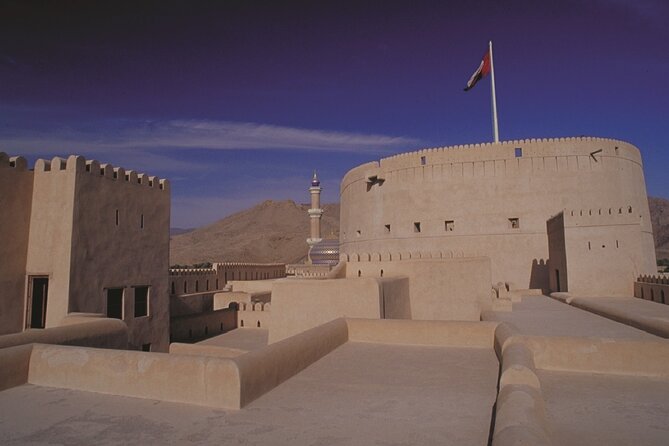
The journey to Muscat is one of the longest travel sections. The route passes via Hatta and continues through Oman, with lunch in Sohar and an orientation tour of the city.
Sohar’s mosque and an Omani halwa factory provide the main stops. The factory visit offers a look at how this well-known sweet is made, which is more personal than simply buying a packaged souvenir. From there, you continue through Barka and Seeb before reaching Muscat in the evening.
The road time is the cost of seeing both countries in one continuous program. You should expect a tiring day, but the route also shows how quickly the setting changes from Dubai’s dense urban development to Oman’s more open towns and mountain surroundings.
Dinner is at the hotel, which is useful after a full day on the road. You will have more time in Muscat on the next day, so think of this as a transfer with cultural stops rather than a full sightseeing day.
Day 8: Muscat’s mosque, opera house, forts, and Muttrah Souk
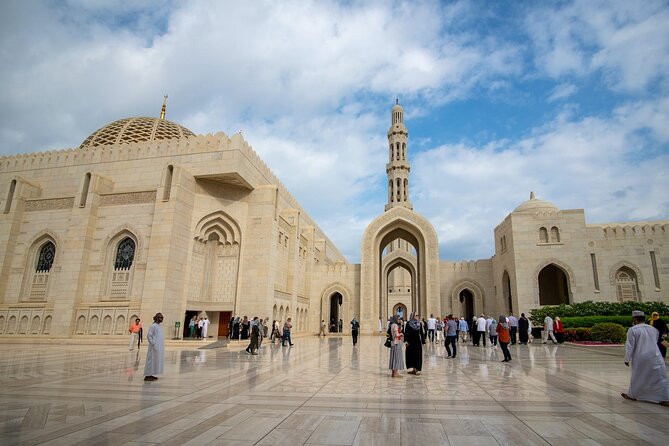
Muscat receives a full guided day, beginning with the Sultan Qaboos Grand Mosque. The building combines modern construction with Islamic design and is one of the city’s key religious landmarks. A briefing meeting at 9:30 am introduces the guide and group before sightseeing begins.
The Royal Opera House follows. Its purpose-built design gives you a different view of Oman’s modern cultural identity. After lunch at a local fish restaurant, the route turns to Old Muscat.
Old Muscat is framed by steep mountains and the 16th-century forts of Jalali and Mirani. You also see Al Alam Palace, the ceremonial residence of the Sultan, and visit Bait Al Zubair Museum. The museum covers Omani weapons, jewelry, clothing, household objects, and recreated settings from urban and rural life.
The day finishes at Muttrah, the old port and commercial center. Its souk has narrow lanes filled with textiles, jewelry, frankincense perfume, antiques, and souvenirs. This is the kind of place where a guide adds real value, helping you understand what you are seeing instead of treating the market as a quick shopping stop.
Dinner is at a traditional Omani restaurant. After so many hotel meals and road stops, that meal helps give Muscat a stronger local feel.
Day 9: Wadi Shab, Sur, and a night in Wahiba Sands
The coastal road to Sur is one of the trip’s most scenic stretches. You stop at the Bimmah Sinkhole, a collapsed section of mountain filled with seawater, then continue through Fins toward Wadi Shab.
Wadi Shab is a natural stop rather than a formal attraction with a set viewing platform. You walk a little into the wadi and have lunch there. The schedule does not promise a long hike or a full swim, but you should still wear practical shoes and be ready for uneven ground. The tour’s own warning about stamina is worth taking seriously.
Sur is a seafaring town known for traditional dhow building and its old architecture. After a quick orientation, you continue along the coast through cliffs and fishing villages.
Late in the day, 4WD vehicles take you into Wahiba Sands. The dune drive includes sand driving and a camp dinner. The desert is home to Bedouin communities, and the shifting dunes create the trip’s best setting for sunset and night photography.
This is an excellent day for scenery, but it asks a lot from you. There is a coastal drive, a wadi walk, a town visit, a desert transfer, and dune driving in one schedule. Pack lightly for the camp and keep essentials close rather than buried in your main luggage.
Day 10: Wadi Bani Khalid and historic Nizwa
After breakfast in the desert, you take the 4WD vehicles back toward the main road and continue to Wadi Bani Khalid. The valley is surrounded by rugged mountains and offers another chance to walk and take photographs.
The second wadi is a useful contrast with Wadi Shab. You see a different setting before heading to Nizwa around midday. After lunch and a short orientation, you explore the souk and old city.
Nizwa was Oman’s ancient capital and an important center of learning. Its souk is known for silver jewelry, while the cattle auction takes place on Fridays. If your visit does not fall on Friday, do not expect to see the auction, but the souk and old streets still provide a strong introduction to the city.
The schedule refers to a visit to the souk and old city, with the fort area included in the city’s main sights. Confirm the exact fort admission and touring time if that particular visit is important to you. You spend the night in Nizwa, which is better than making the long return to Muscat after a full day.
Day 11: Jabreen Fort, Bahla, and the airport
The final day begins at Birkat Al Mawz, an old village near Jebel Akhdar. You then visit Jabreen Castle, a 17th-century building known for plasterwork, carved doors, and painted wooden ceilings.
The route continues past the Hajar Mountains and through Bahla, with an outside view of its fort. At Al Hamra, you stop among palm groves to see the falaj irrigation system, an important traditional method for moving water through settlements and farmland.
After lunch, you continue to Muscat Airport for your departure flight. The six-hour final touring period means your flight time matters. Do not assume every departure time will work. Confirm the airport transfer timing and leave enough margin for the road journey.
Who should book this UAE and Oman tour?
I would choose this trip if you want a guided overview rather than a relaxed resort break. It suits you if you enjoy changing scenery, long touring days, local meals, historic buildings, and organized transport. It is also a practical choice for solo travelers, since the group structure gives you company while the hotels, transfers, and border crossing are handled by the operator.
I would hesitate if you dislike road travel, need a flexible schedule, or want several free days in Dubai and Muscat. The wadis require stamina, the desert safari includes rough 4WD driving, and the Oman portion contains long transfers.
The cancellation terms are worth noting before you commit. A full refund is available when you cancel at least six full days before the start time. A 50 percent refund applies two to six days before departure, while cancellations under two days receive no refund. Weather or minimum-group cancellations can lead to a different date or a full refund.
Should you book it?
Book it if your priority is seeing the UAE and Oman’s main highlights in one organized trip. The strongest features are the mix of modern and traditional settings, the Musandam dhow cruise, the Oman coast and desert, and the number of meals and transfers included for the price.
Skip it if you want slow mornings, independent restaurant choices, or extra time inside each museum. At $1,828, the value comes from the amount of ground covered and the work taken off your hands. Its cost is your time and energy. Go in ready for early starts, long drives, walking at the wadis, and a steady stream of sights, and this can be a very rewarding introduction to both countries.
FAQ
How long is the tour?
The experience lasts 11 days and 10 nights, beginning with arrival in Dubai and ending with an evening transfer to Muscat Airport.
What is included in the price?
Accommodation, airport arrival and departure transfers, full-time guide assistance, transportation, the listed tours and visits, 10 breakfasts, 10 lunches, and nine dinners are included.
Are visa fees included?
No. UAE and Oman visa fees, when applicable, are not included.
Can single-entry UAE visa holders join the Oman portion?
No. The provided requirements state that single-entry UAE visa holders are not permitted to travel to Oman. Multiple-entry UAE visa holders are allowed, subject to the other entry rules.
What passport validity is required?
Your passport must be valid for at least six months. Your Emirates ID must also be valid for at least three months if that requirement applies to you.
Is the tour available in languages other than English?
Yes. Guided assistance is available in English, French, and Italian.
How large is the group?
The group can include a maximum of 25 people.
New to the itinerary around the world
- Washington, DC: Georgetown Architecture Walking Tour★ 5.0 · 8 reviews
- Wilmington History and Architecture Tour★ 4.8 · 18 reviews
- Washington DC: Dupont Circle & Embassy Row Architecture Tour★ 5.0 · 6 reviews
- New Orleans : Garden District Architecture Walking tour★ 4.8 · 5 reviews
- Walk & Discover KL’s Architectural and Heritage Gems★ 5.0 · 7 reviews
- Unveiling Brno: History, Culture & Architectural Delights★ 5.0 · 2 reviews
- Vicenza: Palladian Architecture Private Walking Tour★ 3.3 · 3 reviews
- Private Colonial Williamsburg Architectural Tour★ 5.0 · 5 reviews
Dubai Architecture Tours, compared.

Guided Dubai City Tour: Modern Architecture & Sightseeing
Read our review →
Walking, Architecture and History Tour of Dubai Opera
Read our review →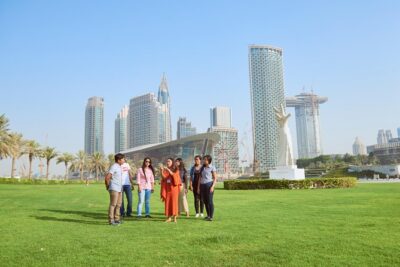
Wings of Dubai: Downtown Dubai Art & Architecture Tour
Read our review →Other lists with this tour