Review · CHICAGO
Chicago: Art Deco Skyscrapers Walking Tour
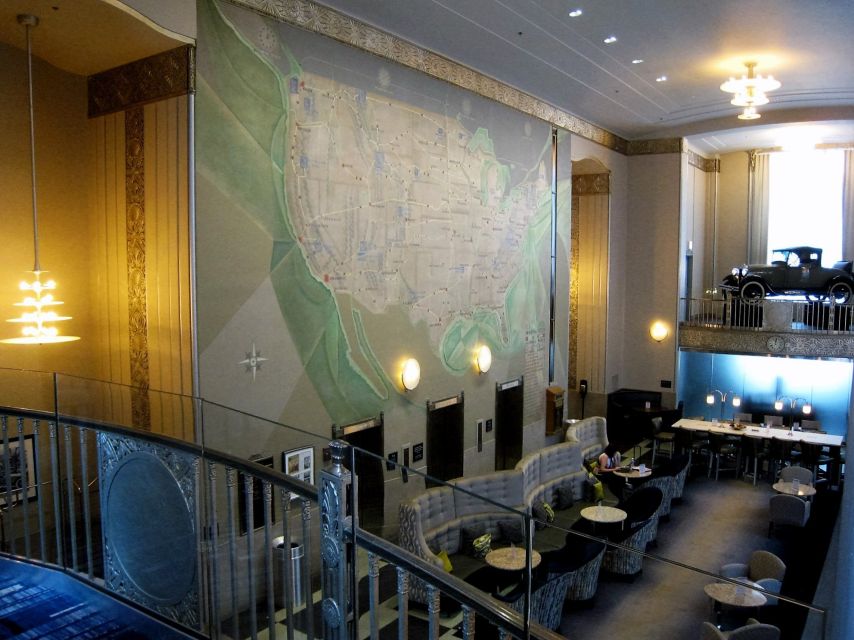
Chicago’s Art Deco is best understood from inside. This 90-minute walk takes you through five polished skyscraper lobbies built during the Roaring ’20s boom, where geometric patterns, bold color, and costly materials turn a simple entrance into a civic showpiece. The Carbide and Carbon Building and the Chicago Motor Club Building give the tour its headline stops, while less famous interiors add welcome surprise.
I especially like two things here: the small group of up to 10, which gives you a better chance to hear the docent, and the focus on interiors, not just façades. The guides are Chicago Architecture Center certified volunteer docents, trained for hundreds of hours in local architecture and history. The main drawback is that tours run rain or shine, and there’s no place to store luggage or strollers.
Key points at a glance
- Five landmark interiors: See the lobbies of five Art Deco skyscrapers near the Chicago River.
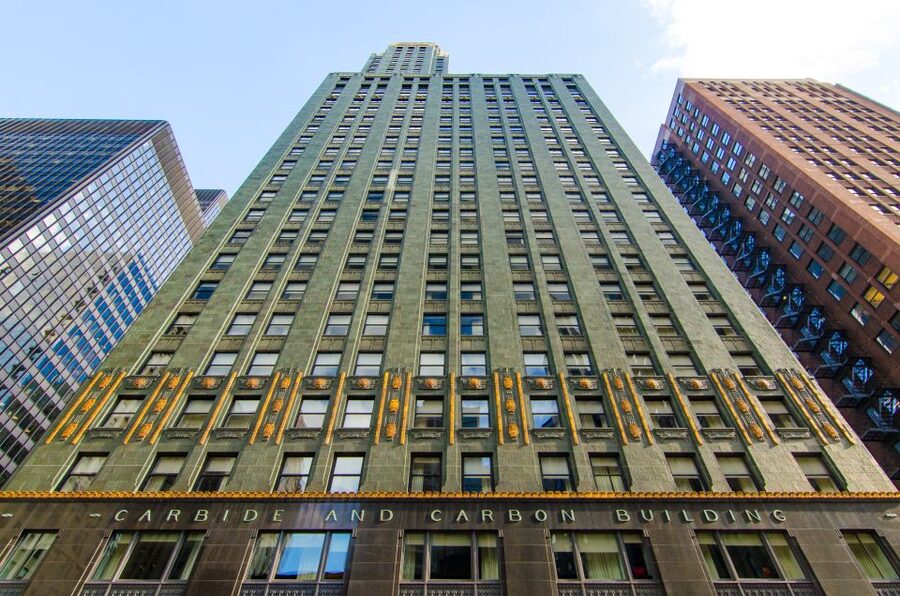
- Carbide and Carbon Building: Visit the former skyscraper now known as the St. Jane Hotel.
- Less familiar Chicago: The Trustees System Service Building, now Century Tower, adds color and a less obvious stop.
- Trained local guide: Learn from a Chicago Architecture Center certified docent with extensive preparation.
- Merchandise Mart finish: The route ends at one of the city’s best-known commercial buildings.
- Flexible booking: Cancel up to 24 hours ahead for a full refund, and reserve now while paying later.
Why Chicago is such a good city for Art Deco
Art Deco arrived in Chicago during the 1920s, after the style was shown at an international art exposition in Paris. It later appeared prominently at Chicago’s 1933 and 1934 Century of Progress Exposition, helping make its clean geometry and machine-age polish familiar to the public.
You’ll see the style in motifs that are easy to spot once your guide points them out: zigzags, octagons, sunbursts, and flowers. These shapes are not random decoration. They reflect a period that paired modern industry with older artistic influences, including Cubism and the art and architecture of the ancient Middle East.
The result can feel both strict and playful. Straight lines and repeated forms give a lobby order, while colored stone, metal details, and decorative patterns keep it from feeling cold. I like this style because it rewards close looking. You may pass a building several times before noticing that its entrance contains a carefully planned visual program.
The tour also puts Art Deco in its proper setting. These towers were built during the business boom of the Roaring ’20s, when companies wanted offices that projected confidence and speed. The lobbies served as public calling cards. A visitor did not need to enter an office to understand that the building wanted to look prosperous.
More Art Deco Tours in Chicago
- Chicago Walking Tour: Art Deco Skyscrapers Loop
★ 5.0 · 138 reviews - Chicago Architecture Walking Tour: Incredible Art Deco Interiors
★ 5.0 · 85 reviews - Chicago Walking Tour: Art Deco Skyscrapers Riverfront
★ 5.0 · 53 reviews
Starting at 30 North LaSalle Street
You meet at 30 N LaSalle Street and should arrive 10 minutes before departure with your confirmation ready. The docent checks your name against the attendance list, so the start is simple and does not require a ticket exchange or a complicated check-in process.
The exact starting time varies, so you’ll need to check availability when booking. The activity is conducted in English, and the group is limited to 10 participants. That size matters on an architecture walk. A guide can point out a small detail above a doorway, and you have a better chance of hearing the explanation than you would in a large group gathered on a busy sidewalk.
This is an urban walking tour, so wear comfortable shoes and plan for the weather. Chicago tours depart in rain or shine, and there are no weather-related refunds. A compact rain jacket is a sensible choice, but large bags and luggage are not allowed. Secure storage is not provided for luggage, strollers, or coats.
The Carbide and Carbon Building’s theatrical entrance
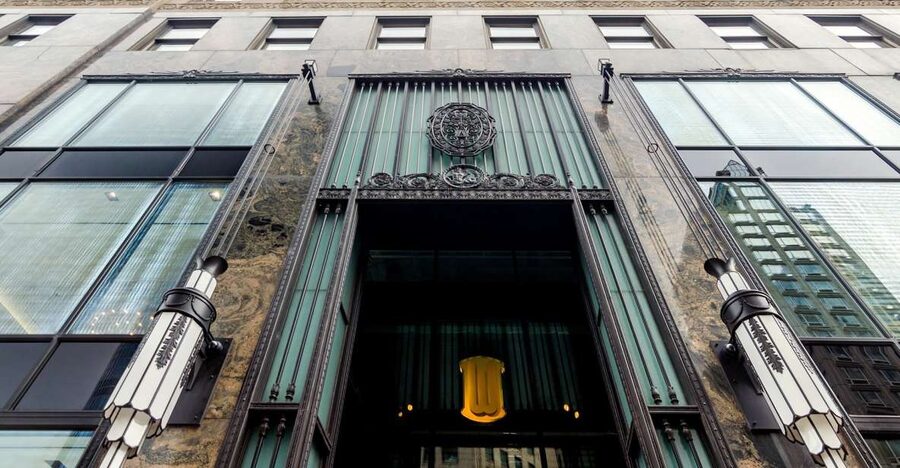
One of the most memorable stops is the Carbide and Carbon Building, now the St. Jane Hotel. Its inclusion makes sense for anyone who wants to see Art Deco at its most opulent. You are not simply looking at a tall building from the pavement. You are brought into the lobby, where the decorative treatment gives you a better idea of how the style worked at eye level.
The name of the building may suggest industry, and the design fits the period’s fascination with modern materials and bold presentation. Your guide will help connect the building’s exterior to its interior details, showing how Art Deco could make a skyscraper feel polished from the sidewalk to the elevator doors.
This is also a good example of why the tour is more useful than a quick self-guided stroll. From outside, you can admire a tower’s silhouette and ornament. Inside, you can see how patterns, finishes, and geometry controlled the visitor’s first impression. The experience is less about collecting building names and more about learning how to read a lobby.
The Chicago Motor Club Building and its new life
The Chicago Motor Club Building, now the Hampton Inn, is another designated Chicago landmark on the route. Its present-day hotel use gives the stop a practical lesson in how historic buildings continue to function. You see a building made for an earlier business age still being used by people coming and going today.
The Art Deco setting is especially useful here because the style is tied to movement, commerce, and modern life. The motor club was connected to the excitement of the automobile era, and the building’s identity reflects that wider sense of speed and progress. Your docent provides the context, so the decoration does not feel like a collection of disconnected patterns.
I would pay attention to the contrast between the public lobby and the building’s current role. Historic architecture is not always preserved as a frozen object. A hotel can bring new use to an older structure, while the lobby keeps enough of its original character to show why the building matters.
More Art Deco Tours in the USA
- Chicago Art Deco Madness Walking Tour
★ 5.0 · 31 reviews - Chicago Walking Tour: See Inside Art Deco Masterpieces
★ 4.9 · 8 reviews - The Official Art Deco Walking Tour by The Miami Design Preservation League
★ 5.0 · 1,580 reviews - Miami South Beach Art Deco Walking Tour
★ 5.0 · 1,039 reviews
Century Tower and the colorful surprise
The Trustees System Service Building, now called Century Tower, is described as colorful and often overlooked. That makes it one of the most appealing stops for anyone who already knows Chicago’s famous skyline and wants something less predictable.
The building shows that Art Deco was not limited to restrained stone, dark metal, and conservative office design. Color could play a major role. The word colorful is important here because it signals a different mood from the more formal skyscraper interiors. You might find this stop especially rewarding if you enjoy decorative details that do not receive much attention in standard city sightseeing.
It also gives the guide a chance to explain how architectural importance is not always tied to fame. Chicago has many celebrated buildings, but a quieter landmark can reveal just as much about the city’s design ambitions. Since this building is designated a Chicago landmark, the stop carries official importance even if you have not heard of it before.
The Engineering Building and the Art Deco working city
The Engineering Building continues the tour’s look at commercial Chicago during the 1920s. Its presence on the route helps broaden the story beyond hotels and showpiece towers. Art Deco was not just a decorative idea for grand public monuments. It also shaped buildings connected to offices, industry, and professional life.
Your guide can help you look for the style’s repeated visual language as the tour moves along: geometric forms, symmetry, strong vertical lines, and decorative elements that suggest progress. Once you recognize those features, you begin to see connections among buildings that may otherwise seem unrelated.
The advantage of seeing several interiors in a short period is comparison. One lobby may rely on color, another on polished surfaces, and another on strong geometric pattern. Five stops give you enough examples to understand Art Deco as a broad style rather than a single formula.
A fifth lobby and the value of seeing interiors
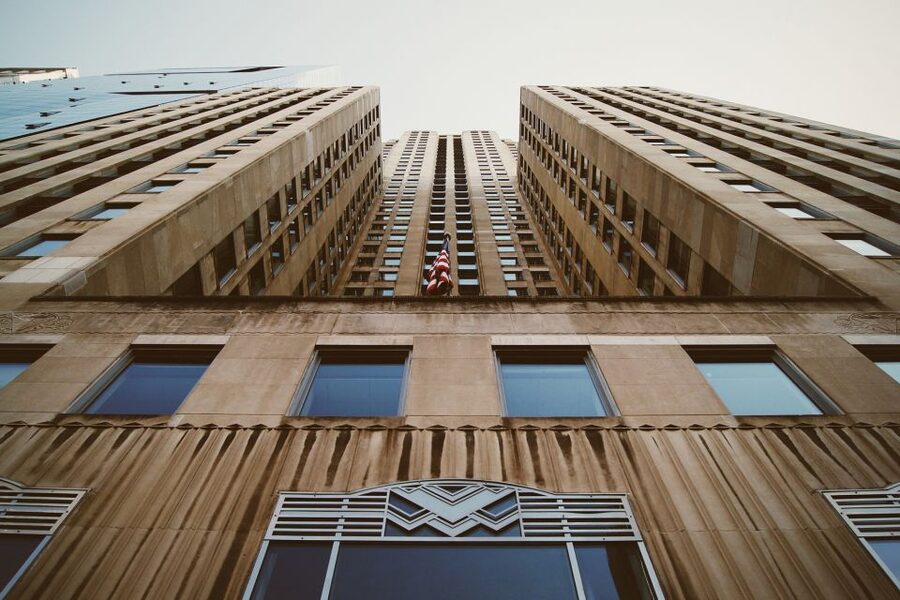
The route includes entry into five iconic Art Deco buildings, although the supplied details identify four by name. That fifth interior is part of the overall comparison, and the value lies in the sequence. Each lobby adds another example of how Chicago architects and designers adapted the style to different buildings and owners.
You should not expect a museum-style visit where you linger alone in one room for a long time. This is a guided walking tour with a fixed 90-minute duration. The pace is designed to connect several sites, so you’ll spend time moving through the downtown streets as well as looking at the interiors.
That balance suits you if you want a clear introduction rather than a specialist study of one building. If you are an architecture enthusiast hoping to examine every ornament at length, the schedule may feel brisk. For most visitors, the range of stops is the better trade.
Finishing at Merchandise Mart
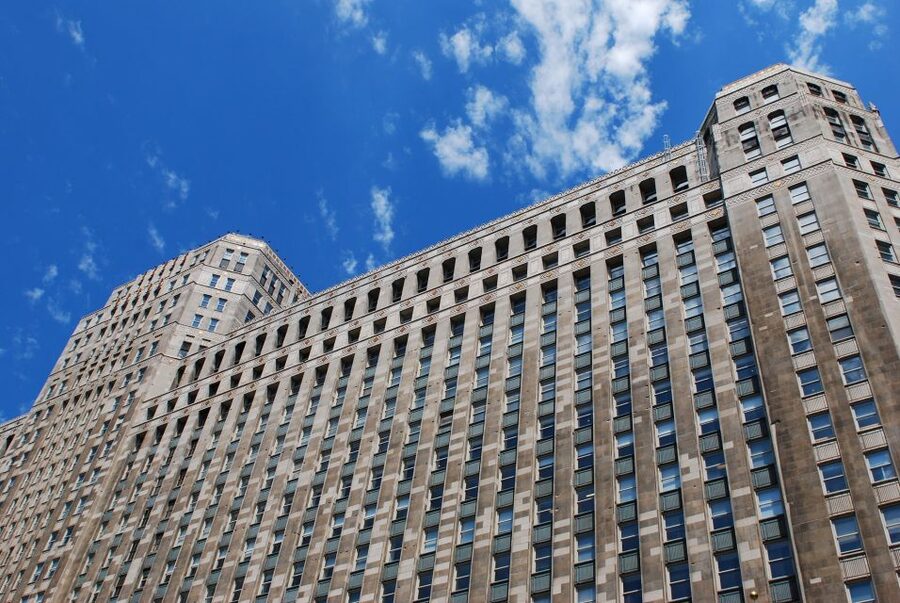
The tour ends at Merchandise Mart, a fitting place to close a story about Chicago’s commercial ambition. The building is associated with the city’s large-scale business identity, and its size helps broaden the tour from individual lobbies to the wider downtown setting.
Ending here also gives you a useful point for the rest of your day. The tour does not include hotel pickup or drop-off, so you are responsible for continuing on from Merchandise Mart. The supplied details do not promise transportation, a meal, or a return to the meeting point.
The finish is practical rather than ceremonial. You leave with a stronger sense of how Art Deco fits into Chicago’s riverfront business district, and you can plan your next stop from there.
What the guide adds
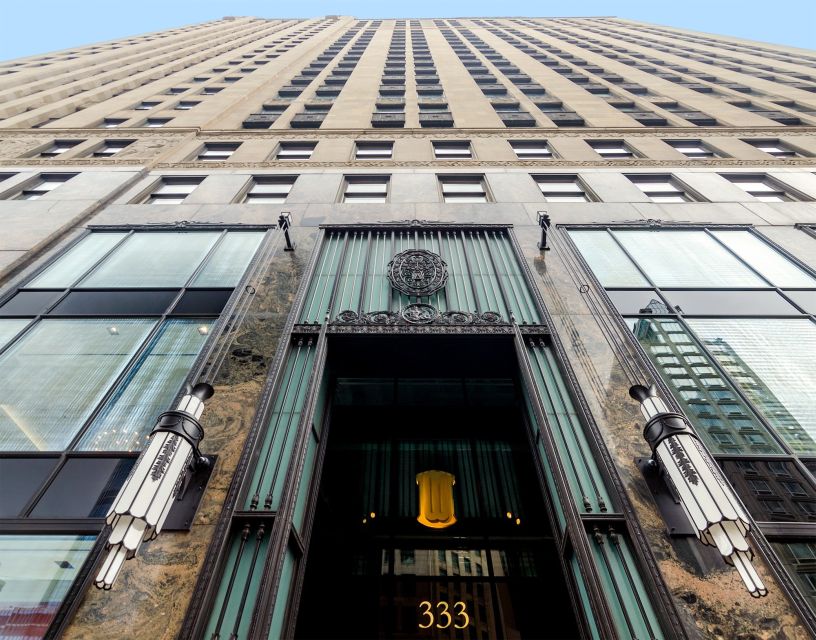
Every tour is led by a Chicago Architecture Center certified volunteer docent. These guides receive hundreds of hours of training in Chicago architecture and history, so the experience is built around explanation rather than a simple list of dates and building names.
The most consistently praised qualities are the guide’s clear detail, good pace, humor, and ability to make the subject easy to follow. That matters with Art Deco. Without a guide, you may notice that a lobby looks grand but miss why its geometry, materials, and motifs matter.
No guide names are provided in the booking information, and you should not expect a particular docent. The quality of the experience can depend somewhat on the person leading your group, but the training standard gives the tour a solid base.
The tour is in English only. If you follow spoken English comfortably, the small group and the guide’s commentary should make the architectural details easier to grasp. If you need another language, this is not the right choice based on the information provided.
Is $35 good value?
The listed price is $35 per group up to one person, which is an unusual way to display the cost. Check the booking screen carefully before paying so you understand how the final total applies to your party.
The value is strongest for someone who wants access to five interiors and a trained explanation in one compact outing. You are paying for more than a downtown walk. The ticket includes the 90-minute tour, entry into five Art Deco buildings, a certified docent, and admission to Chicago Architecture Center exhibits.
That combination can make the price worthwhile if you care about architecture but do not want to spend a full day inside museums. It also supports Chicago Architecture Center education and community programs, including Girls Build!, Teen Fellows, the Newhouse Architecture + Design Competition, and Open House Chicago.
The value is less clear if you mainly want skyline photographs or a general city orientation. This is an interiors-first experience, and its appeal depends on your interest in design, history, and close observation. You will also need to handle your own transportation and cannot bring luggage or large bags.
Who should book this walk?
I would recommend it to first-time Chicago visitors who want a focused introduction to the city’s architecture, as well as repeat visitors who have already seen the main skyline views. It suits adults and older children who can manage 90 minutes of walking and listening.
It is also a smart choice for anyone curious about how historic commercial buildings keep working in modern Chicago. The conversion of the Carbide and Carbon Building into the St. Jane Hotel and the Chicago Motor Club Building into the Hampton Inn make that question part of the route.
You may want to skip it if bad weather would spoil your day, since departures continue in rain and there are no weather refunds. You should also choose another activity if you need stroller or luggage storage, want a non-English tour, or prefer a relaxed visit with plenty of unstructured time.
Should you book the Art Deco Skyscrapers Walking Tour?
Book it if you want to see five landmark interiors, learn a clear visual language for recognizing Art Deco, and hear the city’s architecture explained by a trained local docent. The small group, good pacing, and mix of famous and less familiar buildings make the route feel purposeful.
Think twice if you need storage, dislike fixed walking schedules, or care more about exterior views than interior detail. For the right audience, this is a compact and worthwhile way to understand why Chicago’s 1920s skyscrapers still command attention.
FAQ
How long is the Chicago Art Deco Skyscrapers Walking Tour?
The walking tour lasts 90 minutes.
Where does the tour meet?
The meeting point is 30 N LaSalle Street. Arrive 10 minutes before departure with your confirmation ready.
Where does the tour end?
The tour ends at Merchandise Mart.
How many buildings will I enter?
You will enter five iconic Art Deco buildings during the tour.
Is the tour conducted in English?
Yes. The live tour guide language is English.
How large is the group?
The tour is limited to 10 participants.
Is the tour wheelchair accessible?
Yes, the activity is listed as wheelchair accessible.
Can I bring luggage or a stroller?
No. Large bags and luggage are not allowed, and the tour does not provide secure storage for luggage or strollers.
Can I cancel for a refund?
Yes. You can cancel up to 24 hours in advance for a full refund. Tours operate rain or shine, and weather-related refunds are not provided.
More Walking Tours in the USA
- Chicago in a Day: Food and Architecture Private Walking Tour
★ 5.0 · 53 reviews - Chicago Walking Tour: Modern Architecture
★ 5.0 · 50 reviews - Chicago History and Architecture Walking Tour
★ 4.6 · 13 reviews - Chicago History and Architecture Walking Tour with Boat Cruise
★ 4.5 · 10 reviews
More Walking Tours in Chicago
- Chicago in a Day: Food, History & Architecture Walking Tour
★ 5.0 · 1,153 reviews - Chicago’s Secret Interiors Architectural Walking Tour
★ 5.0 · 635 reviews - Chicago: Secret Interiors Architecture Walking Tour
★ 4.9 · 498 reviews - Chicago Architecture Walking Tour: What’s New
★ 5.0 · 64 reviews
New to the itinerary around Chicago
- Private Chicago Architecture Tour★ 5.0 · 5 reviews
- Private Frank Lloyd Wright Architectural Tour by Luxury Vehicle★ 3.5 · 7 reviews
- Chicago Luxury Minibus City Tour and Architecture River Cruise★ 4.5 · 8 reviews
- Private Chicago Architecture Walking Tour★ 5.0 · 6 reviews
- Chicago History and Architecture Walking Tour with Boat Cruise★ 4.5 · 10 reviews
- Small Group History And Architecture Walking Tour of Chicago★ 4.5 · 8 reviews
- Chicago: History and Architecture Guided Kayak Tour★ 5.0 · 3 reviews
- Chicago Walking Tour: See Inside Art Deco Masterpieces★ 4.9 · 8 reviews
Art Deco Tours, compared.

The Official Art Deco Walking Tour by The Miami Design Preservation League
Read our review →

Guided 10am Morning Art Deco Walk From Napier Art Deco Trust
Read our review →

Award-winning Art Deco & Neon Lights Walking Tour in Miami Beach
Read our review →