
Review · MEXICO CITY
Architecture and History of Mexico City – Small Groups
Mexico City’s Historic Center makes the most sense when you see its buildings as layers rather than isolated sights. This small-group walk links a skyscraper, a colonial church atrium, an ornate post office, an archaeological site, and the great Zócalo, while guide Raul explains how each era changed the city. I like the tiny group, capped at six, and the chance to ask questions instead of following a large crowd.
I also like the route’s practical shape: it starts at Torre Latinoamericana and ends at the Zócalo, giving you useful bearings for the rest of your visit. The main consideration is pace. You’ll be on foot for up to three and a half hours, and the tour is about interpretation rather than long indoor visits, with Palacio de Bellas Artes admission not included.
Key points to know before you book
- Small group of six or fewer: You can hear Raul clearly and ask questions without waiting for a large group to move along.
- Eight connected stops: The route ties together Mexica, colonial, nineteenth-century, and twentieth-century architecture.
- A strong first-day choice: The walk gives you a useful framework for later visits to museums and central Mexico City.
- Several outside perspectives: Balconies at the House of Tiles and the starting point near Torre Latinoamericana help you read the city from above and at street level.
- Mostly free admissions: The listed stops do not require an extra ticket, but Palacio de Bellas Artes admission is not included.
- Walking is the main activity: Public transportation is nearby, but private transportation is not provided.
Why this walk helps you read Mexico City
A first look at central Mexico City can feel confusing. Tall modern buildings rise beside colonial facades. A grand nineteenth-century statue shares space with remnants of the Mexica capital. This tour gives you a way to connect those contrasts.
The focus is architecture, but the discussion also reaches politics, art, construction materials, religion, and social change. That matters because the city’s buildings are not just decoration. They show who held power, what materials were available, how the ground shaped construction, and how Mexico changed from the Mexica period through Spanish rule and into the modern era.
Raul’s approach, based on the experience described, is conversational and detailed. He explains the story behind a building, then leaves room for questions. That makes the tour useful if you want more than a list of dates and names. You’ll hear how buildings relate to one another and how different eras remain visible in the same few blocks.
The small group is a real advantage here. With no more than six people, the guide can point out details, adjust the explanation, and respond to individual interests. If you want to ask about mural art, building symbols, colonial materials, or the city’s social history, this format gives you a better chance to do so.
More History Walks around the world:
- Chicago in a Day: Food, History & Architecture Walking Tour
★ 5.0 · 1,153 reviews - Charleston’s Best Highlights: History, Culture & Architecture
★ 5.0 · 422 reviews - Palm Springs Modernism Architecture & History Bike Tour
★ 5.0 · 359 reviews
Starting at Torre Latinoamericana
The meeting point is Torre Latinoamericana, at Eje Central Lázaro Cárdenas 2. The first stop, Mirador Torre Latino, lasts about 30 minutes and is free of charge.
The important point is not simply the tower itself. This corner gives you a way to see Mexico City as a city built in layers. The surrounding architecture reflects different periods, and the guide uses the view to explain how the center evolved.
You’ll begin with a broad orientation before moving into more specific buildings. That is a smart order. If you start with a close look at one facade, it can be hard to understand where it fits. From this opening point, you get a sense of the relationship between old and new Mexico City.
The stop is especially useful on your first day in the city. It can help you recognize the central grid, understand where the main sights sit, and place later museum visits in context. The tour does not provide private transportation, but the meeting point is near public transportation, which makes it a practical starting place.
The atrium of Templo de San Francisco
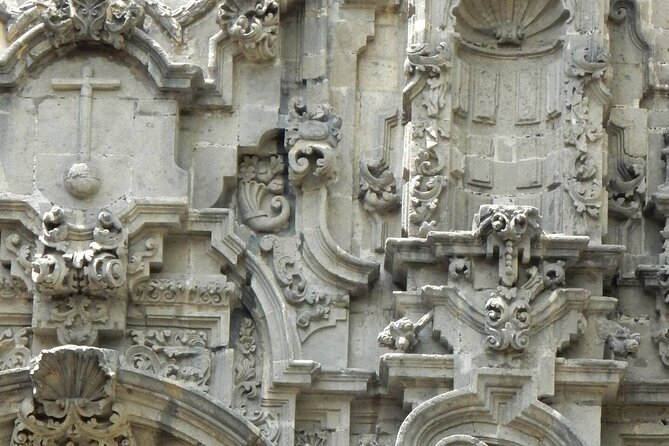
The second stop is El Atrio del Templo de San Francisco, for about 25 minutes. The visit is free.
This stop shifts the discussion from the modern skyline to colonial construction and the materials used to build Mexico City. The atrium is also tied to major historical changes that shaped the country, so the guide uses the setting to explain more than architectural style.
You can expect the discussion to connect the building’s physical features with the broader forces behind them. That approach gives the stop more weight than a quick photograph outside a church. You’ll consider how construction choices, religious institutions, and political change affected the center.
Because the stop is relatively short, Raul’s explanation is likely to be focused rather than exhaustive. If colonial architecture is your main interest, this is a good moment to ask questions. The intimate group makes that easy.
Reading the House of Tiles from its balconies
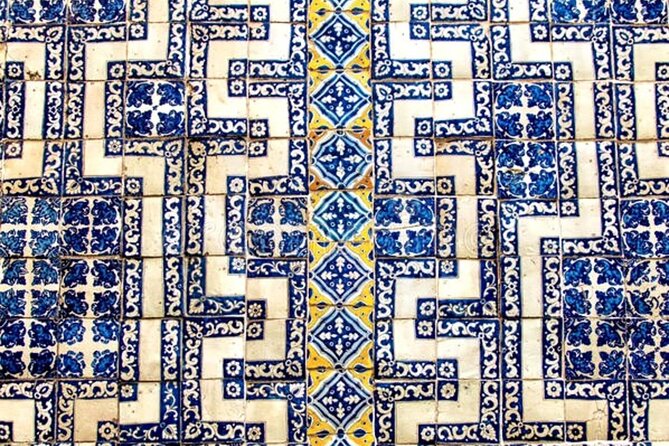
The House of Tiles, or Casa de los Azulejos, receives about 25 minutes of the walk. Admission is free.
The building is used in several ways. You’ll see an interesting piece of art inside, look toward other buildings from its balconies, and trace the building’s development over nearly 300 years. That combination makes this one of the more distinctive stops on the route.
The balconies matter because they change your viewpoint. Instead of looking only at the House of Tiles from the street, you can use it as a place to study the surrounding center. The guide also explains how the building evolved, so you are not left with a single snapshot of its decorated facade.
I like this stop for readers who enjoy details that are easy to miss on an independent walk. The art, the balconies, and the long period of change give Raul several ways to explain how architecture reflects changing tastes and uses.
More Architecture Tours around the world:
- Chicago Architecture River Cruise
★ 5.0 · 15,756 reviews - Chicago River 90-Minute Architecture Tour
★ 4.5 · 9,629 reviews - Chicago River: 1.5-Hour Guided Architecture Cruise
★ 4.8 · 8,046 reviews - Barcelona: Park Güell and Gaudí House Museum Entry Ticket
★ 4.5 · 6,326 reviews
Palacio de Bellas Artes and the city’s public image
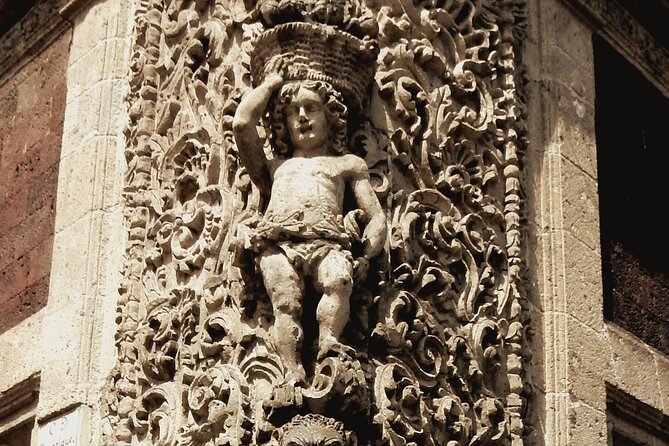
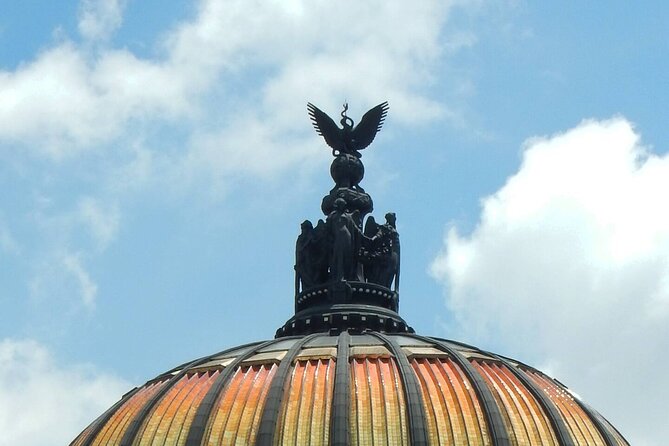
The route continues to Palacio de Bellas Artes for about 20 minutes. Admission is not included, so you should not assume this part covers a full museum visit or an included entry ticket.
The emphasis here is on the building’s historical, political, and artistic setting, along with the buildings around it. That wider view is useful. Palacio de Bellas Artes is not treated as a single grand object, but as part of a central district shaped by public ambition and changing ideas about art and national identity.
You’ll also hear how nearby buildings contribute to the setting. This can help you notice relationships that are easy to miss when you simply arrive, take a picture, and move on.
Allow yourself realistic expectations. Twenty minutes is enough for an informed exterior discussion and orientation, but not for a long visit inside. If you want to explore the building at length, you’ll need separate time and the required admission.
Palacio Postal and the ornate early twentieth century
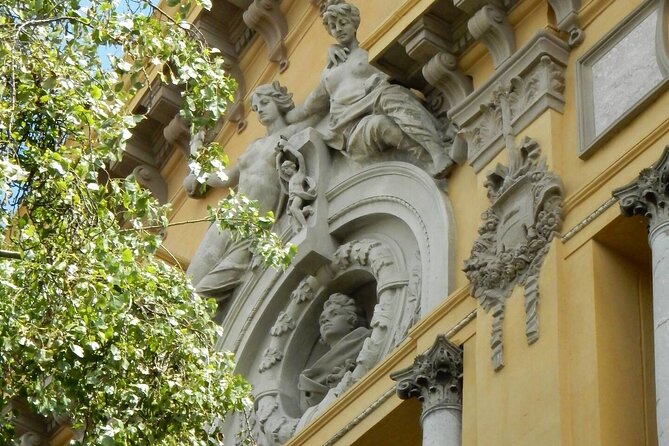
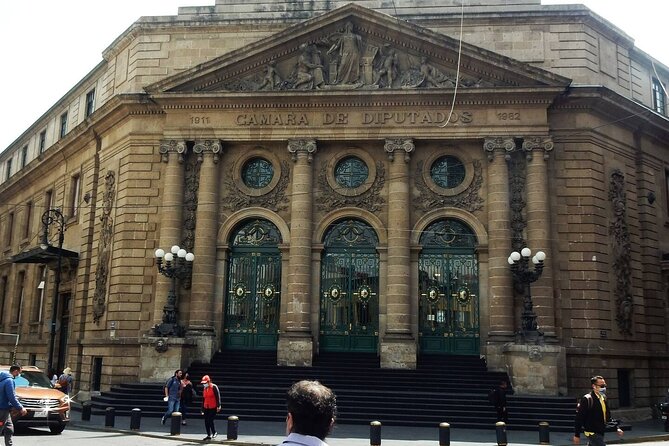
Palacio Postal is another short stop, lasting about 20 minutes, with free admission listed for the visit. The building dates from the beginning of the twentieth century and is one of the route’s clearest examples of formal, highly decorated public architecture.
The group visits the interior depending on the time of day. That qualification matters. You may see more than the exterior, but interior access is not guaranteed at every hour.
This stop works well beside the House of Tiles and Palacio de Bellas Artes because it shows another side of Mexico City’s architectural development. Raul can place the post office within the city’s changing artistic and civic ambitions, helping you compare it with the colonial structures seen earlier.
The practical lesson is simple: keep your eyes open even when the schedule moves quickly. Ornate public buildings often reward a slower look, but this tour gives you an introduction rather than a full architectural study.
Plaza Tolsá and an eclectic mix of styles
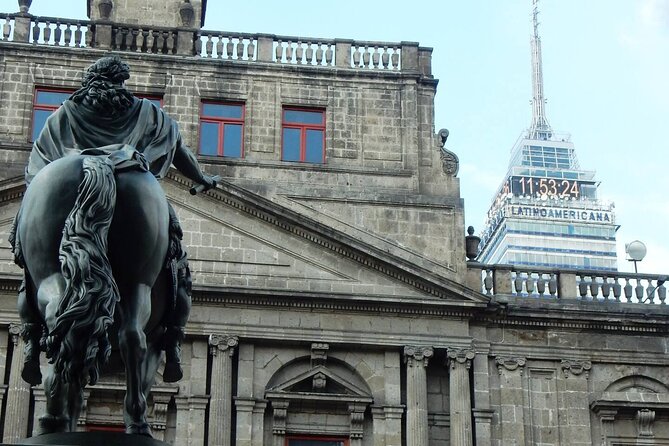
At Plaza Tolsá, the group spends about 20 minutes examining the buildings around the statue of Charles the IV of Spain.
This is a useful pause because the subject is not one famous building. Instead, you’ll look at an eclectic group of structures and compare the styles around the square. The statue provides a fixed point while the surrounding buildings show how central Mexico City accumulated different architectural ideas over time.
The stop is well suited to anyone who wants to learn how to compare buildings. Raul’s explanations connect styles rather than treating each facade as a separate fact. You’ll be encouraged to see the square as a conversation between periods.
It also adds political context. A statue of a Spanish king in the center of Mexico City naturally opens questions about colonial power, public memory, and how the city presents its past. The supplied tour details do not promise a formal debate, but the setting gives the guide plenty to discuss.
Templo Mayor brings the older city into view
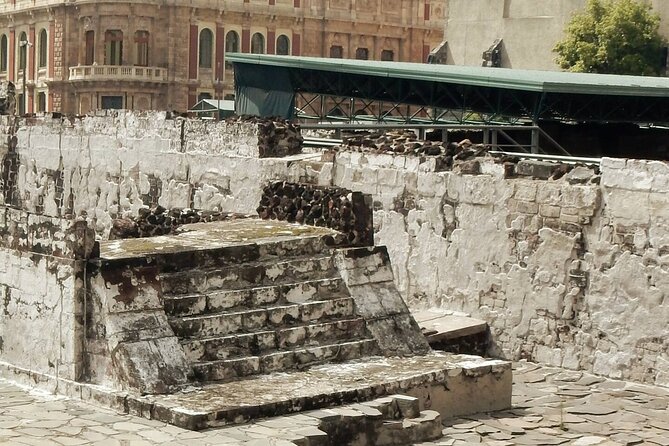
Near the end, the route reaches Museo del Templo Mayor for about 20 minutes. The stop includes an archaeological site in the city center.
This is where the earlier discussion about layers becomes especially clear. The archaeological remains connect modern Mexico City with the Mexica capital beneath and around the colonial city. After seeing churches, civic buildings, and later public architecture, you get a direct reminder that the center did not begin with Spanish construction.
The visit is brief, so think of it as an introduction and orientation rather than a complete museum visit. If archaeology is a major interest, you may want to return with more time. Still, the stop has strong value on this particular walk because it links the oldest part of the story to the buildings you have just studied.
Raul’s background in art, architecture, history, and sociology is especially useful here. The strongest part of this experience is the way those subjects are connected. You are not only looking at ruins. You are considering how one city was built over another and how that past remains part of present-day Mexico City.
Finishing in the Zócalo
The final stop is the Zócalo, officially Plaza de la Constitución. The tour ends here after about 20 minutes, and the listed admission is included.
Ending in the main square gives the walk a clear final point. The Zócalo gathers many of the themes introduced earlier: political power, religious influence, public space, archaeology, architecture, and national identity.
Raul uses this time to tie the stories together and answer questions. He can also offer recommendations for the rest of your visit or for a future return to the city. That makes the ending practical rather than abrupt.
The Zócalo is also a useful place to continue on your own, since the route has already given you a framework for understanding the center. You’ll know more about what you are looking at, and you’ll have a better sense of which buildings or museums deserve a longer visit.
Is the $83.59 price good value?
At $83.59 per person, this is not the cheapest way to walk through central Mexico City. The value depends on how much you want from a guide.
You are paying for roughly three to three and a half hours of discussion, a maximum group size of six, bottled water, and a route that connects eight important places. Most listed stops do not require an added admission charge. The exception is Palacio de Bellas Artes, where entry is not included.
I think the price is easier to justify if this is your first or second day in the city. Raul’s explanations can give later museum visits more meaning, especially the National Museum of Anthropology, which one tour participant felt better prepared to understand after this walk. You are also getting a compact orientation without arranging several separate visits.
The value is less clear if you want extensive time inside museums or a private vehicle. This is a walking and interpretation experience, not a sightseeing transfer. You are paying for context, questions, and a carefully connected route.
Timing, fitness, and useful planning notes
The total duration is listed as approximately three to three and a half hours, with travel time already included. Expect to be on foot for most of that period, so comfortable shoes and a reasonable level of physical fitness are important.
The tour requires good weather. If poor weather causes cancellation, you are offered another date or a full refund. The standard cancellation terms are strict: the experience is non-refundable and cannot be changed for any reason once booked.
You receive a mobile ticket, and the tour is offered in English. Bottled water is included. Private transportation is not, though the starting point is near public transportation.
I would book this early if the dates fit your plans. The experience is booked on average 25 days ahead, which suggests that waiting until the last minute may not be wise, especially if you want to use it as an opening activity in Mexico City.
Who should choose this experience?
I would choose this walk if you want a guide who explains connections between architecture, art, politics, and society. It suits curious first-time visitors, people who like asking questions, and anyone who finds a city easier to understand with a clear historical framework.
It is also a good fit if you want a small group rather than a large procession. Raul’s style, as described through the experience, is warm, thorough, and engaged, with particular strength in explaining how the city developed from Mexica foundations through colonial and modern periods.
I would think twice if you dislike extended walking, need guaranteed indoor access, or want a tour devoted mainly to one museum. The itinerary moves at a steady pace, and some stops offer only a short visit. Palacio Postal access depends on the time of day, and Palacio de Bellas Artes admission is separate.
Should you book this Mexico City architecture walk?
Book it if you want to understand the Historic Center rather than simply pass through it. The route is well planned, Raul is the central strength, and the group limit of six gives the discussion a personal feel.
The best use is early in your stay, when the city’s mix of archaeological remains, colonial buildings, ornate public works, and modern towers still needs a framework. For $83.59, you are not buying a long list of admissions. You are buying three hours of explanation that can make the rest of Mexico City easier to read.
FAQ
How long does the architecture and history tour last?
The tour lasts approximately three to three and a half hours, including allotted transportation and travel time.
Where does the tour begin?
It begins at Torre Latinoamericana, at Eje Central Lázaro Cárdenas 2 in Mexico City’s Historic Center.
Where does the tour end?
The tour ends at Constitution Plaza, also called the Zócalo, the main square of Mexico City.
How many people can join the group?
The tour has a maximum of six participants.
Is the tour offered in English?
Yes. The experience is offered in English.
Is transportation included?
Private transportation is not included. The starting point is near public transportation, and travel time between stops is already included in the total duration.
Are entrance fees included?
The listed stops are generally free of charge. Admission to Palacio de Bellas Artes is not included. The Zócalo stop is listed as included, and Palacio Postal interior access depends on the time of day.
What happens if bad weather cancels the tour?
If poor weather causes cancellation, you are offered a different date or a full refund. The experience otherwise cannot be canceled or changed for a refund.
New to the itinerary around the world
- Washington, DC: Georgetown Architecture Walking Tour★ 5.0 · 8 reviews
- Wilmington History and Architecture Tour★ 4.8 · 18 reviews
- Walk & Discover KL’s Architectural and Heritage Gems★ 5.0 · 7 reviews
- Washington DC: Dupont Circle & Embassy Row Architecture Tour★ 5.0 · 6 reviews
- New Orleans : Garden District Architecture Walking tour★ 4.8 · 5 reviews
- Unveiling Brno: History, Culture & Architectural Delights★ 5.0 · 2 reviews
- Vicenza: Palladian Architecture Private Walking Tour★ 3.3 · 3 reviews
- Private Colonial Williamsburg Architectural Tour★ 5.0 · 5 reviews
Mexico Architecture Tours, compared.
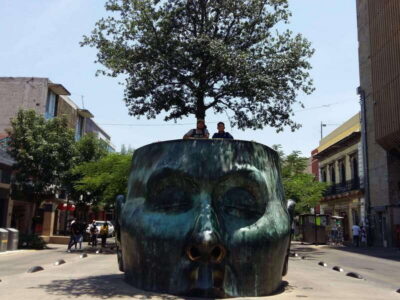
Guadalajara: Culture, Architecture, and Market Walking Tour
Read our review →
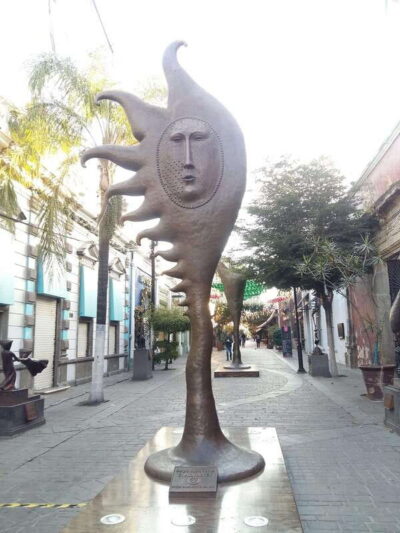
Tlaquepaque Magic Town: Artisans, Traditions, Architecture
Read our review →
Mexico City: 1960s &1970s Mexican Architecture Walking Tour
Read our review →
Guadalajara: Private Food Tour and Architecture Sightseeing
Read our review →

Other lists with this tour