Review · CHICAGO
Chicago Walking Tour: Modern Architecture
Chicago’s modern architecture is easy to miss because much of it is woven into the daily life of the Loop. This 90-minute walking tour brings the concrete, glass, steel, and bold experiments into focus, from Mies van der Rohe’s disciplined towers to Bertrand Goldberg’s round Marina City.
I like the small group, capped at 15, and the chance to enter the Chicago Architecture Center galleries before or after the walk. I also like the guide-led storytelling, which turns familiar downtown buildings into a lesson in how Chicago tried to keep people living in the city. The main drawback is focus: if modern architecture is not your thing, parts of the tour may feel repetitive, and some guides set a brisk pace.
Key points at a glance
- See the 4,000-building Chicago model: The Chicago Architecture Center gives you a useful visual primer on the city’s shape and growth.
- Trace the shift to modern materials: The Daley Center offers an early look at Cor-Ten steel, while nearby buildings show changing ideas about offices and public space.
- Study Marina City up close: Bertrand Goldberg’s twin round towers were designed as an urban experiment, not just as eye-catching apartments.
- Hear the city through a guide: Guides including Marcia, Kathleen, Donna, and Ollie have been praised for clear, friendly explanations.
- Keep the schedule tight: The walking portion lasts about an hour and a half, making it easy to fit into a day of sightseeing.
- Expect an architecture-first outing: This is best for people who enjoy design, city planning, and the stories behind buildings.
Starting with Chicago’s 4,000-building model

Meet at the Chicago Architecture Center, 111 E. Wacker Drive. The tour begins with about 10 minutes at the center, where you can see a scale model of Chicago made up of roughly 4,000 buildings.
That model is more than a quick photo stop. It gives you a bird’s-eye view of how the city fits together, which helps when your guide starts discussing the Loop, the river, major office blocks, and residential towers. If you arrive early, the center also has an award-winning store, and admission to its galleries is part of the experience.
The short opening visit also sets the tone. This is not a general sightseeing walk with a few buildings added for decoration. The focus is architecture, and your guide will ask you to look at materials, structure, purpose, and the ideas behind each project.
Because the model visit takes only about 10 minutes, do not expect a full museum visit during the walking portion. The useful approach is to treat it as an introduction, then return to the galleries afterward if you want more time.
More Walking Tours in Chicago
- Chicago in a Day: Food, History & Architecture Walking Tour
★ 5.0 · 1,153 reviews - Chicago’s Secret Interiors Architectural Walking Tour
★ 5.0 · 635 reviews - Chicago: Secret Interiors Architecture Walking Tour
★ 4.9 · 498 reviews
Prudential, Aon, and Inland Steel: three different answers to the office tower
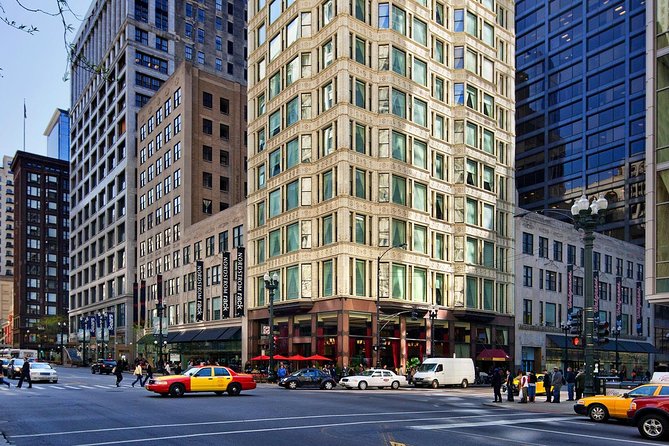
The early part of the route takes in the Prudential Building, the Aon Center, and the Inland Steel Building. These are viewed from the outside, so your experience depends on your guide’s ability to explain what you are seeing in the larger story of Chicago’s modern architecture.
The Prudential Building is a helpful starting point because it connects older downtown skyscraper traditions with newer postwar design. One visitor rated this building as the most memorable part of the walk, which makes sense if you enjoy seeing how office architecture changed after the classic early skyscraper era.
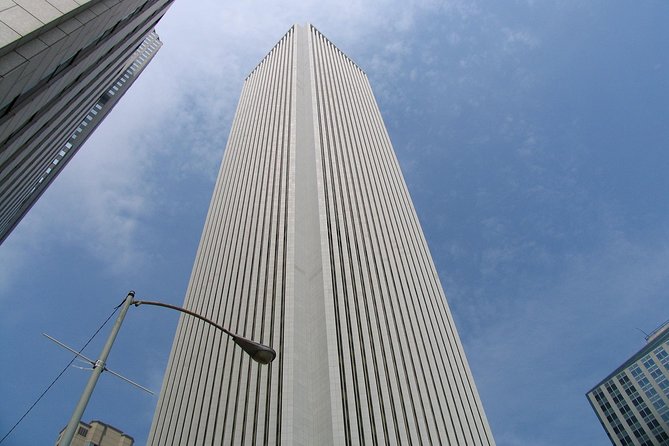
The Aon Center gives you a chance to consider the scale and ambition of later office construction. Its height and clean form make it a useful comparison with the buildings around it. Your guide can point out details you might otherwise pass without noticing, especially when the streets are busy and your attention is pulled toward shops and traffic.
The Inland Steel Building offers another contrast. Rather than treating every modern tower as the same glass box, the tour uses nearby examples to show different approaches to office space, structure, and exterior treatment.
This section is strongest when you listen closely to the comparisons. On your own, you might photograph each building and move on. With a guide, you can begin to see why one tower feels heavy, another appears spare, and another reflects a different period’s idea of efficiency.
The Daley Center and Picasso in the public square
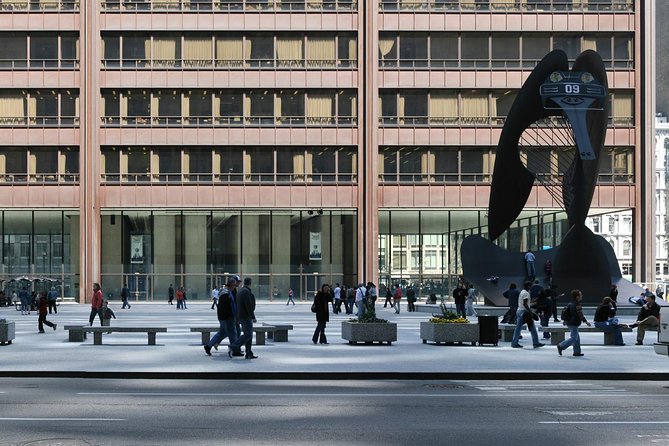
The Daley Center is one of the tour’s most useful stops. You spend about 15 minutes here, looking at a major civic building and the public plaza around it.
The building was among the first to use unpainted Cor-Ten steel, a material that develops a weathered reddish-brown surface. That choice changed the mood of the building. Instead of hiding age and exposure behind a bright finish, the material makes weather part of the design.
Your guide also discusses the famous Picasso sculpture in the plaza. The artwork adds a public-art question to the architectural one: What belongs in a civic square, and how should a city make room for art that may challenge familiar ideas of beauty?
This is a particularly good stop for history lovers who do not want architecture reduced to names and dates. You get a sense of how a building and its plaza work together, and how public architecture can shape the way people gather, pass through, or pause.
The limitation is time. Fifteen minutes is enough for a focused explanation, but not enough to study every feature or linger over the Picasso. If the sculpture interests you, note its location and return later at your own pace.
AMA Plaza and the discipline of Mies van der Rohe
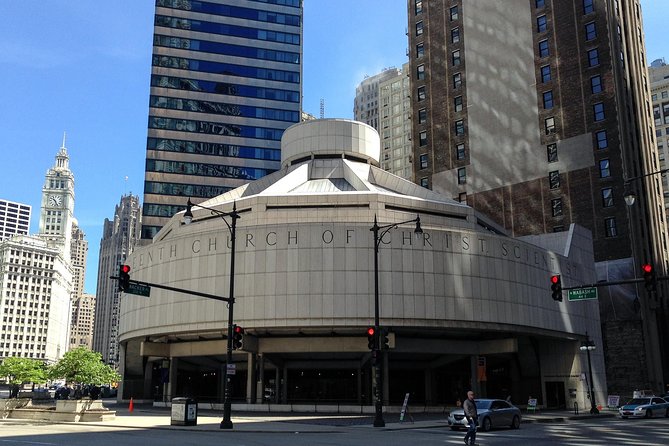
The route continues to AMA Plaza, formerly home to the office of Mies van der Rohe. This stop gives the guide a chance to explain the architect’s place in Chicago’s modern story and the influence of his restrained approach.
Mies is associated with clear structure, strong geometry, and an insistence that a building’s materials and form should do the work without excess decoration. You will not need a background in architecture to follow the basic idea. Your guide translates the design into things you can actually look at: lines, surfaces, proportions, and the way a tower meets the city around it.
This is where a good guide matters most. Marcia has been praised for being both friendly and well informed, while Donna has been noted for presenting material in a clear architectural sequence. Those qualities help because the subject can become technical if it is delivered as a list of architects and dates.
The stop also helps explain why Chicago became such an important place for modern architecture. You are not only looking at one building. You are seeing how a design philosophy took root in a working city and influenced the appearance of downtown.
More Walking Tours in the USA
- Chicago Walking Tour: Art Deco Skyscrapers Loop
★ 5.0 · 138 reviews - Chicago Architecture Walking Tour: Incredible Art Deco Interiors
★ 5.0 · 85 reviews - Chicago Architecture Walking Tour: What’s New
★ 5.0 · 64 reviews - Chicago Walking Tour: Art Deco Skyscrapers Riverfront
★ 5.0 · 53 reviews
Marina City, Bertrand Goldberg’s urban experiment
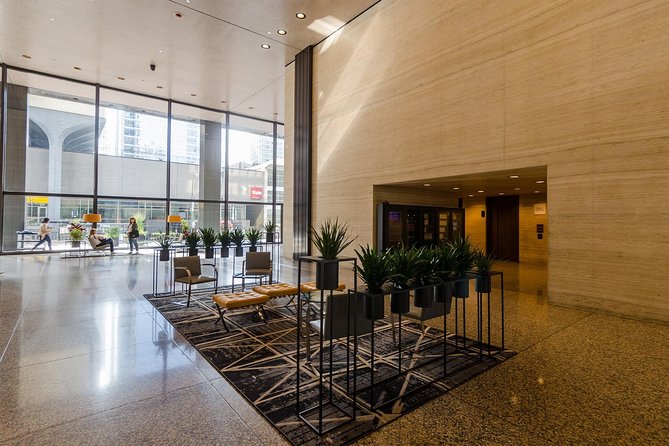
Marina City is the tour’s most unusual major stop. You spend about 15 minutes examining Bertrand Goldberg’s mixed-use residential and commercial complex, known for its distinctive rounded towers.
Goldberg designed Marina City as an urban experiment. The goal was to draw middle-class Chicagoans back to the city after more than a decade of suburban migration. That purpose gives the buildings a practical story behind their unusual shape. They were not created simply to look futuristic. They were part of an attempt to make city living appealing and self-contained.
This is the point where the tour moves beyond facade spotting. You can discuss how housing, work, and daily services might fit together in one complex. The rounded form becomes part of a larger question: What does a city need to keep residents from moving away?
If you enjoy architecture with a clear social aim, Marina City may be your favorite stop. If you prefer traditional buildings or interiors, it may feel more like a quick exterior study. The supplied schedule does not promise entry into the towers, so expect to examine them from the public route rather than tour private residential areas.
Apple on Michigan Avenue and newer design
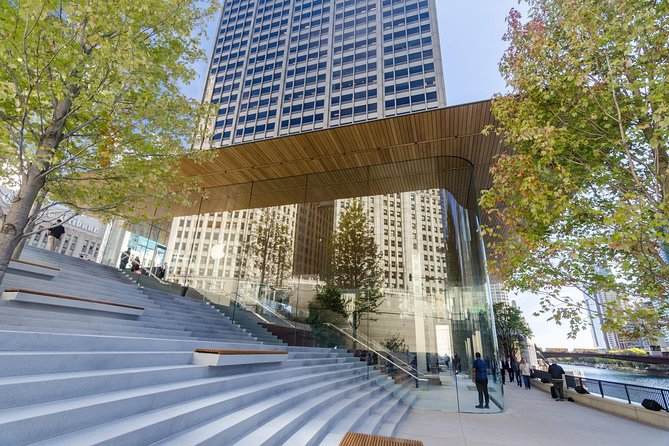
The route also includes a look at the Apple Store on Michigan Avenue. This offers a more recent point of comparison after the earlier examples of postwar modernism and mid-century design.
The Apple Store is useful because it shows how a major brand uses architecture to create a public presence. Its placement on Michigan Avenue also lets the guide connect modern design with one of Chicago’s best-known shopping streets.
This stop is not treated as a separate long visit, so keep your expectations realistic. You are looking at the building as part of the city’s architectural development, not taking a retail tour or spending time shopping.
Taken together, the route moves from the Chicago Architecture Center to office towers, a civic plaza, an architect’s former office, a mixed-use residential experiment, and a newer commercial building. That range keeps the walk from being limited to one decade or one design school.
What the guide adds to the walk
The guide is the key variable in this experience. The tour uses a professional, certified architectural guide, and the strongest guide descriptions point to a mix of clear teaching and an easy manner.
Marcia has been praised for being friendly and extremely well informed. Kathleen has been described as an effective guide, though also as someone who walks fast. Donna has been noted for organizing the material in an architectural chronology, which can make the tour easier to follow. Ollie has been described as fun, interesting, and well prepared.
Those names do not mean you can select a particular guide when booking. They show the kind of presentation you may receive, but the guide assigned to your departure can vary.
I would pay attention to the pace. One cold-weather outing was made enjoyable by an entertaining guide, while another participant found the walk brisk. The route lasts only 90 minutes, so the guide needs to cover a lot without stopping for long periods. Wear comfortable shoes and stay close to the group at crossings and busy downtown corners.
The group maximum of 15 is a real advantage. It is small enough for questions and easier listening, but it is not a private tour. If you want a completely personal discussion at every building, you may find the group format limiting.
Is $35 a fair price?
At $35 per person, this is a reasonable buy if you want an organized introduction to Chicago’s modern buildings. You are paying for a certified guide, a planned route, and admission to the Chicago Architecture Center galleries. The value comes mainly from the interpretation, not from paid entry into a series of towers.
That distinction matters. Most of the stops are viewed from public spaces, and there is no promise of interior access to the buildings. If you already know the architects, materials, and design debates, you may want a longer or more specialized architecture program instead.
For someone new to the subject, the price compares well with the cost of wandering downtown without context. The guide helps you connect buildings that might otherwise seem unrelated, and the center’s model gives you a useful way to understand Chicago beyond the street level.
The tour is booked an average of five days in advance, so I would not leave it until the last moment if your schedule is tight. Confirmation arrives at booking, and free cancellation is available until 24 hours before the start time. Cancellations or changes inside that window are not refunded or accepted.
Weather, access, and practical planning
This is an outdoor walking tour, so Chicago weather matters. A cold-weather outing was still considered worthwhile, but you should dress for the conditions rather than assume the city’s office towers will provide shelter.
The route begins near public transportation, and most people can take part. Service animals are allowed. Pets are not allowed, and the tour does not provide hotel pickup, luggage storage, stroller storage, or a coat check.
The schedule and route can change without notice. That is normal for a downtown walk, where street conditions and building access may affect the order of stops. You should plan around the stated 90-minute duration, but leave a little room afterward if you have a timed reservation.
A small group helps with questions, but you still need to be ready to walk and keep up with the guide. Kathleen’s reported brisk pace is a useful reminder that this is an active city walk, not a stationary lecture.
Who will enjoy this most?
I would choose this tour if you like architecture, urban history, or the way cities try to solve social problems through design. It also works well for a first visit to Chicago because the route gives you a useful framework for buildings you may see again during your stay.
History lovers should enjoy the stories behind Cor-Ten steel, the Daley Center plaza, Mies van der Rohe’s influence, and Marina City’s attempt to draw residents back downtown. The tour is also a good fit for anyone who wants a short activity between museums, meals, or other Loop sightseeing.
I would think twice if you want interiors, long stops, or a broad tour of Chicago’s architecture from the nineteenth century to today. This experience is focused on modern, postmodern, and newer structures. One participant found that focus monotonous, which is a fair warning if your interest in buildings is casual.
The 94 percent recommendation rate and 4.8 rating from 50 reviews suggest strong overall satisfaction, but the one-star cancellation complaint should not be ignored. Confirm your meeting details and watch for provider communication, especially if this tour is important to your day. If a cancellation occurs without notice, resolving a third-party booking may be harder than dealing directly with the center.
Should you book the modern architecture walk?
Book it if you want a compact, well-organized introduction to Chicago’s modern buildings and prefer hearing the reasons behind the designs rather than simply taking photographs. The best parts are the guide’s explanations, the small group, the Chicago model, the Daley Center and Picasso discussion, and Marina City’s unusual social purpose.
Skip it if you are not interested in architecture or if you need a relaxed pace with substantial indoor time. For the right person, $35 buys a useful way to read the Loop. For everyone else, the buildings may blur together before the 90 minutes are over.
FAQ
Where does the tour begin?
The tour begins at the Chicago Architecture Center, 111 E. Wacker Drive, Chicago, Illinois 60601.
How long does the tour last?
The walking tour lasts approximately 1 hour and 30 minutes.
What buildings and sites are included?
The route includes the Chicago Architecture Center, Prudential Building, Aon Center, Inland Steel Building, Daley Center, the Chicago Picasso, AMA Plaza, Marina City, and the Apple Store on Michigan Avenue.
Is admission to the Chicago Architecture Center included?
Yes. Admission to the Chicago Architecture Center galleries is included, including the chance to view the 4,000-building scale model.
How large is the group?
The tour has a maximum of 15 travelers.
Are service animals allowed?
Yes. Service animals are allowed, but pets are not.
What is the cancellation policy?
You can cancel up to 24 hours before the experience starts for a full refund. Cancellations or changes made less than 24 hours before the start time are not accepted and are not refunded.
New to the itinerary around Chicago
- Private Chicago Architecture Tour★ 5.0 · 5 reviews
- Private Frank Lloyd Wright Architectural Tour by Luxury Vehicle★ 3.5 · 7 reviews
- Chicago Luxury Minibus City Tour and Architecture River Cruise★ 4.5 · 8 reviews
- Private Chicago Architecture Walking Tour★ 5.0 · 6 reviews
- Chicago History and Architecture Walking Tour with Boat Cruise★ 4.5 · 10 reviews
- Small Group History And Architecture Walking Tour of Chicago★ 4.5 · 8 reviews
- Chicago: History and Architecture Guided Kayak Tour★ 5.0 · 3 reviews
- Chicago Walking Tour: See Inside Art Deco Masterpieces★ 4.9 · 8 reviews
Chicago Architecture Tours, compared.

Chicago River: 1.5-Hour Guided Architecture Cruise
Read our review →
Chicago Architecture Center River Cruise aboard First Lady
Read our review →
Architecture River Cruise Skip-the-Ticket Line
Read our review →
Chicago River 45-Minute Architecture Tour from Magnificent Mile
Read our review →