Review · CHICAGO
Chicago Architecture Walking Tour: What’s New
Chicago keeps rebuilding itself, and this 90-minute walk shows you how the city is changing now. Instead of trying to cover every famous tower, you stay near the Chicago Architecture Center and the Chicago River, where old landmarks meet new apartments, hotels, shops, and public spaces.
I like the small group limit of 15, which gives you a better chance to ask questions. I also like that the tour includes the CAC galleries, so you get both an outdoor walk and a useful indoor introduction to Chicago’s design story.
The main thing to consider is the focus. If you want a greatest-hits tour of early skyscrapers, this is not the best match. It concentrates on newer buildings and recent changes, and access to building interiors can shift with weekend schedules, holidays, or unexpected closures.
Key points at a glance
- Recent Chicago design: Focus on new buildings, additions, renovations, and current urban design trends.
- Strong local guides: Paul, Paula, Mary Ann, and Mary Jo have led tours with clear explanations and lively stories.
- A compact route: The walk stays around the CAC, Pioneer Court, the River, and Michigan Avenue.
- Useful indoor time: Admission to the Chicago Architecture Center galleries is included.
- Good value at $35: You get a professional guide, a small group, and roughly an hour and a half of instruction.
- Weather matters: The tour runs outdoors, so rain or cold can affect your comfort even when the guide keeps the pace engaging.
Why this tour looks at Chicago’s future
Many Chicago architecture walks focus on the city’s famous early skyscrapers. Those buildings deserve attention, but this tour asks a different question: what is Chicago building now, and how does new construction fit beside the old?
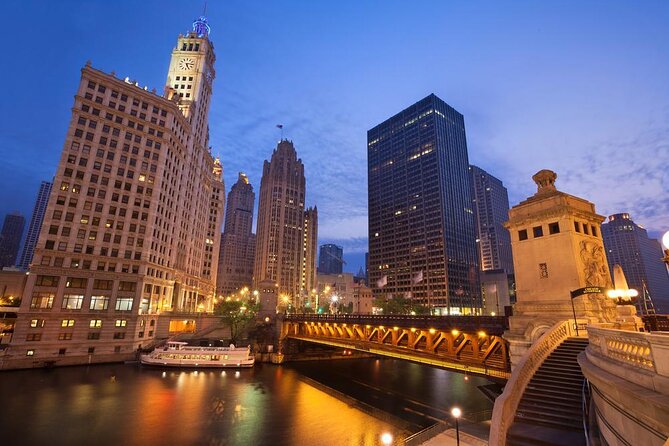
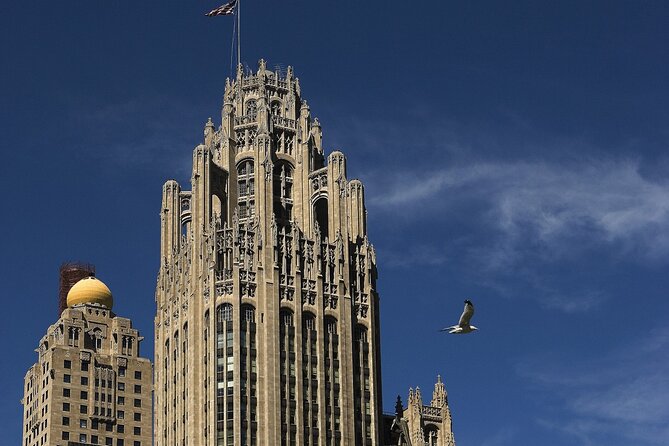
That makes the experience useful for anyone who already knows the Tribune Tower, Wrigley Building, and riverfront skyline. You are not simply collecting postcard views. You are looking at how historic buildings are reused, how small urban apartments are designed, and how large new towers change the public spaces around them.
The route is also practical. Chicago has an enormous amount of architecture, and a citywide search can leave you worn out and unsure of what deserves your attention. This walk keeps you in a tight central area, so you can spend your time looking up rather than worrying about the next train, street crossing, or distant landmark.
The Chicago Architecture Center is a sensible starting point. Your guide begins with introductory remarks, then takes you outside for the main portion of the tour. The included galleries give you added context before or after the walk, depending on how the visit is organized that day.
More Walking Tours in Chicago
- Chicago in a Day: Food, History & Architecture Walking Tour
★ 5.0 · 1,153 reviews - Chicago’s Secret Interiors Architectural Walking Tour
★ 5.0 · 635 reviews - Chicago: Secret Interiors Architecture Walking Tour
★ 4.9 · 498 reviews
Starting at the Chicago Architecture Center
The tour begins at 111 E Wacker Drive, beside the Chicago River. Plan to arrive ready to walk, since the opening remarks are only about 10 minutes and the group soon moves into the surrounding streets.
The CAC is more than a meeting point. Gallery admission is included, which adds value to the $35 price. If you are new to Chicago architecture, the galleries can help you understand the city’s building types, planning choices, and design changes before you study individual structures outdoors.
The indoor portion is also useful if the weather turns unpleasant. Still, the main tour is a walking experience, not a gallery lecture with a short outdoor add-on. Bring a coat or rain layer when the forecast calls for it, and wear shoes that feel good on city sidewalks.
The group can include up to 15 people. That is large enough to provide a social atmosphere but small enough for direct questions. The guide is a professional certified host from the Chicago Architecture Center, and the strongest part of the experience is the conversation between stops.
Pioneer Court and the meeting of old and new
The first major outdoor discussion takes place around Pioneer Court. This area puts you near several important Chicago buildings and gives the guide room to explain how newer work relates to established landmarks.
This is where the tour’s theme becomes clear. You are not only looking at façades. You are considering the role of a building in a busy downtown setting, including how it meets the sidewalk, frames public space, and fits into a district with decades of architectural history.
The guide discusses buildings surrounding Pioneer Court, then moves toward the recent changes at Tribune Tower. That transition is one of the most interesting parts of the route. Tribune Tower is a historic Chicago landmark, but the story here is not frozen in the past. The tour examines renovations and additions, giving you a way to think about preservation that goes beyond simply keeping an old exterior intact.
If you care about adaptive reuse, this stop should be a highlight. You get to consider what happens when a historic office building receives a new life and new functions. The exact interior access may change, though, so do not book this expecting a guaranteed look inside every building.
Tribune Tower and the practical side of preservation
Tribune Tower offers a useful case study because it combines familiar historic design with newer changes. Your guide explains the recent renovations and additions, helping you see how an old building can remain part of the city’s daily life rather than becoming a museum piece.
I value this kind of discussion because it connects design to practical decisions. A building may be admired for its appearance, but it also needs to work for current owners, residents, businesses, and the public spaces around it. The tour gives you a chance to think about those competing needs.
This stop may appeal especially to architects, designers, preservation fans, and anyone curious about how cities update older structures. It is also approachable if you do not know technical architecture terms. Guides such as Paul, Paula, Mary Ann, and Mary Jo have been praised for explaining buildings, architects, sustainability, and local stories in a clear way.
Do not expect a long interior visit here. The itinerary allows for changes based on holiday and weekend schedules, closures, or other issues. The outdoor discussion remains the dependable part of the experience.
More Walking Tours in the USA
- Chicago Walking Tour: Art Deco Skyscrapers Loop
★ 5.0 · 138 reviews - Chicago Architecture Walking Tour: Incredible Art Deco Interiors
★ 5.0 · 85 reviews - Chicago Walking Tour: Art Deco Skyscrapers Riverfront
★ 5.0 · 53 reviews - Chicago in a Day: Food and Architecture Private Walking Tour
★ 5.0 · 53 reviews
Small urban apartments and the changing downtown
The tour then turns to recent design trends in small urban rental apartments. This is a less famous subject than a landmark tower, but it may be more relevant to the city’s future.
Apartment design tells you a lot about how Chicago is growing. Smaller units can respond to high demand for central housing, but they also raise questions about shared spaces, privacy, light, amenities, and the daily experience of living in a dense neighborhood.
The guide helps you look at these buildings as more than anonymous rental blocks. You consider how architects work within tight city lots, how a new apartment building meets the street, and how current housing needs shape design choices.
This part gives the tour a good balance. The walk is not just a parade of glamorous towers. It also deals with ordinary urban life, including where people live and how new construction affects the feel of a neighborhood.
If you are mainly interested in famous ornamental details, this segment may seem less dramatic. If you want to understand current city planning, it is one of the most useful stops.
465 N Park Drive and St. Regis Chicago
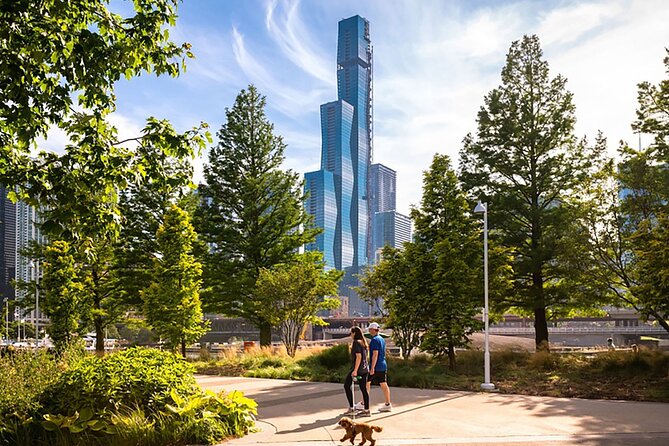
The route includes a discussion of 465 N Park Drive, followed by a view of St. Regis Chicago. These newer buildings give the guide more material for comparing current high-rise design with Chicago’s older tower traditions.
From the outside, you can study the scale and shape of newer construction and how it joins the modern riverfront district. The St. Regis Chicago is particularly useful as a visual marker of the city’s recent building boom. Your guide can place it within the wider pattern of new residential and mixed-use development in the area.
This is also a good point to keep your expectations realistic. The tour offers views and explanation, not a private architectural inspection. The itinerary does not promise entry into every featured building, and conditions can change without notice.
Still, the value is in having someone point out what your untrained eye might miss. A tower can look simple from street level, while its relationship to nearby buildings, public space, and the river tells a more complicated story. The guide’s narration turns a series of new façades into a discussion about how Chicago is being reshaped.
Apple Michigan Avenue and a modern retail landmark
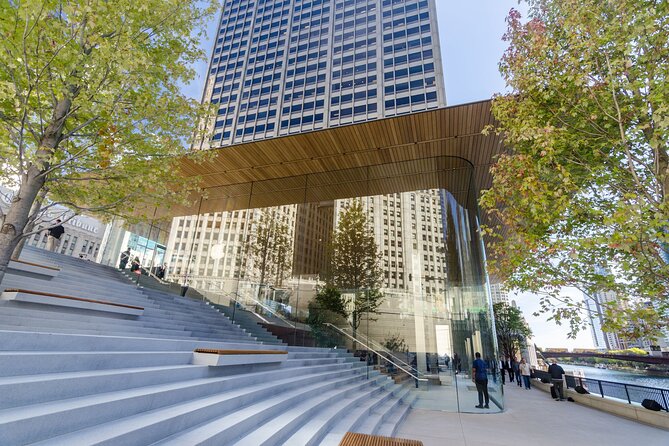
The walk reaches Apple Michigan Avenue, where you view the store from the outside. This stop shifts the conversation from residential and high-rise construction to retail architecture and public presence.
The Apple store is easy to recognize, but the guide can help you think about why a retail building matters in a major avenue setting. Its location, visibility, and relationship with Michigan Avenue make it part of Chicago’s public architectural experience, not just a place to buy electronics.
The stop lasts about 10 minutes. That keeps the tour moving and prevents one building from taking over the whole discussion. You will have enough time to see the design and hear the main points, but not enough for an extended shopping visit.
This is a good reminder that modern architecture appears in many forms. It is not limited to giant towers. A store can change how people enter a street, pause in a public area, and experience a famous shopping corridor.
Guides who make the buildings easier to read
The guide matters greatly on a tour like this. Buildings do not explain themselves, and a strong host can connect design choices to people, politics, history, sustainability, and city life without turning the walk into a technical class.
Paul S. has led a tour with a broad range of information and stories about architects, buildings, and public spaces. He also handled a rainy outing with good humor and answered questions along the way. Paula has been praised for explaining architecture, history, sustainability, and the story behind each building.
Mary Ann brought energy to the discussion of Chicago, while Mary Jo led an engaging walk about how present-day design borrows from, and departs from, earlier styles. Those names give you a useful sense of the guide team, but your specific host can vary.
I would choose this experience for the chance to ask questions. A private tour would offer more control, but at $35, a small-group CAC walk gives you access to a trained guide at a much lower price. The group size of 15 keeps that exchange manageable.
What the $35 price really gets you
At $35 per person, this is not the cheapest way to see downtown buildings. You can walk the same streets for free. But the price includes professional narration, a planned route, a small group, and admission to the Chicago Architecture Center galleries.
That last part changes the value. You are paying for interpretation, not transportation or expensive entry tickets. If you enjoy architecture but cannot tell one design choice from another, a guide can make the walk far more useful than wandering alone.
The 90-minute length is another advantage. It fits neatly into a day of sightseeing and leaves room for lunch, a museum, or more time along the Riverwalk. You get enough material to learn something substantial without committing to a half-day tour.
I would call it good value for architecture fans, design students, city planners, and Chicago residents who want a fresh look at familiar streets. It is less useful for someone who only wants quick skyline photographs or a broad survey of Chicago’s entire architectural past.
Timing, weather, and practical planning
The meeting point is near public transportation, making the CAC easy to reach from central Chicago. Hotel pickup and drop-off are not included, so you need to make your own way to 111 E Wacker Drive.
Coat check is not included, and there is no storage for luggage or strollers. I would avoid arriving with bulky bags, especially because the walk includes outdoor movement between stops.
Service animals are allowed, and most people can participate. Pets are not allowed. The route involves city walking, so comfortable shoes are a wise choice even though no special athletic ability is required.
Weather deserves attention. One guide kept a rainy tour engaging, but rain still changes the experience. You may spend much of the 90 minutes outside, looking up at buildings while moving between stops. A waterproof layer, compact umbrella, and shoes with good traction can make the difference.
The itinerary can change without notice. Interior access may be limited by weekend or holiday schedules, building closures, or other conditions. Think of the tour as a guided study of the district, not a promise to enter every building mentioned.
Who should book this walk?
I would recommend it most strongly to people who want to understand new Chicago architecture in context. It suits architects, designers, students, preservation fans, and curious locals, but you do not need formal training to follow the discussion.
It is also a good choice if you have already seen the classic Loop sights. Instead of repeating the same old skyscraper stories, the route examines renovations, new apartment design, modern towers, and retail architecture.
Families and casual sightseers can enjoy it too, provided everyone is comfortable with a 90-minute walking format. The guide’s ability to answer questions helps keep the subject approachable.
You may want a different tour if your main goal is Chicago’s earliest skyscrapers, a full city overview, or guaranteed interior access. This experience has a narrower focus, and that is both its strength and its limitation.
Should you book the Chicago Architecture Walking Tour: What’s New?
Book it if you want a focused look at how Chicago is changing. The combination of CAC galleries, a compact riverfront route, recent buildings, Tribune Tower’s renovations, and a small group gives you more substance than a simple photo walk.
The strongest reasons to go are the guides, the current subject matter, and the chance to ask questions. The main cautions are outdoor exposure, changing interior access, and the fact that older architectural landmarks receive attention mainly as context for newer work.
At $35, I think it is a smart pick for an architecture-minded afternoon. You will not see all of Chicago, but you will leave with a clearer sense of what the city is building now and why those choices matter.
FAQ
Where does the tour begin?
The tour begins at the Chicago Architecture Center, 111 E Wacker Drive, Chicago, Illinois 60601.
How long does the tour last?
The walking tour lasts approximately 1 hour and 30 minutes.
What is included in the price?
The price includes narration by a professional certified guide and admission to the Chicago Architecture Center galleries.
What buildings and places are covered?
The route includes the Chicago Architecture Center, Pioneer Court, recent renovations and additions to Tribune Tower, trends in small urban rental apartments, 465 N Park Drive, St. Regis Chicago, and Apple Michigan Avenue.
How large is the group?
The tour has a maximum of 15 participants.
Can I cancel for a full refund?
Yes. You can cancel at least 24 hours before the experience start time for a full refund. Cancellations or changes made less than 24 hours before the start time are not accepted for a refund.
New to the itinerary around Chicago
- Private Chicago Architecture Tour★ 5.0 · 5 reviews
- Chicago Luxury Minibus City Tour and Architecture River Cruise★ 4.5 · 8 reviews
- Private Frank Lloyd Wright Architectural Tour by Luxury Vehicle★ 3.5 · 7 reviews
- Private Chicago Architecture Walking Tour★ 5.0 · 6 reviews
- Chicago History and Architecture Walking Tour with Boat Cruise★ 4.5 · 10 reviews
- Small Group History And Architecture Walking Tour of Chicago★ 4.5 · 8 reviews
- Chicago Walking Tour: See Inside Art Deco Masterpieces★ 4.9 · 8 reviews
- Chicago: History and Architecture Guided Kayak Tour★ 5.0 · 3 reviews
Chicago Architecture Tours, compared.

Chicago River: 1.5-Hour Guided Architecture Cruise
Read our review →
Chicago Architecture Center River Cruise aboard First Lady
Read our review →
Architecture River Cruise Skip-the-Ticket Line
Read our review →
Chicago River 45-Minute Architecture Tour from Magnificent Mile
Read our review →