Review · BARCELONA
Roman & Gotic & Gaudi in Barcelona: private walking tour
Barcelona’s old center is best understood on foot, where narrow stone lanes suddenly open onto a cathedral, a medieval palace, or a quiet square. This private walk links the Gothic Quarter’s Roman and medieval layers with La Rambla, Boqueria Market, and an early Gaudí building, giving you a useful first look at the city’s historic core.
I like the private format, since you can ask questions and keep the pace suited to your group. I also like the route’s range: cathedral, royal palace, government buildings, old Jewish quarter remains, market, opera house, and Gaudí all appear within two hours. The main drawback is time. With roughly 20 stops, several are brief pass-bys, and the $210.68 per-person price is high unless you value personal guiding and a fully private group.
Key points at a glance
- A two-hour private walk: Your group gets its own guide rather than joining a large public tour.
- Barcelona Cathedral anchors the route: You spend about 15 minutes near this major Gothic church, with admission not included.
- Roman, medieval, and modern sights share one route: You’ll see old city walls, royal buildings, City Hall, La Rambla, and early Gaudí work.
- Boqueria Market adds a food stop: You have about 20 minutes to look around, with snacks and drinks purchased separately.
- Morning or afternoon departures: The schedule can fit around other Barcelona plans.
- Palau Güell is the finishing point: The walk ends outside Gaudí’s early project for the Güell family.
A useful first walk through Barcelona’s old center
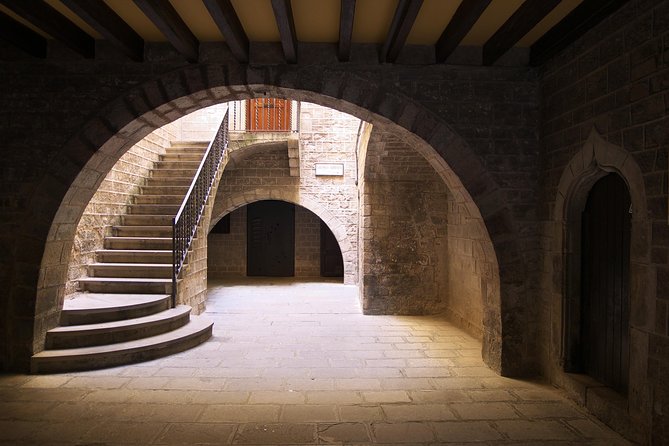
This is not a museum-heavy tour. It is a street-level introduction to Ciutat Vella, Barcelona’s old city, where the pleasure comes from the sequence of places rather than long visits inside each one.
You begin at the Col·legi d’Arquitectes de Catalunya on Plaça Nova, beside the cathedral area. From there, the route threads through the Gothic Quarter before ending at Palau Güell on Carrer Nou de la Rambla. That direction makes sense: you start among medieval and Roman remains, then finish with Gaudí’s early work near La Rambla.
The guide is Elisabet Morera. Since the tour is private, you can ask for more detail about architecture, politics, religion, food, or Barcelona’s neighborhoods as the walk unfolds. The supplied information does not promise a fixed script, so the exact balance will depend on your guide and your questions.
The route is also practical for first-time visitors. You get your bearings around several major landmarks without spending a full day in one district. If Barcelona is one stop on a longer trip, this can help you decide which places deserve a return visit.
More Private Architecture Tours in Barcelona
- Sagrada Familia & Gaudi Tour Private or Small Group with Tickets
★ 4.5 · 1,188 reviews - Barcelona 1.5h Private Old Town, Gothic & Ramblas Walking Tour
★ 5.0 · 318 reviews - Treasures of Barcelona: Private Gaudi Walking Tour
★ 5.0 · 128 reviews
From Roman walls to Barcelona Cathedral
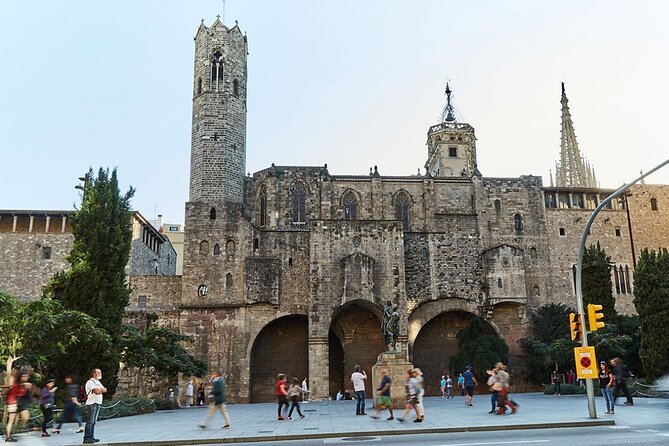
The opening area around Plaça Nova carries several layers of the city at once. The route points out traces of Roman defenses, especially around Plaça de Ramon Berenguer el Gran, where parts of the first wall that protected the city remain visible.
You then reach Barcelona Cathedral, the main architectural pause. Construction began in the 13th century and continued for nearly two centuries, with local masons and several architects involved. The result is a large Gothic church that can feel almost startling when it appears at the end of a tight old street.
The scheduled stop is about 15 minutes. That is enough for an exterior explanation and a quick look, but not enough for a careful visit to every part of the building. Admission is not included, so ask the guide how an interior visit fits with the day’s timing and current entry arrangements.
A short cathedral visit may suit you if you want context before exploring alone. If sacred buildings are a major interest, plan extra time after the tour rather than expecting this walk to provide a full cathedral visit.
One useful detail comes through clearly from the experience notes: the old quarter is enjoyable simply as a place to walk. The comparison to Paris’s Marais or Latin Quarter is fair in mood, not in exact appearance. You get narrow lanes, old stone facades, sudden views of the cathedral, and a sense that the present city is built directly over earlier ones.
Royal power at Palau Reial Major
The next major stop is Palau Reial Major, the former royal palace of the Kings of the Crown of Aragon. It served that role until the 16th century and helps explain why Barcelona was more than a local port town. This was a seat of royal government and power.
The planned stop lasts about 15 minutes, with free admission listed. The value here is the guide’s explanation of what you are seeing. A palace can look like another old stone building if you do not know its role, its dates, or its connection to the Crown of Aragon.
You also pass through Plaça del Rei, home to the Barcelona History Museum, known as MUHBA. The route does not include a museum visit, but the square is an important setting for understanding the medieval city. You also pass the Palau de Lloctinent, now used for the Crown of Aragon’s medieval archives. It originally served as a residence and meeting place for the lieutenant of the Aragon army and Barcelona’s governor.
These stops work best as a connected story. The cathedral represents religious authority, the royal palace represents the crown, and later stops show the city’s civic government and trade. In a short walk, you see how different institutions occupied the same compact center.
City government in Plaça de Sant Jaume
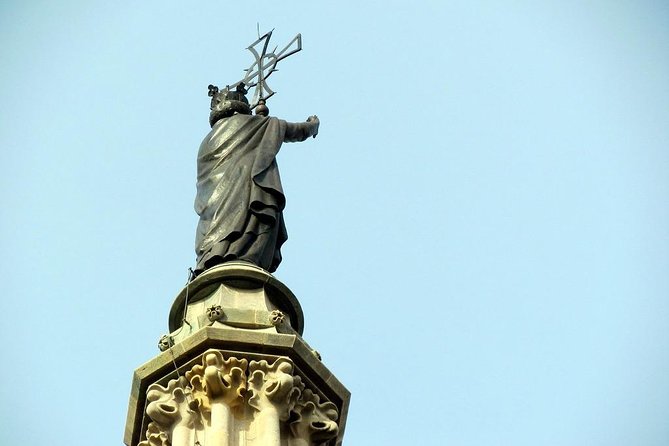
Plaça de Sant Jaume is the political heart of modern Barcelona’s old center. The square is home to the City Council and the government of Catalonia. You pass through rather than receive a long scheduled stop, but it is a useful place to pause and look at how old civic space remains part of present-day public life.
The route also includes City Hall, or Casa de la Ciutat. The original medieval building housed the councillors of the Consell de Cent. In the 19th century, it was arranged for use by the modern democratic city government.
I like this part of the route because it keeps the walk from becoming a parade of churches and palaces. You see that the Gothic Quarter is not just a preserved historic zone. It remains a working civic center, with political institutions occupying buildings and squares shaped many centuries ago.
Pont del Bisbe is another quick pass-by. Its ornate bridge is among the most photographed corners of the quarter. Since the stop is brief, your guide can explain its place in the district, but you should not expect a long architectural study.
Casa de l’Ardiaca provides another glimpse of how old buildings are reused. This medieval structure was adapted as an archive. The route treats it as an exterior sight, which is enough to appreciate the setting but not the interior.
More Private Architecture Tours in Spain
- Sagrada Familia & Gaudi Guided Tour Private or Small Groups
★ 4.7 · 106 reviews - Private Barcelona Modernism and Gaudí Walking Tour
★ 4.7 · 54 reviews - Park Guell and Sagrada Familia, Gaudí’s Masterpieces Private Tour
★ 5.0 · 46 reviews - Wonders of Gaudi: Park Guell & Sagrada Familia Private Tour
★ 5.0 · 46 reviews
A quiet square, an old Jewish quarter, and local street life
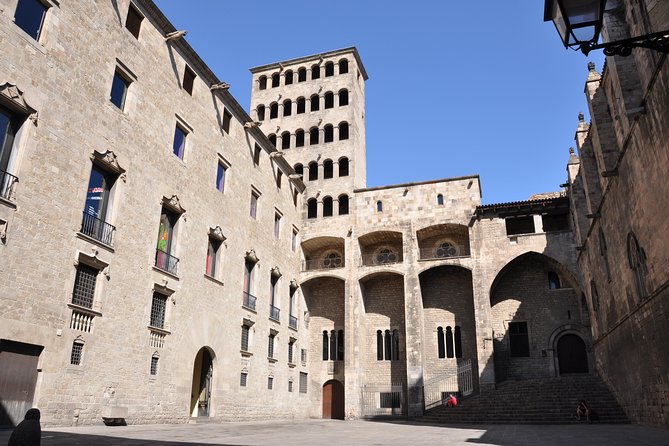
Plaça de Sant Felip Neri is one of the more atmospheric places on the route. It is a tucked-away square reached through the old quarter’s narrow lanes. The experience description calls it a hidden square, but the important point is its quiet character compared with the nearby public streets.
The route also passes along Carrer de la Llibreteria, associated with old bookshops. This is the sort of detail that gives a walking tour texture. You are not just being taken from one famous monument to the next. You are also given smaller clues about how the neighborhood developed and what kinds of businesses once occupied its streets.
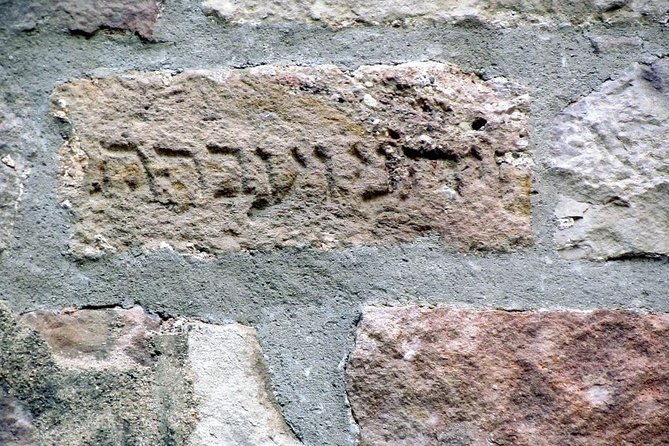
At MUHBA El Call, you pass remains connected with Barcelona’s medieval synagogue. El Call was the medieval Jewish quarter, and even a short exterior explanation can add another layer to the city’s story. This is another place where the private format helps. You can ask about the Jewish community, the surviving remains, or how this area fits into the wider Gothic Quarter.
The route’s many pass-bys are both its strength and its limit. They let you cover a lot of ground, but you need to listen closely and keep moving. I would not choose this walk if you want long interior visits or a slow photography session at every stop.
Boqueria Market and the energy of La Rambla
Mercat de la Boqueria is the route’s main food stop, with about 20 minutes set aside. It is Barcelona’s old food market and remains a popular place to look at produce, prepared food, snacks, and drinks.
The tour includes admission to the market, but it does not include snacks. Plan to pay for anything you want to eat or drink. Twenty minutes gives you time to look around and perhaps make a quick purchase, but it is not a leisurely meal.
I like the market stop because it changes the rhythm of the tour. After stone churches, civic buildings, and royal sites, you get a direct look at Barcelona’s food culture and daily commerce. If you want tapas or a market snack, this is the obvious place to use your own money.
From there, the walk follows La Rambla, Barcelona’s famous promenade. The route includes two La Rambla stops, one for about 15 minutes and another later in the walk for another 15 minutes. That may sound repetitive, but the boulevard connects several different parts of the itinerary, from Boqueria to the opera house and Palau Güell.
You pass the Gran Teatre del Liceu, Barcelona’s major opera house. You also see Casa Bruno Quadros, known for its amusing facade. These details give the busy boulevard more character than a simple stroll down a famous street.
La Rambla can be crowded and commercial. The tour information describes it as packed with entertainment, bars, restaurants, historic sites, and theaters. Keep your belongings close in busy areas, and do not expect the quiet atmosphere found in Plaça de Sant Felip Neri or the smaller Gothic lanes.
Churches, Gaudí, and the finish at Palau Güell
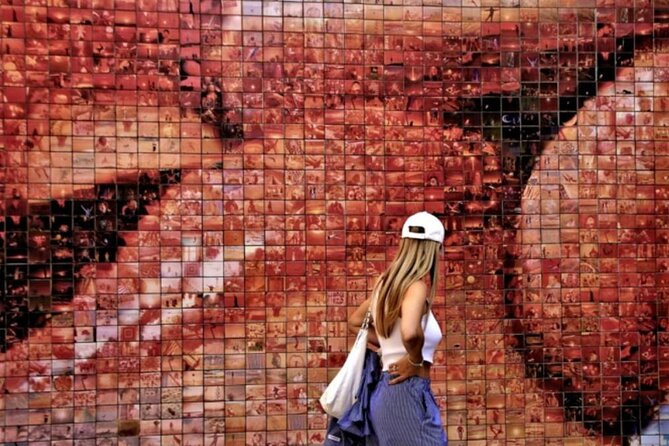
The route passes Basilica de Santa Maria del Pi, an impressive Gothic church. Like the cathedral, it is treated as a pass-by rather than a full interior visit. Its presence reinforces the scale of religious architecture in the old city.
The final architectural focus is Palau Güell, where the walk ends. This was an early Gaudí project financed for the Güell family and intended as a private residence. The tour finishes outside the building, so admission is not listed as part of the experience.
That ending gives the walk a clear change of period. You begin with Roman walls and medieval institutions, then finish with the early work of one of Barcelona’s best-known architects. You do not get a full Gaudí tour, but you do gain a useful introduction to his place in the city’s architectural story.
If Palau Güell is high on your list, check its opening arrangements separately and decide if you want to return after the walk. The tour’s two-hour schedule is designed for an exterior-focused overview, not a full visit to every attraction.
What the private format is worth
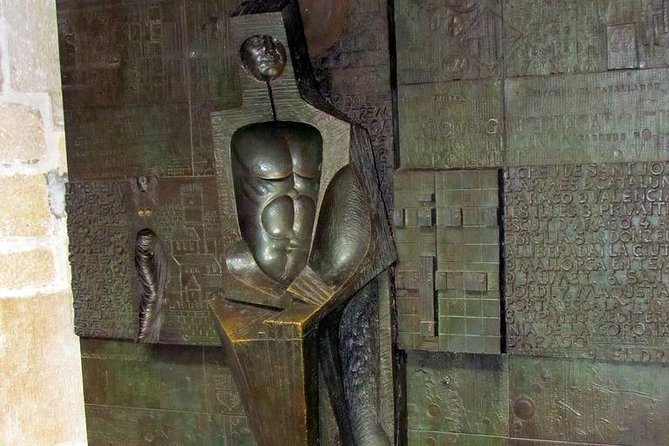
The price is $210.68 per person, which puts this well above a standard group walking tour. The value depends almost entirely on how much you will use the private guide.
For a couple or a small group, the cost may make sense if you want a flexible pace, personal questions, and a route that connects the sights you care about. It can also work well for families or friends who do not want to adjust to a large group’s speed.
Group discounts are available, though the exact terms are not supplied. Ask about them before booking if you are traveling with several people. Since the service is private, only your group participates.
The two-hour length keeps the commitment manageable, but it also limits the depth. You are paying for focused orientation and local commentary, not for admission to several monuments or a full day of guiding. Snacks, transport to the starting point, and most interior admissions are not included.
Morning and afternoon departures make the walk easy to place around other plans. Public transportation is nearby, and the starting point at Plaça Nova is central. A different meeting point may be possible by request, but that must be arranged with the provider.
Wear comfortable shoes and expect a moderate level of walking fitness. The old quarter includes narrow streets and a route with many stops, even if each individual visit is short.
Who should book this walk?
I would recommend it most strongly to first-time visitors who want a private orientation to Barcelona’s oldest center. You get a useful mix of major sights and small street details without giving up an entire day.
It also suits you if you enjoy architecture and city history but prefer to see buildings from the street rather than spend hours inside museums. The route gives you Roman remains, Gothic churches, royal buildings, civic institutions, a medieval Jewish quarter, a market, an opera house, and early Gaudí in one compact outing.
Families and small groups may appreciate the private setup. You can ask for explanations at your level and avoid the awkwardness of joining strangers. The moderate fitness requirement is worth taking seriously, since this is a continuous walking route through an old district.
I would hesitate if your main goal is a full cathedral visit, a long food experience at Boqueria, or an in-depth Gaudí tour. The itinerary covers many places, but several receive only a passing look. At this price, you should value the guide’s attention and the broad historical route.
The cancellation terms are flexible up to 24 hours before the start time, with a full refund. Cancellations or changes made inside that window are not refunded or accepted.
Should you book it?
Book this private walk if you want personal guidance through Barcelona’s old center and like the idea of connecting Roman, medieval, civic, food, and Gaudí sights in one route. The cathedral, royal palace, Plaça de Sant Jaume, Boqueria Market, La Rambla, and Palau Güell give you a strong first framework for the city.
Skip it if you prefer a slower visit with long interior time or if $210.68 per person feels too steep for a two-hour overview. For the right group, the private format is the main benefit. Go in expecting a fast, well-connected introduction, then return on your own to the places that deserve more time.
FAQ
How long is the private walking tour?
The tour lasts approximately two hours.
Is the tour private?
Yes. Only your group participates, with an expert local guide.
Who is the guide?
The experience provider is Elisabet Morera.
Where does the tour begin?
It begins at COAC, the Col·legi d’Arquitectes de Catalunya, at Plaça Nova, 5, in Barcelona’s Ciutat Vella.
Where does the tour finish?
The tour finishes outside Palau Güell at Carrer Nou de la Rambla, 3-5.
Are morning and afternoon start times available?
Yes. Morning and afternoon tours are offered.
Is admission to Barcelona Cathedral included?
No. Admission to Barcelona Cathedral is not included.
Are food and drinks included at Boqueria Market?
No. Snacks are not included. The tour allows about 20 minutes at the market, but you pay separately for anything you buy.
More Walking Tours in Spain
- Gaudi’s Modernist Legacy: Small Group Walking Tour
★ 4.5 · 43 reviews - The Story of Gaudi and Modernism Private Walking Tour
★ 5.0 · 36 reviews - Life of Gaudi and Architectural | Walking Tour | 2h
★ 5.0 · 35 reviews - Barcelona: Evening Walking Tour in the Gaudi Area with Tapas
★ 3.9 · 35 reviews
More Walking Tours in Barcelona
- Ramblas, Old Town, Gothic and Gaudi Architecture Walking Tour
★ 5.0 · 723 reviews - Barcelona: Ramblas, Old Town & Gaudí Houses Walking Tour
★ 4.9 · 239 reviews - Barcelona Architecture Walking Tour With Casa Batlló Upgrade
★ 5.0 · 137 reviews - Night Tapas Walking Tour in Barcelona Modernist Area with Small Group and Dinner
★ 4.5 · 56 reviews
New to the itinerary around Barcelona
- Visit to the Modernist houses of the Americans★ 5.0 · 2 reviews
- Barcelona Gaudi Tour: Sagrada Familia, Casa Batllo & Casa Mila★ 5.0 · 4 reviews
- Barcelona Street Escape: Gaudi and the Hidden Treasure★ 5.0 · 17 reviews
- Gaudí & Catalan Modernism Private Walking Tour★ 5.0 · 11 reviews
- Self-Guided Audio Tour-The Surrealist Barcelona of Dalí and Gaudí★ 3.5 · 8 reviews
- Gaudí and Barcelona Legends – Private Tour★ 5.0 · 4 reviews
- Gaudi’s Casa Batlló and La Pedrera with Chocolate Tasting★ 5.0 · 5 reviews
- Gaudi houses Private Tour: La Pedrera & Casa Vicens Skip-the-Line★ 4.5 · 20 reviews
Gothic Quarter Tours, compared.
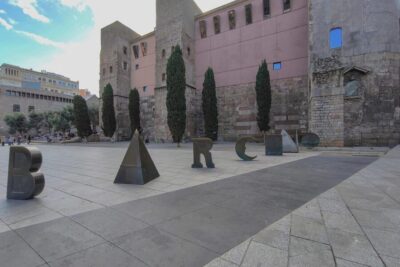
Gothic Quarter & Gaudí’s Treasures Small-Group Tour
Read our review →