
Review · BARCELONA
Barcelona: Sagrada Familia, Modernism and Gothic Quarter
Barcelona’s most important lesson on this tour is also its easiest to miss: the Sagrada Família stop is outside only. You spend about 45 minutes learning about Gaudí, the cathedral’s symbols, and its construction, but admission to the basilica is not included. Read that detail twice before booking.
I like the clear sweep from Modernisme to medieval Barcelona, and I like the chance to see smaller historic sites that are easy to overlook on your own. Guides including Anastasia, Nuria, Caio, Christian, and Christina are praised for strong storytelling and helpful city advice. The main drawback is the outdoor format: traffic, construction noise, a brisk pace, and no earphones can make it hard to follow every word.
What this Barcelona walk does especially well
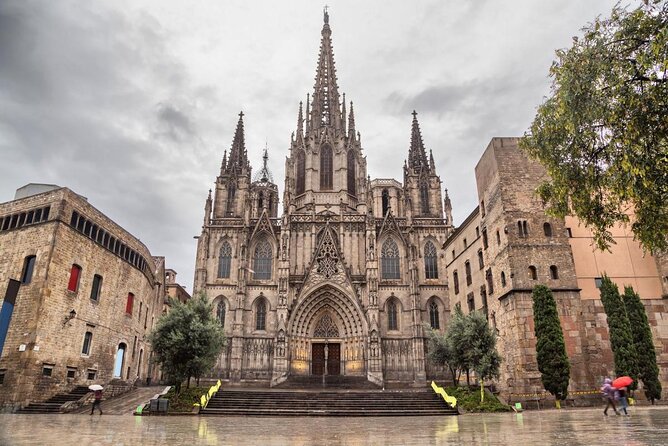
- Starts beside the Sagrada Família: You get a focused introduction to Gaudí’s masterpiece without paying for basilica entry.
- Connects several eras in three hours: The route moves from Modernisme to Roman Barcelona, medieval streets, royal government, and today’s city.
- Uses local guides as interpreters: Anastasia, Caio, Christian, Christina, Nuria, Kristina, and Leo have been singled out for lively explanations and answers to questions.
- Includes Casa de l’Ardiaca and the Roman Temple of Augustus: These included visits add substance beyond the city’s famous façades.
- Ends at Plaça del Rei: The final setting is atmospheric, though it is a different part of town from the starting point.
- Keeps the group to 20 people: That is small enough for a more personal walk, but still large enough to require staying close to the guide.
A smart way to read the Sagrada Família stop
The opening section is about the great church, not inside it. From Av. de Gaudí, 2, you look at the building and hear about Antoni Gaudí, the meaning behind its details, and the long process of construction.
That outside explanation can be useful. The Sagrada Família is packed with symbols, competing architectural ideas, and details that are hard to sort out without help. A good guide gives you a way to look at the façades rather than simply taking a few photographs and moving on.
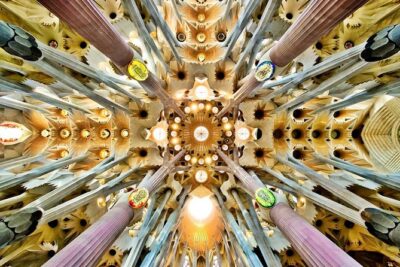
Still, this is not a substitute for entering. You will not see the forest of interior columns, the stained glass, or the view from inside the basilica. The price of $56.75 buys guided interpretation and a wider city walk, not an admission ticket.
This distinction matters because the title can easily lead you to expect a church visit. The description makes the exclusion clear, but some people have arrived expecting entry and left disappointed. If entering the Sagrada Família is a top priority, arrange a separate ticket and treat this experience as an exterior introduction.
The outdoor setting also creates practical limits. One low-rated experience described traffic and construction noise, with no earphones available. Stay close, face the guide when possible, and ask questions if you miss a point. Guides such as Anastasia and Leo have been praised for making the exterior stop engaging, but even the best speaker cannot control street noise.
More Sagrada Familia Tours in Barcelona:
- Barcelona: Sagrada Familia, Modernism, and Old Town Tour
★ 4.7 · 1,621 reviews - Sagrada Familia & Gaudi Tour Private or Small Group with Tickets
★ 4.5 · 1,188 reviews - Complete Gaudi Tour: Casa Batllo, Park Guell & Sagrada Familia
★ 5.0 · 1,152 reviews
Passeig de Gràcia and Barcelona’s Modernisme
After the Sagrada Família, the walk turns to the Modernisme movement and Passeig de Gràcia, Barcelona’s best-known avenue. This section lasts roughly 15 minutes, so expect an overview rather than a full architectural tour.
The value here is connection. Gaudí did not work in isolation, and Barcelona’s early twentieth-century architecture makes more sense when you see it as a citywide movement. The guide discusses the avenue, its museum-related history, and the architects who shaped this period.
The route then pauses at several Modernist façades. One stop focuses on Gaudí’s vision and the way he transformed a building into a work of art. Another combines chocolate, art, and the work of one of the era’s leading Modernist architects. A further stop asks you to consider who built a richly detailed building that might otherwise pass as just another grand city façade.
The exact buildings can receive around 15 minutes each, according to the planned timing. That is enough for a pointed explanation and photographs, but not enough for a long interior visit. The experience works best if you enjoy looking up, comparing façades, and hearing the story behind decoration rather than collecting admission tickets.
Nuria has been praised for using visual aids and adding suggestions for other things to do in Barcelona. That can be especially useful here, since Passeig de Gràcia offers more architecture than any short stop can cover.
Plaza de Catalunya gives you a needed pause
A break near Plaça de Catalunya comes about partway through the walk. The stop is listed as about 10 minutes, with no admission charge.
That pause matters. This is a three-hour walking experience with several short stops and little built-in free time. Use the break to drink water, check your map, or gather the group again. One detailed account described trouble finding a restroom during the walk, so it is sensible to use facilities before starting and make the most of any pause.
Plaça de Catalunya also helps you understand Barcelona’s layout. It links the broad Eixample streets with the older lanes of Ciutat Vella. After this point, the route feels less like an architectural overview and more like a walk through layers of the old city.
The Gothic Quarter, where the route gets more atmospheric
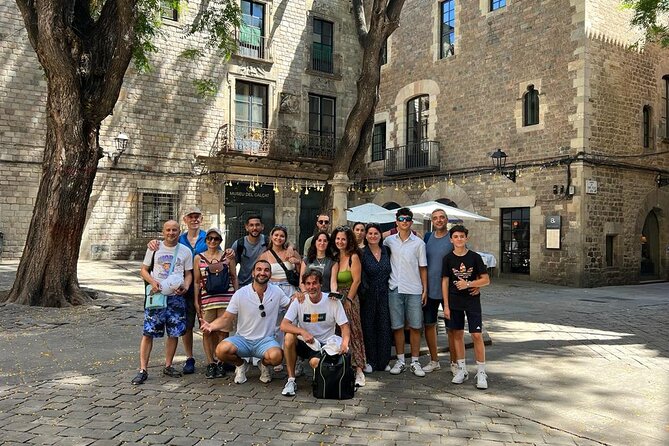
The second half takes you through the Gothic Quarter, where narrow lanes and irregular passages replace the broad geometry of the Eixample. The guide explains why the streets developed as a maze rather than a neat grid.
That question is more useful than a simple list of dates. You begin to see the quarter as a place shaped by earlier walls, old property lines, religious institutions, and changing city plans. The walk includes a surprising piece of modern art in the old town, a Roman-era stop, and Barcelona Cathedral.
The cathedral receives about 10 minutes in the planned route. You will hear how long it took to build and get a sense of its place in Barcelona’s story. This is a brief exterior-focused explanation, not a full cathedral visit with extended time inside.
The pace can be demanding. One account described a guide who walked quickly and did not always check that everyone was following. Another described a group member becoming separated after a restroom break. Keep your guide in sight, especially when crossing busy streets or turning into narrow lanes. A group of up to 20 is manageable, but it is not a private walk.
The strongest part of the Gothic Quarter is often the storytelling. Caio has been praised for memorable stories at each stop, while Christian is noted for answering questions and adding historical detail. Christina and Kristina have also been praised for their enthusiasm and command of Barcelona’s past. Your guide may be someone else, but the experience depends heavily on that person’s ability to make short stops feel connected.
More Gothic Quarter Walks around Barcelona:
- Gothic Quarter & Gaudí’s Treasures Small-Group Tour
★ 4.9 · 65 reviews - Barcelona in One Day: Gaudí, Gothic Quarter &Tapas (Private Tour)
★ 5.0 · 18 reviews - Gothic Quarter and Gaudí Small-Group Tour
★ 5.0 · 3 reviews - Roman & Gotic & Gaudi in Barcelona: private walking tour
★ 4.5 · 2 reviews
Casa de l’Ardiaca takes you behind the street front
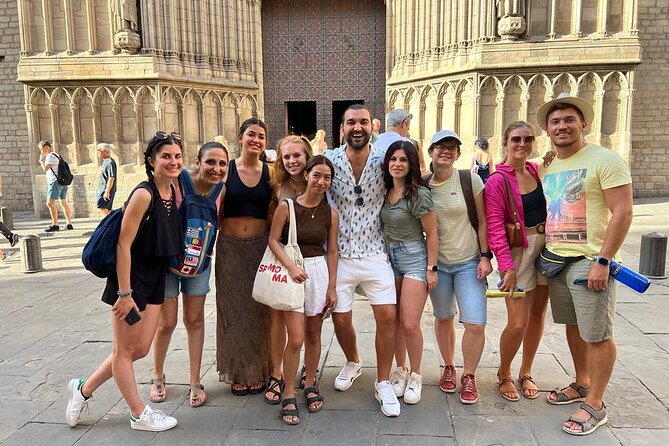
Casa de l’Ardiaca is one of the included visits, with about 10 minutes inside. The building gives the walk a change of rhythm after the open streets and crowded façades.
The appeal is not only the structure itself. Entering creates a sense of moving through different periods of Barcelona at once. The guide uses the building to explain how the city’s older institutions and domestic spaces fit into the larger story.
Ten minutes is short, but it is enough to see why the site matters. Do not expect a museum-length visit or time to examine every detail. Think of it as a compact stop that rewards you with an interior setting and a pause from traffic.
Roman Barcelona at the Temple of Augustus
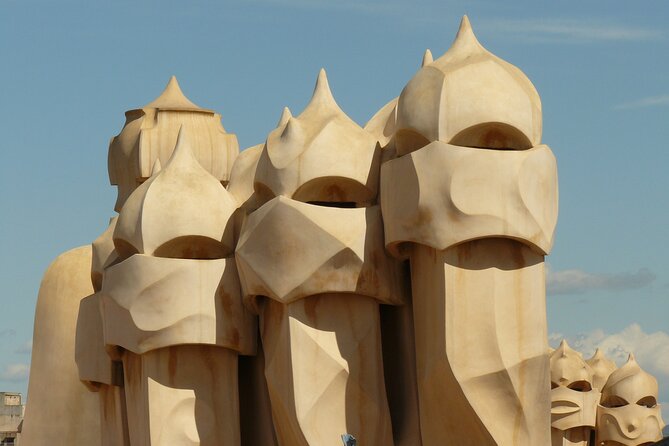
The MUHBA Temple of Augustus brings the route back to the Roman Empire. The visit is listed at about five minutes, so the stop is brief and focused.
That brevity is part of the charm. The remains can be easy to miss amid the Gothic Quarter unless someone points them out and explains what you are seeing. The guide gives the Roman layer of the city a clear place in the story rather than treating Barcelona as purely medieval.
You are not spending an hour at an archaeological site. Instead, you get a concise look at an older Barcelona tucked into the modern city. If Roman remains are a major interest, you may want more time elsewhere, but this is a useful introduction during a broader walk.
The General Archive and Barcelona’s royal past

The General Archive of the Crown of Aragon is another included stop. Here the guide explains the Crown of Aragon and the important events connected with the building.
This is one of the route’s less obvious strengths. Many first visits to Barcelona focus on Gaudí and the Gothic streets, but the Crown of Aragon helps explain the political world that shaped the city and the wider region. The setting gives the history a physical anchor.
The stop lasts around 10 minutes. That makes it an introduction rather than a scholarly examination, but the guide’s explanation can help you recognize the importance of the surrounding quarter. Christian, Caio, and Christina have received particular praise for turning historical material into stories rather than reciting dates.
The walk finishes at Plaça del Rei, in front of the History Museum of Barcelona. It is a fitting ending, with royal buildings and old-city architecture around you. It is also a practical point to note: you do not return to the Sagrada Família area.
The ending is attractive, but plan your next move
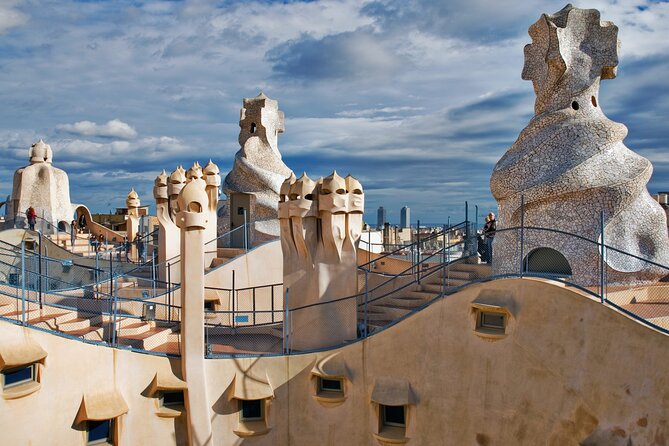
The start is at Av. de Gaudí, 2, in the Eixample. The end is Plaça del Rei in Ciutat Vella. This one-way design lets you cover more ground, but it can confuse you if you expect to finish where you began.
One person had difficulty finding the right place for a planned onward bus connection and eventually used a taxi. I would save the endpoint in your phone before the walk begins. If you are using a hop-on, hop-off bus, checking the nearest stop ahead of time will spare you a frustrating search after three hours on foot.
The walk may include a metro segment or explanation of using the metro, as one account praised the chance to ride it for the first time. Metro tickets are not included, so carry a valid ticket or be ready to buy one if your guide uses public transport during the route.
How much value do you get for $56.75?
At $56.75 per person, this is not a cheap orientation stroll. Its value depends on what you want from Barcelona.
You are paying for about three hours with a multilingual professional guide, a route that links major sights with less obvious historic buildings, and included access to Casa de l’Ardiaca, the Temple of Augustus, and the General Archive of the Crown of Aragon. You are not paying for entry to the Sagrada Família, metro tickets, or a private group.
I think the price makes the most sense for a first visit when you want a framework quickly. In three hours, you move from Gaudí’s Modernisme to Roman remains and medieval institutions. That saves you from treating each district as a separate subject.
The value drops if you mainly want to enter the Sagrada Família. A separate church visit will still be necessary, and you should compare the combined cost with a tour that includes admission. It also drops if you prefer a slow photographic walk with plenty of time for cafés, shopping, and independent exploring.
The group size is capped at 20, which is better than a very large city walk. Still, you should expect a shared pace and occasional street noise. Private guiding would offer more flexibility, but this option costs less than a private tour and covers a broad stretch of Barcelona.
Who will enjoy this tour most?
I would choose this experience if you are visiting Barcelona for the first time and want a fast, guided introduction to several major periods. It suits people who enjoy architecture, stories, and walking more than long indoor visits.
It is also useful if you have only one free half-day. The route gives you a starting point for later visits to the Sagrada Família, Gothic Quarter, and other Modernist buildings.
You should think twice if you need wheelchair-free certainty, a slow pace, or frequent restroom stops. The supplied details ask for moderate physical fitness, and the route includes several hours of walking through city streets. Service animals are allowed, and the meeting point is near public transportation.
Keep WhatsApp notifications turned on before the tour. Meeting information may arrive there, and one person had trouble getting the details because notifications were off. Charge your phone fully, save the end point, wear comfortable shoes, and stay close to the guide when the group turns into narrow streets.
Should you book the Sagrada Família and Gothic Quarter walk?
Book it if you want a lively outside look at the Sagrada Família, a compact introduction to Modernisme, and a guided route through Roman and medieval Barcelona. The strongest guides, including Anastasia, Caio, Christian, Christina, Nuria, Kristina, and Leo, have been praised for clear stories, warmth, and useful answers.
Do not book it expecting to enter the basilica. That is the single most important condition. Also reconsider if you dislike brisk group walks or noisy outdoor commentary.
For the right person, $56.75 is a fair price for a broad first orientation. Pair it with a separate Sagrada Família admission if the interior is central to your plans, and leave yourself time afterward to explore Plaça del Rei and the surrounding old city.
FAQ
Does this tour include entry to the Sagrada Família?
No. The tour explains the Sagrada Família from outside, and admission to the basilica is not included.
How long does the experience last?
The tour lasts approximately three hours.
Where does the tour start?
It starts at Av. de Gaudí, 2, in Barcelona’s Eixample district.
Where does the tour end?
It ends at Plaça del Rei in Ciutat Vella, in front of the History Museum of Barcelona.
What sites are visited in the Gothic Quarter?
The route includes Casa de l’Ardiaca, the MUHBA Temple of Augustus, the General Archive of the Crown of Aragon, Barcelona Cathedral, and Plaça del Rei.
Are metro tickets included?
No. Metro tickets are not included.
What happens if I need to cancel?
You can receive a full refund if you cancel at least 24 hours before the local start time. Cancellations or changes made within 24 hours are not refunded or accepted.
New to the itinerary around Barcelona
- Roman & Gotic & Gaudi in Barcelona: private walking tour★ 4.5 · 2 reviews
- Visit to the Modernist houses of the Americans★ 5.0 · 2 reviews
- Barcelona Gaudi Tour: Sagrada Familia, Casa Batllo & Casa Mila★ 5.0 · 4 reviews
- Barcelona Street Escape: Gaudi and the Hidden Treasure★ 5.0 · 17 reviews
- Gaudí & Catalan Modernism Private Walking Tour★ 5.0 · 11 reviews
- Self-Guided Audio Tour-The Surrealist Barcelona of Dalí and Gaudí★ 3.5 · 8 reviews
- Gaudí and Barcelona Legends – Private Tour★ 5.0 · 4 reviews
- Gaudi’s Casa Batlló and La Pedrera with Chocolate Tasting★ 5.0 · 5 reviews
Sagrada Familia Tours, compared.

Sagrada Familia, Modernism, and Old Town Tour
Read our review →
Sagrada Familia & Gaudi Tour Private or Small Group with Tickets
Read our review →
Complete Gaudi Tour: Casa Batllo, Park Guell & Sagrada Familia
Read our review →
Discover Gaudí, Sagrada Familia, and Park Güell
Read our review →
Fast Track Sagrada Familia & Park Guell the best of Gaudí
Read our review →
Sagrada Familia & Park Güell Optional: Small Group Tour
Read our review →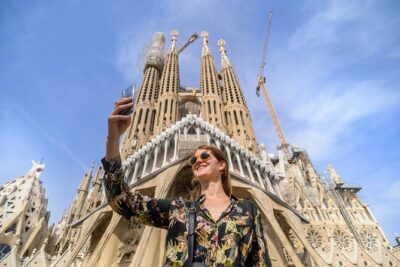
Sagrada Familia: Small Group Tour, hotel pick-up with Fast-Track
Read our review →Other lists with this tour