Review · BARCELONA
Gaudí & Catalan Modernism Private Walking Tour
Barcelona’s Gaudí story unfolds best on foot, where one ornate façade leads naturally to the next. This private three-hour walk takes you from Plaça de Catalunya through the Eixample district and ends at the Sagrada Família, with the focus firmly on Catalan Modernist architecture and the people behind it.
I like the private format, since you can ask questions without waiting for a large group to catch up. I also like the route’s progression from urban planning to individual buildings, especially the close look at Casa Batlló, Casa Amatller, and Casa Lleó i Morera. The main drawback is simple: every attraction is visited from outside, so you will need a separate plan and ticket if you want to enter the interiors.
Key points to know before booking
- The route connects Barcelona’s major Gaudí sights: Begin near Plaça de Catalunya and finish at the Sagrada Família.
- The tour is private: Only your group takes part, giving you room for questions and a pace check.
- The focus is exterior architecture: No attraction admission is included or required during this walk.
- The Mansana de la Discordia is a major highlight: Compare three very different Modernist façades in one city block.
- Guides bring more than architecture: Alessandro has added history and politics, while Henrieta has been praised for stories, facts, discussion, and checking the group’s pace.
- Plan for steady walking: The tour lasts about three hours and includes several stops for viewing and photographs.
Why this private route makes sense in Barcelona

Barcelona can feel like an open-air architecture museum, but the buildings make more sense when you know how they fit into the city. This tour begins with the wider urban picture, then narrows its attention to façades, architects, families, and artistic ideas.
That order is useful. Instead of seeing Gaudí’s work as a string of strange shapes, you get a framework for understanding why the Eixample looks so different from older parts of Barcelona. Your guide explains how the district was laid out and how Catalan Modernism changed the city’s appearance.
The private setting is the real advantage. You can stop to ask why one building uses floral details while another feels more geometric, or ask how Gaudí differed from his contemporaries. You are not limited to a fixed script or a few rushed questions.
The tour is offered in English and includes a private expert guide plus local recommendations. Since it is an exterior walk, it avoids entrance lines and interior admission fees during the three hours. That keeps the route moving, though it also means the value depends on how much you want interpretation rather than indoor access.
More Private Architecture Tours in Barcelona
- Sagrada Familia & Gaudi Tour Private or Small Group with Tickets
★ 4.5 · 1,188 reviews - Barcelona 1.5h Private Old Town, Gothic & Ramblas Walking Tour
★ 5.0 · 318 reviews - Treasures of Barcelona: Private Gaudi Walking Tour
★ 5.0 · 128 reviews
Starting at Plaça de Catalunya and the Eixample
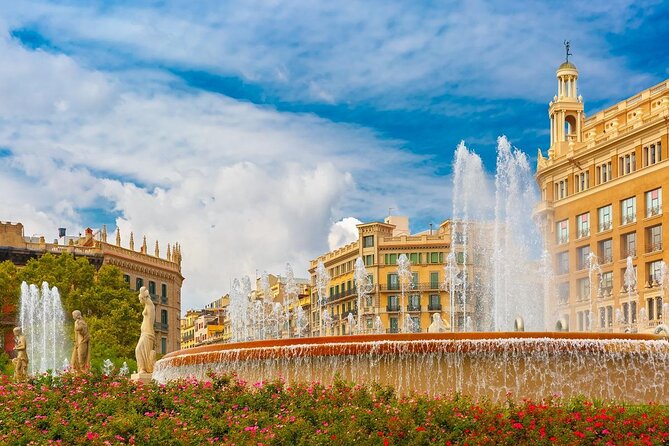
The walk begins near Plaça de Catalunya, Barcelona’s main square, at Pg. de Gràcia, 2. This is a sensible starting point because it places you at the meeting point of the city’s older center and the Eixample district.
Your guide begins with urban history and architecture rather than rushing straight to a famous façade. You learn how the Eixample was laid out and why its broad streets and planned blocks created such a useful setting for ambitious private homes.
I appreciate this opening because it gives you something to watch for during the rest of the walk. The buildings are not isolated curiosities. They belong to a period when Barcelona was expanding and wealthy families wanted homes that announced their taste, status, and modern outlook.
The stop lasts about 15 minutes and requires no admission ticket. Use this time to ask for a quick orientation to the route, especially if you are visiting Barcelona for the first time. The guide can also point out how the surrounding streets relate to the architectural sights ahead.
Casas Pascual i Pons introduces Catalan Modernism
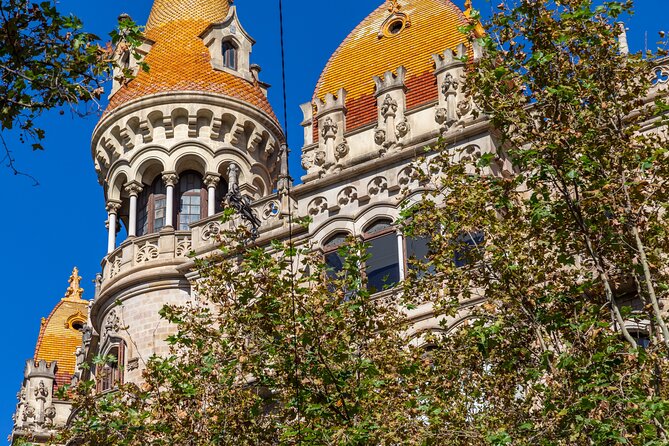
The first architectural stop is Casas Pascual i Pons, built between 1890 and 1891. Its façade provides an early way to discuss the Modernist movement before the tour reaches the more famous Gaudí buildings.
This is an important part of the route for art lovers. Your guide can help you identify artistic influences across Barcelona rather than treating Modernism as something found only in Gaudí’s work. Details that might look decorative or excessive at first begin to fit into a larger artistic conversation.
The stop takes about 15 minutes and is viewed from outside. That makes it quick, but it also keeps the tour from spending all its time at one building. You get an initial visual lesson, then have the rest of the walk to compare what you have seen with later façades.
If you enjoy learning how art movements spread through a city, listen closely here. The value is less about one famous building and more about training your eye for the details that appear again along Passeig de Gràcia.
The Mansana de la Discordia puts three façades side by side
The strongest comparison point on the route is the Mansana de la Discordia, the block where Casa Batlló, Casa Amatller, and Casa Lleó i Morera sit close together. In about 40 minutes, your guide explains how these façades differ and how their architects approached the same urban setting.
This is where the tour’s subject becomes especially clear. You can look from one building to another and compare shape, ornament, color, windows, and overall mood without needing to cross half the city.
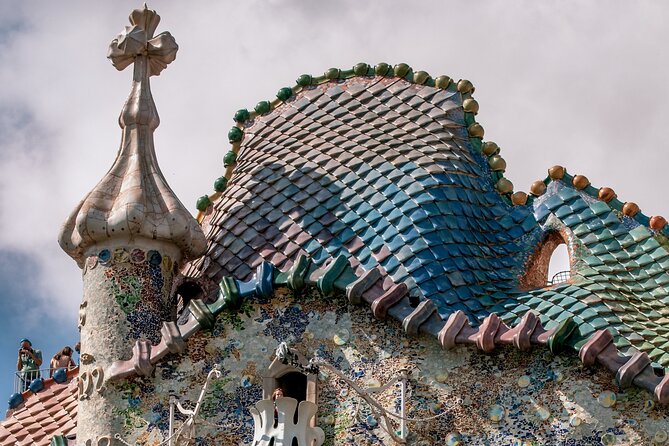
Casa Batlló draws attention with Gaudí’s imaginative design. Casa Amatller and Casa Lleó i Morera show that Barcelona’s Modernist scene was never just a one-man show. Your guide discusses the creative world of Gaudí and his contemporaries, helping you see the buildings as part of a period of artistic competition and experimentation.
The name Mansana de la Discordia refers to the idea of a block marked by disagreement or rivalry. That makes this stop more than a photo opportunity. It gives you a useful question to carry through the tour: how did each architect try to make a private home memorable?
This is also one of the best places to take photographs. You can frame the façades together, then focus on individual details. Since the tour is private, you can ask your guide to pause on the elements that interest you most rather than moving on with a large group.
More Private Architecture Tours in Spain
- Sagrada Familia & Gaudi Guided Tour Private or Small Groups
★ 4.7 · 106 reviews - Private Barcelona Modernism and Gaudí Walking Tour
★ 4.7 · 54 reviews - Park Guell and Sagrada Familia, Gaudí’s Masterpieces Private Tour
★ 5.0 · 46 reviews - Wonders of Gaudi: Park Guell & Sagrada Familia Private Tour
★ 5.0 · 46 reviews
Casa Batlló reveals Gaudí’s most playful side
The Casa Batlló stop lasts about 15 minutes and focuses on the exterior of the UNESCO-listed Gaudí masterpiece commissioned by the Batlló family. You will have time to study the façade and hear why the building matters within Gaudí’s work.
The exterior is full of visual questions. Your guide can explain how Gaudí used unusual forms and decorative details to create a home that feels unlike a standard apartment building. The building’s place in the Mansana de la Discordia also gives it a useful comparison with the façades beside it.
Because the visit is exterior only, do not expect access to the rooms, courtyards, or roof. That limitation matters if Casa Batlló is high on your list. You can use this walk to decide if you want to return with an admission ticket later.
For a first introduction, though, the outside discussion can be enough to make the building easier to read. You are not simply taking a picture of a famous façade. You are learning what to look for in its design and how it fits the family’s commission and the period’s artistic ambitions.
La Pedrera shows Gaudí working with stone
The walk continues to La Pedrera, also known as Casa Milà. The stop takes around 30 minutes, making it one of the longer pauses on the route.
Here, your guide explains the stone façade and the ideas behind Gaudí’s architectural approach. The building offers a useful contrast with Casa Batlló. Instead of relying only on colorful surface detail, La Pedrera gives you a chance to examine mass, curves, stone, and the way the façade changes the feel of the street.
This is another exterior visit, so you will not enter the courtyards, roof, or interior spaces as part of the tour. Still, the longer explanation gives the building room to make sense. If your interest is architectural rather than purely photographic, this can be one of the most rewarding stops.
I would pay attention to how your guide explains the building’s less obvious features. The tour promises secrets of Gaudí’s architectural masterpiece, and this is the point where questions are especially useful. Ask about the façade’s construction, its relation to the street, and how it differs from Casa Batlló.
The final approach to Sagrada Família
The route ends at the Basílica de la Sagrada Família on Carrer de Mallorca, 401. The final 30 minutes provide a complete exterior tour of Gaudí’s best-known work.
Ending here gives the walk a clear finish. You have moved from the city’s urban plan to individual Modernist façades, then arrived at the largest and most famous expression of Gaudí’s architectural vision.
The Sagrada Família is too large and detailed to absorb in a quick glance. A guide can help you separate the major ideas from the visual overload, explain the building’s place in Gaudí’s legacy, and point out details you might miss on your own.
Again, the tour covers the exterior only. No entrance ticket is included, and no ticket is needed for this walking experience. The guide finishes at the entrance and provides information about the area and useful instructions, which is helpful if you plan to continue independently.
This is also the moment to ask for local recommendations. The tour includes recommendations from the guide, and the final location gives you a practical point from which to continue your Barcelona plans.
What the guides add to the architecture
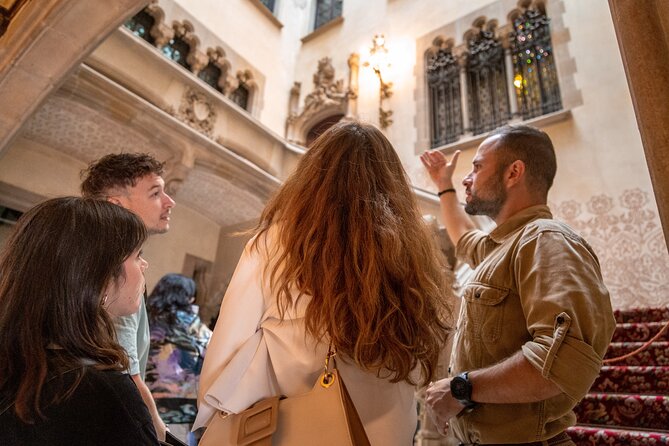
The guide can make or break an architecture walk. Here, feedback has specifically praised Alessandro for discussing history and politics alongside architecture. That combination matters because buildings in Barcelona are tied to the city’s wider social and cultural changes.
Henrieta has been praised for filling the walk with facts, stories, and thoughtful discussion. She also checked the group’s pace and how everyone was feeling throughout the route. That kind of attention is especially useful on a three-hour walk with several stops.
You should not assume you will receive a particular guide unless the booking confirms it. Still, Alessandro and Henrieta show the sort of guiding approach this experience aims for: architecture explained through stories, context, and conversation rather than a string of dates.
The private format makes this style work well. You can ask about politics, artistic influence, building details, or the difference between Gaudí and his contemporaries. You can also tell the guide if you want more time for photographs or a quicker pace.
Walking time, meeting point, and practical limits
The experience lasts approximately three hours. It begins at Pg. de Gràcia, 2, in the Eixample area, and finishes at the entrance of Sagrada Família.
The supplied route lists Plaça de Catalunya as the first stop, so confirm the exact meeting instructions in your booking confirmation. Confirmation is provided at the time of booking, and the experience is near public transportation.
You should be ready to walk between several major sights. The route includes frequent stops for explanation and photographs, but it is not a stationary lecture. Comfortable shoes are a sensible choice.
Most people can take part, and service animals are allowed. Since the activity is private, only your group participates. Group discounts are available, though the listed price is $203.25 per person.
That price needs careful thought. For one person, it is a significant cost for a three-hour exterior walk. For a couple, family, or small group, a private guide can offer better value because the cost buys personal attention, questions, and control over the pace rather than a seat in a large group.
You also avoid paying attraction admission during the walk, but that is because the tour does not enter the buildings. If you want interior access, budget separately for tickets and time. The price is easiest to justify when you see the walk as an architectural orientation that helps you choose which interiors deserve a return visit.
The tour is often booked about 41 days ahead, so do not leave it until the final day if your Barcelona dates are fixed. Free cancellation is available up to 24 hours before the start time. Changes or cancellations made inside that window are not refundable.
Who will get the most from this walk
I would choose this tour if you want Barcelona’s architecture explained in plain language and prefer a private conversation to a large group. It suits art lovers, first-time visitors, and anyone who wants to understand the connections between the city plan, Modernism, and Gaudí’s major works.
It is also a good choice if you want strong exterior photographs. The Mansana de la Discordia and Sagrada Família offer obvious subjects, while Casas Pascual i Pons and La Pedrera add variety to the route.
You may want something else if entering the buildings is your main goal. No interior admission is included, and the tour does not turn into an indoor visit at Casa Batlló, La Pedrera, or Sagrada Família.
Families and mixed-interest groups may appreciate the private format. One person can ask about architecture, another can ask about history or politics, and the guide can adjust the pace. You are not locked into the interests of strangers.
Should you book the Gaudí and Catalan Modernism walk?
Book it if you want a focused introduction to Barcelona’s Modernist architecture, personal attention from an English-speaking guide, and a route that links several major sights in one morning or afternoon.
The best reason to book is the combination of comparison and context. You do not see Casa Batlló, La Pedrera, and Sagrada Família as unrelated photo stops. You learn how they connect to the Eixample and to the wider creative world around Gaudí.
Skip it if you mainly want interior access or a lower-cost sightseeing option. In that case, you may prefer to visit selected buildings independently and pay only for the interiors you care about.
For most visitors who value explanation, questions, and a flexible private pace, this is a strong three-hour introduction. Just remember to wear comfortable shoes, confirm the meeting details, and plan separate tickets if you want to go inside.
FAQ
How long does the Gaudí and Catalan Modernism tour last?
The walking tour lasts approximately three hours.
Is this a private tour?
Yes. Only your group participates in the activity.
What language is the tour offered in?
The tour is offered in English.
Where does the tour start?
The listed meeting point is Pg. de Gràcia, 2, Eixample, 08002 Barcelona, Spain. The route also begins with a stop at Plaça de Catalunya.
Where does the tour end?
The tour ends at the entrance of Basílica de la Sagrada Família, Carrer de Mallorca, 401, Eixample, 08013 Barcelona, Spain.
Are attraction tickets included?
No. The tour visits the exteriors, and no attraction tickets are required for the walking experience.
Which buildings are included on the route?
The route includes Plaça de Catalunya, Casas Pascual i Pons, the Mansana de la Discordia, Casa Batlló, La Pedrera, and the exterior of Sagrada Família.
Is the tour suitable for most people?
Most people can participate. The experience is near public transportation, and service animals are allowed.
Can I cancel for a full refund?
Yes, if you cancel at least 24 hours before the experience start time. Cancellations or changes made less than 24 hours before the start time are not accepted for a refund.
More Walking Tours in Spain
- Gaudi’s Modernist Legacy: Small Group Walking Tour
★ 4.5 · 43 reviews - The Story of Gaudi and Modernism Private Walking Tour
★ 5.0 · 36 reviews - Barcelona: Evening Walking Tour in the Gaudi Area with Tapas
★ 3.9 · 35 reviews - Life of Gaudi and Architectural | Walking Tour | 2h
★ 5.0 · 35 reviews
More Walking Tours in Barcelona
- Ramblas, Old Town, Gothic and Gaudi Architecture Walking Tour
★ 5.0 · 723 reviews - Barcelona: Ramblas, Old Town & Gaudí Houses Walking Tour
★ 4.9 · 239 reviews - Barcelona Architecture Walking Tour With Casa Batlló Upgrade
★ 5.0 · 137 reviews - Night Tapas Walking Tour in Barcelona Modernist Area with Small Group and Dinner
★ 4.5 · 56 reviews
New to the itinerary around Barcelona
- Roman & Gotic & Gaudi in Barcelona: private walking tour★ 4.5 · 2 reviews
- Visit to the Modernist houses of the Americans★ 5.0 · 2 reviews
- Barcelona Gaudi Tour: Sagrada Familia, Casa Batllo & Casa Mila★ 5.0 · 4 reviews
- Barcelona Street Escape: Gaudi and the Hidden Treasure★ 5.0 · 17 reviews
- Self-Guided Audio Tour-The Surrealist Barcelona of Dalí and Gaudí★ 3.5 · 8 reviews
- Gaudí and Barcelona Legends – Private Tour★ 5.0 · 4 reviews
- Gaudi’s Casa Batlló and La Pedrera with Chocolate Tasting★ 5.0 · 5 reviews
- Gaudi houses Private Tour: La Pedrera & Casa Vicens Skip-the-Line★ 4.5 · 20 reviews
Gaudí Tours, compared.
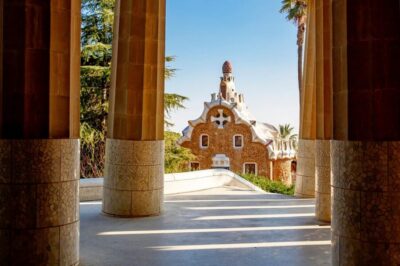
Park Güell and Gaudí House Museum Entry Ticket
Read our review →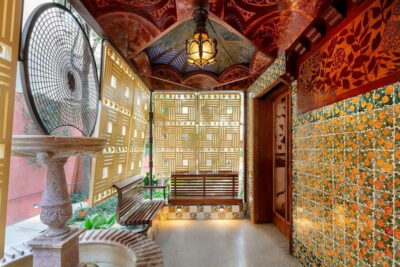
Gaudi’s Casa Vicens Skip-the-Line Entrance Ticket
Read our review →
Gaudí’s Park Güell Tour with Fast-Track Ticket
Read our review →
Sagrada Familia & Gaudi Tour Private or Small Group with Tickets
Read our review →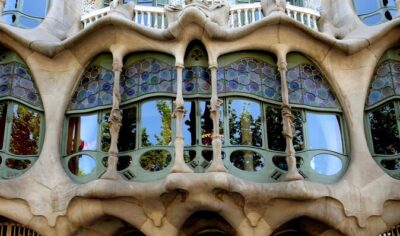
Complete Gaudi Tour: Casa Batllo, Park Guell & Sagrada Familia
Read our review →
Park Güell: Guided Tour with Optional Gaudí Experience Entry
Read our review →
Barcelona e-Bike Tour: Gaudí & Old Town Small Group
Read our review →