
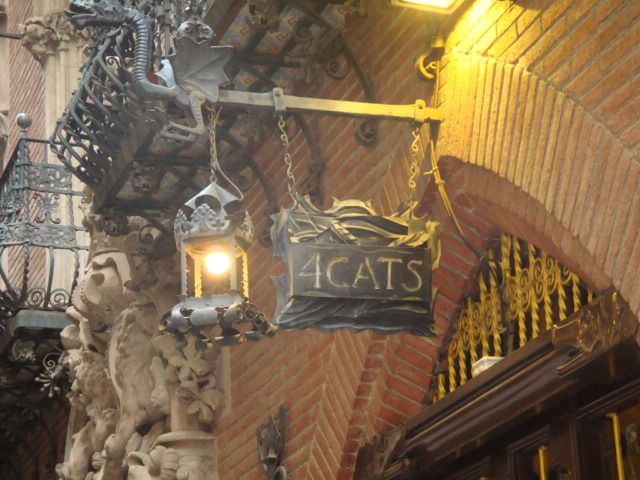
Review · BARCELONA
Barcelona: Art Nouveau & Gaudí Tour
Barcelona’s Eixample is where money, politics, and artistic ambition turned a new suburb into an open-air gallery. On this private 3.5-hour walk, you’ll follow the broad streets of the Golden Square, study façades by Gaudí and his rivals, and learn why Barcelona’s Modernist buildings are tied to war, Catalan identity, industry, and social change.
I like the way this tour connects architecture with politics, rather than treating each ornate building as a pretty shell. I also like the relaxed pace, the chance to stop for photographs, and the guide’s strong storytelling, especially with Johannes, also called Hannes, whose explanations link people, events, and building styles. The main limitation is clear: this is mostly an exterior tour, so entry fees and detailed interior visits are not part of the plan.
Key points to know before booking
- Eixample tells Barcelona’s 19th-century story: The district grew after the city walls came down, opening space between the old city and Gracia.
- Gaudí is only part of the picture: You’ll also encounter work by Domènech i Montaner and Puig i Cadafalch, two major figures in Catalan Modernism.
- The tour is private for up to four people: The $212 group price works best when shared by several people.
- Johannes brings the history together: His style links architecture to local politics, war, industry, and Catalan culture.
- Expect an exterior walking tour: Buildings and monuments are viewed from streets and squares, with entry fees not included.
- It runs in all weather: Bring sun protection in summer and a light jacket in winter, with sensible shoes for a long city walk.
Why Eixample is the right place to study Barcelona
The word Eixample means expansion. That simple name hides a dramatic change in Barcelona’s fortunes.
For roughly two centuries, the old city was packed inside medieval walls. Wealthy families, workers, and the poorest residents lived close together because the city could not spread outward. When the walls were finally torn down in 1854, Barcelona gained room to grow toward the small town of Gracia.
The new district was planned around broad streets and regular blocks. Those famous chamfered corners were not added just for looks. They opened up views, improved movement, and gave architects more visible wall space for balconies, ceramic work, windows, and carved stone.
I find this background essential. Without it, Eixample can look like a collection of extravagant façades. With it, you can see the district as a statement about freedom, wealth, order, and the future.
The tour also places the buildings within Catalonia’s political story. Barcelona was affected by the War of the Spanish Succession and its aftermath, by restrictions imposed from Madrid, and by a strong local desire for greater self-government. Architecture became one way for prosperous Catalans to show confidence in their city and culture.
More Gaudí Tours in Barcelona:
- Barcelona: Park Güell and Gaudí House Museum Entry Ticket
★ 4.5 · 6,326 reviews - Barcelona: Gaudi’s Casa Vicens Skip-the-Line Entrance Ticket
★ 4.7 · 4,541 reviews - Barcelona: Gaudí’s Park Güell Tour with Fast-Track Ticket
★ 4.8 · 4,512 reviews
From the old walls to Cerdà’s planned city
One of the most useful parts of the walk is the shift from medieval Barcelona to Ildefons Cerdà’s vision for Eixample. Cerdà imagined a healthier, more open city, with room for light, air, movement, and public life.
The result was never built exactly as planned. As land became valuable, blocks were filled more heavily and private interests altered the original ideal. That tension gives the neighborhood much of its character. Eixample was intended as a rational city, but wealthy owners quickly used it to compete with one another.
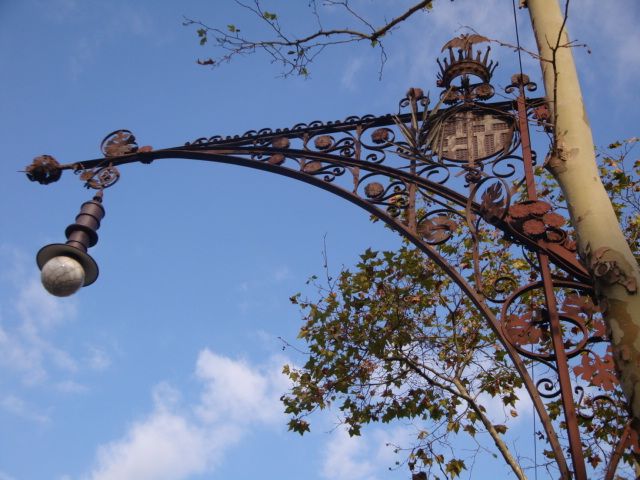
As you walk, you’ll see how practical planning became a stage for architectural display. Industrialists, aristocrats, and families who had made fortunes in South America commissioned grand homes. They hired leading architects and competed through balconies, sculpted doorways, stained glass, ceramics, and unusual rooflines.
This is where the tour’s historical approach helps. You are not simply told that a building is beautiful. You learn why its owner wanted it, what the architect was trying to express, and how the district reflected Barcelona’s rising confidence.
Catalan Modernism beyond simple Art Nouveau
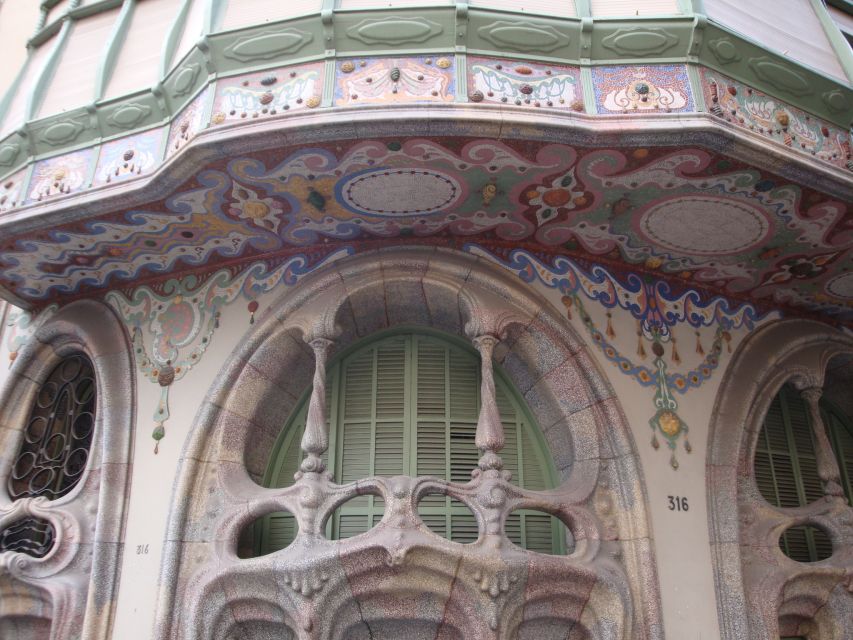
Catalan Modernism began around 1885 as more than a style of architecture. It was a cultural movement that reached into literature, music, visual art, and ideas about Catalan identity.
That makes comparisons with German Art Nouveau, the Viennese Secession, and the English Modern Style useful, but not complete. The local version was shaped by Barcelona’s politics, medieval references, folk traditions, industry, and renewed interest in Catalan culture.
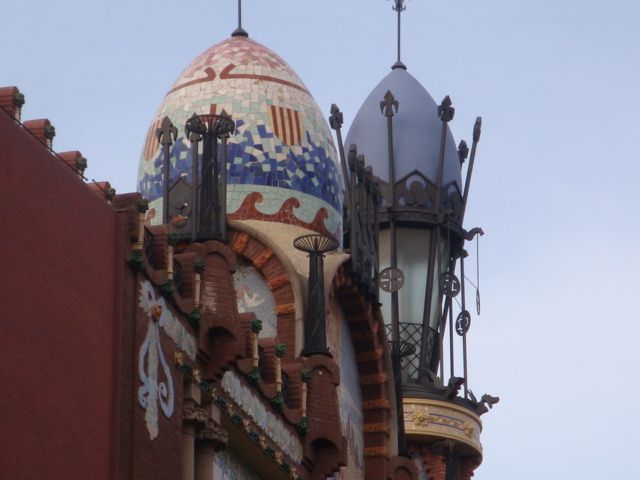
The Palau de la Música Catalana is a strong example of this approach, even if the main focus of the walk is the surrounding streets and exterior architecture. Domènech i Montaner treated music as something that could be expressed in stone, ceramic, glass, and sculpture. Catalan folk songs were not just performed inside the building. They became part of its visual language.
The tour’s subject list also reaches into the Catalan Renaissance, the Barcelona World’s Fair, and the city’s effort to present itself as modern and confident. These links help explain why Eixample feels like a cultural declaration rather than just an upscale neighborhood.
Gaudí, Domènech i Montaner, and Puig i Cadafalch
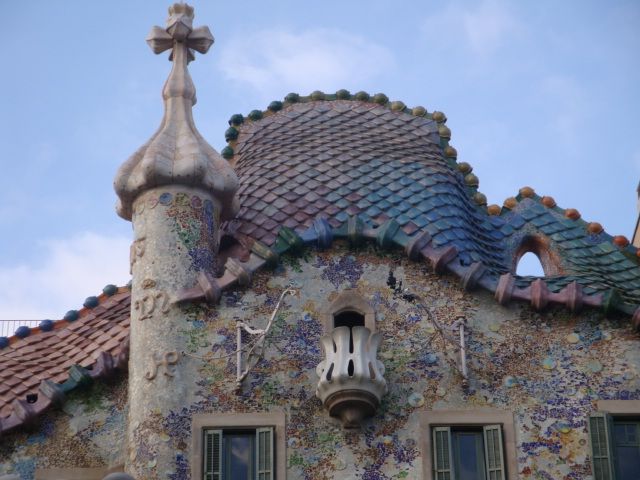
Gaudí receives plenty of attention, but this walk does not reduce Barcelona’s architecture to one famous name. That is a real strength.
You’ll encounter the work and influence of Domènech i Montaner and Puig i Cadafalch, architects with their own ideas about decoration, national identity, structure, and historical reference. Their buildings help you see the range within Catalan Modernism.
Gaudí’s buildings often seem to grow, twist, or behave like living things. Ceramic fragments, unusual windows, sculpted forms, and playful details encourage you to look closer. The tour may point out the famous technique of trencadís, a surface made from broken ceramic pieces. In Barcelona, even fragments can become decoration and good fortune.
The route also brings in Gaudí’s fascination with natural forms, dragons, and inventive construction. His famous string model, used to work out structural forms, offers a glimpse into the practical thinking behind buildings that can look wonderfully strange from the street.
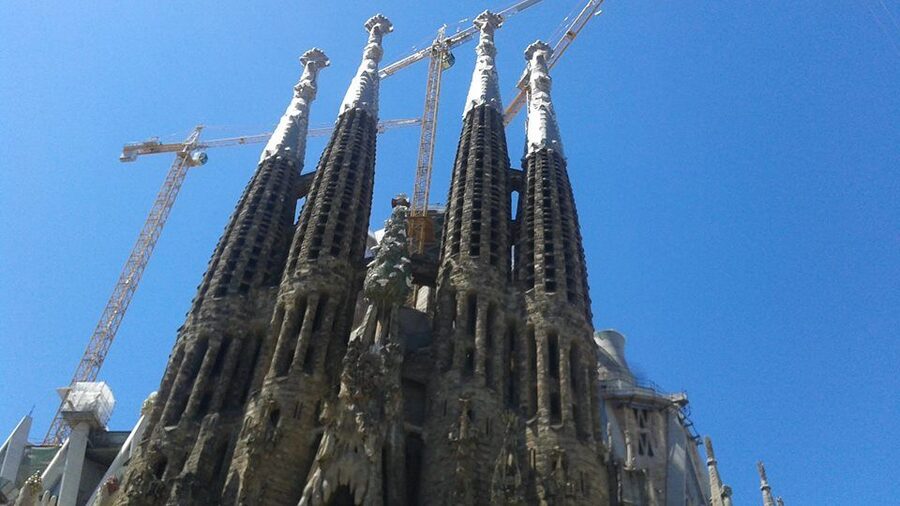
You’ll hear about the Sagrada Familia as well, including Gaudí’s lost plans. Since this is not an interior visit, you should think of that section as architectural and historical context rather than a substitute for a full Sagrada Familia entry.
More Art Nouveau Tours around Barcelona:
- Walking Tour of Riga’s Beautiful Art Nouveau Architecture
★ 4.8 · 20 reviews - Private Art Nouveau and Art Deco tour near Opera
★ 5.0 · 15 reviews - Riga’s Architecture: A self-guided audio tour of the city’s art nouveau history
★ 5.0 · 3 reviews - Mexico City origins and architecture: Art Nouveau, Deco,Eclectic
★ 3.0 · 2 reviews
Passeig de Gracia and the Block of Discord
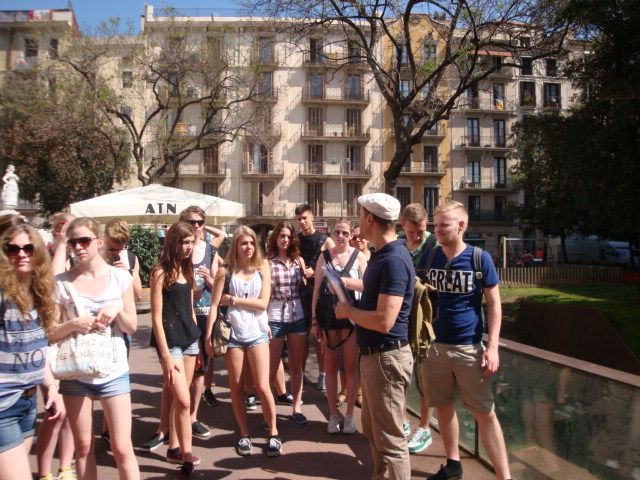
Passeig de Gracia is the grandest part of the route. Once a road toward Gracia, it became a prestigious boulevard lined with expensive homes, shops, and elaborate façades.
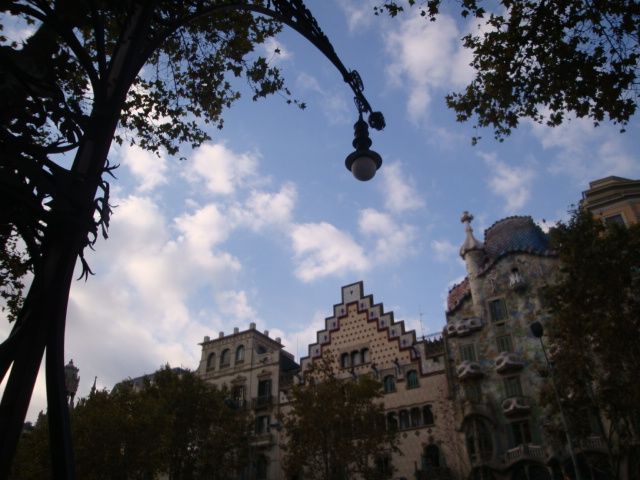
Here, the famous Block of Discord brings several competing visions into one stretch of street. The buildings associated with Gaudí, Domènech i Montaner, and Puig i Cadafalch seem to answer one another through color, shape, balconies, ceramic, and stone.
This is a good place to slow down. Look above street level. The most memorable features may be around windows, rooflines, upper balconies, and decorative details that are easy to miss while walking. A guide can help you separate structural choices from surface decoration.
The name Block of Discord captures the visual effect. The buildings do not settle into one polite style. They compete. One is sinuous, another more floral, another more geometric or medieval in its references.
I like this section because it makes architectural history easy to see. Instead of comparing photographs in a book, you can look from one façade to the next and notice how different architects handled the same urban setting.
Casa Batlló, La Pedrera, and the drama of private homes
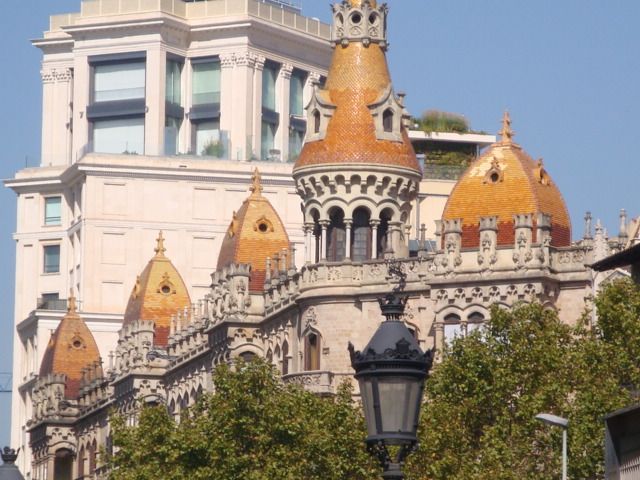
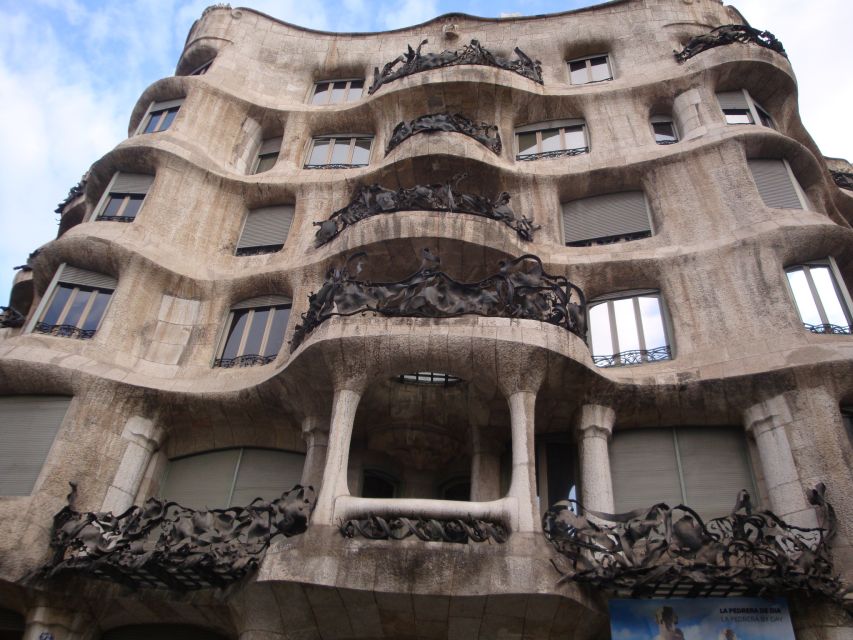
Gaudí’s work on Passeig de Gracia includes two of Barcelona’s best-known residential buildings. Casa Batlló is famous for its flowing surface, colorful ceramic elements, and references to bones, masks, and dragons. La Pedrera, also called Casa Milà, has a rough stone exterior and a roofline that feels almost geological.
The tour views these buildings from outside. That matters because the interiors are major attractions with separate admission fees. You’ll get the façade, the urban setting, and the guide’s explanation, but not the full experience of the courtyards, rooms, staircases, or rooftop spaces.
The exterior visit still has value. You can understand how these houses changed the meaning of a private residence. They were homes, but they were also public signs of wealth and social position. Their owners wanted comfort and status, while Gaudí used the commissions to test new ideas about structure and decoration.
The stories attached to these buildings also show the competitive mood of the district. Eixample’s leading families were not shy about displaying success. Their houses turned daily life into a kind of architectural theater.
The social history behind the polished façades
The walk does not stay safely inside the world of wealthy patrons. It also points toward the tensions beneath the decoration.
Barcelona’s growth brought industrial wealth, but it did not bring equal comfort for everyone. The city’s expansion, labor conditions, political conflict, and regional identity all shaped the period. The route includes references to the industrial barons, the bourgeoisie, Raval, and the Week of Tragedy, a reminder that Barcelona’s polished streets were connected to unrest beyond the grand homes.
That contrast is important. The Golden Square may look calm and refined, but its buildings were created during a turbulent time. The tour’s historical arc helps you connect elegant doorways with the larger pressure of modernization.
You may also hear about figures and cultural links that seem surprising at first, including Salvador Dalí and the Chupa Chups empire, as well as Gaudí’s relationship to ideas about New York. These subjects broaden the story beyond a standard list of monuments and show how Barcelona’s creative reputation continued to spread.
What the guide adds to the walk
The guide is central to the value of this experience. Johannes, also referred to as Hannes, is described as an energetic storyteller who can connect local events, political developments, people, and architectural styles without relying on constant reference checks.
That matters on a route with many details. A building can have a sculpted doorway, a strange balcony, or a colored roof, but the story gives those details a reason to matter. You’ll get more from the walk if you enjoy asking why a building looks the way it does.
The available guide languages are German and English. Johannes has led the tour in a style that is both informed and easygoing, with the three and a half hours organized into a clear teaching plan rather than a stream of disconnected facts.
You should also expect time for photographs and short breaks. This is described as a relaxed walk, not a race between monuments. A bathroom stop is acceptable, and the guide allows the group to pause rather than forcing everyone onward.
How the private format affects the value
The price is $212 per group of up to four people. That is not a low-cost walking tour for one person, but it can be fair for a small group that would otherwise book several seats on a private guide service.
At four people, the cost works out to $53 per person before any entry fees. At two people, it becomes a much larger per-person expense. The private format gives you a more personal setting and avoids being placed with a large public group, but you are paying for the group rather than buying an individual ticket.
The included subway ticket is useful because the route includes a broad area and uses public transport as part of the city experience. Entry fees are not included, so budget separately if you want to return to Casa Batlló, La Pedrera, the Palau de la Música Catalana, or Sagrada Familia interiors.
For me, the price makes the most sense for a family, two couples, or a small group that wants one shared architectural lesson with an adaptable pace. If you mainly want quick photo stops or plan to enter every major building, compare the total cost before booking.
Walking conditions, weather, and practical preparation
The meeting point is Plaza de Urquinaona, in front of Theater Borrás. Starting there places you near the transition between central Barcelona and Eixample.
The tour runs in sun, rain, wind, and strong showers. That is useful for planning, but it also means you should not treat this as a fair-weather activity. In summer, bring a hat, sunglasses, sunscreen, and a small bottle of water. In winter, a jacket or thin coat should be enough according to the practical guidance provided.
Wear comfortable shoes. The pace is relaxed, but three and a half hours on city streets is still a substantial walk. Since much of the tour takes place outside, dress for the forecast and remember that façades are easier to study when you are not distracted by heat or rain.
The activity is wheelchair accessible. The private format may also make it easier to communicate any needs, though the tour remains a street-based city walk.
Who will get the most from this Barcelona tour
I would choose this tour if you want to understand why Barcelona looks the way it does, not simply collect names of famous buildings.
It suits first-time visitors who want a strong introduction to Eixample, architecture fans who want to compare several Modernist architects, and repeat visitors who have already seen the façades but want their political and cultural meaning explained. It is also a good fit for German-speaking visitors looking for a private experience rather than a large group.
You may want something else if your priority is interior access. This tour gives you a thoughtful outside view, but it does not include museum visits or a full exploration of the buildings. You should also think carefully about the price if you are alone or traveling as a pair.
The strongest reason to book is the guide’s ability to make connections. The most praised qualities are the depth of the explanations, the clear teaching structure, the entertaining storytelling, and the way the three and a half hours pass quickly. Those strengths are especially useful in Eixample, where the details can overwhelm you without a clear guide.
Should you book the Art Nouveau and Gaudí Tour?
Book it if you want context, comparison, and a private pace. You’ll see the Golden Square through the work of several architects, while also learning how Barcelona’s wars, wealth, Catalan identity, and urban planning shaped the district.
Skip it if you mainly want included admission to Gaudí interiors or a short sightseeing loop. The tour is best understood as an exterior architecture and history walk, with Johannes or another guide explaining the story behind what you see.
For a group of four, the price is easier to justify. For a solo visitor, it is a larger commitment. Either way, this is one of the more useful formats for making sense of Barcelona’s Modernist center, especially if you value a strong narrator as much as the buildings themselves.
FAQ
Where does the tour meet?
The meeting point is Plaza de Urquinaona, in front of Theater Borrás.
How long does the tour last?
The walking tour lasts 3.5 hours.
What languages are available?
The tour is available in German and English.
Is this a private tour?
Yes. It is organized as a private group experience for up to four people.
What is included in the price?
The city tour and a subway ticket are included.
Are entry fees included?
No. Entry fees are not included, and museum visits and interior explorations are generally not part of the program.
Does the tour run in bad weather?
Yes. It runs in sun, rain, wind, and strong showers.
Is the tour wheelchair accessible?
Yes, the activity is listed as wheelchair accessible.
Can I cancel for a full refund?
Yes. You can cancel up to 24 hours in advance for a full refund. You can also reserve now and pay later.
New to the itinerary around Barcelona
- Roman & Gotic & Gaudi in Barcelona: private walking tour★ 4.5 · 2 reviews
- Visit to the Modernist houses of the Americans★ 5.0 · 2 reviews
- Barcelona Gaudi Tour: Sagrada Familia, Casa Batllo & Casa Mila★ 5.0 · 4 reviews
- Barcelona Street Escape: Gaudi and the Hidden Treasure★ 5.0 · 17 reviews
- Gaudí & Catalan Modernism Private Walking Tour★ 5.0 · 11 reviews
- Self-Guided Audio Tour-The Surrealist Barcelona of Dalí and Gaudí★ 3.5 · 8 reviews
- Gaudí and Barcelona Legends – Private Tour★ 5.0 · 4 reviews
- Gaudi’s Casa Batlló and La Pedrera with Chocolate Tasting★ 5.0 · 5 reviews
Gaudí Tours, compared.
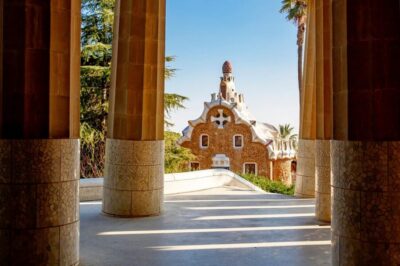
Park Güell and Gaudí House Museum Entry Ticket
Read our review →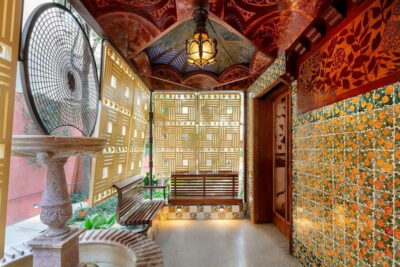
Gaudi’s Casa Vicens Skip-the-Line Entrance Ticket
Read our review →
Gaudí’s Park Güell Tour with Fast-Track Ticket
Read our review →
Sagrada Familia & Gaudi Tour Private or Small Group with Tickets
Read our review →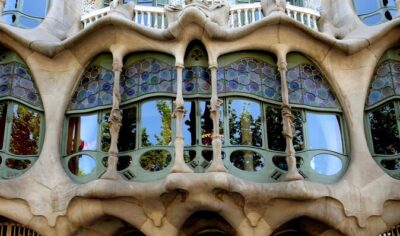
Complete Gaudi Tour: Casa Batllo, Park Guell & Sagrada Familia
Read our review →
Park Güell: Guided Tour with Optional Gaudí Experience Entry
Read our review →
Barcelona e-Bike Tour: Gaudí & Old Town Small Group
Read our review →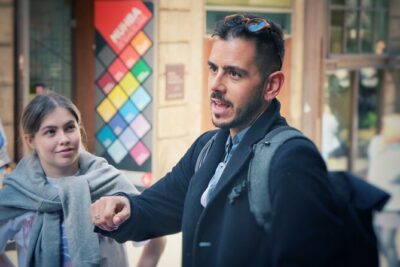
Ramblas, Old Town, Gothic and Gaudi Architecture Walking Tour
Read our review →Other lists with this tour