
Review · GERMANY
Lübeck: Architecture and Local Craft Private Guided Tour
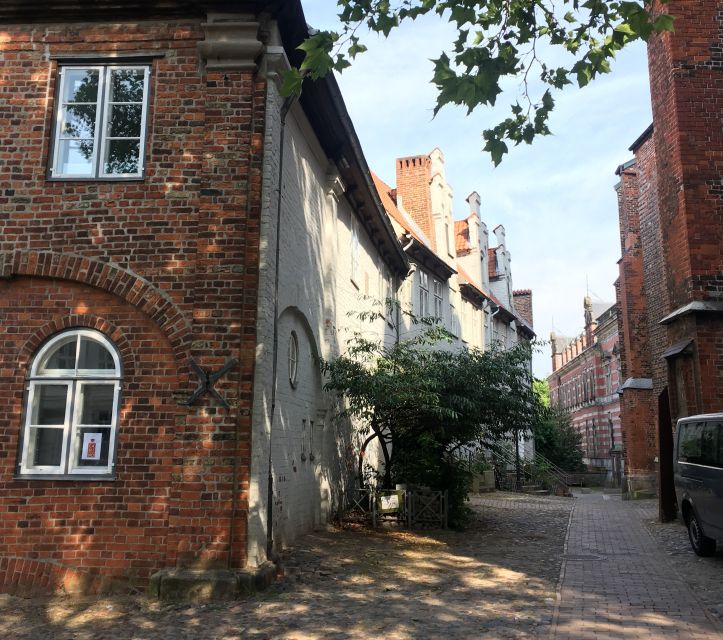
Lübeck’s most memorable feature is not one single monument, but the way its Gothic brick architecture fills the old town with color, texture, and odd little details. This private walk connects the grand churches and town hall with tucked-away passages, sagging houses, altered gables, and the practical craft of brick-making.
I like the private format, since your guide can answer your questions instead of delivering a fixed speech to a large crowd. I also like the focus on local craft and daily life, not just famous facades. The main consideration is time: 90 minutes gives you a sharp introduction, but not a full tour of Lübeck’s churches or museums.
The guides are praised for knowing their history, explaining clearly, and answering questions at length. One Danish guest called the guide especially good with Lübeck’s past, while other comments point to an engaged and highly capable guide. You can book in English or German and request a start time between 9 a.m. and 7 p.m.
Key points at a glance
- Hanseatic brick architecture: Learn why brick became so important in a northern city where building stone was scarce.
- Private group for up to eight: You get a more personal walk and can shape the conversation around your interests.
- Market square and St. Marien: See Lübeck’s town hall and one of its famous church buildings.
- Glockengießerstraße courtyards: Pass through historic passages and learn how these compact spaces were built and used.
- Local merchant’s house: Connect the city’s grand architecture with trade, homes, and the people who made Lübeck work.
- Flexible timing: Choose a start between 9 a.m. and 7 p.m., with the guide contacting you after booking.
Why Lübeck’s brick buildings matter
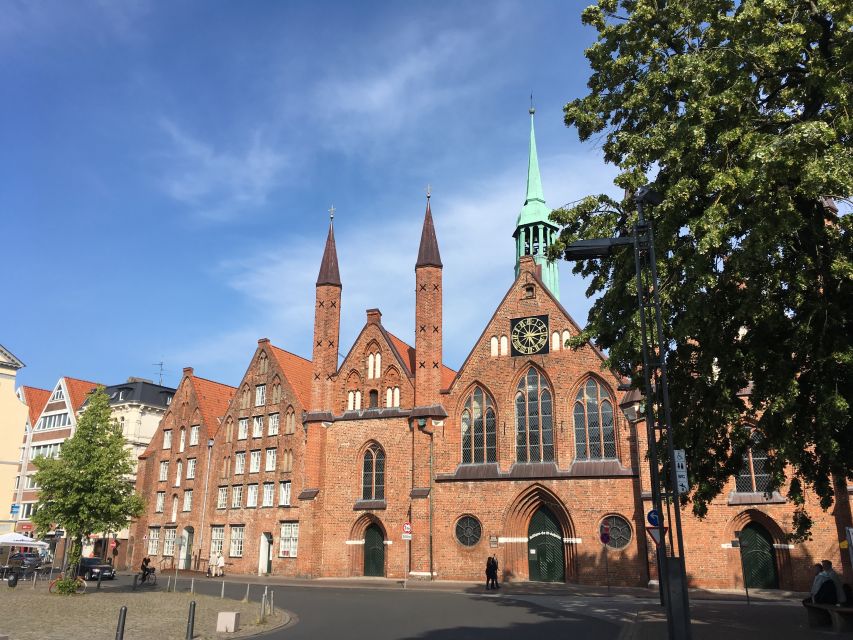
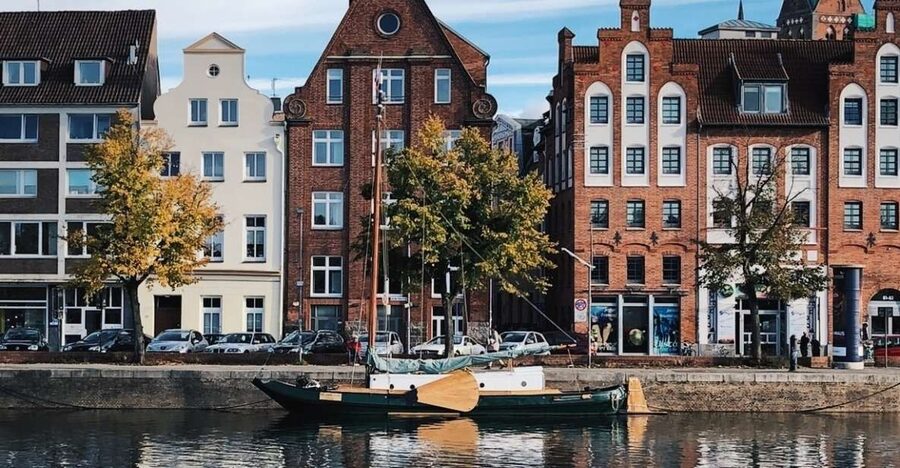
Lübeck was a major Hanseatic city, and its architecture reflects that wealth and influence. Instead of relying mainly on cut stone, the city developed a powerful building tradition in fired brick. The result is a distinctive northern German style, with tall gables, patterned walls, church towers, and broad civic buildings.
That is the central idea of this walk. You are not simply looking at old buildings and checking off names. Your guide explains how the city was laid out, how building areas were expanded in the Middle Ages, and why brick-making was such an important skill for Lübeck’s residents.
I find this approach useful because brick can seem plain at first glance. Once you understand how it was made and used, you begin to notice changes in color, texture, shape, and decoration. The material tells you something about the city’s resources, trade, labor, and ambitions.
The tour also touches on less polished details, including sagging houses and altered gables. Those details matter. Lübeck is not a stage set where every building has remained untouched. Houses changed as owners adapted them, and later alterations can reveal just as much about city life as the original medieval design.
More Private Architecture Tours in Germany:
- Private Taxi Tour City East & West History and Architecture 3-4h
★ 5.0 · 42 reviews - Private walking Tour: Berlin Architecture Tour
★ 5.0 · 14 reviews - Lübeck: Private Historical and Architectural Walking Tour
★ 4.5 · 6 reviews
Starting at the Holstentor
You meet your guide directly at the entrance of the Holstentor, Lübeck’s most recognizable landmark. This is a sensible meeting point because it is easy to identify and immediately places you beside one of the city’s great symbols.
The Holstentor has the heavy, defensive look many people expect from a medieval city gate. Its brick construction introduces the main subject before the walking begins. You can start by looking at the gate as a monument, then use the guide’s explanation to understand it as part of Lübeck’s wider civic and commercial story.
Because the tour is private, this is a good moment to tell your guide what interests you most. You may want more detail about construction, churches, trade, or the people who lived behind the decorated facades. The information provided does not promise a fixed route beyond the listed sights, so the conversation can be especially useful here.
The meeting instructions are precise: wait at the entrance of the Holstentor. Allow a little time to find the exact spot, particularly if you are arriving from another part of the old town.
The old town’s streets and original plan
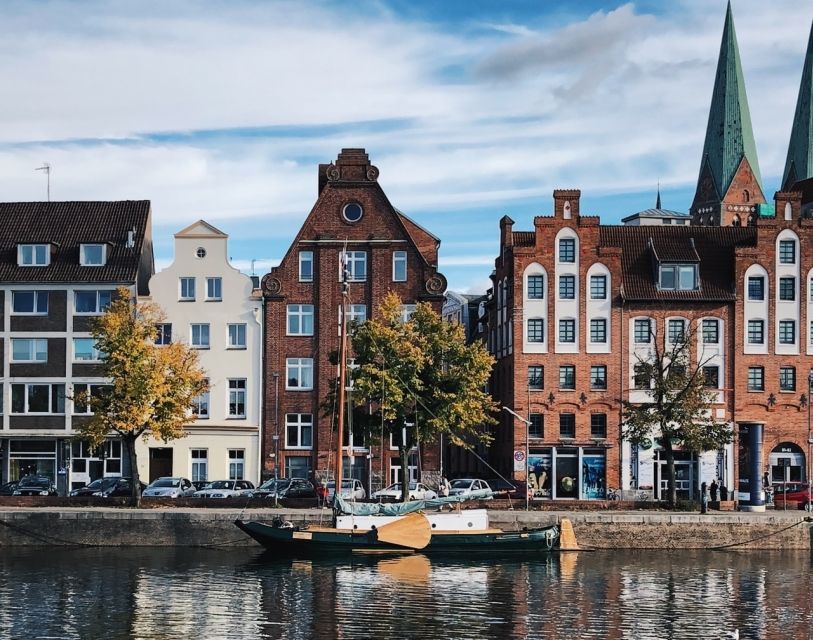
From the Holstentor, you head into Lübeck’s streets with your guide. The walk covers the city’s original street system and explains how construction areas were artificially expanded during the Middle Ages.
That subject gives the buildings a practical context. Medieval cities had limited space inside their walls, so the way land was divided and extended shaped the streets you see today. A narrow passage, a tightly packed group of houses, or an unusual building line may reflect old decisions about land rather than modern planning.
You also hear about the people of Lübeck and events that took place behind closed doors. The tour description promises stories about residents and secret events, but it does not list specific tales in advance. That is useful to remember: you are booking a guided introduction with room for local storytelling, not a scripted theatrical performance.
I like the balance between large public architecture and small human details. Grand churches tell you about civic wealth and religion. A crooked house or playful gable tells you about owners, builders, repairs, and changing taste.
The market square and St. Marien
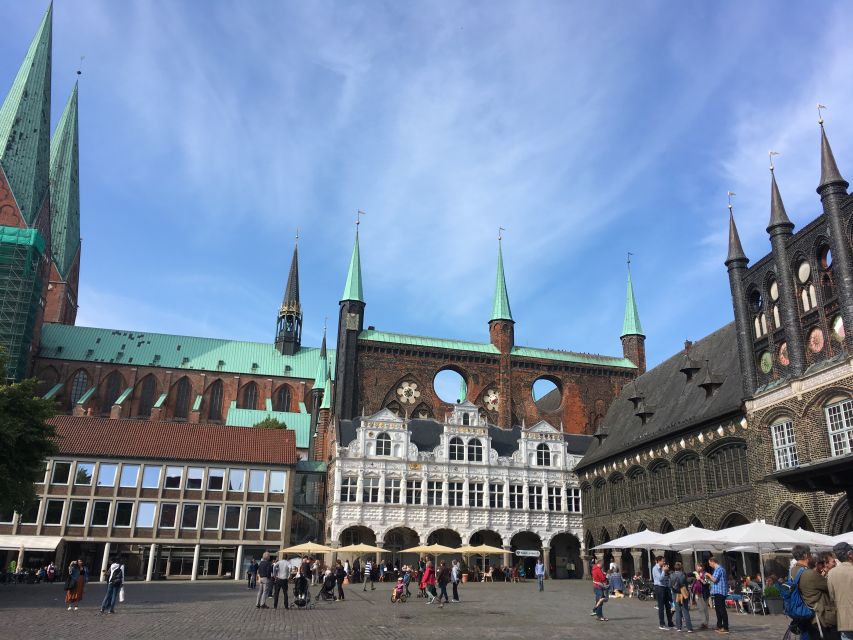
One of the main stops is Lübeck’s town market place. Here, you can look at the town hall and the Ratskirche St. Marienchurch, one of the city’s most important church buildings.
The market square is where Lübeck’s civic and religious power comes together. The town hall represents government and commerce, while St. Marien represents the importance of the church in medieval urban life. Your guide can help you read the relationship between these buildings rather than treating them as separate photo stops.
This is likely to be one of the most visually impressive parts of the walk. The scale changes from narrow streets to a more open public space, allowing you to appreciate the size and authority of the buildings.
Church entrances are optional and cost 2 euros. That fee is not included in the tour price, so bring a small amount if you want to go inside. The supplied details do not promise interior access as part of the standard walk, so you should regard it as an optional addition rather than a guaranteed extended visit.
The 90-minute schedule also matters here. You will have time to see the market square and hear its main story, but you should not expect a long, quiet examination of every church detail. If church interiors are your main reason for visiting Lübeck, you may need extra time before or after the tour.
More Guided Tours around Germany:
- Düsseldorf: Guided City Architecture Walking Tour
★ 4.6 · 61 reviews - Potsdam: Guided Walking Tour of UNESCO Site and Architecture
★ 4.7 · 49 reviews - Berlin: Guided Architectural Walking Tour of Hansaviertel
★ 4.9 · 5 reviews - Munich Your Way: Private Tour with Architect & Guide
★ 5.0 · 2 reviews
Buddenbrockhaus and Glockengießerstraße
The route continues through the Baroque Buddenbrockhaus before reaching Glockengießerstraße. These stops shift the focus from major civic buildings to domestic architecture and the way people moved through the city.
The Buddenbrockhaus adds a later architectural layer to the tour. Lübeck is not made up only of medieval brick churches. Baroque changes and newer alterations show how the city kept adapting over time. Passing through the building helps you compare different periods without leaving the old town.
At Glockengießerstraße, you see several passages and courtyards. These spaces are easy to miss if you are walking alone with only a guidebook. They reveal a more compact side of urban life, where homes and work areas were arranged behind the main street.
Your guide explains how the passages and courtyards were constructed and what their history means. The supplied information does not specify the exact number of courtyards or whether every space is open at all times, so expect a guided look at the area rather than a guaranteed tour of every interior.
This part should suit you if you like architecture at eye level. Instead of only photographing church towers, you get to notice doorways, narrow routes, building depth, and the way a street can hide a second layer behind its front facade.
A merchant’s house and the craft of brick-making
The visit to a local merchant’s house gives the tour a direct link to Lübeck’s trading past. Here, the focus turns to homes, business, and the craft that made the city’s brick buildings possible.
Brick-making may sound like a small technical subject, but it is one of the most useful parts of the experience. The city’s appearance depended on people who knew how to make and fire bricks well. A merchant’s home helps you connect that craft to the people who paid for buildings, traded goods, managed businesses, and lived among the city’s churches and public offices.
I appreciate that the tour does not treat architecture as decoration alone. You learn why mastering brick-making was so important to Lübeck and its residents. That explanation gives the city a stronger sense of place without requiring a long museum visit.
The details do not state whether the merchant’s house includes a full interior tour or simply a visit to the site. Keep your expectations practical. The value is the guide’s explanation of the building and its role in Lübeck’s urban life.
What the private format changes
The tour costs $277 per group of up to eight people. At the maximum group size, that works out to about $34.63 per person. For two people, the cost is much higher per head, so the value depends heavily on how many people are in your party.
For a family or group of friends, the price can be reasonable because you are paying one group rate and receiving a private guide. You also avoid being tied to the pace or questions of strangers. A couple who wants the lowest possible cost may find a shared walking tour better value, if one is available.
The private setup is especially useful if you want to ask about architecture. Brick construction, building alterations, passages, courtyards, and church design can raise plenty of questions. The guide can spend more time on the subjects that catch your attention.
The feedback attached to the experience is consistently positive, with an overall rating of 4 out of 5 from six reviews. The strongest praise concerns the guides themselves: history knowledge, clear explanations, engagement, competence, and careful answers to questions. One German-language comment describes a very informative tour in which the guide answered questions in detail.
There is no named guide listed, so you cannot request a particular person based on the available information. You can choose English or German, and the guide contacts you after booking to arrange the exact start time.
Timing, pace, and practical details
Ninety minutes is a good length for a first look at Lübeck. You get a clear route through major architectural areas without giving up half a day. It also fits well into a schedule that includes museums, shopping, or an independent return to the buildings you liked best.
The walk is focused on streets, buildings, passages, courtyards, churches, and a merchant’s house. Food and drinks are not included, and there is no meal stop built into the experience. Plan to eat before or after the walk rather than expecting refreshments along the route.
You can request any starting time from 9 a.m. to 7 p.m., subject to arrangement with the guide. That flexibility helps if you arrive by train, have a fixed museum booking, or want to avoid the middle of the day.
You can cancel up to 24 hours ahead for a full refund, and the reserve-now, pay-later option lets you hold the booking without paying immediately. Those terms are useful when your Northern Germany plans are still changing.
The tour is offered in English and German. Since this is a walking experience through an old city center, wear shoes that you can use comfortably for 90 minutes. The provided information does not give specific accessibility details, so ask the provider before booking if you have mobility needs.
Who will get the most from this walk
I would choose this tour if you want to understand why Lübeck looks the way it does, rather than simply collect photos of the Holstentor and churches. It suits first-time visitors who want a concise introduction and architecture fans who enjoy construction details.
It is also a good match for families or small groups. The private format gives you room to ask simple questions, pause over an unusual house, or focus on stories about residents and local life.
You may want a different plan if you prefer long church visits, museum interiors, or a full-day historical program. The walk is an overview, and its 90-minute length means the guide must keep moving. Optional church entry costs extra, and food and drinks are not part of the price.
For the best experience, arrive with one or two subjects in mind. Ask about the original street system, the reason for the courtyards, the changes to the gables, or the brick-making process. The positive comments about detailed answers suggest that questions are one of the best ways to make the private format pay off.
Should you book it?
Book this Lübeck tour if you value a personal guide, clear historical context, and close attention to architecture. It gives you the grand sights at the market square and Holstentor, but also takes you toward the passages, courtyards, houses, and craft traditions that are easy to overlook.
The price makes the most sense for a group of several people. At two guests, it is a premium walking tour. At eight, it becomes a more practical way to share a private guide.
I would treat it as a strong first introduction, not a complete study of Lübeck. You will leave with a better eye for brickwork, a clearer idea of how the city developed, and several places worth revisiting on your own.
FAQ
How long does the Lübeck architecture tour last?
The tour lasts 90 minutes.
Where do I meet the guide?
You meet the guide directly at the entrance of the Holstentor. Wait there for the guide.
What languages are available?
The tour is available in English and German.
Is this a private tour?
Yes. It is a private group tour for up to eight people.
How much does the tour cost?
The price is $277 per group of up to eight people.
What time can the tour start?
You can arrange a start time between 9 a.m. and 7 p.m. The guide contacts you after booking to schedule the tour.
Are church entrance fees included?
No. Church entry is optional and costs 2 euros.
Are food and drinks included?
No. Food and drinks are not included.
Can I cancel for a refund?
Yes. You can cancel up to 24 hours in advance for a full refund. You can also reserve now and pay later.
New to the itinerary around Germany
- Munich Your Way: Private Tour with Architect & Guide★ 5.0 · 2 reviews
- Hidden Architectural Gems of Munich (Max. 16 guests)★ 5.0 · 2 reviews
- Architectural Frankfurt: Private Tour with a Local Expert★ 5.0 · 2 reviews
- Berlin Architecture/River Spree Full Day Photography Tour★ 5.0 · 2 reviews
- Private Taxi Tour of City East History and Architecture 2-3h★ 5.0 · 2 reviews
- Architectural Berlin: Private Tour with a Local Expert★ 4.0 · 3 reviews
- Lübeck: Private Historical and Architectural Walking Tour★ 4.5 · 6 reviews
- Dessau: Bauhausbauten Radtour★ 5.0 · 2 reviews
Private Architecture Tours, compared.

Sagrada Familia & Gaudi Tour Private or Small Group with Tickets
Read our review →
Barcelona 1.5h Private Old Town, Gothic & Ramblas Walking Tour
Read our review →
Treasures of Barcelona: Private Gaudi Walking Tour
Read our review →
Sagrada Familia & Gaudi Guided Tour Private or Small Groups
Read our review →
Best of Chicago: Architecture & Highlights City Private Tour
Read our review →
Private Harajuku Omotesando Architecture Walking Tour
Read our review →
Private Santa Barbara History and Architecture Walking Tour
Read our review →
Private Barcelona Modernism and Gaudí Walking Tour
Read our review →Other lists with this tour