
Review · SOUTH AFRICA
Johannesburg: Architectural Walking Tour
Johannesburg makes more sense when you read it through its buildings. This two-hour walk follows the city from its gold rush beginnings to its modern towers, using architecture to explain how streets, offices, public spaces, and everyday life have changed.
I like the unusual focus on architecture as a history lesson, and I like the way the route brings you into ordinary city spaces rather than keeping you inside a sightseeing bubble. Guide Mo is especially good for visitors who want to ask questions about design, urban change, and the changing uses of old buildings. The main drawback is practical: this is a walking tour in the city center, and it is not suitable for people with mobility impairments.
Key points to know before you go
- Architecture tells the story: Buildings provide the main route into Johannesburg’s gold rush origins, growth, and changing city life.
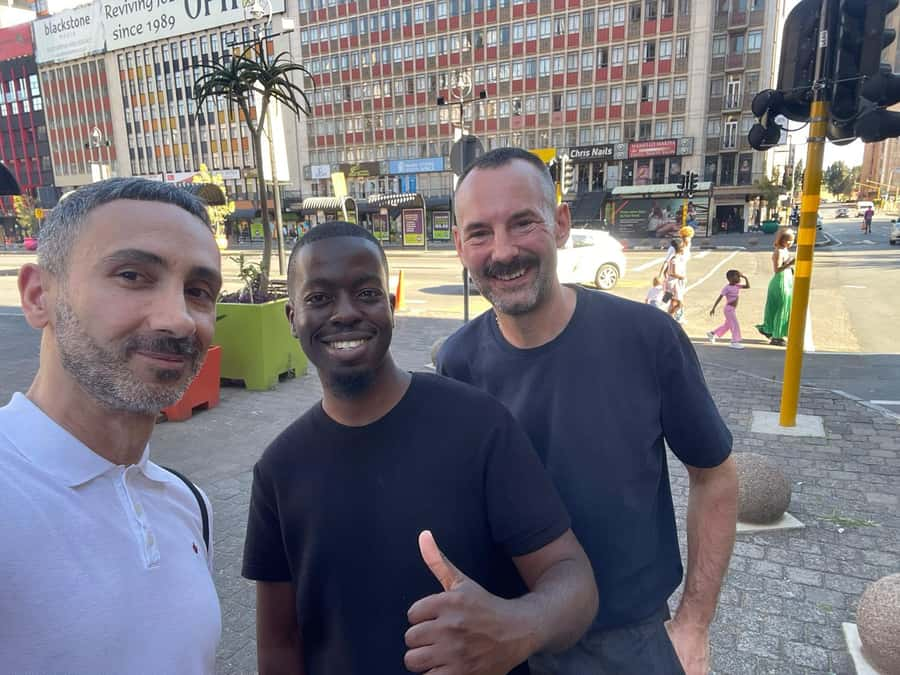
- Guide Mo leads the walk: He explains architectural style, design, historical use, and later changes to important central buildings.
- The route links major districts: You walk from Newtown through Market Street and Marshalltown toward Gandhi Square and the Carlton Centre.
- Buildings are part of the experience: Entry to any buildings visited is included in the $25 price.
- Expect an active two hours: The tour is interactive and question-friendly, but the walking and city-center setting require reasonable mobility.
- Check the final stop: The Top of Africa is currently closed, so the tour ends at the bottom of the Carlton Centre, with the listed finish point at Gandhi Square.
Reading Johannesburg through its buildings
Many city tours give you dates, famous people, and a quick photo stop. This one uses a different tool. You look at the shape, purpose, and location of buildings, then connect those clues to Johannesburg’s growth.
That approach matters here because the city changed quickly. Gold brought workers, money, offices, public buildings, transport links, and new districts. Architecture gives you something concrete to look at while the guide explains those shifts.
I like this format for a first visit because it helps you get your bearings. Instead of seeing a string of unrelated sights, you follow a line through the city. A square leads to a street, a street points toward old commercial buildings, and those buildings help explain why the center developed as it did.
The tour is led in English by Mo, who designed the experience around architectural history. His role is more than pointing out façades. He explains style and design, but also asks you to consider how buildings were used, how that use changed, and what those changes say about Johannesburg.
That makes the walk useful for two kinds of people. If you already care about architecture, you get detail about buildings and urban design. If you do not, you still get a clear way to understand the city without needing a long list of dates.
More Walking Tours in the world:
- The Official Art Deco Walking Tour by The Miami Design Preservation League
★ 5.0 · 1,580 reviews - Lecce: Baroque Architecture and Underground Walking Tour
★ 4.6 · 1,248 reviews - Chicago in a Day: Food, History & Architecture Walking Tour
★ 5.0 · 1,153 reviews
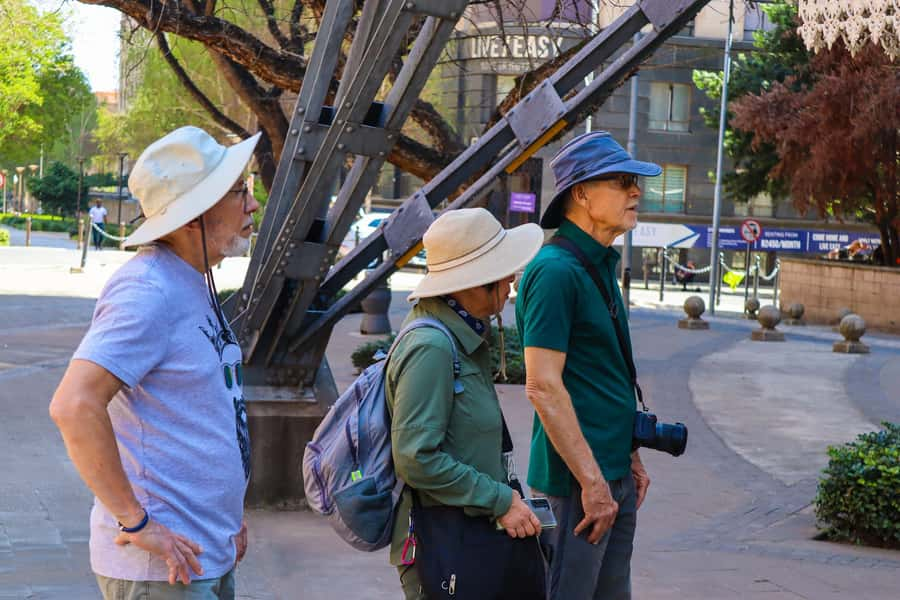
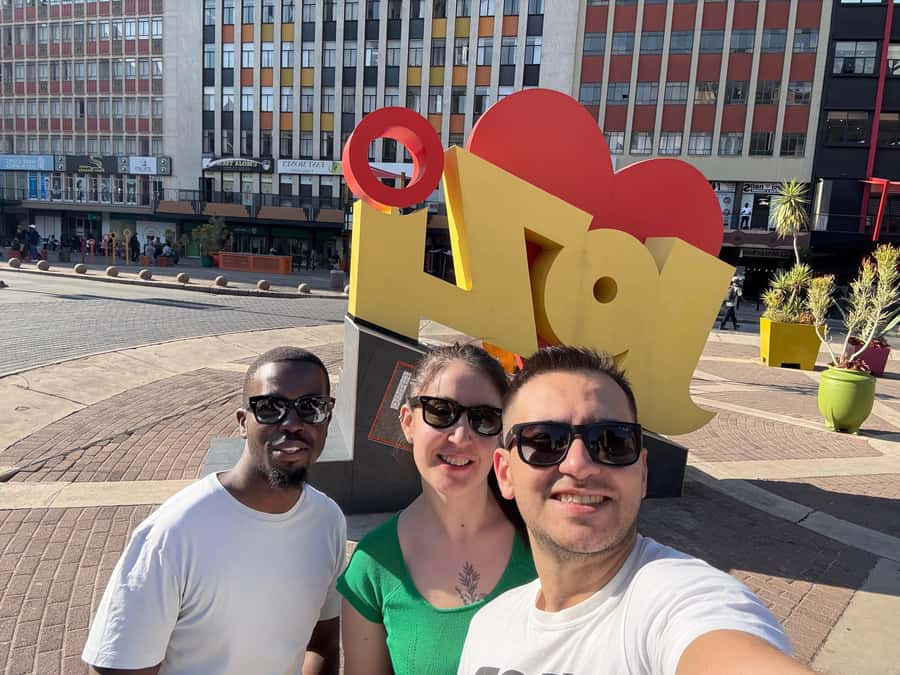
Starting in Newtown at Mary Fitzgerald Square
The meeting point is at the door of McDonald’s near 100 Carr Street. From there, the tour moves into the Newtown district, beginning around the Market Theatre and Mary Fitzgerald Square.
Newtown is associated with art and creativity, so it gives the tour an energetic opening. The Market Theatre stop is brief, about five minutes of guided sightseeing, but it helps set the tone. You are not looking only at old offices. You are also seeing how parts of the center have been used for culture and public life.
Mary Fitzgerald Square receives about ten minutes. This is where the tour begins to connect architecture with people and daily city activity. Public squares are not just empty spaces between buildings. Their size, position, and surrounding structures can tell you how a city expects people to gather, move, work, or spend time.
I like starting here because it avoids a dry introduction. You begin with a public place and a cultural building, then work backward and forward through the city’s story. The route also gives you a sense of how Newtown fits into central Johannesburg.
Do not expect a long interior visit at every stop. The schedule allows short pauses, so Mo’s explanations and your questions are the main event. Wear shoes that are comfortable for steady city walking, and arrive ready to listen outdoors as well as inside any building the group visits.
Along Albertina Sisulu Street, once Market Street
The route continues toward Albertina Sisulu Street, formerly called Market Street. This is an important part of the walk because the street is presented as the birthplace of the city.
The Library Gardens are the key pause here. Mo uses the gardens and nearby historical spaces to explain where Johannesburg began and how those places changed over time. This is one of the tour’s strongest ideas: history is not treated as something locked in a museum. It is attached to a street, a garden, and the buildings around you.
The stop lasts about ten minutes, which is enough for a focused explanation but not enough for a long historical lecture. That suits the tour’s pace. You keep moving, and each location adds another piece to the city’s development.
For me, this is where the architectural approach becomes most useful. A street name can reveal a different period of civic life. A public garden can show how the city presented itself. A building that changed purpose can point to larger economic and social shifts.
The tour does not ask you to memorize every detail. Instead, you build an image of Johannesburg by comparing what you see with what Mo explains. That makes the information easier to carry with you after the walk.
Turbine Hall and the working city
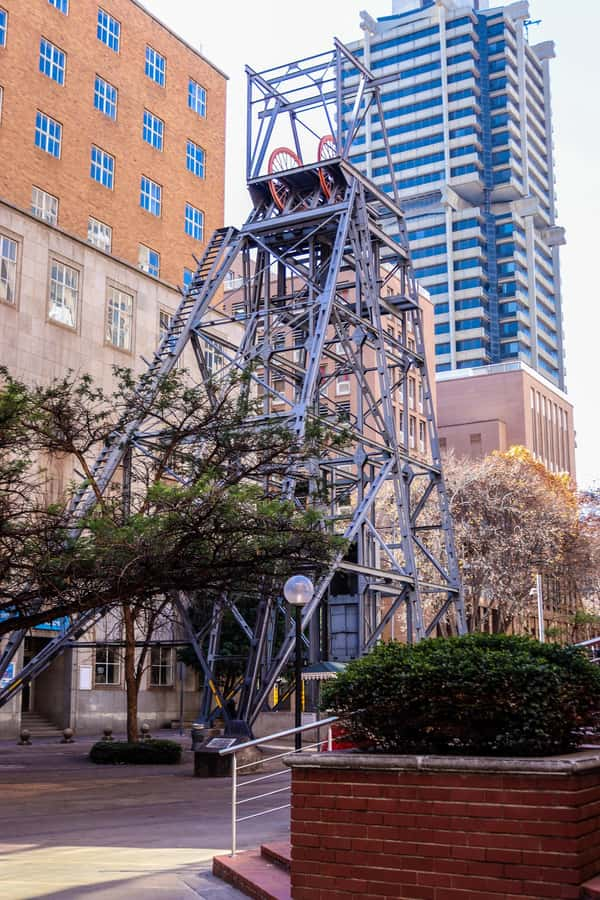
The next stop is Turbine Hall, with about five minutes for sightseeing. It is a short visit, but its place in the route matters.
The building helps widen the story beyond government, commerce, and grand public spaces. Industrial architecture shows another side of city growth: the systems and workplaces that powered Johannesburg. You may find this stop especially useful if you want the tour to cover more than attractive façades.
Because the stop is brief, your experience will depend on the guide’s explanation and the group’s questions. This is not a long building study. It is one quick chapter in a walk that keeps linking different types of urban space.
That rhythm is worth understanding before booking. The tour gives you a broad view of central Johannesburg rather than a slow, specialist examination of one or two buildings. I see that as good value for a first look, though architecture students or serious specialists might want more time at each site.
More Architecture Tours around the world:
- Chicago Architecture River Cruise
★ 5.0 · 15,756 reviews - Chicago River 90-Minute Architecture Tour
★ 4.5 · 9,629 reviews - Chicago River: 1.5-Hour Guided Architecture Cruise
★ 4.8 · 8,046 reviews - Barcelona: Park Güell and Gaudí House Museum Entry Ticket
★ 4.5 · 6,326 reviews
Marshalltown and the Anglo American offices
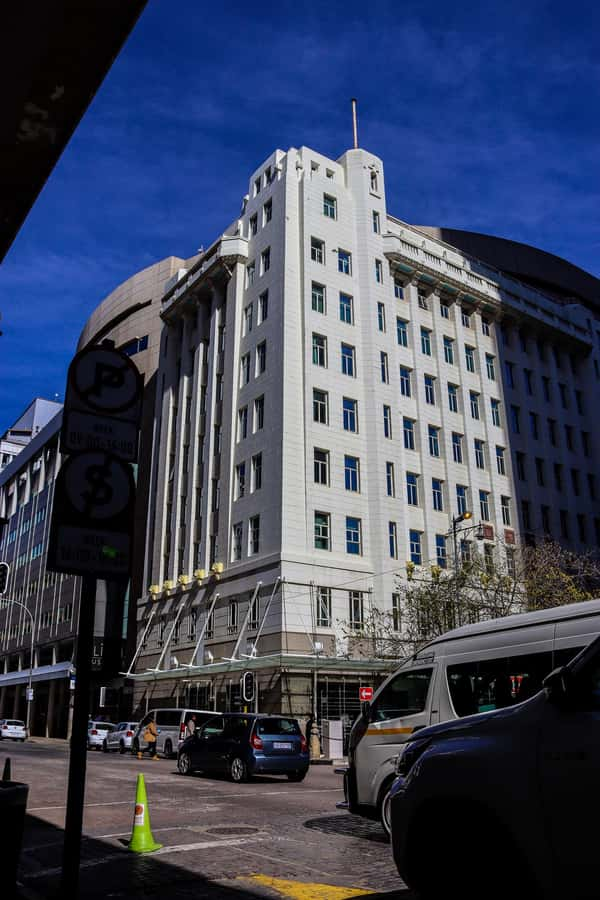
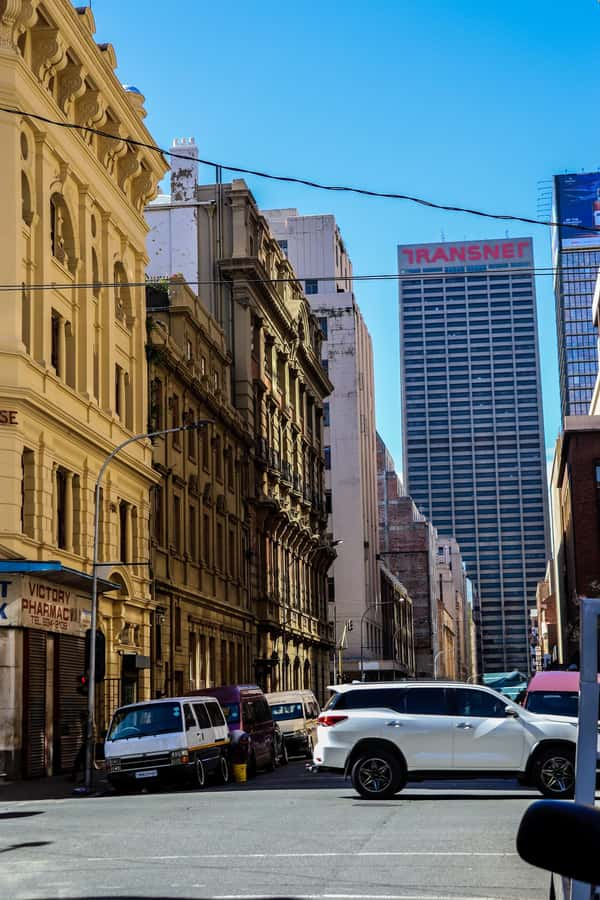
The route then reaches the mining offices of Marshalltown, including the Anglo American stop. This section connects directly to Johannesburg’s gold-driven development.
The buildings here matter because mining did not only create mines outside the city. It also created offices, finance, administration, and commercial power in the center. The architecture becomes evidence of the institutions that shaped Johannesburg.
The Anglo American stop is scheduled for about ten minutes. That gives Mo room to explain the building’s design and role in the city’s story. It also gives you a chance to look at the relationship between the offices and the surrounding district.
I appreciate this part because it moves beyond the easy gold rush story. Gold is not presented only as a dramatic beginning. You see how wealth became organization, corporate presence, and a built center.
Mo’s strongest quality, based on the tour’s published feedback, is his ability to answer questions and adjust to what interests you. One detailed assessment says the roughly two-and-a-half-hour experience passed quickly because he handled questions about architectural history, design, style, and changing building uses. The advertised duration is two hours, so allow a little flexibility if the pace expands through discussion.
Gandhi Square and the changing center
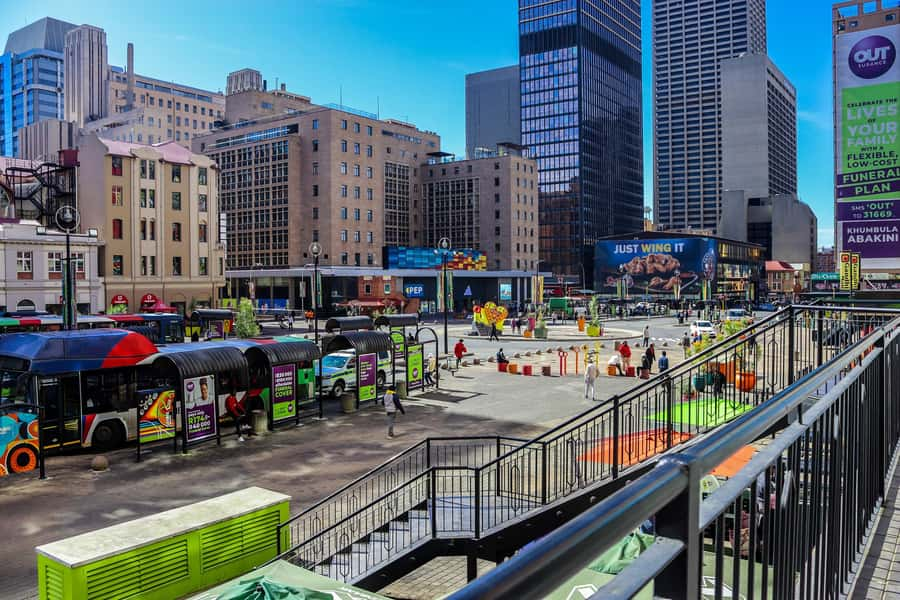
Gandhi Square is another ten-minute sightseeing stop. Its position in the route gives you a chance to think about Johannesburg as a living center rather than a collection of historic buildings.
The square helps connect the older commercial districts to the walk’s final landmark. Here, you can consider how public spaces are renamed, reused, and reinterpreted. The tour’s focus on changing uses is particularly helpful at this point because the city center is not frozen in one historical period.
Gandhi Square is also listed as the finish point, while the main route continues to the Carlton Centre. That creates a small piece of practical uncertainty in the description. Ask the operator at the start to confirm exactly where your group will finish and how the final stop relates to Gandhi Square.
This is not a reason to avoid the tour. It is simply useful to know before you arrive, especially if you have arranged transport or another appointment immediately afterward.
The Carlton Centre and the closed Top of Africa
The final landmark is the Carlton Centre, with about ten minutes of sightseeing. It was once the highest point in Africa, which gives the building a clear place in Johannesburg’s modern story.
The planned Top of Africa visit needs one important update. The Top of Africa is currently closed, so the tour ends at the bottom of the Carlton Centre rather than at the viewing point. You should not book this walk expecting a panoramic visit from the top.
Even without access upstairs, the Carlton Centre works as a strong ending. The building represents a later phase of Johannesburg’s growth and ambition, after the early mining offices and older central streets. It lets the route finish with modern scale rather than returning to its starting point.
I would treat this as an architectural conclusion, not a viewpoint tour. If your main goal is a city panorama, this experience will not provide it while the Top of Africa remains closed. If you want to understand how Johannesburg’s buildings mark different stages of urban development, the Carlton Centre still makes sense as the final stop.
What the $25 price includes
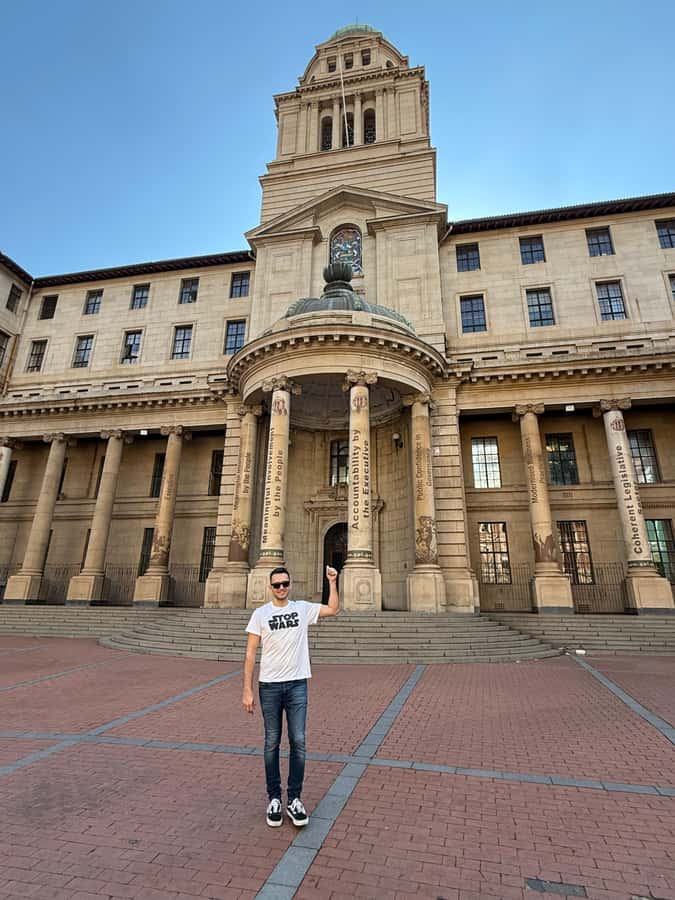
At $25 per person, the tour is reasonably priced for a two-hour guided walk, especially because entry to any buildings visited is included. The value comes from the guide’s interpretation, not from a long list of paid attractions.
You are paying for a clear route, a specialist subject, and the chance to ask questions in real time. That is useful in a city where buildings can look impressive but remain hard to place in context.
The price is less attractive if you want long interior visits, a major viewpoint, or a full-day history tour. Several stops are short, and the Top of Africa is closed. Still, for a focused introduction to central Johannesburg, the cost is fair.
The tour also offers free cancellation up to 24 hours before the start and a reserve-now, pay-later option. Those terms help if your city plans are still shifting, but the more important decision is whether you enjoy walking and architectural discussion.
Who will enjoy this walk most
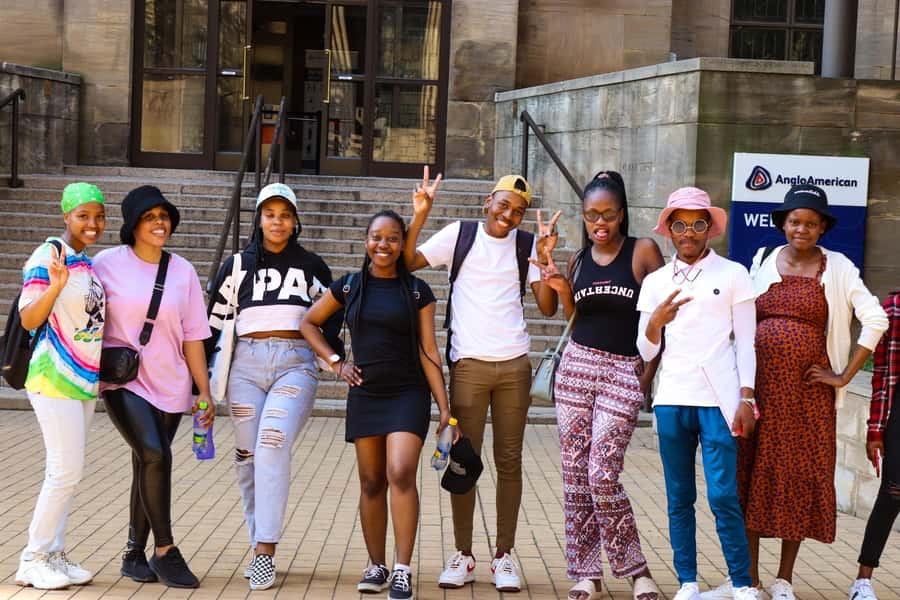
I would recommend it to you if you like cities best when you understand how they were built. It suits people interested in architecture, urban development, mining history, public spaces, and the changing uses of old buildings.
It is also a good choice if you want a more local, street-level look at Johannesburg rather than a tour built only around headline attractions. The route takes you through everyday central spaces and asks you to notice how those spaces function.
You should think twice if you have mobility limitations. The experience involves walking between several districts, and it is specifically not suitable for people with mobility impairments. The stated age restriction also says it is not suitable for people over 95.
The tour is in English, so you need enough English to follow explanations and take part in questions. The interactive style is a plus if you enjoy conversation, but less useful if you prefer a quiet audio-guide format.
Practical advice for a smoother walk
Meet at the door of McDonald’s near 100 Carr Street. Since the route information names both 100 Carr Street and Mary Fitzgerald Square, confirm the exact starting point with the guide when you arrive.
Allow two hours, with some flexibility. One published account describes the walk lasting about two and a half hours, likely because of questions and discussion. Mo may be able to respond to your interests, but a lively group can affect the pace.
Wear comfortable walking shoes. The tour is not designed for limited mobility, and the value comes from moving through the city rather than sitting in one place.
Keep the current Carlton Centre situation in mind. You will see the building and finish at its base rather than visiting the Top of Africa. Also confirm whether your group formally ends at the Carlton Centre or Gandhi Square, since both locations appear in the route details.
Should you book the Johannesburg Architectural Walking Tour?
Book it if you want Johannesburg explained through buildings, streets, public spaces, and changing uses. For $25, you get a focused two-hour walk led by Mo, with building entry included and plenty of room for questions.
Skip it if you mainly want a high viewpoint, long interior visits, or a low-effort sightseeing outing. The closed Top of Africa removes one expected feature, and the walk requires reasonable mobility.
For most curious first-time visitors, I see this as a smart way to get a clearer sense of central Johannesburg. It gives you a framework you can use for the rest of your stay, and it does so without reducing the city to a list of famous names.
FAQ
How long does the Johannesburg Architectural Walking Tour last?
The advertised duration is two hours. Allow some extra time, since the walk may run longer when the group asks questions and discusses the buildings.
How much does the tour cost?
The price is $25 per person.
Where does the tour meet?
The meeting point is at the door of McDonald’s near 100 Carr Street.
What language is the tour conducted in?
The live guided tour is conducted in English.
Is entry to buildings included?
Yes. Entry to any buildings visited during the tour is included.
Can I visit the Top of Africa at the Carlton Centre?
No. The Top of Africa is currently closed. The tour ends at the bottom of the Carlton Centre instead.
Is the tour suitable for people with mobility impairments?
No. The activity is not suitable for people with mobility impairments. It is also listed as unsuitable for people over 95.
New to the itinerary around the world
- Washington, DC: Georgetown Architecture Walking Tour★ 5.0 · 8 reviews
- Wilmington History and Architecture Tour★ 4.8 · 18 reviews
- Washington DC: Dupont Circle & Embassy Row Architecture Tour★ 5.0 · 6 reviews
- New Orleans : Garden District Architecture Walking tour★ 4.8 · 5 reviews
- Walk & Discover KL’s Architectural and Heritage Gems★ 5.0 · 7 reviews
- Unveiling Brno: History, Culture & Architectural Delights★ 5.0 · 2 reviews
- Vicenza: Palladian Architecture Private Walking Tour★ 3.3 · 3 reviews
- Private Colonial Williamsburg Architectural Tour★ 5.0 · 5 reviews