
Review · NEW YORK CITY
New York Upper West Side Art and Architecture Tour
The best part of this two-hour walk is that it turns familiar Manhattan sights into a connected story. You begin at Columbus Circle and move through major buildings, performance spaces, and public areas before ending at Hearst Tower. Along the way, Ivan explains not just what each building looks like, but how the architecture fits into New York’s larger city plan.
I like the small maximum group of 15, which gives you room to ask questions without losing the guide in a crowd. I also like the personal headsets, a practical touch on noisy city streets. The main consideration is that this is a walking and discussion tour, not an interior sightseeing tour with timed admission to the museums or performance halls.
Key points to know before booking
- Columbus Circle to Hearst Tower: The route links several major Midtown landmarks in one compact walk.
- Ivan leads the tour: He explains architecture, urban planning, art, and New York history in a way that works for specialists and curious beginners.
- Small-group format: The tour is limited to 15 people, so you have a better chance to ask questions.
- Headsets are included: You can hear the guide while standing beside traffic and city crowds.
- A strong design focus: The route includes Central Park Tower, Lincoln Center, Juilliard, Hearst Tower, and the Museum of Arts and Design.
- Easy to fit into a busy day: The tour begins at noon, lasts about two hours, and ends near subway and other transportation options.
Why this short Manhattan walk works
Upper West Side architecture can be hard to read on your own. You may notice a tall glass tower, a grand cultural complex, or an unusual facade, but miss the reason it was built there and how it relates to the surrounding streets.
This tour gives you that missing context. Ivan discusses buildings as part of the city, not as isolated objects. That approach matters in Manhattan, where old and new structures often share the same block and where a building’s position can tell you as much as its materials.
The route also has a useful shape. It begins at Columbus Circle, takes you past Central Park and Lincoln Center, then moves toward Hearst Tower. You get a clear northward progression rather than a series of disconnected stops.
At $49 per person, the experience is priced above a basic free walking tour but below many longer, specialized city excursions. The value comes from the focused subject, the small group, the headsets, and the chance to ask questions. If you already enjoy architecture or urban design, the price is easier to justify. If you prefer entering every attraction, this tour may feel less satisfying because admission to interiors is not included.
More Architecture Tours around New York City:
- Manhattan Architecture Yacht Cruise
★ 5.0 · 1,395 reviews - NYC: Around Manhattan Official NYC Architecture Cruise
★ 4.8 · 402 reviews - Art Deco and Architecture Midtown Landmarks Tour
★ 5.0 · 142 reviews
Starting at Columbus Circle and the Time Warner Center
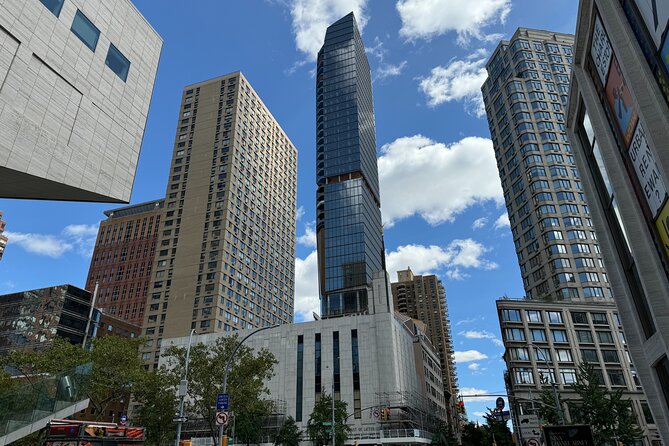
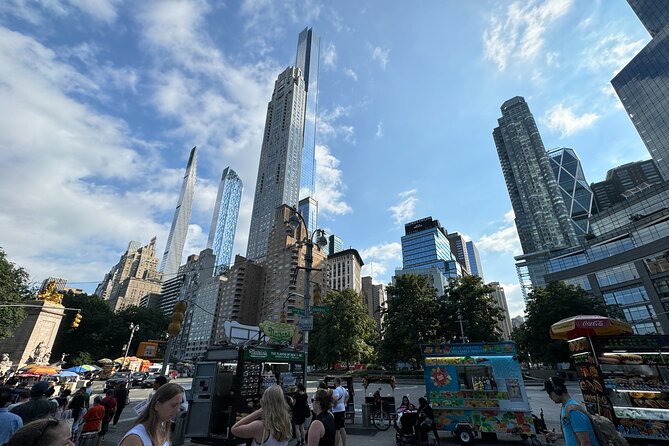
The meeting point is Columbus Circle, at the southwest corner of Central Park. This is a useful starting place because it puts several big ideas in front of you right away: a major traffic circle, a famous park entrance, a monumental statue, and some of Manhattan’s most visible modern towers.
The first discussion includes the statue of Christopher Columbus, the Time Warner building, and Central Park Tower. You will spend about 15 minutes here, enough time to get oriented without turning the opening into a long lecture.
This is one of the strongest parts of the route for seeing how public space and private development meet. Columbus Circle is not just a place to gather. It is also a major crossroads, and the buildings around it show different approaches to scale and height.
The next stop focuses on the Time Warner Center for about 10 minutes. You discuss the building rather than simply walking past it. The adjacent Museum of Arts and Design is also included in the route, giving the tour an art and materials angle alongside its focus on architecture.
You should expect exterior viewing and conversation, not a museum visit. If you want time inside the Museum of Arts and Design, plan a separate visit.
Central Park as part of the city plan
The walk continues by Central Park, with about 10 minutes devoted to the park and its role in the city. This stop is valuable because it keeps the tour from becoming a string of building profiles.
Central Park changes the scale of the neighborhood. After looking at towers and large cultural buildings, you get a chance to consider the open space that shapes the area around them. Ivan’s focus includes urban planning, so this part helps connect the buildings to the city grid and public realm.
You should pay attention to how quickly the view shifts from dense construction to open parkland. That contrast is one of the reasons this area is so useful for an architecture walk. You can see how public space affects the way buildings are placed and experienced.
The tour does not promise a long park stroll. The stop is brief, and travel time is part of the two-hour duration. Think of Central Park here as an important point of reference, not a separate park tour.
Lincoln Center, where many design ideas meet
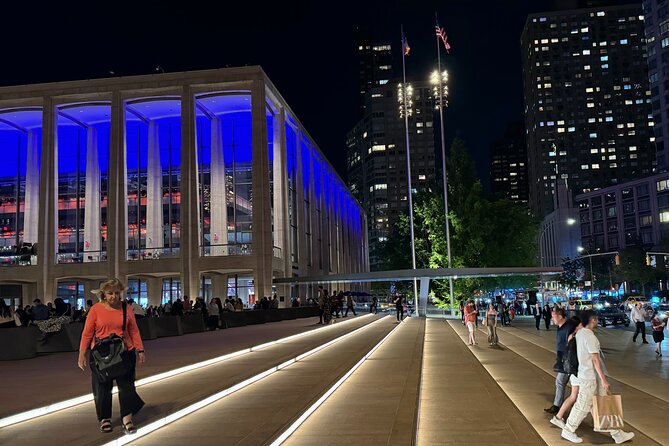
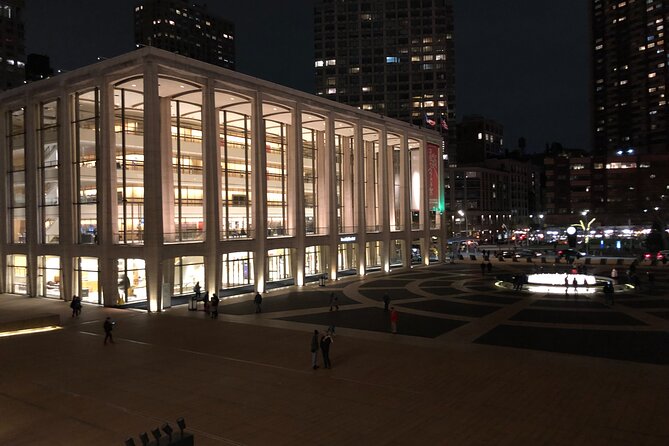
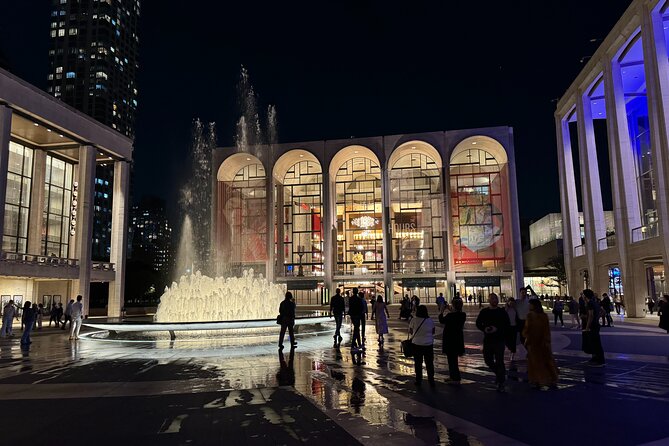
Lincoln Center for the Performing Arts forms the heart of the tour’s cultural section. You will discuss the complex, then visit or pass by several of its major venues. The number of stops may feel high, but each is short, usually five to 15 minutes.
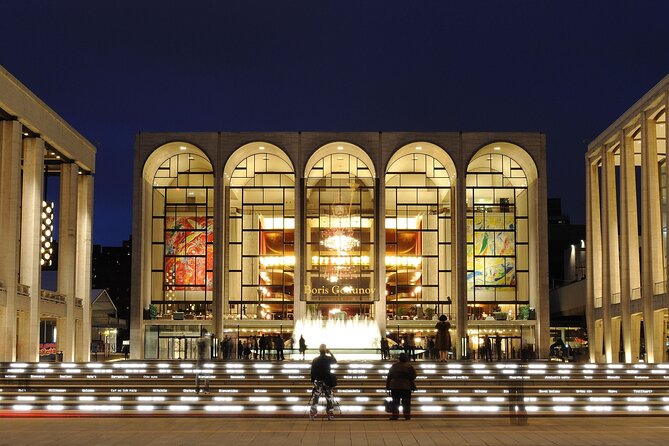
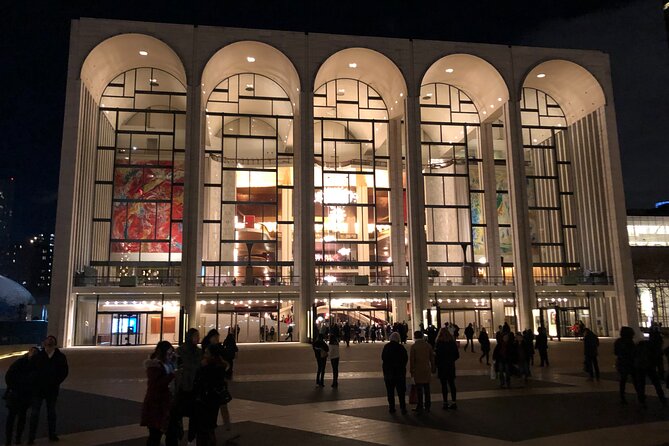
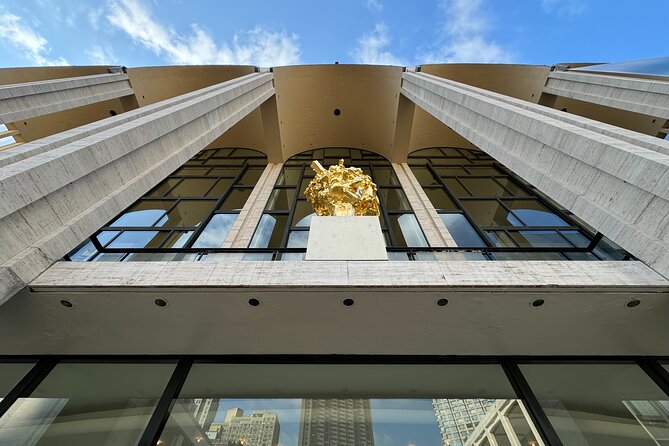
The route includes David Geffen Hall, home to the New York Philharmonic, and the New York City Ballet. It also covers the Metropolitan Opera House, the Vivian Beaumont Theater, The Juilliard School, and Alice Tully Hall.
This cluster gives you a useful lesson in how one major arts center can contain several architectural identities. You are not just looking at a single facade. You are comparing performance venues, educational space, theater design, and the relationship between separate buildings within one cultural complex.
David Geffen Hall receives about five minutes. The same is true for the New York City Ballet and the Metropolitan Opera House. These short stops are best for a focused explanation and a look at the exterior. They are not long enough for a detailed study of each venue.
The Vivian Beaumont Theater also receives about five minutes. It is followed by a longer 15-minute stop at Juilliard, where Ivan discusses the original school by Pietro Belluschi and the later extension by Diller Scofidio + Renfro.
Juilliard is likely to be one of the more rewarding stops if you care about modern design. The tour gives you enough time to compare the original work and the extension, rather than treating the school as just another famous name.
Alice Tully Hall receives another five minutes. Taken together, these stops provide a compact survey of Lincoln Center, but you should keep your expectations in check. The tour is designed to explain and compare the buildings from the outside, not to offer performances or backstage access.
Same streets, read through a different style:
- Tribeca Architecture And History Walking Tour
★ 5.0 · 141 reviews - New York City The Official Rockefeller Center Tour
★ 4.5 · 119 reviews - 3 Hour Midtown Manhattan Architectural Tour
★ 5.0 · 81 reviews - New York City: Art Deco and Architecture Landmarks Tour
★ 5.0 · 76 reviews
Passing Fordham University and heading toward Hearst Tower
The route also passes Fordham University. No extended stop is listed here, so you should treat it as part of the walking connection rather than a full campus visit.
This stretch matters because the tour keeps moving through a mixed Midtown setting. The route is not confined to one plaza or a single collection of buildings. You continue through the city while Ivan adds context along the way.
The end point is Hearst Tower at 300 West 57th Street. The building is associated with architect Norman Foster and provides a strong final subject for a tour centered on modern architecture.
You spend about 10 minutes discussing Hearst Tower. Ending here is practical as well as visually useful. The location is close to the subway and other transportation, so you can continue to another part of Manhattan without retracing the route.
What Ivan adds to the experience
Ivan is the guide named for this tour, and his role is central to its value. His background in the discussion, as reflected in the tour feedback, covers architecture, art, city planning, and the way New York’s buildings fit together.
That range should suit you if you are not trained in architecture but still want more than dates and building names. At the same time, the tour can handle detailed questions. One participant with professional architecture experience found room to ask many questions, while the same walk remained accessible to people without that background.
That balance is important. A technical architecture tour can lose beginners, while a basic sightseeing walk can frustrate people who want design details. Ivan’s format appears to aim between the two.
The available guide languages are English, Spanish, French, and Italian. Confirm your preferred language when booking, since the experience information lists those options but does not explain whether every language is available at every departure.
Why the headsets and group size matter
New York is loud. Traffic, construction, pedestrians, and nearby conversations can make it hard to follow a guide, especially at a busy corner.
The individual headsets solve a real problem. You can keep looking at the building instead of standing close to Ivan just to hear him. This is particularly useful during the Columbus Circle and Lincoln Center sections, where urban noise can compete with the explanation.
The group limit is 15 people. That is not a private tour, but it is small enough to keep the group together and make questions practical. If you are interested in architecture, ask about materials, design changes, or how the buildings relate to their surroundings.
The headsets and small group also make the tour more useful for people who have already seen the area. One long-time New Yorker found that familiar buildings looked different after learning more about their design and city context. That is a good sign for repeat visitors who do not need another general Midtown orientation.
Timing, walking effort, and practical details
The tour starts at 12:00 p.m. and lasts approximately two hours. Travel time is included, so the schedule moves at a steady pace.
You should wear comfortable shoes and be ready to spend the entire tour outdoors unless the guide directs the group into a permitted space. The experience requires good weather, and the provider may offer another date or a full refund if poor weather causes a cancellation.
Most people can participate, and service animals are allowed. The route begins at Columbus Circle and ends at Hearst Tower, close to public transportation. That end point makes the tour easy to pair with an afternoon museum visit, a meal, or another Midtown activity.
The mobile ticket keeps the booking simple. All fees and taxes are included, but tips are not.
You can cancel for a full refund if you do so at least 24 hours before the start time. Changes or cancellations made within 24 hours are not accepted for a refund, and the cut-off follows New York local time.
Who gets the most from this architecture tour
I would recommend this walk to you if you enjoy buildings, public spaces, design, or the way cities grow. It is also a good choice if you want a short, subject-specific activity rather than a full-day sightseeing program.
You do not need architectural training. The tour is intended to work for both specialists and beginners, and Ivan’s subject range gives you several ways into the material.
It may also suit a long-time New York visitor. The route covers famous places, but the emphasis is on seeing them with more context. You may already know Lincoln Center or Hearst Tower by sight and still pick up useful details about their design and place in the city.
I would be more cautious if you want extensive interior access, lots of free time for photographs, or a relaxed pace with few stops. The tour covers many sites in two hours, so each location receives a short, purposeful discussion.
Is the $49 price fair?
For $49, you are paying for a specialized walking experience rather than entry to attractions. There are no separate admission tickets included because the route is built around exterior discussion and public spaces.
The price makes sense if you value a guide who can connect architecture with urban planning and answer questions. The maximum of 15 people and individual headsets also make this more polished than a casual large-group walk.
The value is less clear if you plan to visit only one building or prefer to explore independently. You can see many of the exterior landmarks without a ticket. The reason to book is the interpretation, structure, and access to Ivan’s explanations, not admission.
Should you book the Upper West Side Art and Architecture Tour?
Book it if you want to understand why Columbus Circle, Central Park, Lincoln Center, Juilliard, and Hearst Tower belong in the same conversation. The route is compact, the subject is focused, and the small group gives you a fair chance to ask questions.
Skip it if you need indoor access or want a broad tour of all Manhattan attractions. For an architecture-minded afternoon, though, $49 buys a useful two-hour framework for seeing a familiar part of New York with sharper eyes.
FAQ
Where does the tour begin?
The tour begins at Columbus Circle in New York City.
Where does the tour end?
It ends at Hearst Tower, 300 West 57th Street, near the subway and other transportation.
What time does the tour start?
The scheduled start time is 12:00 p.m.
How long does the tour last?
The experience lasts approximately two hours, and travel time is included.
How large is the group?
The tour has a maximum of 15 participants.
Are headsets provided?
Yes. Each person receives a professional individual headset.
Which languages are available?
The listed guide languages are English, Spanish, French, and Italian.
Is admission to the buildings included?
The tour includes all listed fees and taxes, but the route is primarily an exterior architecture walk. Separate admission to museums or performance venues is not listed as an inclusion.
What is the cancellation policy?
You can cancel at least 24 hours before the start time for a full refund. Cancellations or changes made less than 24 hours before the start time are not accepted for a refund. If poor weather cancels the tour, you will be offered another date or a full refund.
New to the itinerary around New York City
- Race to the Sky: NYC Architecture Tour With SUMMIT One Ticket★ 5.0 · 3 reviews
- Private Flatiron Food, History and Architecture Tour★ 5.0 · 8 reviews
- New York Soho and the Village Art and Architecture Tour★ 5.0 · 4 reviews
- Chelsea and the High Line NYC Architecture Walking Tour★ 5.0 · 6 reviews
- New York Midtown South Art and Architecture Tour★ 5.0 · 2 reviews
- New York Upper East Side Art and Architecture Tour★ 5.0 · 3 reviews
- Custom Private New York Architecture, Art and City Tour★ 5.0 · 3 reviews
- Chelsea Galleries and High Line; Art, Architecture and History★ 5.0 · 14 reviews
New York City Architecture Tours, compared.


Around Manhattan Official NYC Architecture Cruise
Read our review →
Art Deco and Architecture Midtown Landmarks Tour
Read our review →

New York City The Official Rockefeller Center Tour
Read our review →


Midtown Manhattan Art and Architecture Walking Tour
Read our review →Other lists with this tour