
Review · AUSTRALIA
Melbourne Art Deco Architecture Tour
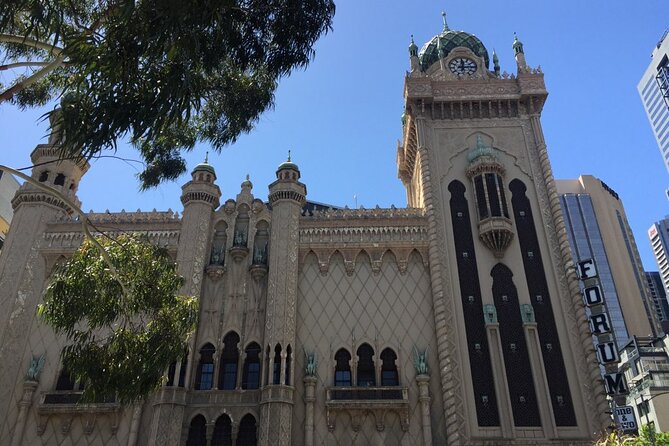
Melbourne’s Art Deco story is written above street level. This two-hour walk takes you through the city centre to buildings such as the Manchester Unity Building and the Majorca Building, showing how the 1934 centenary helped trigger a burst of construction and design.
I like the small group limit of 10, which gives you room to ask questions. I also like the morning timing: you get a focused architecture lesson, then still have most of the day for museums, markets, the MCG, or a tram ride beyond the centre. The main consideration is simple: you need a moderate level of fitness and must be comfortable walking outdoors for about two hours.
Key points at a glance
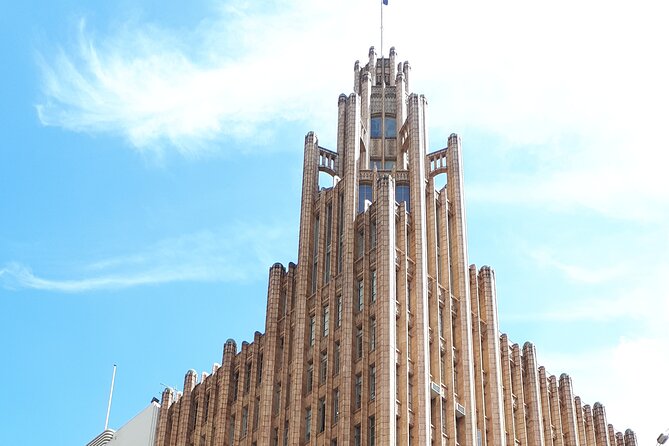
- A close look at Melbourne’s Art Deco centre: See major examples including the Manchester Unity and Majorca buildings.
- Learn to read the details: Your guide explains terracotta self-cleaning tiles, geometric patterns, and decorative influences from Spain, Egypt, and the Maya.
- A compact morning tour: The 10am start and roughly two-hour length leave your afternoon open.
- Small groups help: With no more than 10 people, it is easier to ask questions and follow your own interests.
- Guides add a personal touch: San, John, and Catherine have each been praised for clear explanations, enthusiasm, and thoughtful help.
- Good value for design fans: At $64.55 per person, the cost pays for a specialist guide and a focused way to see details you could easily miss alone.
Why Melbourne’s 1934 centenary matters
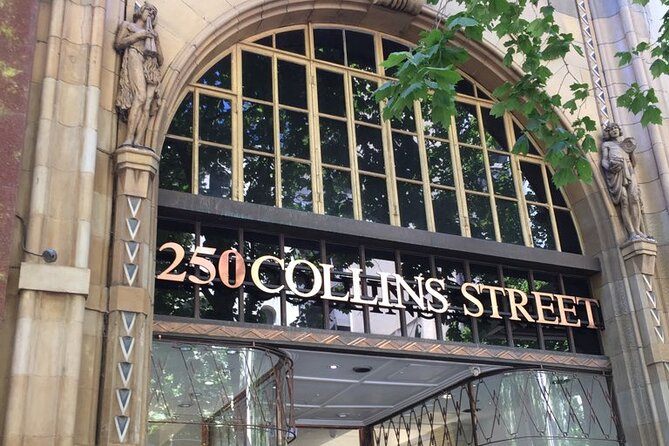
The tour begins at 10am outside the Manchester Unity Building at 220 Collins Street. This is more than a convenient meeting point. It places you directly beside one of the city’s key Art Deco examples, so the subject begins before the walking does.
In 1934, Melbourne marked its centenary. The event helped fuel a building boom, changing the central city with new commercial and civic architecture. That context matters because Art Deco in Melbourne was not just a decorative fashion imported from elsewhere. It became part of a particular moment when the city was looking forward, building upward, and drawing ideas from across the world.
I find this a useful way to approach architecture. Instead of seeing isolated façades, you begin to understand why so many buildings from the period appeared at roughly the same time and why they share certain visual habits.
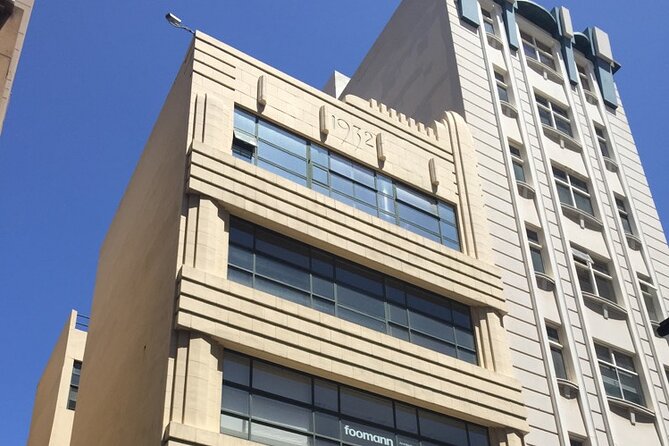
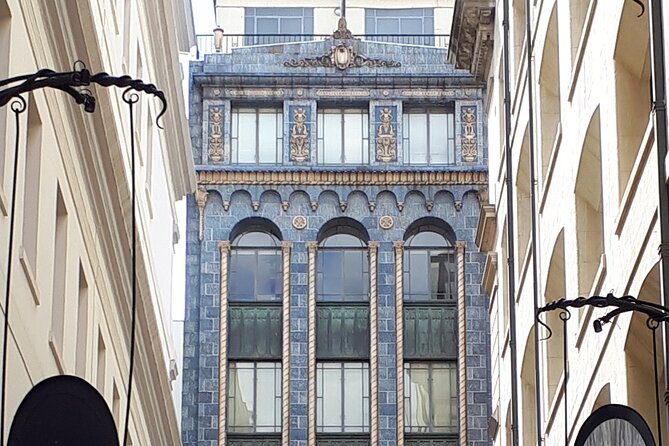
Your guide introduces the main traits of Art Deco as you walk. Look for strong lines, repeated geometric shapes, stylized decoration, and carefully placed colour and texture. You will also hear about terracotta tiles described as self-cleaning, a practical feature that helped keep façades looking fresh in a city where pollution and weather could dull exterior surfaces.
More Art Deco Tours in the world:
- The Official Art Deco Walking Tour by The Miami Design Preservation League
★ 5.0 · 1,580 reviews - Miami South Beach Art Deco Walking Tour
★ 5.0 · 1,039 reviews - Miami Beach Food and Art Deco Walking Tour
★ 4.5 · 245 reviews
Entering the Manchester Unity Building
The Manchester Unity Building is one of the tour’s anchor points. Its role is especially useful at the start because it gives you a full example of the design language before you begin comparing it with other buildings.
You may notice how the decorative work is organized rather than scattered. Art Deco often uses symmetry, stepped forms, sharp angles, and repeated motifs to create a sense of order. A guide can point out those elements in place, making them easier to recognize on the next street.
This is where a specialist walking tour earns its fee. You could pass the building while thinking only that it looks old or ornate. With the right explanation, you start checking the edges, entrances, tiles, patterns, and upper levels. You begin to look up.
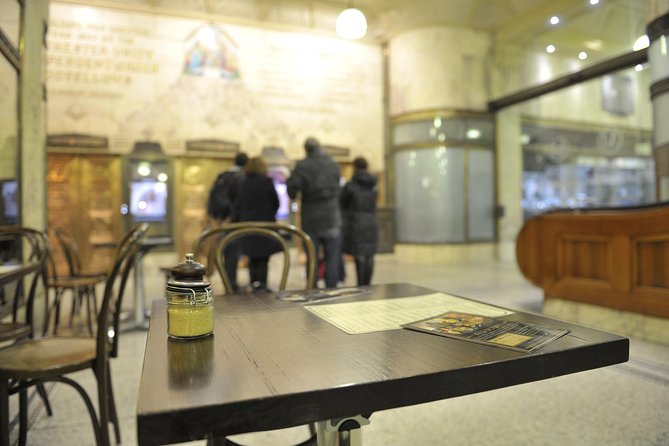
One especially useful part of the experience is the chance to go inside some buildings when access allows. The interior view adds depth to the walk, since Art Deco was not limited to exterior façades. Interior details can show how the same design ideas carried through entrances, foyers, and shared spaces.
Access inside a building can depend on circumstances, so I would not book this expecting a guaranteed interior visit at every stop. Still, even a short look inside can change how you understand the style.
The Majorca Building and global design influences
The Majorca Building provides another important comparison. Your guide uses buildings such as this to explain how Art Deco absorbed design ideas from several places and periods.
Spanish influence is part of the story, along with Egyptian and Mayan references. These influences can appear in stylized decoration, strong colour contrasts, symbolic shapes, and patterns that simplify older artistic traditions into modern geometric forms.
That variety is one of the best reasons to take the tour rather than simply search for Art Deco examples on a map. The walk is not only about identifying a date or naming a style. It shows how designers mixed international ideas into Melbourne’s own city centre.
You do not need a background in architecture. The tour is designed to teach you what to notice as you go. Art and design enthusiasts will get the most from the subject, but the guide also gives you a practical way to see a familiar city differently.
If you already live in Melbourne, the walk can work particularly well as a change of viewpoint. One local participant booked it as a way to play tourist in the city and found new details on buildings that had previously blended into the daily commute. That is a useful test of a good city tour: it should give you a reason to look again after it ends.
A walking route built around looking up
This is an active tour, but it is not described as strenuous. You should have a moderate level of fitness and be ready to walk for around two hours in the city centre.
The pace appears to leave room for explanation, questions, and careful observation rather than rushing from one address to the next. That matters with architecture. If you are hurrying, the upper floors and small decorative details disappear.
Wear comfortable shoes and keep your attention on the façades. The most interesting details may be above eye level, especially if you are used to walking through Melbourne while focused on shops, traffic, or directions.
The route begins and ends at the Manchester Unity Building. There is no hotel pickup, and food and drinks are not included. That is not a serious drawback for a central Melbourne activity, but you should plan your coffee or lunch separately.
The starting point is near public transport, which makes it practical to reach from other parts of the city. Since the tour ends back at the meeting point, you can easily continue with another central activity afterward.
More Architecture Tours around the world:
- Chicago Architecture River Cruise
★ 5.0 · 15,756 reviews - Chicago River 90-Minute Architecture Tour
★ 4.5 · 9,629 reviews - Chicago River: 1.5-Hour Guided Architecture Cruise
★ 4.8 · 8,046 reviews - Barcelona: Park Güell and Gaudí House Museum Entry Ticket
★ 4.5 · 6,326 reviews
Why the small group changes the experience

The maximum group size is 10. For a subject based on small details, that limit is important.
In a large group, it can be hard to hear an explanation on a busy street or get close enough to see what the guide is pointing out. A group of 10 gives you a better chance of staying connected to the guide and asking a question without interrupting the whole rhythm of the walk.
The personal side of the guiding is one of this tour’s strongest features. San has been praised for his enthusiasm for Melbourne and for responding to individual questions. One particularly thoughtful touch was helping a participant find the tram needed for the next activity at the MCG.
John has been described as careful and highly informed, leading a slow walk through the CBD and explaining the buildings along the way. Catherine has also been praised for showing how many Melbourne buildings use Art Deco ideas and for including interior views when possible.
Those details suggest that the guide is not simply reciting a fixed script. Your interests can shape the conversation to some degree. If you care about materials, ask about the tiles. If you are more interested in city development, ask about the 1934 centenary and the building boom. If decorative influences catch your eye, ask how Spanish, Egyptian, or Mayan references were adapted.
What the $64.55 price covers
At $64.55 per person, this is not a general free city stroll. You are paying for a focused subject, a local guide, and a small group capped at 10.
The value depends on how much you want from the architecture. If you are mainly looking for a quick list of buildings to photograph, you could explore central Melbourne on your own. But independent sightseeing will not necessarily explain the self-cleaning terracotta tiles, connect the buildings to the 1934 centenary, or help you identify the difference between broad Art Deco traits and other decorative styles.
I think the price is fair for design fans who want interpretation rather than directions. It is also useful for anyone with limited time in Melbourne. Two hours is enough to learn a clear visual vocabulary without giving up a full morning or day.
The value is less obvious if you dislike walking, have little interest in buildings, or prefer a tour built around food, shopping, or major landmarks. This experience is specialized. That is its strength, but also its limit.
The best time to fit it into your day

The tour starts at 10am and lasts about two hours. That timing works well on the first or second full day of a Melbourne visit, once you have a basic sense of the central streets.
The morning schedule leaves your afternoon open. You could pair it with a museum, another central walking route, the MCG, or an activity reached by tram. One guide has even helped a participant continue to the MCG, which shows how the end point can work with a planned day.
It also makes sense late in your visit if you want to return to buildings you passed earlier. By then, you may recognize how much of Melbourne’s character sits in façades that are easy to overlook.
Weather can affect comfort because the experience takes place on foot. The supplied details do not state a weather policy, so check the conditions and dress for a morning outdoors. The moderate fitness requirement is the clearest practical warning: this is not a seated lecture.
Who should book this walk
I would recommend it most strongly to:
- People who enjoy architecture, design, and city planning
- Visitors who like learning how to notice details for themselves
- Melbourne residents who want a fresh view of the CBD
- Active visitors who prefer walking to riding between sights
- Anyone with a free morning and an afternoon plan
- First-time visitors who want a subject beyond the usual major attractions
You do not need specialist training. The guide explains the style as the walk develops, and the small group gives you a chance to ask for clarification.
Families should note the minimum age is 13. Younger children cannot join, even if they might manage the walking distance. The tour also works best for people who are happy to spend much of the morning looking carefully at buildings rather than moving through a long list of attractions.
Booking, cancellation, and practical details
Confirmation is provided when you book. The tour is often reserved well ahead of time, with bookings averaging 33 days in advance, so I would not leave it until the last minute if the date matters to you.
Free cancellation is available up to 24 hours before the 10am start time for a full refund. Changes or cancellations made less than 24 hours before the start are not accepted for a refund.
The activity requires a minimum number of participants. If that number is not reached, the operator may cancel after confirmation and offer another option or a full refund. The group maximum is 10.
Bring comfortable shoes, arrive at the Manchester Unity Building before 10am, and plan your own food and drinks. Since the tour ends where it starts, you can collect anything you need nearby or continue straight into your next Melbourne plan.
Should you book the Melbourne Art Deco Architecture Tour?
Book it if you want to understand Melbourne through its buildings rather than simply photograph them. The walk gives you a clear introduction to Art Deco, places the style in the setting of the 1934 centenary, and shows how international influences became part of the city centre.
The strongest reasons to choose it are the small group, the focused route, and the guides’ ability to adjust to questions. San, John, and Catherine each bring a personal approach, and the morning timing leaves space for other plans.
Skip it if two hours of walking and architectural detail sounds like work. But if you enjoy discovering the stories above the shopfronts, $64.55 buys a useful new way to see Melbourne long after the tour is over.
FAQ
Where does the Melbourne Art Deco Architecture Tour begin?
It begins at the Manchester Unity Building, 220 Collins Street, Melbourne VIC 3000, Australia.
What time does the tour start?
The tour starts at 10:00am.
How long does the tour last?
It lasts approximately two hours.
Where does the tour finish?
The activity ends back at the Manchester Unity Building meeting point.
What buildings are included?
The tour includes the Manchester Unity Building and the Majorca Building, along with other Art Deco examples in Melbourne’s city centre.
What is included in the price?
A local guide is included. Hotel pickup, food, and drinks are not included.
Is there a minimum age?
Yes. The minimum age is 13.
What happens if the tour does not reach its minimum group size?
You will be offered an alternative date or experience, or a full refund.
Can I cancel for a full refund?
Yes. You can cancel at least 24 hours before the experience start time for a full refund.
New to the itinerary around the world
- Washington, DC: Georgetown Architecture Walking Tour★ 5.0 · 8 reviews
- Wilmington History and Architecture Tour★ 4.8 · 18 reviews
- Washington DC: Dupont Circle & Embassy Row Architecture Tour★ 5.0 · 6 reviews
- New Orleans : Garden District Architecture Walking tour★ 4.8 · 5 reviews
- Walk & Discover KL’s Architectural and Heritage Gems★ 5.0 · 7 reviews
- Unveiling Brno: History, Culture & Architectural Delights★ 5.0 · 2 reviews
- Vicenza: Palladian Architecture Private Walking Tour★ 3.3 · 3 reviews
- Private Colonial Williamsburg Architectural Tour★ 5.0 · 5 reviews
Art Deco Tours, compared.
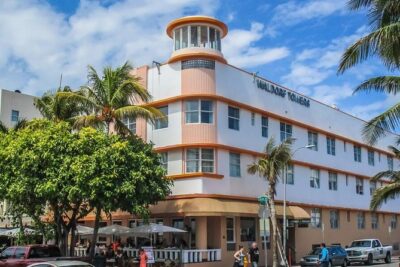
The Official Art Deco Walking Tour by The Miami Design Preservation League
Read our review →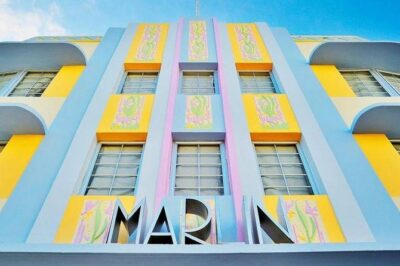
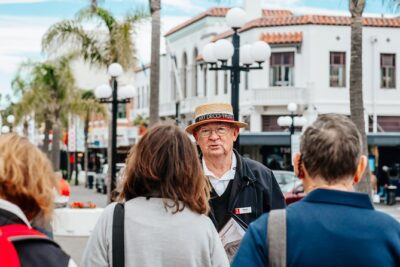
Guided 10am Morning Art Deco Walk From Napier Art Deco Trust
Read our review →
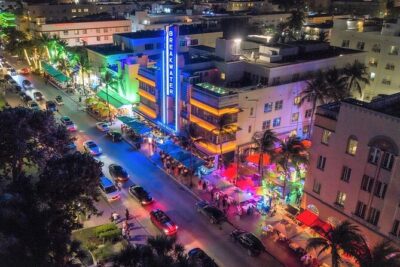
Award-winning Art Deco & Neon Lights Walking Tour in Miami Beach
Read our review →
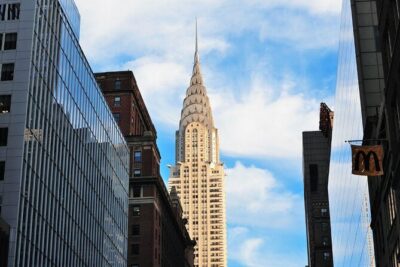
Art Deco and Architecture Midtown Landmarks Tour
Read our review →Other lists with this tour