
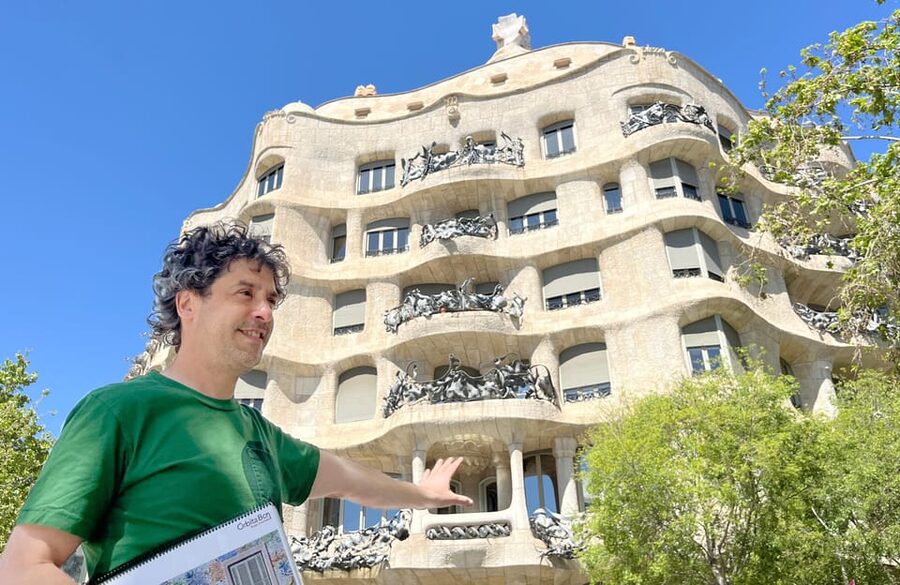
Review · BARCELONA
Gaudí & Modernism with a Historian.
Barcelona’s Modernist buildings make a lot more sense when you stop treating them as pretty façades and start asking why they appeared at that moment. On this 2.5-hour walking tour, Mariano Pesin links Gaudí and his fellow artists to Barcelona’s industrial growth, social change, and new international ambitions.
I like two things in particular: the tour looks at Gaudí’s symbols and nature-inspired details, and it puts the buildings into the wider story of Barcelona between 1888 and 1930. The final coffee stop, in a courtyard surrounded by nature, also gives the experience a relaxed finish. The main consideration is that you’ll spend the tour outdoors, so bring water and dress for changing temperatures.
Key points at a glance
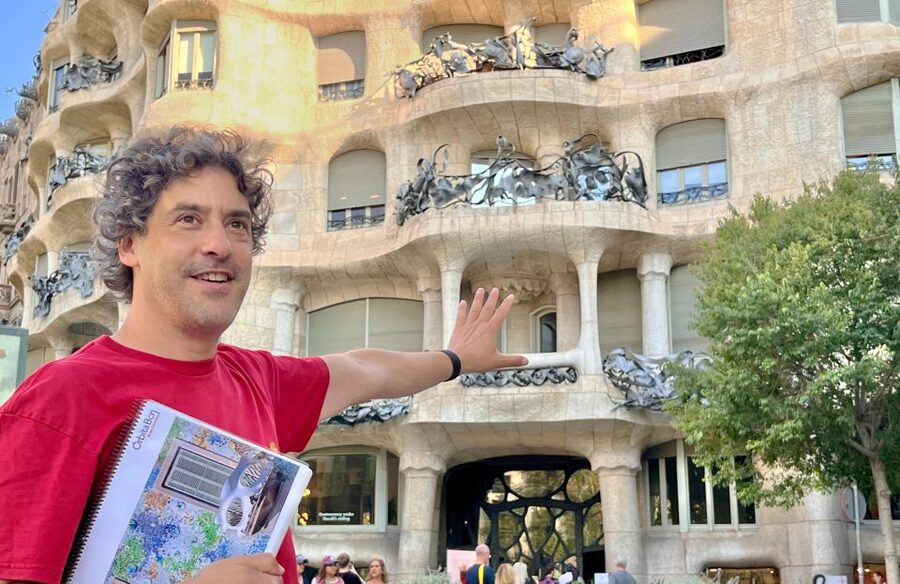
- Gaudí explained in context: Learn how industrial Barcelona helped create the setting for Modernism.
- Nature as a design language: Look at the symbols and organic forms that shape Gaudí’s work.
- A historian as your guide: Mariano Pesin leads the tour in English or Spanish.
- Passeig de Gràcia starting point: Meet in front of the Camper Store at Pg. de Gràcia, 2.
- Coffee after the walk: Finish in a beautiful coffee shop with time for conversation.
- Small practical details matter: The tour begins on time, with a maximum 10-minute wait after advance notice.
Why Gaudí makes more sense through Barcelona’s social story
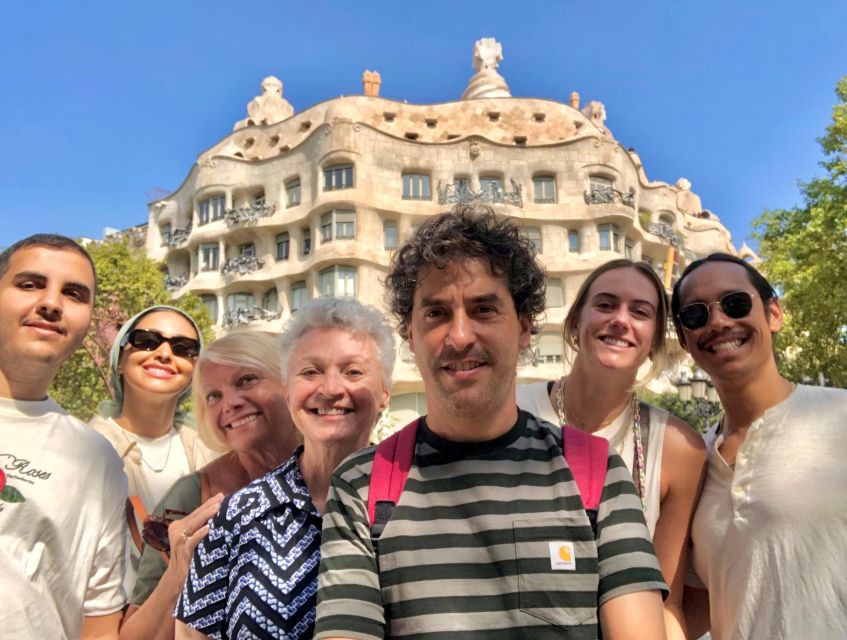
A common mistake in Barcelona is to treat Gaudí as a lone genius floating above everyday life. This tour takes a more useful route. Mariano Pesin presents Modernism as part of a period when Barcelona was changing quickly through industrial growth and becoming a modern, international city.
That setting matters. It helps explain why wealthy patrons wanted striking homes, why artists had new opportunities, and why Barcelona’s architecture became so expressive. The period covered runs from 1888 to 1930, giving you a clear frame for understanding the era rather than a collection of disconnected buildings.
The tour also places artists such as Antoni Gaudí and Pablo Picasso within this changing city. You are not simply shown a façade and told its architect. You are encouraged to connect art, money, politics, society, and urban ambition.
I find that approach especially useful if you are new to Barcelona’s Modernist style. The buildings can seem odd at first glance, with twisting forms, unusual decoration, and symbols that are easy to miss. Once you understand the period, those details begin to feel less random.
More Gaudí Tours in Barcelona:
- Barcelona: Park Güell and Gaudí House Museum Entry Ticket
★ 4.5 · 6,326 reviews - Barcelona: Gaudi’s Casa Vicens Skip-the-Line Entrance Ticket
★ 4.7 · 4,541 reviews - Barcelona: Gaudí’s Park Güell Tour with Fast-Track Ticket
★ 4.8 · 4,512 reviews
Starting at Passeig de Gràcia, 2
The meeting point is in front of the Camper Store at Pg. de Gràcia, 2. This puts you on one of Barcelona’s best-known avenues, in an area closely tied to the city’s Modernist architecture.
Arrive early. The experience starts on time, and the maximum waiting period is 10 minutes when advance notice has been given. That rule is worth taking seriously, since a walking tour can quickly lose its rhythm if people arrive late.
At the beginning, you can expect Mariano to establish the larger story before focusing closely on individual buildings. The emphasis is not just on what you are looking at, but on how Barcelona’s industrial revolution helped change the city’s identity.
This is a good place to get your bearings. You’ll want comfortable shoes, water, and clothing suited to the forecast. Temperatures can shift during the walk, and there is no reason to turn a thoughtful architecture tour into a test of endurance.
Casa Milà and the language of Modernism
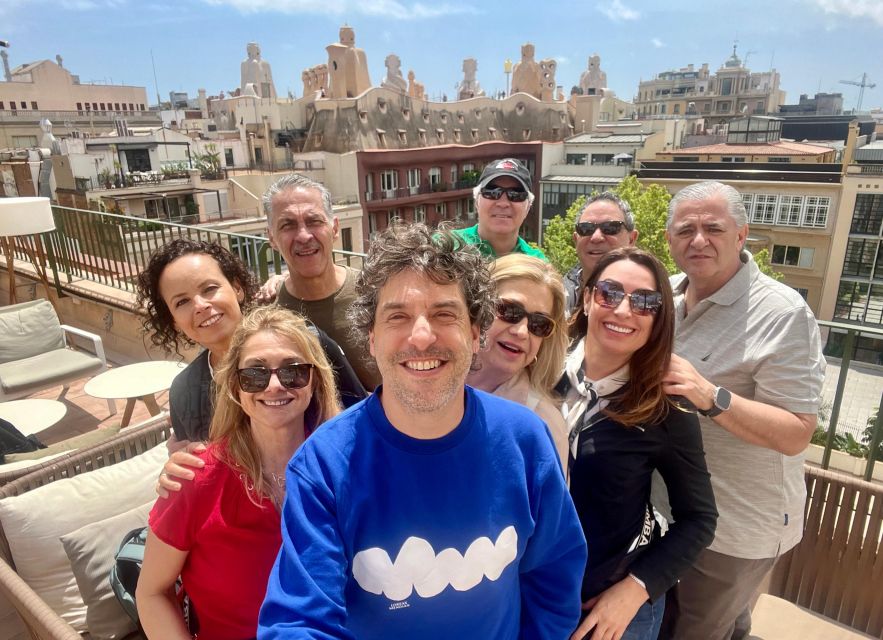
Casa Milà is listed as a main stop, with a guided explanation of the building and its place in Gaudí’s work. The supplied timing describes this section as a guided tour of 30, while the complete experience lasts 2.5 hours, so you should think of Casa Milà as one important part of a broader walking route rather than the entire visit.
Casa Milà gives Mariano a strong setting for explaining how Gaudí moved away from straight lines and conventional façades. The focus is on analysis, including the symbolism of Modernist buildings and the natural forms that influenced Gaudí.
The useful part here is the close reading. Instead of only hearing that a building is famous, you are invited to look at how its decoration works and what its shapes may suggest. Gaudí’s interest in nature is not treated as a simple design trick. It becomes part of a larger discussion about his sensibility and his way of thinking.
If you have already seen Casa Milà, the tour can still add value because the emphasis is interpretive. You may begin noticing details you previously walked past. Several people who have taken the tour describe leaving with a different way of looking at Barcelona’s streets, which is exactly what a good architecture guide should do.
One practical point: the experience is described as wheelchair accessible, but it is still a walking tour. If you have specific mobility needs, it is sensible to confirm the route details with Mariano before booking.
Reading Gaudí beyond the famous name
Gaudí is the main draw, but this is not presented as a greatest-hits tour with a quick list of famous buildings. Mariano explains the architect’s history in front of his best-known works and explores how he used the support of wealthy and influential people to create buildings that changed Barcelona.
That is an important piece of the story. Great architecture does not appear through talent alone. It also depends on patrons, money, planning, and a city willing to support ambitious projects. This tour gives you a chance to consider those forces alongside Gaudí’s artistic choices.
The discussion of symbolism should appeal to anyone who likes to know what they are seeing. You will look at forms inspired by nature and consider how Gaudí’s designs communicate ideas without relying on plain written explanation.
I like that this turns the city into a kind of open-air classroom without making the experience feel like a lecture. The guide’s style is described as fun, warm, and engaging, with humor helping keep the historical material moving. Mariano’s enthusiasm for Barcelona is a major part of the experience, but the subject still has room for serious historical detail.
More Architecture Tours around Barcelona:
- Barcelona: Sant Pau Recinte Modernista Entry Ticket
★ 4.6 · 2,567 reviews - Barcelona: Sagrada Familia, Modernism, and Old Town Tour
★ 4.7 · 1,621 reviews - Sagrada Familia & Gaudi Tour Private or Small Group with Tickets
★ 4.5 · 1,188 reviews - Complete Gaudi Tour: Casa Batllo, Park Guell & Sagrada Familia
★ 5.0 · 1,152 reviews
Barcelona between 1888 and 1930
The Modernist period is easier to understand when you see it as a response to a city in transition. Barcelona’s industrial revolution helped create an expanding, outward-looking metropolis. That shift affected architecture, business, art, and the people who could commission grand buildings.
The tour looks at the period’s social, political, economic, and artistic context. That wide view is one of its strongest features. You are not limited to a narrow biography of Gaudí, and you are not asked to admire buildings without understanding the city that produced them.
The dates also give the experience shape. Beginning around 1888 and running through 1930 covers the major Modernist era as a historical period, rather than reducing it to one architect or one neighborhood.
For you, the practical benefit is simple: later sightseeing becomes more rewarding. After the tour, you may find yourself looking up at balconies, ornaments, façades, and street details with more purpose. The experience aims to change how you see Barcelona after the guide has gone, not just entertain you for one afternoon.
Original objects and details you might miss
Mariano plans to share original objects from the period. These can help bridge the gap between an abstract historical explanation and the physical world of Modernist Barcelona.
The value of such objects is not that they replace the buildings. They give you another way to understand the people and period behind them. A building can feel distant when you only see it as a monument. Period objects can make the era feel more immediate and human.
The tour also promises attention to subtle details that are easy to overlook. That is especially useful in Barcelona, where major sights compete with one another for your attention. You might find that the most memorable part is not the broad view of a famous façade, but a small design feature that you would not have noticed alone.
This is where a live historian can offer more than an audio guide. You can ask questions, follow up on a point, or ask Mariano to explain why a particular detail matters. The tour is offered in English and Spanish, so choose the language in which you can comfortably discuss art and history.
The coffee stop in a peaceful courtyard
At the end of the walking tour, Mariano invites the group to an exclusive coffee shop surrounded by nature. The experience finishes at C. de Pau Claris, 179, in Barcelona.
This is more than a convenient final stop. After two and a half hours of looking, listening, and walking, a quiet coffee can give you time to sort out what you have learned. It also keeps the experience personal rather than ending abruptly at a street corner.
The coffee stop includes conversation in a beautiful, relaxing courtyard. That makes it a good feature for people who enjoy asking follow-up questions or talking through what they have seen. You may want to use this time to ask about other Modernist buildings, Gaudí’s methods, or Barcelona’s changing neighborhoods.
Do note that the coffee itself is not presented as an included meal or formal tasting. Think of it as a concluding gathering rather than a food-focused activity.
Is $65 a fair price?
At $65 per person, this is not the cheapest way to walk through central Barcelona. You are paying for a guided historical interpretation, not simply a route between famous façades.
The value depends on what you want from the city. If you only need quick photographs and basic facts, a free map or self-guided walk may be enough. If you want to understand why Barcelona’s Modernist buildings look the way they do, the price becomes easier to justify.
You receive 2.5 hours with a live guide, explanations of the Modernist period, discussion of Gaudí’s history, analysis of architectural symbolism, original period objects, and a coffee stop. The guide’s enthusiasm and ability to connect architecture with personalities and the city’s past are central to what you are buying.
I would especially consider it good value for a first visit to Barcelona, or for a repeat visit when you want more than the standard sightseeing list. It also suits anyone who prefers a personal guide who can explain the city in a conversational way.
Who should book this experience?
Book it if you enjoy architecture but want the history behind it. You do not need specialist training. The tour is designed to make Modernism understandable through stories, context, and close observation.
It is also a good fit if you have already seen Barcelona’s main sights but felt you were missing the details. The focus on symbolism and subtle features can give familiar streets a new purpose.
Couples, solo visitors, and small groups who like conversation should get the most from the format. The relaxed coffee stop adds time to talk with Mariano rather than simply moving on to the next attraction.
You may want to choose another activity if you are looking for interior access to several buildings, a bus ride, or a short photo stop. This is primarily a walking and explanation-based experience. It asks you to pay attention for 2.5 hours, and the guide’s historical storytelling is the main attraction.
What to know before you go
Bring water. The walking route takes place outdoors, and the temperature may vary, so dress in layers or check the forecast before leaving.
Use the restroom before the tour, since this advice is given as part of the preparation. Most important, arrive on time at the Camper Store meeting point. With a maximum wait of 10 minutes after advance notice, a late arrival could mean missing the beginning.
The tour is available in English or Spanish and is listed as wheelchair accessible. You can cancel up to 24 hours in advance for a full refund, and the reserve-now, pay-later option lets you hold a place without paying immediately.
The overall rating is 4.8 from 17 reviews, with particularly strong praise for Mariano’s warmth, humor, enthusiasm, and ability to connect architecture with history and everyday life. One lower score was simply marked as okay, so you should not expect every participant to have the same response. Still, the consistent theme is clear: the guide is the heart of the experience.
Should you book Gaudí and Modernism with a Historian?
I would book this tour if you want Barcelona’s architecture explained rather than merely pointed out. Mariano Pesin’s approach links Gaudí to industry, art, wealth, politics, and the city’s changing identity, then gives you time to reflect over coffee.
The best reason to choose it is the chance to leave with a better eye for Barcelona. If you want a quick checklist of sights, this may feel too detailed. If you want to understand why the buildings look so unusual and how the city became a center of Modernism, $65 is a fair price for the time and personal guidance.
FAQ
How long does the Gaudí and Modernism tour last?
The walking tour lasts 2.5 hours.
Where does the tour begin?
It begins at Pg. de Gràcia, 2, in front of the Camper Store.
Where does the tour finish?
The tour finishes at C. de Pau Claris, 179, 08037 Barcelona.
Which languages are available?
The live tour is offered in English and Spanish.
Is the tour wheelchair accessible?
Yes, the activity is listed as wheelchair accessible.
What does the tour cover?
The tour covers Barcelona’s Modernist period from 1888 to 1930, Gaudí’s history and buildings, the symbolism of Modernist architecture, and the social, political, economic, and artistic setting of the period.
Is coffee included at the end?
The experience ends with a visit to a beautiful coffee shop surrounded by nature. The supplied details do not specify whether the coffee itself is included in the $65 price.
New to the itinerary around Barcelona
- Roman & Gotic & Gaudi in Barcelona: private walking tour★ 4.5 · 2 reviews
- Visit to the Modernist houses of the Americans★ 5.0 · 2 reviews
- Barcelona Gaudi Tour: Sagrada Familia, Casa Batllo & Casa Mila★ 5.0 · 4 reviews
- Barcelona Street Escape: Gaudi and the Hidden Treasure★ 5.0 · 17 reviews
- Gaudí & Catalan Modernism Private Walking Tour★ 5.0 · 11 reviews
- Self-Guided Audio Tour-The Surrealist Barcelona of Dalí and Gaudí★ 3.5 · 8 reviews
- Gaudí and Barcelona Legends – Private Tour★ 5.0 · 4 reviews
- Gaudi’s Casa Batlló and La Pedrera with Chocolate Tasting★ 5.0 · 5 reviews
Gaudí Tours, compared.
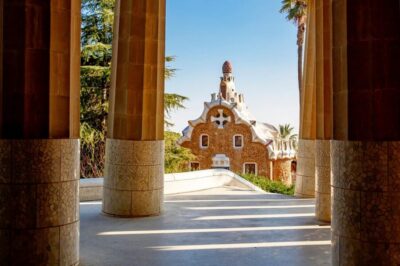
Park Güell and Gaudí House Museum Entry Ticket
Read our review →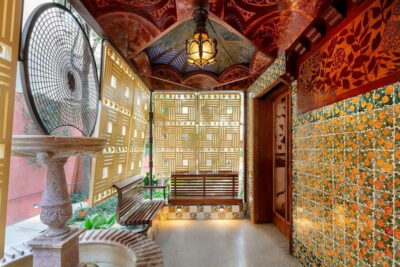
Gaudi’s Casa Vicens Skip-the-Line Entrance Ticket
Read our review →
Gaudí’s Park Güell Tour with Fast-Track Ticket
Read our review →
Sagrada Familia & Gaudi Tour Private or Small Group with Tickets
Read our review →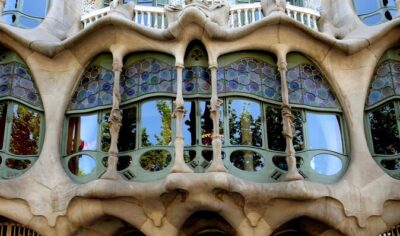
Complete Gaudi Tour: Casa Batllo, Park Guell & Sagrada Familia
Read our review →
Park Güell: Guided Tour with Optional Gaudí Experience Entry
Read our review →
Barcelona e-Bike Tour: Gaudí & Old Town Small Group
Read our review →
Ramblas, Old Town, Gothic and Gaudi Architecture Walking Tour
Read our review →Other lists with this tour