
Review · CHICAGO
Explore Chicago’s Hidden Past: Prohibition Culture & Architecture
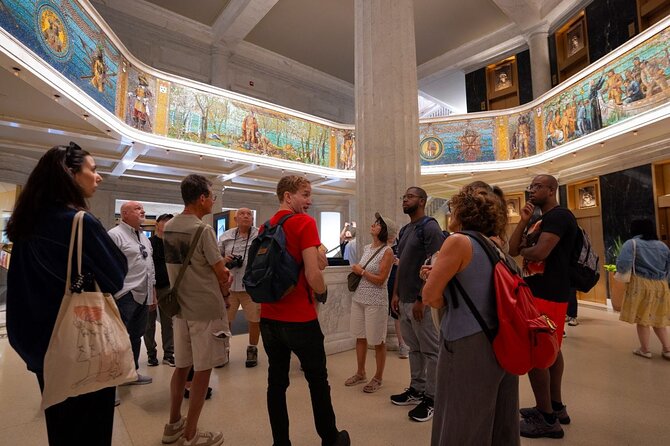
Chicago’s Prohibition years come alive here not through a museum display, but through the streets, office towers, public art, and underground passages of the Loop. You’ll walk from the Chicago Theatre to the Bean, taking in the Riverwalk, Wrigley Building, Tribune Tower, and Chicago Cultural Center along the way. The best part is the city itself, with a guide adding the stories you might miss while sightseeing alone.
I like the small-group format, capped at about 15 people, and the way the tour mixes famous sights with less obvious stops such as the Pedway and the Cultural Center’s grand interior. I also like the practical finish: your guide offers suggestions for lunch, drinks, and nearby sights. The main caution is that the Prohibition theme can feel lighter than the title suggests, and some people may want more detailed discussion of architects and design choices.
Key points to know before booking
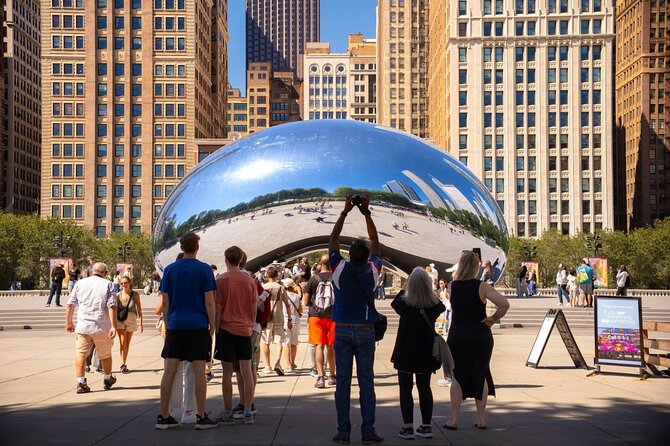
- A downtown route with a clear finish: Begin at the Chicago Theatre and end at Cloud Gate in Millennium Park.
- About 3 miles on foot: The walk takes roughly 2 hours and 30 minutes, with several standing stops.
- Small-group attention: The group is limited to about 15 people, with private touring also available.
- Weather matters: The tour runs in rain, snow, or shine, and some outdoor portions depend on conditions.
- Architecture is the main backdrop: See the Wrigley Building, Tribune Tower, Jewelers Building, London House, and Chicago Cultural Center.
- Simple local tasting: Chicago-style popcorn is included, with other food and drinks available at your own cost.
What this Chicago walking tour is really about
At $49.96 per person, this is a reasonably priced way to get your bearings in central Chicago while learning how the city grew around its streets, bridges, public buildings, and skyscrapers. You are not paying for entry to a major museum or a reserved attraction. You are paying for two and a half hours of guided interpretation, a small group, a few tastes, and a route that links several top downtown sights.
The title puts Prohibition in the foreground, but the actual experience is broader. You’ll hear about the 1920s and the effect of that era on Chicago, yet much of the walk focuses on architecture, public art, civic buildings, transportation, and the daily life of the Loop.
That mix will suit you if you want a first look at downtown and prefer stories to a rigid lecture. If your main goal is a detailed study of Chicago’s architects, building materials, or preservation battles, you may find the commentary too general in places. Some past participants found it more like an entertaining city history walk than a specialist architecture tour.
More Architecture Tours around Chicago:
- Chicago Architecture River Cruise
★ 5.0 · 15,756 reviews - Chicago River 90-Minute Architecture Tour
★ 4.5 · 9,629 reviews - Chicago River: 1.5-Hour Guided Architecture Cruise
★ 4.8 · 8,046 reviews
Starting beneath the Chicago Theatre marquee
Meet at the Chicago Theatre, 175 North State Street. The famous marquee gives you an easy landmark and a classic first photograph, while the opening ten minutes help set the tone for the walk.
This is a smart starting point because you are immediately in the middle of Chicago’s theater and commercial district. Your guide begins connecting the city’s public face with the private world of business, entertainment, politics, and nightlife that shaped downtown during the Prohibition years.
Guides have included Rich, Dave, Dash, and Kevin. The strongest part of the experience depends heavily on who leads your group. Rich is described as warm and easy to talk with, while Dave is praised for using photographs, anecdotes, and clear explanations. Dash has been especially good at keeping a group together during a busy city event, and Kevin has adapted a private tour to the interests and pace of his guests.
That range matters. You are not joining an audio tour with fixed commentary. You can ask questions, and a small group makes it easier to do so. Still, the quality and depth may vary with the guide and the pace of the day.
The Pedway and Chicago’s working city
If weather allows, the route heads into the Chicago Pedway, a network of underground passages used by commuters and locals. The stop lasts about 20 minutes and gives you a different view of downtown life.
The Pedway is useful because it shows Chicago as a working city, not only a postcard of towers and bridges. You’ll see how people move through the Loop when the weather is unpleasant, and you may gain a better sense of how tightly the downtown streets connect above and below ground.
This is also one of the tour’s more weather-sensitive sections. If conditions are poor, the exact route may change. The tour runs in all weather, so bring suitable clothing rather than assuming every portion will be indoors.
As you continue, you pass the City Hall and County Building, home to Chicago’s municipal government and Cook County offices. This part of the walk is less about a single photo stop and more about seeing how civic power fits into the city center.
Public art at Daley Plaza
The Chicago Picasso in Daley Plaza gets about ten minutes. Installed in 1967, the sculpture helped change how public art and urban planning were viewed in the city.
This is a good stop for anyone who likes the way Chicago places modern art in ordinary public space. You are not visiting a gallery with a quiet room and a wall label. You are standing in a working plaza where office workers, government buildings, and a large-scale sculpture share the same setting.
Your guide may use the Picasso to explain how Chicago’s public spaces changed after the era of traditional monuments. The subject also gives the tour a welcome break from looking only upward at skyscrapers.
If you want a long art discussion, this is not that. The stop is short, and the walk has many sights to cover. Think of it as a useful introduction to Chicago’s public-art tradition.
Same streets, read through a different style:
- Chicago Architecture Center River Cruise aboard First Lady
★ 5.0 · 5,536 reviews - Chicago: Architecture River Cruise Skip-the-Ticket Line
★ 4.8 · 4,325 reviews - Chicago River 45-Minute Architecture Tour from Magnificent Mile
★ 4.5 · 2,924 reviews - Chicago Lake and River Architecture Tour
★ 4.5 · 2,308 reviews
Following the Chicago River
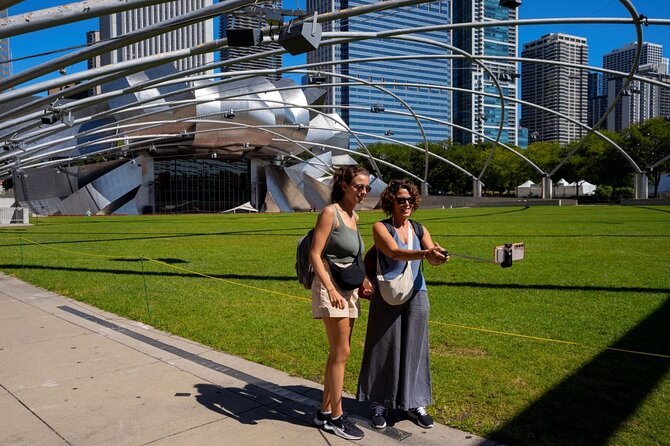
The walk then reaches the Chicago River, the main visual thread of the middle portion of the tour. You’ll spend about 20 minutes near the river, with time for skyline views and photographs.
This is one of the strongest parts of the route. From river level, the city’s buildings feel larger and more connected than they do from a sidewalk several blocks away. Your guide can point out the different shapes, heights, and styles that make Chicago such a good place to look at buildings from the outside.
The route also gives you a local sense of movement. You are sharing space with commuters and people heading through the center of town, rather than viewing the city only from a sightseeing platform.
The river section is best when the group pauses long enough to look carefully. One weakness noted in some experiences is a rushed pace. If your guide is moving quickly, ask for a moment to take photographs or to clarify which building you are seeing.
The Riverwalk, Wrigley Building, and Tribune Tower
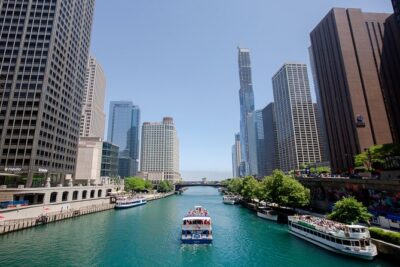
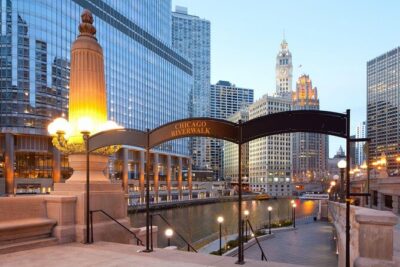
Weather permitting, the walk continues along the Chicago Riverwalk for about 20 minutes. This award-winning public path gives you changing views of Marina Towers, the Wrigley Building, and Tribune Tower.
The Riverwalk is valuable even if you have already seen the buildings from Michigan Avenue. From here, their relationship to the river becomes clearer. Marina Towers has a distinctive rounded form, while the Wrigley Building’s pale exterior and clock tower offer a sharp contrast. Tribune Tower brings a neo-Gothic profile to the riverfront, with its 463-foot height and 36 stories.
You also pass the Jewelers Building and London House, two more examples of downtown architecture that are easy to overlook when you are focused only on the biggest names. This is where the walk can reward an attentive eye, especially if your guide points out details you would otherwise pass without a second thought.
The route then reaches the Wrigley Building at 400 North Michigan Avenue and Tribune Tower at 435 North Michigan Avenue. These are pass-by points rather than full interior visits, so set your expectations accordingly. You’ll hear about them and see them well, but you should not assume you will tour every building.
The Magnificent Mile follows along North Michigan Avenue. The district is known for shops, restaurants, and major attractions, and it grew from the planning ideas associated with Daniel Burnham’s 1909 plan for Chicago. This is a busy stretch, so stay close to your guide and leave room for pedestrians.
Inside the Chicago Cultural Center
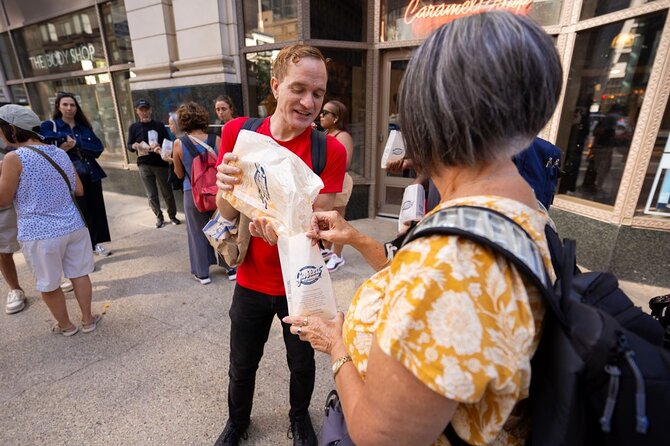
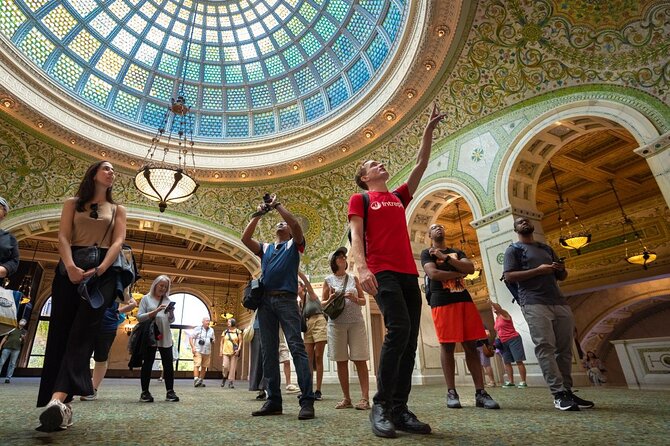
The Chicago Cultural Center gets about 15 minutes, and this may be the interior highlight of the tour. The building is a Chicago Landmark and has welcomed presidents, royalty, and other dignitaries.
The stop matters because it gives you a chance to look inside rather than simply admire another exterior. The former library’s interior is especially appealing if you enjoy ceilings, decorative details, and civic architecture. Some people found this portion more rewarding than the Prohibition discussion itself.
A short visit cannot cover the whole building, but it adds depth to a route otherwise spent outdoors. You get a sense of how Chicago used grand public interiors to express civic pride.
If you have a special interest in architecture, this is the place to ask focused questions. Ask about the building’s original use, the design choices, and how its public role has changed. The guides are generally open to questions, though the amount of detail depends on the person leading your group.
Popcorn, local tips, and the road to Millennium Park
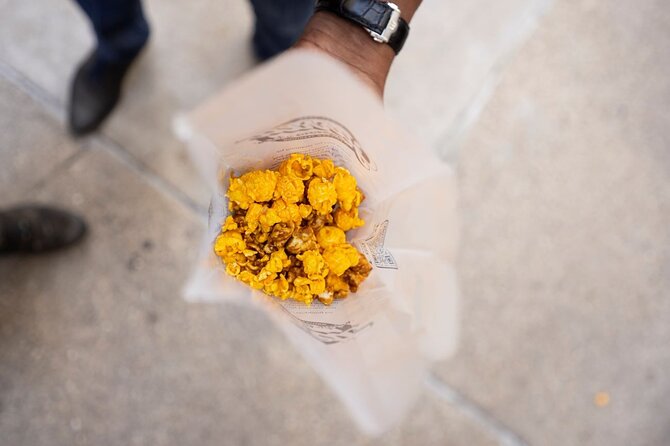
Chicago-style popcorn is included, and the walk may include other small food samples or recommendations. This is a modest extra, not a meal. Additional food and drinks are not included, so plan lunch or a proper snack after the tour.
The popcorn stop gives the experience a relaxed, social feel. It also breaks up the steady walking and helps keep the tour from becoming a string of dates, building names, and historical facts. Still, this is one place where opinions may differ. Some people enjoy the local treat, while others would rather spend more time examining buildings.
The guide may also suggest places to eat and drink nearby. That advice is especially useful at the end, when you are already positioned in one of the best central areas for continuing your day.
Finishing with Millennium Park and the Bean
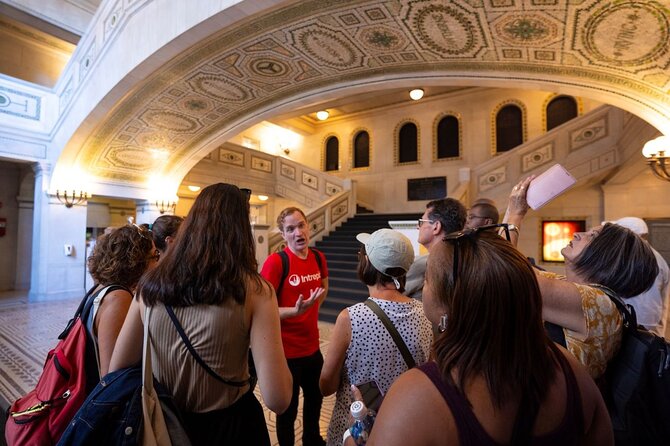
The last major area is Millennium Park, followed by Cloud Gate, better known as the Bean. You receive about 20 minutes in the park and ten minutes at the sculpture.
Cloud Gate is the obvious photo prize. Its polished surface reflects the skyline and the people around it, giving you the familiar Chicago image from a low, close viewpoint. Crowds can affect how long you have for photographs, so do not expect a private session at the sculpture.
Ending here works well because you can continue independently after the guide leaves. You are close to Michigan Avenue, the Art Institute area, restaurants, and other downtown sights. Your guide offers suggestions for what to do next, which makes the tour useful on your first day in Chicago.
That timing is worth noting. Several people who enjoyed the experience wished they had taken it at the start of their stay. I agree with that advice. The route gives you a map in your head, and the food and sightseeing suggestions can help shape the rest of your visit.
How much architecture will you actually learn?
You will see many significant buildings, but the level of architectural analysis may not satisfy every architecture fan. The tour covers design history in an accessible way, with dates, uses, city anecdotes, and the stories behind major places.
Some guides use photographs and comparisons to make the past easier to picture. Others may focus more on general Chicago trivia. If you want to learn about specific architects, structural systems, or why a facade was designed a certain way, ask direct questions as you go.
The route does not appear to include long interior visits to the Wrigley Building, Tribune Tower, NBC Building, or other private buildings. It also does not promise the Flamingo sculpture or a dedicated visit to every architectural landmark named along the way. If those are your priorities, check the exact route on your chosen date or consider a specialist architecture tour.
Pace, group size, and practical comfort
The advertised group size is about 15 people, with a private option available. That is small enough for questions and personal contact, but it is not the same as a one-on-one walk. A private booking gives you more room to set the pace and focus on your interests.
The route covers about 4.8 kilometers, or roughly 3 miles. Most people can take part, and the experience is described as suitable for all ages and fitness levels, but you should still expect a fair amount of walking and standing.
Children under six join free. Children ages six to eleven are charged at the adult rate, and you should note children in your booking. Service animals are allowed, and the meeting point is close to public transportation.
Wear shoes you can walk in and dress for the forecast. The tour runs in rain, snow, or shine, while the Pedway and Riverwalk sections depend on conditions. A phone ticket is used, and confirmation arrives when you book.
Free cancellation is available up to 24 hours before the start time. Inside that window, changes are not accepted and the amount paid is not refunded.
Who should book it?
I would choose this tour if you have limited time in Chicago, want a guided introduction to the Loop, or like mixing architecture with local stories and small food tastes. It works particularly well on your first day, when the route can help you plan later visits.
Families can also use it as an easy introduction to central Chicago, though younger children may tire during the 3-mile walk. The Bean, popcorn, public art, and underground Pedway provide useful variety.
I would hesitate if your main goal is a serious Prohibition study or a technical architecture lecture. The experience offers both subjects, but neither is treated with the depth of a specialist tour. You may also be disappointed if you expect extended interior access to the major towers.
For $49.96, the value is solid when you want a friendly guide, a well-connected downtown route, and practical advice for the rest of your stay. Book it early in your Chicago visit, ask questions, and treat the Prohibition theme as one thread in a larger city walk.
FAQ
Where does the tour begin?
It begins at the Chicago Theatre, 175 N State Street, Chicago, Illinois 60601.
Where does the tour end?
The tour ends at Millennium Park near Cloud Gate, also called the Bean.
How long does the tour last?
The tour lasts approximately 2 hours and 30 minutes.
How far do you walk?
The route covers about 4.8 kilometers, or 3 miles.
How many people can join the tour?
The group has a maximum of about 15 travelers. A private option is also available.
Is the tour suitable for children?
Yes. Children under six join free, while children ages six to eleven join at the adult rate. You should include children in your booking information.
Does the tour run in bad weather?
Yes. The experience takes place in rain, snow, or shine. The Pedway and Riverwalk portions depend on weather conditions.
What food is included?
Chicago-style popcorn is included. Other food and drinks are not included.
Are the attractions included with admission?
The listed stops are visited without separate admission charges. The experience does not promise interior access to every building along the route.
What is the cancellation policy?
You can cancel at least 24 hours before the start time for a full refund. Cancellations or changes made within 24 hours are not refunded or accepted.
New to the itinerary around Chicago
- Private Chicago Architecture Tour★ 5.0 · 5 reviews
- Private Frank Lloyd Wright Architectural Tour by Luxury Vehicle★ 3.5 · 7 reviews
- Chicago Luxury Minibus City Tour and Architecture River Cruise★ 4.5 · 8 reviews
- Private Chicago Architecture Walking Tour★ 5.0 · 6 reviews
- Chicago History and Architecture Walking Tour with Boat Cruise★ 4.5 · 10 reviews
- Small Group History And Architecture Walking Tour of Chicago★ 4.5 · 8 reviews
- Chicago Walking Tour: See Inside Art Deco Masterpieces★ 4.9 · 8 reviews
- Chicago: History and Architecture Guided Kayak Tour★ 5.0 · 3 reviews
Chicago Architecture Tours, compared.
Chicago River: 1.5-Hour Guided Architecture Cruise
Read our review →
Chicago Architecture Center River Cruise aboard First Lady
Read our review →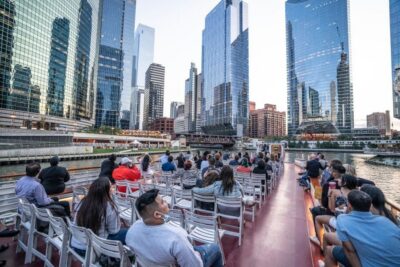
Architecture River Cruise Skip-the-Ticket Line
Read our review →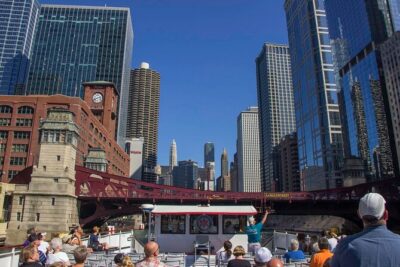
Chicago River 45-Minute Architecture Tour from Magnificent Mile
Read our review →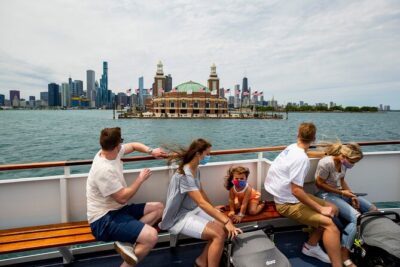
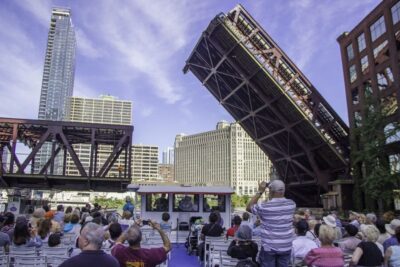
45-Minute Family-Friendly Architecture River Cruise
Read our review →Other lists with this tour